
 The cover of Zangbu’s Story, by Ang Zangbu Sherpa with Diane Scott, shows young Zangbu, a Sherpa boy, gazing at an airplane. Piloting a plane is to become his dream, but to achieve that he has to endure hardships few of us can imagine, and he needs to go to school.
The book describes this true journey. The illustrations by Malcolm Wells alone make it a classic.
His first school is a Sherpa school near Lukla, six hours from his home. It is expected that in two years he is to become the one in the family to learn to read and write, to hold important posts in the village, and to understand land deeds often used to steal land from illiterate Sherpas.
But it is not easy. He has no support at home, no mentor. He must work beforre and after school:
At Sherpa school, grade 1
He struggles not because he is lazy, but because he is working so hard-at pulling weeds and hauling manure in the fields. From the moment it is light until the school bell rings, then from the time he gets out of school until dark–work. But not schoolwork. That must be done, if it is done at all, by the dim light in his cousin’s single open room, where a place by the fire is assigned by age.

Zangbu’s story is not about violent struggles with wolves, or imagined struggles with yetis, though there is some of that. It’s about growing up with hunger, hard work, and abuse rather than with toys and creature comforts. It’s about perseverance and the ability to learn from difficulty, not to become discouraged. It’s also a richly detailed account of the educational challenges for children in mountain villages in Nepal.
Although written for children, Zangbu’s Story is a book that could inspire and teach any adult as well.





 There was also a lot of group singing, which we were invited to join, with song sheets showing the Farsi words in a Latin alphabet. All of this occurred as we enjoyed an excellent dinner of salmon, fresh vegetables, and good Persian bread.


 Gesa Kirsch recently pointed me to John R. Stilgoe’s, Outside lies magic: Regaining history and awareness in everyday places. It’s a refreshing call for becoming more aware of the ordinary world around us. Stilgoe urges us not only to walk or cycle more, but also to use the advantages of those modes of transport to see the world that we usually ignore.
 The chapters—Beginnings, Lines, Mall, Strips, Interstate, Enclosures, Main Street, Stops, Endings—lie somewhere between prose poems, history lessons, and sermons about the everyday. They remind me of John McDermott’s summary that John Dewey “believed that ordinary experience is seeded with possibilities for surprises and possibilities for enhancement if we but allow it to bathe over us in its own terms” (1973/1981, p. x).
 He shows the value of a camera, despite the lament that “ordinary American landscape strikes almost no one as photogenic” (p. 179). He recognizes the dread of causal photography (‘why are you photographing that vacant lot?’), but ties it to “deepening ignorance” (p. 181). This ignorance makes asking directions dangerous: People question us back, ‘Why do you want to know?’
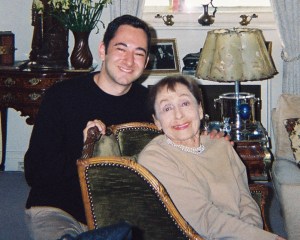 She was very good in that, and still appears to be going strong. I wonder what she thinks of the younger generation with folks like
  We just watched the DVD version of
  For our family, any movie starring Olivia De Havilland is special. In case you don’t know, we go way back.
 Chip's journey