Music in the garden

Garden notes

Garden notes

Given the many enticements, meetings, and demands of travel, I’ve found it difficult to play piano as much as I’d like. But the universities have been very accommodating with their practice rooms. And I’ve even found pianos in unexpected places.

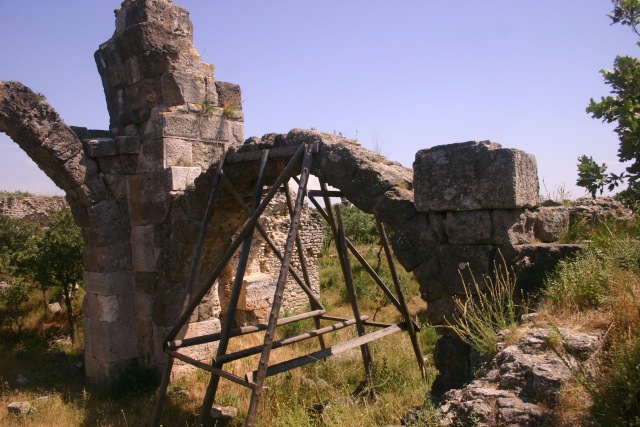
One was in the garden of the lovely hotel, Assos Alarga. With only three rooms, i’ts billed as “the smallest hotel.” The grounds of Assos Alarga were an ancient stone quarry, providing material for the development of Assos, where Aristotle taught biology (my major subject in college). The hotel building is made of stone, which seems to blend into the ruins of Assos.

Rachmaninoff Prelude in c#

Rachmaninoff Prelude in c#

Our hosts had a small collection of sheet music. I couldn’t believe at first the piece I saw on top. It was one I have on my list to learn, Rachmaninoff’s Prelude in c♯.

That prelude has a long history for me. My father sold pianos. When a customer asked to see a piano, especially a grand piano, but was too shy to play it, he would play the first two lines of the piece. Even if you can’t read music, you can see from the score the dramatic contrasts between the thundering ff (fortissimo) chords and the ppp (piano pianissimo) echoes. You may also appreciate the large chords and jumps from low to high notes.

Dad could play those first two lines very well. Then, he’d invite the customer to try the piano themselves. He was lucky that they didn’t ask him to play more, because he couldn’t play it and had just memorized that one section. As a child I learned a transcription of the piece into d, but never the original. Seeing the music in this unexpected location, I felt that I’d been given a message that it was time for me to really learn to play it.

I only had a brief time to play in the garden, and mostly stumbled through some Chopin waltzes I had worked on before. But just being there was magical. I felt connected to the long history of Assos and to the music of Turkey. There are the many ethnic traditions of music within Turkey, but also a strong tradition of Western classical music.

Thinking about music in Turkey, I began to listen more to Fazil Say, a genius composer/performer, who crosses many musical boundaries. You can see much of his work online, including performances of his own compositions, classical renditions (exquisite performances of Bach), Gershwin, and hybrid pieces such as his jazz version of Mozart’s Rondo all Turca.

To me, Say’s gestures occasionally seem overly dramatic and his interpretations equally so, but he’s always fascinating to listen to. He’s clearly one of the most talented modern composers and performers anywhere, someone that Turkey may justly celebrate as part of their contribution to world music.

I like many of his works, but Kara Toprack (Black Earth) is especially haunting:

Personal geography: Gallipoli

Diyarbakırlı Tahsin Bey,  Sinking of Battleship Bouvet

Diyarbakırlı Tahsin Bey, Sinking of Battleship Bouvet

Walking on the east shore of the Dardanelles allows me time to see, and then to feel, more of what is going on around me, even though that walking may seem aimless and slow. I become aware of the Gallipoli battle, even though it happened over 99 years ago. I can begin to imagine the fighting that resulted in over 100,000 deaths and even more wounded.

Çanakkale Onsekiz Mart Üniversitesi (ÇOMÜ) is named for March 18, 1915, when three battleships were sunk during a failed naval attack on the Dardanelles. Russia’s allies Britain and France had the aim of capturing the Ottoman capital of what is now İstanbul. That was only the first part of a major Allied failure in WWI and one of the greatest Ottoman victories during the war, which set the stage for modern Turkey.

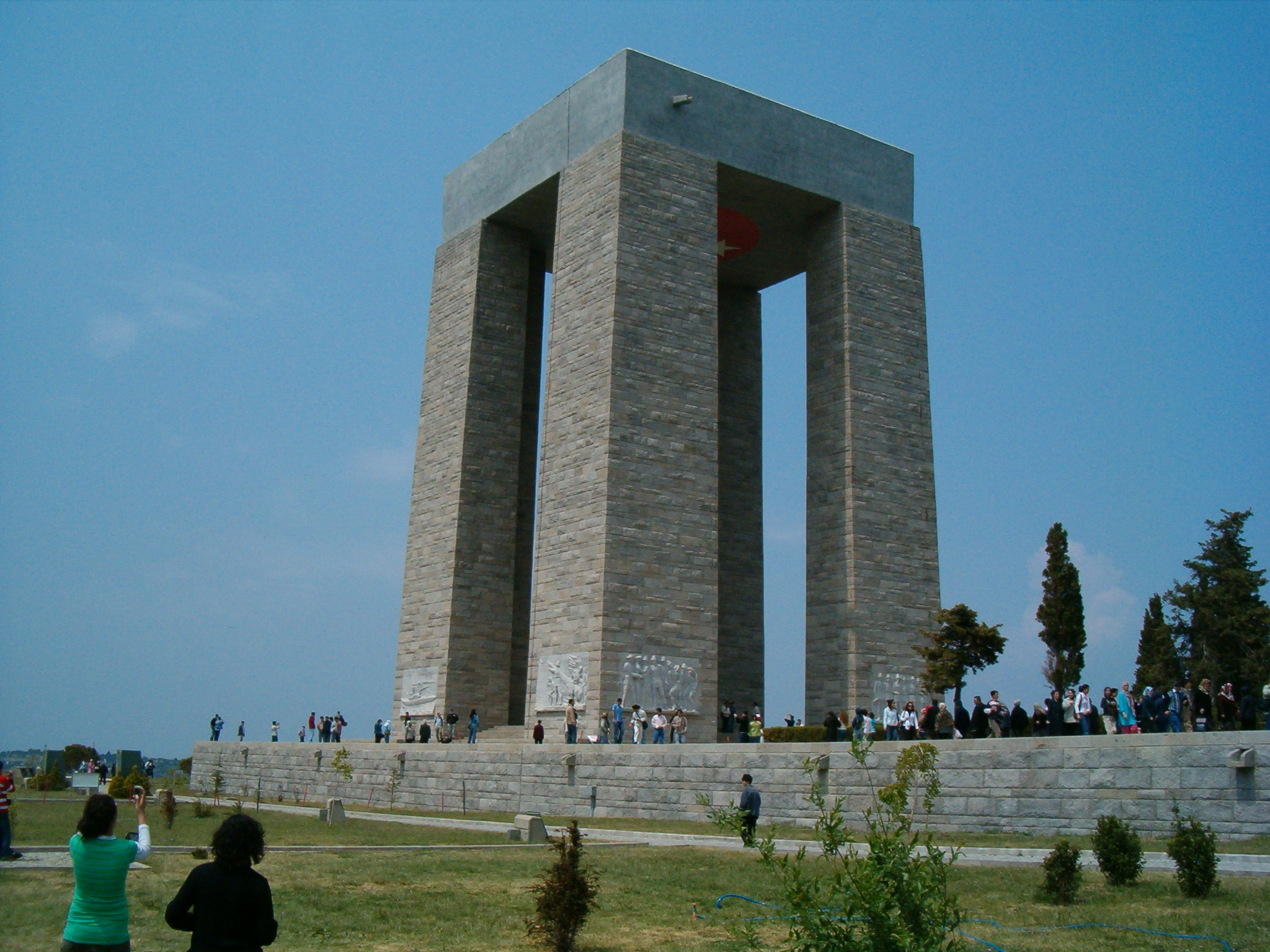
After the failed assault on the Dardanelles, the Allies launched an amphibious landing on the Gallipoli peninsula. The beginning of that campaign, April 25, 1915 is now celebrated in Çanakkale as Anzac Day (Australian and New Zealand Army Corps Day). After eight months of fighting, with many casualties on both sides, the land campaign also failed (January 9, 1916). When you look across the Dardanelles today, you can see Çanakkale Şehitleri Anıtı (the Çanakkale Martyrs Memorial), but otherwise the peninsula looks much as it must have in 1915. Walking alongside, one can sense the strategic importance of the straits and the peninsula, and also the challenge of conquering it.

Çanakkale Martyrs' Memorial

Çanakkale Martyrs’ Memorial

I don’t think about Gallipoli very much in my day to day life. And even when I rode the inter-city bus from İstanbul along the Sea of Marmara, then onto the peninsula, I didn’t think much about its history. To the extent that I did it was more of a brief, “Oh! We’re coming to the great Gallipoli battlefield!” kind of response.

However, as a walker, I have time to ponder how that land and the sea around it shaped our history. I feel free to imagine events without having them delivered in a pre-packaged tour guide or video. I experience the same sun, wind, tides, rocks, hills, plants, and birds that the Ottomans and the Allies encountered. I feel that I get to know the territory in a deeper and more personal way.

To be continued…

Personal geography: Dardanelles

Broom and petunias

Broom and petunias

Observing the world while walking is paradoxical. It’s slower even than riding a bicycle or a horse, so the total distance covered seems puny. There’s little chance to see a Michelin *** “worth the trip,” a ** “worth a detour,” or even a * “of interest.” If you were to see a Michelin *, there would most likely be just one in several days of walking.

Yet I find that when I travel fast just to see a *, it often fails to live up to its rank. It’s often overrated, overly crowded, or less accessible than I imagined. But beyond that, if I got there in a blur, I don’t have a sense of what it means to be that * in just that place or how it relates to the things around it. But those relations are usually part of what gives it * status––the most of this or the best of that.

Çanakkale Martyrs' Memorial

Çanakkale Martyrs’ Memorial

In contrast, when I walk I have plenty of time to observe and to think about what I see. Just this week, we walked from ÇOMU Dardanos, through Dardanos Village, past Kepez Limani, to Kepez center. The place names aren’t important if you don’t know the area. What’s worth noting is that this was a distance of over five miles each way, following the coastline. We could look at the hillsides to the east and across the Dardanelles to the Gallipoli peninsula to the west. With some stops and detours, plus lunch in Kepez, the return trip consumed much of the day.

Walking along the Dardanelles in this way we observed the bustling ship traffic. Some carried Russian oil from the Black Sea, traversing the Bosporous, the Sea of Marmara, the Dardanelles, then into the Aegean Sea and the Mediterranean. Some northbound traffic contained goods from China bound for İstanbul, then on to various destinations in Europe. There are weapons, radioactive materials, household items, clothes, industrial equipment, paper items, and who knows what else, probably 60,000 ships a year. Most of what I see is ships with cargoes mysterious to me, though I could spin fanciful tales about their purposes.

Fishing

Fishing

The Dardanelles is a narrow, winding strait about 40 miles long. Making things worse, there’s a current of up to four knots flowing toward the Aegean, with a countercurrent underneath. The current changes as the strait narrows and widens, something I could examine in detail while walking. Ships pass port to port, so walkers on our path would most clearly see the northbound ships.

The bumper to bumper and two-way ship traffic and uncertain current makes it a difficult and dangerous waterway. Pilots must slow down and speed up their engines to maintain the 15 knot speed limit. Nevertheless, in 2005 over 55,000 ships, including almost 6,000 oil tankers passed through Marmara, most carrying Russian oil. (By the way, “bumper to bumper” may not be the correct nautical terminology.)

As I observed the straits on this and other walks, including a long one to Güzelyalı, I became intrigued by the shape of the straits and what that meant both for walking and shipping. I could see about a third of its length, from the Aegean Sea, where ships waited their turn to enter all the way to Çanakkale, where there’s a 90˚ turn at the narrowest point.

The narrowing and widening, the shape of the bays, and the strong prevailing winds off the water define the character of the walking, just as they constrain the ship traffic. The visibility changes with the winds; a good indicator being the Çanakkale Martyrs’ Memorial at the tip of Gallipoli. It’s clearly visible and sharp, with the Turkish flag flying above when the air is clear.

The walking and leisurely viewing made me think about the geography I was experiencing and want to read more about it. Gazing across to the Gallipoli peninsula, I couldn’t help being aware that I was in Asia, looking at Europe. About 50 miles to the south, is Cape Baba, in Babakale (Papa’s Castle), the westernmost point of Asia.

One could have these thoughts while riding in a car or sitting in an armchair at home. But I find that being outdoors, seeing the details of the landscape, and feeling the effects of sun, wind, tide, and time, I become more directly connected to the world and learn geography in a way I could never do with a map or book alone, and absolutely not while locked into a faster mode of transit.

To be continued…

Living archaeology

Alexandria Troas restoration

Alexandria Troas restoration

In many localities there are ancient sites one can visit. But often, these are removed from contemporary life, not only by time, but also by place. They seem to stand apart.

For example, in Illinois, Cahokia Mounds is a fascinating site to visit. It tells the story of people who settled Illinois over 1000 years ago, and created one of the great cities of the world. However, the threads connecting Cahokia to 21st C Illinois seem very thin. The site is interesting in large part because it seems like it’s from another world. Most of the links from the Mississippian and other cultures to present-day life in Illinois have been erased or forgotten.

In Turkey, however, archaeological sites seem to merge with current life. There are more here than anyone could ever visit, or even count. Ruins spill out of the official ticketed sites into the village and countryside. Modern houses are built of the same stone, and embedded in the same rocks that influenced the ancient structures. Farmers plant and harvest in the same fields, often on top of buried ruins from two or three millennia ago. Modern excavations proceed alongside contemporary uses of the same rocks or even structures.

Apollon Smintheion

Apollon Smintheion

More importantly, there are ties in language and culture to the earlier Cretan, Hellenistic, Roman, Byzantine, Ottoman, and other cultures. Places have names revealing their history, and sometimes multiple names, e.g., Assos / Behramkale / Behram, for their different ties. Customs in food and dress have strong connections that are understood by locals, in a way that one would have trouble finding between Mississippian and modern-day Illinoisans.

An implication of this for the traveler is that archaeological sites exist in an array of states, but all with tangible links to the present. Some are fully excavated and interpreted, while others are submerged into the landscape. Some are outside of present-day settlements, but many are embedded within or under the present day town. Many manifest not just a single culture, but a series, for example an early settlement that became a Hellenistic temple, then later Roman baths and administrative center, then a Byzantine development, with continuing use to the present. This makes the sites seem alive and connected to our life today in a way that sites elsewhere are often fascinating, but removed as in a science fiction story about a strange foreign world.

European stinging nettle

European stinging nettle

The site for Alexandria Troas is one of the largest in Turkey, nearly 1000 acres. But it’s still being excavated and most of it appears first just as some strange rocks sticking up among the vallonea oaks. The site spreads nearby, but partly within and underneath today’s town of Dalyan, Çanakkale. It’s not hard to imagine that some of the farming practices of today in that region were common two millennia ago.

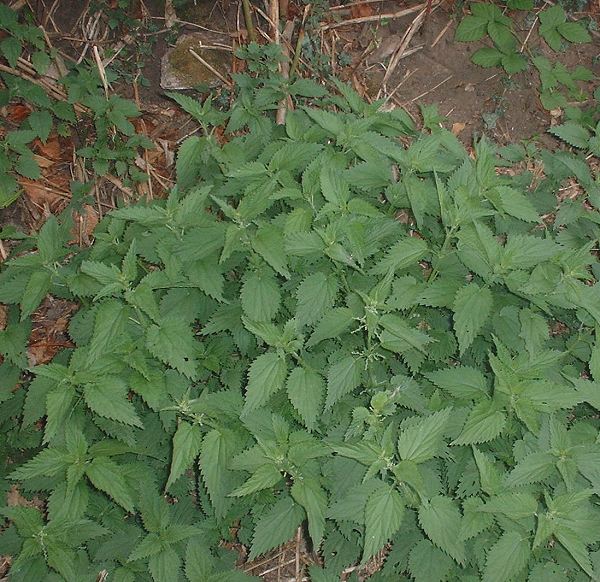
Walking and clambering about the site in my sandals, I found the ısırgan otu (stinging nettle) that undoubtedly plagued early walkers in sandals. They probably enjoyed eating them as much as other modern diners and I do.

About 23 miles south by road is Appollon Sminteionin, whcih was built in the 2nd C BC city of Khrysa (present-day Gülpınar, Çanakkale). When Cretan colonists came to the area, they consulted an oracle regarding where to settle. The oracle told them to settle where ‘the sons of the earth’ attacked them. One morning they awoke and found mice chewing their equipment. They decided to stay there and built a temple dedicated to Smintheion, Lord of the Mice and to Apollo.

Sminthean Apollo is mentioned in the Iliad, Book 1:

Agamemnon had dishonoured the god’s priest,
Chryses, who’d come to the ships to find his daughter,
Chryseis, bringing with him a huge ransom.

Displeased, Agamemnon dismissed Chryses roughly

Chryses then prayed to Appollon Smintheionin:

“God with the silver bow,
protector of Chryse, sacred Cilla,
mighty lord of Tenedos, Sminthean Apollo,
hear my prayer: If I’ve ever pleased you
with a holy shrine, or burned bones for you—
bulls and goats well wrapped in fat—
grant me my prayer. Force the Danaans
to pay full price for my tears with your arrows.”
Assos Temple of Athena

Assos Temple of Athena

There is a walkway at the Appollon Smintheion site, which may have connected it with Alexandria Troas, just as the modern towns link today. There are no wheel ruts in the stone, which suggests that ancient people walked to and from the site.

Not much further on, Assos is one of the most impressive, and surely most photographed, of the many sites in the area. I cringe to think of how many people will fall off the edge seeking the perfect selfie.

Assos is a site that exemplifies the idea of continuous settlement and sedimentation of cultures. Modern boutique hotels and shops are built into the rocks and with rocks just as the ancient structures were. There is an old, though not as old as Assos, cami (mosque) built of stone and standing at the entrance. Although the fenced area of the site is huge, structures and rock piles spill over the edges such that it’s not clear which are archaeological treasures, which are functional structures for today, and which are construction debris.

The Assos habitation traces back to the Bronze Age, with city life from 7C BC onwards without interruption. Aristotle wrote his Politics during his three-year stay here. The missionary, St. Paul, would walk to here from Troas, 20 miles aways. Its easy to envision shepherd throughout this time guiding their sheep and goats among the rock strewn hillsides, much as they do today.

Beyond the physical though, what’s most telling about the connection to the past is the way people talk. For example, many say that local foods, dress, personal names, and even ways of socializing on Turkey’s Aegean coast can be traced directly to its Hellenistic heritage. The many other civilizations in its story have similarly shaped the rich culture.

Personal geography: Walking

Lake Silvaplana

Lake Silvaplana

In Die Götzen-Dämmerung (Twilight of the Idols), Friedrich Nietzsche writes that his best ideas come from walking:

On ne peut penser et ecrire qu’assis [One cannot think and write except when seated] (G. Flaubert). There I have caught you, nihilist! The sedentary life is the very sin against the Holy Spirit. Only thoughts reached by walking have value.

An important example of this for Nietzsche was his concept of the eternal recurrence of the same events. It occurred to him while he was walking in Switzerland in the woods around Lake Silvaplana, when he was inspired by the sight of a large, pyramidal rock. His inner life as writer and philosopher could not be separated from his embodied life as a person who spent hours walking in beautiful spots in Europe.

Why does it require the direct connection reached through walking to embrace an idea like eternal recurrence? Why not just use a map? Reading a book, map, diagram, photo, movie, etc. can be a powerful experience. Why can’t we have the same insights without being there? And what is the relation between reading a text  about a phenomenon and experiencing it more directly?

A philosophy of walkingJohn Dewey addresses this dichotomy in The Child and the Curriculum:

The map is not a substitute for a personal experience. The map does not take the place of an actual journey…But the map, a summary, an arranged and orderly view of previous experiences, serves as a guide to future experience; it gives direction; it facilitates control; it economizes effort, preventing useless wandering, and pointing out the paths which lead most quickly and most certainly to a desired result. Through the map every new traveler may get for his own journey the benefits of the results of others’ explorations without the waste of energy and loss of time involved in their wanderings–wanderings which he himself would be obliged to repeat were it not for just the assistance of the objective and generalized record of their performances.

Sunset on the Dardanelles

Sunset on the Dardanelles

I’ve been thinking along these lines while reading, A Philosophy of Walking, by Frédéric Gros. The book is a pleasure to read (though not while walking). It intersperses Gros’s observations with accounts of other great walkers such as Rimbaud and Nietzsche. Gros writes,

By walking, you escape from the very idea of identity, the temptation to be someone, to have a name and a history … The freedom in walking lies in not being anyone; for the walking body has no history, it is just an eddy in the stream of immemorial life.

Curiously, the anomia and ahistory of walking, its “freedom,” is what allows the walker to connect to a greater degree with history, geography, and ideas in general. This has become even more evident to me during our stay in Turkey.

To be continued…


Personal questions

Lonely Planet publishes a good Turkish phrasebook, which has been handy in many situations. It provides some basic information about the language, the country, and the culture. I’d recommend carrying a copy, unless you’re fluent in Turkish.

But like any guidebook, the advice about social interactions is necessarily simplified, often essentializing differences. For example, the book advises:

Avoid asking questions about someone’s age, religion, or sexual preference, as the Turkish prefer not to discuss these topics openly. They love talking about politics, but exercise a little caution when expressing your opinion – some Turks verge on the fanatical when it comes to the ‘p’ word.

Phrases such as “the Turkish” or “They” are red flags, which can never be universally valid. I accept the advice to avoid personal questions on a first meeting, but I’ve found that at least some of the “They” actually like to talk about these topics. I’ve been asked: How old are you? Where do you live? What religion are you? How tall are you? What do you think about Obama? What do you think of Turkey?

When in an eczane (drugstore), I took advantage of the free scale to weigh myself. A druggist peered at the scale to check my number and then gave his approval. That may have been professional monitoring, but I sensed simple curiosity at work as well.

I’m sure that some of the They “love talking about politics,” but we were cautioned not to bring up politics with two men, who despite being friends and colleagues, had radically different political views. On the other hand, in the US, I know many people who “verge on the fanatical when it comes to the ‘p’ word.” Maybe they all have Turkish heritage.

The phrasebook also suggests,

When you meet someone of the opposite sex who has strong religious beliefs, avoid shaking hands or kissing them. Instead, greet them with the Arabic words selamin alekküm. (p. 105)

Again, broadly useful advice, but off in so many particulars. Turkish people we have met seem to vary widely in terms of talk and gestures. Some women initiate the double cheek kiss. Moreover, in a city, especially in university communities, there are people from all over the world with diverse habits. “The Turkish” vary a lot in terms of their international experiences and customs. And I haven’t heard selamin alekküm used in greetings.

One might also ask how to know whether someone has strong religious beliefs if that topic hasn’t come up. You can guess by clothing styles, but that’s far from infallible. I have a friend here who is deeply religious, but dresses in a modern style and drinks alcohol. Some women dress very conservatively, but for reasons of family or personal choice, not religion.

At another point, the phrasebook suggests,

When talking with people you’ve just met, or those you’re talking to in the polite siz (you) form, it’s considered rude to cross your arms or place your hands in your pockets. (p. 108)

This reminds me of a different guidebook that warns “the Chinese” do not like it when you point a finger at them. In my experience, most people sense that crossed arms, hands in pockets, pointing at people, and so on, are at best informal, and usually off-putting. I might just as well suggest to a Turk, “when meeting someone in the US for the first time, especially in a formal situation, don’t stand there with your arms crossed or point your finger at them. The American doesn’t like that.”

The trafik chess game

Kâmil Koç

Kâmil Koç

I’ve been impressed by the public transport in Turkey.

Turkish Airlines was named the Best Airline in Europe for the third year in a row by customers in the 2013 World Airline Awards. That’s not surprising. The first thing I noticed was that I could fit my knees in.

Don't be a traffic monster

Don’t be a traffic monster

If you’re not 6’4″ you may not appreciate the difference between having 90% of the space you need and 100+%, but believe me, not having room for 10% of your thighs is a problem. In addition to that 10%, the airline offered drinks, snacks, and a good meal, even on the short flight from Bucharest to İstanbul.

Chessboard

Chessboard

The buses are also very good. City buses run frequently, are clean and comfortable. We’ve been using a bus to the suburban area which takes about 40 minutes. It’s always on schedule and easy to use. The long-distance bus from İstanbul to Çanakkale includes a ferry ride. It has snack service, comfortable seating, even wifi and on-demand movies.

A line of black pawns

A line of black pawns

Two white rooks, standing guard

Two white rooks, standing guard

However, I’m not a fan of the street trafik (traffic), especially not as a pedestrian. Motorcycles are a special nuisance, going without regard for walkers or cars, or even the street/sidewalk distinction. There are signs telling people, “Don’t be a ‘traffic monster,” but the monsters are illiterate, so that doesn’t help much.

A commercialized bishop

A commercialized bishop

There may be a solution. The key was seeing the giant chess boards outside our apartment in Dardanos. They’re tiled spaces big enough for a person on each square. Then, I saw the bollards, which discourage at least the larger cars and trucks from driving on the sidewalks.

I began to study the bollards first as a survival skill.  Before long, I realized they were all chess pieces and that I was immersed in a giant chess game. There were the familiar pieces, such as pawns, bishops, and rooks, but in addition, the traffic monsters, and the targets, otherwise known as people.

Kordon horse, from the movie

Kordon horse, from the movie

Çanakkale is not far from Troy. So, one of its attractions is a Trojan horse, which stands guard along along the kordon (beach front). The Çanakkale horse is all the more famous because it was the one used in the movie Troy. Brad Pitt, a lead actor, donated it to the town after the movie was filmed. Perhaps my chess game against the trafik could be aided by a knight on that horse.

The goal of this game is to stay alive, fighting the odds for this technique of population control. This means relying whenever possible on the chess pieces. Unfortunately in Çanakkale, it also means being careful about where and when to stop to view the beautiful Dardanelles, the flowers, and the fascinating life on the kordon.

Shops along the kordon

Shops along the kordon

Enjoying the kordon

Enjoying the kordon

Living history in İstanbul

Kılıç Ali Paşa Külliyesi

Kılıç Ali Paşa Külliyesi

İstanbul is a city of contradictions––part Europe and part Asia, part ancient empire and part modern democracy, part bustling metropolis and part quiet byways. It’s hurtling toward the future with modern buildings, massive construction projects, and crushing traffic, but it’s also a city filled with its history, which is to a large extent the history of much of the world.

Today we saw some of the latter. We visited the Kılıç Ali Paşa complex, including a camii (mosque), a medrese (seminary), a hamam (bath), a türbe (tomb), and a çeşme (fountain). It’s in Tophane, which is part of the Beyoğlu district, on the shore of the Bosporus. It was built by Kılıç Ali Paşa, following the design of the great architect Mimar Sinan. Sinan was 90 when he began the project and 98 when he finished.

Kılıç Ali Paşa Camiii dome

Kılıç Ali Paşa Camiii dome

It’s beautiful inside and out. It shows one of Sinan’s specialities, a massive structure, which is surprisingly delicate and full of light. There are 247 windows including 24 for the central dome. Try the virtual tour.

One legend about the site is that when Kılıç Ali Paşa decided to endow a mosque, he applied for a grant of land. The Grand Vezier said: “Since he is the admiral, let him build his mosque on the sea.” Kılıç Ali Paşa brought in rocks and built the mosque on an artificial island connected to the mainland by a narrow causeway. The complex is now well inland, since the sea was filled during the construction of a modern port.

Another legend is that Miguel de Cervantes was a forced worker at the construction of the complex during his enslavement, like the character in Don Quixote.

The Museum of Innocence, 83 cabinets, one for each chapter

The Museum of Innocence, 83 cabinets, one for each chapter

We also saw The Museum of Innocence. Orhan Pamuk created it, based on the museum in his novel of the same name. He calls it “a declaration of love to the city of İstanbul.”

Visiting the museum is like experiencing an alternate reality version of the book. You read or listen from the book as you view the exhibits, which are described in the book. The cabinets are numbered to correspond to the chapters, so it’s a museum about a book, a book about a museum, and a multimedia creation about life in İstanbul. The cleverness of it all is fun and doesn’t get in the way (though almost) of Pamuk’s thoughtful, melancholic writing.

Tarihi Cumhuriyet Meyhanesi

Tarihi Cumhuriyet Meyhanesi

Tonight we had dinner at Tarihi Cumhuriyet Meyhanesi, where Atatürk used to eat. It feels like eating in a restaurant from the 1920’s. The walls are covered with photos and news articles from its 150 year existence.

World Englishes

Kachru's three circles of English

Kachru’s three circles of English

The concept of World Englishes has been much studied by groups such as the International Association for World Englishes (IAWE), including my own colleagues at the University of Illinois. They consider localized English in global contexts, how it’s spoken and written, along with pragmatic factors such as appropriate use and intelligibility.

When traveling, I notice these issues frequently on a very personal level. For example, one day we were waiting for the elevator (i.e., lift) in a hotel in İstanbul. A couple of people from Munich came up to us to ask about the hotel. We described our room, and then began to talk more generally. They then asked where we were from and were surprised to hear that it was the US. They had judged by our accent that we were from the UK.

Norwegian Star

Norwegian Star

In this case, I don’t think the confusion was due to our having British accents. Instead, it was from having enough interactions with speakers of various World Englishes that we had unconsciously muted our marked US accents, especially my Texas talk. That possibly more subdued and more clearly articulated dialect has proved necessary in travel and work with international colleagues.

Another example arose later the same day. A different couple approached us on a sidewalk, with one saying in a strong Arkansas accent, “Are y’all cruise people?” What was interesting then is that we were marked by appearance as possible cruise people without having said a word, an example of non-verbal language. Moreover, Susan couldn’t understand them, but I, who had grown up in a neighboring country, could.

We had to confess that we weren’t cruise people, but we were able to tell them where their ship was docked. It was a 2000 passenger Norwegian cruise ship about three blocks away. I’m not sure that it was the Norwegian Star, but it was one that looked similar to the one shown here. In any case it was hard to miss, but we were happy to help them find their way home.

A diet of worms

It’s fun to visit the famous sites when traveling, even if only to see all the diverse people coming to see those same sites. But What I tend to remember and value most are the unplanned, mundane, and more local adventures.

On Friday in Bucharest, there was one such involving worms. I was speaking at the aptly named “Friday meeting” at the university. The topic of planning in teaching (exploring the important sites?) came up and I had to share a story that Jack Easley, a math and science educator, had told.

Discovering worms

Discovering worms

Jack had been working in a second grade class, guiding a six week long unit on weather. Pupils learned about clouds, precipitation, storms, weather measurement, agriculture, and other such important topics, taught, I’m sure in a creative and engaging way. On the last day, it was raining outside until just before the class ended. Jack knew that there might be a rainbow. Viewing that could be an exciting culmination for the unit.

He took the class outside, preparing to discuss the visible light spectrum, refraction, moisture in air, and others such topics. But the pupils weren’t interested. While Jack was looking up, they were looking down at the closer and and more ordinary. He was a latter day Thales at risk of falling into a well while gazing at the stars. The children’s observations of the worms led them to ask, “Why do worms come out of the ground after a rain?”

Soil, plants, worms

Soil, plants, worms

Jack started to answer, then realized that he didn’t really know. So he asked the students to write down their question for scientists at the university. It turned out they had many ideas, but didn’t really know, either. A few days later a long article came out in the New York Times, saying that this was an important question for science and for agriculture, but the answer wasn’t simple. Even today, there is a lot to say about why earthworms surface after rain?. Jack saw that the pupils became most excited about their own question, which in turn was more like the science that scientists do.

Catalina Ulrich, a professor at the University of Bucharest, and my host, appeared to be quite excited by this little story. She pulled out her smartphone to show photos (shown here). Just the day before she had been observing in a crèche (preschool), where the children had been fighting over a bike. But then, one of them discovered a worm. Like Jack’s students, these even younger ones saw that soil and worms were more interesting and more attractive than whatever else they had been doing, and than many people might think.

Doreeen Cronin Diary of a WormThat evening, we had dinner at the home of Claudia Șerbănuță. I needed a toilet break, and as is my habit, couldn’t avoid looking at the reading material there. Right on top was Doreeen Cronin’s Diary of a Worm.

The book describes the world from a worm’s point of view. For example, in the beginning, it tells you the three rules about worms that you must never forget. The third rule is “Never bother Daddy when he’s eating the newspaper.” When I came out, I asked Claudia’s children about the book. Could they tell me the three things we must always remember?

They grew quite excited and shouted out the third rule in unison. When I asked about the others they weren’t so sure. The other two have something to do with how worms live, the making of soil, the interdependence of life, or global food supply. I couldn’t remember them either.