Digital storytelling

Through the Digital Literacy in Irish Primary Schools (DLIPS) project, I’ve been visiting primary schools in the Liberties area of Dublin. I’m also visiting 24 infant, primary, and post-primary schools in the Docklands area through Technology in Docklands Education project. This has given me a wonderful opportunity to see a wide variety of learning technologies and ways of organizing classroom learning. Many of the most successful classroom projects have involved some version if digital storytelling (see the photo story entries).

You can get a flavor of these projects from an RTE video at the Francis St CBS (primary level), one of the schools I’ve worked in:


The Digital Hub Learning Initiative has supported this classroom and a variety of others in the area, as well as community groups. One overarching project is Digital Hub FM, a community radio station. Community members of all ages receive training in radio production and then carry out the research, broadcasting, and station management themselves. The broadcasts include music, entertainment, discussion, local history, and youth programs.

There’s a large set of videos posted on YouTube describing the Learning Initiative’s work, including this good introduction:

Miss Dierdorf and the mythology newspaper

I was asked to write about a favorite teacher for a project in a philosophy of education course. The person who asked me plans to use the lenses of John Dewey, Paulo Freire, and Pádraic Pearse to look at the responses from various people. Here’s mine:

I remember many good teachers, but no one that stands out far above the rest. But I’ll pick one: Miss Dierdorf at W. P. McLean Junior High School cared about literature and history in an infectious way. She organized a class newspaper project in which we wrote and illustrated stories from Greek (and Roman) mythology. The antics of the ancient heroes and gods became as real to us as the day-to-day events around the school.

As I recall, every student felt that he or she had a vital contribution to make to the newspaper. We designed the paper, wrote and drew, because we too cared about the stories and the characters. I think that the sense of becoming engaged with the ideas and feelings of the past or faraway has stayed with me ever since.

It was interesting to see that the majority of the responses were about English teachers.

I should add that there are many mythology newspaper curriculum units available on the web and other formats, such as Greek Mythology Newspaper, by the children’s book author, Bernard Evslin. They all seem to be more sharply defined in terms of skill development and assessment than I remember the class to be.

Part II: Stepping out of a photo story

Be sure to read Part I: Stepping into a photo story, before this part.

Z’s story

In a recent classroom visit, I saw many of the benefits of digital storytelling: The students were active and deeply involved in learning; they were developing literacy and technology skills; they were building confidence in themselves as learners and as responsible young people. It was a contemporary version of a Froebel classroom. But something happened on one visit that’s made me think again about how we all inquire and learn.

As I described in Part I, the students were asked to write about their first memory. Their stories involved family, religion, play, travel, money, holidays, toys, and other elements of childhood today. As I went from student to student I saw some interesting variations, but nothing too surprising. Then, I encountered Z.

Who is Santa?

Whereas other students had written several lines already and eagerly allowed me to photograph their texts, Z had written nothing. I aksed her whether she had a memory to write about. My paraphrase loses the full force of her story, but perhaps conveys the spirit:

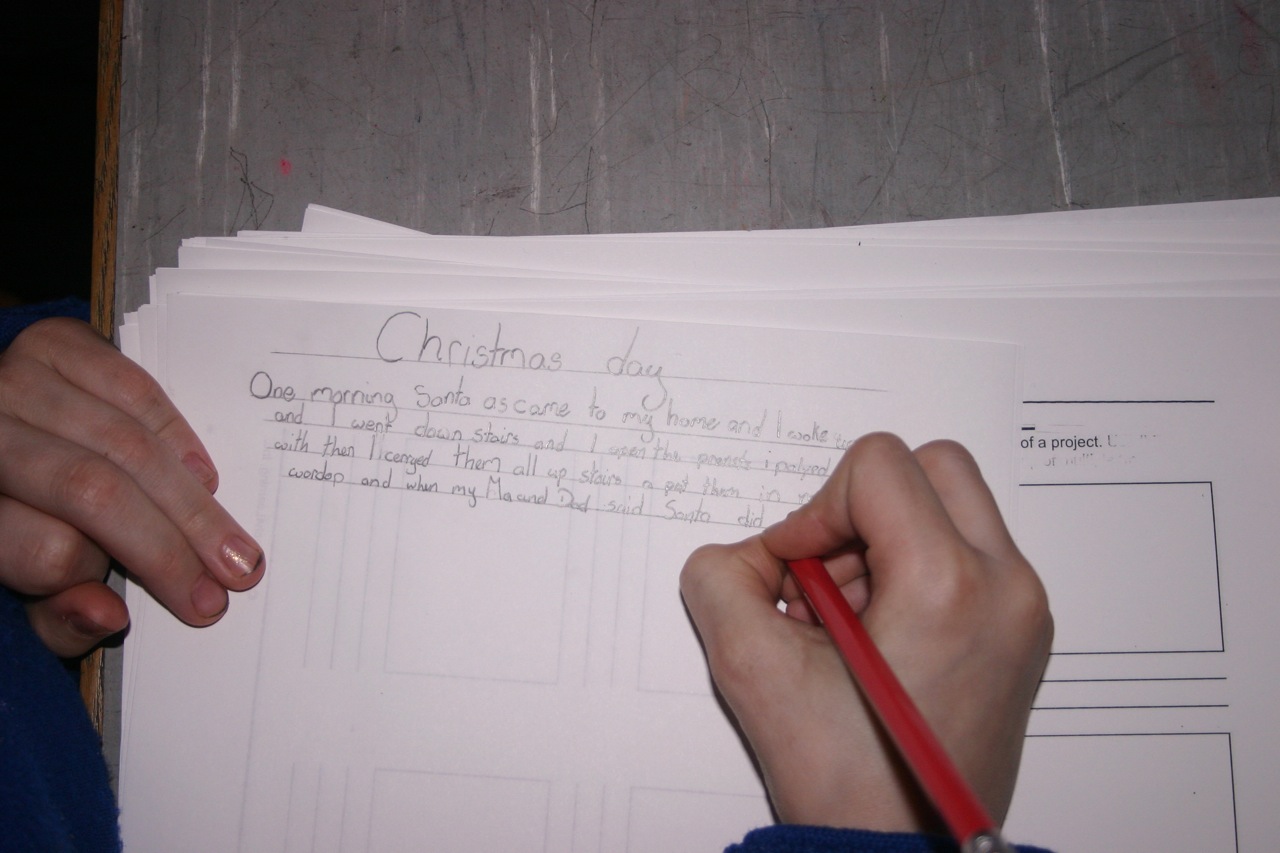
When I was four years old, I heard my parents talking about Santa, but I didn’t believe it. So the night before Christmas, I waited until they’d gone to sleep, then went downstairs. I unwrapped all of the presents, including those meant for my brothers and sisters and played with all of them. Then I took the presents upstairs and hid them in my wardrobe. The next morning my Ma and Dad came and said that Santa didn’t come because I’d been bad. “And where did you put all those presents?!”

Z went on, and I wish I could have recorded her performing. I told her she had a great story, even though I secretly thought that hers might not be as faithful to the truth as the ones her classmates were writing. So, I encouraged her to write it down as the others were doing: “Let me know when you have something written and if you like, I’ll photograph yours as well.”

As L and I went around the room, we talked with each student and photographed their writing. Meanwhile, Z seemed to do the same. She was up and about more than she was sitting writing. She’d be talking to a friend, looking at the photos on their laptop, or generally enjoying herself.

I came back to her several times to ask about her writing. She assured me that she wanted to have it photographed, and I promised that I’d do that as soon as she’d written something. But each time there was animated talk, but very little writing. By the end of the class she had written some (see photo), but it was less than that of most of her classmates and certainly didn’t do justice to the oral form.

What kind of camera is that?

One time she stopped me:

Z: What kind of camera is that?

Me: It’s a Canon. Why do you ask?

Z: My uncle has one like that. Have you seen the kind with the picture that comes out the bottom?

Me: Oh, you mean a Polaroid? Those are fun because you get the printed picture right away.

This conversation continued into different kinds of cameras, how cameras work, and why we have different buttons on the cameras. It was genuine inquiry growing out of lived experience, as Dewey might have described. But it didn’t reside in the classroom inquiry frame. The classroom story line was that students were inquiring through the photostory activity and that I was there to document what they did. They and the teacher were the performers on the classroom stage and I was the spectator, using my notepad and camera to speak to a larger audience. Our roles were clear:

students: photostory activity and materials

L and I: observing activity with notepad, camera

But Z would have none of that. She was just a sometime participant in the photostory activity and like Bertold Brecht, felt perfectly at home “breaking the fourth wall.”

What are you doing here?

Once I came back to see her and she asked:

Z: Why are you here? What are you doing here?

Even more than with the camera incident, I felt that she was challenging our assigned roles, breaking the fourth wall again. I was the spectator, the questioner. She was supposed to be the performer, the respondent. Who was she, a ten-year-old, to disrupt that established order?

But Z deliberately disrupted, albeit in a gentle way. It was genuine questioning, as Socrates or Mme. Curie might have done. No other student had questioned my presence or activity. They accepted as in the natural order of things that a stranger could be observing them and their teacher, asking questions, and taking notes or photos. Whether they didn’t think to ask or were inhibited from asking, I can’t say, but it’s interesting to note that by the age of ten, we’re nearly all so ready to accept that kind of surveillance. But not Z.

me: I’m here to look at this kind of activity and to see what children learn from doing it. Are you learning from it? What do you think you’re learning?

The standard answers to my question here are as I’ve suggested above: Becoming deeply involved in learning; developing literacy and technology skills; building confidence and learning to be responsible. Many ten-year-olds are able to articulate ideas along those lines. But Z was different.

Z: I’m learning to improve my memory.

Reading the world

Well, of course! The day’s activity was framed in terms of “your first memory.” Writing about it and looking at photographs was obviously a way to reinforce and enhance that memory. I just hadn’t thought of ten-year-olds as needing to improve their memories, even though, on reflection, I believe that being able to articulate and express memories is something we do learn how to do. Z had moved to the heart of the activity. Moreover, her compelling oral rendition was her own way to do that improvement.

The photo story activity helps fulfill Friedrich Froebel’s vision of educating the whole child by enlisting imagination, the body, and all of the senses, as well as the mind, in exploring the world. Children participating in the photo story activity did this in a way that would have pleased Froebel. But Z did it even more, by stepping out of the photo story.

Was it the fear of having more Zs enter the world that made the Prussian court in 1851 issue a ban on Froebel’s kindergarten idea?

I’m not sure what this all means. Z’s inquiry is situated, reflective, critical, and connected to experiences in her life beyond the school. It’s also rebellious. Imagine a classroom full of Z’s. Her teacher says she’s a handful. Would anything ever get done? Imagine a society of Z’s. Would so many things go unquestioned?

Ζει” in Greek means “he lives.” It’s a protest slogan referring to the democratic politician Gregoris Lambrakis, whose assassination in 1963 inspired the novel and film, Z. Whatever one might say about our Z’s writing or her ability to focus on the classroom task at hand, it’s indisputable that she lives and that her inquiry is attuned to the world in way that could be a lesson for any of us.I’m of course intrigued to see Z’s final product and wonder where she’ll go next.

Part I: Stepping into a photo story

I’ve recently observed a number of classrooms doing variants of the photo story idea, in which drawings, graphics, or photos are used as the skeleton for a digital story. Such a story may also include written text, audio narration, music, sound effects, and various visual effects. While the students are producing their individual photo stories, I feel that I’m watching the photo story of the whole classroom. I become an engaged spectator, stepping into that photo story, eager to see what they might do next.

Working on personal memoirs

You would be pleased to have your ten-year-old daughter enrolled in Ms. C’s class. The teacher was caring, there were ample resources for learning, and there was even a special teacher in the school who provided IT support and professional development (Ms. D).

On the day L and I visited, the students were working on personal memoirs in digital story form. Each student had her own project, which was built around photos, ideally including baby pictures up to the present. Students could borrow a digital camera to take additional photos at home or within the school. Each student also had the use of a laptop on which she could store photos and assemble them into a photo story with a written narrative.

The class had learned about how to tell a story using pictures, words, and music. On this day, they were working on their story boards. This involved selecting photos, sketching each one, and writing a description. There was a storyboard handout with boxes for each of six photos plus descriptions. Ms. D explained that in a later class she would record each of them reading their scripts aloud and then incorporate that recording into the photo story.

Our earliest memory

Ms. D talked about memories and what our earliest memory might be. She pointed out that we sometimes think we remember something because we’ve been told about it many times or seen a video about it, but we may not have remembered it directly. She then led the children in a brainstorming activity about their earliest memory. Students called out what they believed to be their first memory—a family holiday, First Holy Communion, a trip they took.

Each student then began writing their account of that first memory. I was impressed with how much nearly everyone seemed to be engaged with the writing and cared about getting it just right. L and I moved about the room, talking to the students about these memories and photographing their developing texts.

The texts they wrote were short, but heartfelt and entirely appropriate for the overall project. For example:

My Holy communion

I remember my first Holy communion when I went out for my dinner and went to my uncles and auntys and I got lots of money and when I came back from my auntys and uncles I went home and got dressed into a tracksuit I left my money in and I went out to play with all of my friends after I played and I went up to stay in and watch the tv and the next day I went out to get clothes and toy and I had lots of clothes and toy and I had lots of money left. and I got a cross with my first Holy communion on it

or, from another student:

I rember when I was at my aunts wedding. I was only 4 years old. We were playing chasing and we ran under the table and knock down all the drink. It was very funny but we got into trouble.

Several students had even longer reminiscences. They clearly saw the activity as a way to connect real lived experiences with a creative school project.

Froebel’s gifts and occupations

Ms. C had learned about teaching in a college whose curriculum was built on the ideas of Friedrich Froebel. This 19th-century German educator, and founder of kindergarten, believed that humans are essentially creative, able to learn through active engagement with the world and appreciation of beauty. These ideas followed from a reverence for the child and the significance of play for learning. Froebel encouraged the creation of learning environments that involved practical work, which he called occupations, and the direct use of materials (such as shaped wooden bricks), which he called gifts.

Froebel would have approved of this photo story project. He honored the capacity of people to create and learn at an early age. Here, they were also reflecting on their own earliest learning. Students were engaged with real stuff in their homes and the school. They were actively creating what would become beautiful stories of their own lives. Ms. C understood this and believes that the photo story project is beneficial for her students. She sees how they learn about how to use new technologies, such as the digital camera, the scanner, the laptop, the web, as well as develop literacy skills, such as how to devise a storyline or compose captions. Students also become successful problem solvers and learn to take responsibility for the equipment, which they can take out of the school.

I agree with Mr. F and Ms. C about this wonderful class. As I said above, I would be pleased to have my own child be a part of it. My story might end there. But something happened in that class, which made me think again about play, children, learning, teaching, and inquiry.

Stay tuned for the next installment: Part II: Stepping out of a photo story.

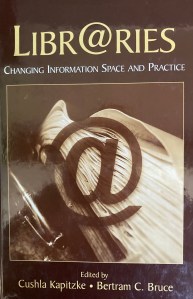
Libr@ries: Changing information space and practice

Libr@ries examines the social, cultural, and political implications of the shift from traditional forms of print-based libraries to the delivery of online information in educational contexts. Despite the central role of libraries in literacy and learning, research of them has, in the main, remained isolated within the disciplinary boundaries of information and library science.


Continue reading

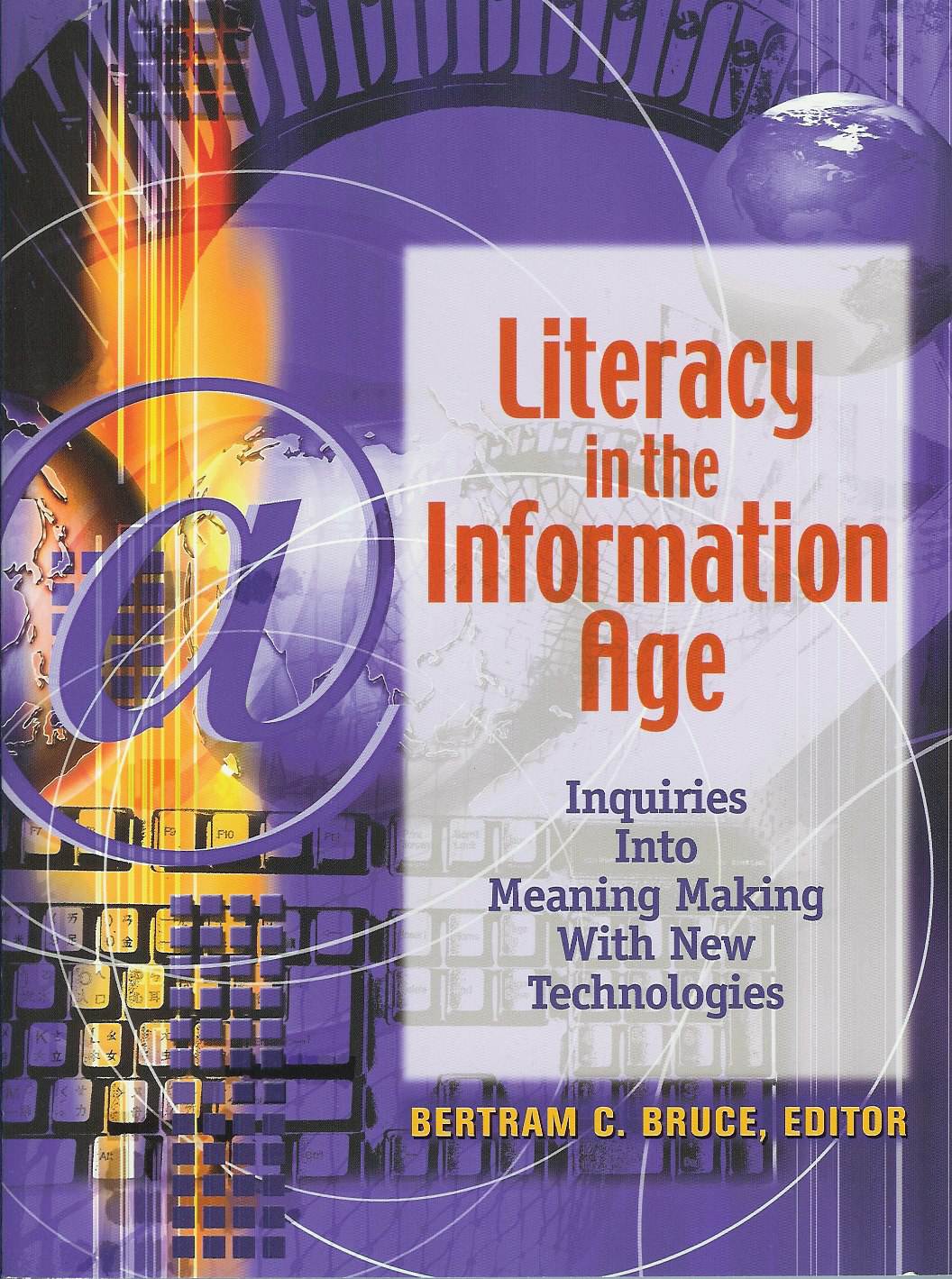
Literacy in the information age: Inquiries into meaning making with new technologies

liabookEducators today want to go beyond how-to manuals and publications that merely celebrate the many exciting new technologies as they appear in schools. Students are immersed in an evolving world of new technology development in which they are not passive recipients of these technologies but active interpreters of them. How do you help learners interpret these technologies as we all become immersed in the new information age? Continue reading

JAAL Technology Department

During 1997-2002, I edited the Technology Department in the International Reading Association’s Journal of Adolescent and Adult Literacy (JAAL). The columns were intended to promote dialogue about new communication and information technologies and to explore what these media mean for literacy and literacy educators. Each had several distinct sections, including an “email” message from me, an “issue of the month,” often written by a guest author, descriptions of selected websites, and a glossary. In addition to the print version, each column appeared in the Electronic Classroom section of Reading Online.

The columns have now been collected into a book, Literacy in the Information Age: Inquiries into Meaning Making with New Technologies (2003, Newark, DE: International Reading Association).

Emily at the nursing home

north entrance, Uni HighWhile at Uni High, Emily spent a :emester tutoring Adolph Willms and learning his life story. See this article by Mary Schenk in The News-Gazette (June 5, 1999):

Life’s work earns man his diplomas

URBANA – Adolph Willms has a lifetime of memories tucked away in his head. Some days he can summon those. Other days it’s not so easy.

With the help of an education researcher and three teen-age girls from University High School in Urbana, the 83-year-old stroke victim has been able to recall many past experiences.

Researcher Patricia Marton of Bloomington was so impressed with Willms’ life experiences as a farmer in the St. Joseph area that she persuaded local…

Discoveries

Discoveries (1995) is a series of four interactive CD-ROM programs for Grades 3-6 (ages 8-12). It includes hypertext, panoramic images, and immersive technology in a pre-web ecology.

img_3975Into the Forest (Great Smoky Mountains National Park) [ISBN 0-669-36168-2]

Editor: Grace Talusan
Designer: Angela Sciaraffa
Logo: Pamela Esty
Cover photo illustration: Daniel Derdula

Continue reading