Community school in Yeniceköy

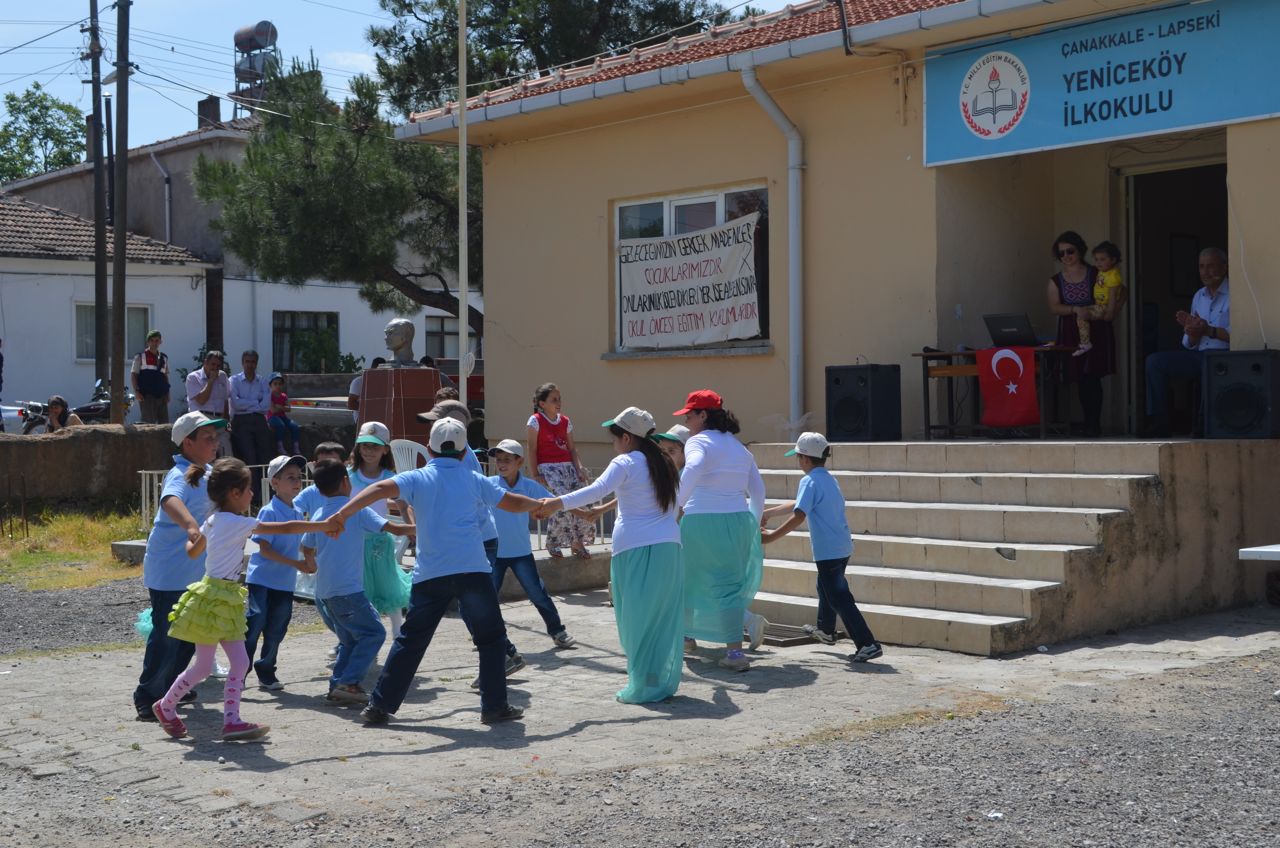
Yeniceköy primary school

Yeniceköy primary school

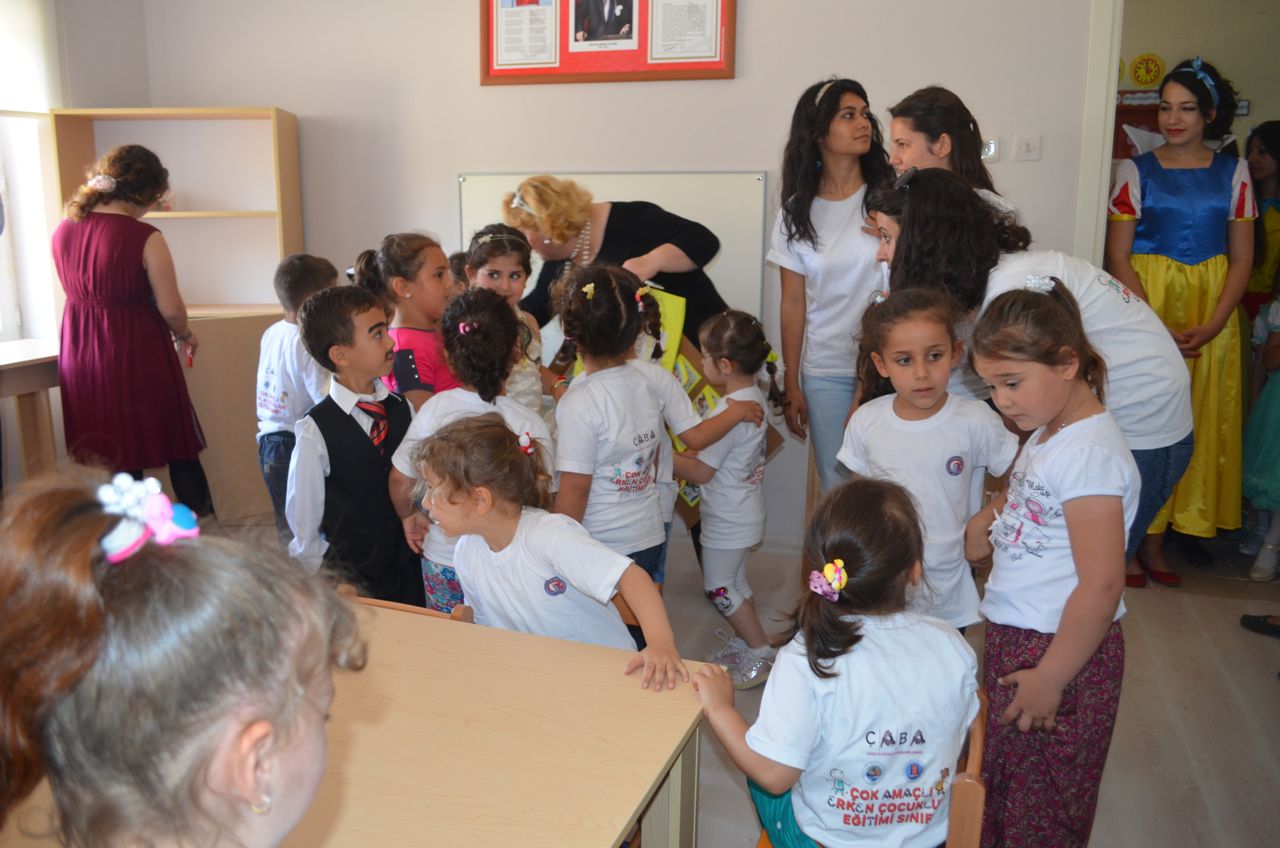
The Multipurpose class, which I wrote about earlier, is in a small urban setting, but it has a sister class in the village of Yeniceköy, about 24 miles away. I had met the class for the first time when the class and I both visited the village. The school there was inaugurating a wonderful new early childhood space; their sister class students clearly approved.

The primary school in Yeniceköy has only 14 children in a multigrade classroom (grades 1 to 4). This structure was once common throughout much of the world, but is less and less so today. There is a tendency to see efficiency in ever larger schools. Many point out that one can offer more specialized classes, computers, better facilities, address special needs, etc. in the larger school. The larger school enables a greater focus on teaching only measurable skills, the unfortunate trend of the day.

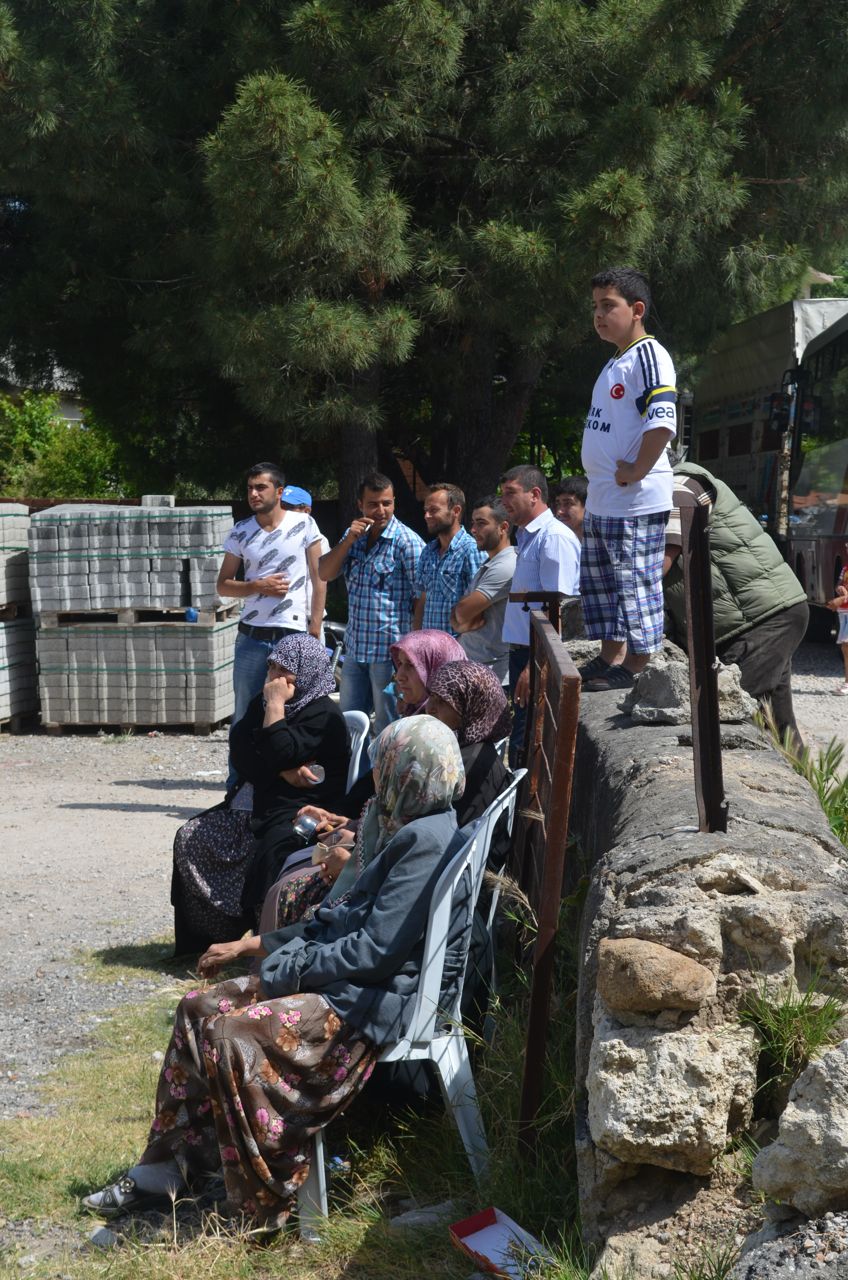
Parents

Parents

However, much is lost in the move to larger, more impersonal schools. The challenge of teaching multiple ages seems daunting, but it’s less so when you realize that children of exactly the same age also vary greatly in terms of ability, interests, and learning styles. Moreover, children may learn even more as they become teachers of others.

The small school is not always a community school, but it has the possibility to become so. Writing in the journal, Progressive Education in 1933 about the Arthurdale, WV school, Elsie Ripley Clapp says,

The school is, therefore an experiment in democratic living…It is influential because it belongs to its people. They share its ideas and ideals and its work. It takes from them as it gives to them. There are no bounds so far as I can see to what it could accomplish in social reconstruction if it had enough wisdom and insight and devotion and energy.

New preschool space

New preschool space

Yeniceköy seems to be a community school. Parents have an involvement with the school and the learning there, which is rare in consolidated schools. Learning activities and village life are connected. It will be interesting to watch how the school develops. There is a wealth of energy and good will going into it, not limited to the preschool space alone. At the same time, larger societal pressures and values may push the school in other directions.

As Clapp showed in the Arthurdale community, the school can become a social center, a means for coordinating shared interests and skills to benefit the entire community. In her case, local Appalachian culture operated through the school to support self-identity and understanding. The community school then becomes, in John Dewey’s terms, the starting point for democratic life.

Personal geography: Life and death

Russian oil tanker

Russian oil tanker

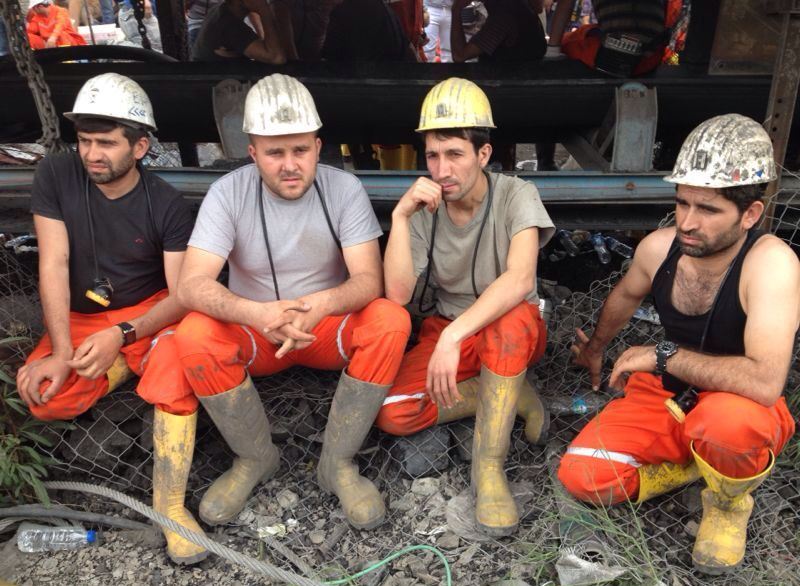
As I watch the Russian oil tankers going through the Dardanelles, I’m reminded that Turkey has little oil, but does have large coal reserves. Looking away from the straits, I see the hills towards Soma, just 100 miles away, where over 300 coal miners died in a disaster that should never have happened.

Miners at Soma coal mine

Miners at Soma coal mine

Despite the callous response from the mine owners and the government, most people I see want to say “Soma ,adencisi yalnız değil” (Soma miners are not alone). On campus, students sell pastries to raise funds for the victims’ families. In town, people march and spray graffiti to protest the government’s policies before, and the response afterwards. In the countryside, I see people whom I can imagine as not so different from the villagers whose family members worked in the mine.

Trying not to think about Soma, I walk to the Dardanos Tümülüsü (tumulus). This is a burial hill not far from our apartment, with artifacts dating from the second century BC, possibly earlier. The Çingene (also called Gypsy) people in Çanakkale say that they have been there for six centuries, possibly before the Ottoman rulers. But long before they arrived, who were the people who built the tumulus? I wonder about their walking on the same hills and coastlines, which they did when there was no choice to take the bus or car.

Dardanos Tümülüsü

Dardanos Tümülüsü

My wanderings lead to wonderings about how we as humans, or any life, will survive the growth-at-all-costs ethos, dominant around the world. Fifty years ago, in the month I graduated from high school, Lyndon Johnson asked:

whether we build a society where progress is the servant of our needs, or a society where old values and new visions are buried under unbridled growth…expansion is eroding the precious and time-honored values of community with neighbors and communion with nature.

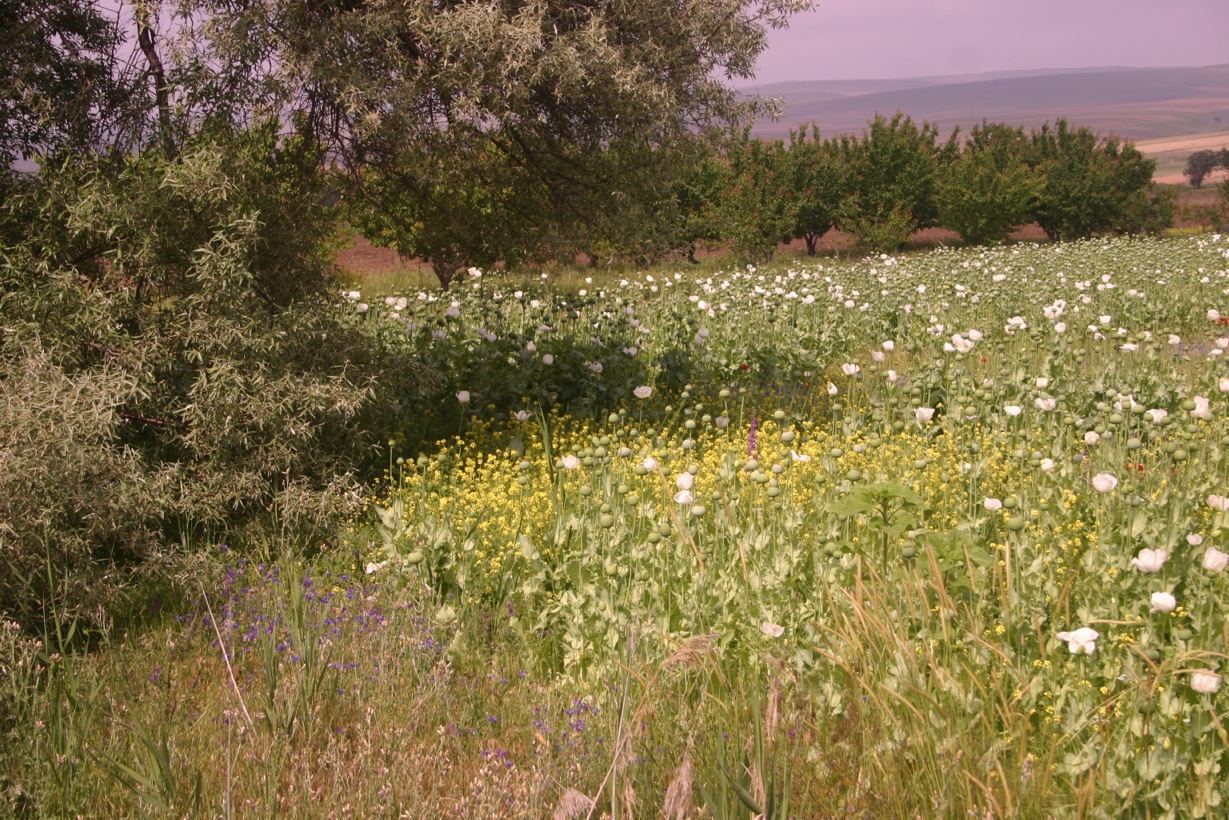
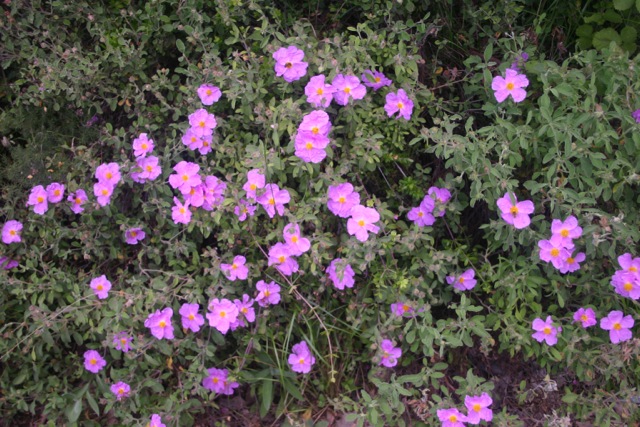
At least, here at Dardanos, there is some respite, if only within an hour’s walk. I see children in the large playground. There’s a vineyard. In the scrub forest there is a maquis ecology, with small pines, fir, cedar, holly, cyprus, and other evergreen trees, as well as some nut and fruit trees, such as valonia oaks, almond, fig, apple, and olive. The underbrush includes flowering broom, sage, oleander, and many interesting grasses. Most striking are the wildflowers–poppy, petunia, aster, and rose, plus many I can’t name. There are butterflies everywhere, birds, frogs, and lizards, all mocking the many wild cats. The ocean seems full of life, with octopus and squid, many kinds of fish and seaweeds, in spite of the heavy ship traffic.

Poppy field

Poppy field

Alongside the Dardanos, these life forms seem in tune with the beautiful setting and oblivious to the massive commerce steaming past and the construction boom on land. Let’s hope they can continue for a long time.

I’m afraid that my generation hasn’t done much to manifest Johnson’s call for “the wisdom to use…wealth to enrich and elevate our national life, and to advance the quality of our American civilization.” We have more nuclear weapons, greater destruction of the environment, abuse of workers, and precious little understanding of neighbors at home or abroad. All too often, our “old values and new visions are buried under unbridled growth.”

Petunias

Petunias

In that 1964 speech, Johnson said,

The Great Society is a place where every child can find knowledge to enrich his mind and to enlarge his talents. It is a place where leisure is a welcome chance to build and reflect, not a feared cause of boredom and restlessness. It is a place where the city of man serves not only the needs of the body and the demands of commerce but the desire for beauty and the hunger for community.

I can’t say that I’ve learned very much in the fifty years since Johnson’s speech, but one thing is that the leisure he spoke about is not lost time, but a central aspect of being. Walking becomes for me a way to ensure that it happens. Otherwise I too often feel compelled to check the computer, go to a meeting, or accomplish some task. Or, I seek escape as a spectator, rather than participant in life.

That leisure is a necessary means to build connections and become one with the plants and animals nearby, the people, the land and sea, and the history that ties them all together. It’s both an essential part of life and means to understanding it better.

Global understanding

Finding Turkey
Finding Turkey

 It makes sense that global understanding starts with understanding the globe. At least that’s what some children and I think.

It was a Monday in the Multipurpose Unit Early Classroom Intervention Program (MUECIP) in Çanakkale, Turkey. This program is an innovative approach for 4-5 year-olds from low-SES families, which integrates music and arts. The student teacher, Dilsad Korkmaz, did an excellent job of keeping the children engaged and allowing for the inevitable individual differences.

The program draws from approaches such as Orff, Babies with Identity, and High-Scope. There is ample use of graphic displays on class size, seasons, daily activities, birthdays, responsibilities, etc. Family participation is encouraged through interviews with the families and home visits to observe children in their natural lives. Parents rotate in providing breakfasts, which also gives them an opportunity to observe the class and engage in the activities.

Research by Özlem Çelebioğlu Morkoçc and Ebru Aktan Acar at Canakkale Onsekiz Mart University has shown that the program supports overall development, including cognitive and psychomotor skills, self-care, language, and personal-social skills.

Finding Cape Cod
Finding Cape Cod

It was more compelling to me that the children seemed so engaged in learning. They were excited to talk and share, to dance, and to investigate everything. I had to remove my electronic fitness bracelet when it became too great a distraction. Besides, it was embarrassing that they figured out how to operate it in about 1/10 of the time I had taken.

At one point we drew upon a globe for some collaborative map work. Using many fingers, we first found Turkey, then Cape Cod. I’m not sure how much they comprehended about the globe versus how much they just wanted to interact with each other and their American “uncle.”

Personal geography: East Thrace

Ship traffic on the Dardanelles

Ship traffic on the Dardanelles

When I look at the Gallipoli peninsula from our apartment, or better, view it while walking along the coast, I become aware that I’m seeing a large land mass that is only a peninsula jutting out of Doğu Trakya (East Thrace), a part of Turkey that’s in Europe.

Trakya, as it’s known within Turkey, is just a small part of the country. But if Trakya were a separate country its population would make it one of the larger ones in Europe. To put it another way, based on my musings about the Gallipoli campaign, if the Ottoman empire had dismembered in a different way, I might be looking at a sizeable European country.

East Thrace

East Thrace

In particular, it’s larger than many of its European neighbors, such as Serbia, Slovakia, Georgia, Croatia, Bosnia and Herzegovina, Moldova, Albania, Macedonia, Slovenia, Kosovo, or Montenegro. It’s also larger than most of the US states. One reason is that it contains two thirds of the population of İstanbul, a huge, cosmopolitan city. Of course with time, Turkey in its entirety will become more a part of Europe politically and economically. That will further confuse all of us who never fully understood why Eurasia was considered to be two continents in the first place.

Trakya borders the Black Sea as well as the Aegean Sea, the Dardanelles, the Sea of Marmara, and the Bosporous. When I walk I see only a tiny fraction of the region, but I “see” its shape and history in a way I never come close to doing otherwise. I see Russia’s annexation of Crimea to the northeast, a fact that makes Romania and Russia now neighbors. I understand more of what it means for Turkey to join the EU. And I appreciate more how a substantial portion of the world’s commerce steams up and down the corridor joining the Aegean Sea to the Black Sea.

To be continued…

Music in the garden

Garden notes

Garden notes

Given the many enticements, meetings, and demands of travel, I’ve found it difficult to play piano as much as I’d like. But the universities have been very accommodating with their practice rooms. And I’ve even found pianos in unexpected places.

One was in the garden of the lovely hotel, Assos Alarga. With only three rooms, i’ts billed as “the smallest hotel.” The grounds of Assos Alarga were an ancient stone quarry, providing material for the development of Assos, where Aristotle taught biology (my major subject in college). The hotel building is made of stone, which seems to blend into the ruins of Assos.

Rachmaninoff Prelude in c#

Rachmaninoff Prelude in c#

Our hosts had a small collection of sheet music. I couldn’t believe at first the piece I saw on top. It was one I have on my list to learn, Rachmaninoff’s Prelude in c♯.

That prelude has a long history for me. My father sold pianos. When a customer asked to see a piano, especially a grand piano, but was too shy to play it, he would play the first two lines of the piece. Even if you can’t read music, you can see from the score the dramatic contrasts between the thundering ff (fortissimo) chords and the ppp (piano pianissimo) echoes. You may also appreciate the large chords and jumps from low to high notes.

Dad could play those first two lines very well. Then, he’d invite the customer to try the piano themselves. He was lucky that they didn’t ask him to play more, because he couldn’t play it and had just memorized that one section. As a child I learned a transcription of the piece into d, but never the original. Seeing the music in this unexpected location, I felt that I’d been given a message that it was time for me to really learn to play it.

I only had a brief time to play in the garden, and mostly stumbled through some Chopin waltzes I had worked on before. But just being there was magical. I felt connected to the long history of Assos and to the music of Turkey. There are the many ethnic traditions of music within Turkey, but also a strong tradition of Western classical music.

Thinking about music in Turkey, I began to listen more to Fazil Say, a genius composer/performer, who crosses many musical boundaries. You can see much of his work online, including performances of his own compositions, classical renditions (exquisite performances of Bach), Gershwin, and hybrid pieces such as his jazz version of Mozart’s Rondo all Turca.

To me, Say’s gestures occasionally seem overly dramatic and his interpretations equally so, but he’s always fascinating to listen to. He’s clearly one of the most talented modern composers and performers anywhere, someone that Turkey may justly celebrate as part of their contribution to world music.

I like many of his works, but Kara Toprack (Black Earth) is especially haunting:

Personal geography: Gallipoli

Diyarbakırlı Tahsin Bey,  Sinking of Battleship Bouvet

Diyarbakırlı Tahsin Bey, Sinking of Battleship Bouvet

Walking on the east shore of the Dardanelles allows me time to see, and then to feel, more of what is going on around me, even though that walking may seem aimless and slow. I become aware of the Gallipoli battle, even though it happened over 99 years ago. I can begin to imagine the fighting that resulted in over 100,000 deaths and even more wounded.

Çanakkale Onsekiz Mart Üniversitesi (ÇOMÜ) is named for March 18, 1915, when three battleships were sunk during a failed naval attack on the Dardanelles. Russia’s allies Britain and France had the aim of capturing the Ottoman capital of what is now İstanbul. That was only the first part of a major Allied failure in WWI and one of the greatest Ottoman victories during the war, which set the stage for modern Turkey.

After the failed assault on the Dardanelles, the Allies launched an amphibious landing on the Gallipoli peninsula. The beginning of that campaign, April 25, 1915 is now celebrated in Çanakkale as Anzac Day (Australian and New Zealand Army Corps Day). After eight months of fighting, with many casualties on both sides, the land campaign also failed (January 9, 1916). When you look across the Dardanelles today, you can see Çanakkale Şehitleri Anıtı (the Çanakkale Martyrs Memorial), but otherwise the peninsula looks much as it must have in 1915. Walking alongside, one can sense the strategic importance of the straits and the peninsula, and also the challenge of conquering it.

Çanakkale Martyrs' Memorial

Çanakkale Martyrs’ Memorial

I don’t think about Gallipoli very much in my day to day life. And even when I rode the inter-city bus from İstanbul along the Sea of Marmara, then onto the peninsula, I didn’t think much about its history. To the extent that I did it was more of a brief, “Oh! We’re coming to the great Gallipoli battlefield!” kind of response.

However, as a walker, I have time to ponder how that land and the sea around it shaped our history. I feel free to imagine events without having them delivered in a pre-packaged tour guide or video. I experience the same sun, wind, tides, rocks, hills, plants, and birds that the Ottomans and the Allies encountered. I feel that I get to know the territory in a deeper and more personal way.

To be continued…

Personal geography: Dardanelles

Broom and petunias

Broom and petunias

Observing the world while walking is paradoxical. It’s slower even than riding a bicycle or a horse, so the total distance covered seems puny. There’s little chance to see a Michelin *** “worth the trip,” a ** “worth a detour,” or even a * “of interest.” If you were to see a Michelin *, there would most likely be just one in several days of walking.

Yet I find that when I travel fast just to see a *, it often fails to live up to its rank. It’s often overrated, overly crowded, or less accessible than I imagined. But beyond that, if I got there in a blur, I don’t have a sense of what it means to be that * in just that place or how it relates to the things around it. But those relations are usually part of what gives it * status––the most of this or the best of that.

Çanakkale Martyrs' Memorial

Çanakkale Martyrs’ Memorial

In contrast, when I walk I have plenty of time to observe and to think about what I see. Just this week, we walked from ÇOMU Dardanos, through Dardanos Village, past Kepez Limani, to Kepez center. The place names aren’t important if you don’t know the area. What’s worth noting is that this was a distance of over five miles each way, following the coastline. We could look at the hillsides to the east and across the Dardanelles to the Gallipoli peninsula to the west. With some stops and detours, plus lunch in Kepez, the return trip consumed much of the day.

Walking along the Dardanelles in this way we observed the bustling ship traffic. Some carried Russian oil from the Black Sea, traversing the Bosporous, the Sea of Marmara, the Dardanelles, then into the Aegean Sea and the Mediterranean. Some northbound traffic contained goods from China bound for İstanbul, then on to various destinations in Europe. There are weapons, radioactive materials, household items, clothes, industrial equipment, paper items, and who knows what else, probably 60,000 ships a year. Most of what I see is ships with cargoes mysterious to me, though I could spin fanciful tales about their purposes.

Fishing

Fishing

The Dardanelles is a narrow, winding strait about 40 miles long. Making things worse, there’s a current of up to four knots flowing toward the Aegean, with a countercurrent underneath. The current changes as the strait narrows and widens, something I could examine in detail while walking. Ships pass port to port, so walkers on our path would most clearly see the northbound ships.

The bumper to bumper and two-way ship traffic and uncertain current makes it a difficult and dangerous waterway. Pilots must slow down and speed up their engines to maintain the 15 knot speed limit. Nevertheless, in 2005 over 55,000 ships, including almost 6,000 oil tankers passed through Marmara, most carrying Russian oil. (By the way, “bumper to bumper” may not be the correct nautical terminology.)

As I observed the straits on this and other walks, including a long one to Güzelyalı, I became intrigued by the shape of the straits and what that meant both for walking and shipping. I could see about a third of its length, from the Aegean Sea, where ships waited their turn to enter all the way to Çanakkale, where there’s a 90˚ turn at the narrowest point.

The narrowing and widening, the shape of the bays, and the strong prevailing winds off the water define the character of the walking, just as they constrain the ship traffic. The visibility changes with the winds; a good indicator being the Çanakkale Martyrs’ Memorial at the tip of Gallipoli. It’s clearly visible and sharp, with the Turkish flag flying above when the air is clear.

The walking and leisurely viewing made me think about the geography I was experiencing and want to read more about it. Gazing across to the Gallipoli peninsula, I couldn’t help being aware that I was in Asia, looking at Europe. About 50 miles to the south, is Cape Baba, in Babakale (Papa’s Castle), the westernmost point of Asia.

One could have these thoughts while riding in a car or sitting in an armchair at home. But I find that being outdoors, seeing the details of the landscape, and feeling the effects of sun, wind, tide, and time, I become more directly connected to the world and learn geography in a way I could never do with a map or book alone, and absolutely not while locked into a faster mode of transit.

To be continued…

Living archaeology

Alexandria Troas restoration

Alexandria Troas restoration

In many localities there are ancient sites one can visit. But often, these are removed from contemporary life, not only by time, but also by place. They seem to stand apart.

For example, in Illinois, Cahokia Mounds is a fascinating site to visit. It tells the story of people who settled Illinois over 1000 years ago, and created one of the great cities of the world. However, the threads connecting Cahokia to 21st C Illinois seem very thin. The site is interesting in large part because it seems like it’s from another world. Most of the links from the Mississippian and other cultures to present-day life in Illinois have been erased or forgotten.

In Turkey, however, archaeological sites seem to merge with current life. There are more here than anyone could ever visit, or even count. Ruins spill out of the official ticketed sites into the village and countryside. Modern houses are built of the same stone, and embedded in the same rocks that influenced the ancient structures. Farmers plant and harvest in the same fields, often on top of buried ruins from two or three millennia ago. Modern excavations proceed alongside contemporary uses of the same rocks or even structures.

Apollon Smintheion

Apollon Smintheion

More importantly, there are ties in language and culture to the earlier Cretan, Hellenistic, Roman, Byzantine, Ottoman, and other cultures. Places have names revealing their history, and sometimes multiple names, e.g., Assos / Behramkale / Behram, for their different ties. Customs in food and dress have strong connections that are understood by locals, in a way that one would have trouble finding between Mississippian and modern-day Illinoisans.

An implication of this for the traveler is that archaeological sites exist in an array of states, but all with tangible links to the present. Some are fully excavated and interpreted, while others are submerged into the landscape. Some are outside of present-day settlements, but many are embedded within or under the present day town. Many manifest not just a single culture, but a series, for example an early settlement that became a Hellenistic temple, then later Roman baths and administrative center, then a Byzantine development, with continuing use to the present. This makes the sites seem alive and connected to our life today in a way that sites elsewhere are often fascinating, but removed as in a science fiction story about a strange foreign world.

European stinging nettle

European stinging nettle

The site for Alexandria Troas is one of the largest in Turkey, nearly 1000 acres. But it’s still being excavated and most of it appears first just as some strange rocks sticking up among the vallonea oaks. The site spreads nearby, but partly within and underneath today’s town of Dalyan, Çanakkale. It’s not hard to imagine that some of the farming practices of today in that region were common two millennia ago.

Walking and clambering about the site in my sandals, I found the ısırgan otu (stinging nettle) that undoubtedly plagued early walkers in sandals. They probably enjoyed eating them as much as other modern diners and I do.

About 23 miles south by road is Appollon Sminteionin, whcih was built in the 2nd C BC city of Khrysa (present-day Gülpınar, Çanakkale). When Cretan colonists came to the area, they consulted an oracle regarding where to settle. The oracle told them to settle where ‘the sons of the earth’ attacked them. One morning they awoke and found mice chewing their equipment. They decided to stay there and built a temple dedicated to Smintheion, Lord of the Mice and to Apollo.

Sminthean Apollo is mentioned in the Iliad, Book 1:

Agamemnon had dishonoured the god’s priest,
Chryses, who’d come to the ships to find his daughter,
Chryseis, bringing with him a huge ransom.

Displeased, Agamemnon dismissed Chryses roughly

Chryses then prayed to Appollon Smintheionin:

“God with the silver bow,
protector of Chryse, sacred Cilla,
mighty lord of Tenedos, Sminthean Apollo,
hear my prayer: If I’ve ever pleased you
with a holy shrine, or burned bones for you—
bulls and goats well wrapped in fat—
grant me my prayer. Force the Danaans
to pay full price for my tears with your arrows.”

Assos Temple of Athena

Assos Temple of Athena

There is a walkway at the Appollon Smintheion site, which may have connected it with Alexandria Troas, just as the modern towns link today. There are no wheel ruts in the stone, which suggests that ancient people walked to and from the site.

Not much further on, Assos is one of the most impressive, and surely most photographed, of the many sites in the area. I cringe to think of how many people will fall off the edge seeking the perfect selfie.

Assos is a site that exemplifies the idea of continuous settlement and sedimentation of cultures. Modern boutique hotels and shops are built into the rocks and with rocks just as the ancient structures were. There is an old, though not as old as Assos, cami (mosque) built of stone and standing at the entrance. Although the fenced area of the site is huge, structures and rock piles spill over the edges such that it’s not clear which are archaeological treasures, which are functional structures for today, and which are construction debris.

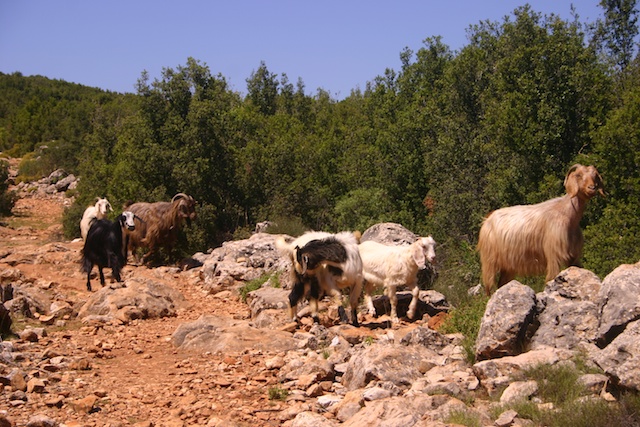
The Assos habitation traces back to the Bronze Age, with city life from 7C BC onwards without interruption. Aristotle wrote his Politics during his three-year stay here. The missionary, St. Paul, would walk to here from Troas, 20 miles aways. Its easy to envision shepherd throughout this time guiding their sheep and goats among the rock strewn hillsides, much as they do today.

Beyond the physical though, what’s most telling about the connection to the past is the way people talk. For example, many say that local foods, dress, personal names, and even ways of socializing on Turkey’s Aegean coast can be traced directly to its Hellenistic heritage. The many other civilizations in its story have similarly shaped the rich culture.

Personal geography: Walking

Lake Silvaplana

Lake Silvaplana

In Die Götzen-Dämmerung (Twilight of the Idols), Friedrich Nietzsche writes that his best ideas come from walking:

On ne peut penser et ecrire qu’assis [One cannot think and write except when seated] (G. Flaubert). There I have caught you, nihilist! The sedentary life is the very sin against the Holy Spirit. Only thoughts reached by walking have value.

An important example of this for Nietzsche was his concept of the eternal recurrence of the same events. It occurred to him while he was walking in Switzerland in the woods around Lake Silvaplana, when he was inspired by the sight of a large, pyramidal rock. His inner life as writer and philosopher could not be separated from his embodied life as a person who spent hours walking in beautiful spots in Europe.

Why does it require the direct connection reached through walking to embrace an idea like eternal recurrence? Why not just use a map? Reading a book, map, diagram, photo, movie, etc. can be a powerful experience. Why can’t we have the same insights without being there? And what is the relation between reading a text  about a phenomenon and experiencing it more directly?

A philosophy of walkingJohn Dewey addresses this dichotomy in The Child and the Curriculum:

The map is not a substitute for a personal experience. The map does not take the place of an actual journey…But the map, a summary, an arranged and orderly view of previous experiences, serves as a guide to future experience; it gives direction; it facilitates control; it economizes effort, preventing useless wandering, and pointing out the paths which lead most quickly and most certainly to a desired result. Through the map every new traveler may get for his own journey the benefits of the results of others’ explorations without the waste of energy and loss of time involved in their wanderings–wanderings which he himself would be obliged to repeat were it not for just the assistance of the objective and generalized record of their performances.

Sunset on the Dardanelles

Sunset on the Dardanelles

I’ve been thinking along these lines while reading, A Philosophy of Walking, by Frédéric Gros. The book is a pleasure to read (though not while walking). It intersperses Gros’s observations with accounts of other great walkers such as Rimbaud and Nietzsche. Gros writes,

By walking, you escape from the very idea of identity, the temptation to be someone, to have a name and a history … The freedom in walking lies in not being anyone; for the walking body has no history, it is just an eddy in the stream of immemorial life.

Curiously, the anomia and ahistory of walking, its “freedom,” is what allows the walker to connect to a greater degree with history, geography, and ideas in general. This has become even more evident to me during our stay in Turkey.

To be continued…


Personal questions

Lonely Planet publishes a good Turkish phrasebook, which has been handy in many situations. It provides some basic information about the language, the country, and the culture. I’d recommend carrying a copy, unless you’re fluent in Turkish.

But like any guidebook, the advice about social interactions is necessarily simplified, often essentializing differences. For example, the book advises:

Avoid asking questions about someone’s age, religion, or sexual preference, as the Turkish prefer not to discuss these topics openly. They love talking about politics, but exercise a little caution when expressing your opinion – some Turks verge on the fanatical when it comes to the ‘p’ word.

Phrases such as “the Turkish” or “They” are red flags, which can never be universally valid. I accept the advice to avoid personal questions on a first meeting, but I’ve found that at least some of the “They” actually like to talk about these topics. I’ve been asked: How old are you? Where do you live? What religion are you? How tall are you? What do you think about Obama? What do you think of Turkey?

When in an eczane (drugstore), I took advantage of the free scale to weigh myself. A druggist peered at the scale to check my number and then gave his approval. That may have been professional monitoring, but I sensed simple curiosity at work as well.

I’m sure that some of the They “love talking about politics,” but we were cautioned not to bring up politics with two men, who despite being friends and colleagues, had radically different political views. On the other hand, in the US, I know many people who “verge on the fanatical when it comes to the ‘p’ word.” Maybe they all have Turkish heritage.

The phrasebook also suggests,

When you meet someone of the opposite sex who has strong religious beliefs, avoid shaking hands or kissing them. Instead, greet them with the Arabic words selamin alekküm. (p. 105)

Again, broadly useful advice, but off in so many particulars. Turkish people we have met seem to vary widely in terms of talk and gestures. Some women initiate the double cheek kiss. Moreover, in a city, especially in university communities, there are people from all over the world with diverse habits. “The Turkish” vary a lot in terms of their international experiences and customs. And I haven’t heard selamin alekküm used in greetings.

One might also ask how to know whether someone has strong religious beliefs if that topic hasn’t come up. You can guess by clothing styles, but that’s far from infallible. I have a friend here who is deeply religious, but dresses in a modern style and drinks alcohol. Some women dress very conservatively, but for reasons of family or personal choice, not religion.

At another point, the phrasebook suggests,

When talking with people you’ve just met, or those you’re talking to in the polite siz (you) form, it’s considered rude to cross your arms or place your hands in your pockets. (p. 108)

This reminds me of a different guidebook that warns “the Chinese” do not like it when you point a finger at them. In my experience, most people sense that crossed arms, hands in pockets, pointing at people, and so on, are at best informal, and usually off-putting. I might just as well suggest to a Turk, “when meeting someone in the US for the first time, especially in a formal situation, don’t stand there with your arms crossed or point your finger at them. The American doesn’t like that.”