Can anything be done?

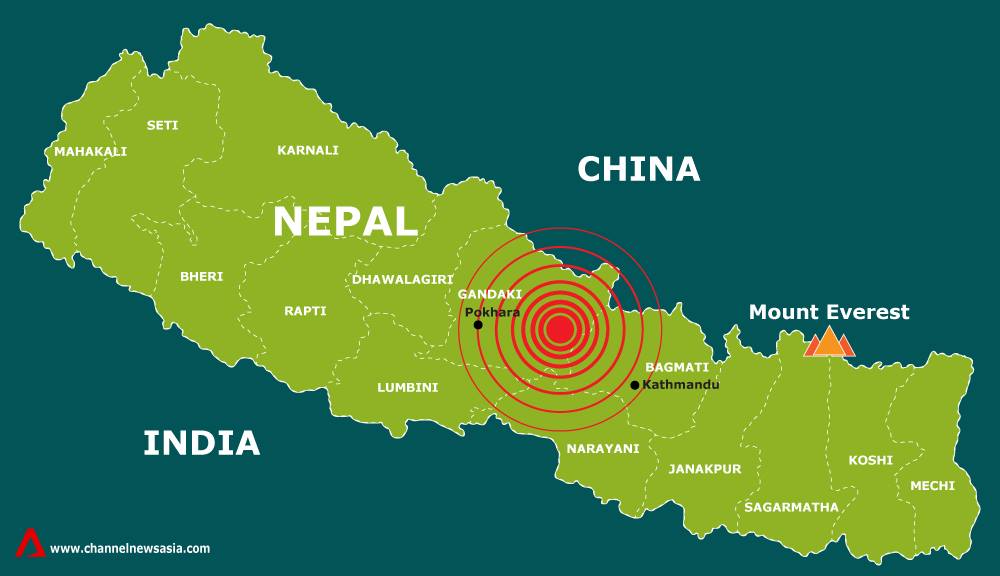
Earthquake response in Nepal

Earthquake response in Nepal

When we think about problems such as intolerance, economic justice, or climate change, should we focus on the local or the global? the short-term or the long-term? the social or the technical? Questions such as these recur in ways that often lead to discouragement, including the feeling that nothing can be done on any problem at any level.

Naomi Klein discussed this in last June’s College of the Atlantic commencement address, Climate Change Is a Crisis We Can Only Solve Together. She writes, “the very idea that we—as atomized individuals, even lots of atomized individuals—could play a significant part in stabilizing the planet’s climate system, or changing the global economy, is objectively nuts.” There must be “a large, organized, and focused movement.” And yet, she goes on to say, local activism is critical: It’s winning big fights, showing us what the future looks and feels like, and inspiring bigger examples. In short, we need both.

What Klein says makes a lot of sense. But it’s often hard to find examples that bridge between the local and the global, the immediate need and the needed long-term change, or between social and organizational work and technological fixes.

Open air mapping, when buildings were unsafe

Open air mapping, when buildings were unsafe

Yesterday at MIT, Nama Budhathoki gave an inspiring talk on the work of Kathmandu Living Labs. It was titled: Nepal’s Digital Innovation for Social Good: Looking Back to the April Earthquake. His project offers such an example.

KLL uses online mapping to address a wide variety of social challenges. This can be seen most dramatically in the timeline of KLL’s response to the April 25 earthquake in Nepal. For an excellent summary of their work, see Naomi Bloch’s article GIS & the Global Community: Humanitarian Mapping.

Through KLL, a farmer in a remote Nepalese village can integrate his local knowledge of a field or stream with that of an engineer at MIT. People in Nepal, despite their own challenges, can become among the largest contributors to relief efforts following Typhoon Haiyan in the Philippines. Detailed information about a school can be used to influence government policies and actions. This connecting across levels or communities is something many people talk about but few have shown how to achieve.

There are many reasons for KLL’s success, including the dedication of Nama and his team. But what also seems clear is that KLL offers remarkable models for how people can work together to achieve common good.

Elogio de la Sombra

The Friends of wellfleet Library presented another in its Favorite Poems series yesterday, with Mort Inger ably hosting.

My own contribution was from one of my favorite writers, Jorge Luis Borges. Suzanne Jill Levine calls him “the most important writer of the 20th Century,” an assertion supported by Jane Ciabattari in a BBC article last year.

I became fascinated with Borges when I was in high school, the time that his first book-length publications began to appear in English (Ficciones and Labyrinths). His works wandered across a labyrinth of genres, including romance, mystery, sci-fi, fantasy, metafiction, philosophy, literature, and language. His interest in time challenged my own dissertation work on time and formal logic.

I like other musings of Borges on philosophical issues, including this:

Being an agnostic means all things are possible, even God, even the Holy Trinity. This world is so strange that anything may happen, or may not happen. Being an agnostic makes me live in a larger, a more fantastic kind of world, almost uncanny. It makes me more tolerant.

Borges was also a translator of English, French, German, Old English, and Old Norse into Spanish. He translated Oscar Wilde’s story “The Happy Prince” at the age of nine. And his ideas about translation are even more relevant today. He saw language as a creative force that shaped us as much as we it. I think that he’d want me to learn better Spanish, but would also support the fact that nearly all my reading of his work is in translation. I know at least one Borges.

His work on time and language come together in his ideas about literary precursors:

the heterogeneous pieces I have enumerated resemble Kafka; …not all of them resemble each other….if Kafka had never written a line, we would not perceive this quality; in other words, it would not exist….The fact is that every writer creates his own precursors.

Despite being acknowledged by many as an outstanding, even the (or one of the) most important writers of the last century, Borges was never awarded the Nobel Prize. He writes:

Not granting me the Nobel Prize has become a Scandinavian tradition; since I was born they have not been granting it to me.

In 1955, after Peron was deposed, he became Director of the National Library of Argentina. Soon thereafter he became blind. He focused on poetry, since he could memorize an entire work and keep it in memory until he had perfected it.

No one should read self-pity or reproach
Into this statement of the majesty
Of God; who with such splendid irony,
Granted me books and night at one touch
Seven Nights, 1984

A decade or so later, when he was exactly my age now, Borges published a collection of poems, Elogio de la Sombra (In Praise of Darkness). Of the same name, the last poem in the book, is the one I read yesterday:

In Praise of Darkness (1969/1974)

Old age (the name that others give it) can be the time of our greatest bliss. The animal has died or almost died. The man and his spirit remain.
I live among vague, luminous shapes that are not darkness yet.
Buenos Aires,
whose edges disintegrated
into the endless plain,
has gone back to being the Recoleta, the Retiro,
the nondescript streets of the Once,
and the rickety old houses
we still call the South.
In my life there were always too many things.
Democritus of Abdera plucked out his eyes in order to think; Time has been my Democritus.
This penumbra is slow and does not pain me;
it flows down a gentle slope,
resembling eternity.
My friends have no faces,
women are what they were so many years ago,
these corners could be other corners,
there are no letters on the pages of books.
All this should frighten me,
but it is a sweetness, a return.
Of the generations of texts on earth
I will have read only a few-
the ones that I keep reading in my memory, reading and transforming.
From South, East, West, and North
the paths converge that have led me
to my secret center.
Those paths were echoes and footsteps,
women, men, death-throes, resurrections,
days and nights,
dreams and half-wakeful dreams,
every inmost moment of yesterday
and all the yesterdays of the world,
the Dane’s staunch sword and the Persian’s moon, the acts of the dead,
shared love, and words,
Emerson and snow, so many things.
Now I can forget them. I reach my center
my algebra and my key,
my mirror.
Soon I will know who I am.

–Tr. Norman Thomas di Giovanni

A conference in Taipei

The conference in Taipei a little over a week ago was really two-in-one. It combined “Museums in Everyday Life” with “Educational and Communication Technology Transforms the Future.” The museum part meant that we had tours of several local museums as part of the conference activities, rather than requiring one to skip sessions.

At the end, there was a wonderful dinner with Taiwanese specialities at Qingtian 76 (also see), a Japanese-styled building that had once been the residence for National Taiwan University professors and is now an excellent and charming restaurant.

This slideshow requires JavaScript.

Reconnecting with students

There were many special aspects for me of a recent trip to Taiwan, including the countryside, Taipei, interesting conferences on museums in everyday life and technology in education, university visits, wonderful food, and museums.

Alex at Wistaria Tea House (紫藤廬; Zǐténg Lú)

Alex at Wistaria Tea House (紫藤廬; Zǐténg Lú)

Several of my students from Taiwan now live in the US, Canada, and other places, but many have returned to Taiwan to work and live. Reconnecting with them was a special treat, especially since some had to travel a long distance to meet.

Alex and Shihkuan introduced Susan and me to Taipei, including the Wistaria (or Wisteria) Tea House. This is a Japanese-style wooden house built in the 1920s, which is named for three wisteria vines planted in the front courtyard. The house served as a residence for the Governor-General of Taiwan under Japanese rule prior to 1945. It became a teahouse and was known as a venue for political dissidents during the 1980s. It continues as a meeting place for literati, artists, and academics and was used for the filming of Eat Drink Man Woman.

Shihkuan, Alex

Shihkuan, Alex

We had a wonderful lunch there and enjoyed a Gongfu cha (“making tea with effort”) ceremony. I proved to be the clumsiest at pouring tea properly.

In the evenings, I was fortunate to have dinners in excellent Taiwanese restaurants with many former doctoral students.

Shihkuan, Ruey-chuan, Yuangshan, Hsiu-Hsiang

Shihkuan, Ruey-chuan, Yuangshan, Hsiu-Hsiang

Yu-Hua, Min-Ling, Shihkuan, Yulan

Yu-Hua, Min-Ling, Shihkuan, Yulan

Yuangshan & family

Yuangshan & family

East Coast adventure

After the bustle of Taipei, Taiwan, it’s refreshing to explore the East Coast of Taiwan.

Coastal rock formations, gorges, waterfalls, mountains, and other natural wonders are interlaced with signs of still vibrant indigenous cultures. I saw Formosan rock macaques, boars, and countless birds and butterflies in the wild.

This slideshow requires JavaScript.

My Dad

Bertram Camp Bruce

Bertram Camp Bruce

Today is the centennial of my father’s birth. He lived not much over half of that century, a period that has grown shorter in my eyes with each passing year.

Dad loved music in many forms–opera, chamber, symphonic, piano, vocal, jazz, Big Band, and more. Around 1950, he opened Bruce Piano Company. The store sold Steinways and provided pianos for performers visiting the Fort Worth Symphony and Opera.

We often argued during the years that were to be his last and my first as a nominal adult. There were the perennial favorites of politics and religion, but special features such as how I didn’t understand what it meant to grow up in the Great Depression, what was wrong with contemporary pop music, and how I would benefit from more direction in my life.

I’m stubborn like Dad was, so my views probably haven’t changed much since then. Still, I’d give a lot to have the briefest time with him again, even if it were an argument. I might even be able to listen better.

My Dad was a good husband, father, friend, and community member. At his funeral, our minister quoted Jesus, “The good man out of the good treasure of his heart brings forth that which is good.”

On the whole, I have fond memories and few regrets. However, one big regret is that he knew his children only as teenagers, and never met any of his six grandchildren and seven great-grandchildren. I know that he would have been very proud of all of them, and that they would have richer lives knowing him.

The Canoe of Theseus

Not long after I was born, the Chestnut Canoe Co. in Fredericton, New Brunswick built a 17′ 2″ Prospector model canoe. Chestnut was a leading builder of wood-and-canvas canoes, which unfortunately failed with the onslaught of inferior aluminum, fiberglass, and rubberized plastic imitations.

The Prospector design is awesome. With no keel, wide ribs, and high gunwales, it can tackle whitewater that flips kayaks and rafts. It can carry two large people and a summer’s worth of gear, or as many as four adults without swamping. It’s quiet, strong, beautiful, and easy to paddle. It can take a sail or motor. And it’s light enough to carry on a portage trail. No design is perfect, and no canoe can meet all needs, but this one comes very close.

I wrote earlier about the restoration of the particular Chestnut Prospector that owns me. Today, we took the aging Prospector out for a paddle. Looking at it, I can enjoy the new canvas with its new brick red paint and new decals. There are new brass fittings to replace those that had corroded over sixty plus years. There are two new ribs and a new portage yoke, many new screws, and new varnish.

Restoring or replacing?

It feels like a new canoe. However, the remaining parts though serviceable for now, show signs of age, and might need to be replaced in a future restoration. Is it simply a fixed up old canoe? Or, is it a new one? Could a time come when I’d no longer feel that it’s the same canoe that Chestnut built in 1954?

Being a bit older myself, I note that I carry replacement parts, and have lost some parts from the original. And while my entire set of body cells may not turnover every seven years, cells are dying and being replaced all the time. What does it mean for something to be “the same,” when that something is changing constantly?

When Theseus returned from his successful mission to slay the minotaur, the grateful Athenians pledged to honor Apollo by maintaining his ship in a seaworthy state forever. Any wood that wore out or rotted would be replaced. Over centuries, the original parts were replaced many times. Had they kept their promise? Plutarch writes:

The ship wherein Theseus and the youth of Athens returned from Crete had thirty oars, and was preserved by the Athenians down even to the time of Demetrius Phalereus, for they took away the old planks as they decayed, putting in new and stronger timber in their places, insomuch that this ship became a standing example among the philosophers, for the logical question of things that grow; one side holding that the ship remained the same, and the other contending that it was not the same.

Is it the same ship? If not, when did it become something else? If it looks and functions more as it did in the beginning, is it more the original than if it’s not repaired? Centuries later, Thomas Hobbes introduced a further puzzle, wondering what would happen if the original planks could be located and used to build a ship. If one could assemble the old planks and other parts, would that be more the original? Which ship, if either, would be Ship of Theseus?

The shakedown cruise

We took the new/old canoe out today on Gull, Higgins, and Williams Ponds. I can tell that it creaks a bit and the wood is more brittle than it once was, but so am I.

Nevertheless, it tracked as well as it ever did and handled an occasionally stiff breeze very well. The September sky was beautiful, the trees are just beginning to turn, and the birds are busy all about.

I know that I change over the years, sometimes noticeably from day to day. Can I remain the same person? Can I become someone new?

The old Prospector is still the canoe I’ve known and loved for many years. In many ways it’s a new canoe, but it still serves as the magic vessel it’s always been.

International Handbook of Progressive Education

International Handbook of Progressive Education cover

International Handbook of Progressive Education (Peter Lang, 2015) represents a project involving over 60 authors and editors from countries around the world.

Mustafa Yunus Eryaman and I are editors, aided immeasurably by Section editors John Pecore, Brian Drayton, Maureen Hogan, Jeanne Connell, Alistair Ross, and Martina Riedler.

Continue reading

Mistaken Point

Newfoundland_map
There’s a problem in writing about Newfoundland: It’s an unassuming place, with few of the Michelin green guide must-see attractions. Some of the best sights are poorly marked or hard to reach.

There are little-known attractions here that rival the most famous sites in the world, and some are unique to the area. I keep experiencing what I think is the highlight of the trip, only to have another even more engaging experience. A recent one was at Mistaken Point.

Background

But first, a little background: In 1868, the Scottish geologist Alexander Murray discovered unusual an fossil now called Aspidella terranovica. Four years later, Elkanah Billings found these at the corner of Duckworth and Holloway Streets, where they can still be seen today, unmarked and unprotected in the back of a parking lot. The fossils are in a Precambrian outcrop of black shale.

This was deemed impossible. Scientists believed that the Precambrian period was the time before the Cambrian explosion of multicellular life on earth. There should be only microscopic bacteria, fungi and the like. Others claimed that these were inorganic concretions, gas escape bubbles, or fakes planted by God to mislead those with little faith.

The doubts continued until mid 20th century. Then, Reg Sprigg discovered an assemblage of fossils in the Ediacara Hills of South Australia, which confirmed the existence of multi-celled organisms on Earth between 635 million and 542 million years ago. They’re now found in many parts of the world, especially in now-dispersed regions (England, FLorida, NW Africa, Newfoundland) that were once part of the Avalonia terrane. Some of the best examples of these fossils are in Newfoundland, including at Port Union and St. John’s.

These discoveries answered a question that Darwin raised in On the Origin of Species: Why didn’t the fossil record show more experiments with multicellular life prior to the Cambrian explosion? It now appears that the Avalon explosion was one such, with a variety of diverse and fascinating plants and animals.

In 1967, graduate student S. B. Misra, discovered and documented similar fossils found in great numbers on exposed rock surfaces at Mistaken Point along the southeasternmost coast of the Avalon Peninsula. Mistaken Point is so named because of the difficulty of navigating in the treacherous waters surrounding the point, which led some navigators to turn north too soon, when attempting to go around the peninsula.

Mistaken Point tour

I’m not a fan of guided tours, but I’m glad that the ecological reserve at Mistaken Point now requires that. Fossils that have lasted 565 million years can be destroyed in a weekend by humans.

We signed up for a tour that lasted most of the afternoon. After seeing the fossils, we went on to the nearby eastern point of Cape Race, which has one of the most powerful and important lighthouses in the world. It’s also the site of the Marconi wireless station that received the first distress message from the Titanic.

You can see a bit of our tour in the slides below. We were given a good introduction to the natural history of the area on the 45-minute walk out across hyper-oceanic barrens. We had to wear booties to avoid damaging the fossils.

We were able to explore shelves which had lain at the bottom of the ocean over 565 million years ago, populated by creatures that have never been seen alive.

This whole experience was one of the highlights of our trip.

This slideshow requires JavaScript.

“First Life with David Attenborough” has more about these early creatures, including the fractal nature of their body organization:

A union-built town

Band saw in the restored factory

Band saw in the restored factory

Port Union is a gem that I knew nothing about. It seems little understood by Wikipedia or Google searches, or even many locals. Yet it’s a fascinating site and story, and an important one for anyone interested in workers’ rights or community building. The new museum and other facilities are well worth a visit, even if you have no interest in dramatic seascapes, quaint Newfoundland port towns, Ediacaran fossils, handmade crafts, or beautiful nature walks.

The town claims to be the only union-built town in North America. Some others might quibble. For example, Nalcrest, Florida was conceived, designed and financed by the letter carriers union as an experiment in retirement housing. Cities such as Chicago and St.Louis are often described as “union-built towns.” But it’s hard to find examples anywhere of a town so fully conceived and established of, by, and for a union.

The founding of Port Union

William Ford Coaker, 1871-1938

William Ford Coaker, 1871-1938

William Coaker founded the town as the base for the Fishermen’s Protective Union in 1917. During 1908-09, he had travelled around Notre Dame Bay, seeking support for a union in each of the tiny communities. By the fall of 1909, the FPU had 50 local councils. By 1914, over half the fishermen in Newfoundland had become members.

In rapid succession, the FPU and the town established a trading company to break the merchants’ stranglehold on salt fish trade. They soon built workers’ housing, a retail store, a salt-fish plant, a seal plant, a fleet of supply and trading vessels, a spur railway line, a hotel, a power-generating plant, a movie theatre, a school, and a factory to build these facilities and other things the community needed.

Clamps for door making

Clamps for door making

There was much more, including even a soft drink (or ìtemperance beverage) factory. One of the most important enterprises was the influential Fishermen’s Advocate newspaper.

Reaction and decline

The anthem of the Fishermens Protective Union was sung at FPU meetings to show support for Coaker and his movement to unite the fishermen. It starts as follows:

We are coming, Mr. Coaker, from the East, West, North and South;
You have called us and we’re coming, for to put our foes to rout.
By merchants and by governments, too long we’ve been misruled;
We’re determined now in future, and no longer we’ll be fooled.
We’ll be brothers all and free men, we’ll be brothers all and free men,
We’ll be brothers all and free men, and we’ll rightify each wrong;

Calculator scale

Computing scale used in the retail store

There was widespread support among the fishing communities for Coaker and the FPU. Coaker himself had a successful career in the Newfoundland House of Assembly and as minister of marine and fisheries through 1924.

But they union was attacked by moneyed interests and the Catholic church. Eventually, it lost power and its political role ended in 1934. The cod fishing moratorium furthered the community’s decline.

By the late 1990s, the town was no longer a commercial center and was in a state of neglect. In 1999, the original part of the town and the hydroelectric plant were designated a National Historic Site of Canada.


Questions and connections

I came away from Port Union with many questions. I’ve read that the FPU drew from and influenced the farmer’s co-operatives in the western provinces. I wondered though whether it was connected with enterprises such as La Bellevilloise in Paris, which was founded earlier, after the Commune. It was the first Parisian cooperative project to allow ordinary people access to political education and culture. It, too was a place of resistance with a “from producer to consumer” motto. There were similar projects in Ireland and England, which might have provided a more direct link for Coaker.

The FIsherman's Advocate

The Fisherman’s Advocate

Coaker lived nearly contemporaneously with Jane Addams. Although her settlement house work was not directly union organizing, it shared in the effort to provide self-contained services and to promote workers’ rights.

The earlier Toynbee Hall in London’s East End sought to create a place for future leaders to live and work as volunteers. It was created out of similar motives, and the realisation that enduring social change would not be achieved through individualised and fragmentary approaches. I’d like to learn more about how, if at all, these enterprises learned from one another.

What if

I’d also like to learn more about Coaker himself. Michael Crummey’s novel Galore includes Coaker as a major character. In an interview, Crummey describes the actual Coaker as an enigma and the FPU experience as a pivotal moment:

It is the great “what if” moment in our history. The entire story of 20th century Newfoundland would have been completely different if Coaker had succeeded. We might still be an independent country.

Even truncated as it was, what Coaker accomplished was extraordinary. Delegations from a number of Scandinavian countries came to study what he was up to and implemented many of the reforms in their own fishery that he was fighting for.