Languages of Nepal

Nepal ethnic groups

Nepal ethnic groups

In an area about the same size as Illinois, smaller than New England, Nepal boasts an amazing array of languages.

The 2011 National census lists 123 mother tongue languages. Nepali is the official language, and is spoken by nearly half of the people (although with multiple dialects). The others are all “national languages,” which are accepted as official at the regional level.

These languages can be quite different. In fact, they belong to at least four major language families. Most of the languages are in the Tibeto-Burman group, but only 18% of the people speak these. The largest population percentage is for languages in the Indo-Aryan family. There are also a number of Dravidian languages and Austroasiatic languages.

Courtyard friends

Courtyard friends

Nepal also has several indigenous village sign languages, as well as the official Nepali Sign Language (which is unrelated to oral Nepali). I actually learned a few words of the latter while waiting for a friend at a restaurant where the staff were mostly sign language speakers. When they asked what I wanted to order, at least I could say “I’m waiting for my friend.”

Lava Deo Awasthi

Lava Deo Awasthi

My friends in the photo above are signing “peace” and either “Spiderman is great” or “I love you” (I didn’t ask). These are not necessarily in official Nepali Sign Language.

Along these lines, I was fortunate to meet Lava Awasthi, the Chairperson of the Nepal Language Commission. He said that although there are 123 national languages, the Commission suspects that there are many more. And in addition to the four well-established language families, there may be at least one, maybe two more. So, this is an active area of research. The terrain of course makes it difficult to study for the same reason that there are so many languages in a relatively small territory in the first place.

Shivapuri peak

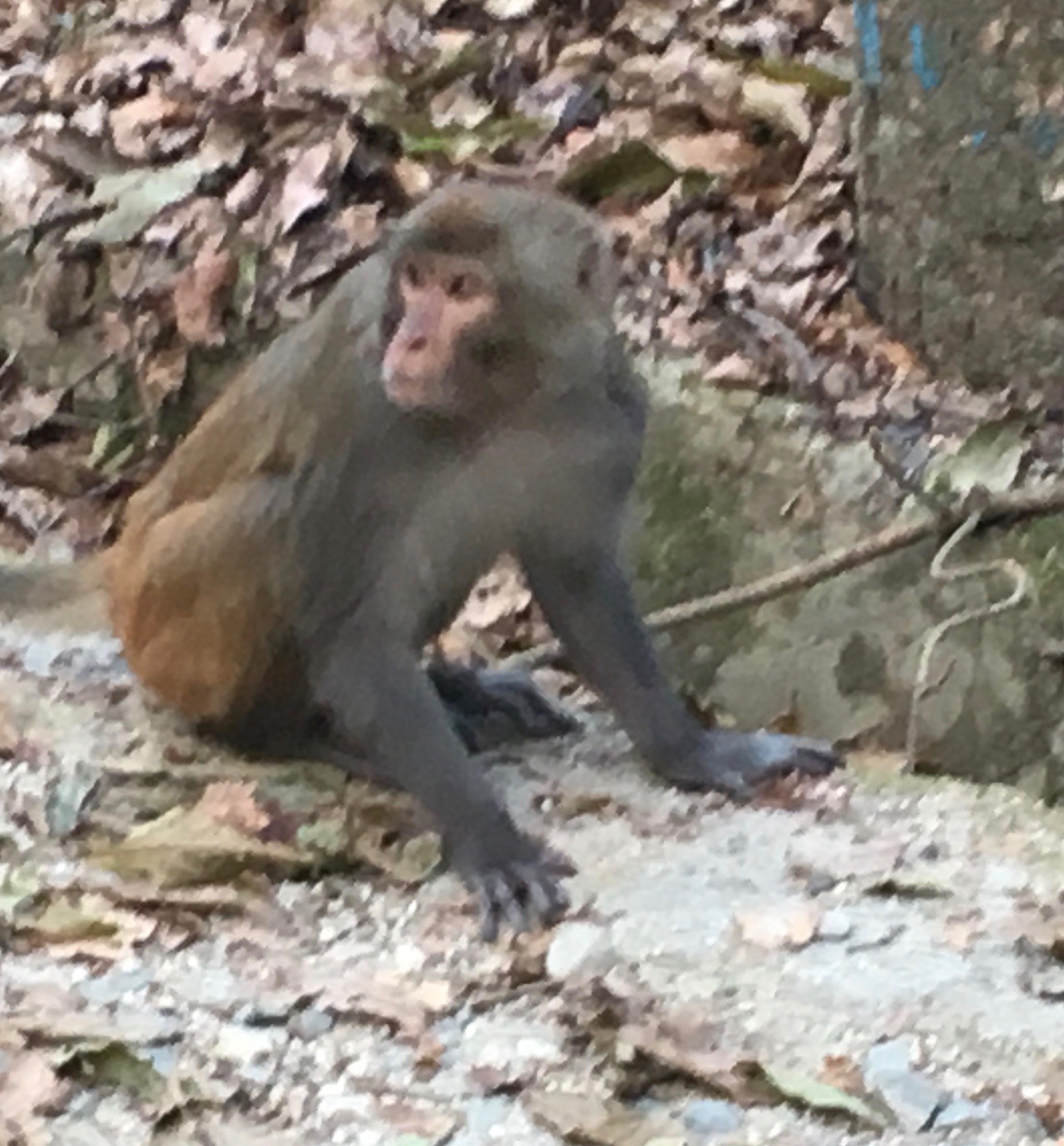
Asami monkey

Asami monkey

I recently “climbed” Shivapuri. I have to put that in quotes, because for Nepalis and serious trekkers, this is a “short and easy walk.” For this flatlander, however, it was a serious climb.

Most of the guides describe it as 3-4 hours up and 2-3 down, with extra time needed for photos, lunch, shrine visits, and such. So, it consumes much of one day. My fitbit got a workout, reporting 38,000 steps and 353 flights of stairs. To be fair to flatlanders, it’s not a negligible height–8,963 ft, easily higher than anything east of the Rockies in North America.

The park

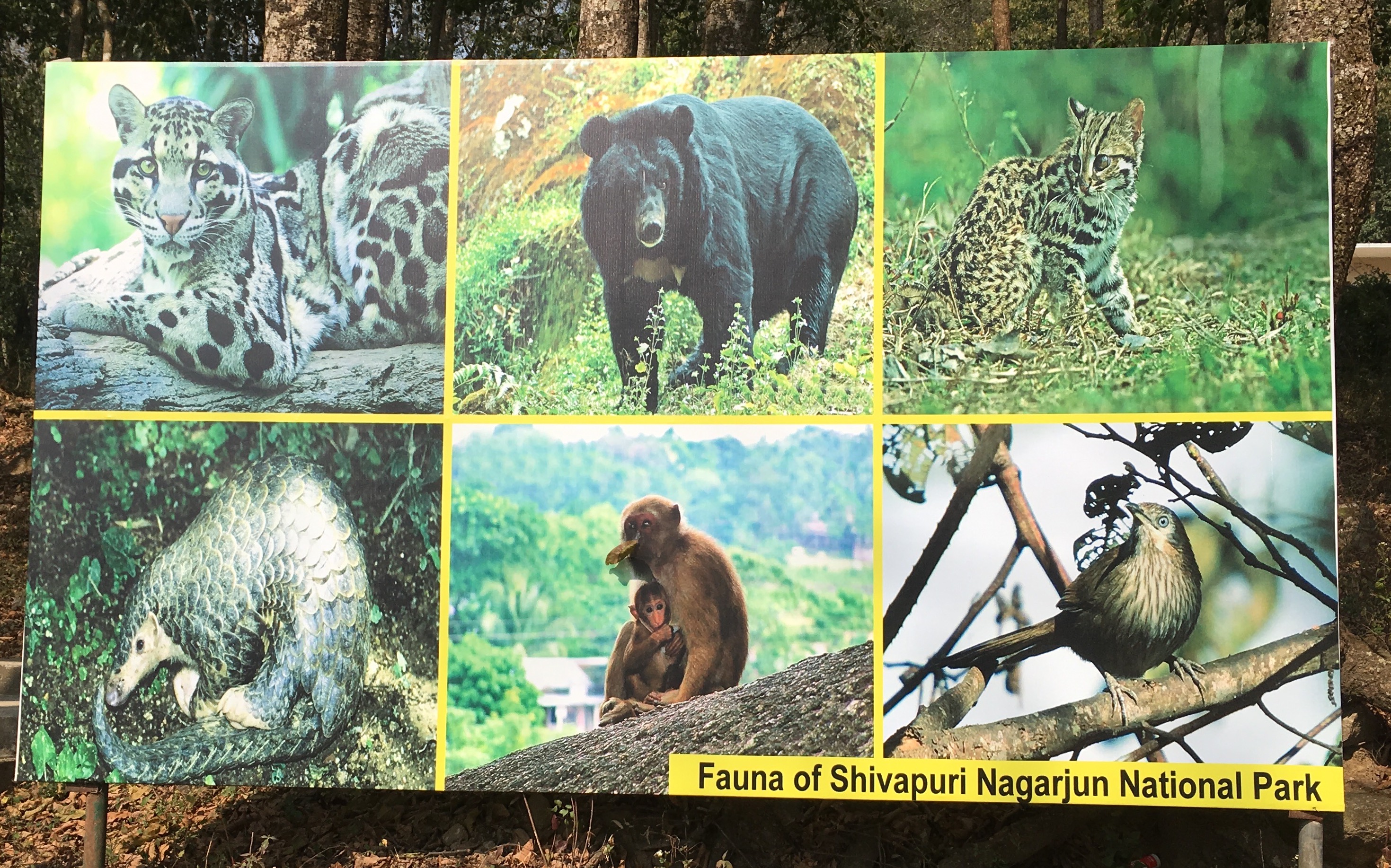
Fauna of Shivapuri

Fauna of Shivapuri

The Shivapuri park is in a beautiful national park, just north of Kathmandu. It’s a destination for watchers of birds, plants, butterflies, Hindu shrines and Buddhist monasteries, and much more.

I learned that Mira Rai had been there the day before my walk, hosting a trail running event. The distances were 25 K, 50 K, and 80 K. I could still see many of the brightly colored ribbons marking the trails for the races. Perhaps you need to walk there to understand why an 80 K (50 mile) run up and down the hills would be a good workout. One man ran directly up and down to Shivapuri peak in one and a quarter hours. That’s a good marathon pace by itself, but on stairs at altitude it’s unbelievable.

Nagi Gomba

Nagi Gomba

Sights

At my more sensible pace, I had a chance to observe more of the natural beauty of Shivapuri. Starting at the Pani Muhan gate, I saw Asami monkeys, a type different from the rhesus monkeys one sees around temples in Kathmandu. There were loud calls from the many warblers in the park, as well as from blue magpies, Bonelli’s eagles, and great Himalayan barbets. I mostly just heard these, but did see kalij pheasants. Beautiful butterflies were everywhere, and mercifully, no annoying insects.

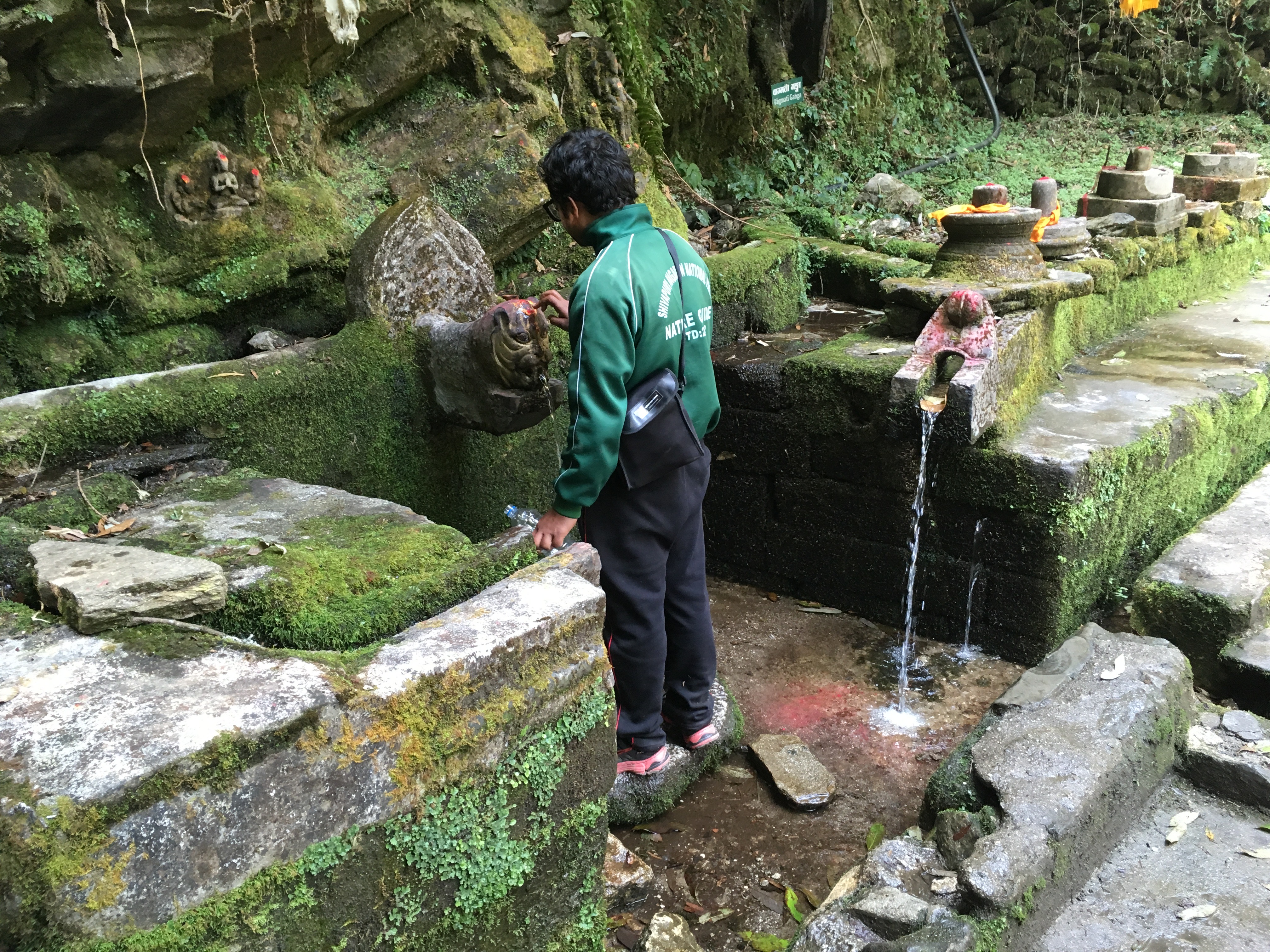
Water source and temple

Water source and temple

There are some magnificent pines at the lower elevation, then a dense forest of laurels, rhododendrons, and oaks heading up.

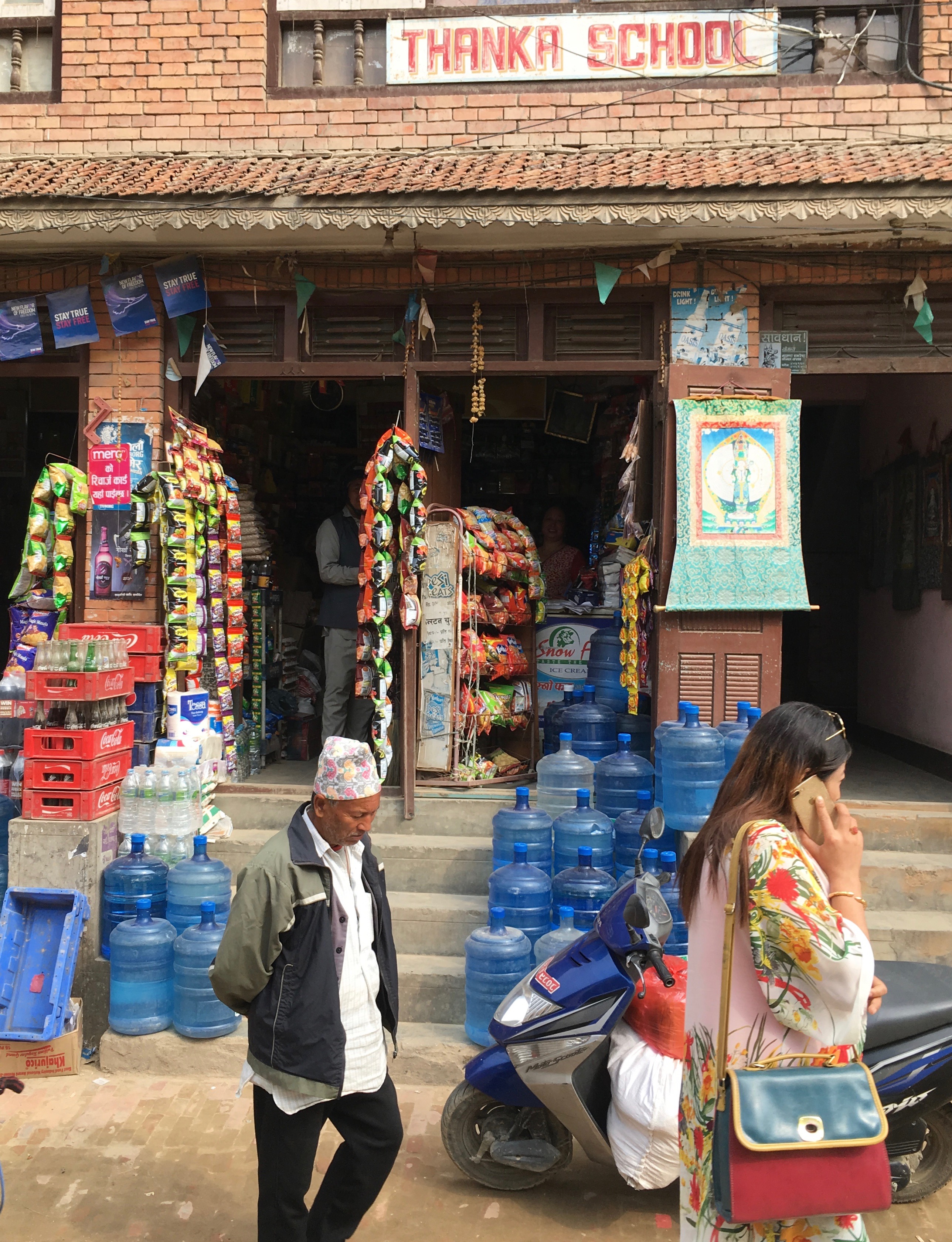
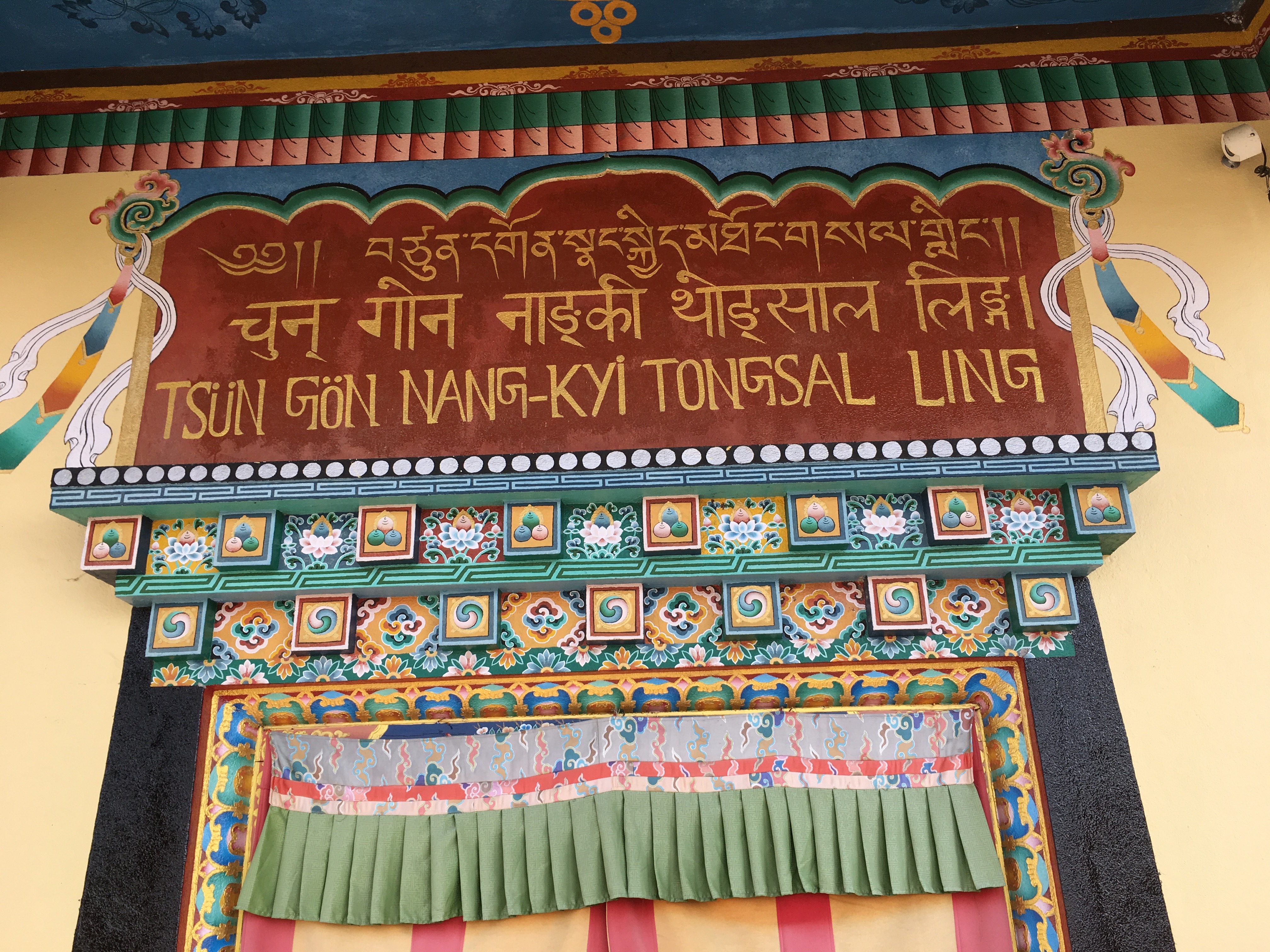
The first major stop is Nagi Gomba, a Buddhist monastery run by nuns. There’s a school for orphans. Although there is still much evidence of earthquake damage, fortunately, not al of the buildings were destroyed. You can also fill up your water bottle with clean mountain water. The photo of the main doorway shows the title in a Tibetan language, in Nepali, and in Tibetan with Roman script.

Signpost

Signpost

My guide

There are mostly helpful signposts marking the way. But they’re not necessary because of the mandatory guide. In one of the photos you can see Badi filling up his water bottle at a shrine. There, he also applied a tilak, along with the prayer – “May I remember the Lord. May this pious feeling pervade all my activities. May I be righteous in my deeds.”

At Shivapuri peak

At Shivapuri peak

Badi, by the way, was an excellent guide, helping to identify many of the unfamiliar natural phenomena. He was also very honest. When I said, “I need to get in better shape,” he replied, “yes, you do.” Seeking a little softer response, I added, “I need to lose some of this belly.” Perhaps I hoped he’d say that I wasn’t that bad for an old man, but instead, I got another, “yes, you do.”

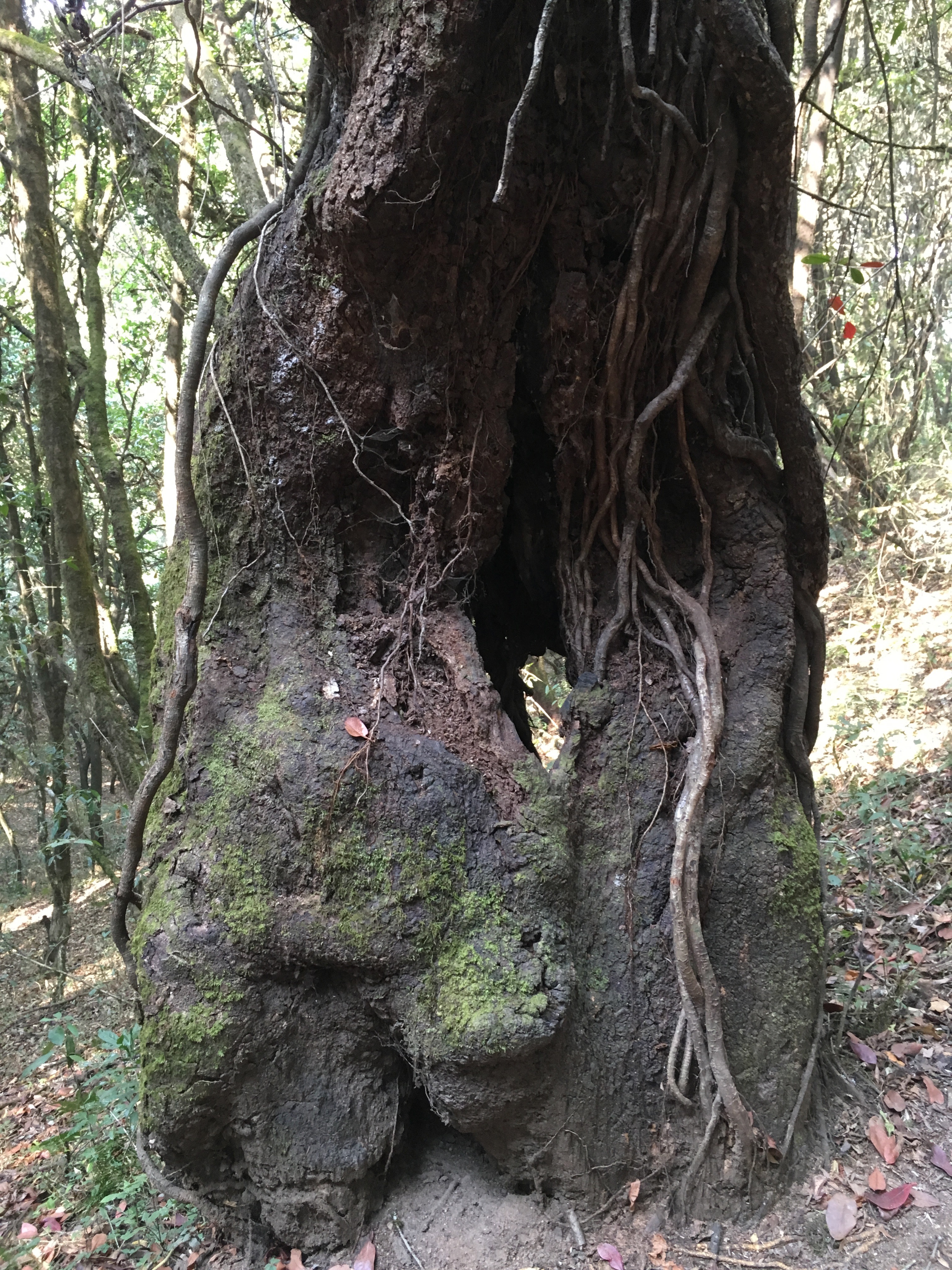
Huge, old oaks

Huge, old oaks

So, I asked whether he’d guided anyone as old as I on this “climb.” He told me about a 65 year old German man. He was a pilot who had a terrible crash, breaking many bones. His doctor told him to take up walking and trekking. I knew what was coming: “He was in much better shape than you.”

The top

I struggled a bit near the top. I was probably dehydrated, getting a little dizzy. At one point the mica on the ground and in the rocks presented me with a beautiful kaleidoscope of flashing lights. I enjoyed that for a moment, until I remembered that I needed to be paying attention to the walking.

Many beautiful butterflies

Many beautiful butterflies

We managed to reach the summit and paused for a brief lunch. Unfortunately, there was cloud cover, so we didn’t get the view of the Himalayas that many people count on as their reward for the climb.

Also, I felt a little sick, which may have had something to do with the mica kaleidoscope. So I walked back down a short way to take care of business in the woods. When I came back up to the peak, I realized that I had technically ascended it twice in one day, something few people do. My pace was glacial and my form was embarrassing, but I made it, and twice!

Kumbeshwar Technical School

KTS is a place very close to my apartment in Patan and is now close to my heart as well. I’ve visited several times and want to learn more about it.

KTS was established in 1983 to assist the local community of street sweepers. They were “untouchables,” with little education or employment opportunities.
Carpentry training

Carpentry training

The project began with a childcare project, followed by adult literacy classes, and a nutrition and health clinic. Soon, a carpet weaving training program was established to expand employment possibilities. A production unit grew out of that, which provided funds to start a primary school in 1987.

Today, there’s a nursery, a free daycare center for employees’ children, and an orphanage. There are now training programs for knitting and carpentry as well.

On the production side, there is no child labor involved and all the work adheres to Fair Trade policies (KTS is a founding member of Fair Trade Group Nepal). Products are sold abroad by organizations such as Traidcraft, Serrv, Ten Thousand Villages, and Oxfam.

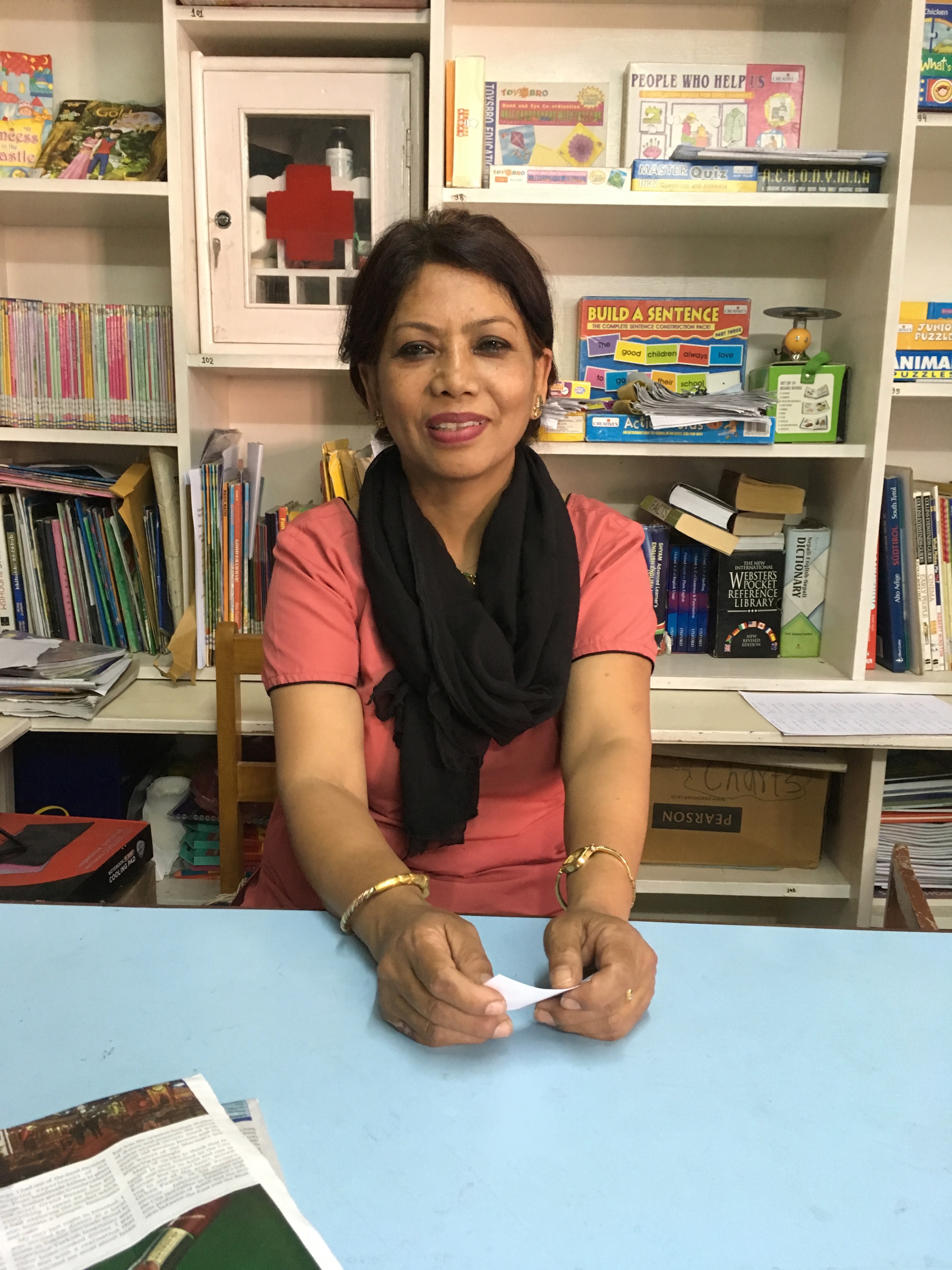
The library (and social studies teacher)

The library (and social studies teacher)

The project provides an allowance during training, and employment afterwards. Over 2000 businesses have been started by graduates, some in Kathmandu, and others back in villages.

There is a small shop displaying carpets, knit hats and mittens, furniture and small wooden items. There’s even a cookbook for Nepali food, now in its second edition.

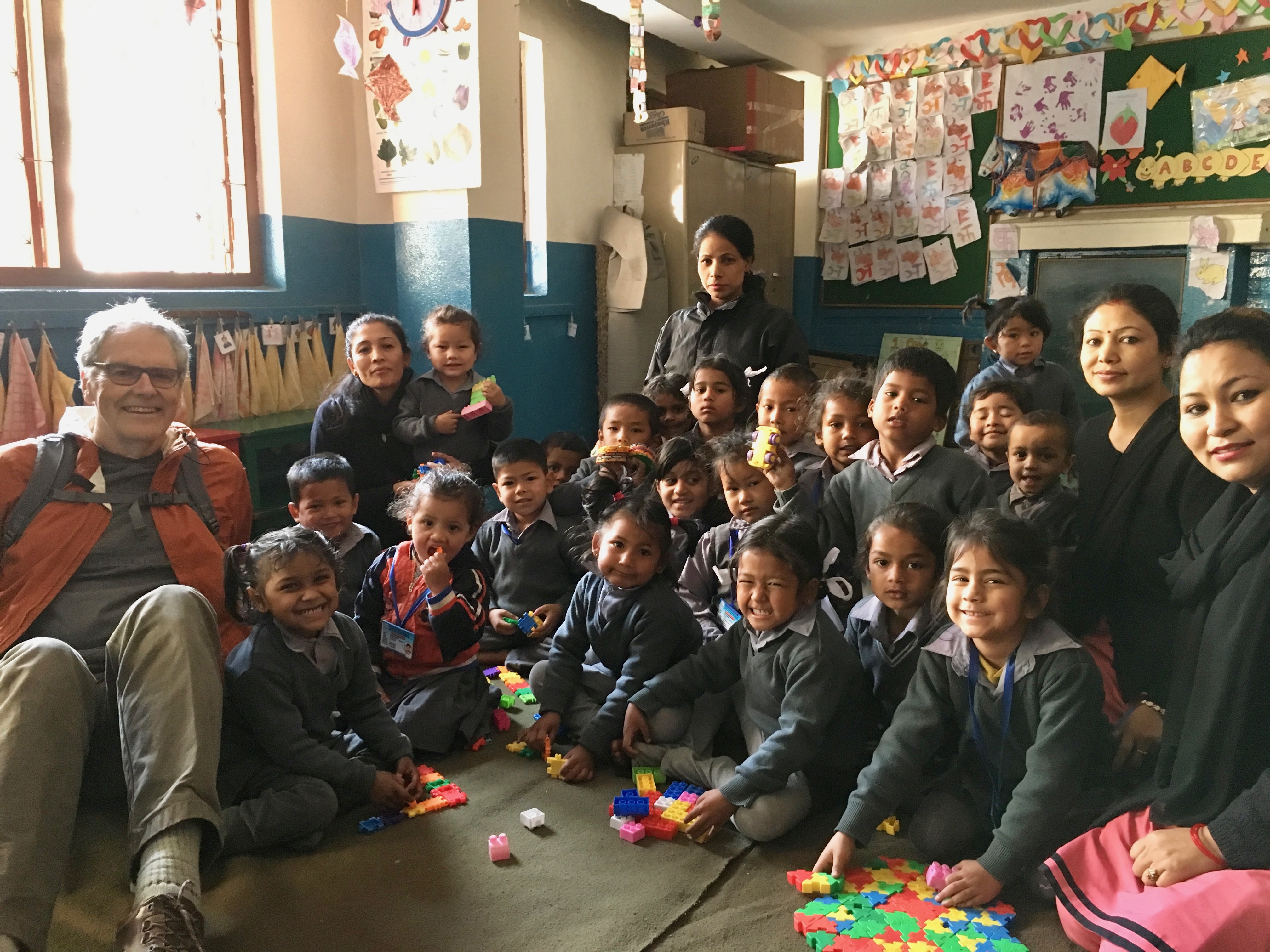
Nursery school

Nursery school

The program keeps growing and changing, but throughout there’s a focus on fairness, opportunity, economic security, local empowerment, literacy and learning.

Courtyard life

Dhumbahal stupa, Patan

Dhumbahal stupa, Patan

My apartment is on the second floor (US, third) near Kumbeshwar Temple complex in Patan. It’s in one of several 4-6 story buildings surrounding a small courtyard, called Dhumbahal Square.

Thus far, it’s similar to the courtyard behind the flat in London where we stayed with our good friend Jane on the way to Nepal. That courtyard had well-groomed bushes and trees, walkways, and convenient benches. It offered a peaceful respite from city life.

Objects

Family

Family across the way

The one in Patan is a different story entirely. It’s 100 feet square, about the same size as the average US suburban lot–1/4 acre. But in that 1/4 acre there’s more to see than anyone can absorb.

There’s a Buddhist stupa in the middle. Around the perimeter one finds a communal water source, a small Hindu mandir, a tiny shop that miraculously produces any item you can name, a beauty parlor (and training center), a (motor)bike wash and repair center, a small convenience store, a weather station on top of one of the buildings, and other establishments I haven’t identified yet.

Tree blossoms for her hair

Tree blossoms for her hair

Water is brought by truck to fill large, black plastic tanks on the top of each building. That water becomes the tap water, getting its pressure from the height of the tanks. It’s filtered, but most people drink bottled water for safety. Mine comes in 20 liter clear plastic jugs, which fit into a dispenser tank.

Small mandir

Small mandir

The ground is covered about a third with bricks. Some of those form a sort of patio, others are arranged in a curving pattern as if they knew exactly where most people would like to walk. There’s also a slate paved area, some concrete, lots of bare ground, and amazingly, a little grass. I haven’t figured out why one surface is one place rather than another, but it all seems to work.

Activities

The mystery hole

The mystery hole

As remarkable as some of these objects may be, it is the activities around them that cause one to sit mesmerized on the balcony, just watching.

Baby photos

Baby photos

A woman tosses millet in the air to remove chaff; another takes an offering with candles and flowers to the temple; a man splashes water on the ground to reduce the dust; boys roll an abandoned motorcycle tire around the stupa, as two girls walk around the same monument turning the prayer wheels; a young man washes his motorcycle; an older man gets an open-air shave and haircut; a young couple take endless photos of their young child; women hang laundry and water flower pots; children play rock pitching games. It’s notable how often fathers are caring for children. One older boy (12) runs to pick up a younger one (6) who’s fallen. He comforts him and brushes the dust off his pants. The children also sing and dance.

Preparing vegetables

Preparing vegetables

Meanwhile, there’s construction. Although Patan may be the oldest city in the Kathmandu Valley, dating back more than two millennia, and the courtyard is in one of its oldest parts, there’s a feel of new building everywhere.

The wedding party

The wedding party

Some of this is needed re-construction after the damage of the 2015 earthquake. But workers are building new apartments, too, reflecting early gentrification of the area. One man digs a mysterious hole that ends up being 8 feet deep with surprisingly straight sides. Later, small boys use the dirt from the hole as a site for play and the uncovered rocks for their pitch & toss games. A small crew puts up a cell tower, without using any harnesses or visible safety equipment. The construction goes on amidst the young children playing, older ones coming and going from school, adults working and relaxing.

Installing the cell antenna

Installing the cell antenna

Observing all of this is like a watching a complex movie, except it’s one that is showing 360° around, with sights and sounds, but also with tastes and smells, touch, heat and cold.

Schedule

There is no beginning to the courtyard’s day; one moment segues into the next 24/7. A dog may start barking at 2 in the morning and soon have dozens of others to talk with. I can’t give a full account of the day, as I’m mercifully learning to sleep through most of it. But sometime around 5 in the morning is an important inflection point.

Morning rituals

Morning rituals

That’s when I hear the first temple bells–one is deep and loud, two are middle volume, but one of those is high pitched. There are several smaller ones, too. If the dogs weren’t already going they soon make up for lost time. Motorcycles start up. Human voices come in, conversing rapidly or yelling. Before long children are running and squealing about. In little gaps, one can hear pigeons cooing, crows cawing, and songbirds singing. The roosters manage to make themselves heard above it all.

This continues throughout the day, although each hour has its distinctive character. There are sounds of children laughing, singing, and squealing at play from the nearby school. There’s even a time in the afternoon when all but one dog decides it’s too much trouble to bark anymore. That one gives a few desultory yaps, but I can tell that his heart isn’t in it. In the evening, there’s the dinnertime chatter all around, and later, Nepali pop music.

One day, the signature event was a wedding. Although it seemed to involve most of the courtyard and many visitors, it didn’t stop all the other activities. We saw a 50 foot long tent being erected and red plastic chairs being set up in rows. Soon, a 14-piece band appeared. There were of course many photos, of babies and children and women in beautiful saris. There were also a number of young men in what must be called dandy outfits and poses.

Chaos and peace

The sign to turn into the courtyard

Lions signaling the turn into the courtyard

On first encounter, the chaos of the courtyard is disturbing–too many scary dogs snarling, too much noise, too many strange sights, sounds, and smells, too many chances to trip on rocks or broken pavement.

But the courtyard is actually a very safe place, away from the street traffic and noise, and where people know one another.

After a while it all, or most of it anyway, begins to make sense. There are patterns and relations that fit into a larger whole. I begin to recognize faces and they mine. One child loves to talk in broken Nepali/English; another seems too shy to say anything. The apparent chaos is actually welcoming, enriching, overcoming difference. There’s peace in the bustle that is less apparent in quiet solitude.

Peace does not mean to be in a place where there is no noise, trouble, or hard work. It means to be in the midst of those things and still be calm in your heart.

Rubber band chain adventures

Courtyard friends

Courtyard friends

The six kids above are the ones I see most often in the courtyard. On Sunday they were shooting a rubber band chain onto the stupa. It was a good game except that the chains would hang up out of their reach.

They could climb the lower part of the stupa (left in the photo), but the upper part is a smooth dome. Also, there are many electric wires that can catch the chains. You can see some of those in the photo.

The children invited me to shoot one of the chains. I was a failure compared to any of them. But I had a super power, about four feet extra reach. So I climbed up to recover the captured chains.

When I asked to take a photo, the girl in red had just gotten on her bike and was about to ride off. She called out “Wait! Wait!” to be included.

This photo says a lot to me. Notice the arms around each of the twin boys. That’s very common here, as well as the mutual efforts to include everyone in the play, even me. Notice also the generous, but slightly mischievous smiles on each of their faces.

You can see one of the rubber band chains in the left hand of the 12 year-old boy.

As I left, I tried my very best Nepali, “Pheri bhe-ṭaūlah (see you later).” The oldest girl said essentially, “Huh?” I was saved by the same 12 year-old boy, who explained that I was trying to say “Pheri bhe-ṭaūlah.” They all smiled and waved goodbye, wondering what I could have been saying.

The photo is a large format. If you click twice on it, you can get a closer view.

National Botanical Garden

I had a wonderful day at the National Botanical Garden, about half an hour by motorized transport south of Patan, in Godawari. It lies below Mt. Phulchwoki (2715m), which is the highest peak in the Kathmandu valley. It’s an instant relief to be in a quieter place with cleaner air. Beyond that, the garden is a pleasant place to walk with many interesting specimens and layouts.

Some of the grounds are relatively wild and undeveloped, but most are organized into special gardens, such as a typical Nepali terrace garden, with a Nepali style stone tap at the top, a water garden, a fern garden, a Japanese garden, a rock garden, a lily garden, and a Conservation and Educational garden for students and scholars.

Posing for photos in the Japanese garden

A heavy load of greens

Family playing along the creek

Egret in the terrace area

School groups

Flowers and goats in the distance

The entry complex, with a pleasant, informal restaurant

Nepalese broom grass (Thysanolaena); flowers used to make brooms

Old vines in an arbor

Small stream running through the Botanical Garden

Ornamental cabbage?

One of many special display buildings

Ang Zangbu’s Story

The cover of Zangbu’s Story, by Ang Zangbu Sherpa with Diane Scott, shows young Zangbu, a Sherpa boy, gazing at an airplane. Piloting a plane is to become his dream, but to achieve that he has to endure hardships few of us can imagine, and he needs to go to school.

The book describes this true journey. The illustrations by Malcolm Wells alone make it a classic.

His first school is a Sherpa school near Lukla, six hours from his home. It is expected that in two years he is to become the one in the family to learn to read and write, to hold important posts in the village, and to understand land deeds often used to steal land from illiterate Sherpas.

But it is not easy. He has no support at home, no mentor. He must work beforre and after school:

At sherpa school, grade 1

At Sherpa school, grade 1

He struggles not because he is lazy, but because he is working so hard-at pulling weeds and hauling manure in the fields. From the moment it is light until the school bell rings, then from the time he gets out of school until dark–work. But not schoolwork. That must be done, if it is done at all, by the dim light in his cousin’s single open room, where a place by the fire is assigned by age.

Zangbu’s story  is not about violent struggles with wolves, or imagined struggles with yetis, though there is some of that. It’s about growing up with hunger, hard work, and abuse rather than with toys and creature comforts. It’s about perseverance and the ability to learn from difficulty, not to become discouraged. It’s also a richly detailed account of the educational challenges for children in mountain villages in Nepal.

Although written for children, Zangbu’s Story is a book that could inspire and teach any adult as well.

Welcome to Nepal

Tourist Police NepalIt’s hard to imagine a more welcoming place than Nepal. People of all ages greet each other and visitors with a big smile accompanying a “Namaste.”

Tourists are still rare enough in many areas that little children are fascinated–staring, giggling, and waving. Their parents show then how to bring their hands together for “Namaste,” and get a big smile when you reciprocate.

There are welcome signs everywhere, on mats, doorways, posters, wooden carvings, and painted cloths. The signs are in Sanskrit (svāgatam) or Nepali (swagat cha), although those welcomes usually employ the Devanāgarī script (स्वागतम्).

There are also many welcomes in English. These often use two words, “wel come,” or hyphenation, “wel-come.”

Officialdom, even the police, also displays a welcoming attitude. Listen to the poem below, from a card distributed by the Tourist Police.

Always at your service

If you are lost or confused, we provide clarity.
If you are nervous or scared, we encourage strengthening your confidence.
If you need information, we provide them.
If you don’t know where to go, we guide you.

We are there when you need us.

Dial 1144.

Let us serve you.

A Morning Walk Through Time

The old railbed, 100 miles from Boston

At the start on Lecount Hollow Rd.

Peter Brannen’s Rambling Through Time is one of those attempts to make the universe comprehensible, which is fun to try but ultimately fails for me. It’s just too big for my brain.

Brannen uses geologist Robert Hazen’s model for a walk, in which each step represents a century back in time. Starting on NY’s Upper West Side, he can’t even get out of the building (the Hayden Planetarium) before he’s passed all of human history. So much for those who think 10,000 BC to the present is a long time! The walk continues at this pace to the Pacific Ocean, but still doesn’t reach the early Cambrian period, when multicellular life as we know it began. And doing that would still represent only 10% of the earth’s history.

At the start on Lecount Hollow Rd.

The old railbed, 100 miles from Boston

For our annual Imbolc walk (a few days late, on Feb 6), Daniel and I decided to pick up the pace. At Hazen’s speed we’d reach the appearance of grass by the end of the Cape Cod Rail Trail, but would not see the first large mammals, much less the dinosaurs, or anything else of interest. To get reptiles, fish, insects, trilobites, and so on, we need to go much faster. See [trail map].

The extended trail runs 25.7 miles, so we used that distance as the benchmark. We increased the pace by 100 times. That means that each step is a century of centuries (10,000 years) and each mile is 21 million years.

Frozen ephemeral pool

Frozen ephemeral pool

We’d need 50,000 steps to reach the early Cambrian. Maybe 60,000, or more if our stride flags near the end. But at this pace it would take just one step to cover all of human history (the wheel, agriculture, writing, pyramids, Buddhism, geology, the Beatles, etc.). The first humans show up at 1/4 mile, about 4 minutes into our 7 hour walk.

A view along the trail

A view along the trail

Starting the walk at LeCount Hollow Rd, 3 miles gets us to the Eastham border, which matches the KT extinction that wiped out most of the dinosaurs who didn’t have feathers or know how to fly. Somewhere in Orleans, Pangaea split up. It had formed 7 miles earlier in Harwich, before the great Permian extinction. Seymour Pond in Brewster/Harwich takes us to the first large reptiles and sharks. The South Dennis trailhead on Rt 134 gets us to the first vertebrates. At the new start of the trail in Yarmouth we see the first multicellular life of the types we know today. (There are earlier multicellular skeletons in our closet.)

Beautiful lichen

Beautiful lichen

If we had the time, Stamford, CT would take us back to the beginning of the earth. I suppose that we could adjust the pace so that the endpoint would be the Hayden Planetarium, but the arithmetic for that hurts my head.

  1. We started the walk this year a little after 7 on the morning of Tuesday, February 6 and finished 6.5 hours later. Our pace was around 3.5 mph. This was to the South Dennis trailhead at the start of the Silurian period

    Now we need to think about attempting the extended trail next year!

      1. 21 mya: Quartenary (1.6 mya), humans [Seashore HQ, Marconi area]
      2. 42 mya: Grande Coupure, Mongolian Remodeling [Fresh Brook]
      3. 63 mya: Tertiary (65 mya), large mammals, angiosperms, grass [Eastham border]
      4. 84 mya: late dinosaurs [Brackett Rd]
      5. 105 mya: similar to today, except with dinosaurs instead of people [Minister Pond, before Rt 6 crossing]
      6. 126 mya: [Samoset Rd, near Salt Pond]
      7. 147 mya: Cretaceous (144 mya), flowering plants [Gov. Prence Rd]
      8. 168 mya: [Orleans Rotary]
      9. 189 mya: Pangaea splits up [Orleans Center]
      10. 210 mya: Jurassic (208 mya), birds, dinosaurs are dominant, conifers [Namskaket Creek]
      11. 231 mya: [before Nickerson State Park, ℗]
      12. 252 mya: Triassic (245 mya), reptiles dominant, mammals, cycads [Linnell Rd]
      13. 273 mya:
      14. 294 mya: Permian (286 mya) [Long Pond Rd, Rt 137, ℗]
      15. 315 mya: [Sheep Pond]
      16. 336 mya: Pangaea forms [Seymour Pond, Black’s Pond]
      17. 357 mya: Carboniferous (360 mya), tree ferns, gymnosperms, large cartilaginous fish, reptiles [Hinckley’s Pond, ℗]
      18. 378 mya: [Katie’s Pond, after Rt 6]
      19. 399 mya: [Great Western Rd, after Bike Rotary]
      20. 420 mya: Devonian (408 mya), amphibians, land animals [Sand Pond, West Reservoir][/caption]
      21. 441 mya: insects, jawed fish, land plants
      22. 462 mya: Silurian (438 mya), terrestrial plants [South Dennis Trailhead, ℗]
      23. 483 mya:
      24. 504 mya:
      25. 525 mya: Ordovician (505 mya), vertebrates, algae flourish, bivalves
      26. 536 mya: Cambrian explosion (541 mya); first multicellular modern phyla, trilobites, fungi [Yarmouth trailhead, ℗]
      27. In the times of the old ones: Ediacaran life forms, green algae, cyanobacteria, bacteria, eukaryotes (2-3 bya), amino acids


Nature as curriculum: The Wellfleet Harbor Conference

Wellfleet Harbor

Wellfleet Harbor

The annual State of Wellfleet Harbor Conference was held at the Wellfleet Elementary School on November 4, 2017. See the schedule here.

This was a learning event throughout. Janet Reinhart started off with a reference to Wallace Nichols’s Blue Mind: The Surprising Science That Shows How Being Near, In, On, or Under Water Can Make You Happier, Healthier, More Connected, and Better at What You Do. Before we could become complacent about that, we began to see the many threats to the water around us.

Elizabeth McDougall (R) and coworkers from the Cape Cod National Seashore

Elizabeth McDougall (R) and coworkers from the Cape Cod National Seashore on estuarine restoration (water quality)

Continuing what’s now a 15-year tradition, the conference showed the complex connections among trout, whales, menhaden, horseshoe crabs, shellfish, seals, terrapins, sunfish, eel grass, phragmites, bacteria, protozoa, other living things, the land, sea, and air. Most notably, it considered the impact of these diverse aspects of nature on people. In every presentation or poster, we saw the major ways in which human activity affects other aspects of nature.

Presentations at WES

Presentations at WES

The Harbor conference is at once depressing and inspiring. It’s depressing as it details the many ways in which humans damage the beautiful world we inhabit, through greenhouse gas emissions causing global warming, increased storm activity, and sea level rise, pollution of many kinds, black mayonnaise, habitat destruction, and more. But it’s inspiring to see the dedication of people trying to preserve what we can, and to learn so much about the ecology of the unique region of Wellfleet Harbor.

Americorps workers helping serve Mac's clam chowder

Americorps workers helping to prepare Mac’s clam chowder for the lunch

The conference is billed as an opportunity to hear about the latest research, a task it fulfills admirably. Beyond that, I see it as nature school, or nature as curriculum. Participants, including volunteers, fishermen, students, town officials, and staff of the Mass Audubon, the National Park Service, the Center for Coastal Studies, and other organizations, come to report on what they have learned.

The sessions are not simply reports. For example, Geoffrey Day and Michael Hopper spoke for the Sea-Run Brook Trout Coalition. They’re studying the history of anadromous trout in the area and whether traditional runs could be restored. The research is part ecological, looking at the hydrology of Fresh Brook and part historical, using archival data. The presenter, Day, asked for listeners to share any family accounts they might have–letters, maps, and so on– which might document the conditions for the trout population from a century or more ago.

Inquiry in and for nature

Inquiry in and for nature

Whether for brook trout, or many other examples, investigation thus becomes collaborative, a community activity. Moreover, in each case, participants ask “what can be done?” Sometimes the answer is to create, which may be an aesthetic response, political dialogue, collective action for the environment– solar energy, harbor dredging, dam removal, pollution monitoring, and always, more research. Participants continue then to discuss and to to reflect on what they experience, thus enacting an inquiry cycle of learning.

You might find similar activities at many conferences. But the Harbor Conference stands out in terms of the collaborative spirit among presenters and audience and in the ways that knowledge creation is so integrated with daily experience and action in the world.

Poster on monitoring diamondback terrapins nesting on the Herring River

Poster on monitoring diamondback terrapins nesting on the Herring River

This learning was not in a school or a university; there were no grades or certificates of completion. There weren’t even “teachers” or “students” per se. However, by engaging with nature along with our fellow community members, we explored disciplines of history, politics, commerce, geology, biology, physics, chemistry, meteorology, and more. Nature itself became our curriculum guide.