US suppresses minimum wage in Haiti, and more

The release of 1,918 Haiti-related diplomatic cables by WikiLeaks this summer reveals details of US involvement in Haiti from 2003 to present. Unfortunately, the cables support the historical pattern, just adding in disturbing details. If there is any good news here, it’s of a rare example of responsible journalism. The Nation is collaborating with the Haitian weekly newspaper Haïti Liberté on a series of groundbreaking articles about US and UN policy toward Haiti, which are based on those cables.

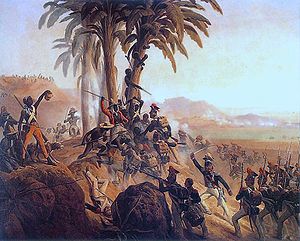
Revolution in Saint Domingue

Revolution in Saint Domingue

The pattern goes back at least to the earliest days of the 19th century, when President George Washington, a slave owner, had Secretary of State Thomas Jefferson grant the first significant foreign aid of the United States to the slave owners in Haiti in a failed effort to suppress the slave revolution there. Following the success of that revolution, the US enforced a diplomatic and trade embargo against Haiti until 1862. From 1915 to 1934 the U.S. imposed a military occupation ostensibly to stabilize the country and keep out Europeans, but also to shape Haiti into a profitable neo-colony.

As popular resistance to occupation grew, the U.S. withdrew and shifted its support from 1957 to 1986 to the fascist Duvaliers, father and son, and their Tonton Macoutes paramilitaries. After suffering from years of bloody military coups and massacres of protesters, Haiti elected Jean-Bertrand Aristide by a landslide in 1990. Aristide called the mass movement that put him into power Lavalas (“torrent” in Kreyòl). His election succeeded despite the millions that the US gave to his opponent, Marc Bazin, a former World Bank Official. In 1991 a US-backed military coup deposed Aristide as president. René Préval replaced Aristide in 1996, but Aristide was re-elected later, replacing Préval in 2001.

Jean-Bertrand Aristide & Mildred Trouillot Aristide

Jean-Bertrand Aristide & Mildred Trouillot Aristide

The newly released cables pick up the details from 2003 on. Because Aristide had disbanded the army in 1995, it was difficult for the U.S. and its allies to organize a coup. On Feb. 29, 2004,  U.S. Special Forces kidnapped Aristide and his spouse, Mildred Trouillot Aristide, taking them to the Central African Republic.

The cables also show how the US, the European Union, and the United Nations supported Haiti’s recent presidential and parliamentary elections, despite the exclusion of Lavalas, Haiti’s largest political party. They agonized a bit about sponsoring an election that would exclude the majority party from participating, about “emasculating” the country, but decided to push through the sham election because so much was invested already in the neocolonial relationship with Haiti.

The US embassy noted that Haiti would save $100 million a year under the terms of  the Caribbean oil alliance with Venezula, called PetroCaribe. The savings would be earmarked for development in schools, health care, and infrastructure. US Ambassador Janet Sanderson immediately set out to sabotage the deal. She noted that the embassy started to “pressure” Haitian leader Préval from joining PetroCaribe, saying that it would “cause problems with [the US.]” As major oil companies, such as ExxonMobil and Chevron, threatened to cut off ties with Haiti, Sanderson met to assure them that she would pressure Haiti at the “highest levels of government.”

Haiti garment workers

Haiti garment workers

Meanwhile, contractors for Fruit of the Loom, Hanes and Levi’s worked closely with the US Embassy to block a minimum wage increase for Haitian garment workers. In a June 10, 2009 cable to Washington, Ambassador Sanderson argued, “A more visible and active engagement by Préval may be critical to resolving the issue of the minimum wage and its protest ‘spin-off’—or risk the political environment spiraling out of control.” After Préval negotiated a deal to create a two-tiered minimum wage—one for the textile workers at $3/day and one other industrial workers at about $5/day, the US Embassy was displeased. David E. Lindwall, deputy chief of mission, said the $5/day minimum “did not take economic reality into account.” It was just a populist measure aimed at appealing to “the unemployed and underpaid masses.”

Think about this when you buy underwear or jeans. The artificially low price you pay, which killed the North American textile industry, goes to pay for shipping, marketing, high executive salaries, and industry profits, with practically nothing for the people who slave to make the clothes. But if you live in the EU or especially in the US, you can know that your government continues to work to maintain those low prices, and resists appealing to the “unemployed and underpaid masses.”

Think about the manipulations of the democratic process in Haiti when people ask why the rest of the world fails to see the wisdom and the glory of Western democracy.

Think also about how much of this has been covered in your local newspaper, or on television and radio news.

People of the rebus

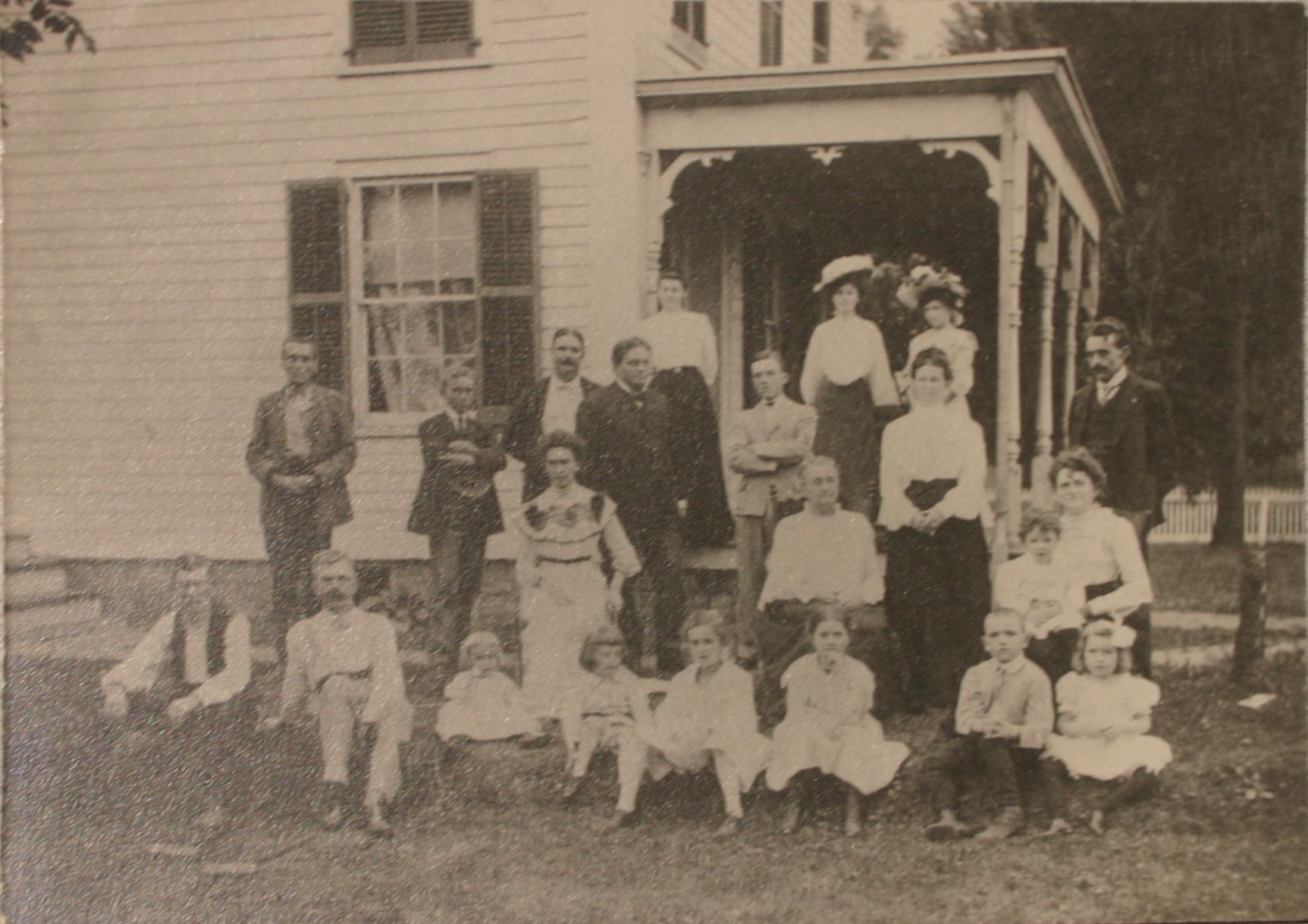
Camp family, 1900

Camp family, 1900

If you’re curious about the rebus baby announcement––Who sent it? Who was the baby? Who was Dorothy?, this may help a little.

Camp family, legend

Camp family, legend

The picture to the left (click to enlarge it) is of the Camp family, around 1900. In the center is Samantha Ann Harris Camp (11), who was known to the others in the photo as “Grandma.” She was born in southern Pennsylvania on July 3, 1835. When she was one year old, her family went down the Ohio by flatboat, then up the Mississippi and Illinois to the beautiful area of Sharp’s Landing, not far from where I’ve done some youth media work in Beardstown and Virginia.

Sharp's Landing area, by JaySRT4

Sharp's Landing area, by JaySRT4

Samantha Harris taught school in Vermont, Illinois, then married Sterling P. Camp and moved with him to his farm in Walnut Grove. They had five children: Thomas (5) William (12), John R. (21), Frank (1), and Anna (13), who surround her in the photo. They later moved to Bushnell. John R. Camp became Editor of The Bushnell Record, the local weekly.

Unfortunately, Sterling died young. One consequence was that Samantha outlived him by more than 40 years and had to raise the five children mostly on her own. She died on January 10, 1913, thirteen years after this photo was taken in front of their family residence in Bushnell.

By the time of the photo, Samantha’s son William had married Jennie Daniels (4), who came from Spokane. Their children were John (20), Glanville (19), and Dorothy (18).

Fannie Daniels (not shown) was one of Jennie’s siblings, the others being Minnie, Annie, and Willie. As far as I know, none of them married or had children. (Aunt) Fannie was the one who created the rebus for Dorothy, about five years after this photo.

What did Dorothy think of it? Did she decode it on her own? Was Fannie in the habit of making rebuses for her nieces and nephews? The Camp family seemed adept at producing offspring; why not the Daniels? How did William from rural Illinois connect with Jennie in Spokane? I need to find a flatboat and go back in time to find out.

Turkey’s Village Institutes

One of the goals I had for my recent trip to Turkey was to learn more about the Village Institutes (Köy Enstitüleri) there. I knew that they represented an innovative approach to expanding opportunities for learning, but that they had come to an abrupt end in the late 1940’s.

I’d read several articles about the Institutes (see below), and also knew that they had been influenced by John Dewey’s report on the Turkish educational system, but I wanted to hear firsthand from Turkish people who had been involved with the Institutes, or had studied them from a Turkish perspective.

The Village Institutes were created to meet a serious educational need. In 1928 (the year of the introduction of the Latin script in Turkey), 82.5 per cent of men and 95.2 per cent of women were illiterate. For 13.6 million people, there were only 4,894 elementary schools and most of those were in the towns, not the villages where most of the people lived (Vexliard & Aytac, 1964).

Between 1939 and 1946 twenty-one co-educational boarding schools were built to prepare primary school teachers. Much of the construction work was done by pupils and teachers. Youth of both sexes, aged twelve to sixteen, who had completed a five-year village primary school, qualified for admission. Their education was free following a pledge to teach in an assigned village for twenty years after graduation.

The duties of the new teachers included:

  • primary education
  • adult education in the villages
  • raising the cultural level of the villages through the distribution of books, educational programs, radio, and vocal, dance, & instrumental music education; the photo above (by George Pickow/Three Lions/Getty Images), shows Turkish teenagers in an Institute presenting a mass concert on the saz, the Turkish national instrument
  • promoting progressive agricultural techniques in the fields, the orchards, and kitchen gardens; the raising of  livestock; rural handicrafts such as ironwork, carpentry, leather work, mechanics, and electricity
  • instruction for adults in child-rearing, housekeeping, needlework
  • the creation and development of rural cooperatives

The graduates of the Institutes were to return to their villages as leaders and reformers. Teachers, students, and villagers in general were to learn practical skills, mostly related to their agricultural economy, new tools for life, and general education.

The Institute approach embodied ideas of Ataturk, Dewey, and others such as integrating theory and practice, focusing on the underserved, working across institutions, and a systemic approach to building a stronger society. Classical education was to be combined with practical abilities and applied to local needs.

The Institutes had a major impact, and many people regret that they were shut down. But there was resistance against this secular and mixed education. Some feared that it would educate ‘the communists of tomorrow,’ a damning statement during the Cold War. Traditionalists questioned the coeducational and secular aspects. Powerful landlords did not appreciate the goal of educating children who could ask “Why?” questions. There were also questions about the organization and preparation of the teachers. By 1953 the Village Institutes had been completely shut down.

I heard strong statements from people who knew about the Institutes and decried their closing. An artist we met, who had been born during the Institute period, said “They killed the Turkish children! They murdered Turkey’s future!”

Others were more reserved, but still felt that a crucial opportunity had been lost. There are estimates of major losses for Turkey in terms of general literacy and economic development still being felt today because of the closings.

From the little I know, it appears that the Village Institutes demonstrated a successful model for education that could be applied anywhere after suitable adjustment for local needs. I’d like to learn more, and have many questions.

For example, all the photos I’ve seen show only (or mostly) young men, even though the Institutes were coeducational. How did the young men and women get along? How did they each experience the Institutes? The graduates would now be in their 80’s. How do they think about that experience today? What did their training mean for the villages where they went to teach?

How do the Village Institutes compare to other grassroots, community-based education initiatives, such as the school at Weedpatch Camp in California, Foxfire, the Misiones Pedagogicas (village literacy program in Spain, which was shut down by Franco), Paulo Freirean projects in many countries, Paseo Boricua, the Reggio Emilia Approach, or the school set up by the schoolboys of Barbiana?

Perhaps most importantly, could or should the Institutes be revived? Or, are there principles we can derive from them that would be valuable for the more urban populations of today?

References

Ata, Bahri (2000). The influence of an American educator (John Dewey) on the Turkish educational system. Turkish Yearbook of International Relations (Milletlerarası Münasebetler Türk Yıllığı), 31. Ankara: Ankara Üniversitesi.

Bilgi, Sabiha, & Özsoy, Seckin (2005). John Dewey’s travelings into the project of Turkish modernity. In Thomas S. Popkewitz (ed.), Inventing the modern self and John Dewey: Modernities and the traveling of pragmatism in education (pp. 153-177). New York: Palgrave Macmillan.

Dewey, John (1983). Report and recommendations upon Turkish education. In Jo Ann Boydston (ed.), The Middle Works: Essays on Politics and Society, 1923-1924. Vol. 15 of Collected Works. Carbondale: Southern Illinois Press.

Eğrikavuk, Işil (2010, April 9). Anniversary marks unfinished story of Turkish village schools. Hürriyet Daily News.

Stirling, Paul (1965, 1994). Turkish village. Canterbury, UK: Centre for Social Anthropology and Computing, University of Kent at Canterbury.

Stone, Frank A. (1974). Rural revitalization and the Village Institutes in Turkey: Sponsors and critics. Comparative Education Review, 18(3), 419–429.

Uygun, Selçuk (2008, November). The impact of John Dewey on the teacher education system in Turkey. Asia-Pacific Journal of Teacher Education, 36(4), 291–307.

Vexliard, Alexandre, & Aytac, Kemal (1964). The Village Institutes in Turkey. Comparative Education Review. 8(1), 41-47.

Wolf-Gazo, Ernest (1996). John Dewey in Turkey: An educational mission. Journal of American Studies of Turkey, 3, 15-42.

Yılmaz, Omer (1977). Schools for developing countries: The Turkish Village Institutes. Educational Planning, 3(4), 72–80.

Adatepe Olive Oil Museum

Heading north from Izmir towards Çanakkale, we came to the Adatepe Olive Oil Museum, in Küçükkuyu. Again, we were the sole visitors at a very interesting site.

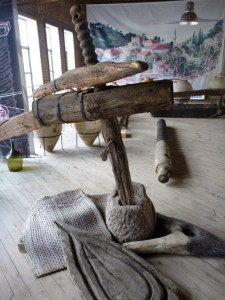
The museum is a restored soap factory designed to display artifacts related to olive culture. It’s the only one in Turkey devoted to the history of olive oil production. The museum extracts oil by traditional cold-press methods in its factory and stores the oil for families in the area.

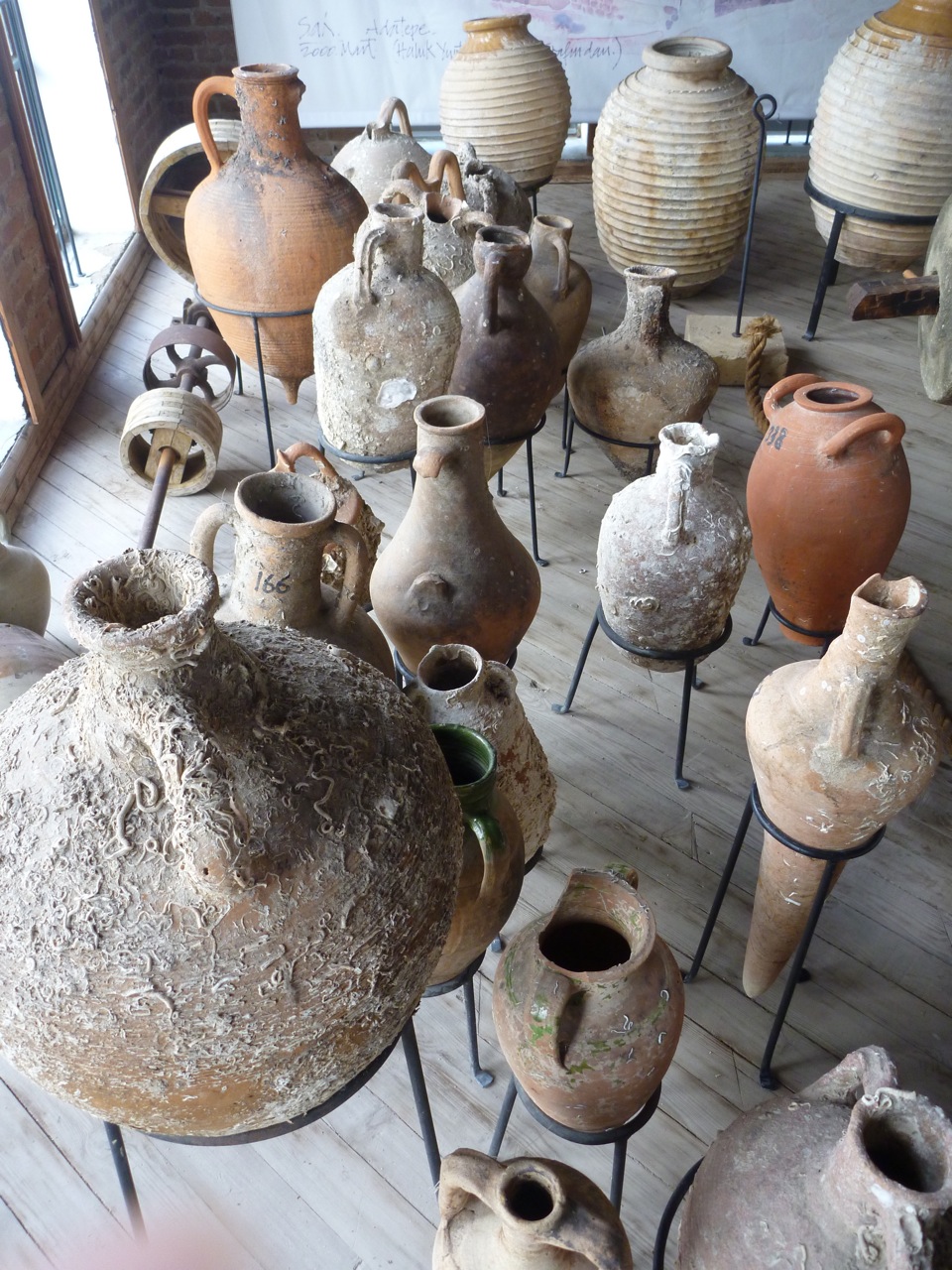
We saw huge granite mills for grinding olives, various tools for pruning and olive picking, baskets for carrying olives, and earthenware jars for olive oil storage.

There are also amphoras from sunken ships of early Mediterranean trade (which never made it to the Bodrum symposium). There are displays of various tools for making olive oil soap, charts of the annual cycle of olive production, maps showing the spread of olives from Syria westward, and writings in Jewish, Christian, and Islamic sacred texts.
Lizards of Labranda

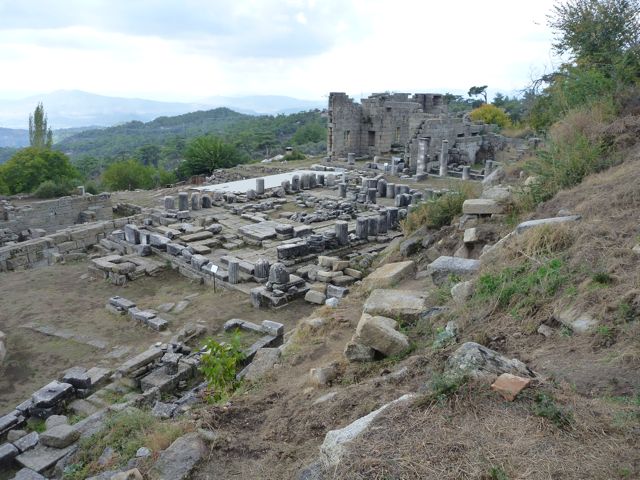
We had another glorious ancient site to ourselves on Sunday. Labra(u)nda (Λάβρανδα) is just north of Milas in SW Turkey.

Admittedly, there is some competition, with Ephesus, Pergamon, Priene, Bodrum Castle, Troy, and numerous other sites less than a day away. Nevertheless, it felt like a guilty pleasure to be able to explore such a fabulous site alone, to drink from the sacred spring, and imagine both the ancient civilization there and the excitement of the first archaeologists to investigate it

Labranda was held sacred by the Carian and Mysian peoples. Mausolus of Mausoleum fame, was a satrap here (c. 377-352 BCE). The local god was Zeus Labraundos (Ζεὺς Λάβρανδος), with a double-headed axe, the labrys (also as in lanyrinth). The site was occupied continously until the mid-Byzantine period.

I have to admit that we weren’t completely alone. There were wild cats, chickens, honeybees from the nearby honey farms, and many fine lizards.

Art scene in Sandima

We went to the (almost) abandoned village of Sandima yesterday.

The story is that it was wiped out three times: once many centuries ago by the bubonic plague, when many residents died and the village had to move; again by the citrus industry, which lured away the young people to work in the orange groves closer to Yalikavak; and a third time, by rampant development, which has covered hillsides with white block houses for people seeking the Mediterranean sun and lifestyle.

The village is just up the hill from Yalikavak. It looks like an old war zone, with abandoned homes, stone walls, watering stations, and a mosque, all now becoming overgrown with vines and scrub vegetation. There are two schools, an older, religious school, next to the mosque, and a newer one with four rooms. The latter looks as if it must have been an attractive site for learning at one time, but now is missing doors, has large holes in the floor, and is covered with graffiti.

It’s possible to follow old footpaths and to go into the buildings, which are not much more than piles of rubble, everything of value having been removed. There’s a second abandoned village just across a ravine.

There are only three residents in Sandima today. One is an 86-year-old man who refused to leave. His story is that he walks into Yalikavak every day, not for work or food, he has his garden and cows in Sandima, but to look for a mate.

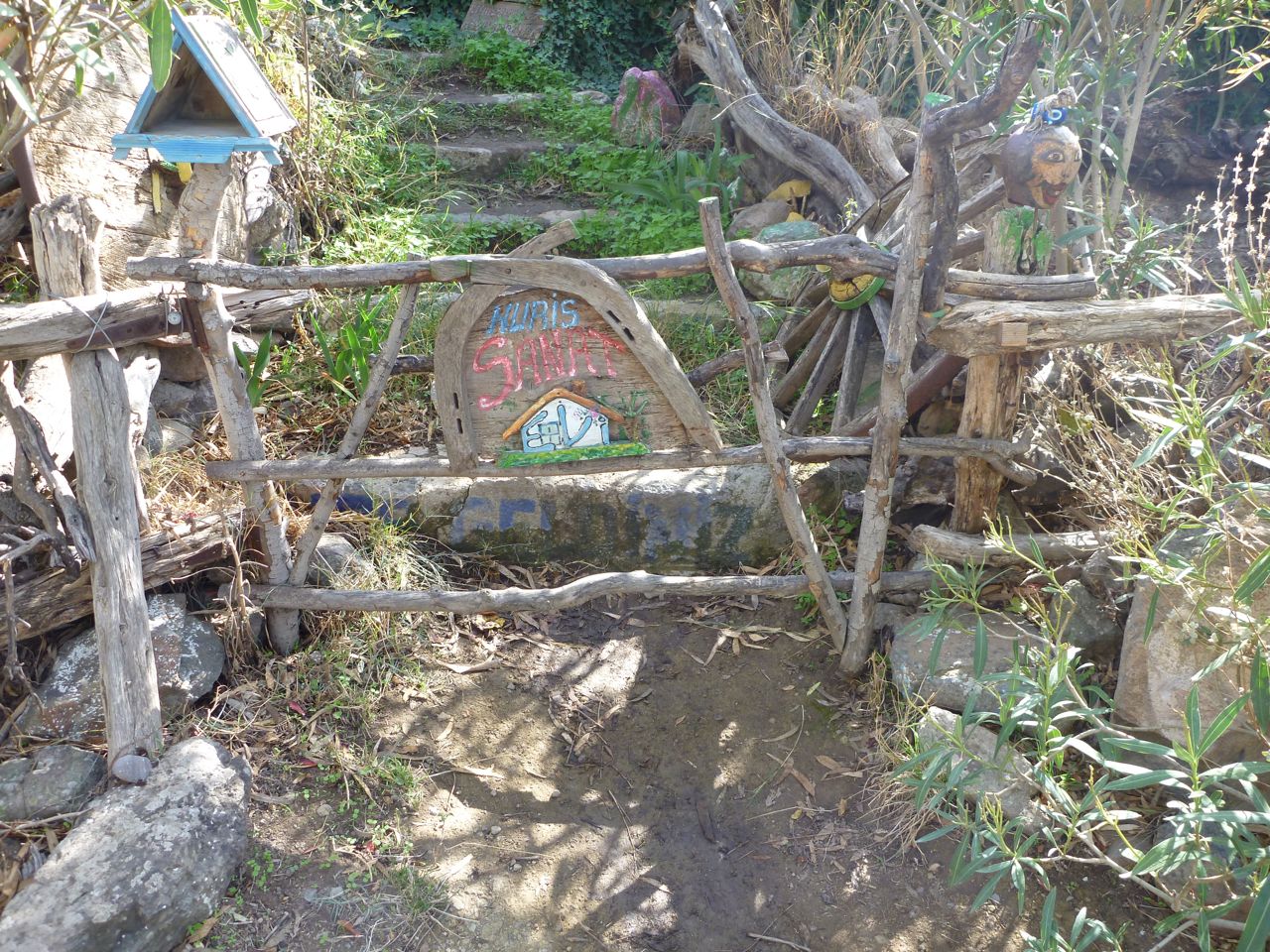
There are also two artists, Ismail Erkoca and Nurten Değirmenci. Ismail gave us a tour of their house, which is the most decorated one I’ve ever seen. Every surface, including floor and ceiling, was covered with art works, or just painted, or festooned with bougainvillea, lantana, hibiscus, and other flowers. Navigating the nooks and crannies, bridges, and hidden passageways required a guide. It soon became clear that if selling artwork were not a business, then giving tours of the house could become one.

The house is called Nuris Sanat Evi, Nur from Nurten and Is from Ismail. Sanat Evi means art house. The story of the name (we heard many stories) is that Nur means holy light and Is means black soot from a fire. So, one needs light to see the darkness.

We enjoyed the adventure of talking with Ismail and getting a glimpse of his life, one far removed from İstanbul, where he was born.

I was pleased to learn more about the Köy Enstitüleri (Village Institutes) from Ismail. I wonder whether the newer school in Sandima was created following John Dewey’s report or somewhat later as a result of the institutes? I’ll save thoughts on that for a future post.

Herodotus today

Yalikavak, Turkey

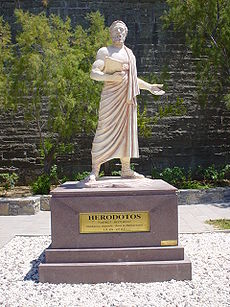
Anyone writing a blog post owes a debt to the “Father of History,” Herodotus.

He was the first to show how write narrative history. And despite his additional appellation as the “Father of Lies,” he did show how to collect information systematically and to assess its validity. It’s noteworthy that his ἱστορία (historía, history), also means inquiry. The delivery channels have changed since the 5th century BCE, but we could still learn from his advocacy of careful methods.

Herodotus lived in Halicarnassus, the site of the famous Mausoleum, one of the Seven Wonders of the World, as well as an ancient stadium and castle. It’s now Bodrum, the booming town and resort area of southwestern Turkey.

We’re staying not far from Halicarnassus/Bodrum, near Yalikavak. Of course much has changed. Our stone cottage has a smaller doorway than he would have wanted, or is it possible that people today are taller?

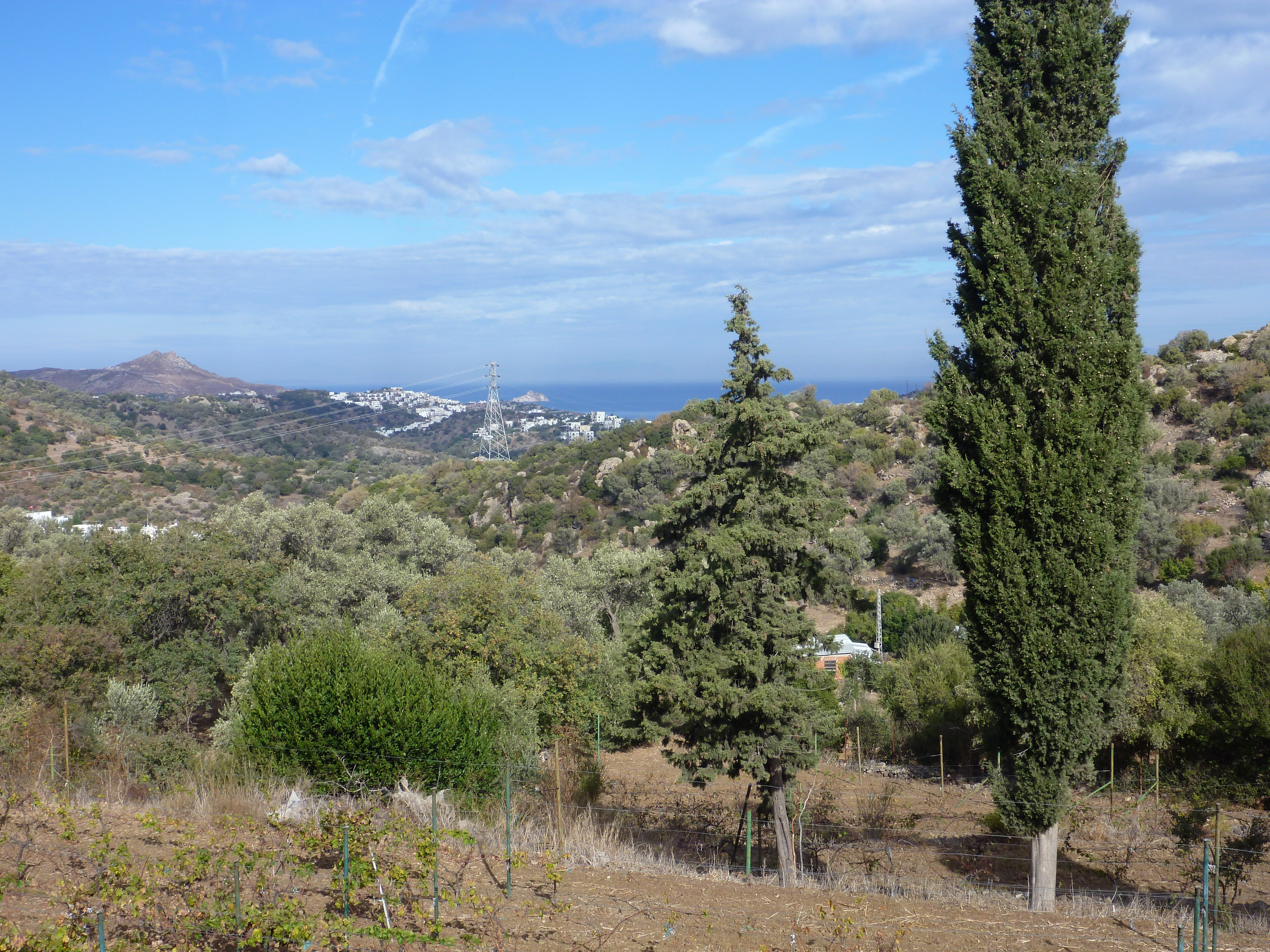
There are still beautiful views of a landscape convoluted by millennia of volcanic activity and earthquakes, and of a limpid Aegean Sea. The vegetation is still of the maquis type, which is found throughout coastal regions in the Mediterranean–dense scrub, with evergreen shrubs, live oak, bay trees, olive trees, lavender, and rosemary. However, the hillsides are now coated with swaths of white block houses, reflecting the rapid development experienced here.

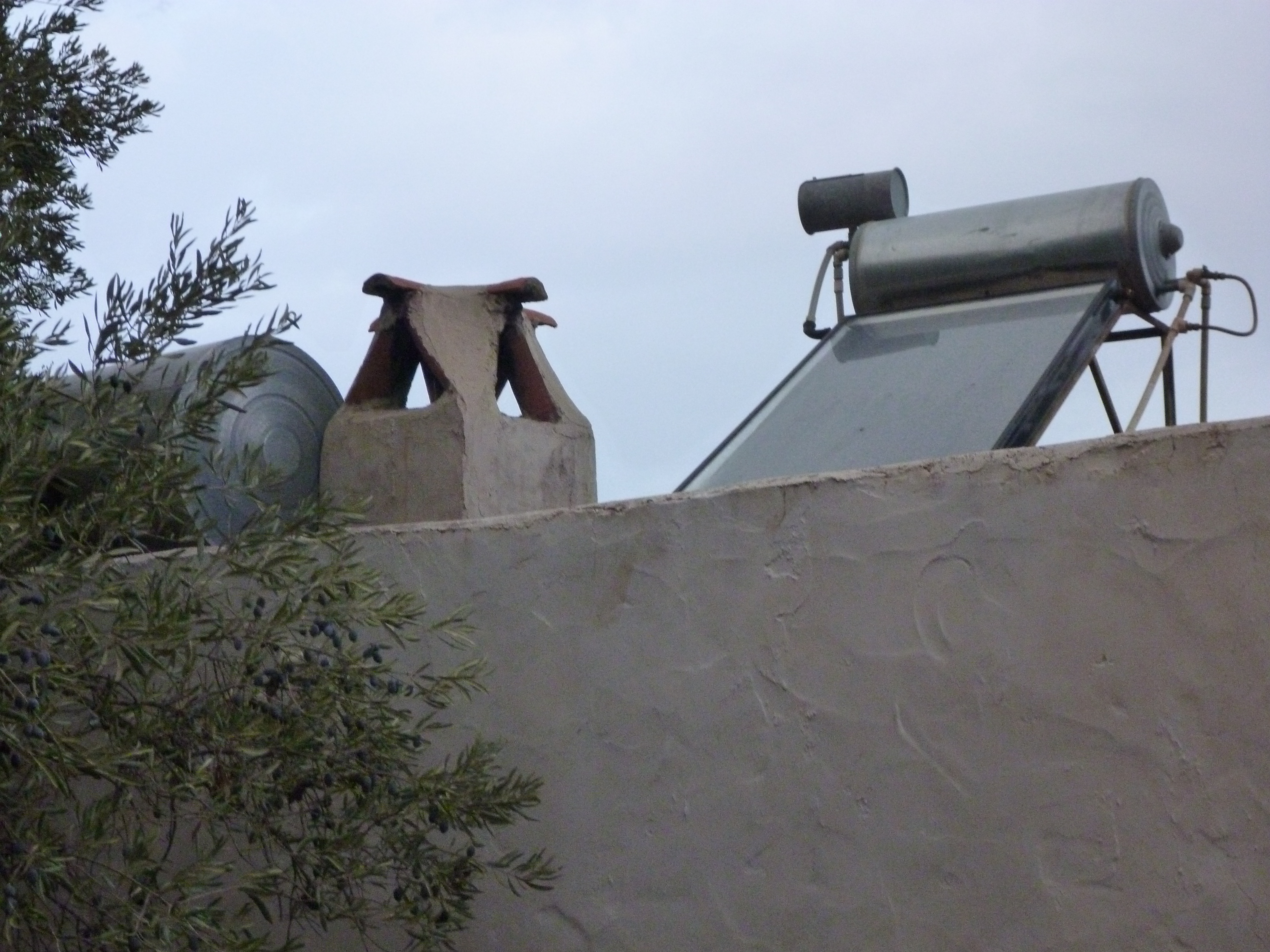
We have photovoltaic cells to heat our water, whereas his solar heating was entirely passive. I imagine a goatskin bag filled with water and hanging in the sun. But I’m not sure we’ve advanced much. A morning shower here leads to abstruse discussions along the lines of “Was the water hot?” “What do you mean by hot?”

We have amphoras in our cottage, just as Herodotus must have had.They’re still made and used locally. However, I’m not aware that the amphoras gather for symposia, as shown here in the Bodrum Kale (castle). That exhibit is part of the underwater archaeology museum, the world’s largest.

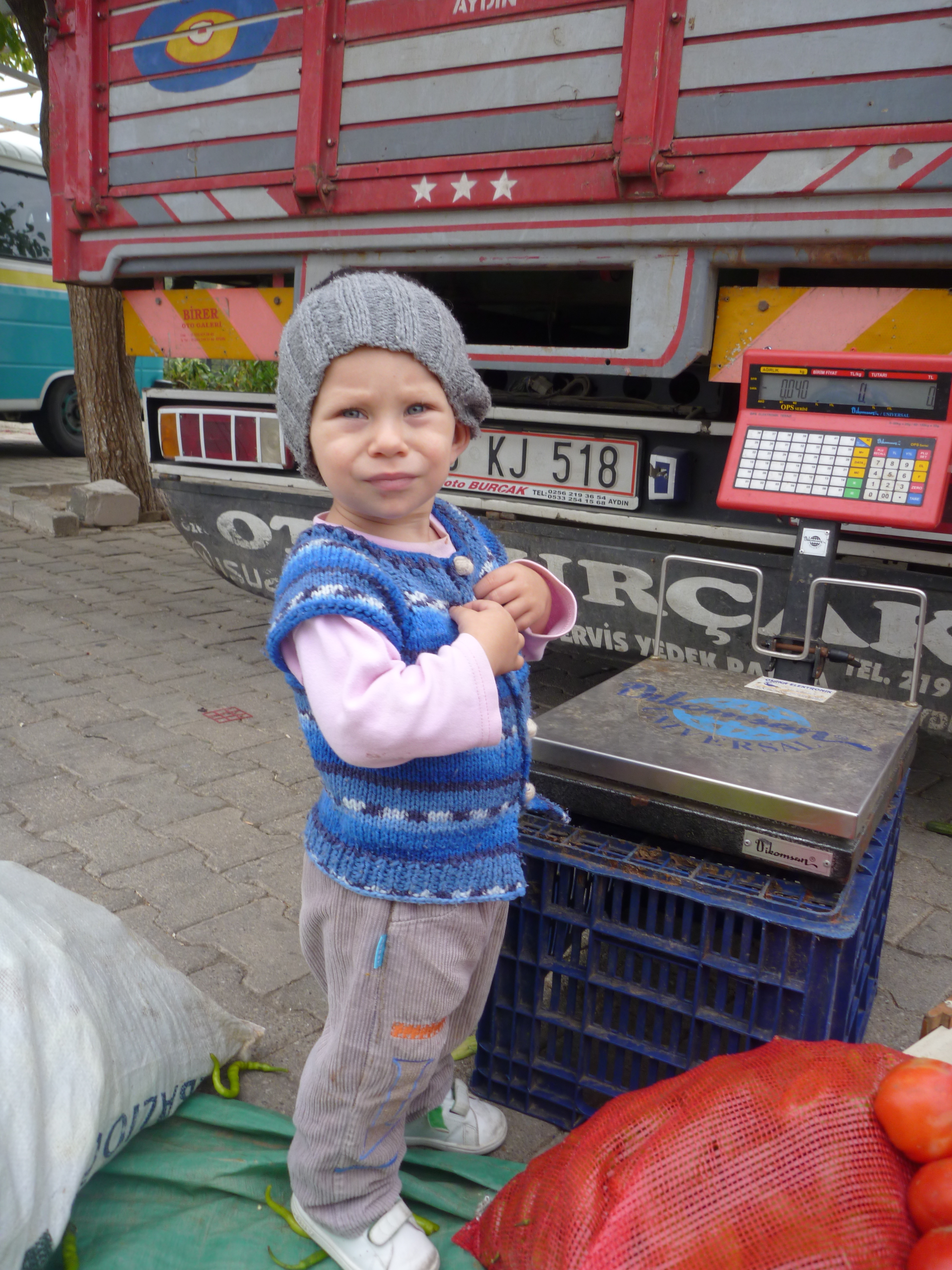
At the end of the day yesterday, we stopped to buy some vegetables for dinner. Although Herodotus wouldn’t have used the Turkish lirasi as we do, it’s not hard to envision him or someone in his household selecting beans, carrots, or onions as we did. Even the measuring device would have been similar, a crude balance with old, battered weights.

I’d always imagined Herodotus as an old man with a long white beard, as he’s portrayed in statues. But thinking of his life here, I now wonder: Would a young Herodotus be writing blog posts from his stone cottage? And when he was younger still, how much would he look like the young boy we see today?

Threadgill’s Home Cookin’

A couple of nights ago, my sister, mother, and I went to Threadgill’s Home Cookin’ on N. Lamar in near north Austin. It’s not far from where I lived when I was in graduate school at the University of Texas.

I used to listen to Kenneth Threadgill and the Hootenanny Hoots when they played at the Split Rail in south Austin, so going to the restaurant brought back many fond old memories.

We had a delicious dinner in the kind of informal, but comfortable setting that I like a lot. At least for my own experience, I agree with the claim on the restaurant website that:

It is a simple fact that the Threadgill’s restaurants, museum and live music venues have more to do with Austin’s cultural and musical heritage than most any other institution within the city limits.

The history goes on to add:

Perhaps country music lover and bootlegger Kenneth Threadgill had more in mind when he opened his Gulf filling station just north of the Austin city limits in 1933, for the day that Travis County decided to “go wet ” in December of the same year, Kenneth stood in line all night to be the first person to own a liquor license in the county. Soon, the filling station became a favorite spot for traveling musicians since it was open 24 hours for drinking, gambling and jamming. Kenneth would sing songs by his beloved Jimmie Rodgers nightly. Musicians who came to play were paid in beer. Such was the atmosphere at Threadgill’s, it was only when a curfew was enacted in 1942 that its owner had to get a key for the front door, before that it had yet to have been locked.

Threadgill’s was important in the development of the Austin music scene. While Threadgill sang Jimmie Rodgers songs, Janis Joplin developed her country and blues hybrid. Other performers brought in rock & roll or music from Mexico.

Claude Matthews produced and directed a very good documentary video about Threadgill and his restaurant, Singin’ the Yodeling Blues. Here’s part 1, with links to parts 2 and 3 on Youtube:

Network neutrality notes

Network neutrality means no restrictions by Internet Service Providers and governments on content, sites, platforms, attached equipment, or modes of communication. This includes neither blocking sites nor offering tiered service models. It can be viewed from the perspective of users wanted to access particular content, such as peer-to-peer sites for video or music, or from the perspective of producers seeking to deliver their content more effectively to users.

History. Concerns with telegraph: “messages received from any individual, company, or corporation, or from any telegraph lines connecting with this line at either of its termini, shall be impartially transmitted in the order of their reception. (Pacific Telegraph Act of 1860)

In 1934, Congress created the Federal Communications Commission (FCC) with the purpose “to make available, so far as possible, to all people of the United States… A rapid, efficient, Nation-wide, and world-wide wire and radio communications service with adequate facilities at reasonable charges, for the purpose of the national defense, [and] for the purpose of promoting the safety of life and property through the use of wire and radio communication.”

The Internet developed out of public funded services, such as Arpanet, NSFnet, TCI/IP. Eventually centralized routing aspects were removed, allowing the free-wheeling Internet we use today. But in recent years, corporate control over key aspects of the Internet has grown, essentially privatizing a service developed at public expense to serve public needs.

Tiered service. Opponents of net neutrality see it as “a solution in search of a problem”, arguing that broadband service providers have no plans to block content or degrade network performance. Yet, Comcast, for example, “intentionally and secretly blocked access to lawful content on the Internet,” e.g.,  peer-to-peer (P2P) communications, such as BitTorrent. The FCC attempted to block that, but lost that authority after a US Court of Appeals decision on April 6, 2010.

Google may soon reach an agreement with Verizon, which will severely compromise the free flow of information that has made the Internet such a powerful force for creativity, collaboration, and learning.

Issues.

  • Innovation: The Internet has been a striking incubator of new ideas, enterprises, products, services, and jobs. This is to a large extent based on its open practices.
  • Privacy: An Internet with built-in nonneutrality would require an additional level of monitoring, i.e., surveillance, so that packets of information can be routed at the agreed-upon speed and that premiums can be charged. (Cohen, 2010).
  • Free speech: The more service is based on the ability to pay, the less access will ordinary people have to the public forum. ISPs, with a legal responsibility to their shareholders alone, have no incentive to guarantee high quality access to all, and in fact, are legally bound not to do so. They could degrade or block any Web site that was critical of them or did not support their political views.
  • Secrecy: In a Kafkaesque mode, there is no provision for corporations to reveal their selective control of content, including whom they target for preferential or degraded service, why they do so, or even whether or how much they have done. Nearly all major phone and cable companies have promised their shareholders that they plan to block or degrade the content and services of their competitors.
  • Access to information: The other side of free speech. Access suffers when what’s available is based on how much someone paid to put it there.

Who decides. Beyond the specifics of access, privacy, free speech, innovation, etc., the big question is “Who should decide internet policy?”

References

Cohen, Noam (2010, August 15). Internet proposal from Google and Verizon raises fears for privacy. The New York Times.

Pacific Telegraph Act of 1860. Central Pacific Railroad Photographic History Museum.

US Court of Appeals (2010, April 6). Comcast Corp. v. Federal Communication Commission..

Evolving thinking in Afghanistan

After the earlier counterterrorism (CT) strategy failed in Afghanistan, the US began to emphasize counterinsurgency (COIN). Now that COIN has been shown to fail (e.g., as in WikiLeaks’s Afghan War Diary in ), we’re switching to CT again. This is called “evolving thinking.”

When President Obama announced his new war plan for Afghanistan last year, the centerpiece of the strategy — and a big part of the rationale for sending 30,000 additional troops — was to safeguard the Afghan people, provide them with a competent government and win their allegiance.

Eight months later, that counterinsurgency strategy has shown little success, as demonstrated by the flagging military and civilian operations in Marja and Kandahar and the spread of Taliban influence in other areas of the country.

Our evolving thinking should be showing us that there is still no clearly articulated and shared goal for the US enterprise in Afghanistan. Without that, it’s difficult to say which of these two, or some other approach, does work or to recognize success once it’s achieved. As Andrew Bacevich writes (2010), there’s growing evidence that western way of war itself has failed.

Harry Paget Flashman (see book cover above) had difficulty separating fiction from reality in his own exploits in Afghanistan. Apparently, reviewers of the Flashman books had the same problem. But we can’t afford to do that any longer in Afghanistan.

References

Bacevich, Andrew (2010, July 29). The end of (military) history? Mother Jones.

Cooper, Helene, & Landler, Mark (2010, July 31). Targeted killing is new U.S. focus in Afghanistan. The New York Times.

Kaplan, Fred (2009, March 24). CT or COIN? Obama must choose this week between two radically different Afghanistan policies. Slate.

Whitman, Alden (1969, July 29). Gen. Sir Harry Flashman and aide con the experts. The New York Times.