Walk to Ptown

Ever since moving to the Cape, I’ve wanted to walk to Provincetown. It wasn’t because of the Wampanoag people, or other early explorers and settlers who wrote about the area, such as Gosnold, Champlain, the Pilgrims, or Thoreau. It was simply that I wanted to connect with the land and sea in a way that walking does, more than riding in a car or bus, or even on a bicycle.

Yesterday, Emily, Stephen, and I managed to do it–what turned out to be 35,000 of my steps.

We walked out the front door, down the hill to Wellfleet center, across route 6, past the ponds of Herring, Williams, Higgins, Slough, Horse Leach, and Round. Then we split up, with Stephen taking the beach walk along the Cape’s backside while Emily and managed the brambles on the dune ridge. We met up again at Ballston Beach, where Emily took a break, having carried the pack the entire way. Stephen and I continued on the beach past Long Neck Beach to a spot between the abandoned North Truro Air Force station and Highland Light. At that point we turned west to cross the Cape to the Bay side. From there it was a straight shot north to Provincetown, where we met up with Emily and Susan and had a lovely early dinner.

This slideshow requires JavaScript.

Wildlife in Wellfleet

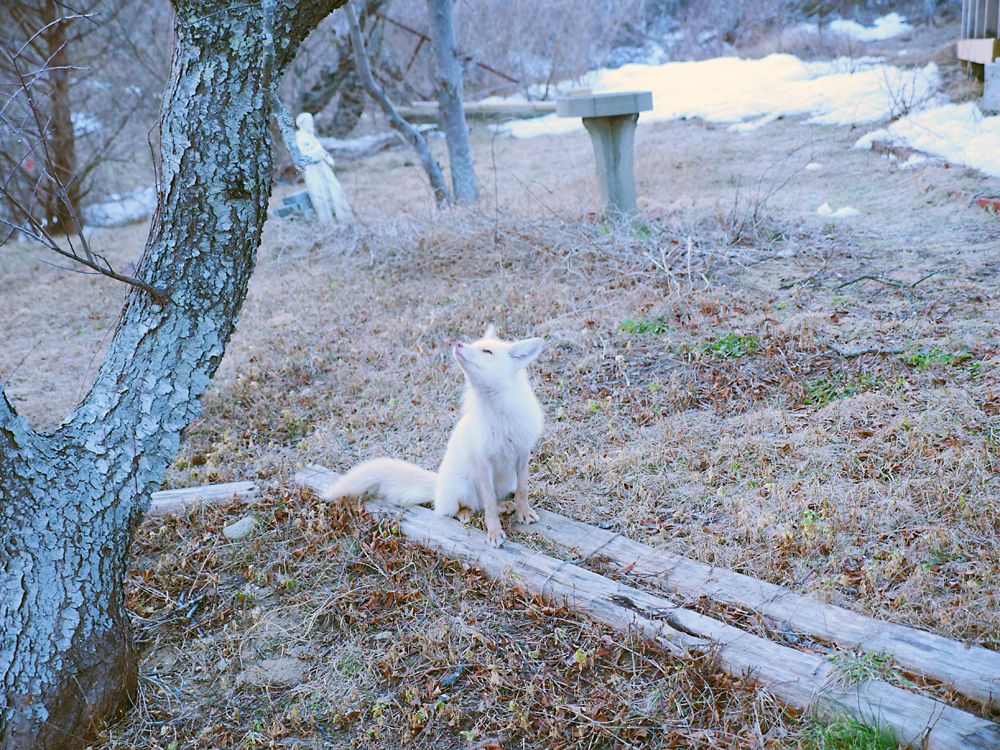
White fox, Truro, by Desmond  Tetrault

White fox, Truro, by Desmond Tetrault

We’re fortunate in Wellfleet to have frequent interactions with wildlife.

We’ve always had many birds around the house, but are now likely to have more since we just set up a bird feeder. Even though it’s late in the season, some chickadees and American goldfinches have been happy to discover that. The goldfinches seem like a different species from the bright yellow ones we saw in the spring mating season.

Birds that live near the water here, such as loons, mergansers, gulls, and gannets have also been feasting. Last week the water temperature dropped suddenly, resulting in the stunning of many small fish. The birds were happy to scoop up the unexpected bounty, so they’re very visible near shallow waters.

Blurry fox, Wellfleet marina

Blurry fox, Wellfleet marina

A more unusual visitor is the white fox. We know of two now, one residing in Wellfleet and one in Provincetown. We saw the Wellfleetian at the pier last night. It was as interested in us as we were in it. The quick smartphone photo doesn’t show much, but at least you can see that the eyes are not red as they would be for an albino fox. This condition is called leucistic. See also A fox of a different color in Provincetown – Gate House.

Turtle rescue at Mass Audubon

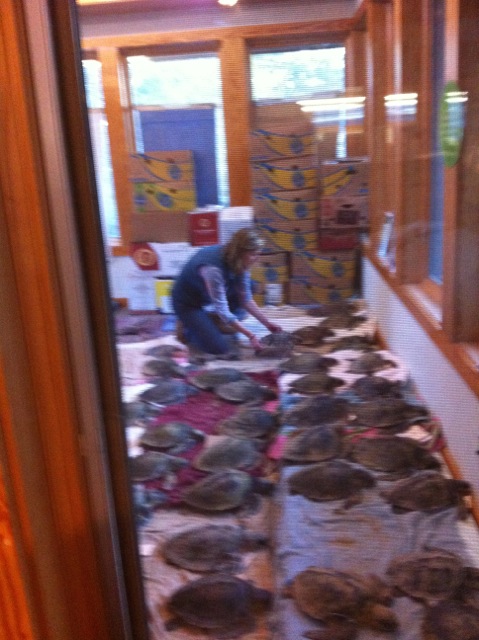
Turtle rescue at Mass Audubon

The same cold snap that stunned the fish and pleased the birds was a disaster for the sea turtles. Hundreds of turtles in Cape Cod Bay have been washed ashore. Most are endangered Kemp’s ridley sea turtles or leatherback turtles, and one is the largest loggerhead turtle ever to come ashore in Massachusetts (300 pounds, 3 feet long). About a thousand have been rescued and taken to the Massachusetts Audubon Society’s Wellfleet Bay Wildlife Sanctuary, and later to the Animal Care Center in Quincy.

Sharing science across generations

In my last post I talked about an intergenerational reading experience. The day after that occurred, I had an intergenerational science experience when I attended the 12th Annual State of Wellfleet Harbor Conference.

The Harbor conference is always interesting, moving smoothly between very local issues in Wellfleet Harbor to regional issues in Cape Cod and New England, and on to global issues, especially those related to human activity, such as global warming, sea level rise, pollution, and decreasing biodiversity.

The presentations and posters dealt with a wide variety of topics: river herring spawning migration, including transponder tracking, training robots to assess landscape change in the Herring River floodplain, shellfish for nitrogen mitigation, horseshoe crab conservation, modeling sea level rise and vegetation change, ocean sunfish strandings, eel monitoring, restoring the Mayo Creek salt marshes, diamondback terrapin nesting, among others.

Although the sessions were diverse, there was a common theme of restoration, going from “How can we assess the damage?” to “How bad will it get?” to “Is there anything that can be done?” It was depressing to see the many ways that we’ve destroyed a beautiful habitat, even one that is supposedly protected by the National Seashore. On the other hand the efforts at restoration are impressive and may at least provide information about what not to do in the future. There was discussion of plans to restore Herring River and Mayo Creek, salt marshes, and many individual species of sea life. If these restoration projects are to succeed they need to involve a large public of all ages, not just a few scientists.

The conference was a delight to attend, even more so since most of the topics related to areas easily accessible by walking or paddling from our home. For example, we’ve seen the amazing ocean sunfish stranded on Mayo Beach only ten walking minutes from home and friends have encountered live ones while kayaking just offshore.

Aside from presenting an opportunity to learn about many topics, the conference was another good example of an intergenerational experience. Presenters included college students and volunteers of all ages. The audience was diverse as well, with some who remember well times long before the National Seashore was created.

One of the presentations was by Nauset Regional High about their own research in collaboration with the Wellfleet and Truro fifth grades. It was the first time to have K-12 presenters at the conference. The students wanted to compare oyster growth and mortality in Herring River and Mayo Creek. An interesting question for their study is that the streams experience tidal variation and high salinity at their outlets, but vary to mostly fresh water higher up: Would oysters be able to survive and thrive away from the sea? Each group of students measured and marked a set of ten oysters. There were five bags for different locations on the Herring River and three for Mayo Creek. The young scientists left each bag with oysters for six weeks, then collected it and re-measured the oysters.

The students learned some of the challenges of field science. For example, one of the oyster bags was missing when they went back to collect it. Valerie Bell, the environmental science teacher at the high school, asked the audience almost as a joke, “if you come across a bag like this can you give us a call?” To my amazement, someone in the back called out that they had in fact found the bag. It must have broken from its mooring and floated with the tide to another location. It was a small thing, but a nice example of community science in action.

Sharing reading across generations

I recently had an enlightening day reading with middle schoolers. It was definitely more fun than when I had to be in middle school myself. I had volunteered for an intergenerational reading group, part of Project Read. This meant that adults in the area would read the same texts and do the same homework as the students. We would then meet with them in small groups during regular class hours to discuss the reading.

On this particular day, we had all read Shirley Jackson’s story, The Lottery. This classic of secondary school has long provided fodder for discussion, confusion, and in some cases distress. I know at least one person my age who says that she’s still disturbed by it. It’s interesting to read the reactions of readers as shown in their letters to the New Yorker, where it was first published in 1948.

There were four class periods with small reading groups, then whole-class discussion, so I was able to hear a variety of responses and share my own:
  • Many students were excited to discover the similarity of the story to that of The Hunger Games novel/film, and even more to learn that others had made the same discovery.
  • I was surprised to hear one boy say that the story must have been set very long ago, because “the heads of household were all men.” Another added that “the men did all the talking and mostly talked about the women, rather than letting them talk.” I don’t believe that middle school boys from my time would have said the same.
  • One student said that the stoning in the story was wrong “because there were only 300 people in the village.” (One death would make a big difference.) We then talked about whether stoning someone to death was ever justifiable.
  • A big question concerned why people in the story, especially Mr. Warner, didn’t want to change. Several students agreed that the people who resisted ending the practice of stoning were similar “to the people who resist allowing fast food restaurants into Brewster. People are afraid of new things.” I didn’t do a poll, but I imagine a sharp generation divide on the fast food issue, with the older ones opposed. The students were right: The older folks don’t want change. Nevertheless, I was uncomfortable equating stoning people to death with opposing fast food.
  • A volunteer adult added, “sometimes you’ve been doing something your whole life and it’s hard to admit that you were wrong.” I doubt that the 13 year-olds have that same feeling about doing something their whole life.
  • I was dismayed to hear two girls in separate groups describe incidents in which boys had thrown (multiple) stones at them.
  • Another student said that Tessie Hutchinson was stoned because she was engaging in protest. The usual reading is that her cry that the stoning was unfair was disingenuous since she never said anything until after she’d been selected. But in the context of Ferguson events I can now understand the interpretation the student made.
  • My best contribution was to bring up Martin Niemöller’s famous First they came… statement. This much-quoted passage reads all the more powerful for me knowing Niemöller’s own earlier national conservative views and anti-semitism. And it makes his analogy to Tessie Hutchinson more telling. The statement is quoted in a book that the students will be reading later in the year in their Holocaust unit.

Like any good learning experience, this one was shared broadly. The teachers, volunteers, and middle school students had to cross some boundaries, but all learned something about the story and about each other. A quote on the classroom wall seemed especially a propos for this intergenerational encounter:

Travel is fatal to prejudice, bigotry, and narrow-mindedness, and many of our people need it sorely on these accounts. Broad, wholesome, charitable views of men and things cannot be acquired by vegetating in one little corner of the earth all one’s lifetime.” –Mark Twain, The Innocents Abroad

Deborah Geithner, August 12, 2014

Duet with Deborah

Duet with Deborah

I’ve been working on a piano sonata by Beethoven (No. 31 in A♭, Opus 110) for a long time. That project may last a lifetime. But I plan to continue both for the sake of the music and for the person who had been guiding me to attempt this work at the edge of my ability.

The piece is beautiful, with contrasting moods, but overall a feeling of melancholy. When it was published, one critic said that its tonality was “emotionally as black as night” and another that it was “a key of the grave, death, the Last Judgement, eternity.” I can blame Beethoven’s music for only a part of that feeling. A larger reason is that Deborah Geithner, my teacher and friend is no longer here.

Deborah combined perceptive listening with helpful suggestions for performance and practice. But more than that, she brought wit, insight, caring, and encouragement to her teaching. I often had mixed feeling about the path of a lesson. I enjoyed talking with her about people, art, politics, travel, and life, while at the same time feeling that I should focus on learning to read music. But then she’d generously allow extra time so that my lessons extended well past the allotted time. This happened again and again, despite her amazing schedule of teaching, performing, writing, and supporting family and friends.

Deborah’s voice is still in my head, especially, of course, when I’m practicing. She would delve deeply into a piece of music, comparing editions, and trying out different interpretations. But that intensity only added, rather than supplanted, a concern for the person and enjoyment of the music.

Assignment book

Assignment book

She didn’t like talk about perfection (as in “but I played it perfectly in practice at home!”). The goal wasn’t to avoid mistakes, nor was it to strive for some fixed standard. Instead, it was to explore oneself and the music to have value in the present and nurture growth. Her students were all ages and ability levels. They included students of voice and other instruments. Always, there was an effort to expand horizons.

At one student workshop, one student might play a duet with another or with Deborah. Another might play only the right hand melody of a piece they were learning. Yet another might be tackling a difficult composition. Deborah managed to support students wherever they were, always opening doors to further development, but recognizing what they could do in the here and now.

There will be memorial services, laudatory obituaries, and other expressions of Deborah’s many contributions to communities around the world, and especially, to her recent years as a supporter of chamber music, literature, painting, and other arts on Cape Cod. Her unique energy, compassion, intelligence, and sensitivity will not be matched again. But most of all, for those who had the privilege to know her, she will be missed as a special friend.

Walker trail

Map of WCT lands

Map of WCT lands

Wellfleet Conservation Trust logo

Wellfleet Conservation Trust logo

The Wellfleet Conservation Trust has been very active recently, securing land for conservation, guiding walks, and building trails for anyone to enjoy. Their website gives a good idea of their many projects. As you can see from the map on that site, the WCT land complements that of several other organizations, making a wide variety of environments available for protection of plant and animal life and preservation of the fragile land, as well as helping the people have healthier lives in every sense of that word.

Walker trail pond

Walker trail pond

I was fortunate to get to assist with some of the trail clearing, including at the recently established Walker trail. The site is nearby, one that we can visit on the way to swim in local ponds or after a trip to the transfer station.

The trail minus foliage

The trail minus foliage

The trail runs through land donated by the Walker family. It’s short, but surprisingly varied, with some ups and downs, views of a few houses, and a small pond. Making the trail included installing some benches and rustic steps for the steeper portions. There was also a major project to remove a large dead branch that was hanging over the trail. Members of the WCT, young workers from the two Wellfleet residences for the AmeriCorps Cape Cod program, and other volunteers all contributed to the effort.

Hung branches

Hung branches

The WCT mission is “to assist and promote the preservation of open spaces and natural resources and to protect the rural character of the town of Wellfleet…The Trust acquires land by gift or purchase…develops walking trails and encourages the study and implementation of sound environmental practices.”

Start of trail

Start of trail

Click on any of the photos to enlarge them.

WCT bench

WCT bench

Log steps

Log steps

Tromboncini strombazzaree

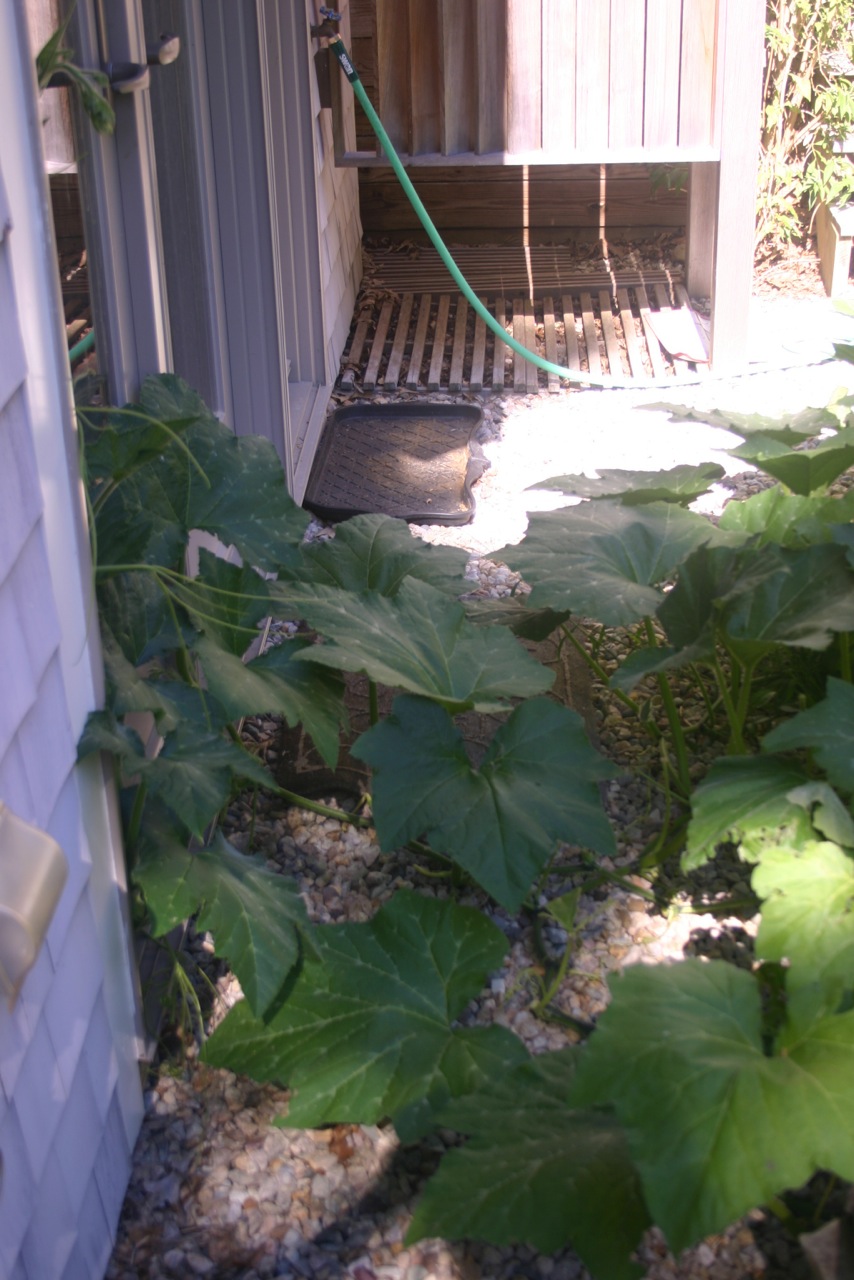
The tromboncini have welcomed August with a fanfare. And now, they’re threatening to take over.

Invasion of the squash

Invasion of the squash

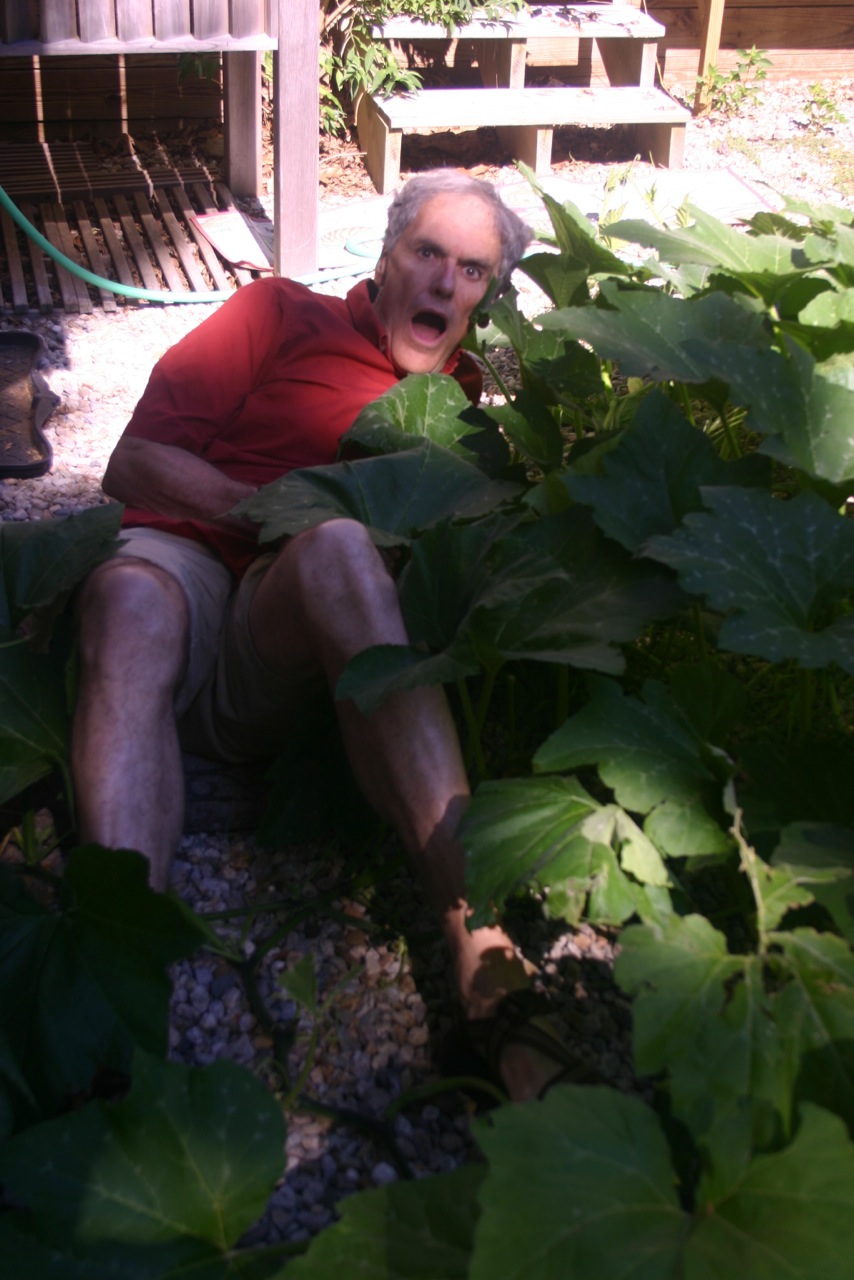
Thanks to starter plants from Daniel Dejean, we now have vines encroaching on our house.

Vines attacking house

Vines attacking house

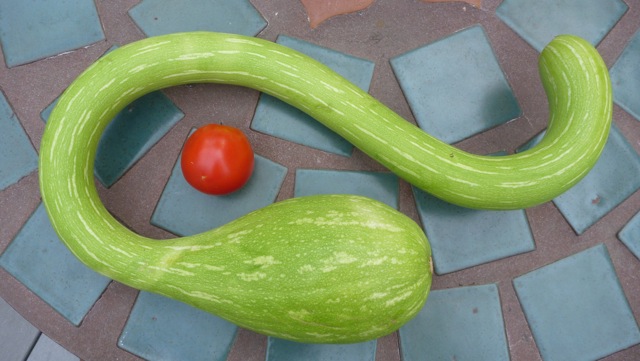
But the fruits of the plant are delicious, tastier than zuchinni. They’re huge, enough to feed the army we’ll need to defend the house against the vines.

Squash love

Squash love

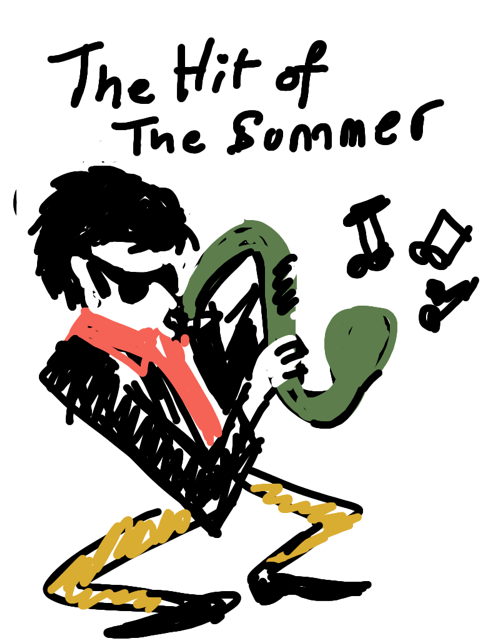
As Daniel says, and illustrates, it’s the “hit of the summer.”

Tromboncino and tomato

Tromboncino and tomato

The hit of the summer

The hit of the summer

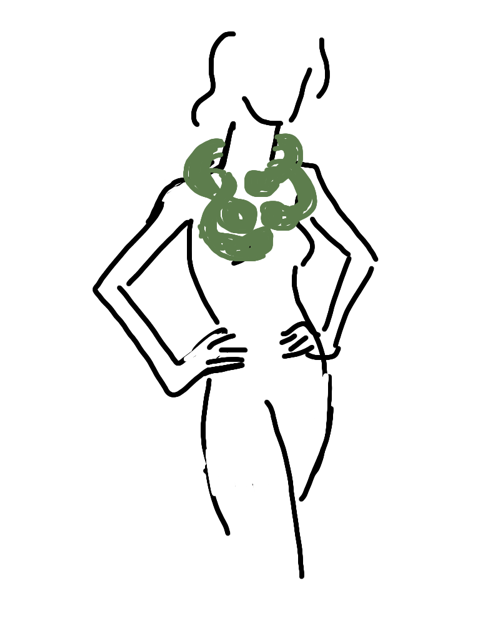
Squash fashion, by Daniel Dejean

Squash fashion, by Daniel Dejean

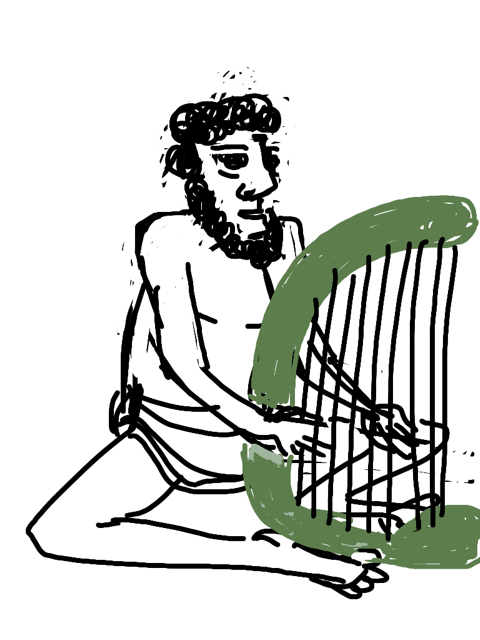
Trombones become harps, by Daniel Dejean

Trombones become harps, by Daniel Dejean

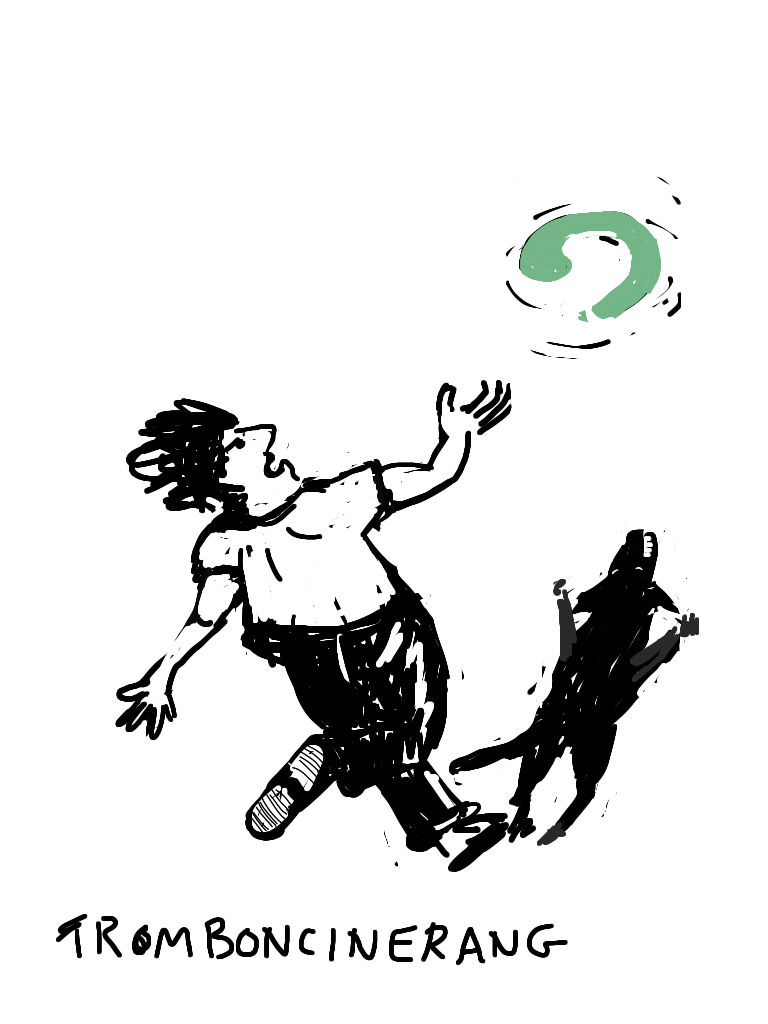
Tromboncinerang

Tromboncinerang

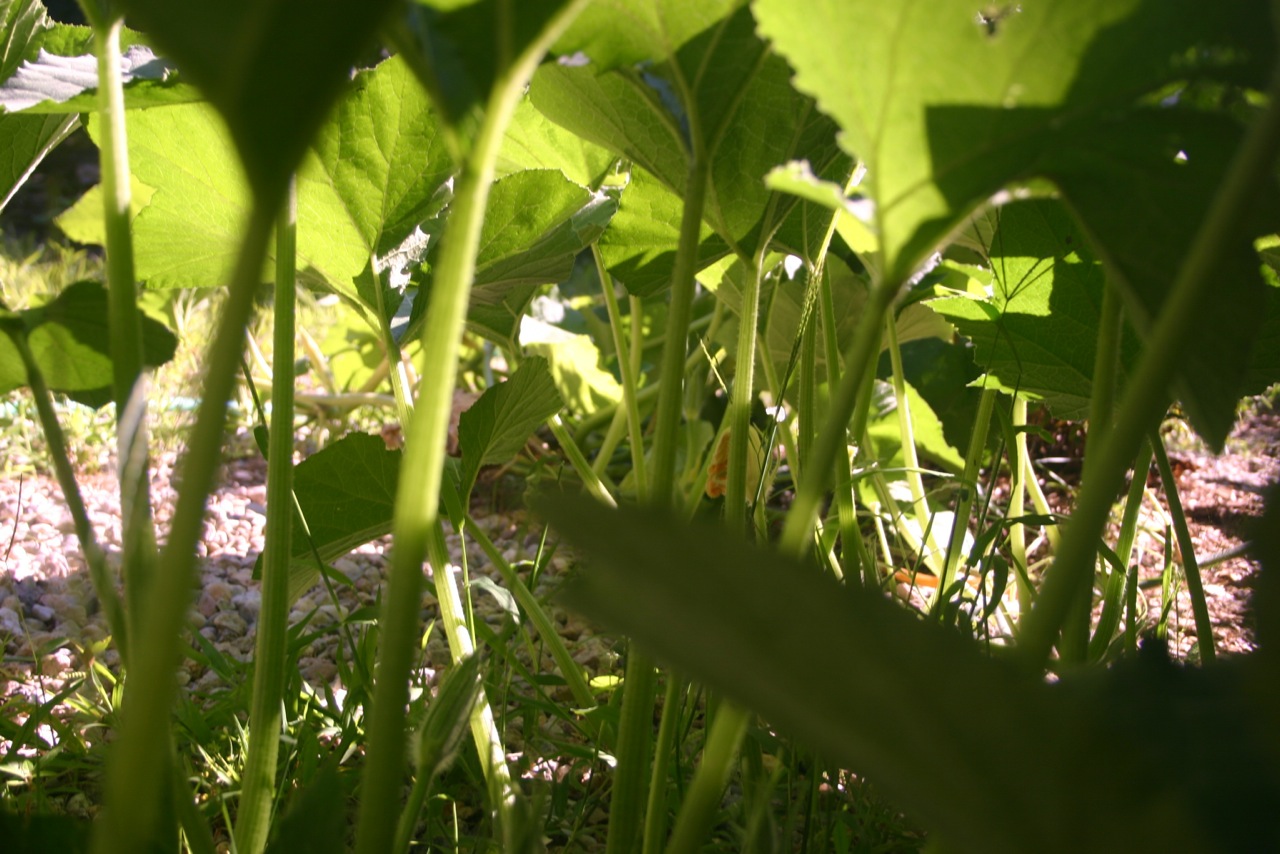
Tromboncino forest

Tromboncino forest

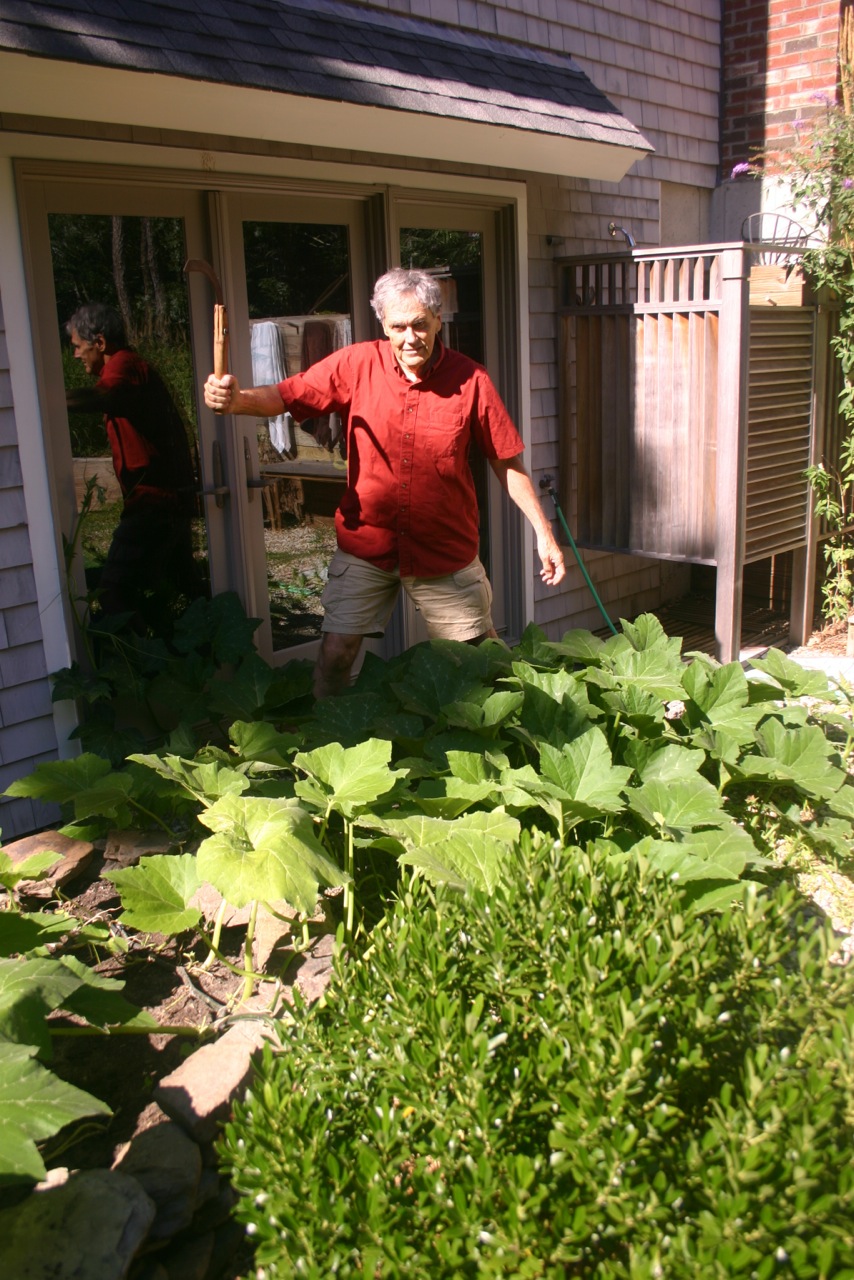
Is resistance futile?

Is resistance futile?

Summer clarinet and piano

Photos courtesy of Luz Zambrano

Photos courtesy of Luz Zambrano

Like the TARDIS, Wellfleet seems bigger on the inside. The array of activities seems impossible for a town its size.

Last night I saw that the array was not just in quantity, but in quality as well. Monika Woods on clarinet and Deborah Geithner on piano offered a concert worthy of any featured event in a major city. The full house, the standing ovation, and the encore were testament to the beautiful music.

coverIt is easy to understand why Monika was the first prize winner at the Cape Cod Symphony Orchestra Soloist competition this year. You can listen to one of her performances here.

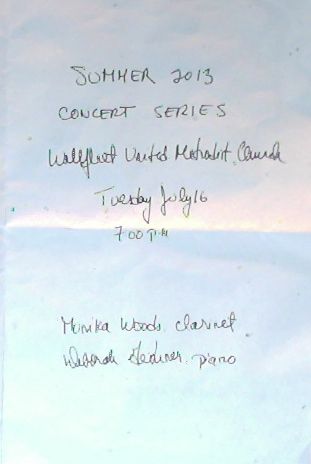
The programme yesterday evening featured Bach, Schumann, Saint-Saëns, Vaughn Williams, and Massenet. Every piece was a pleasure to hear, not something I’d say about many concerts. The feeling of a special event is enhanced by the fact that each attendee’s copy of the programme is individually penned, as is Deborah’s tradition.

The Saint-Saëns Clarinet Sonate in E-flat major, Op. 167, which he composed in his 86th and last year of life, was a highlight that elicited wows and bravos. The Allegretto first movement was especially ethereal and welcomed when its theme returns in the fourth movement. The piece as a whole was captivating.

The Sonate showed off the dialogue of clarinet and piano, as did Massenet’s Méditation from the opera Thaïs (Andante Religioso). That was another very moving selection. but it’s futile to make too much of any one piece, since every offering was excellent.programme

It was no surprise that the audience would demand an encore. The reward was Este a székelyeknél (Evening in the Village), by Béla Bartók. It’s a simple, lyrical piece, with two contrasting themes, which balance beautifully.

Drawing on elements from Transylvanian folk songs, Este a székelyeknél completed the evening’s theme of familiar, entrancing melodies, revealed by great composers and two great performers.

Monika Woods & Deborah Geithner

Monika Woods & Deborah Geithner

The concert was part of the Summer 2013 Concert Series at the Wellfleet United Methodist Church. This series has been a big plus for the community, drawing in people even while it’s still light enough for beach-going. The sanctuary last night was filled with nearly 100 concert goers.

Citizen Science in Wellfleet

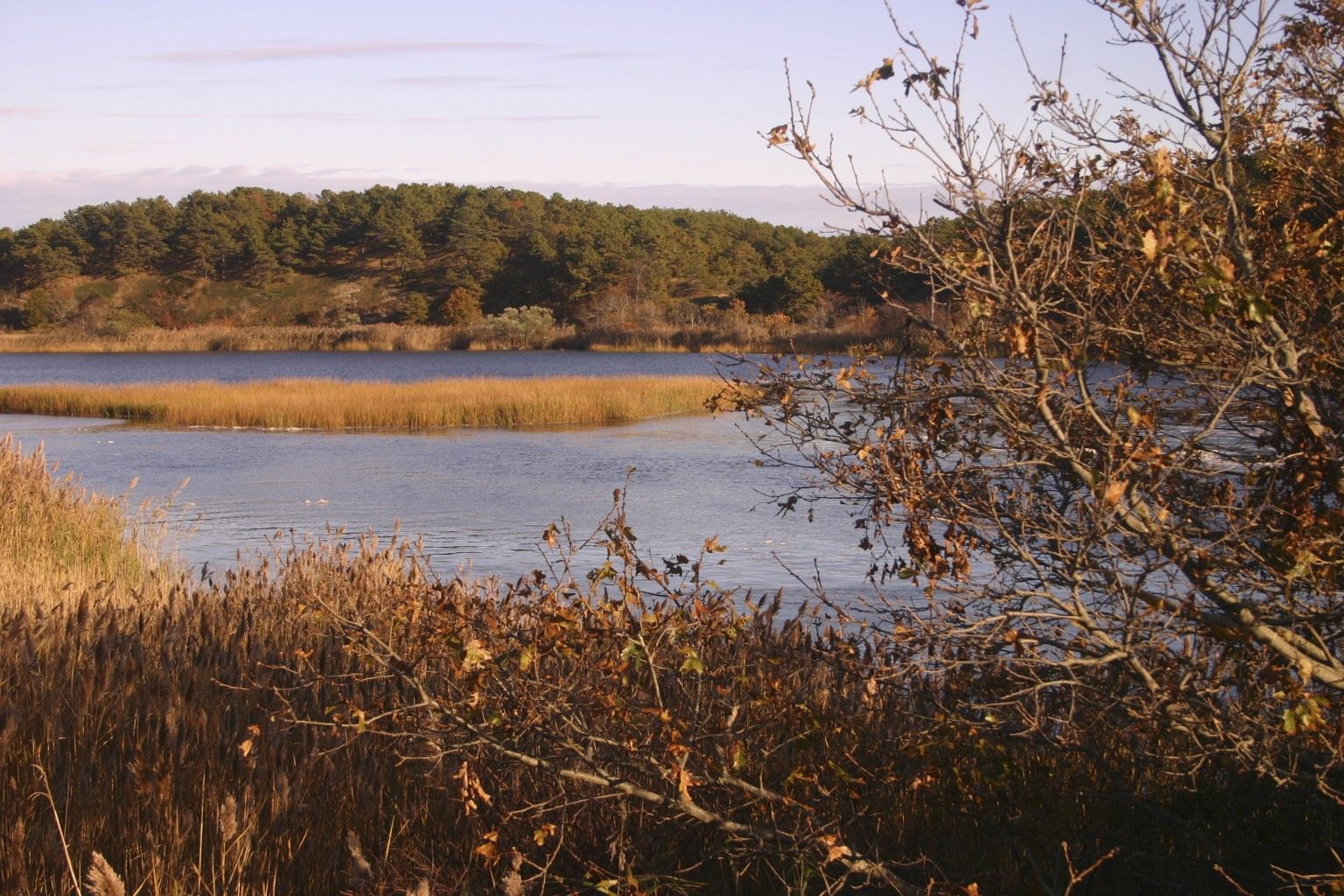
Herring River estuary

Herring River estuary

The current habitat for communication between science and the public is dysfunctional. One need only look at the “debates” about climate change or disease prevention to see the problem.

Scientific findings are regularly misrepresented and sensationalized in the mass and social media. Even when well presented, those findings are ignored or distorted, attacked through faulty arguments, or tied to unsupported inferences. At its best, current science/public dialogue tends to be one-way, with the occasional enlightening article, book, or video, followed by public commentary. This rarely serves to deepen  understanding, much less lead to enhanced inquiry.

State of Wellfleet Harbor Conference 
Wellfleet marina

Wellfleet marina, note osprey nest, upper left

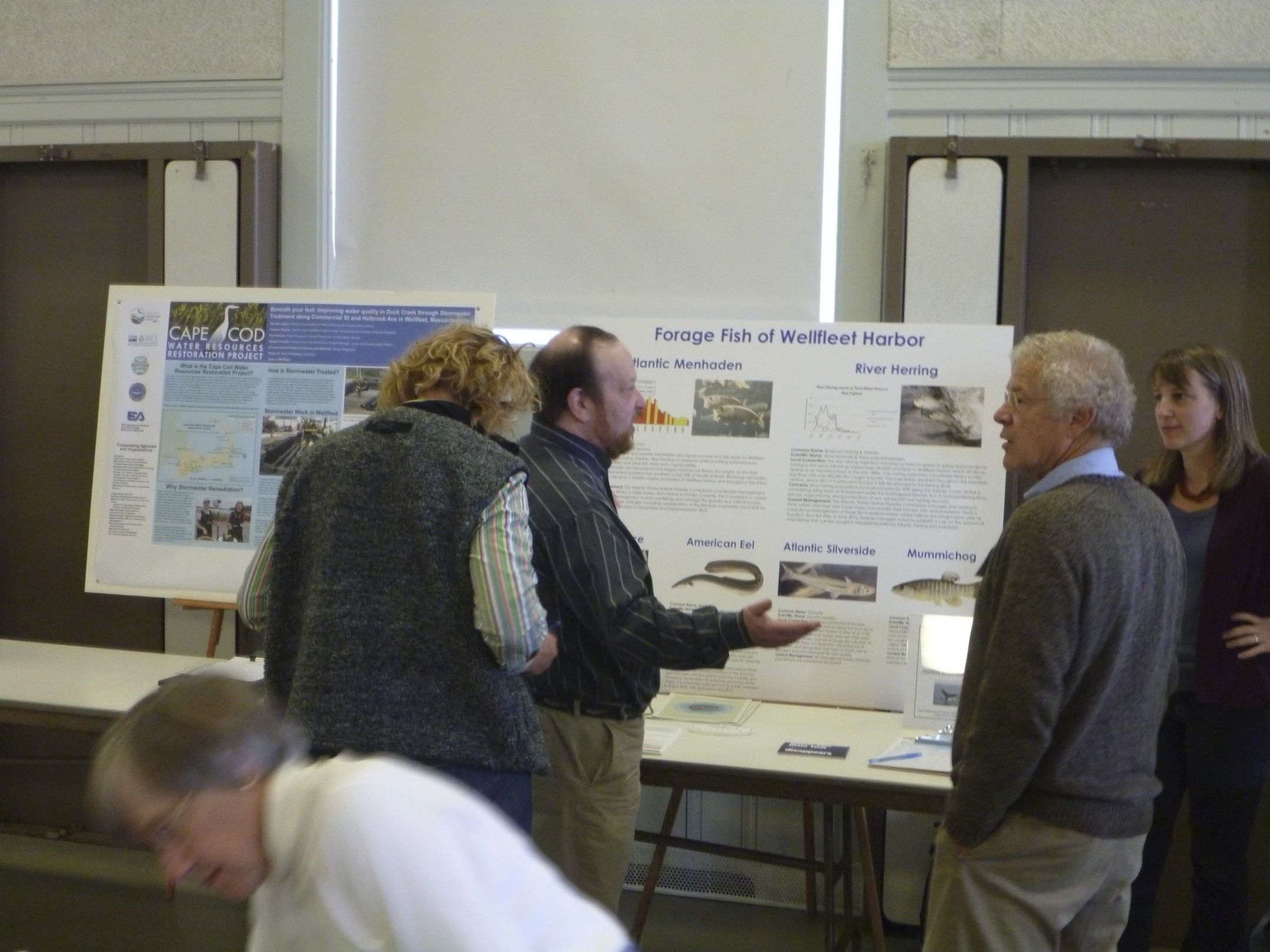
The 10th Annual State of Wellfleet Harbor Conference held yesterday at the Wellfleet Elementary School represents an alternative to that typical dysfunctional science/public relationship. One refreshing note was an effort by scientists to explain not only the results, but also the assumptions, methods, and theories behind them. People asked about the selection of factors to study, or about habitat assessment in tidal river versus bay sites, not to discredit a finding, but to understand more about how results were achieved. The conference was itself a small data point for the case that ordinary citizens can engage in science-based discussions, given enough time and well-crafted presentations, displays, videos, and other materials.
Poster session

Poster session

You can see from the schedule that there was a wide variety of presentations and posters. There was talk about dolphin mass strandings, bathymetry, auditory evoked potential, sentinel species, estuaries, cross-shore sediment transport, salt marsh backup, turtle gardens, terrapin clutches, brumation, eutrophication, cultching, winter/spring blooms, quahog seed, anoxic shellfish, temperature-dependent sex determination, anthropogenic effects, and many other topics related to the diverse ecosystems of the Outer Cape.

There were some good videos from the Friends of Herring River and the International Fund for Animal Welfare (IFAW). Brian Sharp complemented the latter with a talk and a tour of the IFAW van used for marine mammal rescues. This was especially salient given the mass strandings of dolphins in Wellfleet Bay in the early part of the year.
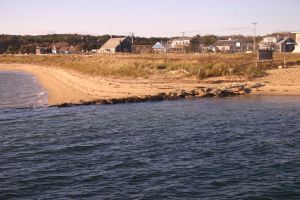
Mayo Beach, with groin

Mayo Beach, with groin

These presentations emphasized the interconnectedness of ecosystems, with humans as an integral part. Mark Borrelli from the Provincetown Center for Coastal Studies talked about how groins and revetments prevent local beach erosion, e.g., to protect a house, but shift the erosion elsewhere. Thus, they are simply “erosion relocation structures.” Sarah Martinez from the Mass Audubon Wellfleet Bay Wildlife Sanctuary presented a poster on the consequences for horseshoe crabs of their use as bait for conch and eels. Moreover, the revetments that relocate beach erosion also disturb the spawning, much of which occurs above the high tide mark.Vincent Malkoski from the Massachusetts Division of Marine Fisheries spoke about the data on horseshoe crab fisheries. These findings have led to harvesting closures for five days around the new and full moons in May and June to allow lunar spawning. Diane Murphy from the Cape Cod Cooperative Extension and Woods Hole Sea Grant spoke on the relation between oyster and clam growth and the wide variety of habitats they find in Cape Cod Bay.

Avoiding Either/Or Thinking 
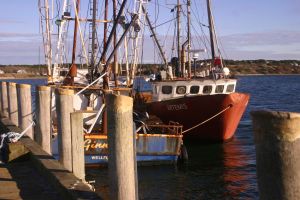
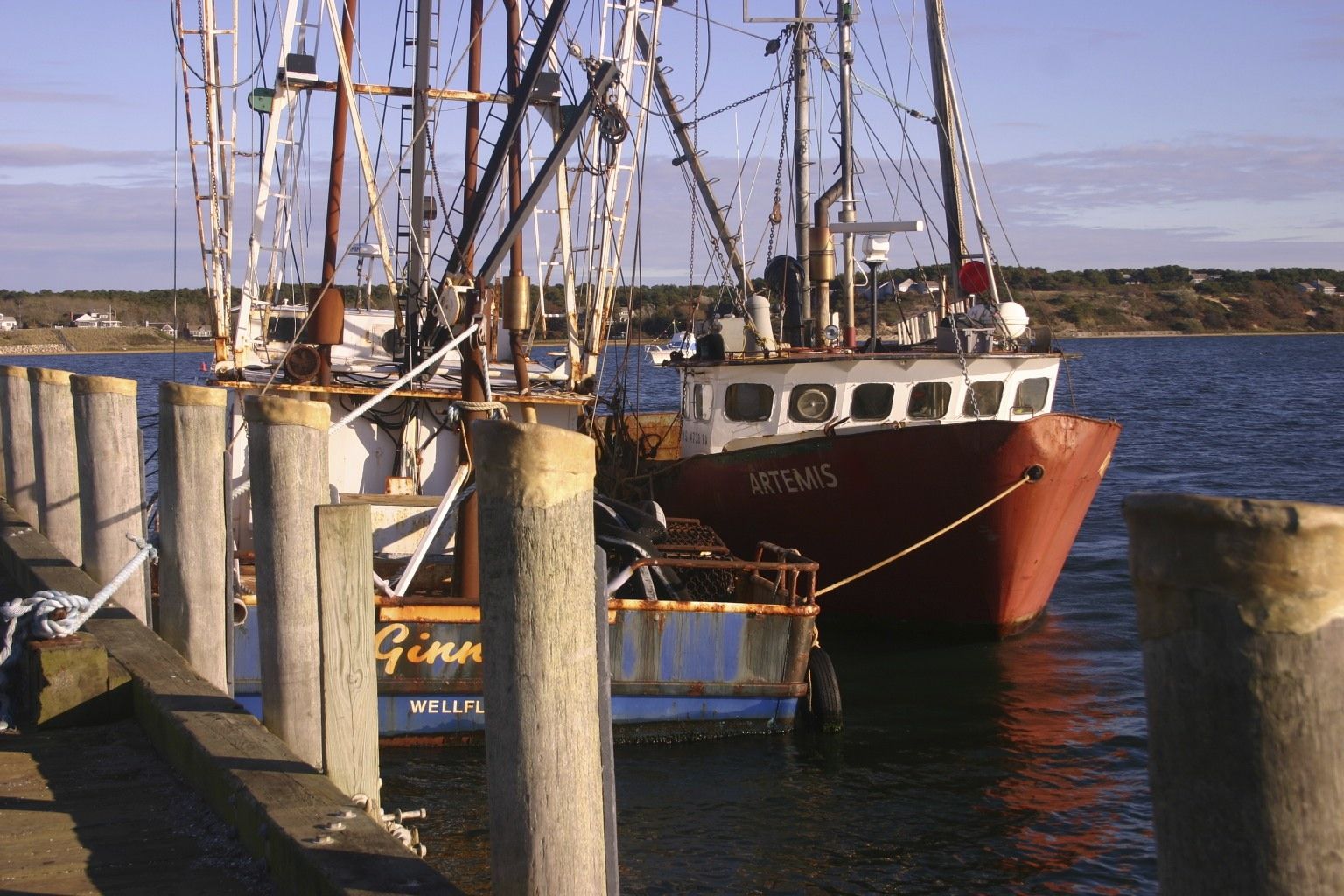
Fishing boats

Fishing boats

One consequence of creating the forum in this way was that discussions avoided the either/or kind of thinking often expressed in mainstream media. For example, although most of the participants shared deep commitments to preserving natural environments and generally opposed rampant development, I heard statements such as “you can’t say that dredging is always bad or good; the decision is about choices and values.” There would then be productive dialogue that critiqued human-made alterations of the shoreline, estuaries, ponds, and so on, but acknowledged values others might hold for commerce, recreation, or housing. Zero-based planning  is no longer an option in the Wellfleet area: Every change today, even one that seeks to undo earlier construction, interacts with a myriad of alterations over centuries and can have unintended consequences for the environment.
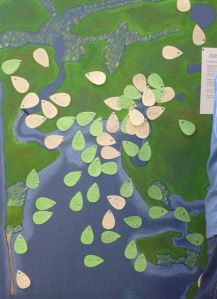
Interactive map

Interactive map

Multilogue

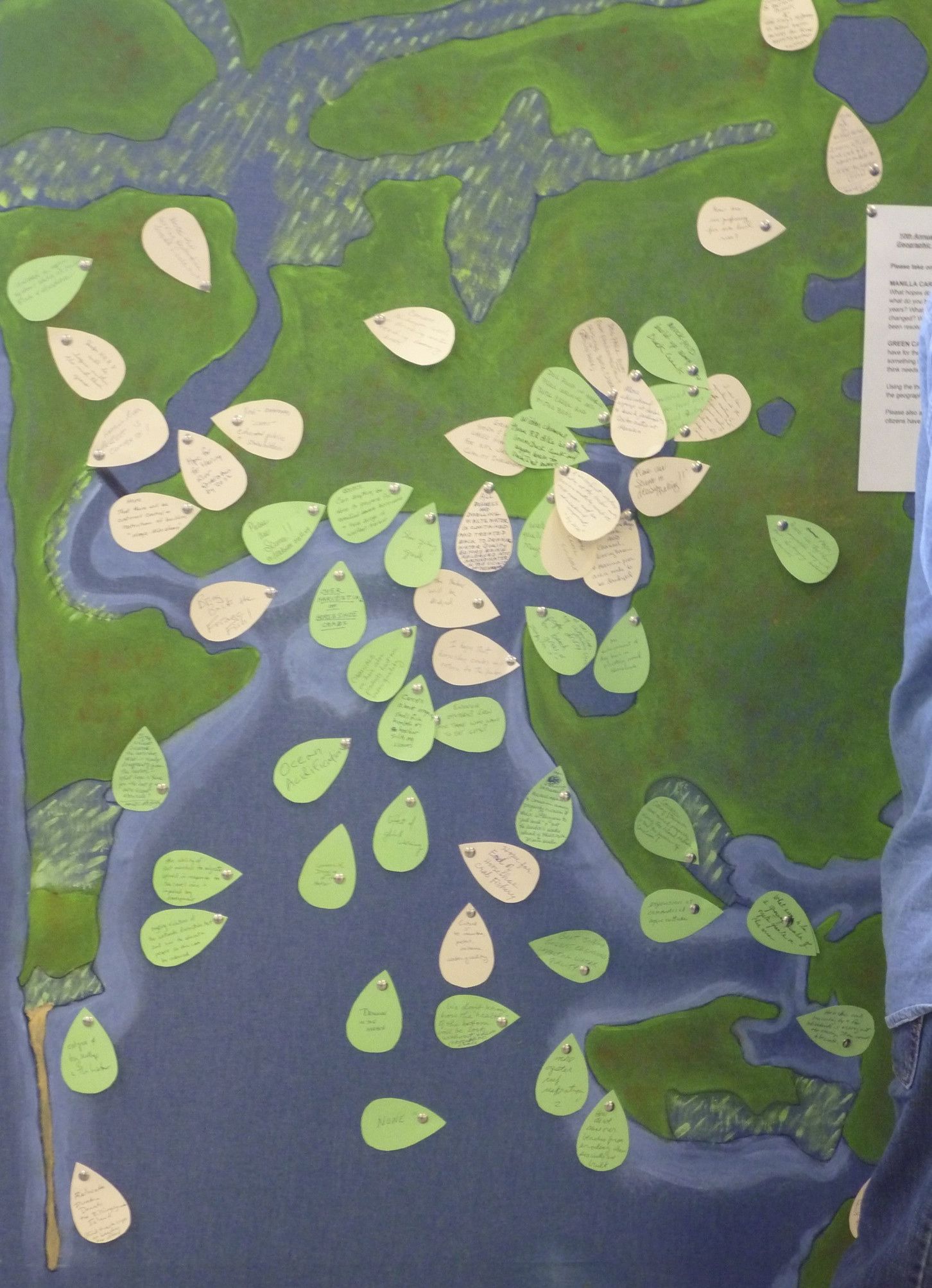
Through Q/A, posters, and ample time for informal discussion, the conference fostered one to many, many to one, and many to many conversations among participants including scientists in the same and other disciplines, students, and general public. There was an interactive map on which people could write their hopes and concerns and peg them to a geographic spot. The map activity will be continued at the library to solicit input from those who did not attend the conference. I saw numerous examples of scientists taking seriously the concerns or knowledge of the public.

This was perhaps enhanced by the fact that many of the projects involve direct citizen science participation , e.g., the river herring count, the horseshoe crab spawning assessment, terrapin sightings, and the dolphin rescues. Others involve coordination with local activist organizations, such as the Wellfleet Conservation Trust.

Some were of special relevance to those involved in commerce, such as oyster farmers. Jessica Smith and Barbara Brennessel from Wheaton College had an interesting poster on a study of genetic diversity among hatchery versus reef oysters, showing, as one might expect, a greater diversity for the reef oysters. This provides indirect support for seeding oyster beds with pelagic, rather than hatchery, veligers. Some oyster farmers still collect these wild larvae for seeing their beds, despite the method being considered slower, difficult, and old-fashioned. A quahog farmer of 30 years was able to add comments about changes over three decades that was missing from most of the shorter-term scientific studies.

Sustainability

IFAW van

IFAW van

Perhaps a meeting like this requires a supportive habitat such as Wellfleet in order to thrive, just as the terrapins, horseshoe crabs, eels, dolphins, ospreys, and other creatures do. Would it fail to survive elsewhere?

Richard Lewontin points out in The Triple Helix that no organism can survive without a supportive environment, but also that no living environment exists without organisms. In this case, the conference organism succeeds because of the town environment, but also shapes it to become more supportive of exactly the kind of discussion heard today.

The conference was well-organized with good snacks, including clam chowder. I came away with a renewed appreciation for the special beauty of Wellfleet, but also sadness about what we’ve done to destroy this, and so much else of the natural world. The fact that a conference such as this is so rare punctuates that sadness. How much did you hear from political candidates or mass media this year about protecting the environment we all live in and depend upon?

Small but good things are worth preserving. I hope to make the conference an annual event.

Green oats in June

An Irish day on Cape Cod: It began with a 5K walking race along Nantucket Sound in South Yarmouth (Cape Cod Irish Village Road Race). At the conclusion of the race we enjoyed Irish music at the Irish Village. Unfortunately, any loss to our waistlines from the race was fully counteracted by hamburgers and pints of stout.

The day ended with listening to Celtic Sojourn on WGBH. That program featured a beautiful poem by Patrick Kavanagh, which is appropriate for Mother’s Day, or for remembrance on any loved one.

But I don’t read the poem as being only about remembrance; it’s more about valuing the “earthiest” aspects of all our daily interactions–walking “together through the shops and stalls and markets” or among the “green oats in June.” Kavanagh reads the poem in the video below.

When we lived in Dublin in 2007-08, I remember walking many times along the beautiful Grand Canal, which was near our apartment. You can see a statue of Kavanagh there (“The Crank on the Bank”). It’s also shown in the slide show and below.

The bronze Kavanagh is sitting on a bench as the flesh and blood one once did. It was inspired by his “Lines written on a Seat on the Grand Canal, Dublin”:

O commemorate me where there is water
canal water preferably, so stilly
greeny at the heart of summer. Brother
commemorate me thus beautifully.

If you were to visit Dublin, I recommend sitting beside him to contemplate the people walking by, the ever-present swans, and the stilly, greeny water.

Patrick Kavanagh, Royal Canal

Patrick Kavanagh, Royal Canal

In Memory of My Mother

by Patrick Kavanagh

I do not think of you lying in the wet clay
Of a Monaghan graveyard; I see
You walking down a lane among the poplars
On your way to the station, or happily

Going to second Mass on a summer Sunday–
You meet me and you say:
‘Don’t forget to see about the cattle–‘
Among your earthiest words the angels stray.

And I think of you walking along a headland
Of green oats in June,
So full of repose, so rich with life–
And I see us meeting at the end of a town

On a fair day by accident, after
The bargains are all made and we can walk
Together through the shops and stalls and markets
Free in the oriental streets of thought.

O you are not lying in the wet clay,
For it is harvest evening now and we
Are piling up the ricks against the moonlight
And you smile up at us — eternally.