Guns against tyranny?

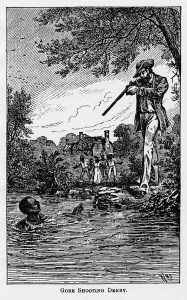
douglassA recent political cartoon showed an ayatollah in Iran pointing a gun at an unarmed citizen, who feebly tried to respond with a pointed index finger. It implied that if Iranians had gun rights they’d have a better chance of standing up to tyranny. The implication was that our Second Amendment had been written for a similar purpose: to protect ordinary people from governmental oppression.

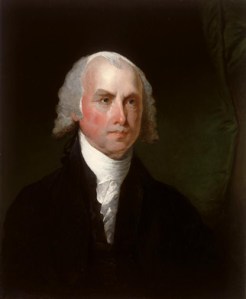
But whatever merits or problems one might see in the Second Amendment today, it’s worth remembering that it was not conceived to enable people to stand up to government, but for precisely the opposite purpose. James Madison wrote the Second Amendment to reassure Southern states that Congress would not disarm their militias, which they deemed to be necessary for slave control. Thus, the amendment ensured that people in power could continue to oppress, not the other way around. For Iran today, this would be akin to guaranteeing that the ayatollah shown in that cartoon would always have a gun, while the citizen did not.

jamesmadisonCompromises to ensure ratification

The Constitution required ratification by at least nine states. Eight had ratified it, but anti-Federalists in other states held sway. Virginia was divided, with George Mason and Patrick Henry arguing against ratification. They raised the specter that Congress might refuse to call forth the militia to suppress a slave insurrection or could even disarm the Southern militias.

Although the Federalists prevailed, James Madison’s career was damaged. In order to resurrect it, he promised that he would support adding a bill of rights including this provision: “A well regulated Militia, being necessary to the security of a free State, the right of the people to keep and bear Arms, shall not be infringed.”

Carl Bogus (1998) shows that Madison wrote the amendment for the specific purpose of assuring his constituents that Congress could not use its new powers to deprive the states of an armed militia. Their primary concern was not that Congress would disarm the militia and thereby prevent hunting, self-defense, national defense, sport shooting, or resistance to governmental tyranny. Instead, it was that disarming the militia could bring an end to slavery. Despite later revised interpretations, the amendment did not grant individuals a right to keep and bear arms for random purposes, but instead for “well regulated” militias whose essential purpose was to prevent a slave rebellion, as happened in Saint-Domingue (now Haiti) just three years later.

As in any political arena, there were multiple interpretations and motivations at the time, as well as misunderstandings due to making sense of these more than two centuries later (Amar, 2005). A major concern in 1788 was of course the war against England and fears about future invasions. But it’s also clear that a driving force was the desire to preserve the institution of slavery, thus using guns to maintain tyranny, not just to resist it.

References

Amar, Akhil Reed (2005). America’s Constitution: A biography. New York: Random House.

Bellesiles, Michael A. (2002, July). Constitutional meanings. Common Place, 2(4).

Bogus, Carl T. (1998, Winter). The hidden history of the second amendment. UC Davis Law Review, 31(2).

Douglass, Frederick (1881). Life and times of Frederick Douglass, his early life as a slave, his escape from bondage, and his complete history to the present time. Hartford, CT: Park.

Mencimer, Stephanie (2008, March). Whitewashing the Second Amendment. Mother Jones.

Spitzer, Robert J. (2000). Lost and found: Researching the Second Amendment. Chicago-Kent Law Review Symposium on the Second Amendment, 76.

Journey sticks for learning geography

This video about journey sticks for learning geography presents a project for Key Stage 2 pupils (ages 7-11) in England. It’s a different age level, orientation, population, and technology from our Youth Community Informatics project. Even so, it has some interesting ideas and you’ll enjoy watching it. It shows how simple tools can help young people open up to the world around them.

The origins of mobile phone and email

atsignMartin Cooper and Raymond S. Tomlinson have just been granted the 2009 Prince of Asturias Award.

Cooper invented “the first handheld mobile telephone and supervised the ten years that were necessary to commercialize the product. He … formulated the Law on Spectrum Efficiency, also known as Cooper’s Law, which states that the maximum amount of information that is transmitted over a given amount of radio spectrum doubles every 30 months.”

tomlinsonTomlinson worked at Bolt Beranek and Newman (now BBN Technologies). He helped develop the TENEX operating system, which had several innovative features, including a full virtual memory system, a user-oriented command line interpreter, and a command escape recognition system. In 1971 he developed the ARPANet’s first application for email by combining the SNDMSG and CPYNET programs so messages could be sent to users on other computers. He selected the @ sign to identify the user’s computer. Before long, that sign became the icon of the digital era.

Ray and I were colleagues at BBN, and teammates on the Great Swamp Volleyball Team, but I was just an ordinary user of that ground-breaking operating system and that early form of email.

References

Kapitzke, Cushla, & Bruce, Bertram C. (2005). The arobase in the libr@ary: New political economies of children’s literature and literacy. Computers and Composition: Special Issue on the Influence of Gunther Kress’ Work, 22(1), 69-78. [doi:10.1016/j.compcom.2004.12.014]one of

Juneteenth World Wide Celebration

Yesterday was the Juneteenth World Wide Celebration, the commemoration of the ending of slavery in the United States. As you can see in President Obama’s statement below, it’s based on the actual, as opposed to the mandated, freeing of slaves in Galveston, Texas in 1865.

I remember the celebrations in Texas when I was young, and it’s good to see those events being recognized more widely. That’s not because Juneteenth marks the completion of America’s struggle against racism, but because understanding our past can help us begin to deal with the reality of racism today.

whitehouse_juneteenth

For the sake of a single verse

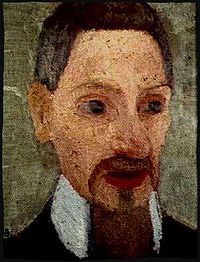
I’ve always liked the passage below by Rainer Maria Rilke, and especially the book by Ben Shahn whose lithographs illustrate each line starting with “For the sake of a single verse.”

Rilke wrote this when he was 28. Shahn discovered it when he was about that age, saying, “I wouldn’t have attempted to do it if I hadn’t had myself every one of the experiences [Rilke] described.” I remember the cellist Yo Yo Ma expressing a similar idea once. Already acknowledged as a master, he said he wouldn’t be really good at a young age and needed to live in order to play.

I first encountered Shahn’s book when I was also in my late 20’s. That was a time when I began to feel that I was completed–finished with schooling, past the age for the military draft, onto a job in industry after three years teaching at Rutgers, married and already divorced. Then it hit me: I barely knew how to live, much less to turn experiences to memories to “blood within.”

The passage spoke to me then of that sense of personal ending/beginning. But I also see it now as a lesson in humility for whatever we do. Our efforts to produce that single verse often focus on the rhyme and meter, when we ought to think more about engaging more fully in the life that that verse represents.

Audio version

200px-RilkeI think I ought to begin to do some work, now that I am learning to see. I am twenty-eight years old, and almost nothing has been done. To recapitulate I have written a study on Carpaccio which is bad, a drama entitled ‘Marriage,’ which sets out to demonstrate something false by equivocal means, and some verses. Ah! but verses amount to so little when one writes them young. One ought to wait and gather sense and sweetness a whole life long and a long life, if possible, and then, quite at the end, one night perhaps be able to write ten lines that were good. For verses are not, as people imagine, simply feelings (those one has early enough)–they are experiences.

shahn_loveFor the sake of a single verse, one must see many cities, men, and things. One must know the animals, one must feel how the birds fly and know the gesture with which the little flowers open in the morning. One must be able to think back to roads in unknown regions, to unexpected meetings and to partings one had long seen coming; to days of childhood that are still unexplained, to parents whom one had to hurt when they brought one some joy and did not grasp it (it was a joy for someone else); to childhood illnesses that so strangely begin with such a number of profound and grave transformations, to days in rooms withdrawn and quiet and to mornings by the sea, to the sea itself, to seas, to nights of travel that rushed along on high and flew with all the stars—and it is not yet enough if one may think of all this. One must have memories of many nights of love, none of which was like the others, of the screams of women in labor, and of light, white, sleeping women in childbed, closing again. But one must also have been beside the dying, must have sat beside the dead in the room with the open window and the fitful noises. And still it is not enough to have memories. One must be able to forget them when they are many, and one must have the great patience to wait until they come again.

ShahnFor it is not yet the memories themselves. Not till they have turned to blood within us, to glance, and gesture, nameless, and no longer to be distinguished from ourselves—not till then can it happen that in a most rare hour the first word of a verse arises in their midst and goes forth from them.

– Rainer Maria Rilke, Die Aufzeichnungen des Malte Laurids Brigge (The Notebooks of Malte Laurids Brigge), 1910

In This World

in this world-2There are times when a movie just grabs me, despite technical flaws, my low expectations, and even a boring DVD case cover. In This World is one of those. The political message is clear, but understated, conveyed instead by an intimate look at the consequences of war and greed on the lives of decent people.

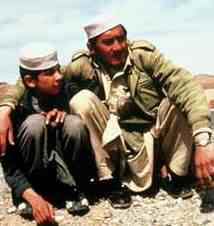
The movie presents a fictitious journey that conveys disturbing truths of life “in this world” we inhabit. Although it’s low-key and rough as cinema, it produces an intimate connection to its characters, Afghan refugees Jamal and Enayatullah, as they travel from Shamshatoo refugee camp near Peshāwar, Pakistan, across Pakistan, through Iran, Turkey, Italy and France, towards London.

ITW_trailerLike thousands of others every year, their desperation feeds the multibillion dollar human smuggling business, an unconscionable stain on any of our pretensions to justice. The smuggling fuels crime, violence, corruption, illegal drug trade, and too often leads to death, no longer being “in this world.”

The actors are Afghan refugees themselves, and the encounters in the movie elide life and art. I was fascinated by the places they moved through, and their resourcefulness in learning how to cope with diverse languages and unscrupulous people.

The camps near Peshāwar are filled with people displaced by the Soviet invasion of Afghanistan and later, US bombing. UNHCR says that there are currently “1.7 million registered Afghans in Pakistan, with 45 percent residing in refugee villages and the rest scattered among host communities.” But the total, including children born to refugees, may be several million. The humanitarian crisis is compounded now by two million civilians fleeing the fighting in Pakistan’s Northwest Frontier.

Even though the story is depressing about our institutions, I finished it feeling hopeful about our human capacity. I wanted to travel the modern silk road and more still to learn about the world of these refugees and the policies that lead to their plight.

Elizabeth McMaster

Elizabeth McMaster lived a short life that was filled with music and art, and she brought two beautiful daughters into the world. She was born in Atlanta, Georgia cc. 1897 and died there in October, 1931. At the time of her death, her daughter Betty was 12 and her daughter Catherine was 10.

Elizabeth was a talented singer. Among her favorites were “Ah! Sweet Mystery of Life” and “Charmaine.” She also painted in oils (see first photo below).

In 1917(?), she married Charles Whitfield Holloway in Atlanta. He was two years younger. Betty was born while they lived there. The family then moved to Chattanooga, where Catherine was born. Charles’s sister Pauline and her mother lived with the family there after her father died. They then moved to Lakeland, Florida, and later to Richmond, Virginia, then back to Atlanta, where they first lived in an apartment on Ponce de Leon street. These moves were due to Charles’s work as a salesman for the B. F. Goodrich Rubber Co.

Elizabeth’s mother felt that Charles was too young and wouldn’t amount to much. Because of this, Charles and Elizabeth had eloped. Despite the estrangement of Charles and her mother, Elizabeth and her daughters kept in close touch with her. However, they didn’t hear from her again after Elizabeth’s funeral.

Elizabeth suffered from nocturnal epilepsy. It was her daughters who discovered her death. Catherine was asked to go outside while others removed the body. After her death, Betty and Catherine went to live with Charles’s brother Emmett and his wife in an apartment in Decatur, Georgia. After a few months they all moved to a house in Atlanta.

Charles then married Eva Lassiter (aka Sugy) and was chosen to manage a Goodrich store in Augusta, where the family moved next. Betty and Catherine were then in high school. He later proved his mother-in-law wrong with the building of the very successful Holloway Tire Co., which sold tires and recapped truck tires. He was also a partner with Ralph Snow in Southeastern Rubber Manufacturing Co. Near the end of the War or possibly shortly afterwards, they went to Washington and received an allotment of rubber and started a company to make camelback for tire recapping (or retreading). Eventually the Holloways built a house at 2727 Hillcrest Avenue and moved there for the remainder of the lives of Charles and Eva.

See more on the Hall and Holloway families.

A new beginning against extremism

300px-CairoUnivObama’s speech yesterday at Cairo University (photo at left) was beautiful. It represents a new beginning against extremism both in the US and abroad. Even Osama Bin Laden recognized that it challenges a linchpin of al-Qaida’s message.

I don’t agree with many of the current Administration’s foreign policies (escalation of the Afghanistan-Pakistan war, inadequate engagement with the Caribbean, especially with respect to Cuba, and not doing more for Haiti, failure to close Guantanamo and re-establish justice following years of officially sanctioned torture and renditions, etc.), but opening dialogue is a first step towards a rational, humane, and effective foreign policy.

The ending of the speech is classic Obama:

89px-A_Boat_in_the_Nile_RiverIt’s easier to start wars than to end them. It’s easier to blame others than to look inward. It’s easier to see what is different about someone than to find the things we share. But we should choose the right path, not just the easy path. There’s one rule that lies at the heart of every religion — that we do unto others as we would have them do unto us. This truth transcends nations and peoples — a belief that isn’t new; that isn’t black or white or brown; that isn’t Christian or Muslim or Jew. It’s a belief that pulsed in the cradle of civilization, and that still beats in the hearts of billions around the world. It’s a faith in other people, and it’s what brought me here today.

We have the power to make the world we seek, but only if we have the courage to make a new beginning, keeping in mind what has been written.

The Holy Koran tells us: “O mankind! We have created you male and a female; and we have made you into nations and tribes so that you may know one another.”

The Talmud tells us: “The whole of the Torah is for the purpose of promoting peace.”72px-Barack_Obama_at_Cairo_University_cropped

The Holy Bible tells us: “Blessed are the peacemakers, for they shall be called sons of God.”

The people of the world can live together in peace. We know that is God’s vision. Now that must be our work here on Earth.

Thank you. And may God’s peace be upon you. Thank you very much. Thank you.

See Obama hits a home run, by Robert Dreyfuss.

Community as Intellectual Space, 2009

CI_2008The fifth annual Community as Intellectual Space Symposium will be held on June 12-14 at La Estancia on 2753 W. Division Street, Paseo Boricua, Chicago, Illinois.

The theme of the symposium is Critical Pedagogy: Community Building as Curriculum. As professionals and institutions are engaging with communities to enhance the life chances and well-being of residents, the conference examines how community-building and critical pedagogy can offer effective and sustainable change, locally and among collaborators as well.

BateyThe keynote speaker this year is Antonia Darder, a Professor at the University of Illinois in Educational Policy Studies and Latino/a Studies. There will be presentations and workshops on

The conference also offers Batey Urbano‘s production of Crime against Humanity, screenings of original documentaries filmed on Paseo Boricua, community tours, and art exhibits.

Community as Intellectual Space is co-organized by the Juan Antonio Corretjer Puerto Rican Cultural Center (Chicago) and the University of Illinois Graduate School of Library and Information Science. Continuing Professional Development Units (CDPUs), academic course credit for those who enroll in UI’s LIS590 CIO, and registration scholarships available.

WIllow Lake, Fort Worth

WIllow Lake in Fort Worth is an artificial lake in an urban setting, which nevertheless boasts a wide variety of wildlife. I spent a week near there and saw fish, turtles with foot-long shells, scaups, coots, ducks, grey herons, nutrias, and more.

The nutrias are South American water rodents that were introduced recently into Louisiana and have been spreading in the southern US. In many places they’re considered pests, because they eat all the desirable water plants. I suspect them of eating the duck eggs at Willow Lake, but don’t have proof so I won’t say that.