Pokhara Valley

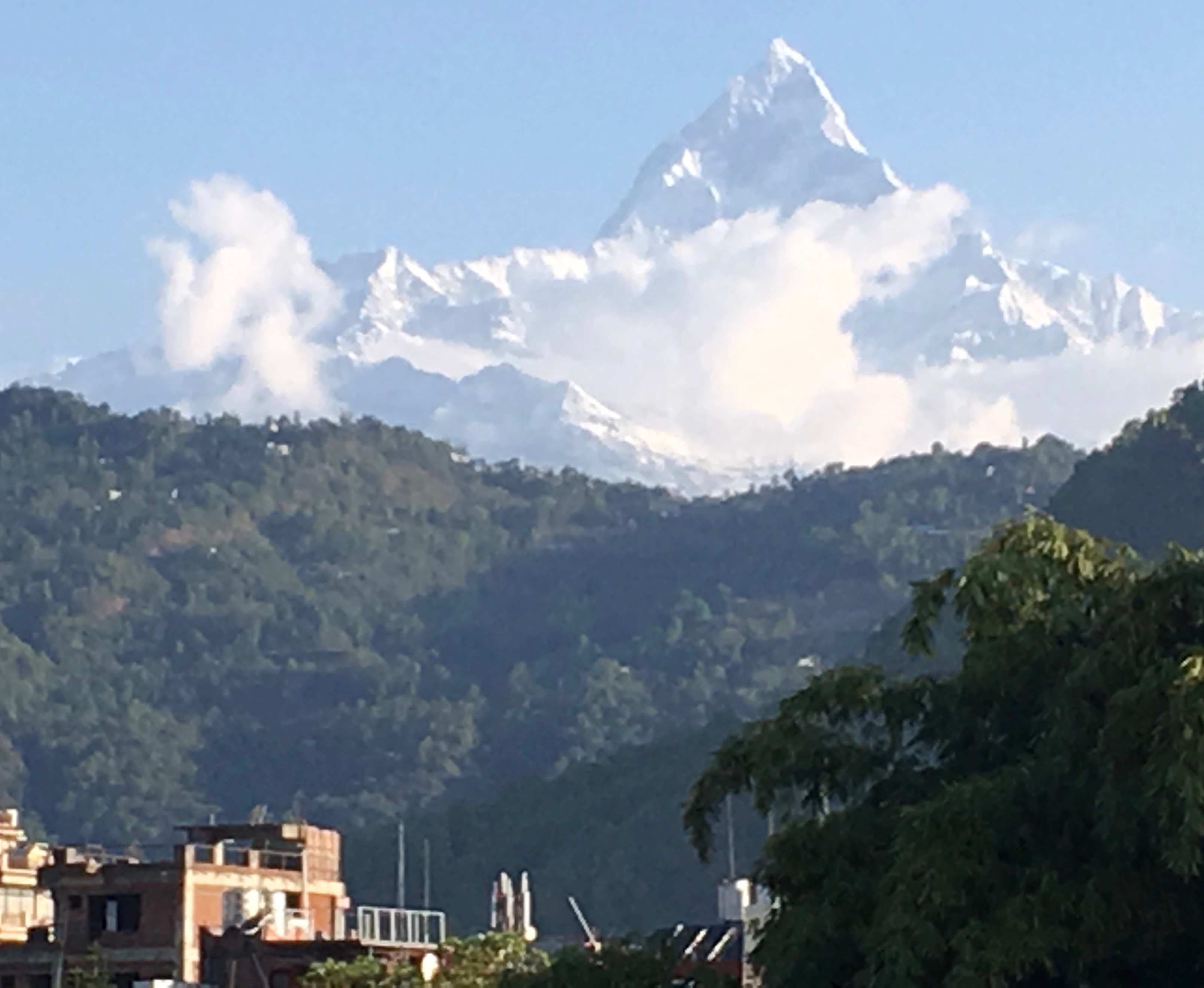
Machupuchare (Fish Tail) from our hotel balcony

Machupuchare (Fish Tail) from our hotel balcony


Machhapuchhare (Fish Tail), at 22,943 ft., which stands in the center of the photo above, is an iconic mountain, which has never been climbed, as it’s considered sacred to Shiva. Climbers have approached the summit, but have always stopped out of respect for Shiva and his followers.

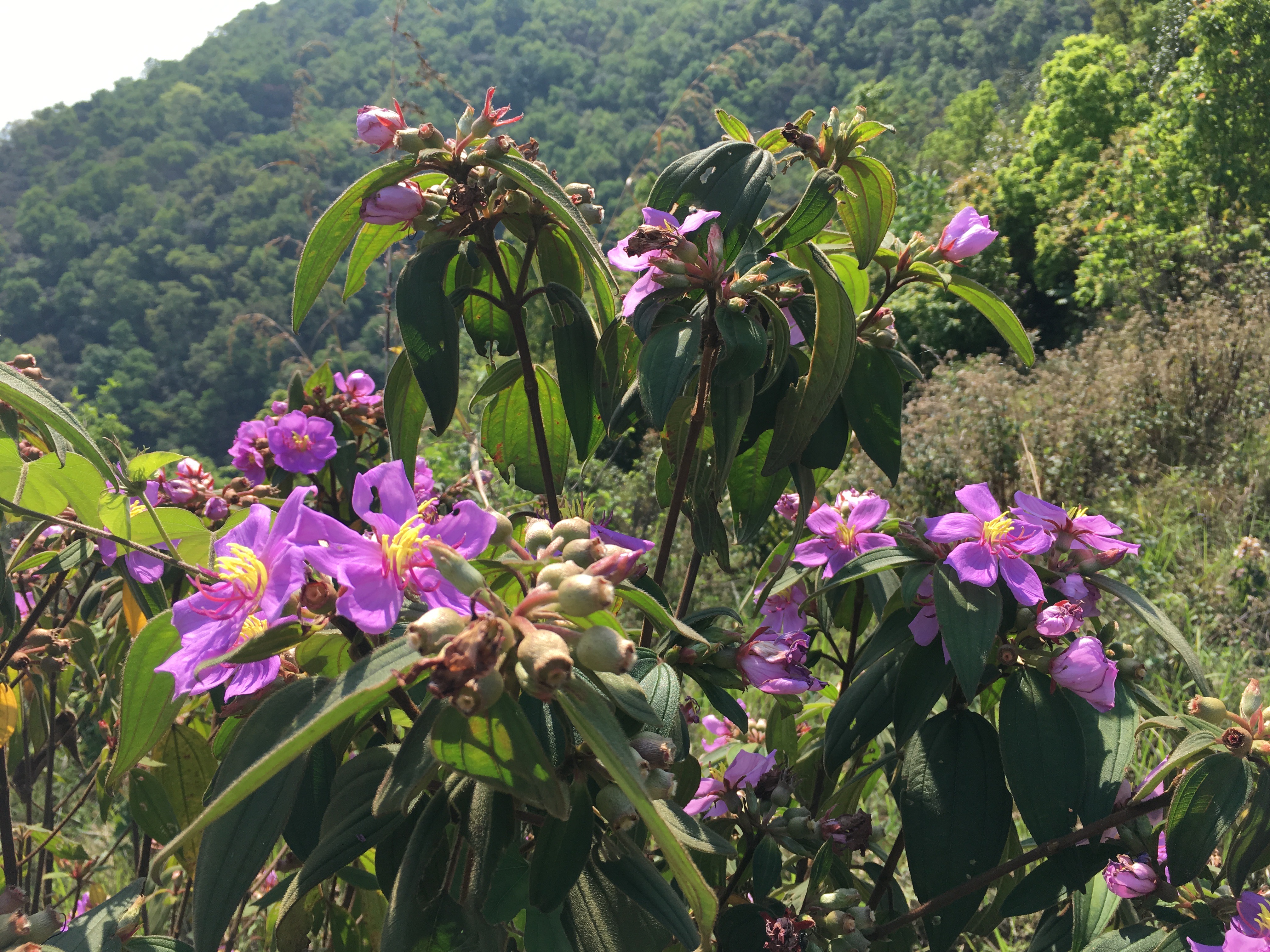
Flowers en route to the World Peace Stupa

Flowers en route to the World Peace Stupa

Machhapuchhare’s distinctive fish tail shape would make it special anywhere. It’s also amazingly tall. Nothing in North America comes close to its height.

For example, the tallest mountain in Mexico is Pico de Orizaba (Citlaltépetl) in the Trans-Mexican Volcanic Belt. At 18,406 ft. it’s 4,533 ft. below Machupuchare. Mount Logan in the Saint Elias Range is the tallest mountain in Canada, at 19,541 ft. Denali in the Alaska Range, the tallest in the US at 20,310 ft, is still 2,633 ft. less. The tallest mountain in the contiguous US, Mount Whitney, barely deserves comparison, at 14,505 ft.

World Peace Stupa

World Peace Stupa

You begin to understand the mountainous nature of Nepal when you learn that Machupuchare, which stands tall above every mountain in North America, is far from the highest even among its nearby neighbors.

Three of the ten highest mountains in the world—Dhaulagiri at 26,795 ft., Annapurna at 26,545 ft., and Manaslu at 26,781 ft., are visible from the Pokhara Valley, and all within 35 miles. All three can often be seen from the World Peace Stupa, but it was cloudy on the day we climbed up to that. See what we missed.


Doongas on Fewa Lake

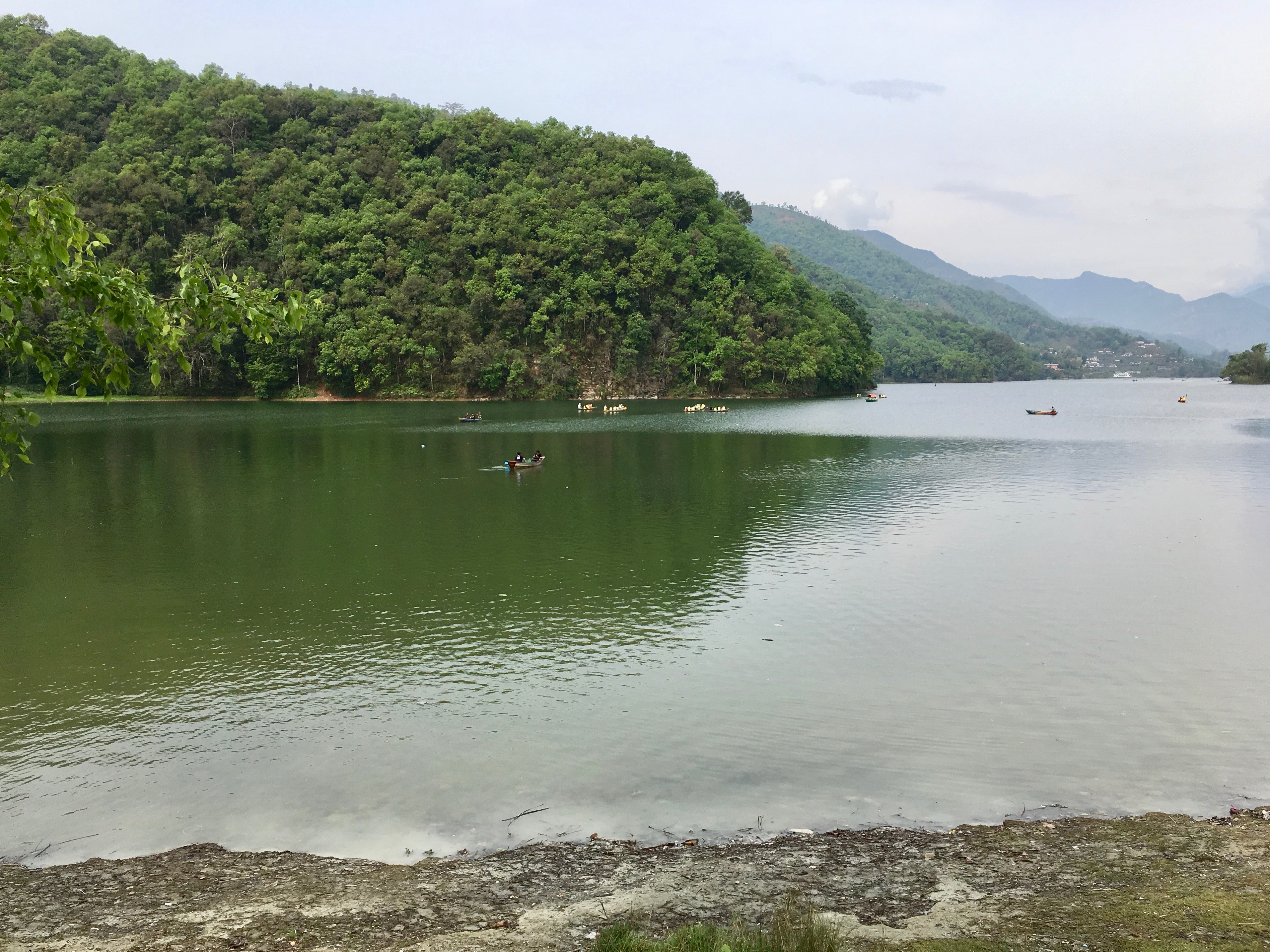
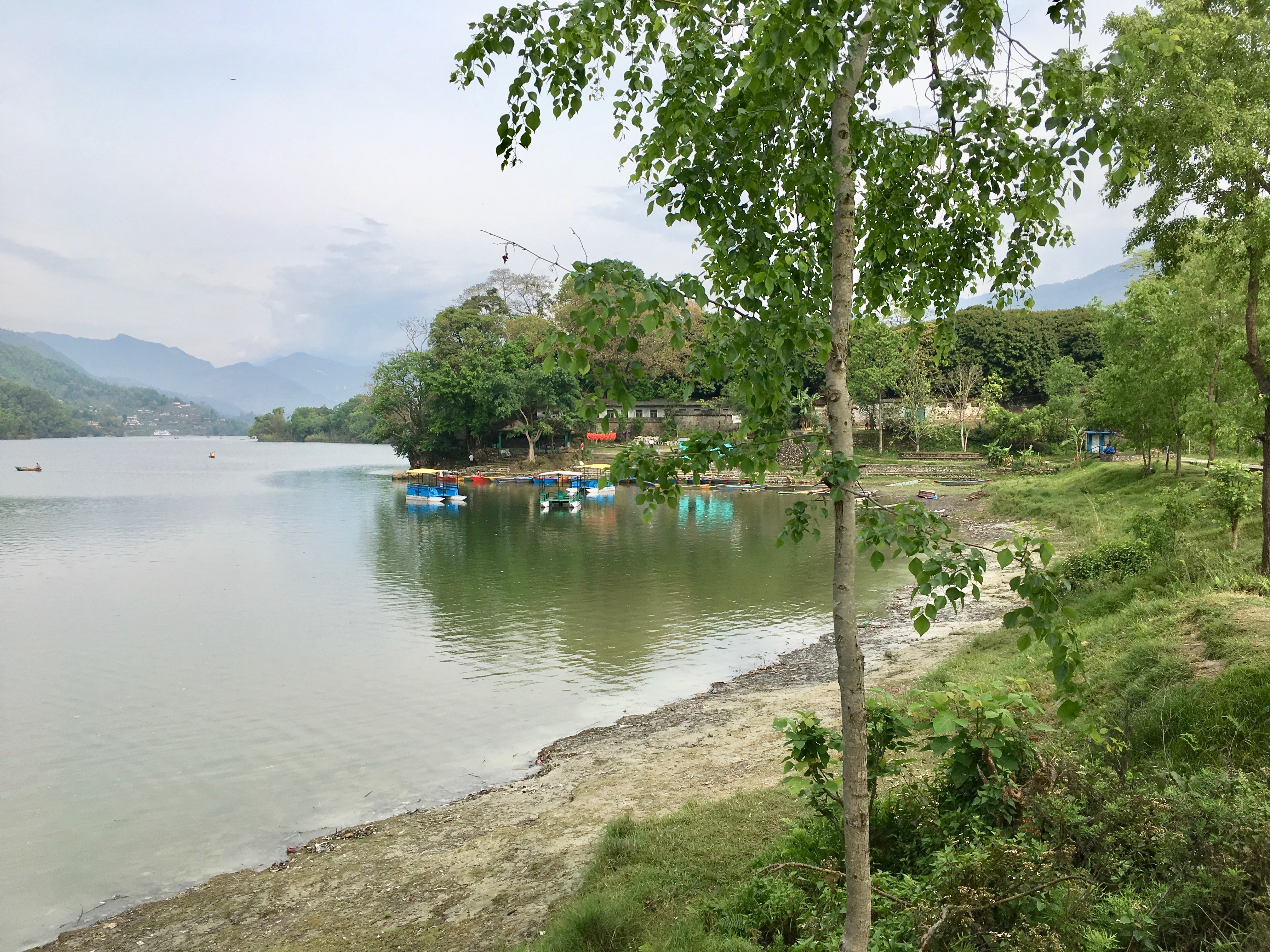
Fewa Lake, Pokhara

Fewa Lake, Pokhara

Friday was the eve of the new year (2075) in Nepal, with big celebrations in Pokhara. We celebrated by paddling a doonga (or dunga) on Fewa Lake.

A doonga looks a bit like a canoe, but it’s much heavier. They’re made of old teak from the Terai in southern Nepal. This is much denser wood than found in the local teak, hence it’s stronger and heavier. One doonga can weigh 500 kg (1100 lbs.).

Our dunga (blue & yellow)

Our dunga (blue & yellow)

They’re good boats, which can easily carry five or more people. They’re stable unless the wind gets too strong. We found them to be slower than a canoe, and a bit tiring with the heavy teak paddles. Nevertheless, they’re mystical to see on the lake.

Navaraj repairs a 35 year old doonga

Navaraj repairs a 35 year old doonga

Fewa Lake is beautiful, with large sections of shoreline undeveloped. There are views of green hills all around, and behind them the Himal, with occasionally clear sights of Machupuchare (Fish Tail) mountain.

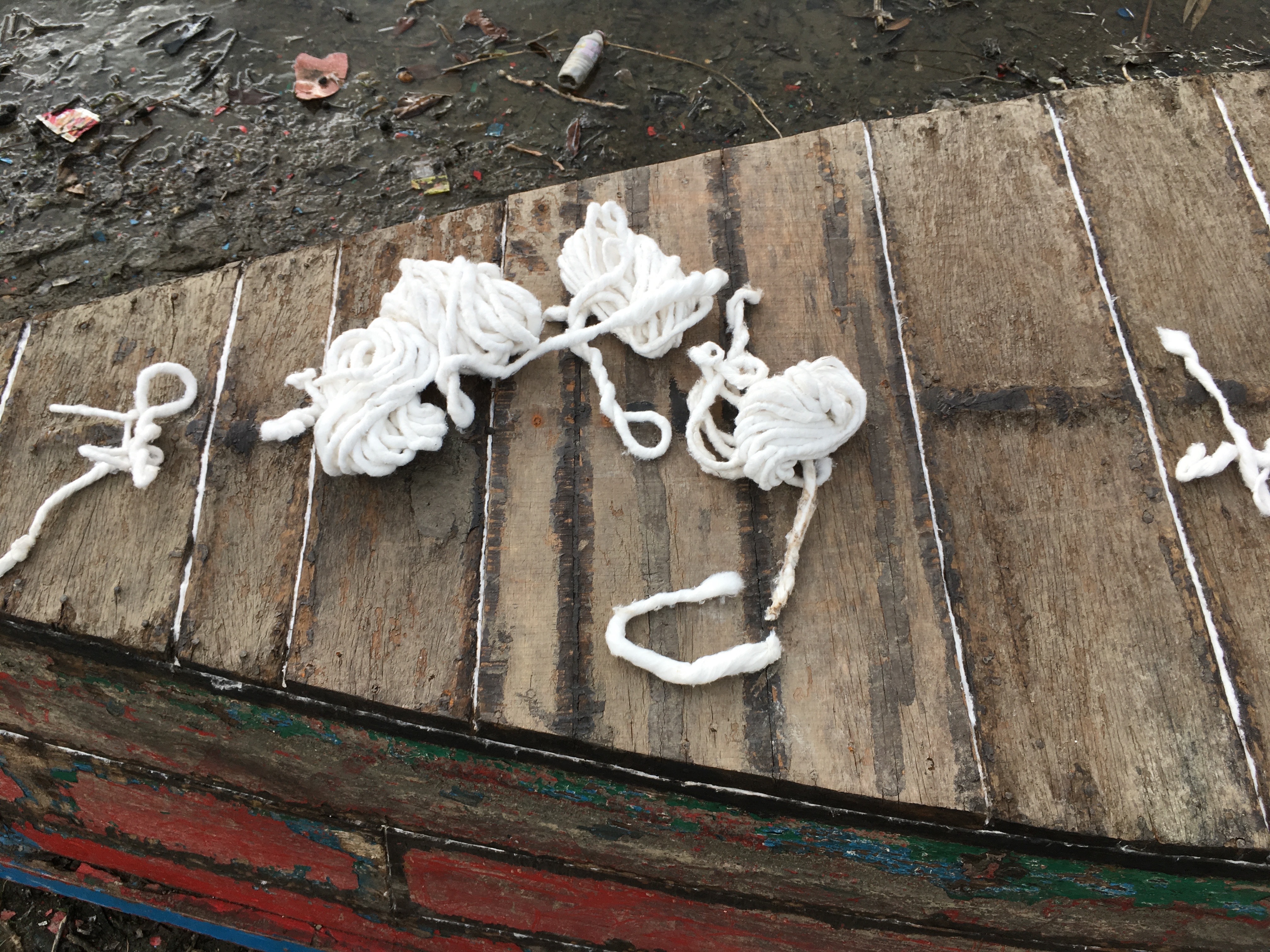
Cotton rope, a form of oakum, for sealing the doongas

Cotton rope, a form of oakum, for sealing the doongas

After our paddle, we talked to  Jhapu, who builds and repairs doongas. He described how he used cotton rope to fill cracks between the planks. He then covers the rope with pitch, applies a layer of primer, and finally enamel.

Lake view with marina in center back

Lake view with marina in center back

Lalita’s shop

Lalits'a shop from the outside

Lalits’a shop from the outside

There are countless little shops not far from my apartment in old Patan. One I frequent is Lalita’s. She basically just has a convenience store. But it’s one that’s about 5% the size of one in the US, with much more stuff. Stepping inside is like entering the TARDIS; it’s bigger on the inside.

Lalita’s shop has drinks of all kinds, including coffee, tea (black, green, herbal), soft drinks, club soda, beer, and wine. There are of course multiple kinds of cookies, candies, chips, and tobacco, like any decent convenience store.

Lalita with neighborhood friend

Lalita with neighborhood friend

But there are also eggs, ice cream, milk, yogurt (both sweet and natural), yak cheese, canned goods, prepared foods, soups, rice, bread, cereal, condiments, hanging herbs and garlic.

Lalita’s shop has razors and creams for shaving, toilet paper, aspirin and other basic pharmaceuticals. There’s much more, imported and domestic, including some items I can’t identify. Most items can be purchased by the piece or by the box. For example, you could choose to buy just five eggs.

On the steps outside there are both 1 liter and 20 liter water jugs. Thanka (Tibetan Buddhist paintings on cloth) hang on the wall.  My goal before leaving here is to discover something she doesn’t have.

You can see in the last photo below a small door at the back. Lalita sometimes has to step back there, for example, to find a drier wine. My suspicion is that there’s a gigantic warehouse appended to the shop, and that she can step through that to get an Amazon delivery. Or, maybe Amazon gets all of its stuff from her store?

When I enter the store each time, I wonder how I can fit my body in what passes for an aisle. But soon, I find that I’m inside the store along with children, other shoppers, young and old, and often a delivery person. There’s lots of friendly chatter and Lalita manages to teach me a few words of Nepali each time I visit.

Deurali danda (hilltop)

Early morning bus ride to the SW hills

Early morning bus ride to the SW hills

A word to the wise:

If you’re in Nepal, and you get invited to join a group of 15 year-olds from Nisarga Batika School for their six-hour spring walk, ask a few questions ahead of time:

  • What kind of “walk” are we talking about?
  • Is a spring walk what we Americans call impossible mountain climbing?
  • Is this just a warmup for their upcoming seven-day trek in Pokhara?
  • Does your trip leader, Sudeep, happen to be a triathlete?
  • Did he recently come in third in the Pokhara triathlon sprint?
  • Are you older than 15?
On the way up

On the way up

Despite my lack of forethought, I not only survived the trek, but had a great time. We climbed Deurali danda, which I thought from a map lookup was far west of Kathmandu. Apparently, though, it just means hilltop, of which there are many in Nepal, even in the Kathmandu Valley. The summit is near Chandragiri Hill, where there is now a modern cable car for tourists.

A welcome rest stop

A welcome rest stop

Our ascent was gradual at first, but soon we heard some alarming advice from our trek leader: “It now becomes a single track, steep, and slippery from the rain. Watch your step. Stay in groups of four to watch for slips.”

Also, “Be alert for wild animals. We saw leopards on the last two treks. Clap your hands and yell when you see one.”

At the top

At the top

There were no leopards as far as I could see. Our mishaps turned out to be minor. There were many screams when one student picked up a leech. One had minor cuts and a sore wrist from a fall. Another sprained an ankle, reinjuring some previous damage from sports.

I broke the ice, or rather the leaf litter, when my foot sank through a deep hole. No damage except to my pride. That recovered a bit when I saw one after another of the others have minor slips.

Abandoned cable car, for industrial use

Abandoned cable car, for industrial use

The students were all in better shape than I was at their age, but a few appeared to have had a bit too much screen time, for which I was grateful. There were frequent calls for rest breaks.

Lunchtime

Lunchtime

A hilltop resident, turning 6 today

A hilltop resident, turning 6 today

An old stupa? Even my hosts weren't sure

An old stupa? Even my hosts weren’t sure

Fiddleheads, a favorite food treat in both US and Nepal

Fiddleheads, a favorite food treat in both US and Nepal

Beautiful fern cacscades

Beautiful fern cacscades

Golden trumpet trees

Golden trumpet trees

Celebrating near the end

Celebrating near the end

Some guys don't even recognize it's a trek

Some guys don’t even recognize it’s a trek

Coffee Tea & Me

Coffee Tea & Me serves up an international menu, including excellent coffee, to what appears to be an entirely local crowd.

That’s due in part to the fact that it’s tucked away down a small alley. That alley slips in between some souvenir shops just 50 meters north of the Bhimsen temple at Patan Durbar Square. You need to know about it in advance, not just wander in.

The little restaurant has great food, served in an unpretentious style. There are only seven tables, with low seating for those seeking a traditional style, and higher ones for anyone with extra long legs.

The menu

Each time I’ve gone in, I’ve relied on Ruby Maharjan, the chef, to suggest what was good that day. One time I had a chicken noodle dish with fresh vegetables, which was delicious, just spicy enough. Another time I had a river-caught bachwa with a wonderful sauce and accompanied by a nice veggie salad. As you can see I couldn’t wait for a photo the way a good food blogger would.

Bachwa fillet

Bachwa fillet

The room layout is enchanting, with walls painted in modern patterns inspired by traditional Nepali and Chinese designs. The painting of Buddha portrayed on the wall is the center of attraction.

There are many other excellent places to eat or have coffee in Patan. They offer not only good food, but fascinating old architecture, charming courtyards, and relaxed atmosphere. I single out Coffee Tea & Me because it gets everything right in a minimalist and very affordable way. It also happens to be close to where I’m staying, just north of Durbar Square.

Bhimsen Temple

The Bhimsen Temple landmark, by the way, is located at the northern end of Durbar Square. It’s dedicated to the god of trade and business.

Bhimsen Temple, Patan Durbar Sq.

Bhimsen Temple, Patan Durbar Sq.

The current temple was completely rebuilt in 1682 after a fire, then was restored after earthquakes in 1934 and 1967. It’s under repair once again, from the 2015 quake. It has an unusual, rectangular, but non-square footprint.

In the photo you can see the old and new in the building itself, in its supports and scaffolding, in the clothing of passersby, and in the cotton candy and cola sales.

Central Zoo

[Note: Click on any photo to enlarge it.]

I had a delightful day at the Central Zoo in Jawalakhel. Despite some problems, the zoo is popular with families. The Friends of Zoo collaborates with 200 schools in Kathmandu Valley. The zoo is working on better enclosures with improved habitats for animals and there’s a recently established Animal Hospital.

I saw one obviously Western couple leaving as I arrived. Otherwise I didn’t notice any Westerners in a visit of well over two hours. They’re missing out.

Posing at the fountain

Posing at the fountain

Himalayan griffon

Himalayan griffon

As much as I’ve enjoyed seeing the multi-starred sites like Patan Durbar Square, there’s nothing like a visit to the zoo for seeing Nepali families enjoying life together in a relaxed fashion. There’s photo taking (both ways) and ample opportunities for casual chats. This gives me a much better sense of the country than seeing some impressive monument.

People watching

As with any zoo, there’s a clear priority on what to see: Plants and physical layout, yes; animals even more; and people best of all. Girls and women were often in beautiful saris and other costumes, perhaps in part because of the holiday (Rama Navami, a spring Hindu festival). Boys and men, including me, were in the obligatory, international male costume of t-shirt and jeans, or other rough pants.

Boating on the central pond

Boating on the central pond

There were groups of pre-school age children, fathers with children, nature lovers, teenagers, old people, visitors from mountain villages, romantic couples, and many more.

Biodiversity

Nepal has remarkable changes in elevation and associated variation in eco-climatic conditions. It lies between the tropical Indomalaya ecozone and the temperate Palearctic ecozone. A total of 118 different ecosystems have been identified. All of this leads to Nepal being a biodiversity hotspot, albeit one under severe threats as with biodiversity everywhere on the planet.

Getting organized

Getting organized

Among the notable mammals in Nepal are pangolins, Bengal tiger, one horned rhinoceros, Asiatic elephant, red panda, snow leopard, and Tibetan wolf. There are many reptiles unique to Nepal and over 900 bird species. The Himalayan griffon vulture is is the largest and heaviest bird found in the Himalayas. There are also many unusual fish, invertebrates, and plant life. The red rhododendron grows throughout Nepal and is a national symbol. The zoo houses many of these creatures and seeks to expand its collection, especially of indigenous fauna.

Management

Red panda

Red panda

The zoo has problems related to space, budget, training, and animal care. It reminds me of some zoos I visited when growing up in the US, before funding improved and international zoo standards were enforced. However, after 1995, the National Trust for Nature Conservation took over the zoo and has initiated projects to make it a fully modern zoo, with natural habitats, and facilities for education and research. It’s already become a refuge for live animals being smuggled internationally.

A pigeon, the best animal at the zoo

A pigeon, the best animal at the zoo

Comparing to the Lincoln Park Zoo in Chicago illustrates the challenge for the Central Zoo. It has half the acreage and about 3% of the budget. Even considering purchasing power parity it’s trying to do a lot with little.

Juddha Sumsher J.B. Rana created the zoo in 1932 as a private trophy. He was maharaja and ruled Nepal as head of the Rana dynasty. This explains the two incongruous statues of women standing in prominent positions. One is of his mother and the other of his sister-in-law. The zoo opened to the public in 1956 under various managements. It’s called the “Central Zoo,” even though it’s the only one in Nepal.

Languages of Nepal

Nepal ethnic groups

Nepal ethnic groups

In an area about the same size as Illinois, smaller than New England, Nepal boasts an amazing array of languages.

The 2011 National census lists 123 mother tongue languages. Nepali is the official language, and is spoken by nearly half of the people (although with multiple dialects). The others are all “national languages,” which are accepted as official at the regional level.

These languages can be quite different. In fact, they belong to at least four major language families. Most of the languages are in the Tibeto-Burman group, but only 18% of the people speak these. The largest population percentage is for languages in the Indo-Aryan family. There are also a number of Dravidian languages and Austroasiatic languages.

Courtyard friends

Courtyard friends

Nepal also has several indigenous village sign languages, as well as the official Nepali Sign Language (which is unrelated to oral Nepali). I actually learned a few words of the latter while waiting for a friend at a restaurant where the staff were mostly sign language speakers. When they asked what I wanted to order, at least I could say “I’m waiting for my friend.”

Lava Deo Awasthi

Lava Deo Awasthi

My friends in the photo above are signing “peace” and either “Spiderman is great” or “I love you” (I didn’t ask). These are not necessarily in official Nepali Sign Language.

Along these lines, I was fortunate to meet Lava Awasthi, the Chairperson of the Nepal Language Commission. He said that although there are 123 national languages, the Commission suspects that there are many more. And in addition to the four well-established language families, there may be at least one, maybe two more. So, this is an active area of research. The terrain of course makes it difficult to study for the same reason that there are so many languages in a relatively small territory in the first place.

Shivapuri peak

Asami monkey

Asami monkey

I recently “climbed” Shivapuri. I have to put that in quotes, because for Nepalis and serious trekkers, this is a “short and easy walk.” For this flatlander, however, it was a serious climb.

Most of the guides describe it as 3-4 hours up and 2-3 down, with extra time needed for photos, lunch, shrine visits, and such. So, it consumes much of one day. My fitbit got a workout, reporting 38,000 steps and 353 flights of stairs. To be fair to flatlanders, it’s not a negligible height–8,963 ft, easily higher than anything east of the Rockies in North America.

The park

Fauna of Shivapuri

Fauna of Shivapuri

The Shivapuri park is in a beautiful national park, just north of Kathmandu. It’s a destination for watchers of birds, plants, butterflies, Hindu shrines and Buddhist monasteries, and much more.

I learned that Mira Rai had been there the day before my walk, hosting a trail running event. The distances were 25 K, 50 K, and 80 K. I could still see many of the brightly colored ribbons marking the trails for the races. Perhaps you need to walk there to understand why an 80 K (50 mile) run up and down the hills would be a good workout. One man ran directly up and down to Shivapuri peak in one and a quarter hours. That’s a good marathon pace by itself, but on stairs at altitude it’s unbelievable.

Nagi Gomba

Nagi Gomba

Sights

At my more sensible pace, I had a chance to observe more of the natural beauty of Shivapuri. Starting at the Pani Muhan gate, I saw Asami monkeys, a type different from the rhesus monkeys one sees around temples in Kathmandu. There were loud calls from the many warblers in the park, as well as from blue magpies, Bonelli’s eagles, and great Himalayan barbets. I mostly just heard these, but did see kalij pheasants. Beautiful butterflies were everywhere, and mercifully, no annoying insects.

Water source and temple

Water source and temple

There are some magnificent pines at the lower elevation, then a dense forest of laurels, rhododendrons, and oaks heading up.

The first major stop is Nagi Gomba, a Buddhist monastery run by nuns. There’s a school for orphans. Although there is still much evidence of earthquake damage, fortunately, not al of the buildings were destroyed. You can also fill up your water bottle with clean mountain water. The photo of the main doorway shows the title in a Tibetan language, in Nepali, and in Tibetan with Roman script.

Signpost

Signpost

My guide

There are mostly helpful signposts marking the way. But they’re not necessary because of the mandatory guide. In one of the photos you can see Badi filling up his water bottle at a shrine. There, he also applied a tilak, along with the prayer – “May I remember the Lord. May this pious feeling pervade all my activities. May I be righteous in my deeds.”

At Shivapuri peak

At Shivapuri peak

Badi, by the way, was an excellent guide, helping to identify many of the unfamiliar natural phenomena. He was also very honest. When I said, “I need to get in better shape,” he replied, “yes, you do.” Seeking a little softer response, I added, “I need to lose some of this belly.” Perhaps I hoped he’d say that I wasn’t that bad for an old man, but instead, I got another, “yes, you do.”

Huge, old oaks

Huge, old oaks

So, I asked whether he’d guided anyone as old as I on this “climb.” He told me about a 65 year old German man. He was a pilot who had a terrible crash, breaking many bones. His doctor told him to take up walking and trekking. I knew what was coming: “He was in much better shape than you.”

The top

I struggled a bit near the top. I was probably dehydrated, getting a little dizzy. At one point the mica on the ground and in the rocks presented me with a beautiful kaleidoscope of flashing lights. I enjoyed that for a moment, until I remembered that I needed to be paying attention to the walking.

Many beautiful butterflies

Many beautiful butterflies

We managed to reach the summit and paused for a brief lunch. Unfortunately, there was cloud cover, so we didn’t get the view of the Himalayas that many people count on as their reward for the climb.

Also, I felt a little sick, which may have had something to do with the mica kaleidoscope. So I walked back down a short way to take care of business in the woods. When I came back up to the peak, I realized that I had technically ascended it twice in one day, something few people do. My pace was glacial and my form was embarrassing, but I made it, and twice!

Kumbeshwar Technical School

KTS is a place very close to my apartment in Patan and is now close to my heart as well. I’ve visited several times and want to learn more about it.

KTS was established in 1983 to assist the local community of street sweepers. They were “untouchables,” with little education or employment opportunities.
Carpentry training

Carpentry training

The project began with a childcare project, followed by adult literacy classes, and a nutrition and health clinic. Soon, a carpet weaving training program was established to expand employment possibilities. A production unit grew out of that, which provided funds to start a primary school in 1987.

Today, there’s a nursery, a free daycare center for employees’ children, and an orphanage. There are now training programs for knitting and carpentry as well.

On the production side, there is no child labor involved and all the work adheres to Fair Trade policies (KTS is a founding member of Fair Trade Group Nepal). Products are sold abroad by organizations such as Traidcraft, Serrv, Ten Thousand Villages, and Oxfam.

The library (and social studies teacher)

The library (and social studies teacher)

The project provides an allowance during training, and employment afterwards. Over 2000 businesses have been started by graduates, some in Kathmandu, and others back in villages.

There is a small shop displaying carpets, knit hats and mittens, furniture and small wooden items. There’s even a cookbook for Nepali food, now in its second edition.

Nursery school

Nursery school

The program keeps growing and changing, but throughout there’s a focus on fairness, opportunity, economic security, local empowerment, literacy and learning.

Courtyard life

Dhumbahal stupa, Patan

Dhumbahal stupa, Patan

My apartment is on the second floor (US, third) near Kumbeshwar Temple complex in Patan. It’s in one of several 4-6 story buildings surrounding a small courtyard, called Dhumbahal Square.

Thus far, it’s similar to the courtyard behind the flat in London where we stayed with our good friend Jane on the way to Nepal. That courtyard had well-groomed bushes and trees, walkways, and convenient benches. It offered a peaceful respite from city life.

Objects

Family

Family across the way

The one in Patan is a different story entirely. It’s 100 feet square, about the same size as the average US suburban lot–1/4 acre. But in that 1/4 acre there’s more to see than anyone can absorb.

There’s a Buddhist stupa in the middle. Around the perimeter one finds a communal water source, a small Hindu mandir, a tiny shop that miraculously produces any item you can name, a beauty parlor (and training center), a (motor)bike wash and repair center, a small convenience store, a weather station on top of one of the buildings, and other establishments I haven’t identified yet.
Tree blossoms for her hair

Tree blossoms for her hair

Water is brought by truck to fill large, black plastic tanks on the top of each building. That water becomes the tap water, getting its pressure from the height of the tanks. It’s filtered, but most people drink bottled water for safety. Mine comes in 20 liter clear plastic jugs, which fit into a dispenser tank.
Small mandir

Small mandir

The ground is covered about a third with bricks. Some of those form a sort of patio, others are arranged in a curving pattern as if they knew exactly where most people would like to walk. There’s also a slate paved area, some concrete, lots of bare ground, and amazingly, a little grass. I haven’t figured out why one surface is one place rather than another, but it all seems to work.

Activities

The mystery hole

The mystery hole

As remarkable as some of these objects may be, it is the activities around them that cause one to sit mesmerized on the balcony, just watching.

Baby photos

Baby photos

A woman tosses millet in the air to remove chaff; another takes an offering with candles and flowers to the temple; a man splashes water on the ground to reduce the dust; boys roll an abandoned motorcycle tire around the stupa, as two girls walk around the same monument turning the prayer wheels; a young man washes his motorcycle; an older man gets an open-air shave and haircut; a young couple take endless photos of their young child; women hang laundry and water flower pots; children play rock pitching games. It’s notable how often fathers are caring for children. One older boy (12) runs to pick up a younger one (6) who’s fallen. He comforts him and brushes the dust off his pants. The children also sing and dance.

Preparing vegetables

Preparing vegetables

Meanwhile, there’s construction. Although Patan may be the oldest city in the Kathmandu Valley, dating back more than two millennia, and the courtyard is in one of its oldest parts, there’s a feel of new building everywhere.

The wedding party

The wedding party

Some of this is needed re-construction after the damage of the 2015 earthquake. But workers are building new apartments, too, reflecting early gentrification of the area. One man digs a mysterious hole that ends up being 8 feet deep with surprisingly straight sides. Later, small boys use the dirt from the hole as a site for play and the uncovered rocks for their pitch & toss games. A small crew puts up a cell tower, without using any harnesses or visible safety equipment. The construction goes on amidst the young children playing, older ones coming and going from school, adults working and relaxing.

Installing the cell antenna

Installing the cell antenna

Observing all of this is like a watching a complex movie, except it’s one that is showing 360° around, with sights and sounds, but also with tastes and smells, touch, heat and cold.

Schedule

There is no beginning to the courtyard’s day; one moment segues into the next 24/7. A dog may start barking at 2 in the morning and soon have dozens of others to talk with. I can’t give a full account of the day, as I’m mercifully learning to sleep through most of it. But sometime around 5 in the morning is an important inflection point.

Morning rituals

Morning rituals

That’s when I hear the first temple bells–one is deep and loud, two are middle volume, but one of those is high pitched. There are several smaller ones, too. If the dogs weren’t already going they soon make up for lost time. Motorcycles start up. Human voices come in, conversing rapidly or yelling. Before long children are running and squealing about. In little gaps, one can hear pigeons cooing, crows cawing, and songbirds singing. The roosters manage to make themselves heard above it all.

This continues throughout the day, although each hour has its distinctive character. There are sounds of children laughing, singing, and squealing at play from the nearby school. There’s even a time in the afternoon when all but one dog decides it’s too much trouble to bark anymore. That one gives a few desultory yaps, but I can tell that his heart isn’t in it. In the evening, there’s the dinnertime chatter all around, and later, Nepali pop music.

One day, the signature event was a wedding. Although it seemed to involve most of the courtyard and many visitors, it didn’t stop all the other activities. We saw a 50 foot long tent being erected and red plastic chairs being set up in rows. Soon, a 14-piece band appeared. There were of course many photos, of babies and children and women in beautiful saris. There were also a number of young men in what must be called dandy outfits and poses.

Chaos and peace

The sign to turn into the courtyard

Lions signaling the turn into the courtyard

On first encounter, the chaos of the courtyard is disturbing–too many scary dogs snarling, too much noise, too many strange sights, sounds, and smells, too many chances to trip on rocks or broken pavement.

But the courtyard is actually a very safe place, away from the street traffic and noise, and where people know one another.

After a while it all, or most of it anyway, begins to make sense. There are patterns and relations that fit into a larger whole. I begin to recognize faces and they mine. One child loves to talk in broken Nepali/English; another seems too shy to say anything. The apparent chaos is actually welcoming, enriching, overcoming difference. There’s peace in the bustle that is less apparent in quiet solitude.

Peace does not mean to be in a place where there is no noise, trouble, or hard work. It means to be in the midst of those things and still be calm in your heart.