Yandex Probki

Keith Gessen has an interesting article about Moscow’s horrible traffic, Letter from Moscow, “Stuck,” in The New Yorker (August 2, 2010, p. 24).

Among other things, he describes Yandex Probki (Яндекс.Карты), an excellent example of a user-created map, which shows Moscow traffic patterns in real time. The site’s content comes, not from webcams or pavement sensors, neither of which would both practical there, but from GPS-enabled smartphones. Users send in descriptions from their own situations.

You can get a sense of the site from this video below, but you can also explore the map itself and get a sense of the enormity of the traffic jams, even if you don’t read Russian.

Dance your Ph.D.

Have you ever been asked to explain your Ph.D., or for that matter, any complex project, to someone who won’t even understand the words in the title?

Imagine you’re Maureen McKeague, working on “Selection of a DNA aptamer for homocysteine using systematic evolution of ligands by exponential enrichment.” How would you summarize that in a way that conveyed the general sense of the work without trivializing it, or alternatively, putting your listener to sleep?

One answer is to create a dance video. This year’s “Dance Your Ph.D.” contest run by Science, received 45 submissions from around the world. I was impressed with all four of the finalists, but voted for McKeague’s because it seemed to most naturally fit the choreography to the logic of the research and I liked the dance itself.


Selection of a DNA aptamer for homocysteine using SELEX from Maureen McKeague on Vimeo.

You can enter your own vote on the Science site.

Now I’m trying to imagine how to choreograph my own dissertation, The Logical Structure Underlying Temporal References in Natural Language.

Popper, Wittgenstein, and the raccoon

We had a visitor last night. Like a previous one of her kin, she managed to visit every room, leaving small gifts on the floor and thoughtfully rearranging books, wall hangings, pottery, and other items.

This one had a special talent for philosophy. She was particularly interested in Karl Popper’s critique of teleological historicism and his reanalysis of Plato, as he develops in The Open Society and Its Enemies. One question she wanted to explore was whether raccoons enter houses with the intention to be ornery or do they just fall in because I haven’t come up with a way to secure the skylight screen. Popper would argue that there are genuine alternatives in history, multiple causal processes, and a role for raccoon intentionality. But I’m not sure how that helps to answer the question.

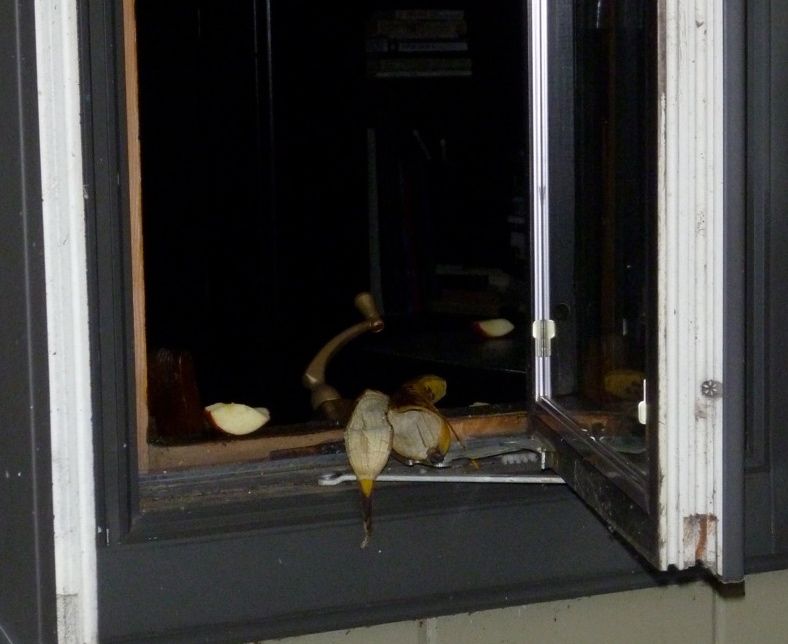
Hoping to appeal to her desire for conscious agency as well as her stomach, I set out some cut apples and banana peel in a trail across the counter to an open window. But her drive to remain curled up in the philosophy section was too strong, and she ignored all my offerings.

I noticed that our visitor preferred to stay in the Popper section and didn’t give any time to poor Ludwig Wittgenstein, his antagonist in the famous confrontation at the Cambridge University Moral Sciences Club. As there was a wood stove in the room, I thought I might reason with her using the fireplace poker, just as Wittgenstein had done with Popper in 1946. In that event, Popper stormed out, which would have been a pleasant outcome in this case, given my moral perspective.

But she held her ground, insisting that Wittgenstein’s view of formal philosophy as nothing but language games was an abdication of moral responsibility, that the Open Society could not be maintained without strong raccoon ideals. I argued that “open” in this case did not include raccoons. This led to a discussion about the danger of a priori categories and the need for dialogue across differences. While I appreciated the general argument, I felt that Wittgenstein might have a valid point in this case, and that it was time to terminate the game.

I assembled a set of tools in order to move to the next stage in this debate: the poker, large leather fireplace gloves, a broom, a blanket, a powerful flashlight, fresh fruit to appeal to her culinary desires. All I was missing was the courage to grab on to her and show her to the exit. As I said above, poking with the poker had no effect.

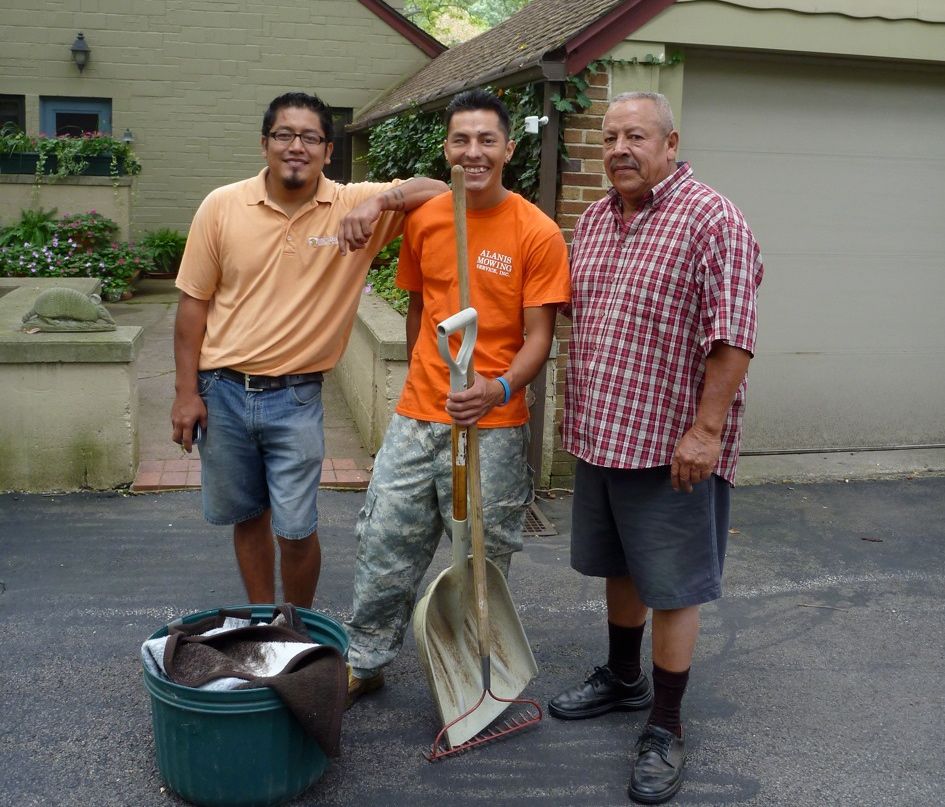
Fortunately, we had some helpers with more resourcefulness and courage than I. It took all three of them and a large plastic tub, but they managed to corner the raccoon in the tub, cover her with a blanket, and take her to the woods, where, I believe, her interest in environmental philosophy can be more profitably continued.

References

The four P’s of pragmatism

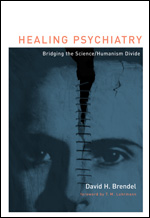
In a 2006 book, Healing Psychiatry: Bridging the Science/Humanism Divide, David H. Brendel notes that psychiatry “is torn by opposing sensibilities. Is it primarily a science of brain functioning or primarily an art of understanding the human mind in its social and cultural context?” He sees the divide between science and humanism as a sickness of psychiatry, one that makes it difficult to heal the emotional conflicts and wounds of patients.

To address the divide, he turns to the pragmatism of Charles Sanders Peirce, William James, and John Dewey. He presents pragmatism in a simple formula (the four P’s) that could apply to most other domains (e.g., Shields, 2008):

  1. the practical dimensions of all scientific inquiry;
  2. the pluralistic nature of the phenomena studied by science and the tools that are used to study those phenomena;
  3. the participatory role of many individuals with different perspectives in the necessarily interpersonal process of scientific inquiry;
  4. and the provisional and flexible character of scientific explanation. (Brendel, 2006, p. 29)

Any such formula has its limitations, but this one seems remarkably effective at capturing salient aspects of pragmatism. The first p, practical, emphasizes pragmatism’s insistence on considering the consequences of any concept, to steer away from abstractions and idealizations that have no conceivable effects in our ordinary experience. The second p, pluralistic, reflects the fact that pragmatism is not so much one method or theory, but rather, an approach that considers any tools that may increase understanding, thereby achieving better practical consequences. It also reflects the assumption that interesting phenomena are unlikely to be captured within a simple category or single way of viewing. The third p, participatory, follows from the second in that multiple perspectives, Peirce’s community of inquiry, are needed to accommodate a pluralistic understanding. And the fourth p, provisional (cf. fallibilism), acknowledges that in a complex and ever-changing world, any understanding is subject to change as we learn more or as events occur.

References

  • Brendel, David H. (2006). Healing psychiatry: Bridging the science/humanism divide. Cambridge, Ma: MIT Press.
  • Shields, Patricia M. (2008, March/April). Rediscovering the taproot: Is classical pragmatism the route to renew public administration? Public Administration Review, 68, (2), 205-221. Washington, DC. (PAR Interview)

Rice beats Texas, 17-34

Just a week shy of 48 years ago (September 12, 1962), President John F. Kennedy spoke at the Rice University Stadium about the plan to send a person to the moon:

But why, some say, the moon? Why choose this as our goal? And they may well ask why climb the highest mountain? Why, 35 years ago, fly the Atlantic? Why does Rice play Texas? We choose to go to the moon in this decade and do the other things, not because they are easy, but because they are hard, because that goal will serve to organize and measure the best of our energies and skills, because that challenge is one that we are willing to accept, one we are unwilling to postpone, and one which we intend to win, and the others, too.

Today, Rice played Texas again. Fifth-ranked Texas won as usual. This time the score was Texas 34, Rice 17, but the game was disappointing to Texas fans; Rice easily beat the 31.5 pre-game point spread.

While in Texas this week I remembered cheering for Rice in the 1965 game, which was played in Austin. Rice won that one, 20-17. But Kennedy was right: It is very hard for Rice to play Texas.

Threadgill’s Home Cookin’

A couple of nights ago, my sister, mother, and I went to Threadgill’s Home Cookin’ on N. Lamar in near north Austin. It’s not far from where I lived when I was in graduate school at the University of Texas.

I used to listen to Kenneth Threadgill and the Hootenanny Hoots when they played at the Split Rail in south Austin, so going to the restaurant brought back many fond old memories.

We had a delicious dinner in the kind of informal, but comfortable setting that I like a lot. At least for my own experience, I agree with the claim on the restaurant website that:

It is a simple fact that the Threadgill’s restaurants, museum and live music venues have more to do with Austin’s cultural and musical heritage than most any other institution within the city limits.

The history goes on to add:

Perhaps country music lover and bootlegger Kenneth Threadgill had more in mind when he opened his Gulf filling station just north of the Austin city limits in 1933, for the day that Travis County decided to “go wet ” in December of the same year, Kenneth stood in line all night to be the first person to own a liquor license in the county. Soon, the filling station became a favorite spot for traveling musicians since it was open 24 hours for drinking, gambling and jamming. Kenneth would sing songs by his beloved Jimmie Rodgers nightly. Musicians who came to play were paid in beer. Such was the atmosphere at Threadgill’s, it was only when a curfew was enacted in 1942 that its owner had to get a key for the front door, before that it had yet to have been locked.

Threadgill’s was important in the development of the Austin music scene. While Threadgill sang Jimmie Rodgers songs, Janis Joplin developed her country and blues hybrid. Other performers brought in rock & roll or music from Mexico.

Claude Matthews produced and directed a very good documentary video about Threadgill and his restaurant, Singin’ the Yodeling Blues. Here’s part 1, with links to parts 2 and 3 on Youtube:

Between the rich and the rest

Robert Reich has a good op-ed piece in The New York Times today, How to End the Great Recession. It’s a clear and convincing account of a major reason this recession resists all the usual remedies.

Reich asks how American families could manage to keep spending as if they were keeping pace with overall economic growth, and in turn fuel that  growth. There were three reasons: (1) more women joined the paid work force, (2) everyone put in more hours, and (3) families went deep into debt. The last was OK as long as home prices kept rising. But eventually the bubble burst, and there’s no reserve left to rebuild.

Now we’re left to deal with the underlying problem that we’ve avoided for decades. Even if nearly everyone was employed, the vast middle class still wouldn’t have enough money to buy what the economy is capable of producing.

But if the economy was growing, where did the money go?

Mostly to the top. The economists Emmanuel Saez and Thomas Piketty examined tax returns from 1913 to 2008. They discovered an interesting pattern. In the late 1970s, the richest 1 percent of American families took in about 9 percent of the nation’s total income; by 2007, the top 1 percent took in 23.5 percent of total income.

Note that the 23.5% figure is the highest since just before the stock market crash of 1929 and the Great Depression.

Some right-wing commentators have tried to equate social justice with communism. It is ironic that many in their audience see social justice as the final blow to their own economic survival, when in fact it is the lack of social justice that has put them in difficult straits.

In fact, social justice is the only thing that may save capitalism. Without it, even the top 1% will suffer, because their wealth can only be drawn from a healthy economy, and a healthy economy requires a more equitable distribution of wealth, through fair taxes (the US system enormously favors the wealthy), fair wages (real wages have been falling, except at the top), and improved social services, such as health care.

Stating it more broadly: How long can any political/economic system survive if it remains socially unjust?

References

Photo opportunity

I was recently invited to appear in a book for the Fort Worth Museum of Science and History. They’re featuring people who played an important role in creating the museum, famous people who enjoyed the museum, and for some reason, me.

This project involved making photos of the people in scenes with museum artifacts. In my case, that was to be antique telescopes. It’s not hard to find antiques, since even the new ones from my day are now over half a century old. The photography was to take place in Austin.

My photo shoot went OK in the end, but was a near disaster in many ways. Skipping over several minor problems, which made me a few minutes late, I arrived at what I thought was the site, the J. J. Pickle Research Campus, only to be told that I had come to the wrong place. Michael O’Brien, the photographer, did not have any office there, but could definitely be found at CMA (?) on the main University of Texas (UT) campus. *All* I had to do was drive down Burnet Rd to 183, take IH 35, get off at 24th St, and find my way to his office. That was a white knuckles drive in the Austin traffic, in an unfamiliar car, especially when I don’t see well while I’m waiting for new contact lenses.

Anyway, I eventually got to the main campus, but at the opposite corner from CMA. I was given a map, but it didn’t show construction. So, I’d drive ten blocks down a narrow street, with cars on both sides, people on bicycles, pedestrians walking haphazardly, while searching for a street sign I could read. Then I’d come to a construction barrier, which meant I had to back up and go a different way. I eventually reached what I thought was CMA.

There were of course no parking spaces, save for one with large signs declaring how your car would be towed within seconds and crushed to a pinpoint of dense matter for use in a cosmology department experiment if you even thought of using it. It was my mother’s car, but she wasn’t there, so, deciding for her, I took the chance. Inside CMA, which by now I’d decided was a top secret agency, known only to a few others with three-letter acronyms, I asked for Michael O’Brien. No one would admit knowing him, and he wasn’t in the directory.

I kept pressing on, meeting people in the special needs communications department (obviously some kind of intelligence agency function), radio-television-film (propaganda department), and eventually journalism. Under relentless pressure, I finally got someone to claim him.

Unidentified But Helpful Person: Would you like his phone number?
Me: Thanks, no, I have that and already called it, leaving a message.
UBHP: He has a cell number.
Me: Oh, can you give me that?
UBHP: No, but I could call it for you.
Me: Please do.

To my surprise, we reached Michael. Almost immediately another call came in, undoubtedly from some little-known war region, so we went on hold, I had to move to another room, needed to, but couldn’t find the other phone, had trouble reconnecting, and so on. Eventually, we were able to talk, most certainly being recorded by CMA operatives. I apologized; he apologized.

Then, I learned where he was, at the J. J. Pickle Campus: “All you need to do is get across the campus, head north on that same IH 35, take 183 north to Burnet Rd. Just come in the main gate [exactly where I’d been before].” We’re in building 6.

So, I retraced my previous harrowing drive, finally making it the photo shoot. I was sweaty, dehydrated, frazzled, rumpled, everything one needs to be ready for an expensive, high-stakes photo op.

Building 6 turned out to be Vertebrate Paleontology. It’s filled with fossils of creatures who blessedly never had to deal with Austin traffic, construction, vicious tow operators (I got away this time), or  gigantic campuses. I wanted to explore the building, but we (the photo crew of three and I) were after all now an hour late.

So, we moved directly into photos. Poor Michael and team must needed to take several hundred, searching for one in which I didn’t look like the after photo from the evil tow company’s crushing operation. Eventually he succeeded.

But I’m almost certain that when he said he’d gotten a good one, that he’d focused on the telescope alone, and I was out of the frame. As Dewey’s idea of end-in-view tells us, standards for success need to accommodate to changing reality. The sharks managed to stay away.

Anyway, we were done. I hope the book is a success in spite of me.

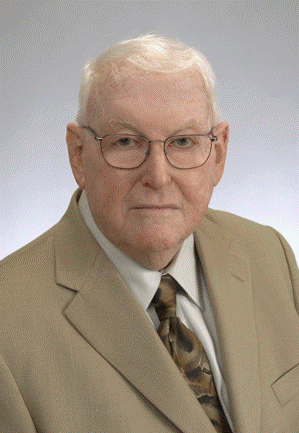
One bonus of the adventure was that I got to meet Wann Langston, a famous UT paleontologist (above left). He’ll be featured in the book because of his research on fossils in Texas, which played an important role in the Museum’s early development, including my own experiences in the “Rocks and Fossils” classes.

Langston shared some of his current work on fossilized giant crocodiles from the Big Bend area. I think they were Deinosuchus. He showed us several models made from creatures with jaws big enough to swallow a man whole, especially one who by then was exhausted from his photo shoot (harder than you may think) and his explorations of the UT campus(es).