Turkey’s Village Institutes

One of the goals I had for my recent trip to Turkey was to learn more about the Village Institutes (Köy Enstitüleri) there. I knew that they represented an innovative approach to expanding opportunities for learning, but that they had come to an abrupt end in the late 1940’s.

I’d read several articles about the Institutes (see below), and also knew that they had been influenced by John Dewey’s report on the Turkish educational system, but I wanted to hear firsthand from Turkish people who had been involved with the Institutes, or had studied them from a Turkish perspective.

The Village Institutes were created to meet a serious educational need. In 1928 (the year of the introduction of the Latin script in Turkey), 82.5 per cent of men and 95.2 per cent of women were illiterate. For 13.6 million people, there were only 4,894 elementary schools and most of those were in the towns, not the villages where most of the people lived (Vexliard & Aytac, 1964).

Between 1939 and 1946 twenty-one co-educational boarding schools were built to prepare primary school teachers. Much of the construction work was done by pupils and teachers. Youth of both sexes, aged twelve to sixteen, who had completed a five-year village primary school, qualified for admission. Their education was free following a pledge to teach in an assigned village for twenty years after graduation.

The duties of the new teachers included:

  • primary education
  • adult education in the villages
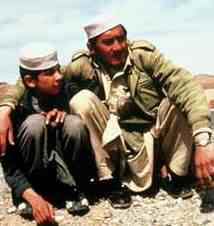
  • raising the cultural level of the villages through the distribution of books, educational programs, radio, and vocal, dance, & instrumental music education; the photo above (by George Pickow/Three Lions/Getty Images), shows Turkish teenagers in an Institute presenting a mass concert on the saz, the Turkish national instrument
  • promoting progressive agricultural techniques in the fields, the orchards, and kitchen gardens; the raising of  livestock; rural handicrafts such as ironwork, carpentry, leather work, mechanics, and electricity
  • instruction for adults in child-rearing, housekeeping, needlework
  • the creation and development of rural cooperatives

The graduates of the Institutes were to return to their villages as leaders and reformers. Teachers, students, and villagers in general were to learn practical skills, mostly related to their agricultural economy, new tools for life, and general education.

The Institute approach embodied ideas of Ataturk, Dewey, and others such as integrating theory and practice, focusing on the underserved, working across institutions, and a systemic approach to building a stronger society. Classical education was to be combined with practical abilities and applied to local needs.

The Institutes had a major impact, and many people regret that they were shut down. But there was resistance against this secular and mixed education. Some feared that it would educate ‘the communists of tomorrow,’ a damning statement during the Cold War. Traditionalists questioned the coeducational and secular aspects. Powerful landlords did not appreciate the goal of educating children who could ask “Why?” questions. There were also questions about the organization and preparation of the teachers. By 1953 the Village Institutes had been completely shut down.

I heard strong statements from people who knew about the Institutes and decried their closing. An artist we met, who had been born during the Institute period, said “They killed the Turkish children! They murdered Turkey’s future!”

Others were more reserved, but still felt that a crucial opportunity had been lost. There are estimates of major losses for Turkey in terms of general literacy and economic development still being felt today because of the closings.

From the little I know, it appears that the Village Institutes demonstrated a successful model for education that could be applied anywhere after suitable adjustment for local needs. I’d like to learn more, and have many questions.

For example, all the photos I’ve seen show only (or mostly) young men, even though the Institutes were coeducational. How did the young men and women get along? How did they each experience the Institutes? The graduates would now be in their 80’s. How do they think about that experience today? What did their training mean for the villages where they went to teach?

How do the Village Institutes compare to other grassroots, community-based education initiatives, such as the school at Weedpatch Camp in California, Foxfire, the Misiones Pedagogicas (village literacy program in Spain, which was shut down by Franco), Paulo Freirean projects in many countries, Paseo Boricua, the Reggio Emilia Approach, or the school set up by the schoolboys of Barbiana?

Perhaps most importantly, could or should the Institutes be revived? Or, are there principles we can derive from them that would be valuable for the more urban populations of today?

References

Ata, Bahri (2000). The influence of an American educator (John Dewey) on the Turkish educational system. Turkish Yearbook of International Relations (Milletlerarası Münasebetler Türk Yıllığı), 31. Ankara: Ankara Üniversitesi.

Bilgi, Sabiha, & Özsoy, Seckin (2005). John Dewey’s travelings into the project of Turkish modernity. In Thomas S. Popkewitz (ed.), Inventing the modern self and John Dewey: Modernities and the traveling of pragmatism in education (pp. 153-177). New York: Palgrave Macmillan.

Dewey, John (1983). Report and recommendations upon Turkish education. In Jo Ann Boydston (ed.), The Middle Works: Essays on Politics and Society, 1923-1924. Vol. 15 of Collected Works. Carbondale: Southern Illinois Press.

Eğrikavuk, Işil (2010, April 9). Anniversary marks unfinished story of Turkish village schools. Hürriyet Daily News.

Stirling, Paul (1965, 1994). Turkish village. Canterbury, UK: Centre for Social Anthropology and Computing, University of Kent at Canterbury.

Stone, Frank A. (1974). Rural revitalization and the Village Institutes in Turkey: Sponsors and critics. Comparative Education Review, 18(3), 419–429.

Uygun, Selçuk (2008, November). The impact of John Dewey on the teacher education system in Turkey. Asia-Pacific Journal of Teacher Education, 36(4), 291–307.

Vexliard, Alexandre, & Aytac, Kemal (1964). The Village Institutes in Turkey. Comparative Education Review. 8(1), 41-47.

Wolf-Gazo, Ernest (1996). John Dewey in Turkey: An educational mission. Journal of American Studies of Turkey, 3, 15-42.

Yılmaz, Omer (1977). Schools for developing countries: The Turkish Village Institutes. Educational Planning, 3(4), 72–80.
Adatepe Olive Oil Museum

Heading north from Izmir towards Çanakkale, we came to the Adatepe Olive Oil Museum, in Küçükkuyu. Again, we were the sole visitors at a very interesting site.

The museum is a restored soap factory designed to display artifacts related to olive culture. It’s the only one in Turkey devoted to the history of olive oil production. The museum extracts oil by traditional cold-press methods in its factory and stores the oil for families in the area.

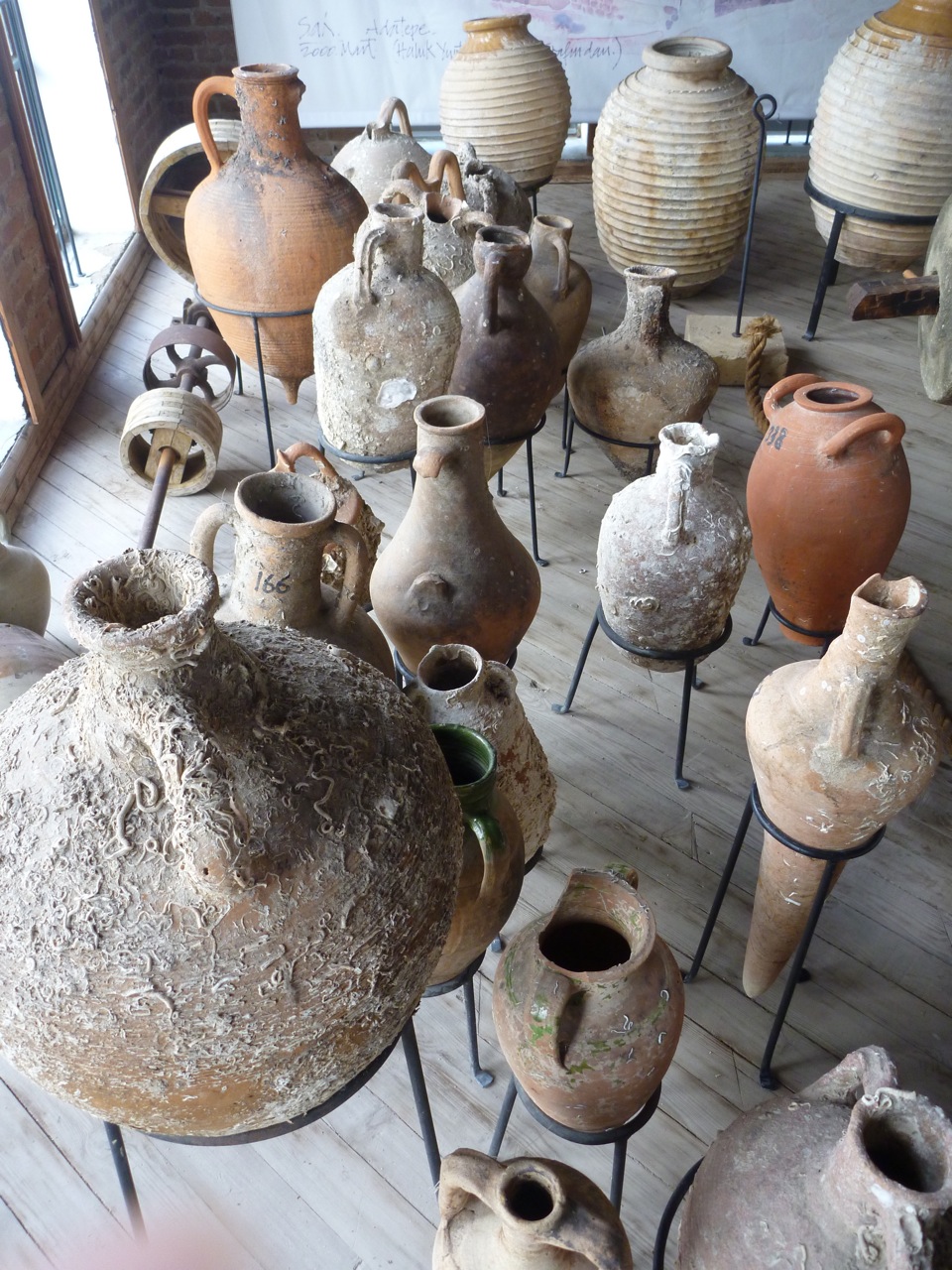
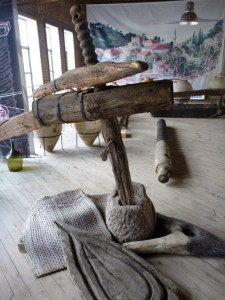
We saw huge granite mills for grinding olives, various tools for pruning and olive picking, baskets for carrying olives, and earthenware jars for olive oil storage.

There are also amphoras from sunken ships of early Mediterranean trade (which never made it to the Bodrum symposium). There are displays of various tools for making olive oil soap, charts of the annual cycle of olive production, maps showing the spread of olives from Syria westward, and writings in Jewish, Christian, and Islamic sacred texts.
Lizards of Labranda

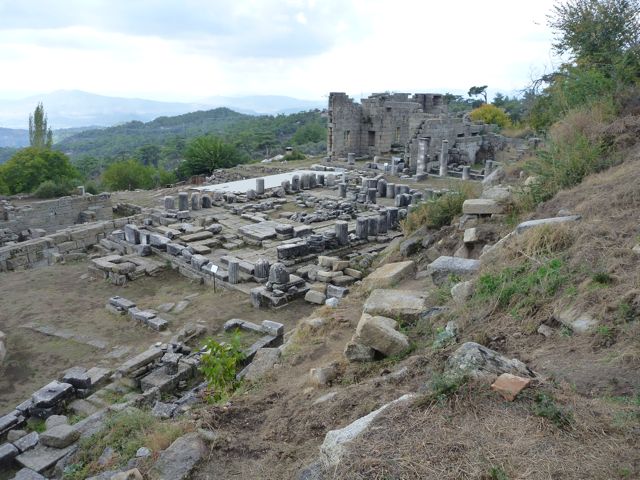
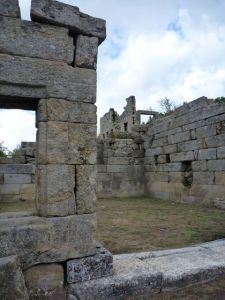
We had another glorious ancient site to ourselves on Sunday. Labra(u)nda (Λάβρανδα) is just north of Milas in SW Turkey.
Admittedly, there is some competition, with Ephesus, Pergamon, Priene, Bodrum Castle, Troy, and numerous other sites less than a day away. Nevertheless, it felt like a guilty pleasure to be able to explore such a fabulous site alone, to drink from the sacred spring, and imagine both the ancient civilization there and the excitement of the first archaeologists to investigate it

Labranda was held sacred by the Carian and Mysian peoples. Mausolus of Mausoleum fame, was a satrap here (c. 377-352 BCE). The local god was Zeus Labraundos (Ζεὺς Λάβρανδος), with a double-headed axe, the labrys (also as in lanyrinth). The site was occupied continously until the mid-Byzantine period.

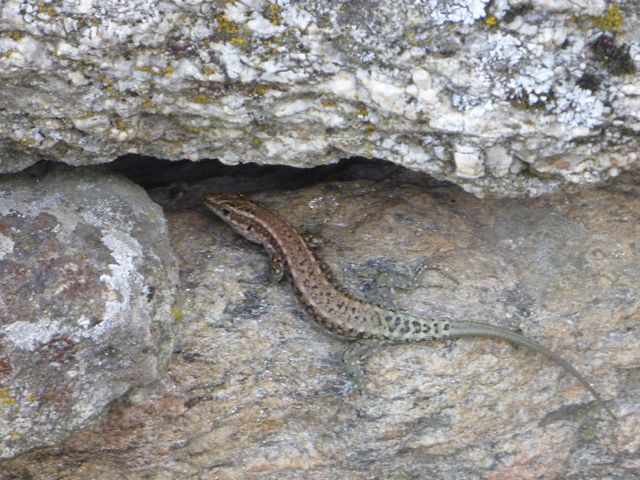
I have to admit that we weren’t completely alone. There were wild cats, chickens, honeybees from the nearby honey farms, and many fine lizards.

Art scene in Sandima

We went to the (almost) abandoned village of Sandima yesterday.

The story is that it was wiped out three times: once many centuries ago by the bubonic plague, when many residents died and the village had to move; again by the citrus industry, which lured away the young people to work in the orange groves closer to Yalikavak; and a third time, by rampant development, which has covered hillsides with white block houses for people seeking the Mediterranean sun and lifestyle.

The village is just up the hill from Yalikavak. It looks like an old war zone, with abandoned homes, stone walls, watering stations, and a mosque, all now becoming overgrown with vines and scrub vegetation. There are two schools, an older, religious school, next to the mosque, and a newer one with four rooms. The latter looks as if it must have been an attractive site for learning at one time, but now is missing doors, has large holes in the floor, and is covered with graffiti.

It’s possible to follow old footpaths and to go into the buildings, which are not much more than piles of rubble, everything of value having been removed. There’s a second abandoned village just across a ravine.

There are only three residents in Sandima today. One is an 86-year-old man who refused to leave. His story is that he walks into Yalikavak every day, not for work or food, he has his garden and cows in Sandima, but to look for a mate.

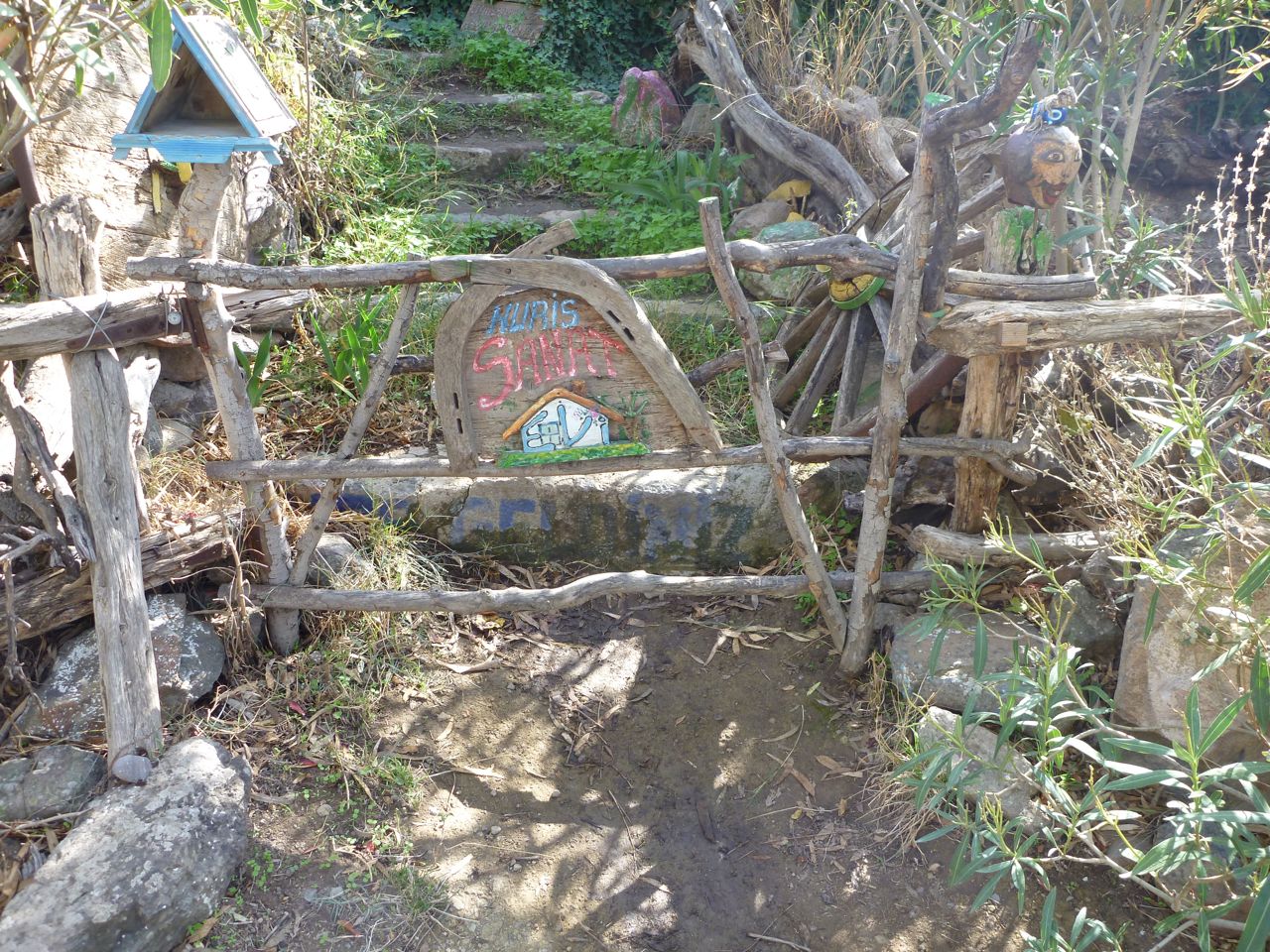
There are also two artists, Ismail Erkoca and Nurten Değirmenci. Ismail gave us a tour of their house, which is the most decorated one I’ve ever seen. Every surface, including floor and ceiling, was covered with art works, or just painted, or festooned with bougainvillea, lantana, hibiscus, and other flowers. Navigating the nooks and crannies, bridges, and hidden passageways required a guide. It soon became clear that if selling artwork were not a business, then giving tours of the house could become one.

The house is called Nuris Sanat Evi, Nur from Nurten and Is from Ismail. Sanat Evi means art house. The story of the name (we heard many stories) is that Nur means holy light and Is means black soot from a fire. So, one needs light to see the darkness.

We enjoyed the adventure of talking with Ismail and getting a glimpse of his life, one far removed from İstanbul, where he was born.

I was pleased to learn more about the Köy Enstitüleri (Village Institutes) from Ismail. I wonder whether the newer school in Sandima was created following John Dewey’s report or somewhat later as a result of the institutes? I’ll save thoughts on that for a future post.

Fresh dolma

I’ve been fortunate to have encountered friendly people nearly everywhere I’ve traveled.

This includes people who have legitimate concerns with US foreign policy, see much of American culture as both boorish and hegemonic, and see Americans as naive but arrogant. Where did they get such impressions?! But even those who think that way recognize the difference between a nation and an individual.

This has been especially evident in Turkey. People everywhere have been extraordinarily friendly. For example, we discovered some excellent dolma (stuffed grape leaves) in a supermarket deli section in Yalikavak.

Yesterday, we went back to get some more. The young man behind the counter offered one for a taste. Again, they were delicious, so I asked for a full container of about 20. He prepared those and sent me off with a smile.
A few minutes later, he called me over. A fresh batch had just been prepared. He asked for the container back, and filled a new one with even fresher dolma. It was unnecessary, unrequested, but I very much appreciated both the gesture and the freshest possible selection. All this in spite of our rudimentary Turkish.

There are many other examples. At the moment, we’re using wifi/internet for free in a little café, Leleg Restaurant, in Gümüslük. It wasn’t advertised as an option, but the owner recognized our need and quickly endeavored to help us out.

PS: We ordered some çay (black tea) to drink while we used the internet. When I asked how much we owed the owner refused to take a single lira for çay or internet.

Herodotus today

Yalikavak, Turkey

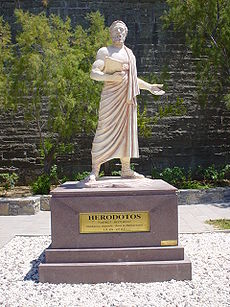
Anyone writing a blog post owes a debt to the “Father of History,” Herodotus.

He was the first to show how write narrative history. And despite his additional appellation as the “Father of Lies,” he did show how to collect information systematically and to assess its validity. It’s noteworthy that his ἱστορία (historía, history), also means inquiry. The delivery channels have changed since the 5th century BCE, but we could still learn from his advocacy of careful methods.

Herodotus lived in Halicarnassus, the site of the famous Mausoleum, one of the Seven Wonders of the World, as well as an ancient stadium and castle. It’s now Bodrum, the booming town and resort area of southwestern Turkey.

We’re staying not far from Halicarnassus/Bodrum, near Yalikavak. Of course much has changed. Our stone cottage has a smaller doorway than he would have wanted, or is it possible that people today are taller?

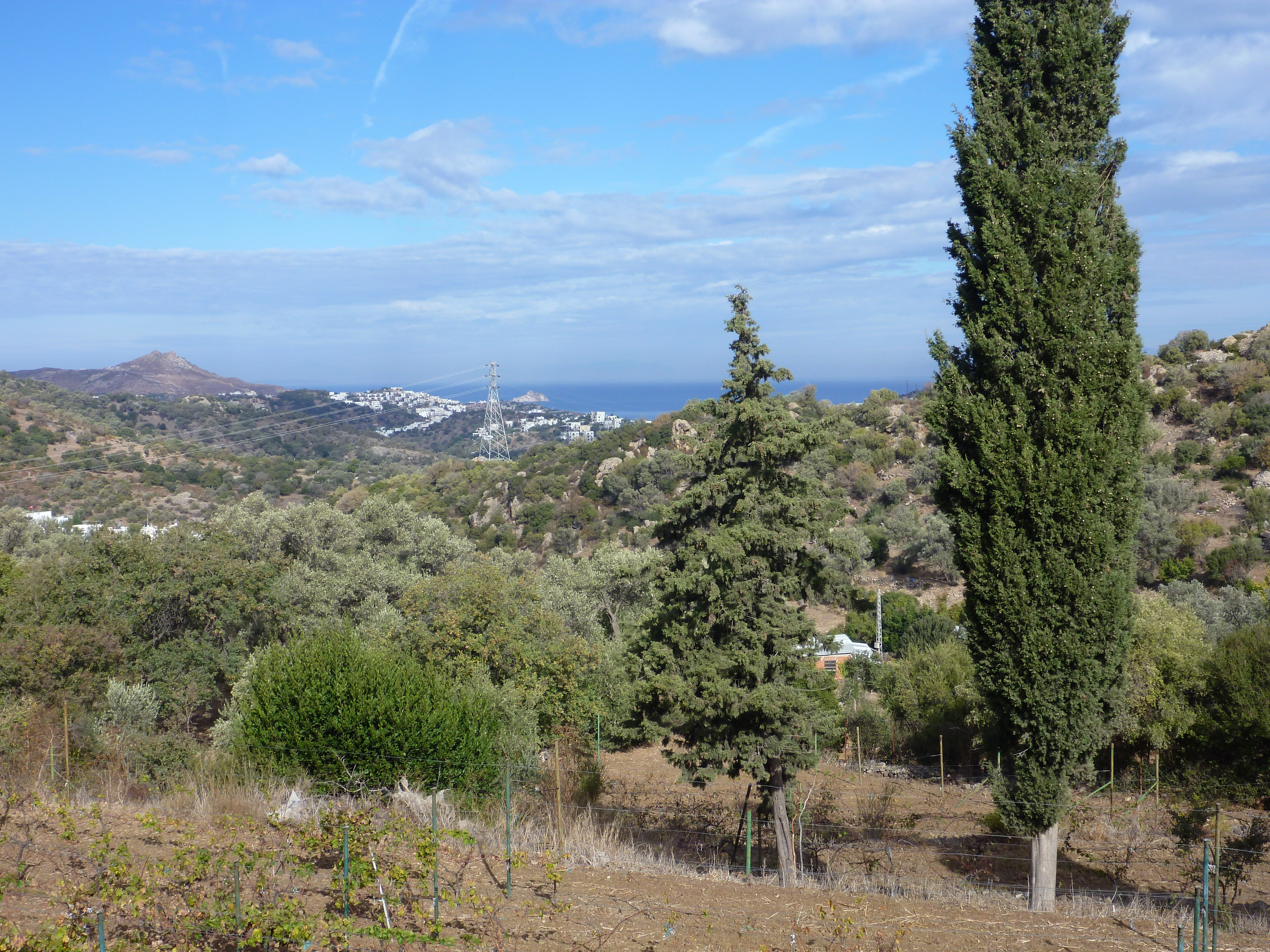
There are still beautiful views of a landscape convoluted by millennia of volcanic activity and earthquakes, and of a limpid Aegean Sea. The vegetation is still of the maquis type, which is found throughout coastal regions in the Mediterranean–dense scrub, with evergreen shrubs, live oak, bay trees, olive trees, lavender, and rosemary. However, the hillsides are now coated with swaths of white block houses, reflecting the rapid development experienced here.

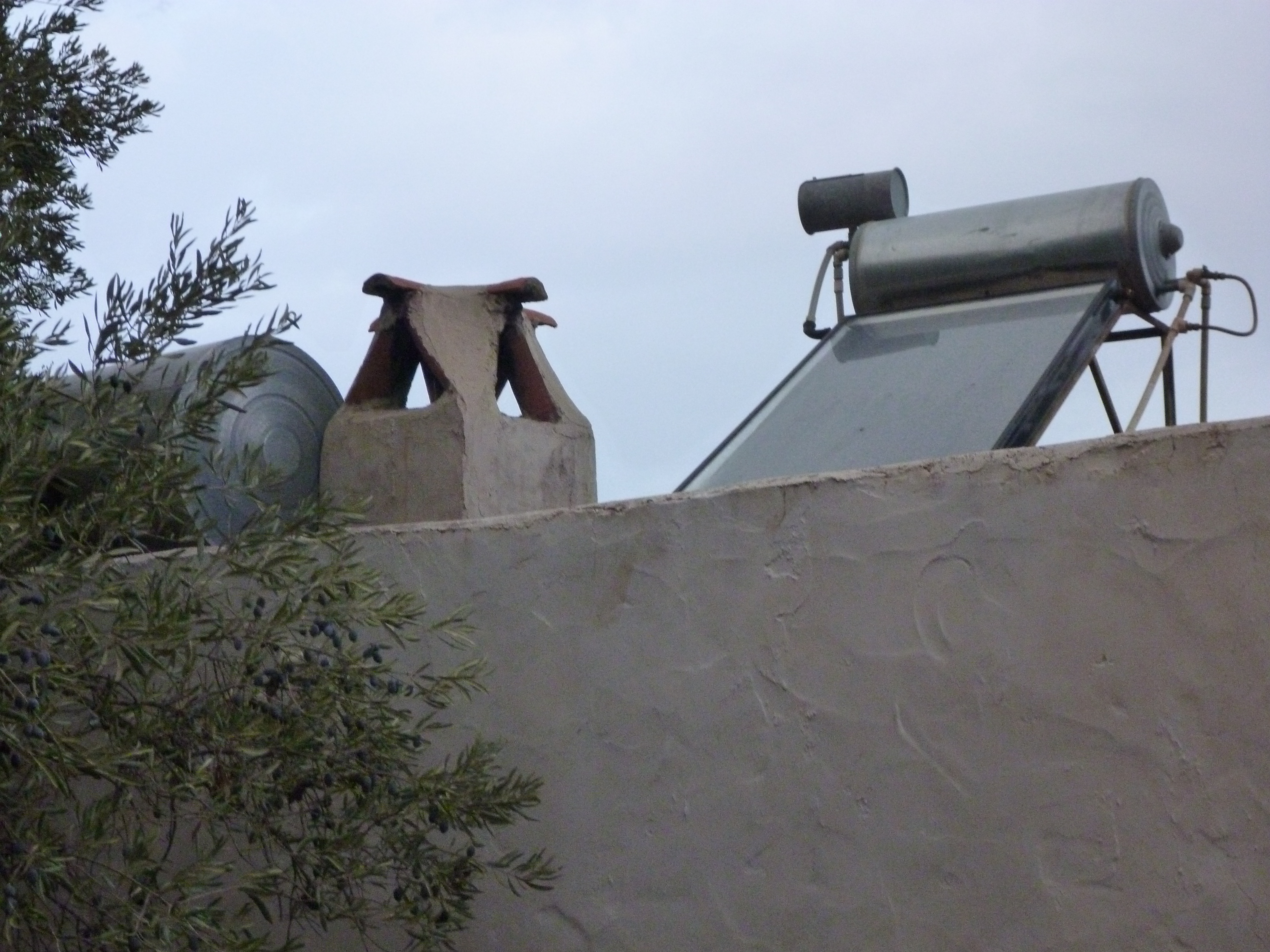
We have photovoltaic cells to heat our water, whereas his solar heating was entirely passive. I imagine a goatskin bag filled with water and hanging in the sun. But I’m not sure we’ve advanced much. A morning shower here leads to abstruse discussions along the lines of “Was the water hot?” “What do you mean by hot?”

We have amphoras in our cottage, just as Herodotus must have had.They’re still made and used locally. However, I’m not aware that the amphoras gather for symposia, as shown here in the Bodrum Kale (castle). That exhibit is part of the underwater archaeology museum, the world’s largest.

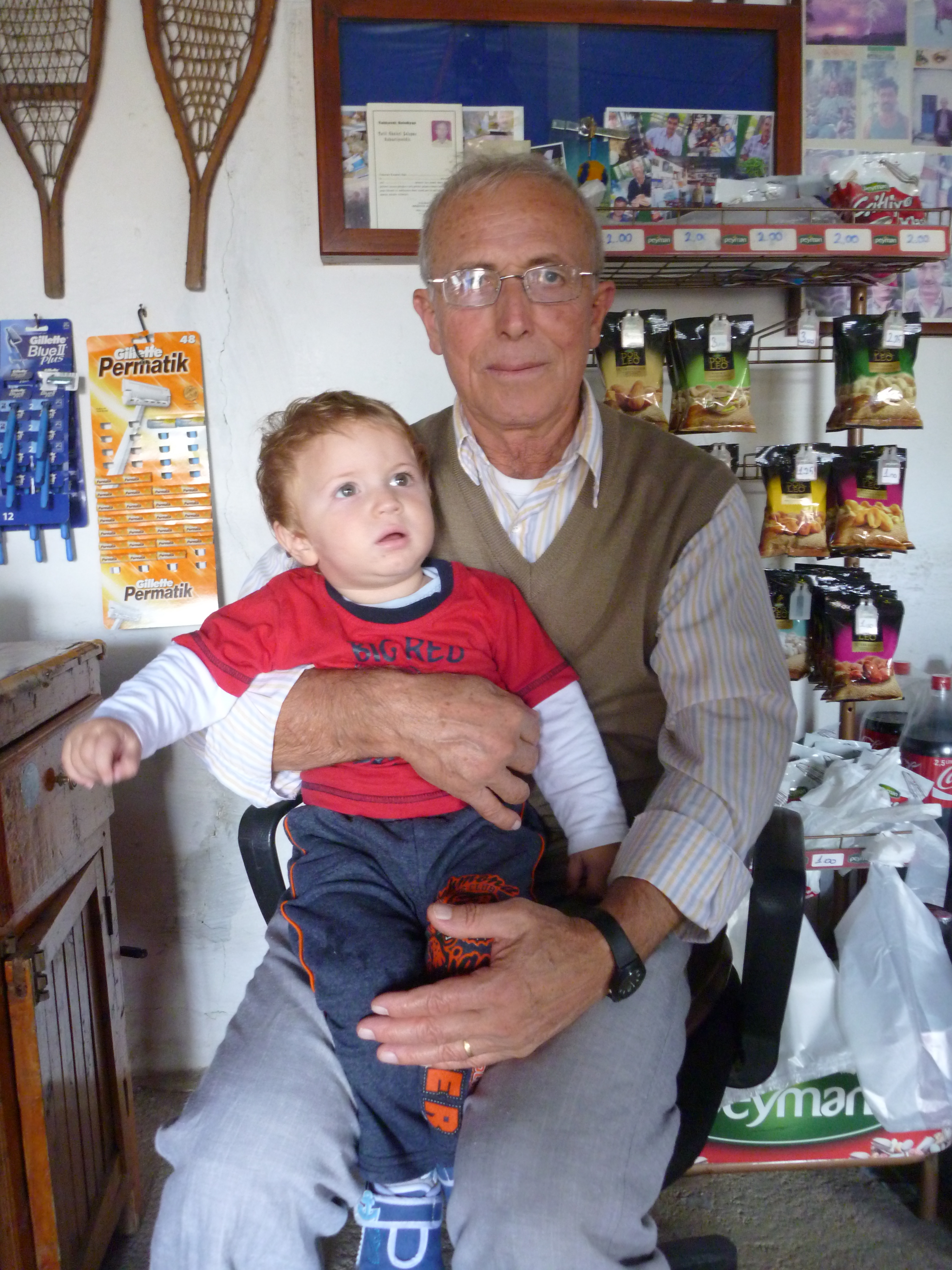
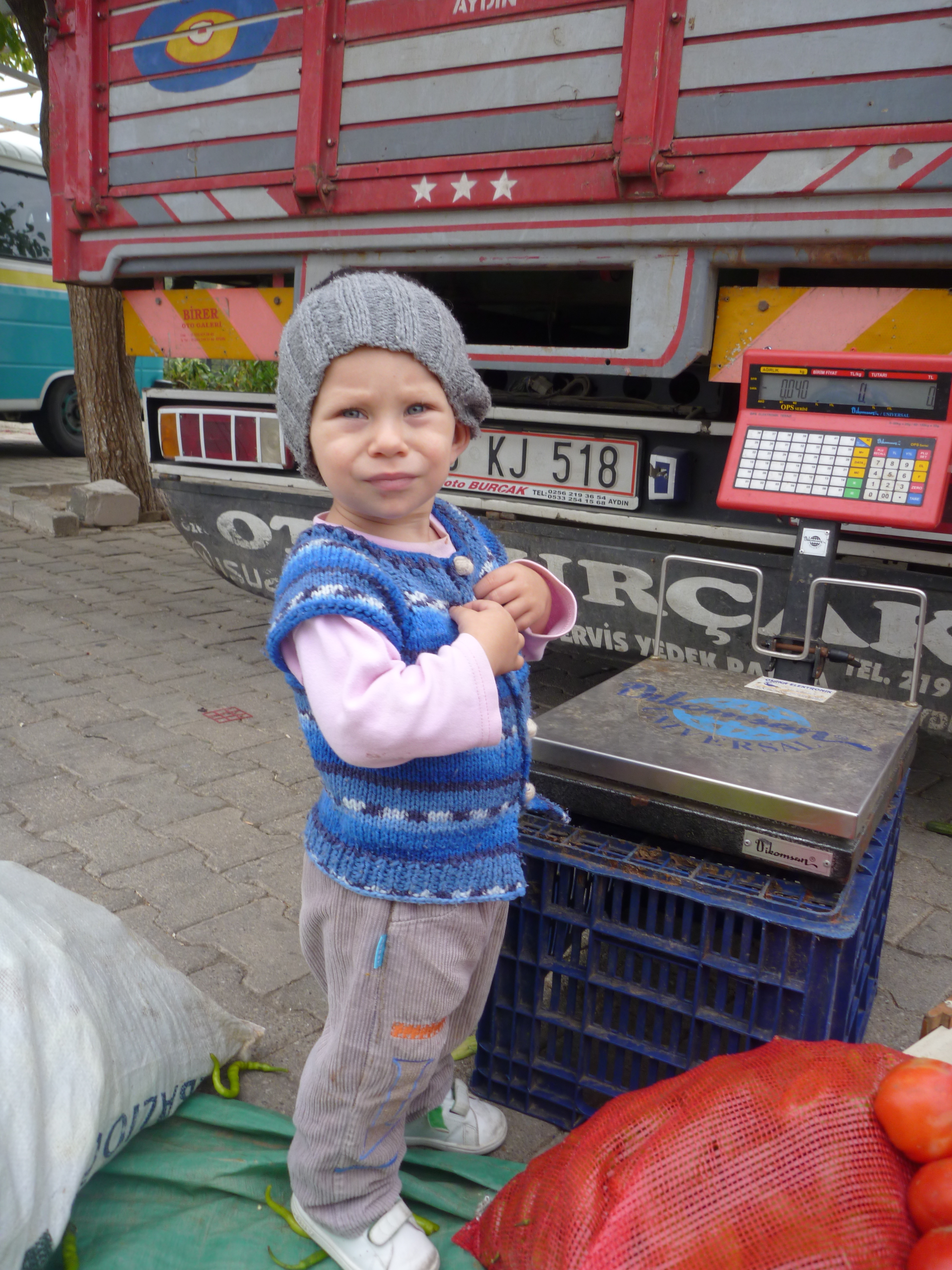
At the end of the day yesterday, we stopped to buy some vegetables for dinner. Although Herodotus wouldn’t have used the Turkish lirasi as we do, it’s not hard to envision him or someone in his household selecting beans, carrots, or onions as we did. Even the measuring device would have been similar, a crude balance with old, battered weights.

I’d always imagined Herodotus as an old man with a long white beard, as he’s portrayed in statues. But thinking of his life here, I now wonder: Would a young Herodotus be writing blog posts from his stone cottage? And when he was younger still, how much would he look like the young boy we see today?

Islamic Science and Technology Historical Museum

Yalikavak, Turkey

Our last stop in Istanbul was at the İstanbul Islâm Bilim ve Teknologi Tarihi Müzesi (Museum for the History of Science and Technology in Islam) in the Eminönü district. It’s a wonderful museum, displaying centuries of achievements in geography, navigation, astronomy, mathematics, music, optics, chemistry, chronometry, historiography, medicine, military, civil engineering, and other disciplines.

I was told in school that the period when most of these discoveries and creations occurred (9th-16th century CE) was called the Dark Ages, a time of fear, superstition, lack of progress, even regression from the Classical era. Then the Classical learning was miraculously rediscovered and expanded during the Renaissance. And of course, like many things I learned in school, it was partly true.

But the fact is that while great scientific and technical accomplishments were happening in the Islamic world, much of Christian Europe languished in these areas, not completely, but to a large extent in comparison. Islamic scholars maintained and extended the Classical learning, and incorporated additional ideas from Greek, Byzantine, Indian, Judaic, and other traditions. They not only advanced learning considerably, but did so by listening to and learning from other cultures.

Long before Roger Bacon, they articulated and promoted experimental science, and they wrote about inductive or scientific methods long before Francis Bacon. They studied the circulation of blood before William Harvey, and made many other medical advances. But the exhibits do not take a “who did it first?” approach; instead, they emphasize the continuity of learning, across time and across cultures.

The Ages were not Dark everywhere, and the Renaissance in Europe was not autonomous; it was dependent upon and grew organically from an Islamic culture that valued learning in all its forms.

The Museum displays fascinating astrolabes, glassware, maps, globes, medical instruments, ships, an elephant clock, and many other artifacts. I’ve never seen such an assemblage anywhere, and these are beautifully presented and explained with multilingual text and video. Scientists, mathematicians and other scholars, such as Muhammad ibn Mūsā al-Khwārizmī, Ibn Sena (Avicenna), Geber, Al-Jazari are featured.

That’s why it was both surprising and a bit depressing to see how few people came to the exhibits. I counted five total visitors during the entire time that we were there, Make that seven if I include Susan and me. There were about fifteen staff and guards. Of course, it’s been open only two years.

İstanbul offers tough competition for any museum. World Heritage sites like the Topkapi Palace nearby, the Sultanahmet Cami (Blue Mosque), and Hagia Sophia are just a few of those within easy walking distance, each offering jaw-dropping sights. But those also offer long lines and crowded viewing. It’s difficult to fully appreciate the Topkapi dagger while being shoved along in a crowd. The Museum for the History of Science and Technology in Islam offers a different and equally important view of Islamic culture, one that I suspect is not well known by many within or outside of Islam,

The Museum is housed in the Has Ahırlar (Imperial Stables) complex now in Gülhane Park. This area was once the outer garden for the Topkapı Palace during the days of the Ottoman Empire.

The working instruments and other objects were constructed by the Institute for the History of Arabic-Islamic Science at the Johann Wolfgang Goethe University, Frankfurt, based on illustrations and descriptions in textual sources, and to some extent, on surviving original artifacts. There is a similar exhibit there under the direction of Fuat Sezgin. The İstanbul museum is a joint project of the Ministry of Culture and Tourism, the Scientific and Technological Research Council of Turkey (TÜBİTAK), the Turkish Academy of Sciences (TÜBA), the İstanbul Metropolitan Municipality, and Goethe University.

İstanbul Trafik

Admittedly, we hadn’t slept, had been traveling for more than 24 hours, and were  jet-lagged (have I mentioned the ingenious two-year-old the next seat over on the plane who demonstrated that the call button could be pushed any time–and many times–of the night?). That surely led us to miss many nuances, but our introduction to İstanbul trafik was nevertheless superb.

We took a taxi from the airport and felt a fresh appreciation for the signs urging people “Don’t be a traffic monster!”

It helped that this was during rush hour with a heavy rain, and growing dark.

Our driver was quite friendly, eager to teach us Turkish. He used gestures, often with both hands, and frequently turned to the back seat to make sure we understood. I would have felt uncomfortable driving at the speed he did, even on a deserted road. Of course, with the heavy traffic he could attain this speed only in spurts, frequently coming to a complete stop, honking, and searching for a lane change that could allow the greatest resumption of speed.
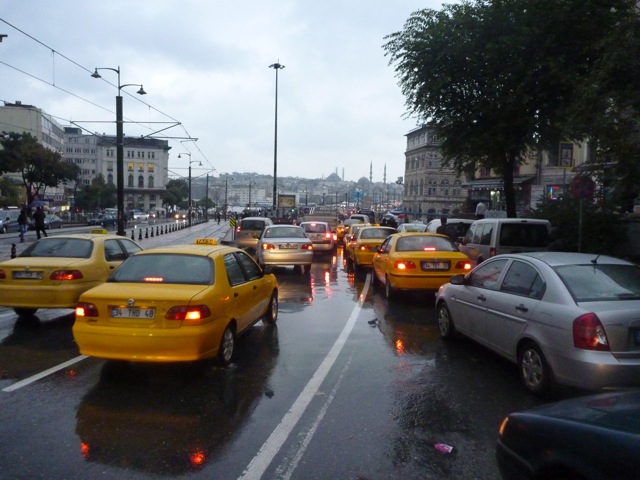
There were other features: My window was open a crack, so the friendly driver had to reach into the back seat to make sure there wasn’t a rain leak. That was while he was following the next vehicle with, generously speaking, a ten foot gap. We ran a couple of red lights and made some impressive cutoffs of other drivers. The driver didn’t have to view all of this, since he was often referring to the paper map showing the way to our hotel.

One question came up a couple of times: Aside from legalities, if you run headlong into someone going the wrong way on a one way street , is that better or worse than doing so when you’re the one going the wrong way?

It soon became clear that my only option was to close my eyes. That worked for a while until I recognized the unmistakeable international register of cell phone talk, in this case, the driver’s. But why should I worry about that with everything else that was going on? I managed to relax a little, and so did the driver.

Then he turned on the car television.

Hotel Poem, İstanbul

Oktay Rifat was a Turkish playwright and founder of the Garip movement in poetry. I suppose you could say that we’re staying in “his” room, since it’s his “I Saw My Hand” poem that identifies it, rather than a usual number. The room is in the small, 19th-century Hotel Poem, in the historic Sultanahmet district, with views of the sea of Marmara.

Rifat would have no trouble today finding water for his drink or for his dams, as it’s been raining steadily since we arrived.

I SAW MY HAND

Drinking water, I saw my hand ,
pink, hollowed and lightly downed.
I said _ hello there , hand, hello!
Hold glass and fork and pen
and when the time comes
don’t hesitate
to hold the sword and gun.
Stand firm, my hero, my lion – hearted friend.

Drinking water, I saw my hand,
speechless and dry
like Ahmet’s hand or Mehmet’s.
Hello, I said, hello you busy hands,
that make trains run , I said,
and electricity work.
You topple mountains,
bring water to the dams,
equip the earth from end to end,
make green the human race.

Drinking water, I saw my hand,
no eyes and ears, alive,
his fine blue weins,
the thumb with pleasure bent,
forefinger nicely crooked,
ring – finger inexplicable,
and the little one in a world of its own

Oktay Rıfat

In This World

in this world-2There are times when a movie just grabs me, despite technical flaws, my low expectations, and even a boring DVD case cover. In This World is one of those. The political message is clear, but understated, conveyed instead by an intimate look at the consequences of war and greed on the lives of decent people.

The movie presents a fictitious journey that conveys disturbing truths of life “in this world” we inhabit. Although it’s low-key and rough as cinema, it produces an intimate connection to its characters, Afghan refugees Jamal and Enayatullah, as they travel from Shamshatoo refugee camp near Peshāwar, Pakistan, across Pakistan, through Iran, Turkey, Italy and France, towards London.

ITW_trailerLike thousands of others every year, their desperation feeds the multibillion dollar human smuggling business, an unconscionable stain on any of our pretensions to justice. The smuggling fuels crime, violence, corruption, illegal drug trade, and too often leads to death, no longer being “in this world.”

The actors are Afghan refugees themselves, and the encounters in the movie elide life and art. I was fascinated by the places they moved through, and their resourcefulness in learning how to cope with diverse languages and unscrupulous people.

The camps near Peshāwar are filled with people displaced by the Soviet invasion of Afghanistan and later, US bombing. UNHCR says that there are currently “1.7 million registered Afghans in Pakistan, with 45 percent residing in refugee villages and the rest scattered among host communities.” But the total, including children born to refugees, may be several million. The humanitarian crisis is compounded now by two million civilians fleeing the fighting in Pakistan’s Northwest Frontier.

Even though the story is depressing about our institutions, I finished it feeling hopeful about our human capacity. I wanted to travel the modern silk road and more still to learn about the world of these refugees and the policies that lead to their plight.