Digital storytelling

Through the Digital Literacy in Irish Primary Schools (DLIPS) project, I’ve been visiting primary schools in the Liberties area of Dublin. I’m also visiting 24 infant, primary, and post-primary schools in the Docklands area through Technology in Docklands Education project. This has given me a wonderful opportunity to see a wide variety of learning technologies and ways of organizing classroom learning. Many of the most successful classroom projects have involved some version if digital storytelling (see the photo story entries).

You can get a flavor of these projects from an RTE video at the Francis St CBS (primary level), one of the schools I’ve worked in:


The Digital Hub Learning Initiative has supported this classroom and a variety of others in the area, as well as community groups. One overarching project is Digital Hub FM, a community radio station. Community members of all ages receive training in radio production and then carry out the research, broadcasting, and station management themselves. The broadcasts include music, entertainment, discussion, local history, and youth programs.

There’s a large set of videos posted on YouTube describing the Learning Initiative’s work, including this good introduction:

Miss Dierdorf and the mythology newspaper

I was asked to write about a favorite teacher for a project in a philosophy of education course. The person who asked me plans to use the lenses of John Dewey, Paulo Freire, and Pádraic Pearse to look at the responses from various people. Here’s mine:

I remember many good teachers, but no one that stands out far above the rest. But I’ll pick one: Miss Dierdorf at W. P. McLean Junior High School cared about literature and history in an infectious way. She organized a class newspaper project in which we wrote and illustrated stories from Greek (and Roman) mythology. The antics of the ancient heroes and gods became as real to us as the day-to-day events around the school.

As I recall, every student felt that he or she had a vital contribution to make to the newspaper. We designed the paper, wrote and drew, because we too cared about the stories and the characters. I think that the sense of becoming engaged with the ideas and feelings of the past or faraway has stayed with me ever since.

It was interesting to see that the majority of the responses were about English teachers.

I should add that there are many mythology newspaper curriculum units available on the web and other formats, such as Greek Mythology Newspaper, by the children’s book author, Bernard Evslin. They all seem to be more sharply defined in terms of skill development and assessment than I remember the class to be.

School visit stories

One school Principal here told me they weren’t thinking about computers much because they had other priorities. I said, “oh, like basic reading and arithmetic?” He said, “no, I have 100 boys in this school and there’s no one to fix the damn toilets!”

We met with a class of 3rd graders. He told them I was from Texas and asked what they knew about it. Long pause, then one said, “they have squirrels.” I agreed. After another pause, a second added, “they have cowboys.” The Principal then asked, “Anything else? Do you know any famous people from Texas?”

One boy then said “Stone Cold Steve Austin.” Others quickly jumped in with other names I didn’t recognize. I thought the problem was my hearing or the accents, but the Principal didn’t know the names either. So, the boys had to explain that they were all wrestlers from Texas, whom they’d had seen on TV. There’s always more to learn.

Digital Literacy in Irish Primary Schools

National College of Ireland is starting a new project, Digital Literacy in Irish Primary Schools (DLIPS). The aim is to investigate digital literacy practices and to develop a conceptual framework for the needs of the Irish Primary Education system. Digital Literacy is regarded as incorporating a broad range of competencies; there is a need to investigate new approaches that facilitate greater student engagement and connection to everyday experiences.

The project involves the evaluation of how teachers integrate ICT into their classroom activities to promote teamwork, collaboration, creativity and co-operative learning using a project-based learning approach. This approach will be evaluated with regard to the student’s academic performance and engagement with learning, particularly in relation to their literacy proficiency. The framework will be developed by reviewing existing frameworks and adapting these according to the above research findings.

This is a collaborative project with the Education Research Centre, the Digital Hub Development Agency and the National Centre for Technology in Education. It is funded by the Department of Education and Science research and development council. Leo Casey and I are co-principal investigators.

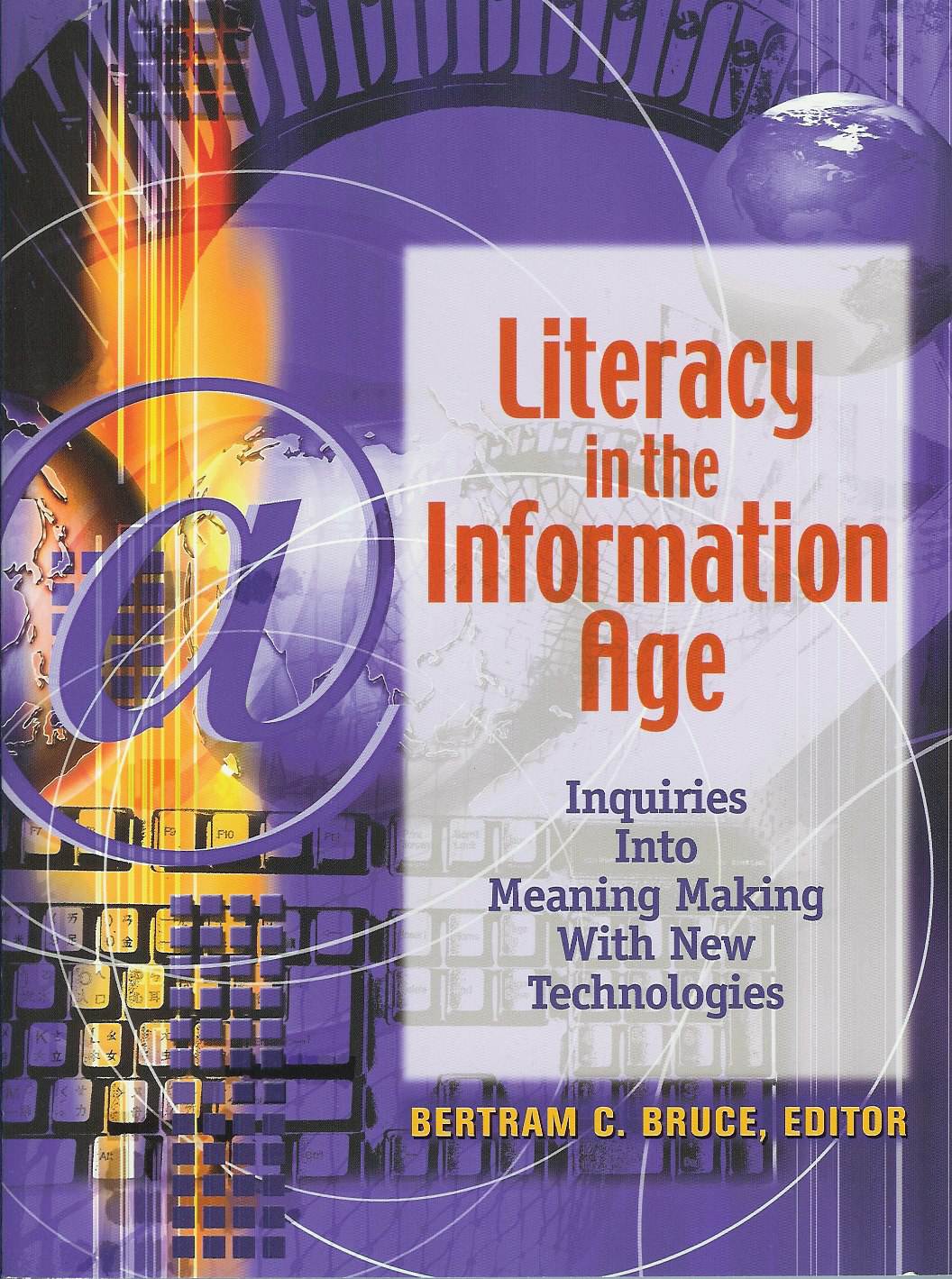
Literacy in the information age: Inquiries into meaning making with new technologies

liabookEducators today want to go beyond how-to manuals and publications that merely celebrate the many exciting new technologies as they appear in schools. Students are immersed in an evolving world of new technology development in which they are not passive recipients of these technologies but active interpreters of them. How do you help learners interpret these technologies as we all become immersed in the new information age? Continue reading

Emily at the nursing home

north entrance, Uni HighWhile at Uni High, Emily spent a :emester tutoring Adolph Willms and learning his life story. See this article by Mary Schenk in The News-Gazette (June 5, 1999):

Life’s work earns man his diplomas

URBANA – Adolph Willms has a lifetime of memories tucked away in his head. Some days he can summon those. Other days it’s not so easy.

With the help of an education researcher and three teen-age girls from University High School in Urbana, the 83-year-old stroke victim has been able to recall many past experiences.

Researcher Patricia Marton of Bloomington was so impressed with Willms’ life experiences as a farmer in the St. Joseph area that she persuaded local…

Beijing and Brisbane, 1996-97

family Xiao Guor
Liqian Stephen in 6th grade in Bardon, Brisbane
Sabbatical with major stays in Beijing, China and Brisbane, Australia and stops in Oklahoma, New Mexico, Arizona, Nevada, Texas, California, Indonesia, Malaysia, Singapore, Italy, and Wales along the way, 1996-1997.

See

While in Queensland, Emily and Stephen attended Rainworth State School in Bardon, Brisbane.

Teacher to teacher: A professional’s handbook

Alvermann, D. E., Arrington, H. J., Bridge, C. A., Bruce, B. C., Fountas, I. C., Garcia, E., Paris, S. G., Ruiz, N. T., Schmidt, B. A., Searfoss, L. W., & Winograd, P. (1995). Teacher to teacher: A professional’s handbook for the primary classroom. Lexington, MA: D. C. Heath. [218 pp.; ISBN 0-669-35984-X]

Alvermann, D. E., Arrington, H. J., Bridge, C. A., Bruce, B. C., Fountas, I. C., Garcia, E., Paris, S. G., Ruiz, N. T., Schmidt, B. A., Searfoss, L. W., & Winograd, P. (1995). Teacher to teacher: A professional’s handbook for the intermediate classroom. Lexington, MA: D. C. Heath. [216 pp.; ISBN 0-669-35985-8]