Flying Fortresses over Urbana

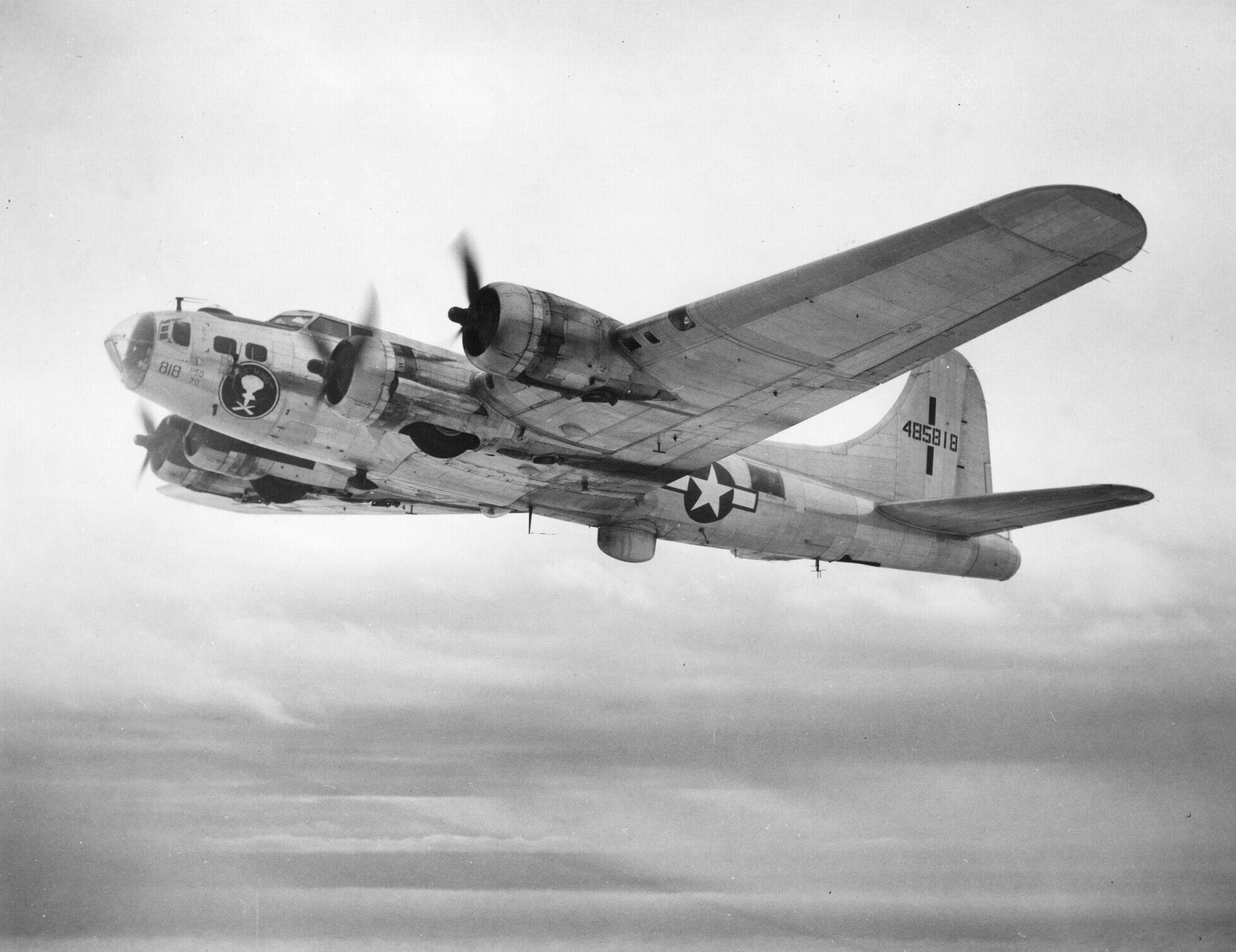
I thought I saw a B-17 bomber, a “Flying Fortress,” flying low over our house while I was outside talking to my sister Susan! But I was afraid to admit it, thinking I might be taken away for observation. Maybe I could chalk it up to bad eyesight.

But it turns out that one has been visiting the area this weekend: Authentic B-17 brings nostalgia to Champaign, Daily Illini, July 9, 2010

They quit making them shortly before I was born, probably because they knew it was too small inside for people over six feet tall.

The endless war

There’s some dispute about whether the war in Afghanistan has become the longest war in US history, but there’s no question that it’s gone on a long time and that it shows little sign of heading toward even an end, much less a successful resolution.

When people talk about WWII, there is sometimes disagreement about the means–were the atomic bombs and fire-bombings necessary? There is less debate about the outcome in terms of ending Nazi terrorism and the Japanese expansion. And even during the war there was a sense all around that an end of some sort would be achieved; there would be a surrender or at least an armistice. The fighting would eventually stop, one way or another, and it did.

But we’ve now entered the era of the endless war. Can Kandahar be secured? Maybe, maybe not. But what then? Do the shifting alliances of enemies–Al-Qaeda, Taliban, the Haqqani network simply walk away? Is there a version of Hirohito to say “the war situation has developed not necessarily to Japan’s advantage” and then surrender? Will young Afghani’s ignore the poverty and devastation and choose to move on? Will ordinary people forgive the occupation, the drones, the collateral damage, the cultural insensitivity, the broken promises? Where are even implausible scenarios of how that will happen?

It’s not enough to say that there are people on the other side who have done or want to do bad things. There must be a vision of change. Yet all we hear is that top operatives have been killed, some place has been temporarily conquered, or that we have a timetable for success.

Writing in Mother Jones, Ann Jones says,

It goes round and round, this inexorable machine, this elaborate construction of corporate capitalism at war, generating immense sums of money for relatively small numbers of people, immense debt for our nation, immense sacrifice from our combat soldiers, and for ordinary Afghans and those who have befriended them or been befriended by them, moments of promise and hope, moments of clarity and rage, and moments of dark laughter that sometimes cannot forestall the onset of despair. —Jones (2010)

Obama has been a good President in many ways, and still has the potential to be a great one, but his continuance and expansion of the war, now across a wide swath of Africa to Asia, reveals a spiritual deficiency in the American polity. Rev. Martin Luther King’s words from the Vietnam War time are even more relevant today.

A nation that continues year after year to spend more money on military defense than on programs of social uplift is approaching spiritual death. —King (1967)

References

King, Rev. Martin Luther (1967, April 4). Beyond Vietnam: A time to break silence. Speech delivered by Dr. Martin Luther King, Jr. at a meeting of Clergy and Laity Concerned at Riverside Church in New York City.

Jones, Ann (2010, July 2). Counterinsurgency down for the count in Afghanistan…. Mother Jones.

Dorothy Height, Unsung Heroine of Civil Rights

Dorothy Height, a leader of the African-American and women’s rights movements died on Tuesday at age 98. Her obituary in the New York TImes is a tribute to a courageous and powerful figure in American history, who did enough to fill several ordinary lifetimes:

Dorothy Height, Unsung Heroine of Civil Rights Era, Is Dead at 98 – Obituary (Obit) – NYTimes.com.

Outside lies magic, Part 1

Gesa Kirsch recently pointed me to John R. Stilgoe’s, Outside lies magic: Regaining history and awareness in everyday places. It’s a refreshing call for becoming more aware of the ordinary world around us. Stilgoe urges us not only to walk or cycle more, but also to use the advantages of those modes of transport to see the world that we usually ignore.

I finished the book, and am writing now, in the antipode of his call to walk and observe. I’m cramped in an airplane seat near the end of a four and a half hour flight. Stilgoe would say that I should still take the opportunity to observe, to learn, and to make sense of my surrounding, but instead I’m counting down the minutes until we land.

The chapters—Beginnings, Lines, Mall, Strips, Interstate, Enclosures, Main Street, Stops, Endings—lie somewhere between prose poems, history lessons, and sermons about the everyday. They remind me of John McDermott’s summary that John Dewey “believed that ordinary experience is seeded with possibilities for surprises and possibilities for enhancement if we but allow it to bathe over us in its own terms” (1973/1981, p. x).

To appreciate the book, you need to follow Stilgoe as he discovers nature, history, urban planning, ethics, social class, and more through cracks in the pavement, vegetation, telephone poles, roadside motels, angle parking, and other seemingly forgettable objects. The real point is not his own findings, but the demonstration that slowing down to look can open up worlds of understanding.

He shows the value of a camera, despite the lament that “ordinary American landscape strikes almost no one as photogenic” (p. 179). He recognizes the dread of causal photography (‘why are you photographing that vacant lot?’), but ties it to “deepening ignorance” (p. 181). This ignorance makes asking directions dangerous: People question us back, ‘Why do you want to know?’

Stilgoe says, “discovering the bits and pieces of peculiar, idiosyncratic importance in ordinary metropolitan landscape scrapes away the deep veneer of programmed learning” (p. 184). Unprogrammed exercise and discovery leads to a unified whole that reorients the mind and the body together. Someone else may own the real estate, but “the explorer owns the landscape” (p. 187).

Stilgoe’s prescription is simple:

Exploration encourages creativity, serendipity, invention.
So read this book, then go.
Go without purpose.
Go for the going.

See Outside lies magic, Part 2.

References

  • McDermott, John J. (1981). The philosophy of John Dewey: Two volumes in one. Chicago: University of Chicago Press. (Originally published 1973)
  • Stilgoe, John R. (1998). Outside lies magic: Regaining history and awareness in everyday places. New York: Walker.

International Violence Against Women Act

The International Violence Against Women Act was re-introduced in Congress on February 4. It’s one step in the effort to end violence against women and girls across the globe, supported by organizations such as Amnesty International USA,  Women Thrive Worldwide, the Family Violence Prevention Fund, and the International Rescue Committee.

This violence is a global human rights, health, and economic problem. It’s a barrier to addressing poverty, HIV/AIDS, and conflict. One out of every three women worldwide has been physically or sexually abused during her lifetime, with rates much higher in some countries. The abuse ranges from rape to domestic violence and acid burnings to dowry deaths and “honor” killings.

A small, but useful action is to urge Members of Congress to co-sponsor the Act.

Elizabeth Peratrovich Day

Today, February 16, is Elizabeth Peratrovich Day. I learned about it from Bonnie and Hans, friends of nearly 30 years. They have a great blog, Bonnie & Hans’ Excellent Adventure, out of Grayling Alaska.

In a recent post, Elizabeth’s Day, they talk about Elizabeth Peratrovich the Anti-Discrimination Act of 1945, Alaska’s Civil Rights Day, and the film For the Rights of All: the Ending of Jim Crow in Alaska, a documentary about the work of Alaska Natives to end discrimination.

Don’t Throw It Away!

Our family has recently devoted considerable effort to weed out family memorabilia and to pass on, give away, or throw out once treasured knick-knacks, books, and pictures. There are many more boxes to go, all filled with possible treasures, but more likely, with white elephants that don’t fit into any of our current homes or lifestyles.

Some items would be useful for others who have real needs. Giving those away makes more sense than letting them occupy space in a closet or attic. Many old family photographs and letters could be digitized and discarded. Other items have lost their provenance: Did this vase come from Aunt Fanny or Granny? Does not knowing that diminish any remaining value?

As we strive to discard things, it may seem strange to talk about deliberate saving, but thoughtful preservation can actually help in the downsizing process. An excellent 2006 booklet from the University of Illinois at Chicago, written by Sandra Florand Young and revised by Douglas Bicknese and Julia Hendry talks about exactly that. Although it’s a manual for small organizations, the basic principles apply for families and individuals as well.

Don’t Throw It Away! Documenting and Preserving Organizational History encourages organizations, both large and small, to save and organize their office and project records…It offers practical advice on providing security for records and setting up an in-house archives, as well as factors to consider should the organization want to deposit records in an institution…

Organizational records not only document the work of an organization, they tell the story of the community and its people, their successes and the issues that they believe to be important.

Fort Worth Museum of Science and History

As a reward for hours spent with packing, house repairs, and financial stuff, my mother and I went to the Fort Worth Museum of Science and History yesterday.

We had a good lunch at the Stars Cafe and a fascinating, though all too brief, visit to the exhibits, including interesting talks staff about the Museum’s history. In addition to being our reward, the visit was a commemoration. it was nearly 60 years ago, on George Washington’s birthday, that my parents and I moved to Fort Worth from Houston. On his birthday this year, my mother will be packing her belongings to move to Austin.

Not long after we arrived, she enrolled me in The Frisky and Blossom Club, the first class of the Museum School. So, a return to the Museum marked both her time in Fort Worth and the evolution of the Museum itself, from being a children’s museum in a house to the recently renovated, massive complex of today.

The current Museum is grand and spacious, with atriums and courtyards. But the prior Fort Worth Children’s Museum was a wonderful place in a different way, with a sense of mysteries tucked away in crowded rooms and clubs devoted to astronomy and insects. But it was my first encounter with the Museum at its Summit house location that hooked me on museums:

The museum’s history actually began in 1939 when the local council of Administrative Women in Education began a study of children’s museums, with the idea of starting one in Fort Worth. Two years later the charter was filed, but it would be almost four years before the museum would find a physical home. With the help of the city’s school board, the museum opened in early 1945 in two rooms in De Zavala Elementary School.

In 1947 the museum moved into the large R.E. Harding House at 1306 Summit, where it kept growing in size and popularity. Three years later two significant entities appeared: The Ladies Auxiliary of the Fort Worth Children’s Museum (now the Museum Guild), and “The Frisky and Blossom Club,” the forerunner of Museum School®. Soon it became apparent that a much larger facility was needed to serve the growing needs of the community. Ground was broken for a new facility in 1952. On January 25, 1954, the museum open the building at 1501 Montgomery Street. The following year the Charlie Mary Noble Planetarium, the first public planetarium in the region, opened.

In 1968 the name was changed to the Fort Worth Museum of Science and History so that adults even without children could enjoy the Museum. It worked! Today more than half the Museum’s visitors are adults. Much of that is due to the addition of the Omni Theater in 1983. The Omni was the first IMAX® dome theater in the Southwest and continues to be one of the most successful in the world.

Civil rights for the LGBT community, and for all

In his ‘Letter from the Birmingham jail‘, Martin Luther King placed the struggle against injustice in Birmingham in a larger context:

Moreover, I am cognizant of the interrelatedness of all communities and states. I cannot sit idly by in Atlanta and not be concerned about what happens in Birmingham. Injustice anywhere is a threat to justice everywhere.

While those lines are often quoted, they’re more often ignored. For many people, injustice means what happens to them directly, not what happens to others.

Countering that passivity, and calling on progressives allies to stand up, is a video made by one of my students, Phil Reese. It’s an excellent message about civil rights for all, including the LGBT community. In addition to conveying an important message, it’s done in a creative way, reminding us of the many silenced voices around us.

Progressives can’t sit by while Civil Rights are taken away from Americans–help us and become a true ally in the fight for Equality! -HEY #p2 We’re talking to you! AFTER THE VID VISIT http://bit.ly/HEYP2ALLY for more!

Howard Zinn’s “Three Holy Wars”

Howard Zinn spoke at the Progressive magazine’s 100 Anniversary Conference. He makes a persuasive case for questioning even the good wars, such as the “three holy wars” of US history.

It’s worth thinking about Zinn’s argument in light of Obama’s Nobel Prize lecture, in which he says “Still, we are at war, and I am responsible for the deployment of thousands of young Americans to battle in a distant land. Some will kill. Some will be killed.” Is the war in Afghanistan a more holy war than the ones that Zinn questions?