Over a decade ago I wrote about the rebus baby announcement and the people of the rebus. What started as an idle curiosity based on the discovery of a crumbled scroll of butcher paper in the attic has become a fascinating journey into family and daily life in 1905.
The rebus contains references to contemporary songs, movies, and comic strips, news of current events, including the circus coming to town, President Teddy Roosevelt’s trip to hunt bears in Colorado, and racial stereotypes in popular products.
After we discovered the rebus, we used the facilities of the university’s conservation department to preserve what we could of it. Recently, Conservation Framing in Truro did further restoration and framed it, the largest frame being about four feet long.
There’s too much for an ordinary blog post, but this file summarizes what we’ve learned so far.
Another January and another opportunity to stop, reflect, and learn. Learning is an important skill to have as a designer/researcher and, I think it makes life more interesting!
I recently came across two new (to me) learning concepts that I will be looking to bring a bit more into 2022.
‘Abeginner mindset’ – taking the approach of looking at things as if I am completely new to them.
And ‘learning to unlearn’ – looking to let go of previous learning to make space for new learning and ways of doing things
Why do we need to try these? To stop us from making assumptions, be more creative and make us more open to new ideas and ways of doing things. To help us grow.
In an age of climate disasters, extreme income inequality, conspiracy theories, anti-democratic movements, segregated schooling, pandemic, and more, the need for democratic education has never been greater, but it may also seem less viable than ever. Classics such as John Dewey’s Democracy and Education are still relevant, but invite us to re-invent education for today.
The symposium
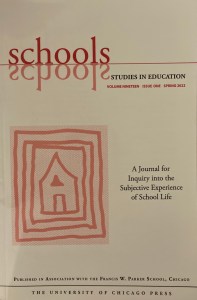
Schools: Studies in Education, published by the University of Chicago Press, is hosting a symposium on this topic to celebrate the journal’s twentieth anniversary. The mission of Schools is to present inquiry into the subjective experience of school life. Unique among academic journals of education, Schools features articles by and about the daily life of classrooms, descriptions and reflections on the meaning of what happens when learning actually occurs.
To celebrate our twentieth year of publication, this symposium shares ways to think about democratic education in today’s world, and how we should plan for the future. How should issues such as indigenous people’s rights, racism, women’s rights, authoritarian governments, the concentration of wealth, the climate crisis, pandemics, and more make us analyze, discuss, and work to create democratic education?
We highly encourage submissions from classroom educators at all levels, from educators outside the United States, and from educators associated with alternative schools or informal learning.
Our initial call for papers in February 2022 led to proposals by almost 40 educators from all over the world. We held two zoom workshops for contributors over the past summer, which led to exciting manuscript submissions. The submissions include articles about teacher education, a ninth grade program devoted to the dreams and hopes of its students, an after school leadership program for Black teenagers, and a social justice program for pregnant and parenting teenagers. Some or all of these articles will likely appear in the first of what promises to be a robust series of an ongoing symposium.
Manuscript preparation
Interested authors should submit a one-page prospectus describing what their project entails. This is to determine appropriateness and balance for the special issue. We anticipate a mix of empirical and theoretical contributions. Completed manuscripts will undergo the usual Schools: Studies in Education review process before final acceptance.
Articles should be a maximum of 8000 words (25 double-spaced pages). Please follow the Schools style guide.
There is a possibility of a follow-on book publication based on revised versions of the articles, after publication in Schools.
Deadlines
For consideration in the Fall 2023 publication:
December 15, 2022: one-page prospectus for your proposed article
January 15, 2023: response to the prospectus
April 15, 2023: final manuscript deadline
May 1, 2023: editors’ review of the manuscript sent to author
June 1, 2023: outside review of the manuscript
July 1, 2023: final revised copy
For consideration in the Spring 2024 publication:
February 15, 2023: one-page prospectus for your proposed article
March 15, 2023: response to the prospectus
October 15, 2023: final manuscript to be considered for the Spring 2024 issue
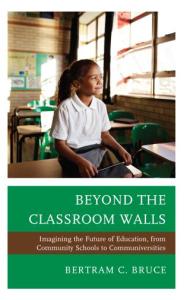
The book asks readers to adopt a critical and comprehensive view of education (pre-K to lifelong learning) as existing both within classroom walls, and in the surrounding world, including communities and workplaces. It presents an integrated view of online learning, community schools, communiversities, and learning through work.
Gerbert de Aurillac, later known as Pope Sylvester II, was a talented French mathematics teacher who played an important role in bringing mathematics, science, medicine, and new technologies into Europe in the 10th century. These contributions were accompanied by efforts at social advancement, but in both arenas de Aurillac’s ultimate failure offers an important lesson for all of us today.
Pope Sylvester II
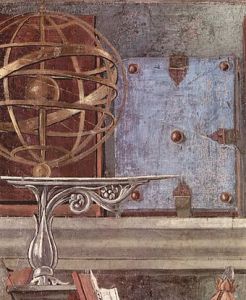
De Aurillac’s most important contribution was the decimal system, including the Hindu-Arabic numeral system we use today, but he also (re-)introduced the abacus, study of Arab and Greco-Roman arithmetic, astronomical studies, and the armillary sphere (a physical model of objects in the sky). Some credit him with the invention of the first mechanical clock (at least in Europe), one that used a pendulum to keep track of the time.
These ideas were not created de novo, but developed within a rich cultural milieu. A vibrant culture, nurtured by Islam, flourished in Spain, especially in Andalusia, from the coming of the Arabs in 711 until their expulsion in 1492. Spain was a home for Christians, Jews, and Muslims who interacted peacefully and learned from one another.
De Aurillac most likely studied at the abbey of Santa Maria de Ripoll, in the mountains of northeastern Spain. While there, he encountered texts from the Greek and Roman times, as well as Arabic texts, Visigoth texts, and many others. He recognized the vital role played by the world of Islam and would support what we would call multiculturalism today, as well as the development of a scientific community.
An armillary sphere in a painting by Botticelli
But this was not to last.
De Aurillac, as Sylvester II, was the first Frenchman to become pope. As such, he was deemed a “foreigner,” who did not deserve that position. His celebration of ancient and foreign ideas was no doubt a further obstacle to his acceptance.
But the larger problem he faced was age-old greed and the desire for power. His opponents sought to demonize him.
While he was studying mathematics and astrology in Córdoba and Seville, he was accused of learning sorcery. He supposedly stole a book of spells from an Arab philosopher. The demonization of Sylvester the individual drew from and reinforced the general fear of Islam.
Along with the rejection of “foreigners” and “foreign” culture, there was a rejection of mathematics, science, and new technologies. The magnificent bounty that the Islamic world offered to Europe was largely rejected.
Pope Sylvester II and the Devil
By the end of the 11th century, the new powers within the church and European society enforced a theocracy, instituted the crusades, and before long, the Inquisition. Although the term “dark ages” is not appropriate, there was definitely a loss. Science was retarded, and the rich interchange of ideas diminished. This period lasted half a millennium, until the time of Galileo and Copernicus.
It was no outside force, but Europe itself that brought that on.
What about today? We see a similar xenophobia, the demonization of others, insatiable greed, violent efforts to obtain power, a rejection of science and mathematics, indeed of all forms of learning, and a subordination of civil society to particular religious doctrines.
Gerbert de Aurillac would recognize this pattern well. He failed against the onslaught of forces that cared little about learning, about other cultures, or peaceful, associated life. Will we do the same?
In the midst of distressing decrees from the Supreme Court and larger concerns about the health of the US body politic, I seem drawn to words, even those that have little obvious relevance to the daily news.
Today I came across a great sentence by Laura Miller, in her review of How Four Women Brought Philosophy Back to Life, by Clare Mac Cumhaill and Rachael Wiseman. Speaking about long-time collaborators Elizabeth Anscombe and Ludwig Wittgenstein, Miller writes:
Married to a conscientious objector who had difficulty finding remunerative work after the war, Anscombe was so poor that Wittgenstein paid for her stay in a maternity hospital after the birth of her second child and insisted on furnishing her spartan lodgings, announcing, “You are a writer, you have to have a wastepaper basket.”
I manage to fill both Wittgenstein’s paper basket and the one on my computer quite easily.
Speaking of revision: The online version of the review, from June 5, has the title: “Oxford quartet: The women who took on the philosophical establishment.” Today’s print version is entitled: “First, let’s kill all the logical positivists: Did four young women change the course of Western philosophy?” This makes me wonder: In the shift from “took on” to “kill all” is the New York TImes calling for a more violent response to entrenched interests?
Let’s not endorse the “kill all” approach, even for logical positivists or Supreme Courts, but the wastebasket would be an appropriate location for at least three Court decrees this week.
In “Realities of Implementing Community-Based Learning during Lockdown: Lessons from a Troubled Year,” Raunak Chaudhari, Smriti Karanjit Manandhar, and Bertram C. Bruce examine the fortunes and misfortunes they encountered implementing a program at King’s College in Kathmandu, Nepal. They had conceived the program as a meaningful experiment in education reform, an effort to connect classroom learning to the needs and desires of the world outside the university. Although the onset of the pandemic seriously altered the original design of the course, the course provided many valuable experiences as well as an important example of how the ambitions of integrated learning create conditions of adaptability that are well suited to emergent and emergency circumstances.
I’ve had recent conversations with two friends my age. These have led me back to the big 5W’s: Who are we? What is our purpose? Where did we come from? When did the universe, life, and consciousness arise? Why are we here?
One writes
One of my more embarrassing memories from high school was a discussion in which two friends revealed that they were atheists. I was beyond shocked. I had never met an atheist before. I was made to go to church every Sunday. I couldn’t believe that these excellent friends had gone to the dark side and emphatically told them that the fact that we exist PROVED that there was a god. I remember one just smiling tolerantly.
Both of these friends had expressed concern for my recent cancer. But the second one took that concern in an opposite direction. He recommended Sickness, by J. C. Ryle. It answers the question, “How can there be sickness in a world with an omniscient and omnipotent God,” by saying that all sickness arises from sin, a turning away from God.
The friend also recommended re-reading the Gospel of John as a source of solace and inspiration. He suggested that I ask “Is it possible that Jesus is who He said He was?”
I like and respect both of these friends, especially when they let me express my own muddled views.
Asking important questions
I think of philosophy as the process of asking the important questions in life. In that sense, the scientist fascinated by cosmology, but seeking an explanation other than its divine origin, or the evangelical seeking to understand Jesus through studying the Bible are each practicing philosophy in their own way. The same is true of the Daoist trying to understand the nature of reality or to find a moral order to life, the Hindu seeing God in every aspect of life, the follower of Madhyamaka Buddhism focusing on the “middle way,” and the evolutionist exploring Darwin’s “tangled bank.”
Fibonacci spiral
When these paths become dogmatic, their value for philosophical inquiry is diminished. This is essentially the argument of James Carse in The Religious Case Against Belief. Carse is a religion professor at NYU who argues that religion’s greatest value is exactly in those areas where we are uncertain. When it degenerates into fixed beliefs it loses precisely what makes it essential.
On the other hand, when religion stays open to questions, calls forth awe about life and the universe, and helps us understand our common humanity, it becomes our way of making sense of a complex, ever-changing world. Both militant atheism and dogmatic religious beliefs fall short. John Dewey lays out this argument well in A Common Faith.
Another source of insight could come from the Confucius-Mozi debates in early China. Confucius laid out a case for starting with what’s close at hand, e.g., “honor thy father and thy mother.” He imagined ever expanding circles of love. Mozi and his followers challenged the Confucian view. They saw that adherence to family, village, local beliefs, and so on could lead to misunderstanding and disrespecting the cultures of others, and ultimately, violence and war.
Mozi taught that everyone is equal in the eyes of heaven. Mohists questioned Confucianism’s over-attachment to family and clan structures, arguing instead for the concept of “universal love.” That implies acceptance and valuing of others’ belief systems, and not placing one’s own beliefs above those of others. That could be extended to love of all things in nature.
Confucianists thought that Mozi overestimated what was humanly possible. They said that we always put our own families and culture first. The debate continues today and can unfortunately recurs in endless strife between Christians and Muslims, Protestants and Catholics, Hindus and Buddhists, atheists and believers.
The answer
So, I’m not sure how to answer the 5W’s. Spinoza said it was “God or Nature” in his Tractatus Theologico-Politicus. He was condemned by many for this work, but it made a lot of sense to me when I first encountered it in Humanities 100 at Rice.
In favor of Spinoza’s formula is the fact that nature is all around us inviting engagement, astonishment, and enlightenment. There is meaning in the journey. We need but open ourselves to its wonders and accept that our understanding can never be more than partial.