Is it good to synchronize traffic signals?

The Champaign County Regional Planning Commission hopes to apply for a $1.94 million federal grant to coordinate the traffic signals at dozens of intersections in the community, covering major corridors such as Neil Street and Prospect, University, Bradley, Mattis and Florida/Kirby avenues.

Champaign-Urbana Urbanized Area Transportation Study…says the proposed “traffic signal energy efficiency and conservation strategy” could reduce the typical motorist’s annual travel times by 20 to 50 percent, cut fuel consumption by 14 percent and reduce carbon dioxide, methane and nitrogen dioxide emissions by 13.3 percent.

via The News-Gazette.com: Re-timing of traffic signals could be first stage in overhaul.

Champaign_Illinois_20080301_4107Saving energy, reducing pollution, reducing travel time, all sound good. But synchronized signals along University Avenue may have an insidious consequence.

It’s already the case that University Avenue marks and maintains racial divisions in the cities of Champaign and Urbana. Some people south of University, especially whites, view “north of University” as an area they don’t want to be in. And some blacks north of University may view south of University as an unwelcoming place. The busy traffic corridor with miserable access for pedestrians reinforces the view that these two domains are separate, and necessarily so.

As an already busy traffic corridor, University Avenue makes it difficult for alert, athletic adults to cross from one area of town to another on foot or bicycle. It’s positively unsafe for children or anyone without well-honed defensive faculties. Drivers already go too fast and are inattentive to pedestrians and cyclists. This could become worse with synchronization.

Could the street become safer with synchronization? Maybe. But I doubt that will happen if the only concerns considered are overall vehicular traffic flow.

I’m not sure in the final analysis whether the proposed changes should be done or not, but I do believe that we’d be better off if we were to understand better the symbolic and material consequences of slashing through our community.

Dewey’s logic

essays_experimental_logicJohn Dewey is not even mentioned in the Wikipedia article on Logic. That’s an oversight that I’m tempted to remedy, but it also reflects the fact that the 20th century development of logic in the tradition of Frege, (early) Wittgenstein, Russell, Gödel, and Tarski has largely ignored Dewey’s work, conceiving it in various ways, but above all, as not part of Logic. His idea that logic is the theory of inquiry is deemed to be a non-starter.

Dewey’s new logic

Bertrand Russell, in particular, took pains to explain why Dewey’s logic (1938) was not real logic, how it failed to address the fundamental questions of truth conditions or the relation between propositions and meaning, an idea that Tarksi had already developed in his model theory. Logicians should focus on concepts such as truth conditions, consistency of logical systems (that not all statements are provable), and completeness (that true statements are provable).

The development of model theory as a basis for semantics meant that the direct connection with the world was severed; logicians could now focus on the structure and operation of logical systems per se, without concern for real world consequences. In the terms of academic logic, it’s clear that Russell won the battle; Dewey’s “new logic” as Russell demeaned it, especially with its insistence on connection to lived experience, is now judged irrelevant by virtually all mathematical logicians, and most philosophical logicians.

alfred_tarskiHowever, despite the great achievements of Tarski and others to follow, the standard account of logic has encountered obstacles. Kurt Gödel proved that any effectively generated theory capable of expressing elementary arithmetic cannot be both consistent and complete. For most systems of greater complexity, it’s not possible to say what consistency and completeness even mean.

Logicians began to see that formal logic was inadequate for the goals that David Hilbert, Russell and Whitehead, and others had proposed. Moreover, it was completely inadequate for that part of the universe that isn’t elementary arithmetic, i.e., social relations, history, culture, language, art, learning, nature, and all the other things that most people care about.
a_bIn recent years, these inadequacies of the formal semantics approach have led to a reconsideration of Dewey’s theories. Thomas Burke, among others, has called for a critical, re-examination of logic as the theory of inquiry. In Dewey’s new logic: A reply to Russell, he analyzes the debate between Russell and Dewey that followed the publication of Dewey’s Logic: a theory of inquiry in 1938. He concludes that although Russell won the battle, Dewey won the war, in the sense that his logic holds more promise for the future, especially as a a logic for work in the social sciences and humanities, or for practical concerns.

Dewey’s unread book

In the preface to his 1938 book on logic, Dewey says,

This book is a development of ideas regarding the nature of logical theory that were first presented, some forty years ago, in Studies in Logical Theory; that were somewhat expanded in Essays in Experimental Logic and were briefly summarized with special reference to education in How We Think.

There are many proposed encapsulations of Dewey’s vast body of work. If I had to choose one, it might be logic, which Dewey himself saw as a 40-year project. His early training, an academic context that sought a logical basis for knowing and life, and the ways in which his logic integrates across his ideas in art, education, political theory, morality, and other areas, suggests to me that logic could be the strongest connective thread.
circleAs he develops his logic, one can see the core behind many of Dewey’s major ideas, such as warranted assertions, situation, ends-in-view, habits, the continuum of inquiry, facts and meanings, and the relation between natural and social science. He also confronts major issues in logic as they are conceived by Russell et al., but always with a twist, which not surprisingly, makes his views unacceptable to that community. Nevertheless, I agree with Burke et al. that Dewey offers us the best option for a usable logic for the problems of today.

Reading Dewey’s Logic: A theory of inquiry

Dewey_logicSome of Dewey’s Logic: a theory of inquiry can be a slow read. Published 71 years ago, the style is often pedantic. Dewey’s characteristic lack of references, diagrams, compelling metaphors, and good examples doesn’t help. His attempts to speak to the world of Russell and Tarski often get in the way. Nevertheless, the ideas are powerful, and deserve the reconsideration mentioned above.

Much of the book can seen as explaining one of the few definitions Dewey ever provides:

Inquiry is the controlled or directed transformation of an indeterminate situation into one that is so determinate in its constituent distinctions and relations as to convert the elements of the original situation into a unified whole.

The book is 556 pp. (my copy), divided into four parts. Part I is probably the most useful for most readers. It’s here that he provides the rationale for conceiving logic as inquiry, and discusses topics such as common sense in relation to scientific inquiry.

Part II defines inquiry and explores the construction of judgments. Part III on propositions and terms is a shorter section, and probably the most technical in the book. It’s also the one that speaks most to Tarski, although in a way that I suspect he rejects. Part IV focuses on mathematics and science. I found it to be the most interesting, especially as it deals with scientific methods, scientific laws, theories of knowledge, and social inquiry.

My recommendation on reading is to slow-read Part I, in order to understand what Dewey is trying to do. Use Part II as a way to see how the theory plays out, but devoting effort to chapters differentially, e.g., I find chapter 8 on understanding and inference to be especially good. Part III could be left for a more advanced read. Part IV is very good, especially the last three chapters.

Table of Contents

Here is the TOC for Logic: a theory of inquiry. The links are to the Past Masters collection at the University of Illinois (login required).

preface
collapse section
collapse section
collapse section
collapse section

References

  • Burke, F. Thomas (1994). Dewey’s new logic: A reply to Russell. Chicago: University of Chicago Press.
  • Burke, F. Thomas; Hester, D. Micah; Talisse, Robert B. (Eds.) (2002). Dewey’s logical theory: New studies and interpretations. Nashville: Vanderbilt University Press.
  • Dewey, John (1938). Logic: a theory of inquiry. New York: Henry Holt.
  • Talisse, Robert T. (2002). Two concepts of inquiry. Philosophical Writings, 20, 69-81.
  • Tarski, Alfred (1983). Logic, semantics, metamathematics: Papers from 1923 to 1938 (2nd ed.). Hackett, Indianapolis: Hackett.

hear you are — [murmur]

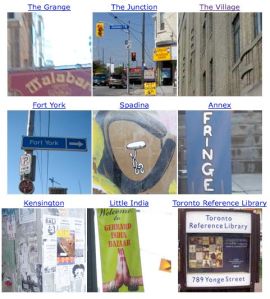
murmur[murmur] is a documentary oral history project that records stories and memories told about specific geographic locations. We collect and make accessible people’s personal histories and anecdotes about the places in their neighborhoods that are important to them. In each of these locations we install a [murmur] sign with a telephone number on it that anyone can call with a mobile phone to listen to that story while standing in that exact spot, and engaging in the physical experience of being right where the story takes place. Some stories suggest that the listener walk around, following a certain path through a place, while others allow a person to wander with both their feet and their gaze…

All our stories are available on the [murmur] website, but their details truly come alive as the listener walks through, around, and into the narrative. By engaging with [murmur], people develop a new intimacy with places, and “history” acquires a multitude of new voices. The physical experience of hearing a story in its actual setting – of hearing the walls talk – brings uncommon knowledge to common space, and brings people closer to the real histories that make up their world.

Being cellphone-impaired, and far from Toronto, I’m reduced to listening to the stories on the website, but they still convey a sense of the city and its history. The site’s a well-designed example of integrating oral history, geographic information systems, and mobile phones.

White privilege

Peggy McIntosh’s essay, White privilege: Unpacking the invisible knapsack” (1990) provides a very accessible discussion of race/racism, in particular, how whites have trouble even seeing it. She identifies 50 daily effects of white privilege, “conditions that…attach somewhat more to skin-color privilege than to class, religion, ethnic status, or geographic location” per se.

McIntosh predicts that if you’re White you’ll answer “yes'” to most of these, and if you’re Black, you’ll say “no” to many of them. Try it yourself. For example,

1. I can if I wish arrange to be in the company of people of my race most of the time.

6. I can turn on the television or open to the front page of the paper and see people of my race widely represented.

7. When I am told about our national heritage or about “civilization,” I am shown that people of my color made it what it is.

21. I am never asked to speak for all the people of my racial group.

22. I can remain oblivious of the language and customs of persons of color who constitute the world’s majority without feeling in my culture any penalty for such oblivion.

24. I can be pretty sure that if I ask to talk to the “person in charge”, I will be facing a person of my race.

25. If a traffic cop pulls me over or if the IRS audits my tax return, I can be sure I haven’t been singled out because of my race.

34. I can worry about racism without being seen as self-interested or self-seeking.

44. I can easily find academic courses and institutions which give attention only to people of my race.

John Berry (2004) adapts these for the library profession. I like both of these articles, and can imagine ways to use such lists to spark a discussion.

I would have to answer yes to most of the statements myself. Then I imagined it for my time in Ireland (thinking more about nationality, than about race per se). Still mostly yes, but some no’s and some harder to answer. When I thought about my stay in Turkey, there were fewer yes’s. For Haiti, fewer still.

But what was most interesting to me is that even for Haiti, I could still say yes to most of the statements, even though I’m the outsider there in terms of race, nationality, language, culture, and above all, economic class. The fact that I can take myself mentally to Haiti, and still possess White Privilege shows even more to me why it’s such a powerful social construct. It also reveals why it’s so hard to understand and accept that one possesses that unfair privilege.

In a Harvard Law Review article, Cheryl Harris (1993), takes this concept further, arguing that racial identity and property are deeply intertwined. She examines “how whiteness, initially constructed as a form of racial identity, evolved into a form of property, historically and presently acknowledged and protected in American law.”

References

The possibility of making sense

earthquake-imgConnecting learning and life sometimes sounds like a useful accessory for the real business of learning in the classroom. But relevance to life is what makes learning possible.

Emerson (1983, p. 1088) reminds us that we need a reason to learn:

We learn geology the morning after the earthquake, on ghastly diagrams of cloven mountains, up-heaved plains, and the dry bed of the sea.

Frank Smith (2004, p. 182) adds that we need materials or activities out of which we can make sense:

It isn’t nonsense that stimulates children to learn but the possibility of making sense; that’s why children grow up speaking language and not imitating the noise of the air conditioner.

All too often, we struggle to motivate, monitor, and assess learning because students aren’t learning, or worse, the classroom feels lifeless. But that struggle is futile if we don’t face the real problem, that learning needs to make sense, to have an intrinsic purpose for the learner. Paraphrasing Wittgenstein (1958, II, iv, 232), the existence of a repertoire of teaching methods “makes us think we have the means of solving the problems which trouble us.” But the real problem in many formal learning situations is that there is no reason to learn, and “problem and method pass one another by.”

See more about purpose in learning in my post on Education for what is real.

References

Emerson, Ralph Waldo (1983). Essays and lectures. Des Moines, IA: The Library of America.

Smith, Frank (2004). Understanding reading: A psycholinguistic analysis of reading and learning to read (6th Ed.).  Mahwah, NJ: Lawrence Erlbaum Associates.

Wittgenstein, Ludwig (1958). Philosophical investigations, third edition (trans. G. E. M. Anscombe. New York: Macmillan.

The Soloist (2009)

The Soloist (2009) is an excellent film based on the true-life book, The Soloist by Steve Lopez. Lopez is a Los Angeles Times columnist who discovers Nathaniel Ayers, a Juilliard School dropout, who becomes schizophrenic and homeless, living on the streets of LA.

Ayers is a classically-trained cellist, who now has only a two string violin to play and instead of a concert stage, an urban tunnel or street corner. Lopez wonders how Ayers can stand to play in those conditions, but Ayers tells him that “the only thing that I hear is the music and the applause of the doves and the pigeons.” Ayers is hooked and decides to write a series of feature articles in the Times.

Robert Downey Jr. portrays  Lopez in the movie, and Jamie Foxx portrays Ayers. The two main characters give terrific performances, as do the actual homeless extras from the Lamp Community.

Ayers’s story makes us wonder about the many other homeless people in LA and elsewhere. As Lamp says,

Close to 74,000 people are homeless in Los Angeles–more than in New York, Chicago, and San Francisco combined. Los Angeles’ Skid Row, a 52-block area east of the downtown business district, has the highest concentration of homelessness in the United States. More than half of the homeless men and women in this area are chronically homeless, meaning they struggle with a mental or physical disability and have been living on the street for years.

That relatively greater challenge in LA doesn’t of course diminish the shameful job we do across the US in dealing with homelessness. The book, Ayers’s music, and the movie all reinforce Jane Addams’s view that art and cultural activities can reduce our isolation form one another, and reinforce essential human: “Social Life and art have always seemed to go best at Hull-House.”

The DVD includes features with the real Steve Lopez and Nathaniel Ayers, and also, Beth’s Story, an animated short telling another story of homelessness:

References

Addams, Jane (1930). The second twenty years at Hull-House: September 1909 to September 1929. New York, Macmillan.

Voyages with the Rob Roy

rob_royI had shoulder surgery on August 18, so my days of paddling through rapids or hoisting a canoe on my shoulders need to be postponed. As a substitute, I’ve been reading A thousand miles in the Rob Roy canoe on rivers and lakes of Europe (1866), by John Macgregor (1825-1892).

singers_wagonMacGregor himself led a life that sounds like an overdone adventure yarn. At the age of three months, he was rescued from a burning ship whil een route to India with his parents. At the age of 12, he helped launch a rescue boat for a ship in distress off Belfast, then slipped aboard secretly a the last moment to help out. He grew up sailing, boat-building, riding, reading, and experimenting with home-made steam engines, batteries, and chemicals that led to several major explosions. He attended seven schools before graduating from Trinity College, Dublin in mathematics. He traveled throughout the world, fighting Greek pirates and crocodiles, climbing Mont Blanc, Etna, and Vesuvius. He won awards for sharpshooting, drew for Punch and illustrated books, and wrote his own books on marine propulsion, patent law, travel, and transcriptions of Syrian and Egyptian melodies he had heard in his travels.

MacGregor built a hybrid canoe / kayak with a sail and a double-bladed, kayak paddle which he named the “Rob Roy”. He then paddled through the rivers, lakes and canals of Germany, France and Switzerland, portaging between waterways on a cart or on trains. His account of the journey became a best seller and was the beginning of the recreational canoeing movement. His trip inspired many, including Robert Louis Stevenson, who made his own voyage in a Rob Roy, and then wrote about it in his first published book, An inland voyage.

morningMacGregor’s account portrays a Europe with only distant resonance to today. Instead of shopping centers and freeways, there were people cutting hay with hand tools. Instead of the Web, there were newspapers, 3241 in Germany alone.

A thousand miles displays a buoyant optimism and refreshing sense of discovery. MacGregor talks of “a strange feeling of freedom and novelty which lasted to the end of the tour,” (p. 15), and throughout, of a reverence for the canoe, which I share:

Something like it is felt when you first march off with a knapsack ready to walk anywhere, or when you start alone in a sailing-boat for a long cruise.

But then in walking you are bounded by every sea and river, and in a common sailing-boat you are bounded by every shallow and shore; whereas, I was in a canoe, which could be paddled or sailed, hauled, or carried over land or water to Rome, if I liked, or to Hong-Kong. (p. 15)

digueI also like his descriptions of wildlife, for example of herons “wading about with that look of injured innocence they put on when you dare to disturb them.” (p. 35) Later, he refers to a gathering including the

long-necked, long-winged, long-legged heron, that seems to have forgotten to get a body, flocks by scores with ducks of the various wild breeds, while pretty painted butterflies and fierce- looking dragon-flies float, as it were, on the summer sunbeams, and simmer in the air. (p. 71)

At the village of Geisingen it was discovered that the boiler of my engine needed some fuel, or, in plain terms, I must breakfast. (p. 59)

meuseMacGregor’s challenges along the way become not discouragements, but the very stuff of the journey. He  reminds me that a broken shoulder is just a toss on the billows, one that can be an opportunity to learn:

It is, as in the voyage of life, that our cares and hardships are our very Mentors of living. Our minds would only vegetate if all life were like a straight canal, and we in a boat being towed along it. The afflictions that agitate the soul are as its shallows, rocks, and whirlpools, and the bark that has not been tossed on billows knows not half the sweetness of the harbour of rest. (p. 37)

The US supplies the guns

weaponsAfter the 9/11 attacks I wrote about 12 steps to respond to 9/11, because “we have to do something!” Number 3 on that list was for the US to stop being the world’s top supplier of arms around the world, at that time selling over 1/2 of all the weapons.

The New York Times Pentagon correspondent Thom Shanker, provides a helpful update, showing that the US market share has grown to 2/3, establishing a virtual monopoly:

Despite a recession that knocked down global arms sales last year, the United States expanded its role as the world’s leading weapons supplier, increasing its share to more than two-thirds of all foreign armaments deals, according to a new Congressional study.

The United States signed weapons agreements valued at $37.8 billion in 2008, or 68.4 percent of all business in the global arms bazaar, up significantly from American sales of $25.4 billion the year before.

via Despite Slump, U.S. Role as Top Arms Supplier Grows – NYTimes.com.

When we wonder about wars around the world, why don’t we ask about our own role in supplying the weapons that people use to fight them?

Tom Engelhardt raises some more disturbing questions in his essay, Is America hooked on war?

References

Engelhardt, Tom (2009, September 17). Is America hooked on war?. Mother Jones.

Inquiry Page and Community Inquiry Labs

inquiry_pageIn a previous post, I described the latest version of Community Inquiry Labs (CILabs). I’d like to add to that, based on some questions.

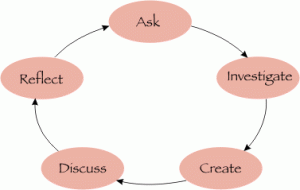
A precursor of CILabs, is the Inquiry Page. This site is still very active, open, and free. It offers an easy way to learn about inquiry-based teaching and learning, to search a large database of Inquiry Units, and to create your own, either de novo or a spin-offs of existing units. There are other features, including help with evaluation and quotes about learning.

CILabs just offers another way to do Inquiry Units, but in the context of the group support functions (blog, document center, group email, web pages, etc.). The two sites were developed at very different times, using different software (Perl vs. Drupal). A current effort is to make the connections between them more evident and to enable them to work synergistically.