Visitor density

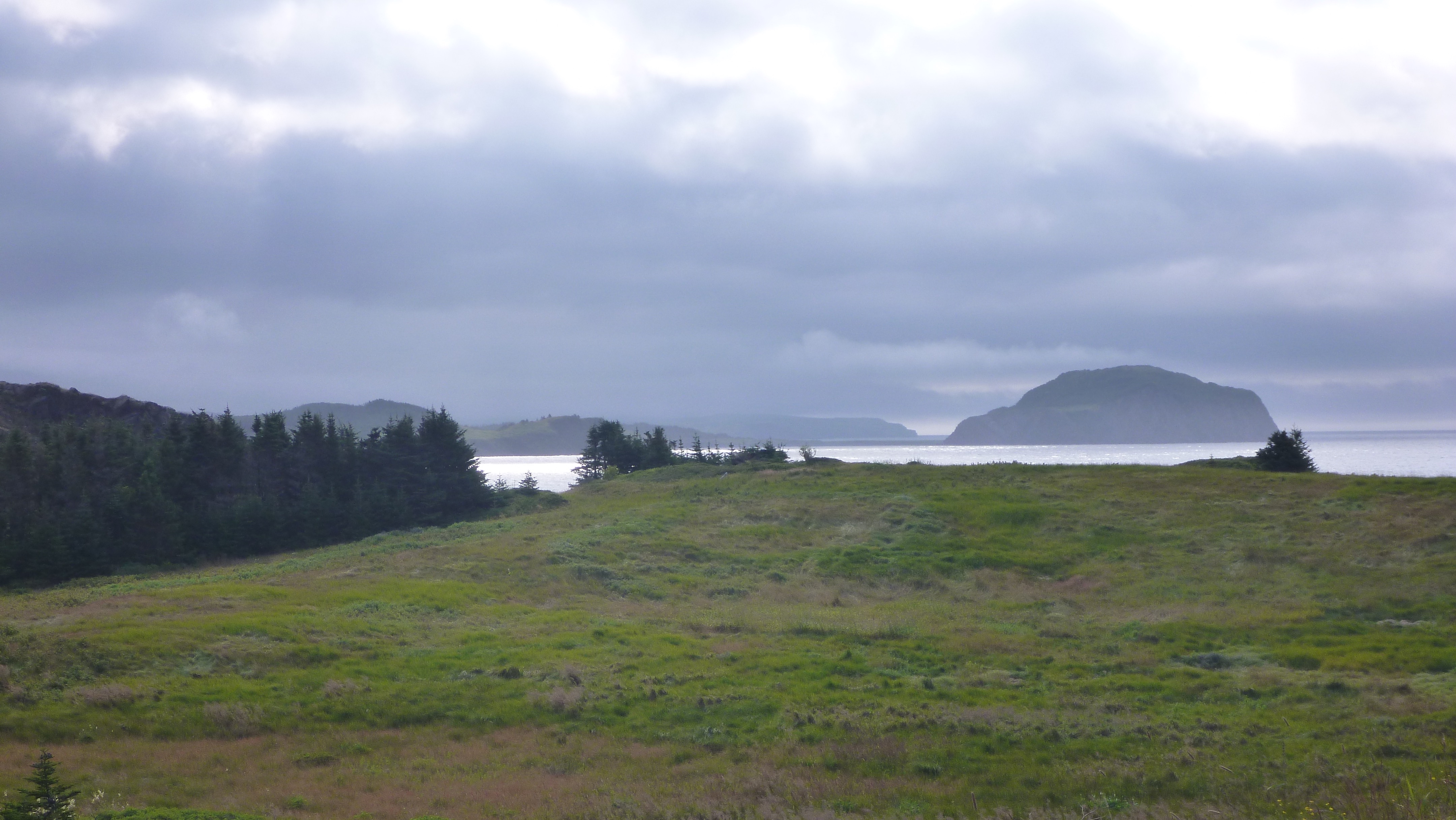
Devil's Cove and beyond

Devil’s Cove and beyond

There are similarities between Cape Cod (CC) and Newfoundland & Labrador (NL). Both are beautiful, have long histories connected with the sea, are more residential than industrial. Even details of the fishing are similar–cod, lobster, and shellfish. Many people remark that NL is like CC of fifty years ago.

One obvious difference is the impact of tourism. That’s very evident on CC, especially in July through August, until school resumes. Tourism is important in modern NL, too, but it’s less intense and more spread out.

I did some calculations, which showCape Cod’s well-deserved appeal draw for visitors. They also show why Newfoundland & Labrador appeals to those who seek a place away from population centers, including centers created by lots of visitors.

My data are not ideal. They’re from different sources and years as well as being incomplete on points such as length of stay. One could argue about whether Labrador ought to be included in this kind of comparison.

Nevertheless, the larger story seems clear. It explains why life is much calmer in NL than on CC, especially in August

Cape Cod

visitors/year – 5.23 M
area – 339 mi²
visitors/year/area – 15,428

Newfoundland & Labrador

visitors/year – .50 M
area – 156,453 mi²
visitors/year/area – 3

NL area / CC area – 462

NL visitor density / CC visitor density .0002

The reciprocal of the last figure says that there are nearly 5000 CC visitors in a given area for a single NL visitor.

It’s only fair to mention that I haven’t been to Signal Hill in St. John’s yet. I expect that it may present a different picture from the tiny outport communities.


Moveable feasting

You can’t count on a 4 mph pace on the trails of Newfoundland, even if you can walk faster than that on flat ground. Even 3 mph or 2 mph is hard to manage. In fact, you stop thinking about the pace.

The problem is not the terrain per se. I’m convinced that it involves more walking uphill than down. There are also uneven rocks, loose gravel, bogs, overgrown vegetation, fallen trees and other obstacles. And the occasional bugs and thorns. But you can get used to all of that.

A much bigger problem is the amazing views, even on the most ordinary trails. I’ve learned not to be captive of the camera, but it’s hard not to stop to look at waves crashing against a sea dungeon, to study 560 million year old Ediacaran fossils at Port Union, or to be captivated by abnormally cute puffins on the island off of Elliston Point. Those sights and more are within a 45 min. drive from our house.

But there is a bigger problem still: The trails are edible. It’s hard to keep up the pace when lunch beckons at every turn.

On a short walk yesterday, we saw ripe bakeapples (cloudberries), low-bush blueberries, and raspberries. There were chuckly-pears or chuckle-berries (amelanchier) and dogberries on the small trees, ready to eat. Nearby were partridge berries and cranberries. We’ve also sampled strawberries, juniper berries, bearberries, bunchberries, and many I can’t identify.

These delicacies were right next to the trail, far more than enough for the sparse walkers. When I’d look off the trail, I sometimes saw masses of berries enough for pies and muffins and pancakes, for jams, for adding to cereal, and for munching to keep my energy up.

There are many other edible berries. In addition to the berries on ground cover-type plants, there are fruits, some called berries, on bushes and trees. There are also numerous edible plants and mushrooms.

Click on any image below to see larger, slideshow format.

Port Rexton

Our longest stay in Newfoundland is in Port Rexton, on the Bonavista Peninsula. Close by are the historic town of Trinity with an excellent local theater, Port Union, the only union-built town in North America, shale formations with Ediacaran fossils, bays with dolphins and whales, great walks along seaside cliffs and through forests, freshwater ponds, sea birds, and more.

The pictures below are just to give an impression of the community itself, most of them taken on a walk to the nearby coffee shop.

Desmond X. Holdridge

Whaler and fishing vessels near the Coast of Labrador, William Bradford

Whaler and fishing vessels near the Coast of Labrador, William Bradford

I’ve been learning about Desmond X. Holdridge, starting with a quote about boats from his book about sailing around Newfoundland and Labrador:

For boats, even the uglier ones, are among the loveliest creations of man’s hands, and though owning them brings a train of debts, hangnails, bruises, bad frights and all kinds of worries not experienced by those who content themselves with more practical vices, the relation between a man and his boat is as personal and intimate as the relation between husband and wife. –Desmond Holdridge, Northern lights: A voyage into danger, 1939

Holdridge was an explorer and author who lived a short, but interesting life (1907-1946). It was filled with dangerous expeditions and the extreme versions of the nautical disasters that I thought only I could create. He died in an automobile accident near Baltimore (Democratic Advocate, April 19, 1946).

When Holdridge was 14 he fitted a rowboat with a sail. Soon after, he was caught in a squall and crashed the boat. At age 18 he and two others sailed a 32-foot schooner for six months around Nova Scotia, Newfoundland, and Labrador. A five-day gale battered his boat to pieces on that trip but they were rescued by another schooner.

Holdridge was again feared lost at age 21. He visited Labrador in to find evidence of Martin Frobisher’s colony from his search for the Northwest Passage in 1576, possibly on Resolution Island.

Not long after that, Holdridge went on an expedition to the jungles of southern Venezuela. His camp was attacked one night, but the attackers fled when he blew the campfire into flames.

The end of the river (film)

The end of the river (film)

Holdridge wrote about that expedition in several books, including the novel, The End of the River, about a South American Indian boy who leaves the jungle for the city where he is accused of murder. That novel was the basis for a film produced by Powell & Pressburger (1947), which was made in Brazil.

He also wrote technical articles, such as “Exploration between the Rio Branco and the Serra Parima” for Geographical Review (1933). He writes there:

The section of northern Brazil enclosed by the Negro, Branco, and Uraricoera rivers and the Serra Parima has long been indicated on maps of Brazil as terra incognita and it was in the hope of finding there aboriginal cultures unchanged by contact with white men that the writer’s expedition was undertaken. During the seven months from May to November, 1932, explorations were conducted on three of the five large tributaries of the Amazon system that have their sources in the Serra Parima–the Catrimany, Demini, and Aracat.

Throughout the several journeys low mountains at strategic points were ascended and bearings taken from them on near–by and distant peaks and sketches made. The resulting network of bearings constitutes a rough triangulation of the whole region and with the photographs and sketches has made possible the construction of a map giving an approximate representation of the topography. A part of the Brazil-Venezuela boundary, following the crest of the Serra Parima, lies within this area, and as a consequence its delineation will be quite different from any shown heretofore.

Holdridge lived for the adventure and writing about it. Speaking of a Labrador storm, he says:

that storm was another symbol, a symbol for the absolute of insensate fury… And here, I think, is the reason for much seafaring, especially for the kind that is conducted in small boats. From the experience of such dreadful chaos there is a catharsis obtainable from no possible work of art…

in the flying Dolphin, her very presence on the surface not predictable even for seconds into the future…

the coexistence of abysmal terror and god-like elation is responsible for much seafaring, especially the small-boat kind… the survivor feels that, if he can design and build the perfect vessel, there will be no terror and only that tremendous thrill. Hence the buckets of drawing ink and the miles of timber that go every year into the building of small seagoing yachts, accompanied always by more money than their owners can afford, and it must make an economic determinist feel like a fool. –Desmond Holdridge, Northern lights: A voyage into danger, 1939


Skerwink Trail

Sea stacks

Sea stacks

We just walked the beautiful Skerwink Trail, which is reachable by a short path from our house rental. The trail loops around Skerwink Head, a rocky peninsula between Port Rexton and Trinity East, Newfoundland.

The peninsula is mainly sedimentary rock, especially sandstone. It’s been shaped into fantastic cliffs, sea stacks, arches, and beaches by the Atlantic storms and freeze/thaw cycles.

Along the walk we saw whales and seabirds, wildflowers, mushrooms, edible wild berries, and a variety of habitats, including determined plants on steep cliffs, mixed forest, craggy meadows, tuckamore, bog, freshwater pond, birch tree clusters, and gravel beach.

The early day was foggy and drizzly, but by late afternoon the sun was shining. A gentle breeze turned into a stronger wind than I liked in the exposed areas.

The trail is considered moderate–difficult. Numerous steps, boardwalks, and rails are what makes it moderate. There is also good signage, including several “Caution” or “Danger: Unstable cliffs.” As an accomplished acrophobe, the recommendation for caution was unnecessary for me. I could easily see the danger, and instead wished for a “Turn back now!” sign.

We celebrated the end of the walk with a dinner of fresh mussels purchased from a roadside truck at Trinity Bay, where they’re farmed. Steamed in white wine and accompanied by some garlic mayonnaise, they were delicious. It didn’t hurt that the price was a little over $1 (US)/pound.

You can see some of the sights in the slides below and on the Skerwink Trail site.

This slideshow requires JavaScript.


Clints and grikes

Clints and grike

Clints and grike

We’ve walked on more interesting trails in Newfoundland than I can count, and those are a tiny fraction of the possibilities. Many are in National or Provincial Parks; some are on private land or Crown Land. Since 95% of Newfoundland and Labrador is provincial Crown Land, there’s a lot to explore.

Some of the trails have been developed by small towns, including outport communities. For example, Flower’s Cove on the Great Northern Peninsula has the White Rocks Walking Trail. This wanders across a limestone barrens, where I learned firsthand about clints and grikes.

Limestone barrens

Limestone barrens

Limestone barrens are odd, unforested areas with what appear as large, limestone paving stones, mortared with mosses, small conifers, wildflowers, and other flora. These are unique ecosystems with extremes hot and cold, plus cycles of drought and flooding and frost. They represent less than 1% of the total area of the island, but host 10% of the rare plants.

The limestone pavement of the barrens is a type of karst landform. These formations have blocks, called clints, separated by deep vertical fissures known as grikes. Karst is derived from the Slovenian word kras, meaning a bleak, waterless place.

Solied pants

Solied pants

From experience, I strongly advise you to be careful, stepping only on the clints. This advice is not always easy to follow, since plants grow up through the grikes and often spill over onto the clints. Thus it’s possible to step on what seems to be a thin layer of green on the clint and find your foot going deep into a grike.

This happened to me near the end of a walk. My left foot sank down nearly up to the knee. I the fell forward hitting both knees on the clint. I was just lucky that I hadn’t caught the foot more, or I might have had a twisted ankle or even a broken foot, possibly one wedged into the grike. Since I was walking alone at the time, I might have come to understand truly what Slovenians mean by kras.

Instead, I suffered no worse than embarrassment and soiled pants.

Completing the circle

Matthew replica

Matthew replica

We’re staying near Bonavista, possibly where John Cabot landed his ship, the Matthew, in “New Founde Lande” on June 24, 1497. There’s a plaque in the cottage commemorating “the 500th anniversary” with celebrations held in 1997. However, the human presence here is much longer than that celebration suggests.

Newfoundland is famous for its dramatic, detailed, and precise record of life on earth. This includes two of the most important GSSPs, or Global Boundary Stratotype Section and Points, one of which we saw at Green Point. Its record of human life is becoming more fleshed out as well.

Recreated long house

Recreated long house

This shows that the cultures of Newfoundland are intertwined over many millennia, just as the mixed forest, slips into tuckamore, then tundra, building upon and shaping each other. That’s true everywhere of course, but the connections seem more evident here, and are notable for a relatively small, non-urbanized population.

For example, Newfoundland was one of England’s oldest colonies, reflecting Cabot’s voyage in 1497. However, in the 17th-century it was more French than English. Those French were largely Normans, Bretons, and in the western area we first visited, Basque. The English kept the French place names, but chose to pronounce them in the English, or sometimes the uniquely Newfoundland way.

Carlb-ansemeadows-vinland-02

English and French records show that during this time Mi’kmaq families were active along the Western coast. They incorporated the island of Newfoundland along with Cape Breton into their domain of islands. I was surprised to learn that in discussions of cultural eras, they’re often now grouped with the European period, due to the timing, their close interaction with the Europeans, and the fact that many were Roman Catholic.

The long history of Newfoundland with its connected cultures can be seen at L’Anse aux Meadows, a site at the far north end of the Northern Peninsula. It was discovered only in 1960. The settlement probably supported Leif Erikson’s attempt to establish the colony of Vinland, 500 years before Cabot’s voyage. This makes it the best evidence for first contact between peoples of Europe and America and the most famous site of a Viking settlement in North America outside of Greenland.

World Heritage Convention symbol at L'Anse Aux Meadows

World Heritage Convention symbol at L’Anse Aux Meadows

L’Anse aux Meadows might have been presented as the beginning before the beginning–the voyage that was 500 years before what we had earlier celebrated as the first one. Instead, the site today rightly talks about those who came to greet the Vikings, who they were and where they came from.

Tracing back, it shows how early modern humans left Africa 100,000 or more years ago. Some dispersed across Asia then moved into North America and eventually Newfoundland from the west. Others went north into Europe, Iceland, Greenland, and eventually from the east.

L’Anse aux Meadows thus represents many things. But one of the most significant is the reconnection of these streams of humanity. The metaphor of “completing the circle” symbolizes the completion of human migration around the world. The Vikings and the Dorset or Late Palaeo-Eskimos were the front people in this re-encounter.

L’Anse Aux Meadows is a UNESCO World Heritage site. Its story aptly reflects the World Heritage Convention symbol, with its emphasis on global connection.

Blow Me Down

Towards Lark Harbour

Towards Lark Harbour

Trail through forest

Trail through forest

Trail through open area

Trail through open area

When, in the middle of August, you need to light up the wood stove to warm your feet, there’s snow at 2000 feet, and an iceberg floats by your cabin window, you know that you’re in an unusual place.

A close encounter with a caribou on a hiking trail, meeting a traditional carver of stone and bone, and eating cod caught a few hours earlier by the restaurant owner’s two young sons add to the pleasant surprises. But the most remarkable thing about Newfoundland are the stories.

Serpentinite

Serpentinite

Every local we meet seems to have a trove of stories, freely mixing what some Viking did a thousand years ago with what they ate for breakfast. And every place, remarkable though it may be on its own terms, comes packaged with intertwined history, myths, and legends,

Beyond the island in front of our lodging in York Harbour was the Blow Me Down Mountain (650 m). Its name comes from the story in which Captain Messervey in 1771 anchored his boat below the range and said “I hope they don’t blow me down!” To this day it’s famous for its powerful winds that blow in every direction at once. It’s also known as an amphitheater that amplifies the sound of thunder. I heard stories of walkers fleeing in terror when Thor seemed to go on a rampage.

Blow Me Down mountain

Blow Me Down mountain

Stairway in a cave

Stairway in a cave

There have been at least 17 communities that share the odd name of Blow Me Down, not to mention mountains, mountain ranges, parks, and other geographical objects.

We took a walk through Blow Me Down Provincial Park nearby, which generated some personal stories to add to the corpus. The trail was beautiful, but a bit of a workout, because of the mud and running water from a recent storm. My activity tracker thought it was more than 100 floors up.

Newfoundland diary: Bottle Cove

York Harbour

York Harbour

I had intended to write a Newfoundland diary, but the onslaught of beautiful rocky coasts, wildflowers and butterflies, fragrant forests of balsam fir, moose and caribou, seabirds, icebergs, quaint fishing villages, lighthouses, Paleoeskimo archeology, world renowned geological sites, challenging hikes with gorgeous views, tundra, friendly people, widely divergent regional dialects, and more has distracted me.

This is beginning to look more like a five-day report, maybe a quinquery? Even now, I feel that I’m just highlighting a few of many rich experiences.

Bottle Cove

Bottle Cove

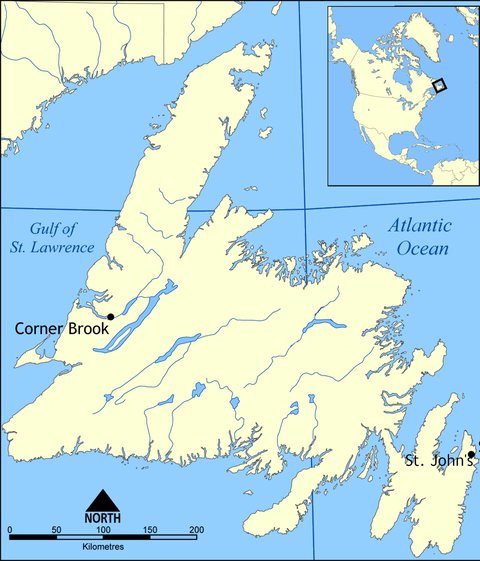
It wasn’t just the overload of rich experiences. The problem began on the first full day. We had arranged to stay in a cabin in York Harbour, on the central west coast, not far from Corner Brook. The cabin was on the seacoast, with a view of mountains and islands. That would have been difficulty enough.

However, the next day we ventured to Bottle Cove. It’s a fishing village with a population of just 10 people, but deservedly has its own Wikipedia entry. Two of those ten were very good friends who welcomed us with treats, including cheeses and homemade beer.

Trail's End, named by Captain Cook

Trail’s End, named by Captain Cook

The cove is aptly named, given its narrow mouth, but apparently it’s actually an Anglicization of the French bateau, from its days as a French fishing village.

The surrounding terrain is part of the Appalachian Mountains. That’s the justification for including the trails in the area in the International Appalachian Trail system.

We had a beautiful walk to the headland named Trail’s End by Captain Cook, when he first explored the area. The trails are suffused with wildflowers, beautiful mushrooms, and interesting rock formations.

The rocks are mostly ophiolites, meaning they came from the oceanic crust and the upper mantle of ancient seas.  They were uplifted and exposed above sea level, often on top of shale and other continental crustal rocks. A prevalent and striking example are the green serpentinites. We saw them in walks around Bottle Cove and also at the nearby Cedar Cove, another beautiful, but quite different formation.

View from the headland

View from the headland

After a day in the Bottle Cove area I was in a mixed state, exhilarated from the beauty and good experiences, but depressed by the thought that everything to come would be a let-down.

Where is everybody?

Earl Holliman,

Earl Holliman, “Where is everybody,” 1959

Where is Everybody?” was the first Twilight Zone episode. It tells about a test pilot, Mike Ferris, who undergoes an isolation experiment in preparation for a trip to the Moon.

We don’t learn about the isolation experiment or its purposes until the end of the story. Instead, traveling with the pilot, we experience the effects of the isolation on his mind. Essentially, it drives him temporarily insane. In the final scene, the commanding officer glosses the problem: “The barrier of loneliness–that’s the one thing we haven’t licked yet.”

I liked the story when it first aired in 1959. It seems very far from my experience; among other things, I’m afraid of heights. But I learned that it was to be much closer to my reality than I had imagined when I first watched the show. Viewing it again recently I saw it from a new perspective, because of an event in my own life.

During my time at college in Houston, I eagerly responded to part-time work opportunities. One of these during the first, or maybe second, year, was for a part of the Apollo space program. There were many such projects in the Houston area, linked with NASA facilities in the Houston area, the medical research facilities, and local universities, especially at Rice.

President Kennedy speaking on the space program at Rice University, Sep 12, i962

President Kennedy speaking on the space program at Rice University, Sep 12, i962

The particular project I signed on to required just a weekend of work. Well, to be honest, it was a three-day weekend, plus some, which meant I had to cut some classes. It was minimum wage ($1.25/hour), but for 24 hours per day, so to me that was a huge sum of money that I could earn in one longish weekend. And of course, the space travel aspects sounded interesting.

It’s worth noting that the wage at that time translates to $9.59/hour in today’s dollars. Minimum wage workers in the present earn about 75% of the wage I received, despite most of those today working harder and having a greater need than I had.

I was disappointed, although not really surprised, to learn that my project wouldn’t involve actual space travel. But it was still intriguing for an 18 year old. Three of us were to enter a simulated Apollo capsule and carry out a mission with tasks similar to those the astronauts might encounter. We were to wear pilot jumpsuits while being connected via 11 electrodes, wires, and cables to devices monitoring ECG, EEG, and other bodily functions. We would eat freeze-dried space food and carefully monitor our input and output of food and fluids.

Interior of actual Apollo capsule (not my simulated one)

Interior of actual Apollo capsule (not my simulated one)

Before that time, all of the US space voyages had been of short
duration. Project Gemini had supported two-person flights of short duration. Meanwhile, the Soviet space program was more advanced, and had already had a person in space for over 24 hours, a person sleeping in space, and multi-person crews.

However, the Apollo program was a large jump forward for the US, one that envisaged three-day and longer flights. The first manned flight of Apollo was in 1968 and culminated in flights to the Moon. Early on there were many questions about the effects on physical and mental health, social interaction, and the ability to maintain vigilance on boring tasks.

Because I had arrived first among the three volunteers, I was designated as Captain. This proved to be important at several times during the mission.

Electrode kit for EEG

Electrode kit for EEG

After the arrival of the complete crew there were various liability releases to sign. My crew was then informed about my promotion to a position of authority,

We then underwent a procedure that seemed routine at the time but turned out to have significance for the space program. The researchers wanted to measure our vital signs over the three-day period of the simulation, This was as much to test out the measurement protocol as to monitor our particular signs. They shaved patches on my legs, my chest, and four places on my head. Paste-on electrodes would then record signals from the brain (EEG) and heart (ECG). They could also measure pulse, blood pressure, and perhaps other signs.

Wires from the 11 electrodes were gathered into cables that emerged from caps we each wore on our heads. We then entered a box barely big enough for three bucket-like seats and various electronic equipment, including displays and buttons to push. I’d guess now that the room was about 9′ long, 5′ wide, and 7′ high. It would not have pleased a claustrophobe. One of the big issues over the three days was moving about the confined space of the capsule without entangling each other in the cables and other gear.

Like the actual astronauts we were confined for the entire mission, although we had an out for emergencies that they wouldn’t have. We received food from a sliding drawer that mimicked the food supply on the Apollo capsule. We had to use plastic bags for elimination of waste products. Most of our time was spent monitoring displays to look for anomalous occurrences, such as a sequence of digits changing its pattern. It reminded me that much of space flight involves routine, even if it has moments that soar.

As I said, the routine procedure of monitoring through electrodes turned out to be more significant than any of us imagined. For two and half days everything worked well, just as it had for the Mercury and Gemini programs. all of whose flights were of short duration. But on the third day, one of the electrodes malfunctioned, then another. We had to break the isolation protocol to have our skin re-shaved and the electrodes re-pasted.

It soon became clear that hair would grow back too fast, There had to be an alternative to paste-on electrodes for use on longer flights. I believe that NASA initially resorted to implantable electrodes for the longer missions, in part due to our experiment. I believe that my rapidly growing hair thereby made a contribution to the space program.

It was also interesting to see the effects of my nomination as Captain. As I mentioned, the confined quarters and bothersome equipment led to ever-growing annoyance over the three days. I became the final arbiter for major disputes, such as “your cable tangled with mine, not the other way around.” I found that quick, firm decisions, which over time roughly balanced the wrongs to the parties involved restored peace to the capsule and appeared to be accepted by all.

At the end of the simulation we had debriefings, showers, etc. Television crews then arrived. I learned as I’ve learned several times since, that I’m terrible at saying anything the least bit intelligent in front of a camera. Although I thought that the experience was fascinating on many levels, I couldn’t bring myself to say that it was terrifying or ennobling in the way the reporters seemed to want. (It seemed crass to mention how pleased I was to learn that we were to be paid for four full days.)

In “Where is Everybody?” Mike Ferris was an astronaut in training confined to an isolation room for 20 days, not the 3 that we experienced. Researchers were assessing whether he could handle the psychological stress of a prolonged, solo trip to the Moon, whereas we were just college students there to test the equipment as much as ourselves. Ferris hallucinated a complete town, without any people, out of his sensory-deprived mind. We weren’t privileged to such elaborate images, but each of us had unusual dreams and changed in the short course of the experience.

For Ferris, space travel meant being alone. As a result of just a simulation, his mind spun a fantastic reality in which all other people had ceased to exist.

The overall effect of my simulation experience was the opposite. Every aspect of my body was monitored 24 hours a day. When I deviated on the routine tasks, alarms would go off. The presence of my co-volunteers was inescapable, instilling another kind of madness, and a desire to be away from them at all costs. Even emerging from the capsule, I was confronted by a team of researchers, reporters, and television cameras. For me, the “everybody” was everywhere. I longed for nobody, and wondered where it could be found.