I’ve been working on a piano sonata by Beethoven (No. 31 in A♭, Opus 110) for a long time. That project may last a lifetime. But I plan to continue both for the sake of the music and for the person who had been guiding me to attempt this work at the edge of my ability.
The piece is beautiful, with contrasting moods, but overall a feeling of melancholy. When it was published, one critic said that its tonality was “emotionally as black as night” and another that it was “a key of the grave, death, the Last Judgement, eternity.” I can blame Beethoven’s music for only a part of that feeling. A larger reason is that Deborah Geithner, my teacher and friend is no longer here.
Deborah combined perceptive listening with helpful suggestions for performance and practice. But more than that, she brought wit, insight, caring, and encouragement to her teaching. I often had mixed feeling about the path of a lesson. I enjoyed talking with her about people, art, politics, travel, and life, while at the same time feeling that I should focus on learning to read music. But then she’d generously allow extra time so that my lessons extended well past the allotted time. This happened again and again, despite her amazing schedule of teaching, performing, writing, and supporting family and friends.
Deborah’s voice is still in my head, especially, of course, when I’m practicing. She would delve deeply into a piece of music, comparing editions, and trying out different interpretations. But that intensity only added, rather than supplanted, a concern for the person and enjoyment of the music.
Assignment book
She didn’t like talk about perfection (as in “but I played it perfectly in practice at home!”). The goal wasn’t to avoid mistakes, nor was it to strive for some fixed standard. Instead, it was to explore oneself and the music to have value in the present and nurture growth. Her students were all ages and ability levels. They included students of voice and other instruments. Always, there was an effort to expand horizons.
At one student workshop, one student might play a duet with another or with Deborah. Another might play only the right hand melody of a piece they were learning. Yet another might be tackling a difficult composition. Deborah managed to support students wherever they were, always opening doors to further development, but recognizing what they could do in the here and now.
There will be memorial services, laudatory obituaries, and other expressions of Deborah’s many contributions to communities around the world, and especially, to her recent years as a supporter of chamber music, literature, painting, and other arts on Cape Cod. Her unique energy, compassion, intelligence, and sensitivity will not be matched again. But most of all, for those who had the privilege to know her, she will be missed as a special friend.
I’ve always been interested in maps, and that interest has grown rather than diminished as I began to learn about them as rhetorical devices. Mark Monmonier discusses this in his How to Lie with Maps.
As faithful representations of reality, maps are endlessly fascinating and useful as tools for many purposes, not just finding one’s way. But as constructed artifacts, they embody a mix of physical reality and human passion––becoming devices for power, greed, delusion, hope, art, and more.
Recently, I read The Mapmaker: A Novel of a Great Navigator who sailed Fifty Years Before Columbus by Frank G. Slaughter. It’s a fictionalized account of Bianco’s life, but one done with an attempt to represent accurately what is known about Bianco, while filling in the gaps with a plausible story.
Portugal’s ruler Prince Henry the Navigator, sent various expeditions into the western Atlantic and along the African coast, beginning in 1418. These voyages were secret. There was a real interest in adding to the knowledge of the world, but that was coupled with a desire to use that knowledge for private gain. Not all of the discoveries were shown on published maps, and some were designed to mislead commercial rivals by concealing the existence of new lands and resources.
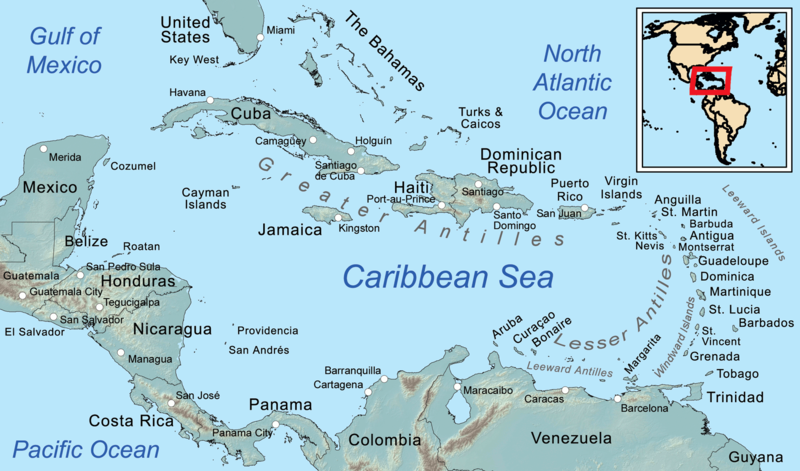
Antilles within the Caribbean
The Portuguese had probably reached the Antilles archilpelago at the Eastern edge of the Caribbean by 1430. Between 1436 and 1448, Andrea Bianco made, but did not publish, maps showing the locations of Newfoundland, Florida, and Brazil. Later Portuguese maps, published in 1459 and 1489, show Asia with something like Florida, conveniently omit South America.
Bianco developed the “Tondo e Quadro” (“circle and square”) method for seeing and measuring a return course. This was invaluable for repeat voyages to secure foreign resources. He collaborated with Fra Mauro, who made other detailed world maps and estimated the world’s circumference within 10% of modern figures. See The Ancient Americas: Migrations, Contacts, and Atlantis, by David Pratt.
Prior to the Portuguese voyages, the famous Chinese admiral Zheng He (a Muslim) had circumnavigated the earth. A world map was published in China during the Ming dynasty in 1418. It shows that the Ming navy had a rough knowledge of Baja California, the west coast of South America, as well as Labrador, Florida, and the Gulf of Mexico. The Chinese maps probably contributed to the Europeans’ knowledge.
The Europeans also learned from Arab science and technology. Arabs put south at the top of maps. When you face the sun in the morning, south is on the right, and right has positive associations. Also, with the sea to the south their land was then on the top of the map. Europeans flipped the map to put north and themselves on top.
Andrea Bianco, explorer and mapmaker
These points are supported by other historical accounts, which in sum show that 15 C Europeans knew that the world was a sphere roughly 24,000 miles in circumference and that there were large land masses between Europe and East Asia. The issue was not to “discover” America nor to prove the word was round, but to map the details and determine who should control it.
To me, this all suggests that what I had learned about voyages of discovery was mostly wrong, and much less interesting than the fuller, more objective accounts available today. School textbooks tended to minimize or omit entirely any non-European contribution. That left out crucial parts of the story, including the cultural aspects of geography.
The textbooks also represented the discovery era as one of courageous, individualized pursuit of knowledge. Instead, the voyages were an essential aspect of empire building based on already extensive knowledge. Rather than enlightening an ignorant world, they were used to acquire knowledge, then deliberately mislead competitors.
It makes sense that global understanding starts with understanding the globe. At least that’s what some children and I think.
It was a Monday in the Multipurpose Unit Early Classroom Intervention Program (MUECIP) in Çanakkale, Turkey. This program is an innovative approach for 4-5 year-olds from low-SES families, which integrates music and arts. The student teacher, Dilsad Korkmaz, did an excellent job of keeping the children engaged and allowing for the inevitable individual differences.
The program draws from approaches such as Orff, Babies with Identity, and High-Scope. There is ample use of graphic displays on class size, seasons, daily activities, birthdays, responsibilities, etc. Family participation is encouraged through interviews with the families and home visits to observe children in their natural lives. Parents rotate in providing breakfasts, which also gives them an opportunity to observe the class and engage in the activities.
Research by Özlem Çelebioğlu Morkoçc and Ebru Aktan Acar at Canakkale Onsekiz Mart University has shown that the program supports overall development, including cognitive and psychomotor skills, self-care, language, and personal-social skills.
Finding Cape Cod
It was more compelling to me that the children seemed so engaged in learning. They were excited to talk and share, to dance, and to investigate everything. I had to remove my electronic fitness bracelet when it became too great a distraction. Besides, it was embarrassing that they figured out how to operate it in about 1/10 of the time I had taken.
At one point we drew upon a globe for some collaborative map work. Using many fingers, we first found Turkey, then Cape Cod. I’m not sure how much they comprehended about the globe versus how much they just wanted to interact with each other and their American “uncle.”
It’s fun to visit the famous sites when traveling, even if only to see all the diverse people coming to see those same sites. But What I tend to remember and value most are the unplanned, mundane, and more local adventures.
On Friday in Bucharest, there was one such involving worms. I was speaking at the aptly named “Friday meeting” at the university. The topic of planning in teaching (exploring the important sites?) came up and I had to share a story that Jack Easley, a math and science educator, had told.
Discovering worms
Jack had been working in a second grade class, guiding a six week long unit on weather. Pupils learned about clouds, precipitation, storms, weather measurement, agriculture, and other such important topics, taught, I’m sure in a creative and engaging way. On the last day, it was raining outside until just before the class ended. Jack knew that there might be a rainbow. Viewing that could be an exciting culmination for the unit.
He took the class outside, preparing to discuss the visible light spectrum, refraction, moisture in air, and others such topics. But the pupils weren’t interested. While Jack was looking up, they were looking down at the closer and and more ordinary. He was a latter day Thales at risk of falling into a well while gazing at the stars. The children’s observations of the worms led them to ask, “Why do worms come out of the ground after a rain?”
Soil, plants, worms
Jack started to answer, then realized that he didn’t really know. So he asked the students to write down their question for scientists at the university. It turned out they had many ideas, but didn’t really know, either. A few days later a long article came out in the New York Times, saying that this was an important question for science and for agriculture, but the answer wasn’t simple. Even today, there is a lot to say about why earthworms surface after rain?. Jack saw that the pupils became most excited about their own question, which in turn was more like the science that scientists do.
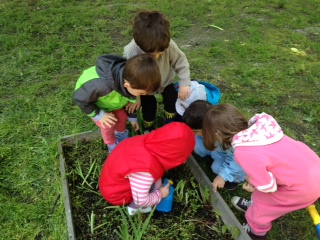
Catalina Ulrich, a professor at the University of Bucharest, and my host, appeared to be quite excited by this little story. She pulled out her smartphone to show photos (shown here). Just the day before she had been observing in a crèche (preschool), where the children had been fighting over a bike. But then, one of them discovered a worm. Like Jack’s students, these even younger ones saw that soil and worms were more interesting and more attractive than whatever else they had been doing, and than many people might think.
That evening, we had dinner at the home of Claudia Șerbănuță. I needed a toilet break, and as is my habit, couldn’t avoid looking at the reading material there. Right on top was Doreeen Cronin’s Diary of a Worm.
The book describes the world from a worm’s point of view. For example, in the beginning, it tells you the three rules about worms that you must never forget. The third rule is “Never bother Daddy when he’s eating the newspaper.” When I came out, I asked Claudia’s children about the book. Could they tell me the three things we must always remember?
They grew quite excited and shouted out the third rule in unison. When I asked about the others they weren’t so sure. The other two have something to do with how worms live, the making of soil, the interdependence of life, or global food supply. I couldn’t remember them either.
In 1971, I was fortunate to see an excellent play at Wyndham’s Theatre in London. It was Abelard and Heloise, by Ronald Millar. Keith Mitchell and Diana Rigg(!) had the title roles. The play was moving and the acting was superb. I can still visualize scenes, not so much from the stage setting, which was fine, but because the story caught my imagination.
Under the pretext of study we spent our hours in the happiness of love, and learning held out to us the secret opportunities that our passion craved. Our speech was more of love than of the books which lay open before us; our kisses far outnumbered our reasoned words. –Abélard
Over the years I would read whatever I could find by or about Héloïse d’Argenteuil and Peter Abélard, including biographies, fictionalized accounts, children’s stories, poetry, song, and of course the letters themselves. I saw several movie versions, some better than others. I began to learn how the story had inspired copies, re-mediations, satires, and endless allusions in a wide variety of artforms.
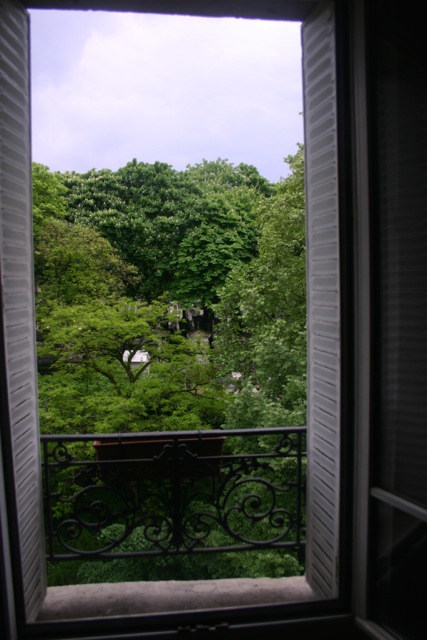
Père Lachaise Cemetery from apartment
Héloïse had seen this coming, with her own perceptive reflections on pictures, letters, talk, and physical presence. For example,
If a picture, which is but a mute representation of an object, can give such pleasure, what cannot letters inspire? They have souls; they can speak; they have in them all that force which expresses the transports of the heart; they have all the fire of our passions, they can raise them as much as if the persons themselves were present; they have all the tenderness and the delicacy of speech, and sometimes even a boldness of expression beyond it. –Héloïse
My obsession with the topic became worse in 2004, when we lived not far from Notre-Dame de Paris, where Abélard had studied and taught. I found an English translation of Régine Pernoud’s book in a used book store. Pernoud lists Héloïse first, which makes sense. Abélard was a great orator and writer, one we might revere even more if most of his works hadn’t been destroyed for his heresies. Yet, Héloïse (a great scholar herself) is the one who makes their story come alive, whether you interpret it as a love story, a theological debate, an example of 12th C patriarchy, or an invention of later writers. His letters are fascinating to read, but hers leap to the heights of the written art, even in translation from the original Latin.
One thing that comes through in every retelling is the tragedy of it all. There is of course the castration and the subsequent separation of Héloïse and Abélard. But there is also the tangible agony of struggles between possibility and reality, spirituality and desire, trust and betrayal. Their love always entailed suffering with happy moments that became recollections before they were fully realized. Even their son Astrolabe appears as a shadow of a world they imagined, but never had.
Monument to Abelard & Héloïse
Later, when their connection was only through letters, Héloïse seeks a way to share the loss, to find meaning in the emptiness:
Let me have a faithful account of all that concerns you; I would know everything, be it ever so unfortunate. Perhaps by mingling my sighs with yours I may make your sufferings less, for it is said that all sorrows divided are made lighter. –Héloïse
You can read one version of this in Alexander Pope’s poem, Eloisa to Abelard. Eloisa is in anguish over her powerful feelings for Abélard, especially as manifested in her dreams:
Black Melancholy sits, and round her throws A death-like silence, and a dread repose: Her gloomy presence saddens all the scene, Shades ev’ry flow’r, and darkens ev’ry green, Deepens the murmur of the falling floods, And breathes a browner horror on the woods.
She realizes that Abélard, now as a eunuch who is free from the “contagion of carnal impurity” cannot return her feelings even if he wants to. And so she begs, not for forgiveness, but for forgetfulness.
How happy is the blameless vestal’s lot! The world forgetting, by the world forgot. Eternal sunshine of the spotless mind! Each pray’r accepted, and each wish resign’d;
Today, one can walk near Père Lachaise cemetery on rue Pierre-Bayle. Bayle was a 17C philosopher. Where Abélard committed the heresy of seeing reason as a path to faith, Bayle advocated a separation between the spheres of faith and reason. He wrote about Héloïse and Abélard in his Historical and Critical Dictionary, a forerunner of the encyclopedias. One can also walk on the rue du Repos, which, were it not for the cemetery wall, would lead directly to where they lie in “repose” at their monument.
Héloïse d’Argenteuil
Cynics will point out that the monument was placed there in 1817 simply as a marketing ploy to convince Parisians to be buried among the famous; that the bones of the famous lovers are probably at the Oratory of the Paraclete, or the church of Nogent-sur-Seine, or most likely, just lost; that their love, if it existed at all, was no more than an expression of medieval structures of religious oppression, patriarchy, abuse of position, class, and power; and that the famous letters themselves were a literary concoction made long after the actual events.
Abélard would disdain these worldly concerns, and urge the cynics, along with Héloïse to
Strive now to unite in yourself all the virtues of these different examples. Have the purity of virgins, the austerity of anchorites, the zeal of pastors and bishops, and the constancy of martyrs.
But Héloïse would know that “the truth is more important than the facts.” She’d recognize that the Père Lachaise monument shows their eternal love, which endured politics, religion, castration, and even Abélard’s pomposity and coldness. She’d also see that just like Keats’s youth, they can never touch, so encased in granite, their suffering also endures forever.
As we’re about to set off on a trip both to explore and to discuss progressive education, I’m thinking about the example of the Misiones Pedagógicas in Spain in the early 1930’s.
My colleague, Iván M. Jorrín Abellán, just sent a link to a digital copy of the 1934 report: Patronato de Misiones Pedagógicas : septiembre de 1931-diciembre de 1933, in the collection of the Bibliotecas de Castilla y León. It tells the story of the Misiones through text, photos, and a map. Even if your Spanish is as poor as mine you can enjoy the many photos and get enough of the text to appreciate the project.
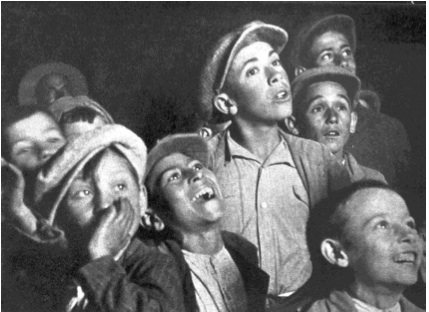
Some of the photos of uplifted, smiling faces are a bit much for today’s cynical eyes. Still, it’s hard to deny that something important was happening for both the villagers and the missionaries.
Watching theater
The Misiones Pedagógicas were a project of cultural solidarity sponsored by the government of the Second Spanish Republic, created in 1931 and dismantled by Franco at the end of the civil war. Led by Manuel Bartolomé Cossio, the Misiones included over five hundred volunteers from diverse backgrounds: teachers, artists, students, and intellectuals. A former educational missionary, Carmen Caamaño, said in an interview in 2007:
We were so far removed from their world that it was as if we came from another galaxy, from places that they could not even imagine existed, not to mention how we dressed or what we ate, or how we talked. We were different. –quoted in Roith (2011)
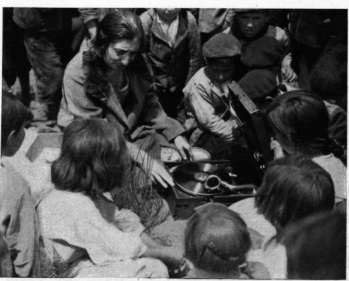
Listening to music, outdoors
The Misiones eventually reached about 7,000 towns and villages. They established 5,522 libraries comprising more than 600,000 books. There were hundreds of performances of theatre and choir and exhibitions of painting through the traveling village museum.
We are a traveling school that wants to go from town to town. But a school where there are no books of registry, where you do not learn in tears, where there will be no one on his knees as formerly. Because the government of the Republic sent to us, we have been told we come first and foremost to the villages, the poorest, the most hidden and abandoned, and we come to show you something, something you do not know for always being so alone and so far from where others learn, and because no one has yet come to show it to you, but we come also, and first, to have fun. –Manuel Bartolomé Cossio, December 1931
There’s an excellent documentary on the Misiones, with English subtitles. It conveys simultaneously the grand vision and the naïveté, the successes and the failures. As Caamaño says, “something unbelievable arrived” [but] “it lasted for such a short time.”
Watching a film
In her study of Spanish visual culture from 1929 to 1939, Jordana Mendelson (2005) examines documentary films and other re-mediations of materials from the Misiones experience. Her archival research offers a fascinating contemporary perspective on the cultural politics of that turbulent decade, including the intersections between avant-garde artists and government institutions, rural and urban, fine art and mass culture, politics and art.
I’m struck by several thoughts as I view the documentation on the Misiones. Today’s Spain is more literate, more urban, more “modern”. But although the economic stresses are different, they have not disappeared. There are still challenges, in some ways greater, for achieving economic and educational justice.
Iván and other educators are asking how the spirit of the Misiones might influence community-based pedagogy in current times. Their experiences have lessons for those outside of Spain as well.
Roith, Christian (2011).High culture for the underprivileged: The educational missions in the Spanish Second Republic 1931 – 1936. In Claudia Gerdenitsch & Johanna Hopfner, (eds.), Erziehung und bildung in ländlichen regionen–Rural education (pp. 179-200). Frankfurt am Main: Peter Lang.
Youth Community Inquiry offers a detailed look at how young people use new media to help their communities thrive. Chapters address questions about learning, digital technology, and community engagement through the theory of community inquiry. The settings range from a small farming town, to a mostly immigrant community, to inner-city Chicago, and include youth from ages eight to 20. Continue reading →
The Wellfleet Conservation Trust has been very active recently, securing land for conservation, guiding walks, and building trails for anyone to enjoy. Their website gives a good idea of their many projects. As you can see from the map on that site, the WCT land complements that of several other organizations, making a wide variety of environments available for protection of plant and animal life and preservation of the fragile land, as well as helping the people have healthier lives in every sense of that word.
Walker trail pond
I was fortunate to get to assist with some of the trail clearing, including at the recently established Walker trail. The site is nearby, one that we can visit on the way to swim in local ponds or after a trip to the transfer station.
The trail minus foliage
The trail runs through land donated by the Walker family. It’s short, but surprisingly varied, with some ups and downs, views of a few houses, and a small pond. Making the trail included installing some benches and rustic steps for the steeper portions. There was also a major project to remove a large dead branch that was hanging over the trail. Members of the WCT, young workers from the two Wellfleet residences for the AmeriCorps Cape Cod program, and other volunteers all contributed to the effort.
Hung branches
The WCT mission is “to assist and promote the preservation of open spaces and natural resources and to protect the rural character of the town of Wellfleet…The Trust acquires land by gift or purchase…develops walking trails and encourages the study and implementation of sound environmental practices.”
I worked on these journal issues with John Pecore, Brian Drayton, and Maureen Hogan, as well as article contributors from around the world. We’re now exploring options for developing some of the articles along with some additional material into a handbook. The series is timely given current debates about the purpose and form of education in an era of rapid technological change, globalization, demographic and political shifts, and growing economic inequities. It asks, “What have we learned about pedagogy that can support democratic, humanistic, and morally responsible development for individuals and societies?”
Progressive education is a pedagogical movement that emphasizes aspects such as learning by doing, student-centered learning, valuing diversity, integrated curriculum, problem solving, critical thinking, collaborative learning, education for social responsibility, and lifelong learning. It situates learning within social, community, and political contexts. It was promoted by the Progressive Education Association in the US from 1919 to 1955, and reflected in the educational philosophy of John Dewey.
But as an approach to pedagogy, progressive education is in no way limited to the US or the past century. In France, the Ecole Moderne, developed from the work of Célestin Freinet, emphasizes the social activism side of progressive education. Loris Malaguzzi and the Reggio Emilia approach to early childhood education demonstrates the importance of art in learning, a key element of the holistic approach in progressive education. Paulo Freire’s work in Brazil on critical literacy, highlights the link between politics and pedagogy. Similarly, influenced by his experiences in South Africa, Mahatma Gandhi’s conception of basic education resonates with progressive ideals of learning generated within everyday life, cooperation, and educating the whole person, including moral development.
It is worth noting that progressive education invariably seeks to go beyond the classroom walls. Thus, the work of Jane Addams and others at Hull House with immigrants fits, even if it is not situated within a traditional school. Myles Horton and the Highlander Folk School focused on social activism with adults, exemplifying the progressive education ideals. So too is the Escuela Nueva in Spain, Colombia, and elsewhere. The informal learning in museums, libraries, community and economic development, and online may express progressive education more fully than what we see in many schools today.
We hope that these issues will prove to be a useful resource for anyone interested improving education for a healthier world.
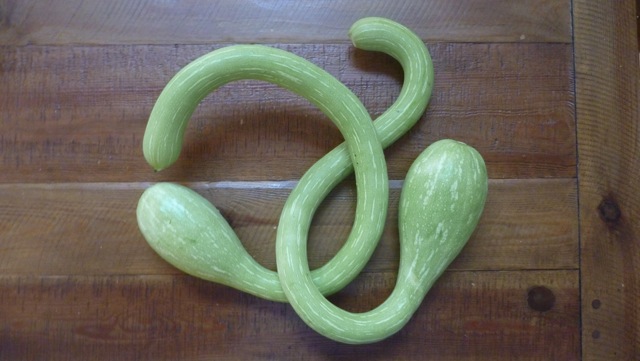
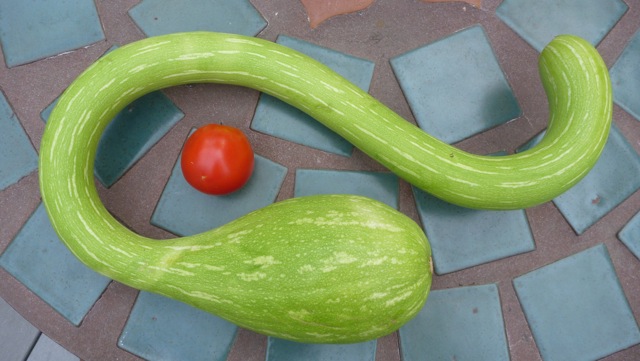
The tromboncini have welcomed August with a fanfare. And now, they’re threatening to take over.
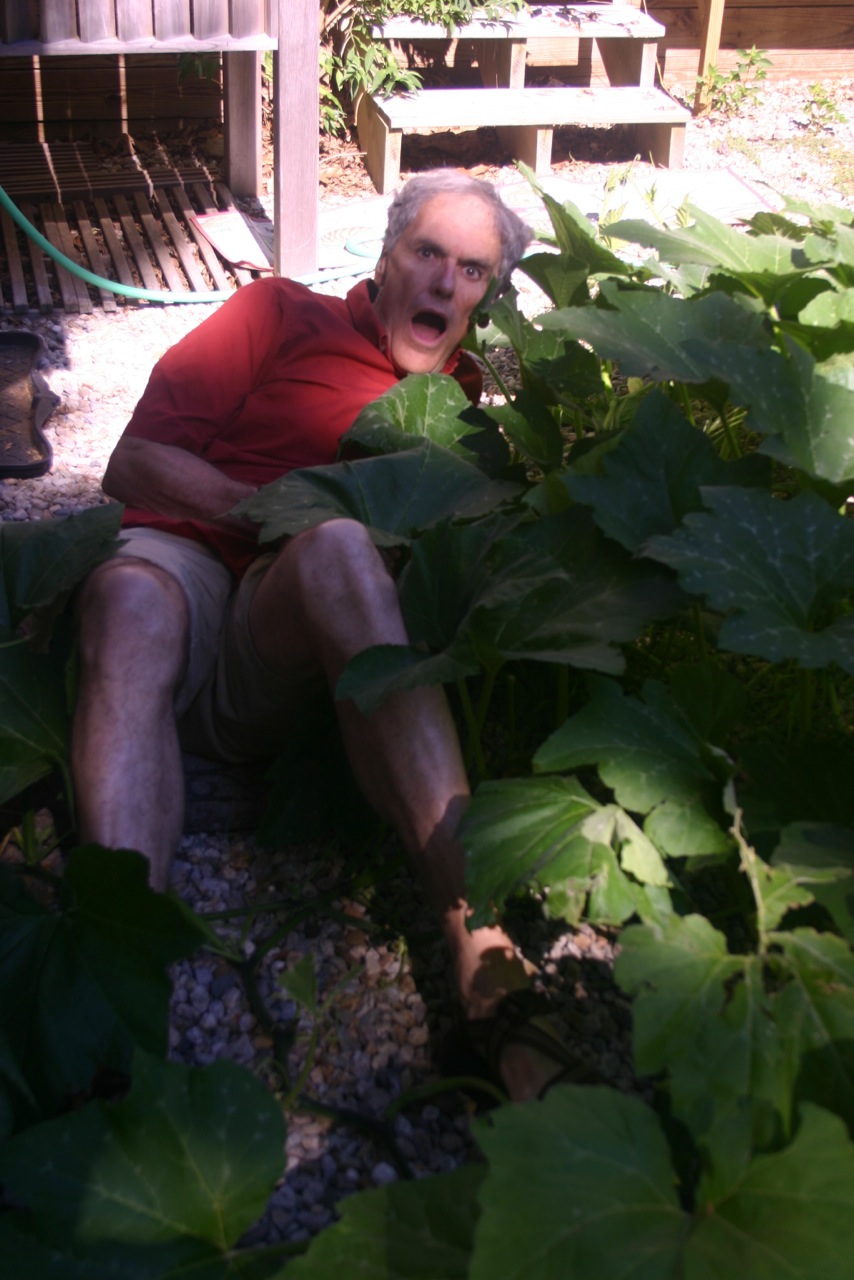
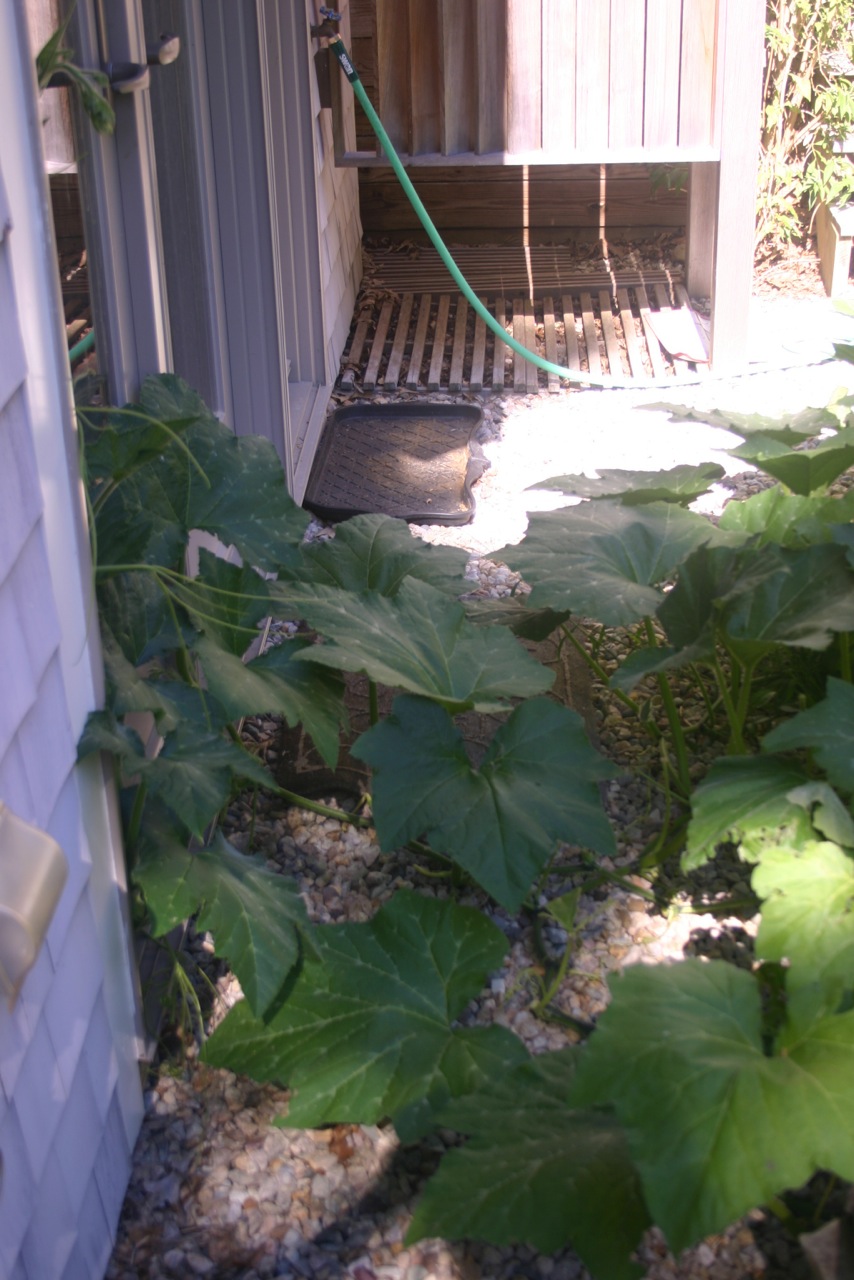
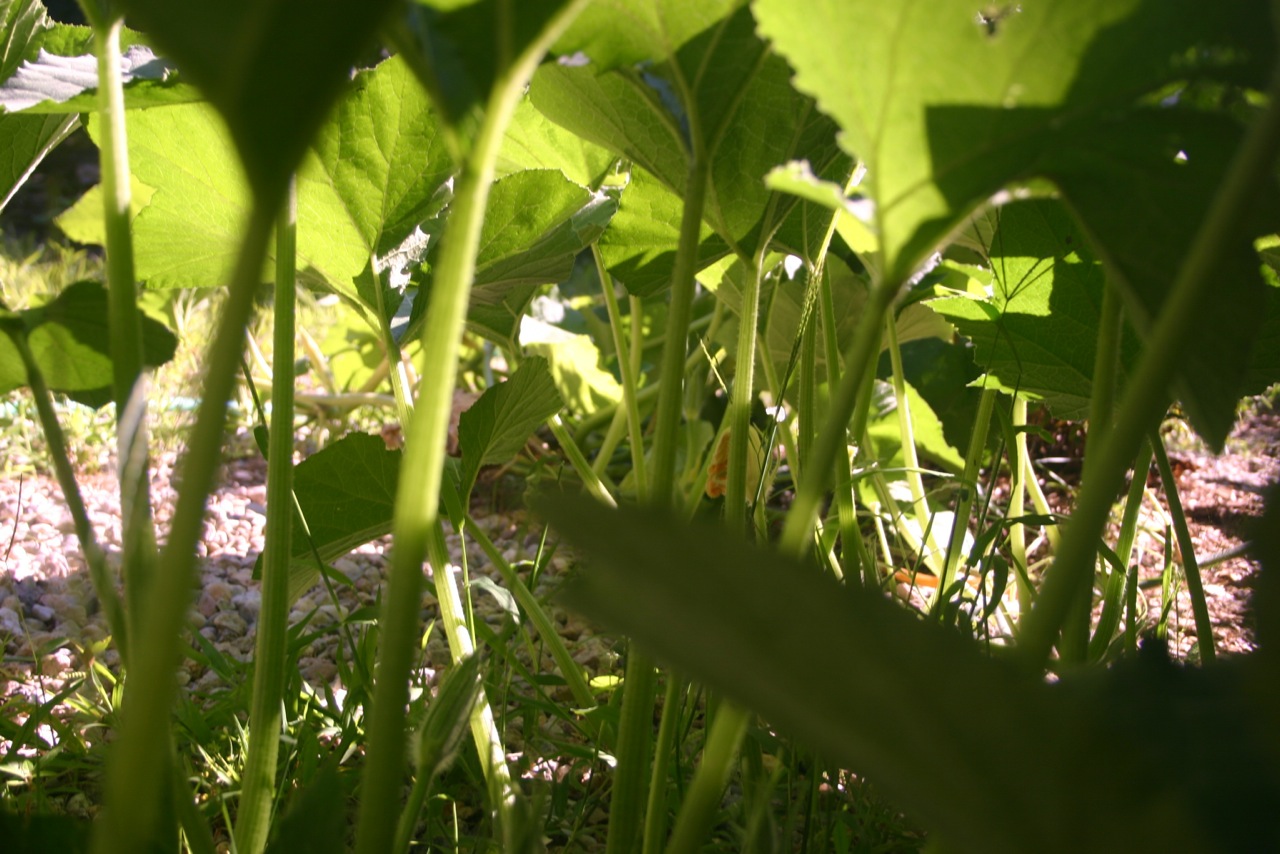
Invasion of the squash
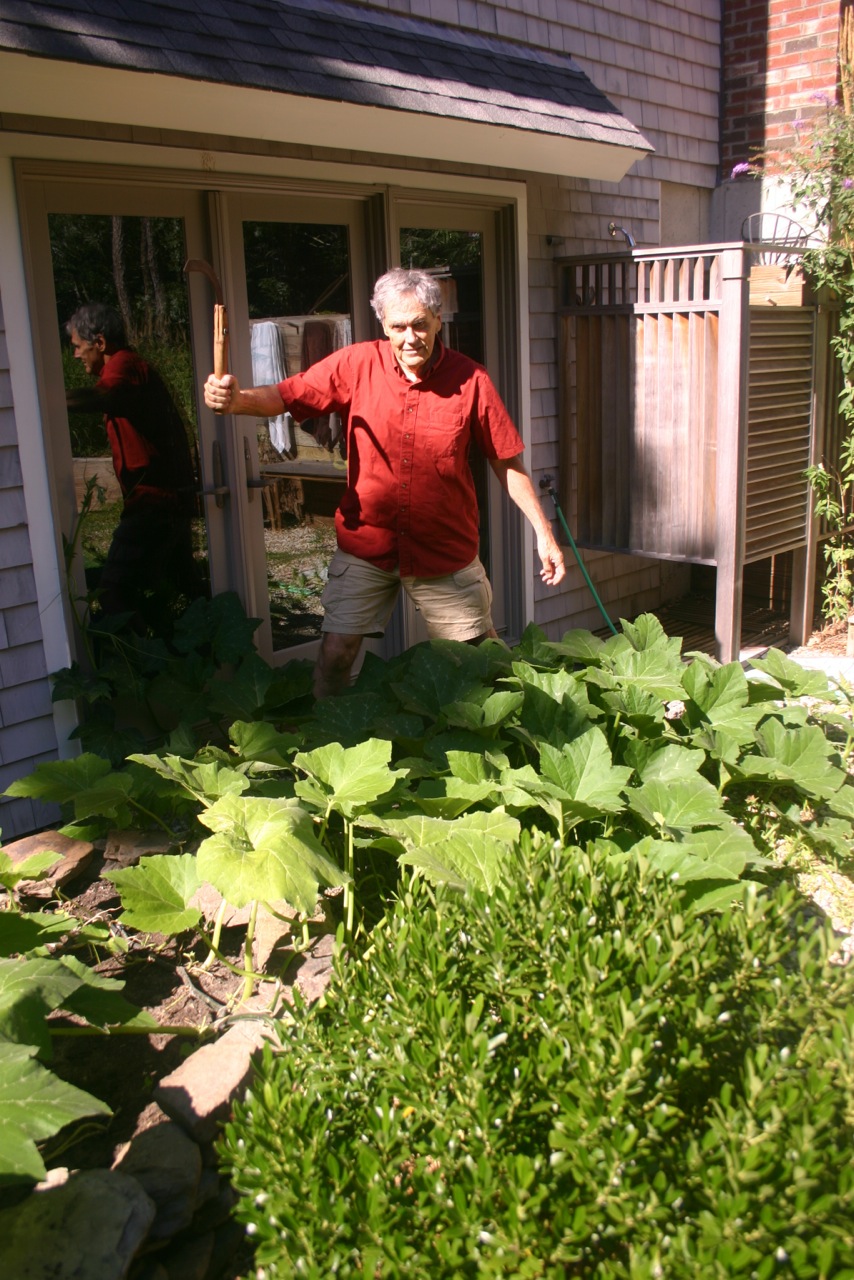
Thanks to starter plants from Daniel Dejean, we now have vines encroaching on our house.
Vines attacking house
But the fruits of the plant are delicious, tastier than zuchinni. They’re huge, enough to feed the army we’ll need to defend the house against the vines.
Squash love
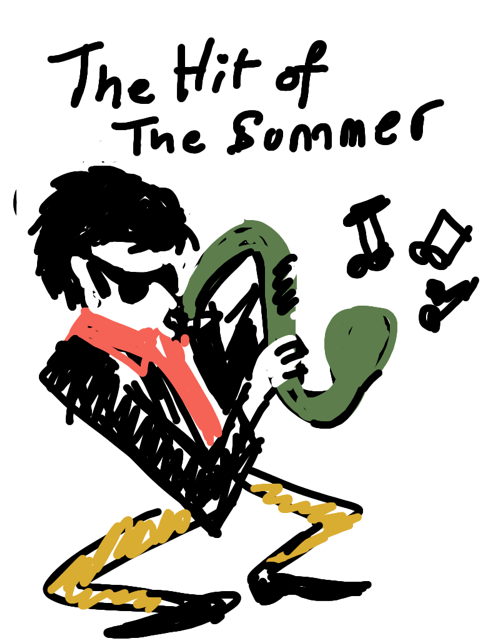
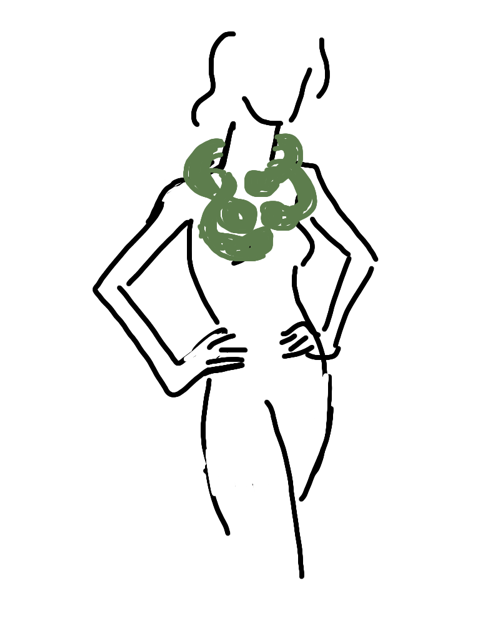
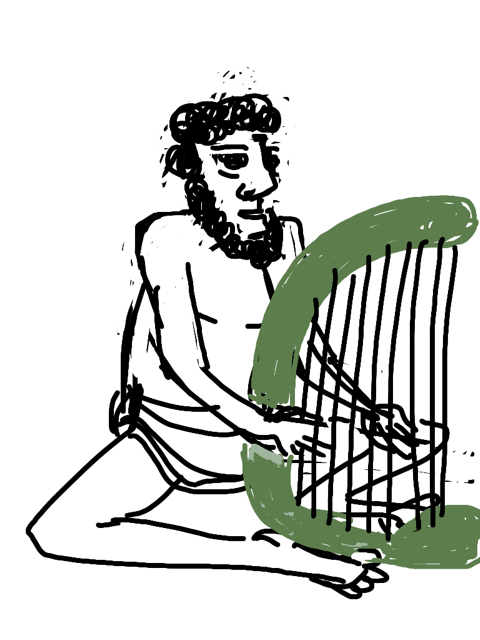
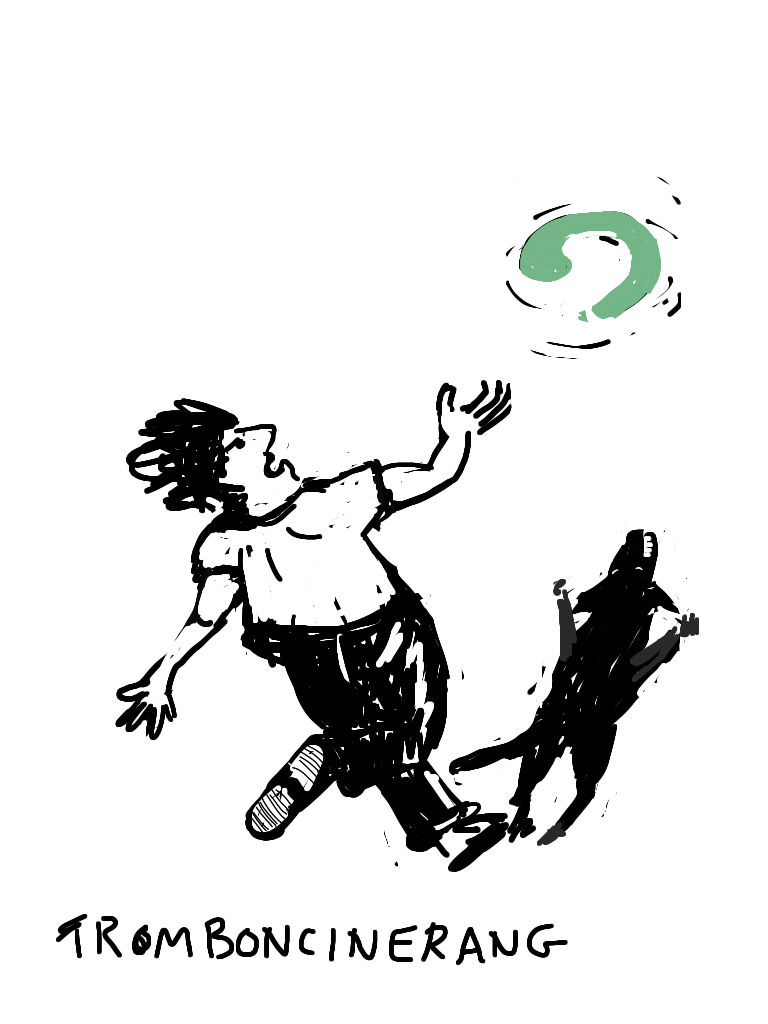
As Daniel says, and illustrates, it’s the “hit of the summer.”












 Chip's journey