Faubourg Tremé and community engagement

Thinking about Faubourg Tremé and also an earlier post about Cooking up a storm gives me a different understanding of community engagement or civic renewal. Sirianni and Friedland (2005), for example, talk about a broad civic renewal movement in the US in areas such as community organizing and community development, neighborhood associations, civic environmentalism, civic journalism, and healthy communities. They also discuss policies that can foster civic capacity building and problem solving.

Although their survey is useful (I use it in my own course on community engagement), three things seem missing from their picture. The most glaring omission is race. Every one of the areas they discuss is deeply imbued with the history and present circumstances of race relations in the US. The very notion of civic capacity building and problem solving can’t be examined fully without taking into account that there is a legacy of oppression and a lack of understanding about how race has shaped American history and policies.

A second omission is history. Much of Sirianni and Friedland focuses on current movements and tools for organizing, all useful, to be sure. But without a grounding in historical precedents it’s difficult to see clearly our way forward. For example, long before the present generation of civic renewal, Jane Addams and colleagues led the way through their work in Chicago on health care, working conditions, literacy, and participatory democracy. Before that, the Paris Commune built social institutions based on liberty, justice, and equality, with a deep respect for learning by all. Even before that, Faubourg Tremé showed how an engaged community could work together to establish effective civic journalism, work toward racial equality, and build a healthy community.

A third area of omission is art. John Ruskin argues that art and culture reflect the moral health of society. Ruskin influenced Jane Addams, who saw that art in all its forms, including crafts, theater, and cultural practices was essential to community and individual development. The importance of art as a means for a community to find shared values, maintain its own history, and to express itself is striking in both the Faubourg Tremé and Cooking up a storm stories as well. I’m not sure that art ought to listed as a civic renewal movement per se, but it does seem crucial to understand more about what it means for civic health and civic renewal.

References

“Free parking isn’t free”

As someone who tries to walk modest distances in town, I’ve been impressed again and again with how unfriendly our cites are for walkers. There are dangerous intersections, or worse, busy roads with no designated crossing. There are missing sidewalks and senseless barriers. Making things worse is the fact that everything is so far apart. One of the culprits here is our irrational obsession with free parking, which like any addiction creates its own need.

Seth Zeren has an excellent essay on Worldchanging about why “free parking” actually costs us all a lot.  He points out that what seemed once to be reasonable zoning requirements for parking actually costs us all a lot in terms of polution, traffic, health, aesthetics, and even direct cash.

Why do Americans drive everywhere? Because everything’s far apart. Why’s it far apart? Often because there’s so much parking in between! In the end, creating bright green cities will require undoing the damage created by mandating free parking.

Free Parking Isn’t Free, August 4, 2009

The bottom line in health care

healthIn my previous post on Single-payer health care: Why not?, I talked about our family’s experiences with health care in France, UK, Ireland, Italy, China, Australia, and other places in comparison to that in the US. This included health care for children and the elderly, and both minor (blood donation, physicals, skin growth removal) and major (broken hip, eye infection) procedures.

Thinking a bit more about this I realized that there were four essential facts that emerged from this wide variety of experiences. In every industrialized country except the US,

  1. Equitable: Everyone has the right to health care.
  2. Effective: People live longer, healthier lives.
  3. Economical: They spend less on health care, as much as 50% less.
  4. Efficient: There is much less bureaucracy, fewer forms, less running around, less waiting.

dollarI might add a fifth point, too: The scare stories that we hear (“you have to wait forever!” “you can’t choose your doctor!”) are simply false, or they index issues that are the same or worse in the US. The information we get about health care promotes profit, not health.

There are many issues–changing demographics, new technologies, new medical knowledge, changing standards, globalization, and more–which affect health care. But the fundamental difference in the current US situation is that health care is driven by the bottom line. Insurance companies, pharmaceutical companies, media corporations, hospitals and clinics, doctors and other health care professionals, and all others involved in health care operate in a system in which rewards bear little relation to the overall quality of care or efficient use of resources.

One can debate each of the points above, but the evidence from OECD, UN, WHO, WTO, and other international organizations is overwhelming in support of them. Other systems offer health care that is more equitable, more effective, more economical, and more efficient.

So, why is single-payer, or national health care not even worth discussing? Why does the Obama plan dismiss it? Why does even public broadcasting ignore it?

Juneteenth World Wide Celebration

Yesterday was the Juneteenth World Wide Celebration, the commemoration of the ending of slavery in the United States. As you can see in President Obama’s statement below, it’s based on the actual, as opposed to the mandated, freeing of slaves in Galveston, Texas in 1865.

I remember the celebrations in Texas when I was young, and it’s good to see those events being recognized more widely. That’s not because Juneteenth marks the completion of America’s struggle against racism, but because understanding our past can help us begin to deal with the reality of racism today.

whitehouse_juneteenth

In This World

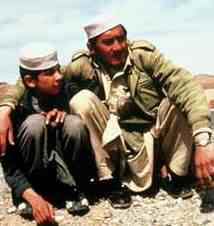
in this world-2There are times when a movie just grabs me, despite technical flaws, my low expectations, and even a boring DVD case cover. In This World is one of those. The political message is clear, but understated, conveyed instead by an intimate look at the consequences of war and greed on the lives of decent people.

The movie presents a fictitious journey that conveys disturbing truths of life “in this world” we inhabit. Although it’s low-key and rough as cinema, it produces an intimate connection to its characters, Afghan refugees Jamal and Enayatullah, as they travel from Shamshatoo refugee camp near Peshāwar, Pakistan, across Pakistan, through Iran, Turkey, Italy and France, towards London.

ITW_trailerLike thousands of others every year, their desperation feeds the multibillion dollar human smuggling business, an unconscionable stain on any of our pretensions to justice. The smuggling fuels crime, violence, corruption, illegal drug trade, and too often leads to death, no longer being “in this world.”

The actors are Afghan refugees themselves, and the encounters in the movie elide life and art. I was fascinated by the places they moved through, and their resourcefulness in learning how to cope with diverse languages and unscrupulous people.

The camps near Peshāwar are filled with people displaced by the Soviet invasion of Afghanistan and later, US bombing. UNHCR says that there are currently “1.7 million registered Afghans in Pakistan, with 45 percent residing in refugee villages and the rest scattered among host communities.” But the total, including children born to refugees, may be several million. The humanitarian crisis is compounded now by two million civilians fleeing the fighting in Pakistan’s Northwest Frontier.

Even though the story is depressing about our institutions, I finished it feeling hopeful about our human capacity. I wanted to travel the modern silk road and more still to learn about the world of these refugees and the policies that lead to their plight.

A new beginning against extremism

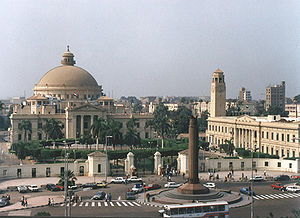
300px-CairoUnivObama’s speech yesterday at Cairo University (photo at left) was beautiful. It represents a new beginning against extremism both in the US and abroad. Even Osama Bin Laden recognized that it challenges a linchpin of al-Qaida’s message.

I don’t agree with many of the current Administration’s foreign policies (escalation of the Afghanistan-Pakistan war, inadequate engagement with the Caribbean, especially with respect to Cuba, and not doing more for Haiti, failure to close Guantanamo and re-establish justice following years of officially sanctioned torture and renditions, etc.), but opening dialogue is a first step towards a rational, humane, and effective foreign policy.

The ending of the speech is classic Obama:

89px-A_Boat_in_the_Nile_RiverIt’s easier to start wars than to end them. It’s easier to blame others than to look inward. It’s easier to see what is different about someone than to find the things we share. But we should choose the right path, not just the easy path. There’s one rule that lies at the heart of every religion — that we do unto others as we would have them do unto us. This truth transcends nations and peoples — a belief that isn’t new; that isn’t black or white or brown; that isn’t Christian or Muslim or Jew. It’s a belief that pulsed in the cradle of civilization, and that still beats in the hearts of billions around the world. It’s a faith in other people, and it’s what brought me here today.

We have the power to make the world we seek, but only if we have the courage to make a new beginning, keeping in mind what has been written.

The Holy Koran tells us: “O mankind! We have created you male and a female; and we have made you into nations and tribes so that you may know one another.”

The Talmud tells us: “The whole of the Torah is for the purpose of promoting peace.”72px-Barack_Obama_at_Cairo_University_cropped

The Holy Bible tells us: “Blessed are the peacemakers, for they shall be called sons of God.”

The people of the world can live together in peace. We know that is God’s vision. Now that must be our work here on Earth.

Thank you. And may God’s peace be upon you. Thank you very much. Thank you.

See Obama hits a home run, by Robert Dreyfuss.

Friends don’t let friends suffer: The US must step up for Haiti

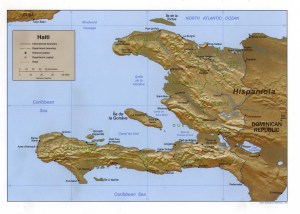
haiti-childrenHaiti is experiencing an unprecedented humanitarian crisis. The US must not ignore one of its closest neighbors in a time of need.

Here are some grim facts behind the crisis, reflecting both long-term problems and recent natural catastrophes:

  • Last year, during a one-month period, hurricanes Fay, Gustav, Hanna and Ike devastated the country. Over 1000 people were killed; countless others were reported missing and injured.
  • The hurricane damage was equivalent to 15 percent of Haiti’s gross domestic product (GDP). A recent international donors’ conference raised $324 million in emergency and long-term assistance for Haiti. That was better than nothing, but it’s only a third of what Haiti needs to rebuild.
  • Meanwhile, over 30,000 undocumented Haitians face deportation orders from the US. If carried out, these orders would return Haitians to a country struggling to rebuild and not able to provide the critical social safety nets needed for people to survive. Their return would also diminish remittances, which mean the difference between life and death for Haitians.
  • There is high maternal and infant mortality, as well as unwelcome high rankings on most other indicators of poverty.

haiti_rel99Despite these problems, organizations such as La Fondation Connaissance et Liberté (FOKAL) have made major strides toward sustainable development. External aid now can make the difference between compounding the suffering and building an independent, prosperous, and democratic nation.

What can be done?

  • The World Bank and International Monetary Fund should include Haiti in their Highly Indebted Poor Country initiative, a program to lower debt to manageable levels. Better yet, cancel Haiti’s crippling external debts until the economy can be self-sufficient.
  • US and other international aid to Haiti should be doubled immediately. Foreign aid should be structured as grants, not as loans, which may offer short-term help, but long-term shackles.
  • International aid should be focused on development, not military and police support. Haiti has enough guns already. Aid programs should work with NGO’s as well as government agencies.
  • Stop the deportations. Haitians should be granted Temporary Protected Status (TPS) and the Department of Homeland Security should conduct a thorough review of US policy towards Haiti. Individuals should call the DHS at 202-282-8495 [if unable to get through, call the White House Comment line at 202-456-1111] and urge these actions.
  • The US should extend the Haitian Hemispheric Opportunity through Partnership Encouragement Act (HOPE), which allows Haitian textile manufacturers to export duty-free to the United States. This could generate much-needed jobs in Haiti’s labor-intensive garment industry. The average Haitian garment worker earns $4 a day, while 77 percent of Haitians live on less than $2 a day. As Rep. Charles Rangel, said of the US textile industry concerns, “God should be so good to the people in Haiti that their exports should be a threat to the United States of America. That’s not going to happen.”
  • All Americans need to learn more about our neighbor in need. Explore the resources provided by organizations such as the Latin American Network Information Center (LANIC) – Haiti, the Haiti Information Project, the Haiti Action Committee, and Oxfam, as well as the many books about Haiti, especially those that consider its history.

References

UNICEF (2009). The state of the world’s children: Maternal and newborn health.

Cooking up a storm

9780811865777_normFrom Cooking up a Storm, ©2008 Marcelle Bienvenu and Judy Walker. Used with permission of Chronicle Books, San Francisco

Residents of New Orleans lost their homes, their neighborhoods and schools, their jobs and businesses, and the lives of family members because of Hurricane Katrina in 2005. The effect on the community was devastating as has been documented in books and movies, e.g., Katrina’s Children and When the Levees Broke: A Requiem in Four Acts. To this day major areas, such as the Ninth Ward, are still struggling to recover.

Of all the losses, losing keepsakes and family treasures was especially hard. One category had an especially acute impact on a city famous for its food: Residents lost their family recipe files. These included the family recipes handed down by generations, as well as those clipped from newspapers, such as the The Times-Picayune. Without these recipes the task of rebuilding families and communities was made much harder.

As residents started to rebuild their lives, The Times-Picayune of New Orleans became a post-hurricane swapping place for old recipes that were washed away in the storm. The newspaper has compiled 250 of these delicious, authentic recipes along with the stories about how they came to be and who created them. Cooking Up a Storm [Recipes Lost and Found from The Times-Picayune of New Orleans] includes the very best of classic and contemporary New Orleans cuisine, from seafood and meat to desserts and cocktails. But it also tells the story, recipe by recipe, of one of the great food cities in the world, and the determination of its citizens to preserve and safeguard their culinary legacy.

The collective effort to reconstruct family recipe collections is positive counterpoint to all of the negative stories that came out of the Katrina disaster. It’s a wonderful example of community informatics—people coming together to address a common need, making use of newspapers, fax, email, digital archives, and other communication tools.

The book is edited by Marcelle Bienvenue and Judy Walker. You can learn more about it in NPR’s story: ‘Cooking Up A Storm’: Recipes From The Big Easy.

RiseOut: “Defining Our Own Education”

I’ve been reading the articles on RiseOut, an online “news center focused on deschooling, youth activism, and other related issues concerning the rights of youth in the U.S.” There are entries on deschooling; unschooling; youth media; racism; the Highlander Folk School in New Market, Tennessee; Dr. “Patch” Adams; a review of the book, The Teenage Liberation Handbook, How to quit school and get a real life and education (by Grace Llewellyn); critiques of school segregation (and recent Supreme Court decisions that support it), credentialism, and military conscription.

Most of the articles on RiseOut are well-researched, thoughtful, and provocative. They remind me of the wonderful book, Letter to a teacher by the schoolboys of Barbiana, in which youth in Italy present a searing critique of their education and the unjust society it supports.

Both the Barbiana book and RiseOut address the question that Earl Kelley asks: What is real in education?. Kelley answers that the bedrock reality is the the actual life of youth.

The Obama administration’s proposed “Cradle to Career” education plan, has many good components, but education reform will never accomplish much if schooling continues to be separated from actual life and fails to come to terms with the issues raised in RiseOut.

From the RiseOut site:

We provide a diversity of alternatives to education that are self-directed and decentralized from standardized schooling. We support a young person’s choice in dropping out of school, free of social stereotypes and biases. We aim to provide a plethora of alternatives from a 12-year prison like sentence of state schooling, while staying vigilant of abuses against young people through diagnosing, segregation, ageism, adultism, sexism, and other assholisms.

A message to those who have decided to quit school:

Instead of dropping out, we applaud you for your courage to “riseout” from a nightmarish disposition of compulsory schooling. We hope RiseOut can be a resource for sharing your stories and providing choices towards regaining control over your own education.

Hidden Her-story: The Top-Secret “Rosies” of World War II

leann_ericksonNorma Scagnoli referred me to a wonderful podcast by LeAnn Erickson, Associate Professor of Film and Media Arts at Temple University. Erickson is an independent video/filmmaker, whose work has appeared on public television, in galleries, and has won national and international awards.

Entitled, Hidden Her-story: The Top-Secret “Rosies” of World War II, it was recorded in January at the EDUCAUSE 2009 Mid-Atlantic Regional Conference in Philadelphia. I expected to listen for a minute and then go on to more pressing things, but after listening a little I decided that those things weren’t so pressing after all. It’s a fascinating story for anyone who has an interest in history, computers, women, education, mathematics, warfare, politics, Philadelphia, science, workplace equity, morality, or life in general.

In 1942, only months after the United States entered World War II, a secret military program was launched to recruit women to the war effort. But unlike recruiting “Rosie” to the factory, this search targeted female mathematicians who would become human “computers” for the U.S. Army. These women worked around-the-clock shifts creating ballistics tables that proved crucial to Allied victory. “Rosie” made the weapons, but the female computers made them accurate. When the first electronic computer (ENIAC) was invented to aid ballistic calculation efforts, six of these women were tapped to become its first programmers. “Top Secret ´Rosies’: The Female ‘Computers’ of WWII” is a documentary project currently in postproduction that will share this untold story of the women and technology that helped win a war and usher in the modern computer age.

Controls for the podcast appear beneath the description on the EDUCAUSE page.