Those of us in the US could learn from Nepalis (and others, as well) about hospitality. Despite having far less in material resources, my host country for a seven week stay has been uniformly friendly, helpful, and generous.
I’ve seen this at the institutional level (King’s College has supplied me with an overly large and nice apartment in a convenient and pleasant area), among friends and colleagues, in shops or touristy places, and among people I meet on the street. Even the towel in my apartment is welcoming.
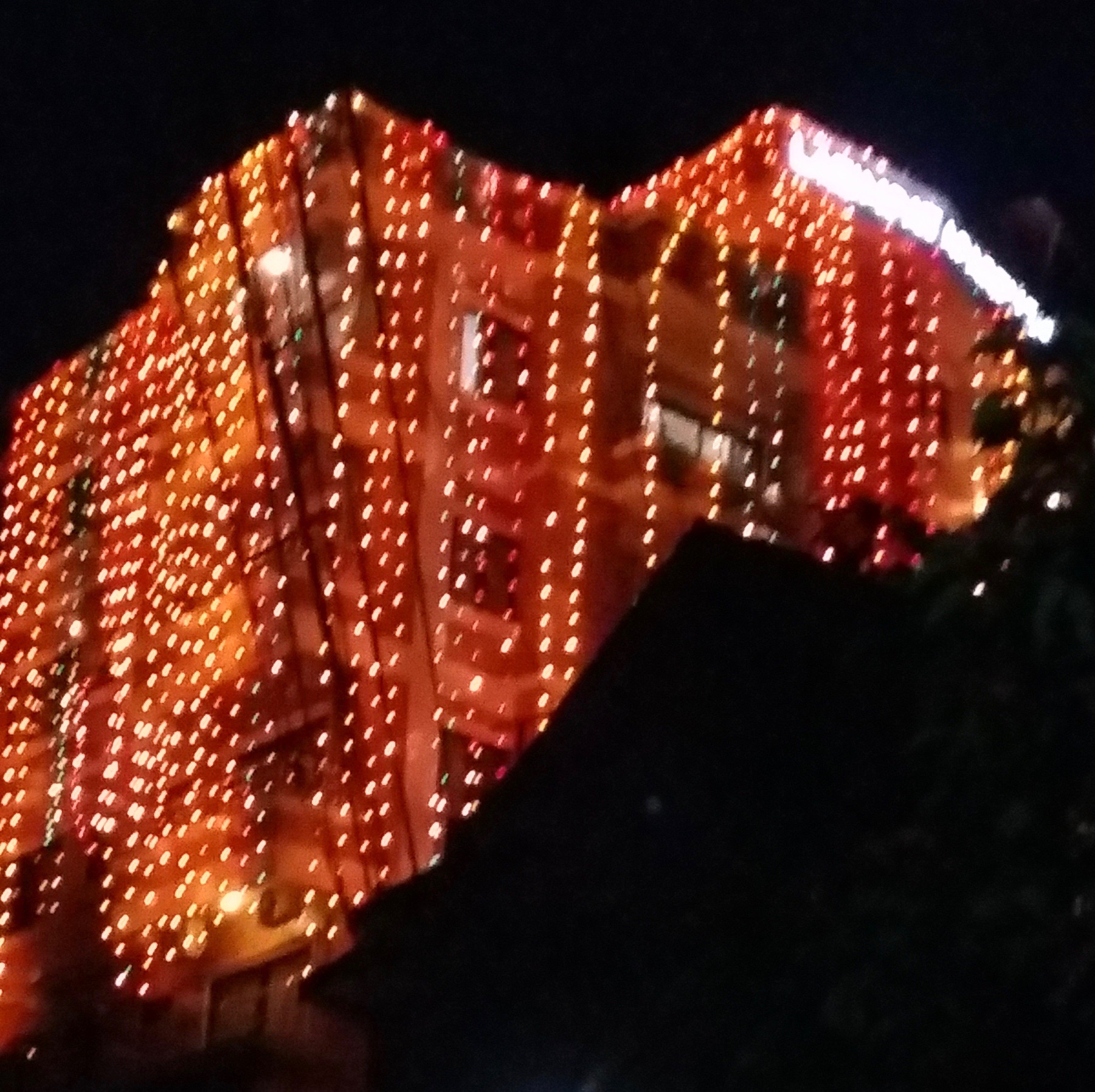
Lazimpat Apartment, lit for the third day of Tihar
When I went for my first walk from the apartment, I heard some music and stopped to look. I was invited in to join the Rotaract Club of Pashupati-KTM, in their Tihar celebration. They asked me to dance with them, which I did in my clumsy way. Will that appear on their FB page?
This was an experience that can’t be captured in words or video, but confirmed my sense of being welcomed. There were many smiles and a lot of interest in who I was, but no pressure to explain myself or to interact in any way that didn’t feel comfortable.
Rangoli for Tihar
I’ve regularly been invited to join family gatherings, garland making sessions, or just to chat. One Tihar party even came to me, just outside my window. You can hear a snipper of that one here: Tihar party in the garden
There is a new manager of Lazimpat Apartment, who started the day I arrived. He wants to make the otherwise international style apartment look more Nepali. He’s placing Thangkas in every sitting room. These are Tibetan Buddhist paintings, in this case, on cotton. They usually depict a deity, scene, or mandala. You can see below, some not-so-good photos of those in my apartment.
Today’s BBC News reports on an important development in Nepal, one which should be a warning to us all (Nepal drains dangerous Everest lake).
Nepal’s army has just completed lowering Lake Imja by 10 ft. This is because it was in danger of flooding downstream settlements with over 50,000 people.
Lake Imja, near Mount Everest (Sagarmatha) at 16,400 ft altitude, is one of thousands of such glacial lakes in the Himalayas. Many of the lakes are filling fast because of accelerated melting of glaciers due to rising temperatures.
The Himalaya region has been described as the third pole of the earth. It is melting, just as the Arctic and Antarctic are.
Lake Imja is a good example of that melting. It is a new lake, composed of glacial meltwater blocked by a terminal moraine. In 1962, it was 7.5 acres, and is now over 260.
I can only guess at the enormous cost of the six-month project, not just in dollars, but in terms of using up limited Nepali resources. It has been necessary to save lives, but sherpas in the region say there are many more lakes that endanger communities.
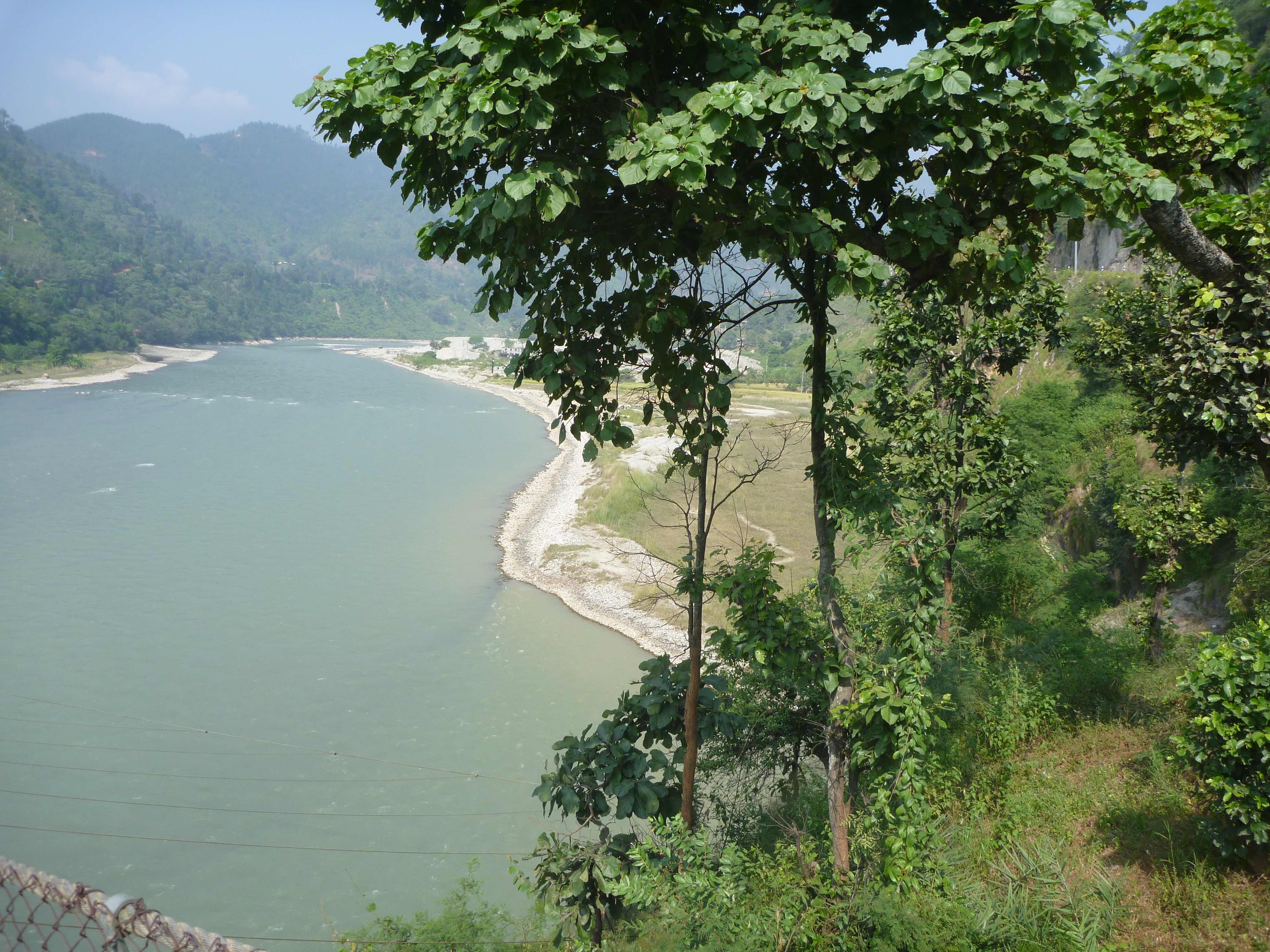
When Shiva had been walking for a long time in the mountains north of the Kathmandu Valley, he grew thirsty, but there was no water to be found. Angry at that, he drove his trishula, or trident, into the ground to create three springs, which in turn created a river.
Some say that the Trishuli begins with snow melt in the Langtang Himal. Other accounts, such as Wikipedia, say that the Trishuli River arises in Tibet, where it’s called Kirong Tsangpo.
In any case, Shiva’s river, the Trishuli, later joins the Bhote Kohsi that flows from Tibet and becomes a spectacular mountain river, with exciting rapids and impressive gorges. It is no surprise that it’s Nepal’s most popular rafting river. It looks like large parts of it could be canoed as well.
The Trishuli flows through mostly Buddhist regions then into Hindu areas. It is one of the major tributaries of the Narayani River, which eventually goes into India to join the Ganges.
At this moment, I’m sitting on a veranda looking out at a series of hills that we would call mountains in New England. The view is partially obscured by a profusion of bougainvillea, poinsettia trees, palms, and many tropical plants I can’t identify, Workers at this guest house where we are staying have to keep cutting back the gorgeous greenery that people in Massachusetts would struggle to nurture as tiny house plants.
Yes, the economic conditions are bad, the roads are full of surprises, the electricity is whimsical, and the effects of the 2015 quake are still felt, but all the people we meet are warm and generous. They use their adequate English to help me learn a few words of Nepali.
Locals directed us to a walk one way to see the hilltop village of Nuwakot with its durbar, or palace, square, now being restored; another to make a circuit of the hill behind with spectacular views; another to explore the farm with its geese, turkeys, donkeys, goats, and naturally organic vegetables.
But this evening seems like a time to stay on the veranda and take in the mountain air and the beautiful sunset silhouetting the hills.
The list of remarkable things about Nepal is remarkably long.
You could start with the physical: It has 8 of the 10 highest mountains in the world with elevations ranging from 66 meters to 8,848 meters above sea level. It is a biodiversity hotspot deriving from the multiple ecoregions–arctic to tropical, including mountains, hills, and savannas. There is a corresponding diversity of flora and fauna, with gorgeous butterflies and birds. There are many cultural groups and over 125 languages spoken. The architecture, the food, the music, the arts, the history, the religions, and more are fascinating. The traffic in Kathmandu is a story in itself.
Teach for Nepal, from the website
However, I experienced something perhaps even more remarkable. I was fortunate to be included in a group of young Nepalis who hope to build a movement to make education in Nepal more progressive, specifically to make it more relevant to people’s lives, more connected to community, and more supportive of inquiry that leads to sustained learning and creativity.
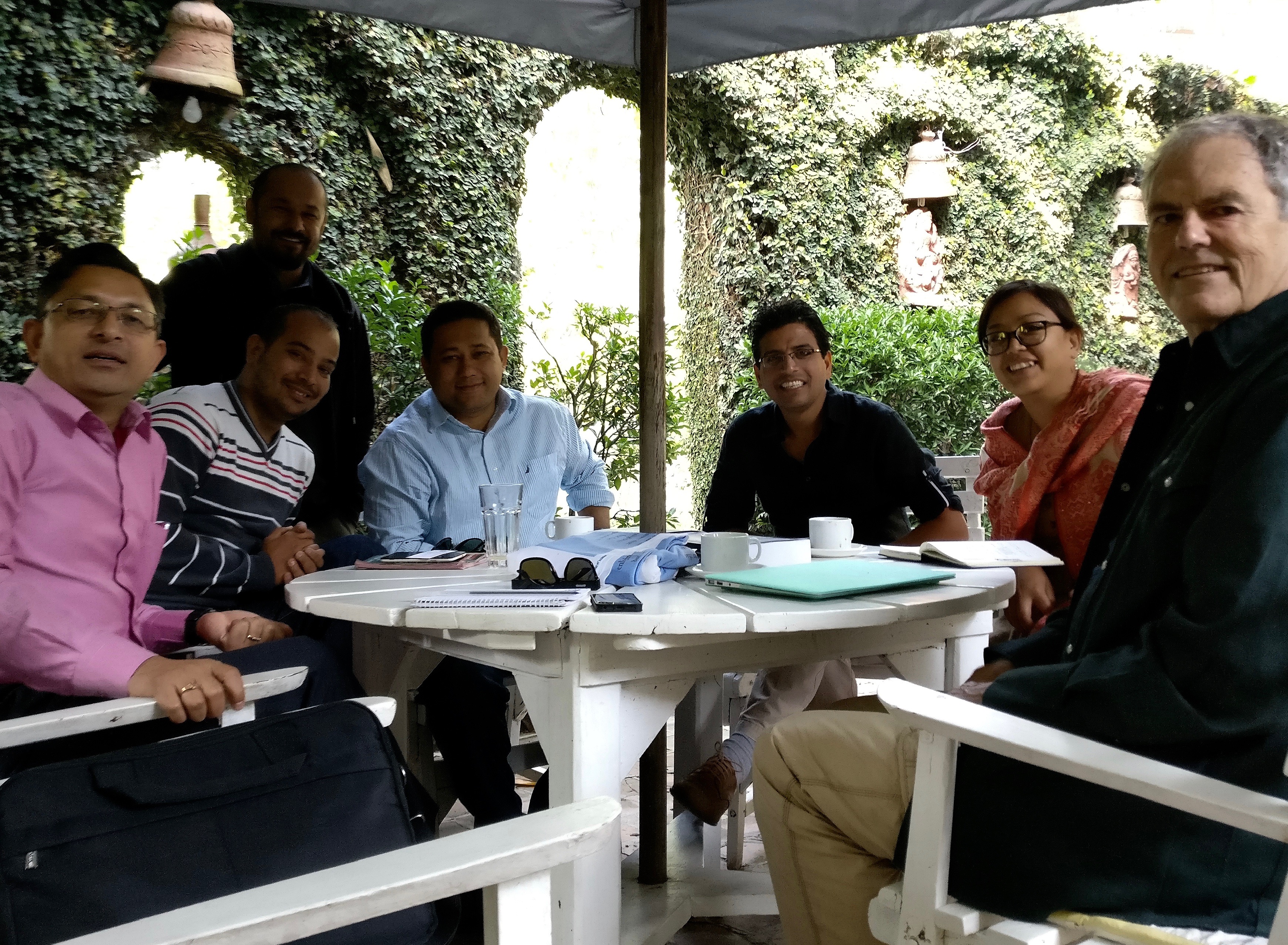
The group has the tentative name of Progressive Educators of Nepal Network (PENN). We met last Tuesday for early morning breakfast at Hotel Vajra in Kathmandu.
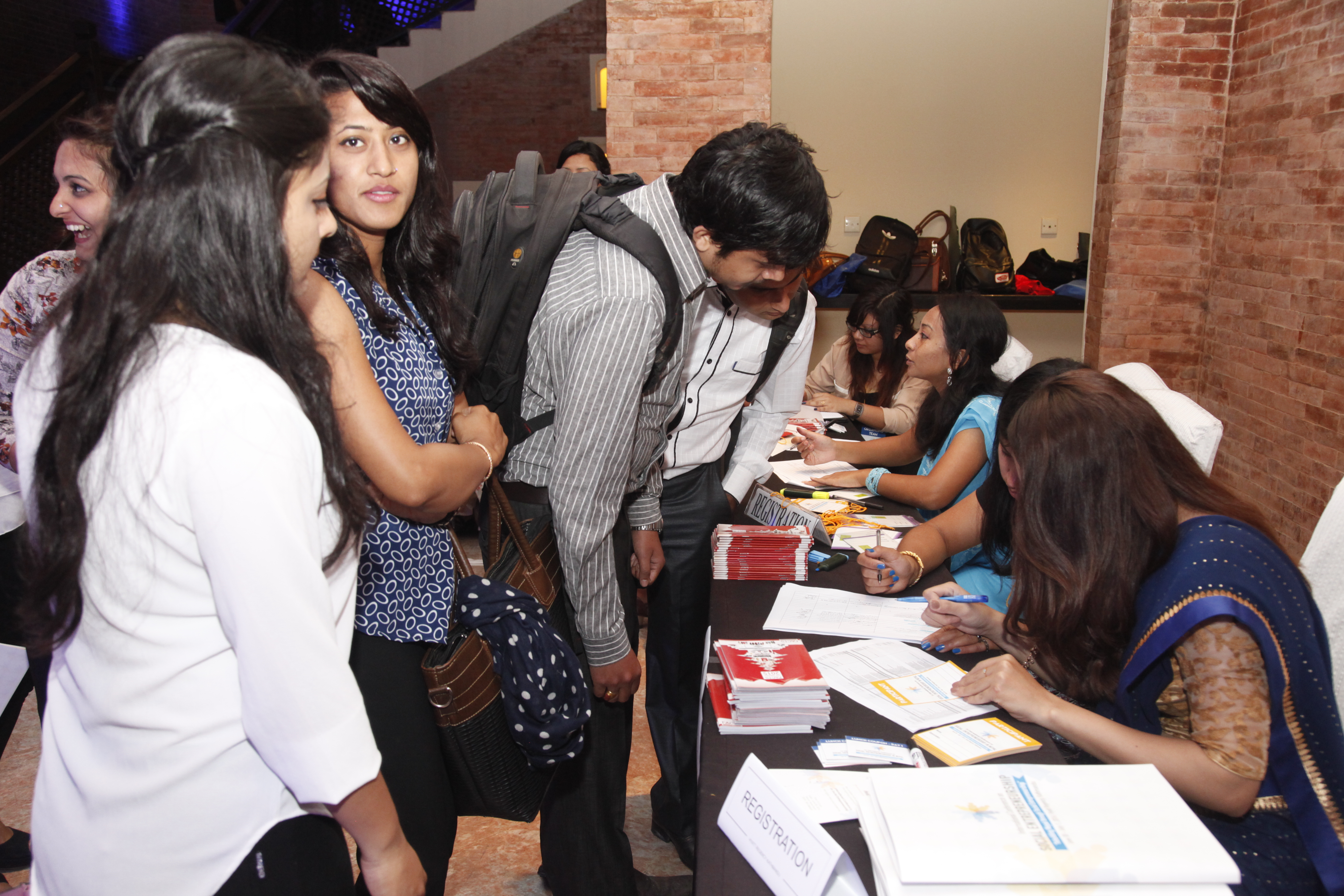
King’s College events
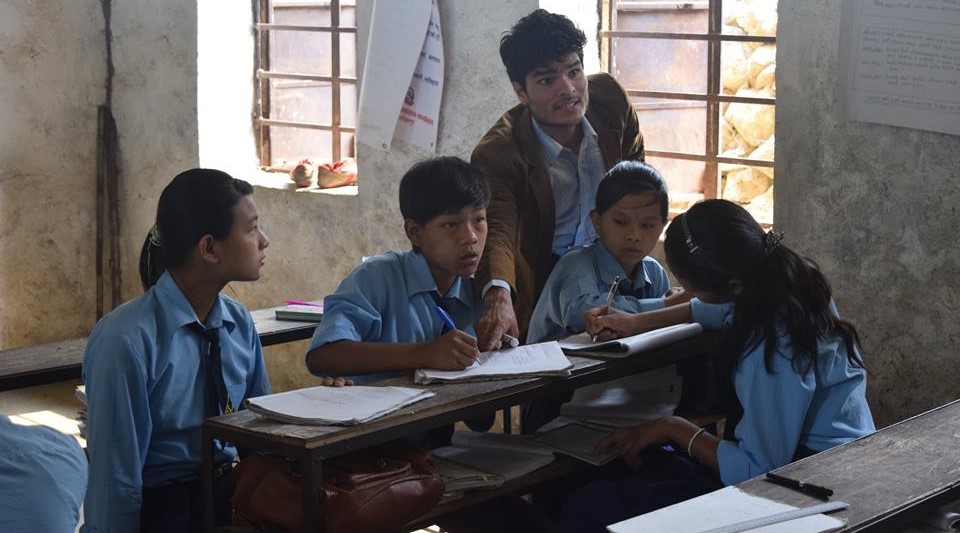
Those present represented four organizations. Shisir Khanal and Swastika Shrestha came from Teach for Nepal. Like Teach for America and similar organizations, TFN engages university graduates and young professionals who are committed to reduce education inequality. They emphasize community-based education, teaching in rural, public schools. Fellows work for two years, typically living in a community and staying in a home there.
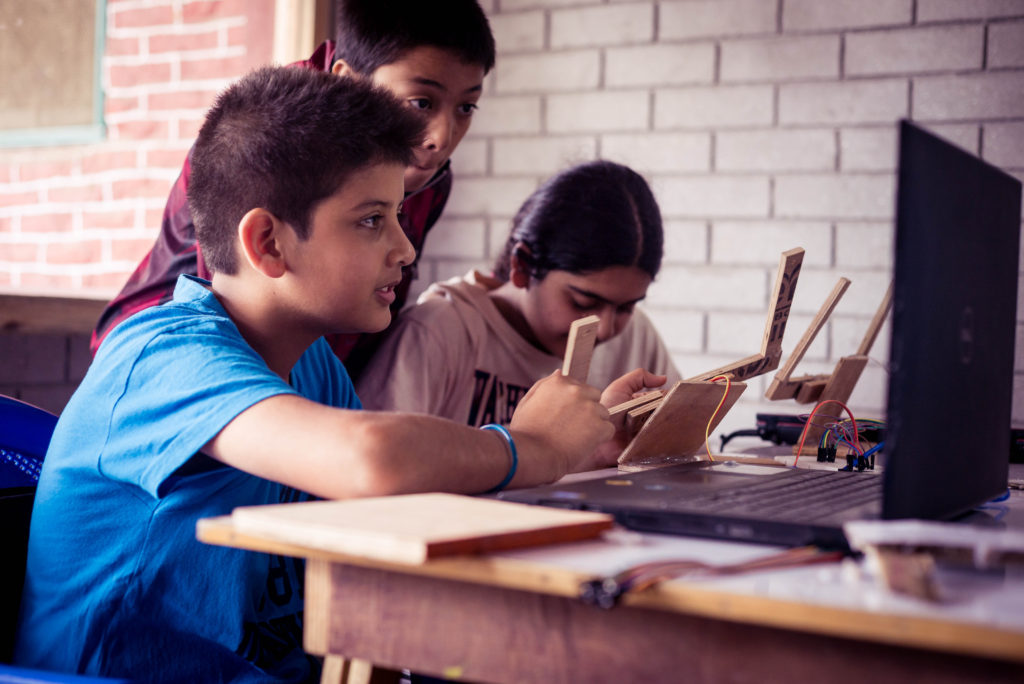
Children as innovators at Karkhana
Umes Shrestha and Narottam Aryal came from King’s College, a new college whose objective is making world-class education available to Nepali youths at home at an affordable cost. King’s College seeks to make its teaching more relevant for students and more inquiry-based.
Karkhana, meaning “factory,” is a company emphasizing experimentation, collaboration, and play for both makers and teachers. It started as a Saturday morning hacker hang-out and evolved into an innovation focused company that combines education and design of new products. See for example, the recent Kathmandu Mini Maker Faire. Pauvita Gautram represented Karkhana and its inquiry-based learning approach.
KLL mapping as service learning
Kathmandu Living Labs (KLL) is a not-for-profit civic technology company. It has been mapping all the educational institutions, health facilities, road networks, tangled mesh of gallies, religious sites and other geographic features of Kathmandu Valley using OpenStreetMap. Secondary and college-level students participate through mapping workshops. Nama Budhathoki represented KLL and its effort to extend youth mapping work to education for full civic engagement. See KLL goal statement.
In November, this network of people, organizations, and interests will host a month long project to foster the development of educators who can become leaders in community–based education. I’ll lead initial workshops on progressive education, inquiry-based learning, and community inquiry. We’ll also travel to village sites to explore community-based education, then bring those experiences back to Kathmandu for a national meeting.
The work of this group can be important for Nepal, while also serving as a model for others. More to come on this exciting project.
When we think about problems such as intolerance, economic justice, or climate change, should we focus on the local or the global? the short-term or the long-term? the social or the technical? Questions such as these recur in ways that often lead to discouragement, including the feeling that nothing can be done on any problem at any level.
Naomi Klein discussed this in last June’s College of the Atlantic commencement address, Climate Change Is a Crisis We Can Only Solve Together. She writes, “the very idea that we—as atomized individuals, even lots of atomized individuals—could play a significant part in stabilizing the planet’s climate system, or changing the global economy, is objectively nuts.” There must be “a large, organized, and focused movement.” And yet, she goes on to say, local activism is critical: It’s winning big fights, showing us what the future looks and feels like, and inspiring bigger examples. In short, we need both.
What Klein says makes a lot of sense. But it’s often hard to find examples that bridge between the local and the global, the immediate need and the needed long-term change, or between social and organizational work and technological fixes.
Through KLL, a farmer in a remote Nepalese village can integrate his local knowledge of a field or stream with that of an engineer at MIT. People in Nepal, despite their own challenges, can become among the largest contributors to relief efforts following Typhoon Haiyan in the Philippines. Detailed information about a school can be used to influence government policies and actions. This connecting across levels or communities is something many people talk about but few have shown how to achieve.
There are many reasons for KLL’s success, including the dedication of Nama and his team. But what also seems clear is that KLL offers remarkable models for how people can work together to achieve common good.
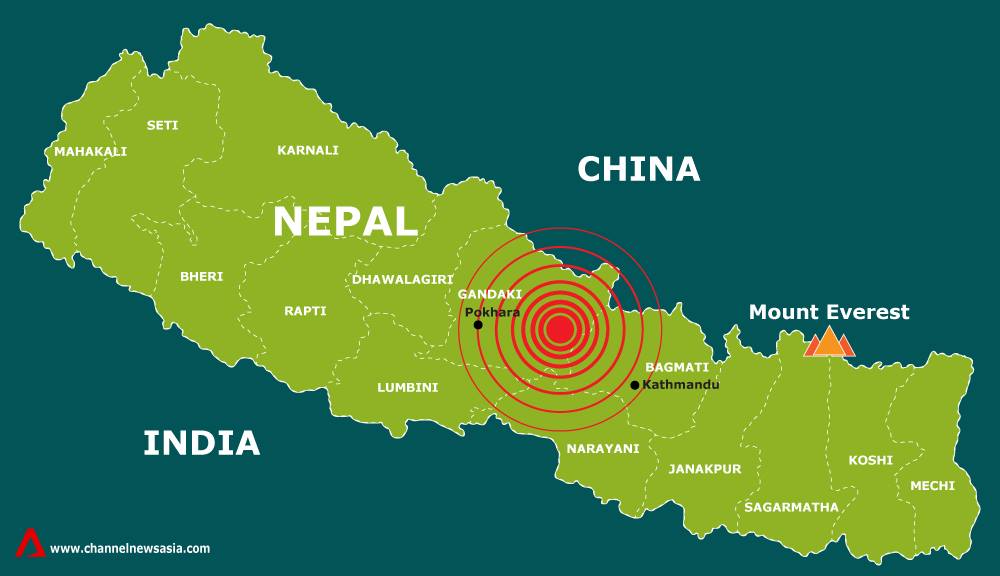
A growing sense of despair spread through Katmandu on Sunday as the devastated Nepali capital was convulsed by aftershocks that sent residents screaming into the streets, where they were pelted by heavy rain. via Nepal Terrorized by Aftershocks, Hampering Relief Efforts – NYTimes.com.
The situation in Nepal sounds awful. Nature in the form of aftershocks and rain, is conspiring with poverty and political discord to make a dire situation.
I know several people there, including some former students, and am relieved that so far they’re doing OK.
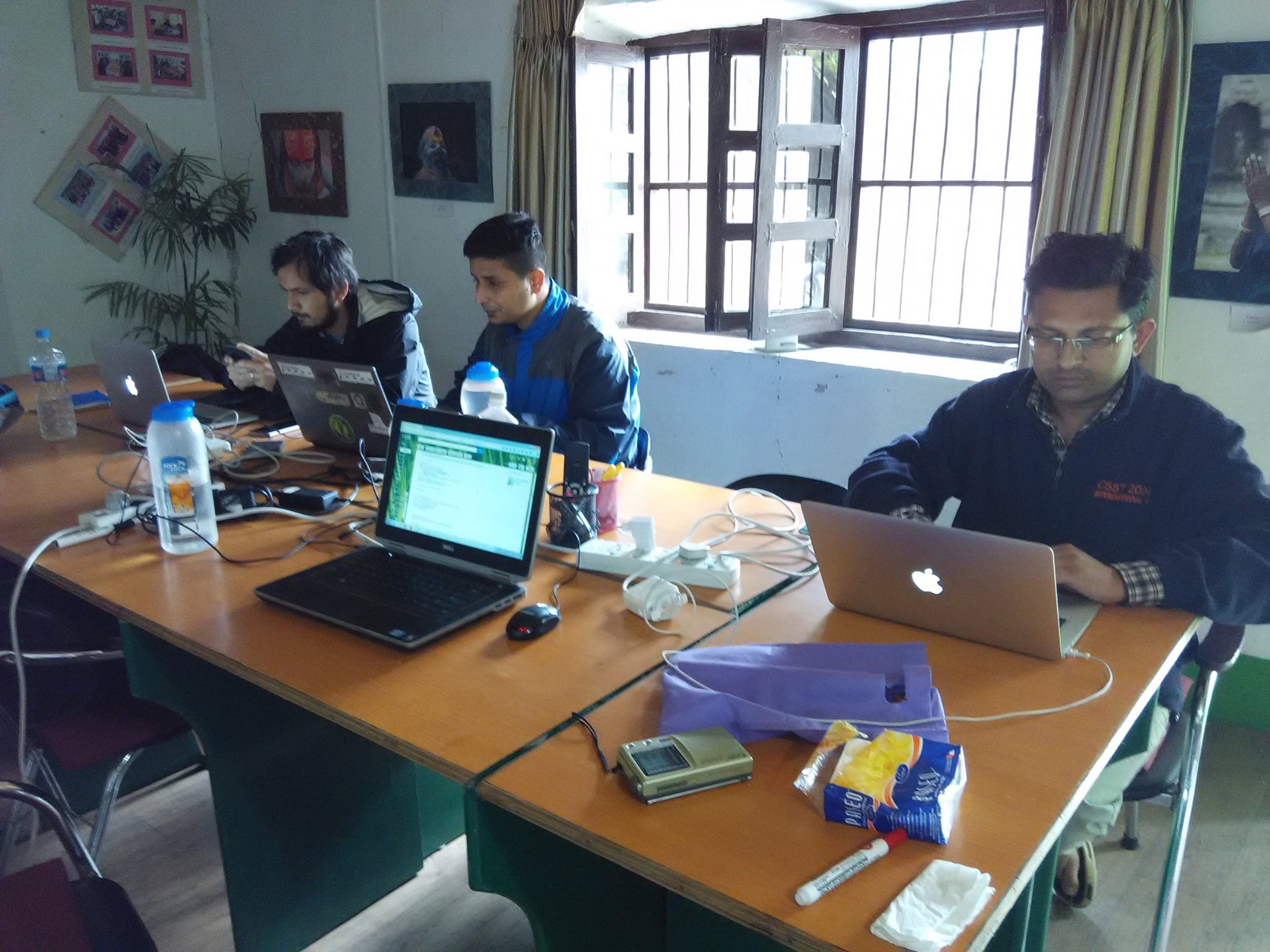
I’ve also been impressed with the work of the Humanitarian OpenStreetMap Team [HOT], which acts as a bridge between the traditional humanitarian responders and the OpenStreetMap community. Nama Budhathoki, a former student and friend, works with Kathmandu Living Labs and HOT to provide vital information, first about the road network and then about buildings. The Tasking Manager is a tool they designed to coordinate these efforts. It helps to divide up a mapping job into smaller tasks that can be completed rapidly.
The photo, taken from the KLL Facebook page, shows the situation room with Nama on the right.
My student Nama has introduced us to momos (Nepali: म:म:), a dumpling that is fun to make and delicious to eat.
Momos are made with a simple flour-and-water dough, with any of several fillings. We’ve had turkey, with onions, garlic, and cilantro, but one could choose goat, yak or vegetables instead. The filled dough can be shaped into a crescent, or as our son did, as a Russian pelmeni (or vareniki, pierogi). They’re then steamed and served with an Indian pickle achar.




 When Shiva had been walking for a long time in the mountains north of the Kathmandu Valley, he grew thirsty, but there was no water to be found. Angry at that, he drove his trishula, or trident, into the ground to create three springs, which in turn created a river.