Garrotxa and Collsacabra

Before going to the conference in Girona on the future of the university, we spent a few days in the Pyrenees (Pireneus in Catalan), mostly in Garrotxa county (camarca) and in Vall de Sau Collsacabra. Collsacabra is a high plateau in the north-east part of Osona county; it’s also called Cabrerès.

Here are some photos; click on any photo to enlarge it.

from-mas-el-solanotgarrotxa1

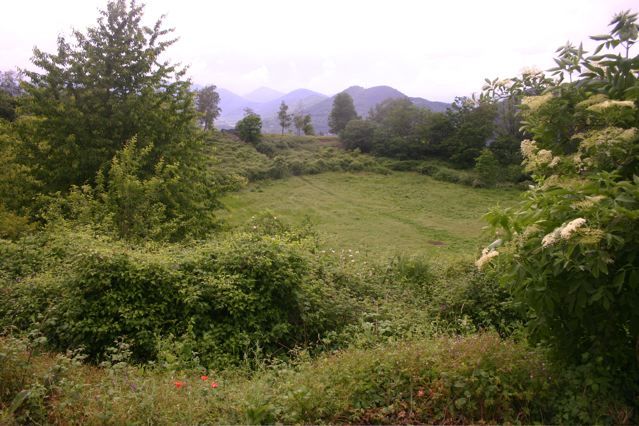
Following a night in Barcelona, we traveled north past Vic and Rupit to a beautiful stone house high on a mountainside. You can see here the view from our room in Mas El Solanot. Notice the tabletop mountains and cliffs, as well as architecture going back to the Middle Ages and even Roman times.

We were staying on the edge of La Garrotxa, which is about 1/4 the size of Champaign County in terms of area and population. It looks very different because of its 40 volcanoes and many cliffs, not to mention the medieval architecture, Mediterranean flora, and red tile roofs.

Volca Montsacopavolca

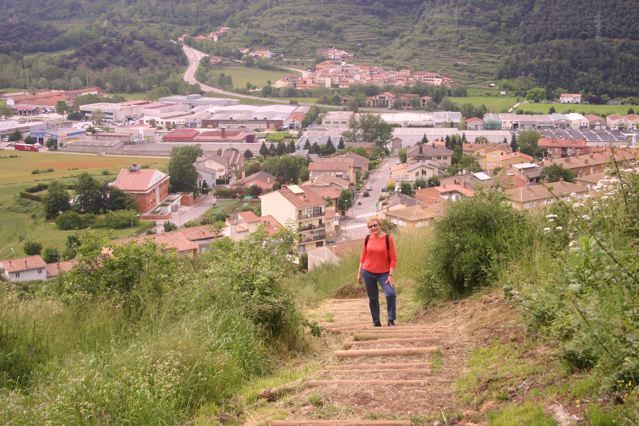
We traveled to many of the volcanoes in Garrotxa. Here we are climbing up to look at the crater of Volca Montsacopa, in the center of Olot.

colades The photo on the left is from the Route of Les Tres Colades, with its spectacular basalt cliffs. It shows the results of the cooling of the lava as it flowed towards the site of what is now Sant Joan les Fonts.

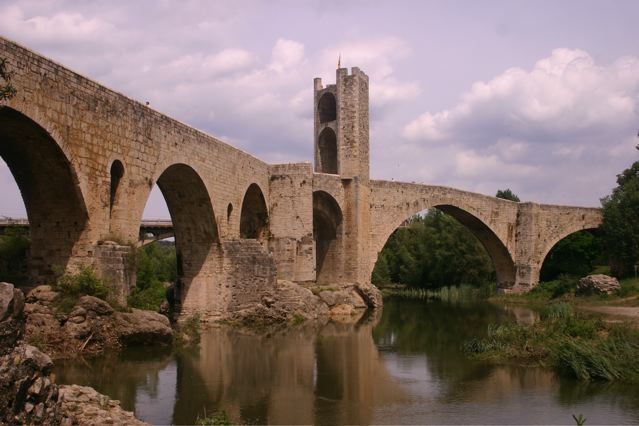
besaluOn the right is a 12th-century Romanesque bridge in Besalú with a portcullis in center. It was partially destroyed during the Spanish Civil War, then rebuilt in the 60’s.

rupit A view of Rupit and the nearby Salto de Sallent, a 100-meter waterfall. The photo below shows a cascade upstream from the main fall. There was an iron cross embedded in the rock, presumably marking the spot where someone had come too close to the edge. I decided not to go up closer to investigate. But it was impressive to see that the unpaved road crosses the stream above the main fall, going through six inches of water just a few feet from the 100-meter drop.

salto-sallentsalto-sallent1

girona girona2

Scenes from Girona, where the conference was held. The cathedral perches on a hill in the center of the beautiful old town (Barri Vell), which lies just across the Onyar River

Dodder birds

Dodder walkFor much of my time here in Dublin, I’ve walked to work alongside waterways. First, it was the Liffey River. Then for a long time it was the Dodder, the second large, remaining, and still aboveground river in Dublin. Sometimes, it has been the Grand Canal. Each of the waterways has its collection of birds, the best being those along the Dodder.

I would often see a grey heron just downstream from the bridge near our apartment. There is also a pair of mute swans, who swim almost always close together, but every few weeks they have a day when they separate by a half mile. There are two main types of gulls, one I think being a Galway gull. swan in DodderThey’re fond of standing on the walkway’s stone railing, until I’d get with 44.5 inches, or was it 46.3?

Near where the Dodder joins the Liffey, I occasionally see cormorants. Further upstream mallards are very common and also moorhens, but they’re a little harder to see because they hang out below the brush near the bank. Magpies will also come down to the water at times.

mallardNote: The distant, red cranes in the photo of the walkway aren’t the feathered kind.

The fountain of knowledge

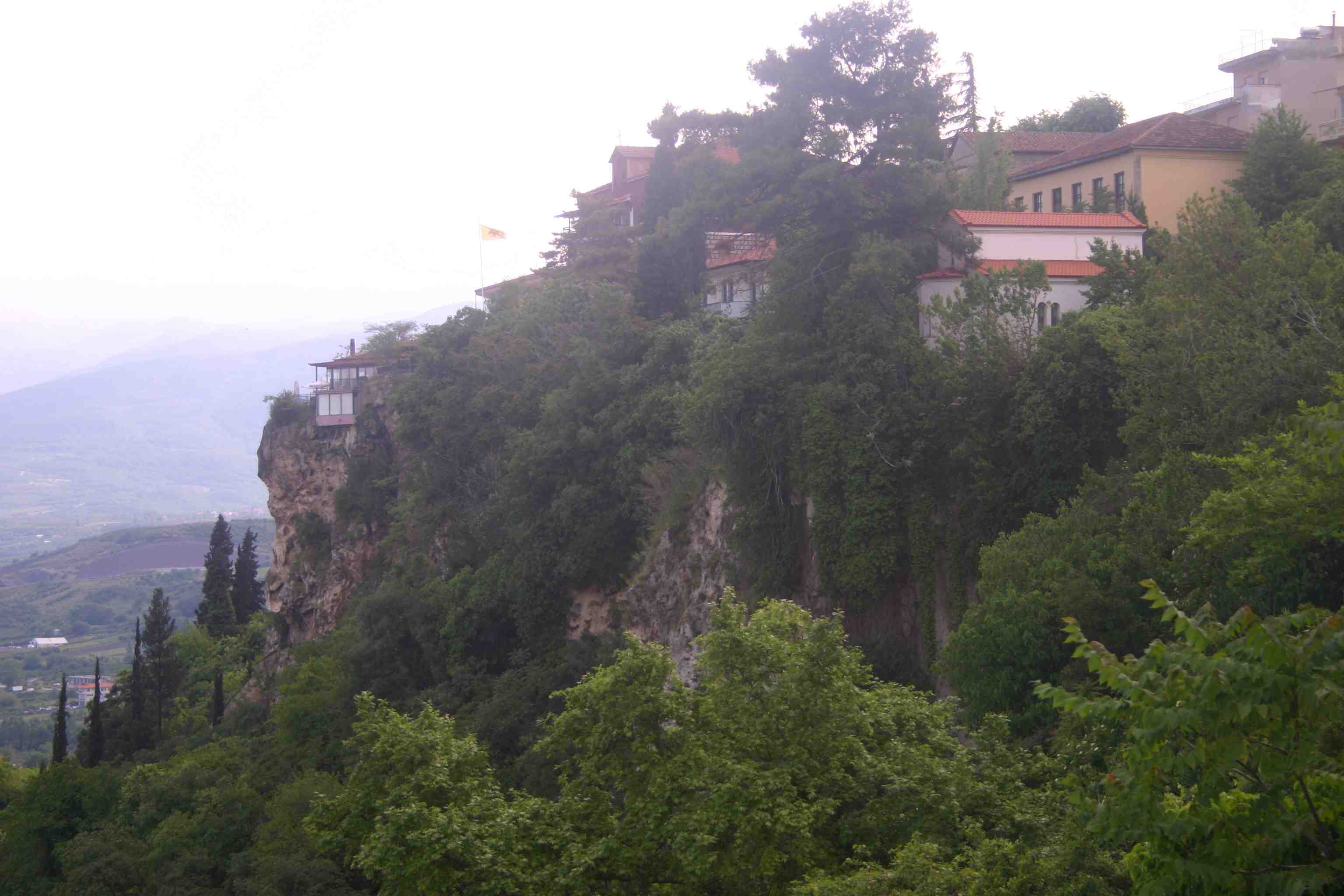
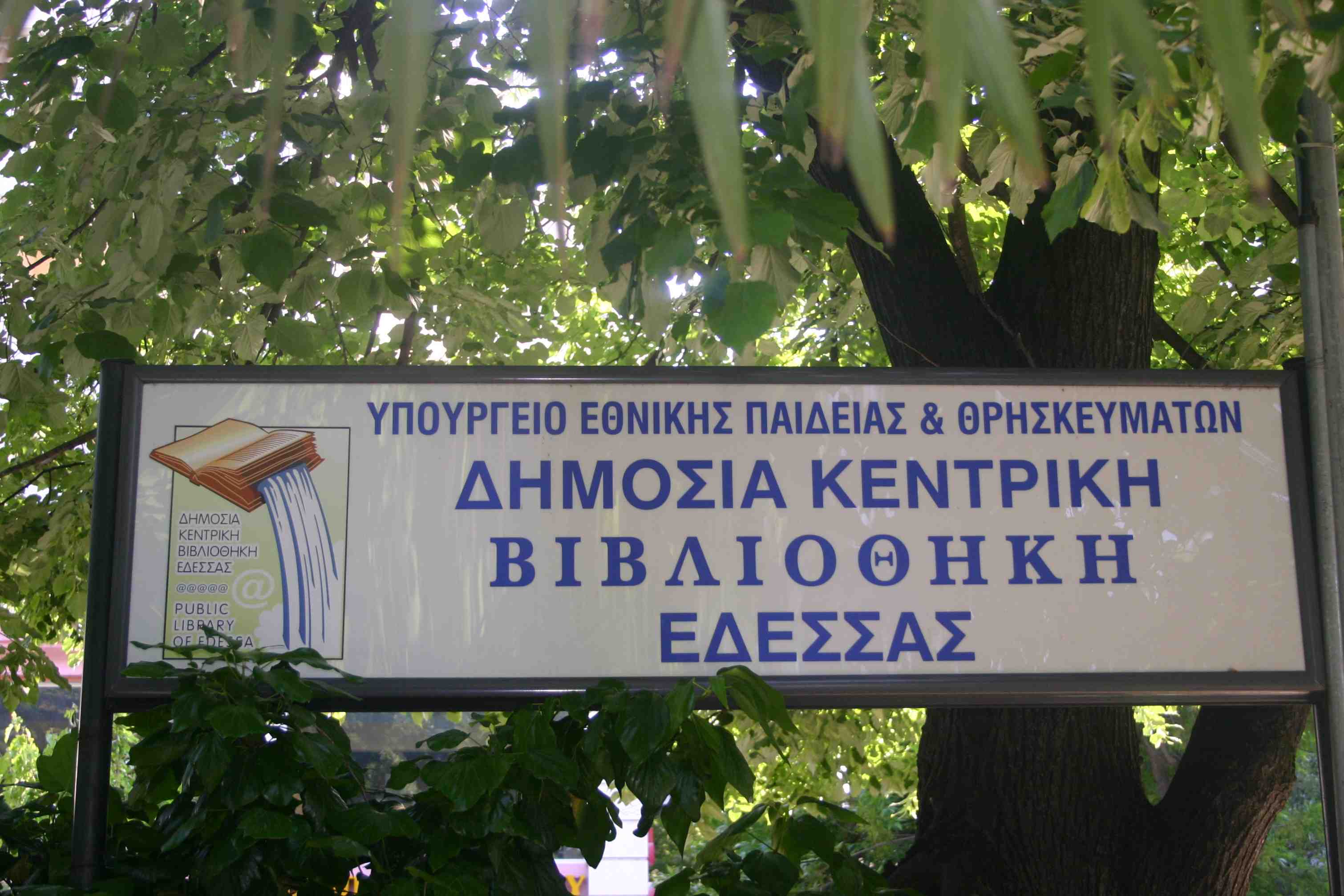
Edessa waterfallsWhereas many Greek towns might be dusty and dry, Edhessa (Έδεσσα) is lush and wet. Much of it is free of cars as well. The reason is a river cascading down from the mountains to the north. It flows through the town, allowing park spaces along the banks and a complex array of paths and bridges crisscrossing the waters. Then, at the edge of the old town (Varossi), the river descends rapidly, culminating in two large waterfalls, which I came to see as fountains of knowledge.

Following the Networked Learning Conference earlier last week in Halkidiki, Greece, we had headed west through Thessaloniki to the region around Edessa. This is where Alexander the Great was born and where his father, Phillip II and Aristotle went to to school together. It includes what are now the major archaeological sites of Vergina, the site of the ancient Macedonian royal city of Aegae, and Pella, the later capital. Alexander, of course, was the one whose conquests spread Hellenistic culture throughout Asia Minor, Syria, Egypt, and eventually the entire Persian Empire, going as far as India. Supposedly, he slept with a copy of the Iliad under his pillow throughout the campaign. His exploits might not represent the origin of the knowledge, but they certainly helped it flow and created an early version of a global culture.

The oracles of Delphi and other sites might allow Greeks to claim the fountain of knowledge. Towns with names like Grammatico make one feel that love of knowledge is intrinsic to daily life. Add in the beginnings of Western science and philosophy and the whole nation would seem to be a bubbling fountain of knowledge, if it just weren’t so sunny and dry!

Edessa libraryI thought we might be approaching the fountain when we came to Meixa, the location of Aristotle’s school (from the Greek schole), where Alexander had studied. But it was just north of there in Edessa, that the fountain revealed itself.

The pleasure of experiencing the water town was only enhanced for me when we visited the wonderful town library. Staff there helped us access the internet and told us more about Edessa.

The library has a unique logo combining two of my favorite things, books and water. It suggests that the ideas of Plato, Sophocles, Hippocrates, Thucydidies, Heraclitus, and all the rest flow from the library, providing pleasure for the mind as the cataracts do for both body and mind. I like the way the logo incorporates the @ sign, too. Fortunately, knowledge is never owned by any one time, place, or people, but Edessa and its library make as good a claim as any to being its source.

Aughavannagh and Glenmalure

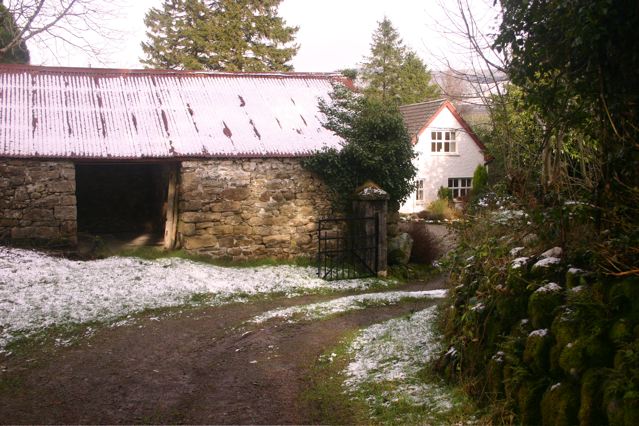
Aughavannagh cottage

Our Ballsbridge apartment lease ran out at the end of January and the new apartment wasn’t available until 3 February. That meant that aside from badly needing a break, we were also homeless for three days. It became clear that this was a time to turn crisis into opportunity. We chose to make a long weekend of it, going to stay in a cottage in Aughavannagh in the Wicklow Mountains south of Dublin. You can see the cottage behind the shed, in the first photo.

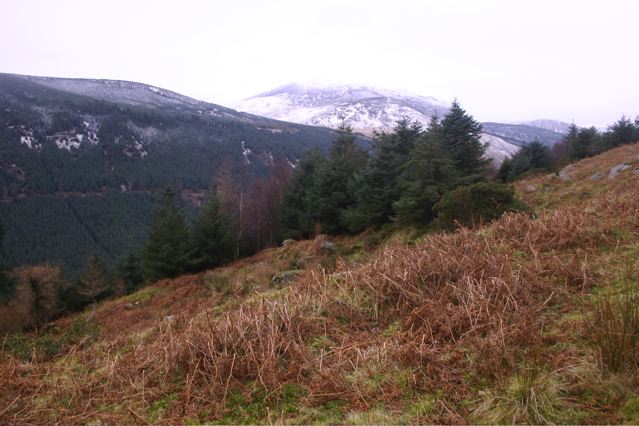
Glenmalure mtns

Being in a valley, there was no mobile phone access, much less internet. As our rental car was not designed for the snow in the mountains, so we were about as isolated as one could be just 50 kilometers or so by air south of Dublin.

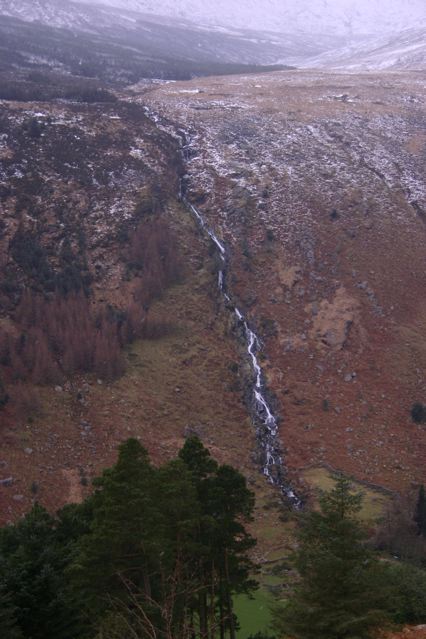
Glenmalure waterfall

The weekend was cold, with light snows, rain, and ferocious winds at times. But we had a fireplace and plenty of fuel. At times the weather cleared enough for walks. One very delightful one was at Glenmalure, the longest glacial valley in Ireland and UK. It’s just east of Luqnaquilla, Wicklow’s highest mountain at 925m. There’s also the impressive Carrawaystick waterfall, down to the Avonbeg River (see left).

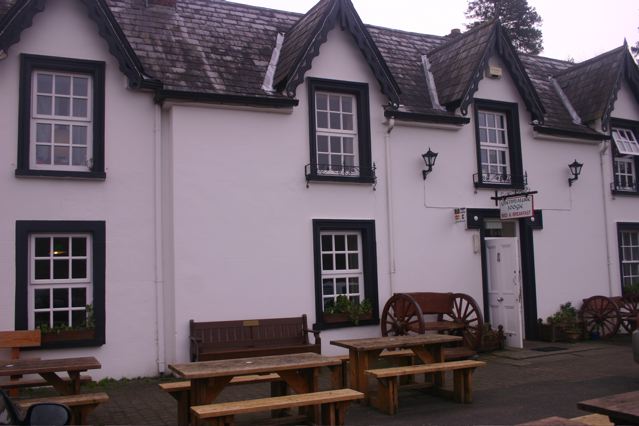
Glenmalure is not far south from Glendalough, an equally beautiful spot, but one that’s more heavily traveled. At the end of the walk we had an excellent pub lunch at the Glenmalure Lodge, where we had parked our car. That allowed us time to get back to watch Ireland v. Italy (rugby) on the telly. (We weren’t totally out of touch with the modern world!) Glenmalure Lodge

Christmas in Kilcrohane

sheep on Sheepshead Wayme in KilcrohaneWe had a wonderful Christmas in Kilcrohane on the Sheepshead Peninsula in West Cork. We went with Stephen, over from St. Petersburg, Russia; Emily, from Minneapolis; and Matt, one of their friends, from Saint-Raphael, France. Our week included a visit to Fitzpatrick’s one evening, several to the O’Mahony store, and stops in Durrus, Bantry, Ahakista, and other charming towns.

swan lakeWe also had winds, fog, sleet, and torrential rain. Locals call it “rain,” even though it blows horizontally, rather than falling sensibly from the top down. There were several terrific gales (or was it one long one?), which made us thankful for the stone walls of Betsy and Michael’s cottage. Sitting by a warm fire, we could look out on gorgeous Dunmanus Bay with sunny skies one time and am awesome storm the next.

Lough HyneDespite the general theme of winter storm, we had frequent sun and glorious skies. That allowed us to manage several good walks. One was in the ancient forest above Glengariff; another around Lough Hyne south of Skibbereen; and others on the Sheepshead Way. We made good use of Kevin Corcoran’s West Cork Walks.Mizen peninsula

Emily was a writing dervish, thus missing some of the walks. Her friend Matt played his guitar, while posed on the large window seat. Stephen had a swim down at the end of the road. He was inspired in part by Frank O’Mahony, who had done the St Stephen’s Day charity swim at the pier. Perhaps it was warmer for the swimmers to be in the water than in the air, given the sleet and winds. And we played a fair bit of bridge.

Photos by Susan Porter Bruce.

Georges-Louis Leclerc, Comte de Buffon

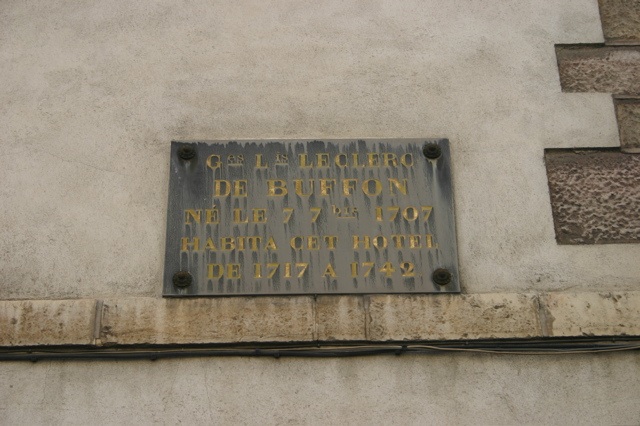
Buffon’s plaqueAfter being inspired by George Reese’s work with Buffon’s needle, then seeing the movie, Le Pacte des loups (Brotherhood of the Wolf), then Buffon’s statue in the Jardin des Plantes, I’ve kept an eye out for Georges-Louis Leclerc, Comte de Buffon. He did amazing work in natural history, mathematics, biology, cosmology, translation, and essays. He also examned alleged specimens for the beast of Gévaudan, which provided the basis for the movie.

On Sunday we saw his house in Dijon (where he lived from 1717 to 1742), on naturally, rue Buffon.

From his Wikipedia entry you can follow links to Buffon’s needle.

The city pigeon is the bird of peace

I used to imagine the bird of peace as a small white dove with an olive leaf in its mouth, like the one Noah sent out to see whether the waters had abated. But now I think it’s really the big city pigeon, which some people call the “rat with feathers.”

This change of image started when I heard about the improbable scheme of Bertrand Delanoë, currently the Mayor of Paris. Delanoë recognized a problem: Pigeons are messing on the beautiful statues and buildings of Paris, costing huge piles of euros and displeasing both residents and visitors. But there are pigeon-lovers as well, many of whom risk fines to share their day-old bread with the hungry birds. Is there any way to recognize the divergent needs of pigeons, pigeon-haters and pigeon-lovers?

The Mayor proposed something, along the lines of his beach on the Seine or the ice skating rink 95 meters up the Eiffel Tower. I learned later that people in Basel, and then throughout Germany, had this idea also, but initally it seemed crazy to me. I’m afraid that when I talked with others about it they attributed that craziness to me as well.
pigionnier The idea was to build a home for the pigeons, a pigeonnier, where they could live comfortably and safely, and even be fed by the pigeon-lovers. This would preserve “the only sign of biodiversity in the city center.” In return, the pigeons would not mess the statues and they’d undergo population control. The money saved on cleaning statues would pay for the €40,000 construction and €9,000 annual maintenance.

Some people asked rude questions, such as “what will make the pigeons stay near their houses?” or “how can their population be controlled?” Yet the pigeonnier had been built and more were promised. I had to see for myself.

I set out for the Place de la Porte de Vanves in the XIVème arrondissement. This is in the SW of Paris, near the Périphérique, so it meant a good walk, and as I’ve discovered many times in Paris, a walk that would take on its own character.

Along the way, I stopped briefly in the Jardin de Luxembourg. On the west side of the garden, near rue Guynemer, I looked for a while at the bronze model of the Statue of Liberty by Frederic Auguste Bartholdi. The statue itself was given by France to the United States in honor of our first centennial. Next to the model was an oak tree, planted to commemorate the solidarity of the French and Americans in response to 9/11. These made me ponder the deep intertwining of French and US histories, as well as the current political divisions. But I couldn’t dewll on that, as I had a goal—to see the pigeons in their new home.

Walking a bit south of the garden, I came upon the unusual sight of a man getting into a late-model car and driving away. What caught my eye was that he wore sandals and a brown robe with a rope around the waist. He was a Capuchin monk coming out a monastery, next to Notre-Dame de la Paix, at 6, rue Boissonade. The image of old and new, religious and secular, somehow seemed relevant to my ponderings on the French/American relations, to accommodating and understanding differences, especially next to the “our lady of peace” church, but again, I had a goal to pursue, and couldn’t afford to linger there.

Walking along rue Schoelcher, I passed Montparnasse Cemetery. There were plaques describing Victor Schoelcher (1804-1893), best known for the decree of April 27, 1843 abolishing slavery in the French colonies. Reading more about him, I learned of how he became the most well-informed French person on the Caribbean colonies, and of his efforts to show how sugar production could be continued without relying on slaves. He helped the French people see that their interests in peace and well-being were not counter to justice, but in fact depended upon it. As Martin Luther King, Jr. said, “Injustice anywhere is a threat to justice everywhere.”

But I moved on, not relinquishing my goal of seeing the pigeons in their house. At the town hall of the XIVème arrondissement, at 2, place Ferdinand Brunot, I stopped briefly at one of those innumerable monuments to the “enfants mort pour la france” (the young people who died for France). If I were ever to lose a loved one to war, I would certainly want to believe that it was for something noble, but I wondered, especially having just visited the battlefields of Verdun, whether all those deaths were really for France, or instead, for greed, stupidity, injustice, the inability to see from the perspective of others, and all the other vices that foster wars and violence.

Still moving toward my goal, I walked along rue Didot to the Cité Croix Rouge. This is a reconsturction of the Broussais charity hospital, which is to become “un grand projet humanitaine du couer du XIVème” and “un lieu d’échanges ouvert à tous.” This new Red Cross center will be open to all and serve 1000 people a day as a hospital and education center. It seemed like a grand and noble project, but I couldn’t avoid seeing the graffitti and tags marring the large banner proclaiming the project. I wondered about whether the “writers” were the intended beneficiaries of the Cité Croix Rouge and about the difficulties of working for the justice that Schoelcher and others saw as so necessary to civil society.

On other walks, I’ve focused on architecture or art, music, history, science, the clothes, or most often, the ordinary people on the street. This one presented me with images of peace and justice, which I hadn’t intended. I simply wanted to see the folly of the pigeon house.

Nevertheless, I reached my goal, and was able to see it in a way I hadn’t expected. The pigeonnier was set in a small park, with benches and trees. Pigeon-lovers could watch the pigeons and even feed them there. Pigeon-haters could stay away, or perhaps learn that pigeons aren’t so bad when they have a place to live without harming others. The pigeons seemed happy, too. I also realized that the Place de la Porte de Vanves had become a more humane place. Softening the nearby railroad tracks, construction projects, and its general gritty urban character, the little park offered a hint of the natural beauty and gentility I had felt earlier that day in the Jardin de Luxembourg. I learned from the Pigeon Control Advisory Service that killing pigeons simply doesn’t work; they breed too fast, and attempting to kill them all simply helps them evolve into stronger, faster, smarter birds. I don’t know whether providing comfortable, modern homes, with ample food and water, perch sites, and a garden nearby will work either, but I saw that there was something grand, not just foolish, in the idea.

Jane Addams showed that tragedy lay in “believing that antagonism is real,” in assuming that a gain for one must mean a loss for the other. In contrast, the pigeonnier represents an attempt to realize what she called “affectionate interpretation,” to see the world as others see it, and thereby, achieve progress toward a common outcome. Pigeons need food and water, and a safe place to live and rear their young. But they don’t need to mess up the statues. Similarly, pigeon-lovers, pigeon-haters, Parisians, and visitors each have their own needs and interests, which need to be understood and accepted, rather than quashed. The pigeonnier and its park is a common good, which is based on interpreting each party in an “affectionate” way. In fact, no one’s interest is served either by killing pigeons or by indiscriminate feeding.

The final story of the Paris pigeonniers remains to unfold. But regardless of the outcome, it stands as a lesson for larger conflicts. Many people assume that their interests are served by military force or by building walls, indiscriminately imposing their interests over those of others (consider US prisons, immigration policies, the war in Iraq, etc.). The tragedy here is not just that injustices are done, that we commit these injustices on ourselves.

Religion of Grass

I would be converted to a religion of grass.
Sleep the winter away and rise headlong each spring.
Sink deep roots.
Conserve water.
Respect and nourish your neighbors and never let trees gain the upper hand.
Such are the tenets and dogmas.
As for the practice — Grow lush in order to be devoured or caressed, stiffen in sweet elegance, invent startling seeds — these also make sense.
Bow beneath the arm of fire.
Connect underground.
Provide.
Provide.
Be lovely and do no harm.

by Louise Erdich

Quetico, August 1963

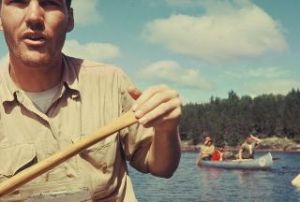
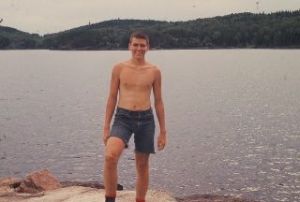
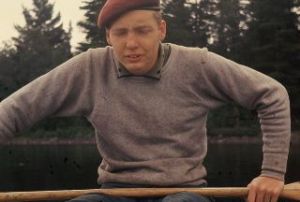
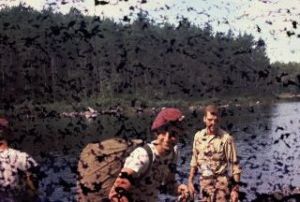
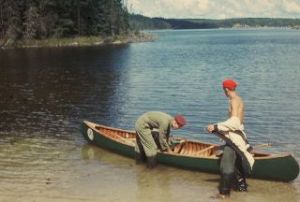
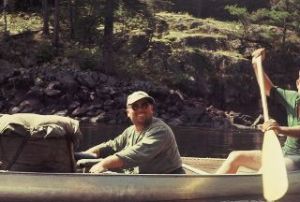
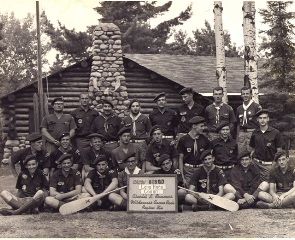
Here are some photos from my trip to Quetico Provincial Park in August 1963. Notice the water damage on the 35mm slides, which is explained by the story that follows the photos.


In August of 1963, our Explorer Post 52 traveled to Ontario’s Quetico Provincial Park just west of Lake Superior on the Canada-U.S. border for a wilderness canoe trip. In order to get to Quetico, we journeyed for three days from Fort Worth in what was even then an old, yellow school bus. We stayed in Air Force bases, sleeping on the gym floors and experiencing steam baths for the first time.

This was a year of changes, including the arrival of the Beatles in the US and the assassination of President Kennedy. But the trip was the major event in my life that year.

It was a wonderful trip in many ways. We stayed up most of one night watching a rare display of the Aurora Borealis, which filled the sky for hours. The sun was shining, the fishing was good, and there was great singing, story-telling, and endless argument about the meaning of life around the campfires. It was good exercise, too, especially with the canvas packs of those days. On portages, one of us would carry the canoe, one a food pack, which weighed 110 pounds in the beginning, and one all our gear–cotton sleeping bags, canvas tent, and clothes.

The Storm

We had been out for at least a week when the storm came up. It was on the Basswood River, but in a wide section, like a long lake. When the storm arrived, we decided not to risk a crossing and pulled into a cave a the base of a huge granite cliff with pictographs. “Picture rock” on Crooked Lake was shown in the September 1963 National Geographic, and I recall seeing the Basswood cliff when I returned from the trip.

I held my canoe onto the rock under this 100-foot cliff, as did Fred Moyer, our guide. The other two canoes held on to us, locked together to avoid capsizing.

After a few minutes, I released my grip on the rock for just a moment to tighten my poncho. As I did, lightning struck a solitary tree at the top of the cliff. The current traveled down the cliff to our cave. Everything went suddenly white, for some indefinite period. If you told me today that it was ten seconds or just one, I wouldn’t be able to dispute it, because time didn’t exist for me then. I could feel the charge in the air, and am still sensitive to changing electrical conditions. When I’ve felt that while canoeing, I get very nervous.

The current reached Fred’s hand, which was still touching the rock. His canoe, which was the only wood and canvas one, was shattered. Bob Cocanower and Gary Rall were the two scouts in Fred’s canoe and they both suffered physical injury from the lightning: Bob’s arms were paralyzed and Gary’s legs. Fred was killed instantly.

After Fred died, Chuck Borgeson and Duane, the guide from a companion group, took his body to the ranger station (see Bobby’s account, too). I must have gone into shock, because I went to sleep later that morning and slept until the next day. We, of course, cut the trip a short from what was planned originally, but not by much, because there wasn’t an easy way just to exit from such a remote location.

Aftermath

The accident was reported in Texas newspapers as “lightning strikes Scout group, at least one killed.” Naturally, our parents were distraught, but unable to learn much about what had happened for several days. This was well before cell phones and we had no portable radio.

It’s sobering to realize that I was the only one other than Fred holding on to the rock just before the lightning struck. If I hadn’t let go to pull my poncho, all 12 of us might have died, because it would have completed an electrical circuit connecting all our aluminum canoes.

We managed to complete the trip without further mishap, but aspects of it are still vivid for me today. After the wilderness experience, we went to Winnipeg and found a restaurant that offered all-you-can-eat lunches for 49 cents. After two weeks of vigorous exercise and eating our own cooking of dehydrated potatoes, we were hungry beyond any measure a restaurant should have to endure. It wouldn’t surprise me to hear that we put them out of business.

References

Coalson, Bob. The Fred Moyer incident. Post 52 history: Charles L. Sommers Canoe Base.

Olson, Sigurd F. (1963, September). Relics from the rapids. National Geographic, 124(3), 412-435.

Connecting learning and life

Bruce, B. C. (2003, Summer). Connecting learning and life. Frontiers!: Official publication of the Fort Worth Museum of Science and History, p. 7.

Frisky and Blossom are long gone now, and I wouldn’t recognize them if they showed up today. But they taught me more about life than many people I’ve known. They were de-scented skunks who lived at the Fort Worth Children’s Museum (now the Fort Worth Museum of Science and History). I met them when my mother enrolled me, as a three-year-old, in the Frisky and Blossom Club held at the Museum.

The Frisky and Blossom Club was the first class of what later became the Museum School, now one of the largest museum school programs in the world, having served over 200,000 children. It was one of the first museum preschools to be accredited by the National Association for the Education of Young Children. But in 1950, the Club had only five members, Ben Hulsey, his younger brother Price, Gary Rall, Doug Wiley, and me.

Mr. and Mrs. Bigelow ran the Frisky and Blossom Club out of an old house on Summit St. We started in the summer of 1950, and came several times a week. There were outdoor benches where we sat for activities. We played with Frisky and Blossom, learned about rocks and fossils, and other artifacts the Museum offered. We also talked about things we liked to do and the Bigelows helped us connect those interests to each other’s and to the larger worlds of science and nature.

Museum School

Zeiss projectorLater, I took other classes from the Museum School. These included Insects, Rocks & Fossils, and Astronomy. I joined the Astronomy Club, run by Mary Charlie Noble, the namesake of the Noble Planetarium. I still have my notebook from the Astronomy Club. It has issues of Sky and Telescope from 1956, diagrams of constellations, and notes from our classes. It also describes our wonderful field trips, in which we sat on a hillside watching for meteors, or studying the Milky Way (a stupendous sight available to anyone on earth to see in the days before we polluted the skies). I also participated in a program to spot enemy aircraft, presumably Russian bombers that had somehow missed being seen on their way to Fort Worth. I don’t know whether I helped save the Nation, but I remember being excited about a chance to contribute, and learning how to identify planes by their sound and silhouette. I still have a book Astronomy, which I won for spotting the most planes.

Although my writing in that notebook seems primitive compared to that of the nine- and ten-year-olds I see today, it recalls for me the joy I felt in expanding my imagination. I listed distances of planets, not because I was to be tested on it, or because it was good preparation for middle school, but because the Museum classes had awakened my senses. They concocted a living organism out of the natural curiosity of a child, knowledgeable and caring adults, interesting books, charts, and images, and the clear Texas skies.

What emerged from the Astronomy Club can be said about the other activities as well. I’ll never forget searching for insects in the Fort Worth Botanical Gardens or making boxes for mounting them. I can still identify insects by their order and was interested to read about the recent discovery of a new order, Mantophasmatodea. In fact, a characteristic of all the experiences I had at the Museum School is that they didn’t stop when the class or club ended. Instead of covering a topic and moving on, the Museum School caused me to open up, to seek to extend and enhance those experiences.

Another characteristic of these experiences was that they were never just, say “rocks & fossils” or “insects.” Through the insects class, I learned about cigar boxes (to hold the mounted insects), carbon tetrachloride (now banned as unsafe!), painting and homasote, the Greek language, flowers in the Botanical Gardens, diseases, history, and much more. Through “rocks & fossils” I learned about plaster of paris, two-D and three-D representations, dinosaurs, evolution, geology, oil exploration, and the age of the Earth. In contrast to some of the formal instruction I had received, this was a living process, a statistically unpredictable one, in which each experience led to learning and in turn to new experiences.

What It Meant to Me

It’s impossible to identify all the ways the Museum School affected me. The fact that I married Susan, who was working then at the Boston Children’s Museum, seems too obvious to say. Perhaps it’s all the little things, reading a biography of Roy Chapman Andrews as a teenager and fantasizing about exploring the world, loving to canoe and to hike in the mountains to this day, choosing to major in biology in college, being a regular reader of Scientific American, Natural History, Smithsonian, and National Geographic, participating in Science for the People, wanting to share a love of science with my children.

The most pervasive effect for me is how it has shaped the way I think about learning and life. In school we sometimes experience learning as a negation of life (“sit down and finish your workbooks!” “that doesn’t belong in the classroom!” “what were you doing instead of your homework?”). The testing mania of today only exacerbates that tendency.

When learning is separated from life, it becomes sterile: How many hours did all of us spend doing calculations in math classes and how many of us feel confident in math, care about it, spend time thinking about it? If the sterile approach helped develop people with a lifelong passion for learning, critical social engagement, and caring for others, I’d reconsider my views about it, but from where I stand those qualities emerge in spite of the sterility of much of formal instruction. Much of my work today is aimed at making learning come alive by connecting it to what matters in each learner’s ordinary experience.

The Museum School taught me a lot about the world. To this day, I can tell you the difference between diplodocus, diptera, and dipper (and I’m probably less afraid of skunks than I should be!). But more importantly, it taught me that the process of learning and growing is both challenging and energizing. The energizing aspect comes because the learning is connected to things the child cares about. That caring in turn is what makes it possible to for the child invest deeply in what would otherwise be daunting tasks. In the end, the learning becomes deeply embedded.

I mentioned above the joy I felt in expanding my imagination. I think many of us identify museum learning with joy, or simply with fun or play. In so doing, we risk conceiving it as un-serious, as inconsequential, as peripheral to real learning that can be organized into the scope and sequence of a curriculum or assessed on a standardized test. But my experiences with Frisky and Blossom, and yes, the people, too, taught me that joy means being connected to what matters, to being deeply engaged in life, and that joy in one’s experiences is the only real source for lifelong learning.