Personal questions

Lonely Planet publishes a good Turkish phrasebook, which has been handy in many situations. It provides some basic information about the language, the country, and the culture. I’d recommend carrying a copy, unless you’re fluent in Turkish.

But like any guidebook, the advice about social interactions is necessarily simplified, often essentializing differences. For example, the book advises:

Avoid asking questions about someone’s age, religion, or sexual preference, as the Turkish prefer not to discuss these topics openly. They love talking about politics, but exercise a little caution when expressing your opinion – some Turks verge on the fanatical when it comes to the ‘p’ word.

Phrases such as “the Turkish” or “They” are red flags, which can never be universally valid. I accept the advice to avoid personal questions on a first meeting, but I’ve found that at least some of the “They” actually like to talk about these topics. I’ve been asked: How old are you? Where do you live? What religion are you? How tall are you? What do you think about Obama? What do you think of Turkey?

When in an eczane (drugstore), I took advantage of the free scale to weigh myself. A druggist peered at the scale to check my number and then gave his approval. That may have been professional monitoring, but I sensed simple curiosity at work as well.

I’m sure that some of the They “love talking about politics,” but we were cautioned not to bring up politics with two men, who despite being friends and colleagues, had radically different political views. On the other hand, in the US, I know many people who “verge on the fanatical when it comes to the ‘p’ word.” Maybe they all have Turkish heritage.

The phrasebook also suggests,

When you meet someone of the opposite sex who has strong religious beliefs, avoid shaking hands or kissing them. Instead, greet them with the Arabic words selamin alekküm. (p. 105)

Again, broadly useful advice, but off in so many particulars. Turkish people we have met seem to vary widely in terms of talk and gestures. Some women initiate the double cheek kiss. Moreover, in a city, especially in university communities, there are people from all over the world with diverse habits. “The Turkish” vary a lot in terms of their international experiences and customs. And I haven’t heard selamin alekküm used in greetings.

One might also ask how to know whether someone has strong religious beliefs if that topic hasn’t come up. You can guess by clothing styles, but that’s far from infallible. I have a friend here who is deeply religious, but dresses in a modern style and drinks alcohol. Some women dress very conservatively, but for reasons of family or personal choice, not religion.

At another point, the phrasebook suggests,

When talking with people you’ve just met, or those you’re talking to in the polite siz (you) form, it’s considered rude to cross your arms or place your hands in your pockets. (p. 108)

This reminds me of a different guidebook that warns “the Chinese” do not like it when you point a finger at them. In my experience, most people sense that crossed arms, hands in pockets, pointing at people, and so on, are at best informal, and usually off-putting. I might just as well suggest to a Turk, “when meeting someone in the US for the first time, especially in a formal situation, don’t stand there with your arms crossed or point your finger at them. The American doesn’t like that.”

World Englishes

Kachru's three circles of English

Kachru’s three circles of English

The concept of World Englishes has been much studied by groups such as the International Association for World Englishes (IAWE), including my own colleagues at the University of Illinois. They consider localized English in global contexts, how it’s spoken and written, along with pragmatic factors such as appropriate use and intelligibility.

When traveling, I notice these issues frequently on a very personal level. For example, one day we were waiting for the elevator (i.e., lift) in a hotel in İstanbul. A couple of people from Munich came up to us to ask about the hotel. We described our room, and then began to talk more generally. They then asked where we were from and were surprised to hear that it was the US. They had judged by our accent that we were from the UK.

Norwegian Star

Norwegian Star

In this case, I don’t think the confusion was due to our having British accents. Instead, it was from having enough interactions with speakers of various World Englishes that we had unconsciously muted our marked US accents, especially my Texas talk. That possibly more subdued and more clearly articulated dialect has proved necessary in travel and work with international colleagues.

Another example arose later the same day. A different couple approached us on a sidewalk, with one saying in a strong Arkansas accent, “Are y’all cruise people?” What was interesting then is that we were marked by appearance as possible cruise people without having said a word, an example of non-verbal language. Moreover, Susan couldn’t understand them, but I, who had grown up in a neighboring country, could.

We had to confess that we weren’t cruise people, but we were able to tell them where their ship was docked. It was a 2000 passenger Norwegian cruise ship about three blocks away. I’m not sure that it was the Norwegian Star, but it was one that looked similar to the one shown here. In any case it was hard to miss, but we were happy to help them find their way home.

The Icon Walk

Merchant's Arch, Temple Bar

Merchant’s Arch, Temple Bar

Temple Bar is an area with narrow, cobbled streets on the south bank of the Liffey in central Dublin. It’s famous the world over for its lively nightlife, but that’s not high on my list of reasons to visit it. There are better places in Dublin to experience Irish food and music, ones where you’re more likely to encounter people who actually live in Ireland. However, the area does offer much that’s special, such as the Irish Film Institute.

One that we just discovered is The Icon Walk, a project of The Icon Factory. It’s located just off Fleet Street, along Aston Place, Bedford Lane, and Price’s Lane. Local artists have transformed the lanes into an open air gallery of Irish culture. It’s recently been awarded approval as a UNESCO City of Literature site.

Someone described the Walk as a twenty minute activity, but it deserves more than that. There’s a great collection of photographs, drawings, paintings accompanying sayings of famous writers and artists, descriptions of moments in the history of sports, movies, fashion, and more.

Arriving at the Playwrights section, we read,

Around 1610, Shakespeare wrote the “The Tempest” and retired to Stratford on Avon where he died in 1613. Queen Elizabeth I having completed the conquest of Ireland was dead. The last of the great leaders, O’Neill and O’Donnell were gone to Spain and Ulster planted with Crown subjects.

Between 1613 and the War Of independence in 1922, which won back self rule for most of Ireland, no play of real merit was written in the English language by anyone other than by an Irish-born writer.

The selected icons–Samuel Beckett, Brendan Behan, Sean O’Casey, George Bernard Shaw, John Millington Synge, and Oscar Wilde–won’t be enough to convince everyone of that claim, but their collective oeuvre is amazing.

Along the walk, you can see many great images produced by a wide variety of artists. A few of those are on the website, but the majority are visible only on the walk itself. They’re best seen that way, in any case, in the context of the other artworks and Temple Bar itself.

One of the best parts for me was the individual quotes, both from writer’s works and from their lives. For example, we read,

Beckett went on to live with an older woman who was not exactly a barrel of laughs. She took the phonecall that informed them of Samuel’s Nobel Prize. “This is a disaster, our lives are ruined” she responded.

In the eighties, Beckett was invited to Germany to direct “Waiting For Godot”. When presented with the script which he had not read in many years he exclaimed; “This thing needs a good edit”.

John Hume, third from left

John Hume, third from left

(Again, however, most of these texts exist only on the walls. I hope there will be an exhibition book at some point.)

One thing I learned was that in 2010 John Hume was chosen in an RTÉ survey as Ireland’s Greatest. He was also the winner of the Nobel Peace Prize (1998), the Gandhi Peace Prize, and the Martin Luther King award. He had modeled his own work for equality in citizenship on that of Gandhi and King. Unfortunately, his peaceful work was disrupted by violence and the “troubles” began. Hume became a leading figure in the civil rights movement in the late 1960s. Through speeches, marches, hunger strikes, dialogues, and long-term negotiations, Hume was behind many of the developments and agreements toward peace in Ireland, and later for European unity.

You can get a sense of the walk from the video below (only part of which is in English):

Veronica Robles at the Methodist Church

Veronica Robles

Veronica Robles

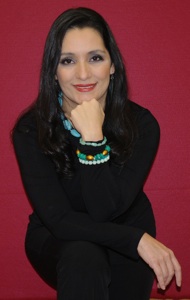
I had a very enjoyable evening thanks to Veronica Robles, who performed Saturday for a Habitat for Humanity fund-raiser at the Wellfleet United Methodist Church.

Her show was a great introduction to the dance, costumes, songs, language, and histories of different states in Mexico, including Michoacán, Jalisco, and Chiapas. Robles is co-producer and host of the popular Telemundo show – “Orale con Veronica (Let’s Go with Veronica)”. You can hear samples of her music on the Orales website.

A major goal of hers has been to connect Latino families with social services and programs. She co-developed the Latino Art and Culture Initiative at Centro Latino de Chelsea and founded Dance, Camera, Action! at the Charlestown Boys and Girls Club. She has six CD’s out and recent appearances at Lincoln Center and Carnegie Hall.

Veronica is a natural teacher, who takes her show to public schools in Boston and beyond, promoting arts, diversity, and cultural understanding. She performs with authentic outfits from different regions. The performances are interactive, with group singing and opportunities to dress up and learn dances. There was much amusement at some of the clumsy volunteers, such as myself.

Mariachi in Wellfleet might seem at first to be an odd fit. But it worked surprisingly well and made a nice addition to life here.

See Best bets things to do this weekend | CapeCodOnline.com.

A view on learning in Go:

My meetings here at Göteborg University have been held in the School of Pedagogy, which sits in three buildings, labeled, fittingly for an education school, as A-B-C.

But someone showed some imagination, and managed to start my brain spinning, by giving each hus a more lyrical name. I know the dictionary definitions, but I still can’t quite pull these names into a unified whole. Perhaps a Swedish colleague can help?

Hus A, the largest, is named Utsikten, which means “view.” That’s very appropriate, as its windows look out on the beautiful canal with its trees and walkways. The building is trilobite shaped. Its curves mean that each window has a different view. I think of the label as suggesting that we need to look out at the world.

Hus B is named Åsikten. This can also be translated as “view,” but here, I think it means point of view, or opinion. It reminds us that when we examine the world, we all see different things.

Finally, Hus C is named insikten, meaning “insight.” So, we have a view, a point of view, and an insight. Is it saying that as we consider our own view, then that of others, as in Peirce’s community of inquiry, that we develop insight? Or, does it mean that learning involves looking both outward and inward, then recognizing the fallibility of all knowledge? Does insight here really mean reflection, as we find in the water of the canal?

Or, is all of this just playing with the root sikt, and the untranslateablity in order to drive English speakers crazy? I suspect the latter, as I see Göteborg becoming Go:teborg on street signs, and then just Go:. But regardless of the deeper meanings I’m missing, this is just one of the many charming things I’m finding everywhere we look in Go:.

Inquiry-based learning concepts

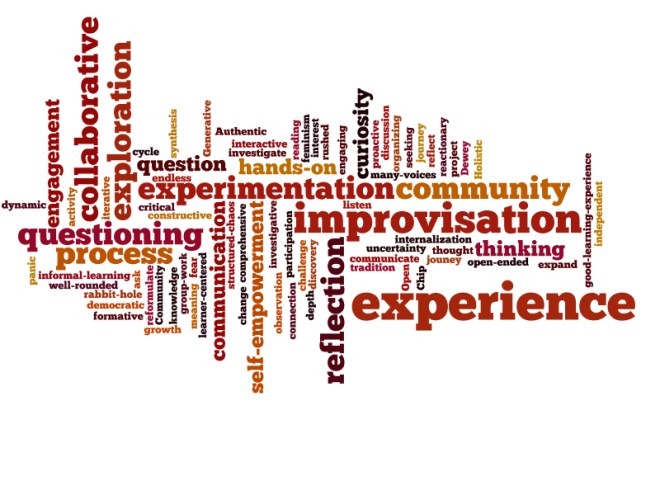
We talked in my class Monday about the terms that help us describe inquiry-based learning, or that derive from thinking about it. Students made their individual lists, then shared those with a partner, then in the group as a whole. There was to me a surprising diversity of responses, but with a sense that the different clusters of words were mutually reinforcing.

Below is a tag cloud we made of the terms. We could have added “fallibilism,” “adventure,” “moral,” “trust,” “dialogue,” “reciprocity,” and others. We also agreed that it’s the connections among the terms that really matter. Nevertheless, it was interesting to turn this mirror on our class dialogue over the semester.

Climate change’s OJ Simpson moment

Bill McKibben has just written an excellent article: Climate Change’s OJ Simpson Moment | Mother Jones. Although one can read it as yet another argument pro or con on climate change, it’s even more a sophisticated analysis of how the discourse has developed over the last 20 years, in the process giving a surprisingly sympathetic account of climate change deniers.

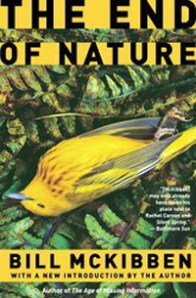
He starts by discussing the positive reaction to his first book, The End of Nature, which was one of the first books for a general audience on climate change:

And here’s what’s odd. In 1989, I could fit just about every scientific study on climate change on top of my desk. The science was still thin. If my reporting made me think it was nonetheless convincing, many scientists were not yet prepared to agree.

Now, you could fill the Superdome with climate-change research data…Every major scientific body in the world has produced reports confirming the peril. All 15 of the warmest years on record have come in the two decades that have passed since 1989. In the meantime, the Earth’s major natural systems have all shown undeniable signs of rapid flux: melting Arctic and glacial ice, rapidly acidifying seawater, and so on.

Somehow, though, the onslaught against the science of climate change has never been stronger, and its effects, at least in the US, never more obvious: fewer Americans believe humans are warming the planet.

But McKibben doesn’t just rail agains the deniers of global warming, or pull out reams of reports, data, and arguments. Instead, he  talks about how we all respond to disturbing news and to mountains of evidence we don’t have the capacity to sort through. I felt as if he were speaking to all of us across a wide range of complex topics in the modern era–health, economics, education.

He goes on then to show how evidence alone is not the issue; in fact, its effect can be contrary to what you might think at first:

the immense pile of evidence now proving the science of global warming beyond any reasonable doubt is in some ways a great boon for those who would like, for a variety of reasons, to deny that the biggest problem we’ve ever faced is actually a problem at all.

The “OJ Simpson moment” relates to the problem that the defense faced in the OJ Simpson murder trial, in which “it was pretty clear their guy was guilty. Nicole Brown’s blood was all over his socks, and that was just the beginning.” How could they cast doubt, when there appeared to be no remotely reasonable doubt? McKibben shows how, ironically, one resource they had was the immense body of evidence against their client.

He also shows how ordinary language is shaped and changed. One reason the deniers of global warming are winning the debate is that they’re able to connect with our fear of change, of having to do something. As McKibben says:

The great irony is that the climate skeptics have prospered by insisting that their opponents are radicals. In fact, those who work to prevent global warming are deeply conservative, insistent that we should leave the world in something like the shape we found it. We want our kids to know the world we knew. Here’s the definition of radical: doubling the carbon content of the atmosphere because you’re not completely convinced it will be a disaster.

Boys and tables: Asking may not be enough

In my last post, I talked about the parable of the blind men and the elephant, concluding that if we want to know how others see the world, “we need to ask.”

But often, simple asking is not enough. John Dewey includes the following story (from Ogden and Richards, quoting J. H. Weeks) in his Essays in Experimental Logic. He obviously liked the story as I do, because he repeats it in his Logic: The theory of inquiry:

I remember on one occasion wanting the word for Table. There were five or six boys standing around, and tapping the table with my forefinger, I asked, ‘What is this?’ One boy said it was a dodela, another that it was an etanda, another stated that it was bokali, a fourth that it was elamba, and the fifth said it was meza.

[It turned out afterwards that] one boy thought we wanted the word for tapping; another understood that we were seeking the word for the material of which the table was made; another had the idea that we required the word for hardness; another thought we wished for a name for that which covered the table; and the last, not being able, perhaps, to think of anything else, gave us the word, meza, table—the very word we were seeking.

References

Ogden, C. K., & Richards, I. A. (1949). The meaning of meaning: A study of the influence of language upon thought and of the science of symbolism, 10th ed. With supplementary essays by Bronislaw Malinowski and F. G. Crookshank (orig. pub. 1923). Routledge & Kegan Paul.

Dreaming in Hindi, by Katherine Russell Rich

kathy_sari

Recently, I listened to an interesting Afternoon Magazine (WILL AM 580) radio interview with Katherine Russell Rich, related to her book, Dreaming in Hindi: Coming Awake in Another Language.

It’s her own story of learning language. When Rich lost her job at a New York magazine, she didn’t just file for unemployment compensation, she decided to immerse herself in Hindi and in India, as she says on her website;

I’d recently lost a job, I was watching the business I’d been in and loved, magazines, begin to crumble. My world had been turned upside down. Compounding that was the fact that in the decade before, I’d gotten smacked around twice by breast cancer. I barely recognized my own life anymore. Or the way that I put it in the book was, “I no longer had the language to describe my own life, so I decided to borrow someone else’s.”

There are many examples revealing about Hindi, English, language in general, culture, and Rich herself, e.g.,

…the word for yesterday and tomorrow is the same: kal, from Kali, the goddess of death and destruction. There’s a philosophy embedded in there—it’s only when you’re in today, aaj, that you’re here; if you’re in yesterday or tomorrow, you’re in blackness.