
 We went to the (almost) abandoned village of Sandima yesterday.
The story is that it was wiped out three times: once many centuries ago by the bubonic plague, when many residents died and the village had to move; again by the citrus industry, which lured away the young people to work in the orange groves closer to Yalikavak; and a third time, by rampant development, which has covered hillsides with white block houses for people seeking the Mediterranean sun and lifestyle.
 The village is just up the hill from Yalikavak. It looks like an old war zone, with abandoned homes, stone walls, watering stations, and a mosque, all now becoming overgrown with vines and scrub vegetation. There are two schools, an older, religious school, next to the mosque, and a newer one with four rooms. The latter looks as if it must have been an attractive site for learning at one time, but now is missing doors, has large holes in the floor, and is covered with graffiti.
It’s possible to follow old footpaths and to go into the buildings, which are not much more than piles of rubble, everything of value having been removed. There’s a second abandoned village just across a ravine.
There are only three residents in Sandima today. One is an 86-year-old man who refused to leave. His story is that he walks into Yalikavak every day, not for work or food, he has his garden and cows in Sandima, but to look for a mate.
 There are also two artists, Ismail Erkoca and Nurten Değirmenci. Ismail gave us a tour of their house, which is the most decorated one I’ve ever seen. Every surface, including floor and ceiling, was covered with art works, or just painted, or festooned with bougainvillea, lantana, hibiscus, and other flowers. Navigating the nooks and crannies, bridges, and hidden passageways required a guide. It soon became clear that if selling artwork were not a business, then giving tours of the house could become one.
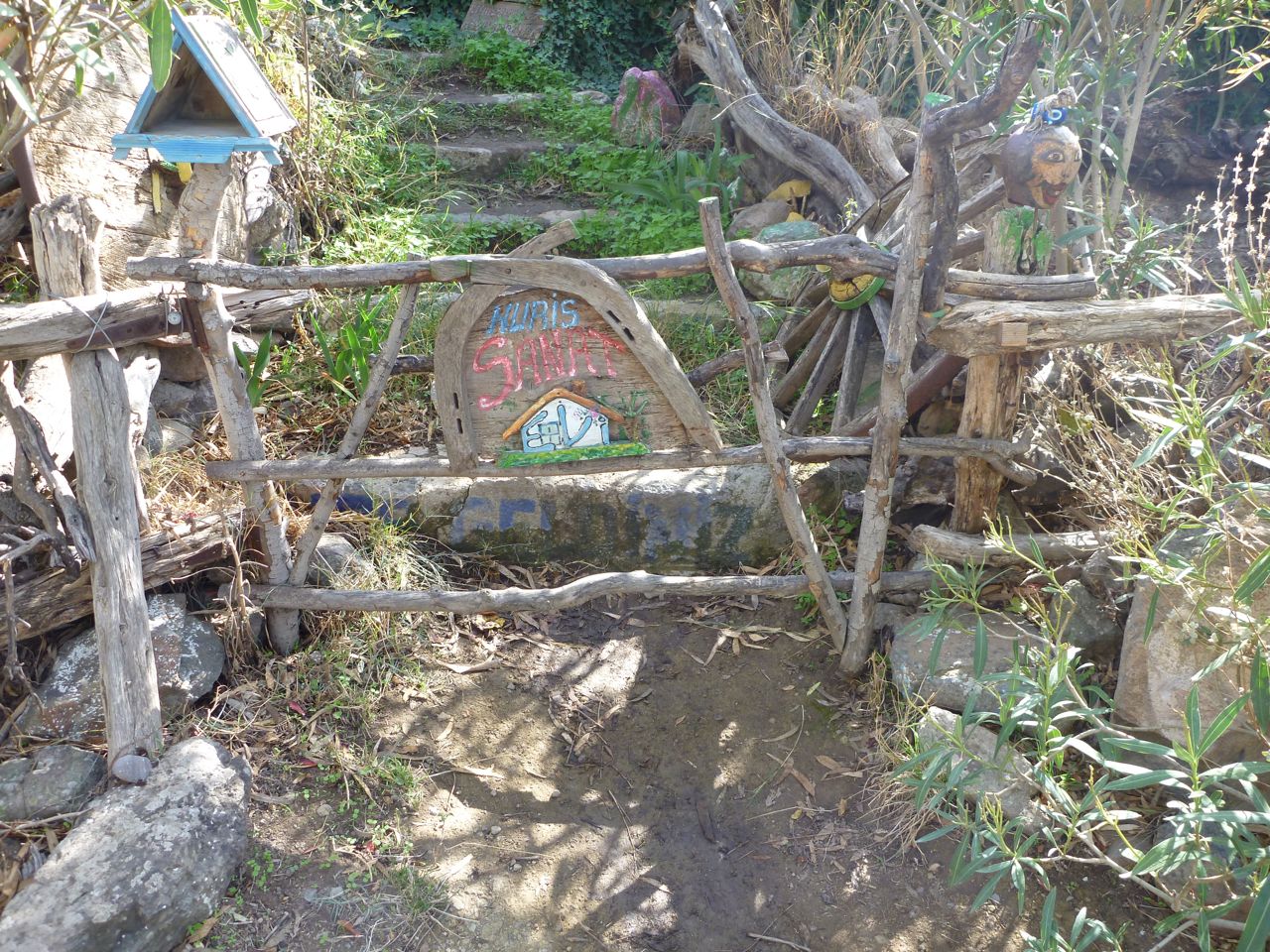 The house is called Nuris Sanat Evi, Nur from Nurten and Is from Ismail. Sanat Evi means art house. The story of the name (we heard many stories) is that Nur means holy light and Is means black soot from a fire. So, one needs light to see the darkness.
We enjoyed the adventure of talking with Ismail and getting a glimpse of his life, one far removed from İstanbul, where he was born.
 I was pleased to learn more about the Köy Enstitüleri (Village Institutes) from Ismail. I wonder whether the newer school in Sandima was created following John Dewey’s report or somewhat later as a result of the institutes? I’ll save thoughts on that for a future post.







 I was fortunate to have a visit with youth planners at the
  What I saw is part of
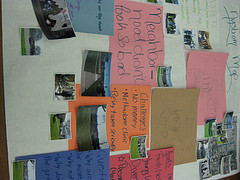
 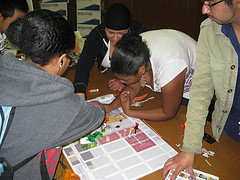 Sarah Van Wart from the UC Berkeley I School was my guide. She and two undergrads, Arturo and Sarir had been leading the high school students in a community planning exercise. They first examined their current situation, using dialogue, photos, and data. They then considered alternatives and how those might apply to a planned urban development project.
  The development will include schools, housing, a park, and community center, but the questions for city planners, include “How should these be designed?” “How can they be connected?” “How can they be made safe, useful, and aesthetically pleasing?”
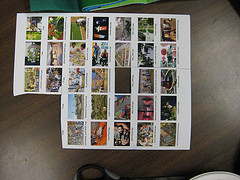
 On the day I visited, the youth had already developed general ideas on what they’d like to see in the development. Now they were to make these ideas more concrete through 3-D modeling. Using clay, toothpicks, construction paper, dried algae, stickers, variously colored small rocks, and other objects, they constructed scale models of the 30 square block development. One resource they had was contact sheets of photos of other urban environments. They could select from those to include as examples to emulate or to avoid.
 I was impressed with the dedication and skill of the leaders of the project, including also the teacher, Mr. G. But the most striking thing was how engaged the young people were. I heard some healthy arguing about design, but I didn’t see the disaffection that is so common some high schools today.
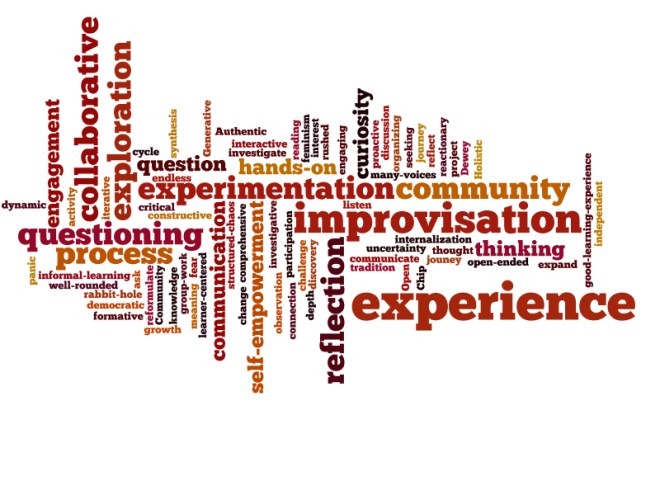
  My only regret is that I wasn’t able to follow the process from beginning to end. But from the rich, albeit limited, glimpse I had, the project is an excellent way to engage young people in their own communities, to use multimedia for learning and action in the world, and to learn how to work together on meaningful tasks. It’s a good example of
 Chip's journey