
Today, April 9, there will be an attempt at the world’s largest lesson. The UN’s Literacy Decade has just begun and today they want people all over the world to teach a lesson about literacy, which focuses on facts such as that nearly a billion adults are illiterate, most non-literate people are women, and 100 million children don’t even go to school. They hope to have thousands of students thinking about these issues all on the same day. The idea of record setting seems a little silly, but the campaign for global literacy is very serious, addressing a problem that stands in the way of solving almost any problem one can name, whether that’s about healthcare, the environment, economic development, social welfare, or conflict resolution.
Literacy in the information age: Inquiries into meaning making with new technologies
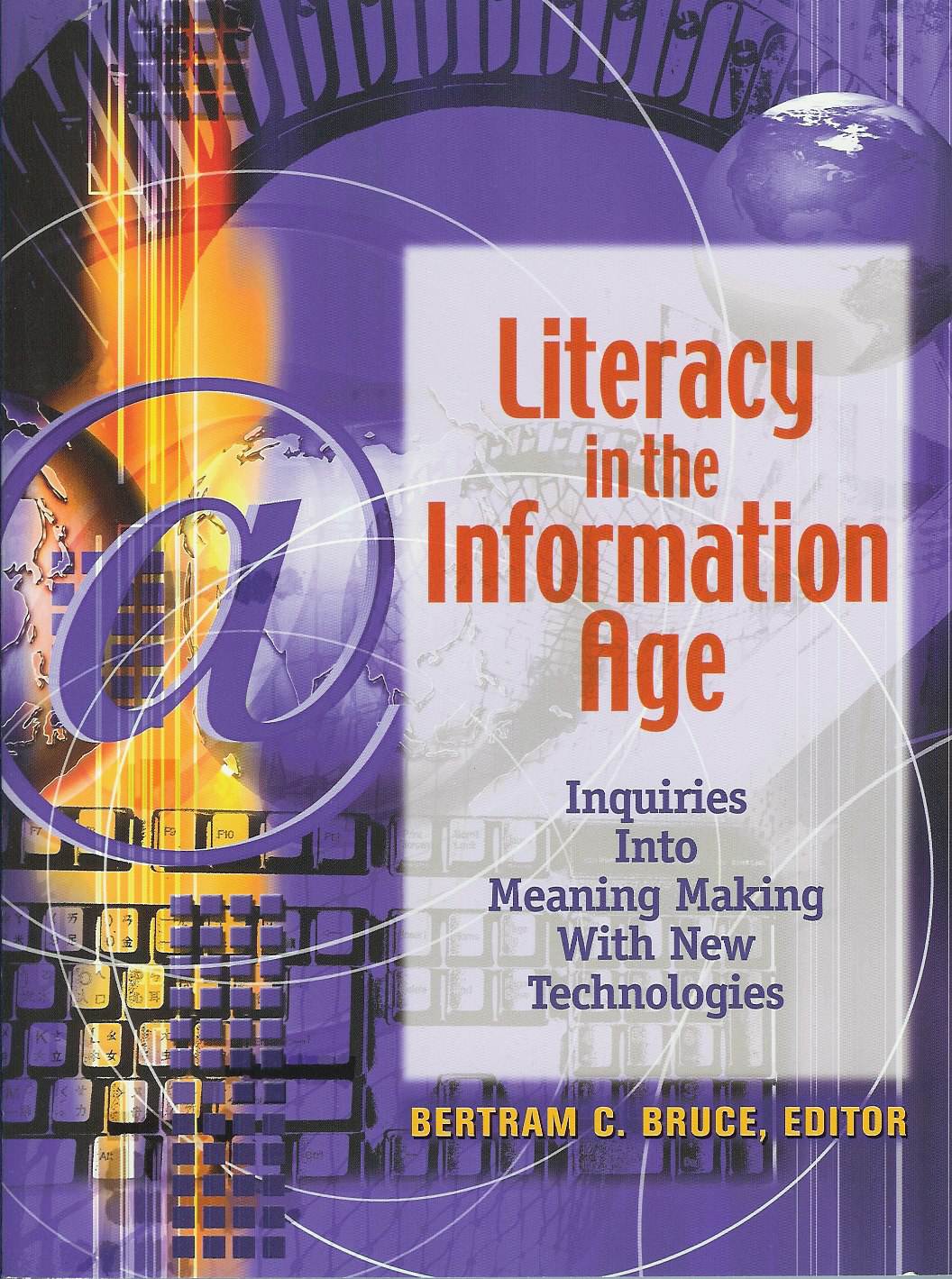 Educators today want to go beyond how-to manuals and publications that merely celebrate the many exciting new technologies as they appear in schools. Students are immersed in an evolving world of new technology development in which they are not passive recipients of these technologies but active interpreters of them. How do you help learners interpret these technologies as we all become immersed in the new information age? Continue reading
Paseo Boricua
 Paseo Boricua has become the center of the Chicago Puerto Rican community. It’s a place where Puerto Ricans can learn about their heritage through the culture center and where the Pedro Albizu Campos High School provides an alternative school setting to help young people succeed. Puerto Rican restaurants and night life have developed along with commerce. Inquiry Project members have bcome active in working with the Paseo Boricua community.
Denounce the peacemakers
From No Iraq Attack: An Open Letter
“Naturally the common people don’t want war: Neither in Russia, nor in England, nor for that matter in Germany. That is understood. But, after all, It is the leaders of the country who determine the policy and it is always a simple matter to drag the people along, whether it is a democracy, or a fascist dictatorship, or a parliament, or a communist dictatorship. Voice or no voice, the people can always be brought to the bidding of the leaders. That is easy. All you have to do is tell them they are being attacked, and denounce the peacemakers for lack of patriotism and exposing the country to danger. It works the same in any country.”
Hermann Goering at the Nuremberg trials, 1946.
Religion of Grass
I would be converted to a religion of grass.
Sleep the winter away and rise headlong each spring.
Sink deep roots.
Conserve water.
Respect and nourish your neighbors and never let trees gain the upper hand.
Such are the tenets and dogmas.
As for the practice — Grow lush in order to be devoured or caressed, stiffen in sweet elegance, invent startling seeds — these also make sense.
Bow beneath the arm of fire.
Connect underground.
Provide.
Provide.
Be lovely and do no harm.
by Louise Erdich
Students using Biology Workbench
UI Scientists Head Back to School [article in the Champaign-Urbana News-Gazette]
“Students at Danville High School built their own molecules last year.
“Obviously, this is the kind of thing you can’t do with a textbook. Not surprisingly, it doesn’t yield typical textbook answers from the kids, which are more likely to be a recitation of facts from the book than a real understanding of how molecules work, says Shelley Barker, a Danville biology teacher and department chair.”
12 steps to respond to 9/11, because "we have to do something!"
The ultimate weakness of violence is that it is a descending spiral, begetting the very thing it seeks to destroy. Instead of diminishing evil, it multiplies it… Through violence you may murder the hater, but you do not murder hate. In fact, violence merely increases hate…. Returning violence for violence multiplies violence, adding deeper darkness to a night already devoid of stars. Darkness cannot drive out hate; only love can do that. –Martin Luther King, Jr., “Where Do We Go from Here: Chaos or Community?”, 1967
Last September I was struck by what seemed to be universal support for the US government actions against terrorism. It seemed to me that many of these actions were unlikely to achieve their stated goals and might even be counterproductive. The pain I felt and saw around me only heightened my concern that these actions weren’t addressing the problem.
When I questioned these actions, a common response was “but, we have to do something!” My feeling then, and now, was not to doubt that some action was needed, but that the US response was both wrong-headed in many ways, and not nearly enough. Even the idea of a “war on terror” seemed to reflect a lack of understanding of what terrorism is, how it arises, and the opportunities to do something about it.
I jotted down then a set of actions, which I thought would actually hold more hope of reducing terrorism. In an effort to keep this relatively brief, I hope I didn’t make the items too cryptic. It’s a very incomplete list; I might add tolerance education, anti-racism, comparative religions, health care, libraries and schools, infrastructure development, and a number of other things, but doing even what’s listed below would be a start. I’d welcome any questions, reactions, suggestions.
Are bombings and restriction of civil liberties all we can do to combat terrorism? Here are a dozen other ideas for things the USA could be doing, none of which are being implemented today:
- Educate: Institute major formal and informal education programs aimed at global understanding: history that is more than European and American experiences; investigations of the relations among globalization, new technologies, and economic development; dissemination of scholarship on world religions, economies, and cultures. Our lack of understanding makes it difficult to combat terrorism, and worse, serves as fuel for the hatred behind it.
- Establish proactive diplomacy: Concentrate on improved relations with among others, Muslim and Arab countries and peoples, not only when oil interests are concerned.
- Stop arms sales: Reduce, if not eliminate, global arms production and sales. The US supplies over half of the new weapons in the world today, and 2/3 of those sold to developing countries (see http://salt.claretianpubs.org/sjnews/2001/09/sjn0109d.html).
- Cooperate with the international community: Become a full partner in international efforts to improve the environment, reduce disease, and protect human rights. The US go-it-alone approach after 9/11 is exactly what infuriates many around the world. Very few of those people would condone, or even consider, terrorist acts, but the response to terrorism would be greatly aided if the US were viewed more as a partner, and less as an overlord.
- Support democracy: Establish a priority of supporting democratic governments and democracy movements. Where in the Middle East have we done that? Where in Africa? Asia? the Americas? All too often, the US sides with autocratic regimes, thus allying itself with the enemy of ordinary people.
- Alleviate poverty: Poverty, especially in contrast to conspicuous consumption, provides a fertile ground, if not justification, for a violent response. The US has the lowest percentage of GDP going to foreign aid of any industrialized nation in the world, currently 1/7 of the already low OECD target (see http://www.globalissues.org/TradeRelated/Debt/USAid.asp). What counts as foreign aid rarely goes to the areas of greatest need and allocations are often earmarked for buying military equipment from US manufacturers.
- Open dialogues: The opportunities for communication across countries, religions, and ethnicities, or even within communities, are limited by governments and the concentration of media control in a few corporations. The US could lead the way in promoting new and improved channels for communication, especially for groups that have little voice today.
- Conserve: The US foreign policy is inordinately shaped by our dependence on foreign oil. Even modest conservation efforts would reduce that dependence and allow a focus on other considerations for the long-term interests; this, in addition to the beneficial environmental effects.
- Improve literacy: Most people in every region of the world are against violence and seek similar goals related to family, culture, economic survival, and personal fulfillment, but their participation in decision-making is limited, because they lack the basic literacy needed for written communication and access to information. The US possesses the tools and resources to have an enormous, positive impact on world literacy development, which would, in turn, facilitate democratic and economic development, and lessen the support for terrorist responses to desperate conditions.
- Resolve conflicts: Not every conflict can be resolved easily, but the US has the stature, the political and economic clout, and in many cases the neutrality to play a major role in resolving conflicts before they become disasters. In Kashmir, Rwanda, Bosnia, East Timor, Sudan, and many other regions, we could engage as mediators and perhaps lessen the violence. Very often, conflicts far away are treated as irrelevant to USA interests, until they become all-too-relevant and nearly impossible to address.
- Protect the rights of women: When women’s rights to health care, education, and political participation are ensured, most societies show economic development, population control, reduced disease, and reduced violence. Aside from the intrinsic justice issue, culturally-sensitive support for progress in women’s rights will also protect against terrorism. In the long run, this will do far more than hiring more armed guards.
- Learn languages: It is difficult to do any of the items above without full communication, attentive to the nuances of culture and politics. The US educational system, which strives for monolingual learning, is swimming against history. Although English is used widely in the world today, there is evidence that other spoken languages are growing faster than English and writing in the thousands of world languages is expanding with the support of new digital technologies.
JAAL Technology Department
During 1997-2002, I edited the Technology Department in the International Reading Association’s Journal of Adolescent and Adult Literacy (JAAL). The columns were intended to promote dialogue about new communication and information technologies and to explore what these media mean for literacy and literacy educators. Each had several distinct sections, including an “email” message from me, an “issue of the month,” often written by a guest author, descriptions of selected websites, and a glossary. In addition to the print version, each column appeared in the Electronic Classroom section of Reading Online.
The columns have now been collected into a book, Literacy in the Information Age: Inquiries into Meaning Making with New Technologies (2003, Newark, DE: International Reading Association).
- Bruce, B. C., & Bishop, A. P. (2002, May). Using the web to support inquiry-based literacy development. Journal of Adolescent and Adult Literacy, 45(8), 706-714.
- Bruce, B. C. (2002, April). A friendly, welcoming attitude toward change. Journal of Adolescent and Adult Literacy, 45(7), 590-595.
- Brunelle, M. D. (2002, March). Why free software matters for literacy educators. Journal of Adolescent and Adult Literacy, 45(6).
- Jungwirth, B., & Bruce, B. C. (2002, February). Information overload: Threat or opportunity? Journal of Adolescent and Adult Literacy, 45(5), 400-406.
- Wielansky, Marc D. (2001-02, December/January). Internationalized domain names. Journal of Adolescent and Adult Literacy, 45(4), 302-308.
- Thakkar, U., Bruce, B. C., Hogan, M. C., & Williamson, J. (2001, November). Extending literacy through participation in new technologies. Journal of Adolescent and Adult Literacy, 45(3), 212-219.
- Hinn, M., Leander, K., & Bruce, B. C. (2001, October). Case studies of a virtual school. Journal of Adolescent and Adult Literacy, 45(2), 156-163.
- Lunsford, K. J., & Bruce, B. C. (2001, September). Collaboratories: Working together on the web. Journal of Adolescent and Adult Literacy, 45(1), 52-58.
- Bruce, B. C. (2001, May). Constructing a once and future history of learning technologies. Journal of Adolescent and Adult Literacy, 44(8), 730-736.
- Mishra, P., Nicholson, M., & Wojcikiewicz, S. (2001, April). Seeing ourselves in the computer: How we relate to technologies. Journal of Adolescent and Adult Literacy, 44(7), 634-641.
- Myers, J., & Beach, R. (2001, March). Hypermedia authoring as critical literacy. Journal of Adolescent and Adult Literacy, 44(6), 538-546.
- Kapitzke, C. (2000-01, February). Information literacy: The changing library. Journal of Adolescent and Adult Literacy, 44(5), 450-456.
- Zhao, Y., Tan, H. S., & Mishra, P. (2000-01, December/January). Teaching and learning: Whose computer is it? Journal of Adolescent and Adult Literacy, 44(4), 348-354.
- Bruce, B. C. (2000, November). Access points on the digital river. Journal of Adolescent and Adult Literacy, 44(3), 262-267.
- Kehus, M. (2000, October). Opportunities for teenagers to share their writing online. Journal of Adolescent and Adult Literacy, 44(2), 130-137.
- Bruce, B. C. (2000, September). The work of art in the age of digital reproduction. Journal of Adolescent and Adult Literacy, 44(1), 66-71.
- Bruce, B. C. (2000, May). Open source: Everyone becomes a printer. Journal of Adolescent and Adult Literacy, 43(8), 766-770.
- Leander, K. (2000, April). Laboratories for writing. Journal of Adolescent and Adult Literacy, 43(7), 662-668.
- Hawisher, G. (2000, March). Constructing our identities through online images. Journal of Adolescent and Adult Literacy, 43(6), 544-552.
- Bishop, A. (2000, February). Communities for the new century. Journal of Adolescent and Adult Literacy, 43(5).
- Bruce, B. C. (1999-2000, December/January). Searching the web: New domains for inquiry. Journal of Adolescent and Adult Literacy, 43(4), 348-354.
- Blanton, W., Greene, M., & Cole, M. (1999, November). Computer mediation for learning and play. Journal of Adolescent and Adult Literacy, 43(3).
- Sharples, M. (1999, October). Electronic publication: Writing for the screen. Journal of Adolescent and Adult Literacy, 43(2), 156-159.
- Bruce, B. C. (1999, September). Educational reform: How does technology affect educational change? Journal of Adolescent and Adult Literacy, 43(1), 42-47.
- Bruce, B. C. (1999, May). Education online: Learning anywhere, anytime. Journal of Adolescent and Adult Literacy, 42(8), 662-665.
- Bruce, B. C. (1999, April). Digital content: The babel of cyberspace. Journal of Adolescent and Adult Literacy, 42(7), 558-563.
- Bruce, B. C. (1999, March). Challenges for the evaluation of new information and communication technologies. Journal of Adolescent and Adult Literacy, 42(6), 450-455.
- Bruce, B. C. (1999, February). How worldwide is the web? Journal of Adolescent and Adult Literacy, 42(5), 382-385.
- Bruce, B. C. (1998-1999, December/January). Learning through expression. Journal of Adolescent and Adult Literacy, 42(4), 306-310.
- Bruce, B. C. (1998, November). Dewey and technology. Journal of Adolescent and Adult Literacy, 42(3), 222-226.
- Bruce, B. C. (1998, October). Mixing old technologies with new. Journal of Adolescent and Adult Literacy, 42(2), 136-139.
- Bruce, B. C. (1998, September). New literacies. Journal of Adolescent and Adult Literacy, 42(1), 46-49.
Professor, GSLIS

Still at the University of Illinois, I became a Professor in what was known then as the Graduate School of Library & Information Science (GSLIS) in the Spring semester of 2000. You can see what attracted me to LIS here. The School is now known as the School of Information Sciences, or simply the iSchool.
In 2004-05, I had a sabbatical in Europe, mostly around Paris, in Germany through a joint NSF/DFG project, and through Fulbright Specialist grants in Finland and Sweden.
In 2007-08 I held a Fulbright Distinguished Chair at the National College of Ireland in Dublin. At other times, I’ve had extended projects in Turkey, China, Romania, Nepal, and other places.
Emily at the nursing home
 While at Uni High, Emily spent a :emester tutoring Adolph Willms and learning his life story. See this article by Mary Schenk in The News-Gazette (June 5, 1999):
Life’s work earns man his diplomas
URBANA – Adolph Willms has a lifetime of memories tucked away in his head. Some days he can summon those. Other days it’s not so easy.
With the help of an education researcher and three teen-age girls from University High School in Urbana, the 83-year-old stroke victim has been able to recall many past experiences.
Researcher Patricia Marton of Bloomington was so impressed with Willms’ life experiences as a farmer in the St. Joseph area that she persuaded local…
 Chip's journey