Bring on the flood

Imja Tsho

Imja Tsho

Today’s BBC News reports on an important development in Nepal, one which should be a warning to us all (Nepal drains dangerous Everest lake).

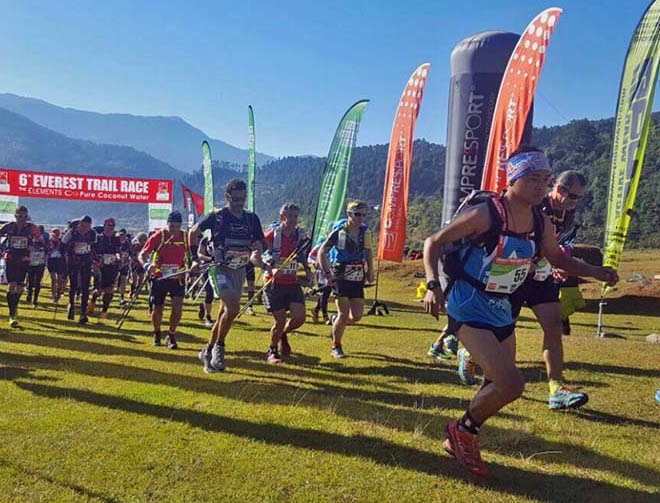
Nepal’s army has just completed lowering Lake Imja by 10 ft. This is because it was in danger of flooding downstream settlements with over 50,000 people.

Lake Imja, near Mount Everest (Sagarmatha) at 16,400 ft altitude, is one of thousands of such glacial lakes in the Himalayas. Many of the lakes are filling fast because of accelerated melting of glaciers due to rising temperatures.

The Himalaya region has been described as the third pole of the earth. It is melting, just as the Arctic and Antarctic are.

Lake Imja is a good example of that melting. It is a new lake, composed of glacial meltwater blocked by a terminal moraine. In 1962, it was 7.5 acres, and is now over 260.

I can only guess at the enormous cost of the six-month project, not just in dollars, but in terms of using up limited Nepali resources. It has been necessary to save lives, but sherpas in the region say there are many more lakes that endanger communities.

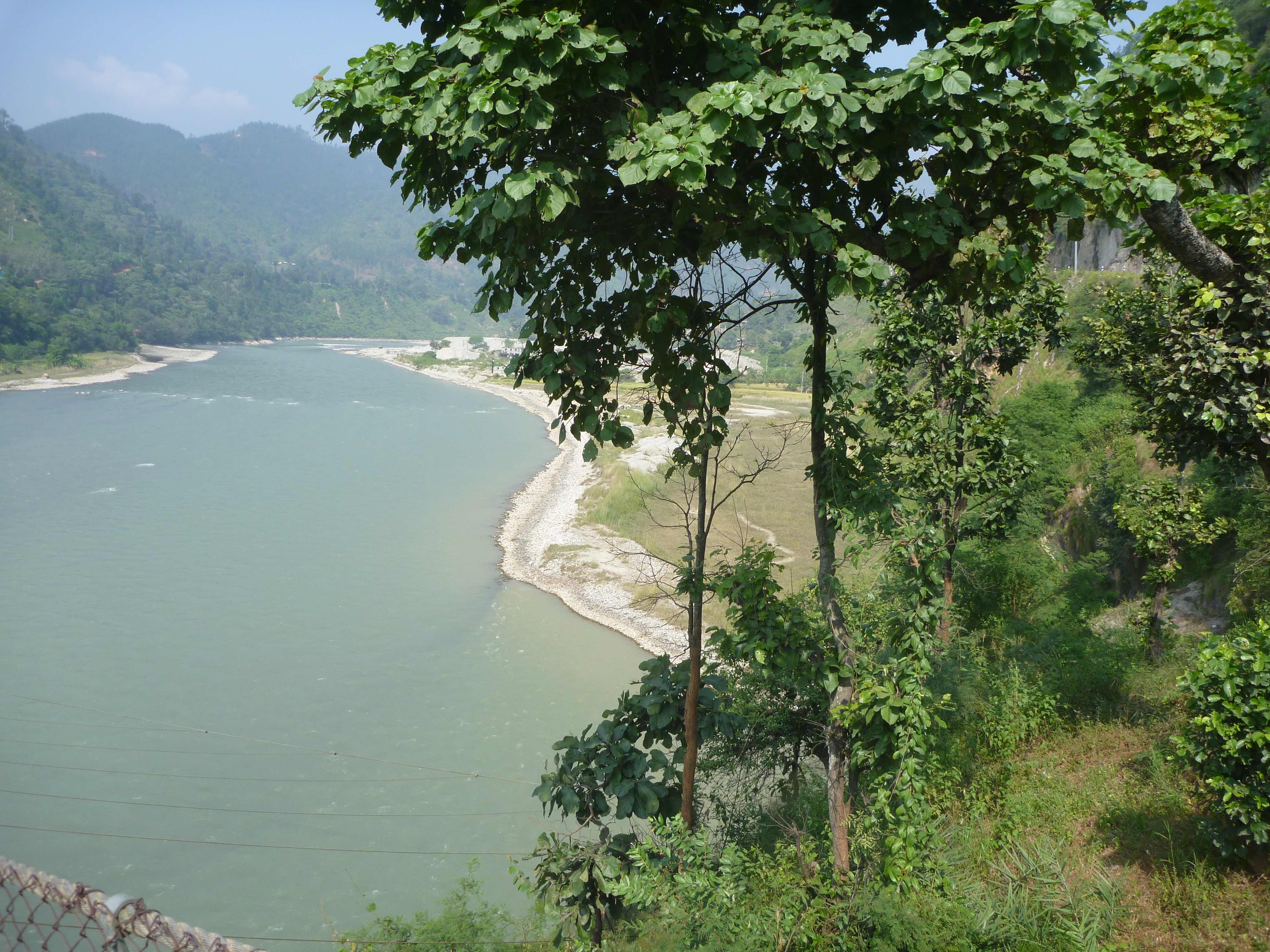
High above the Trishuli Nadi

flowerWhen Shiva had been walking for a long time in the mountains north of the Kathmandu Valley, he grew thirsty, but there was no water to be found. Angry at that, he drove his trishula, or trident, into the ground to create three springs, which in turn created a river.

shiva_kanachur_mpSome say that the Trishuli begins with snow melt in the Langtang Himal. Other accounts, such as Wikipedia, say that the Trishuli River arises in Tibet, where it’s called Kirong Tsangpo.

In any case, Shiva’s river, the Trishuli, later joins the Bhote Kohsi that flows from Tibet and becomes a spectacular mountain river, with exciting rapids and impressive gorges. It is no surprise that it’s Nepal’s most popular rafting river. It looks like large parts of it could be canoed as well.

The Trishuli flows through mostly Buddhist regions then into Hindu areas. It is one of the major tributaries of the Narayani River, which eventually goes into India to join the Ganges.

trishuliAt this moment, I’m sitting on a veranda looking out at a series of hills that we would call mountains in New England. The view is partially obscured by a profusion of bougainvillea, poinsettia trees, palms, and many tropical plants I can’t identify, Workers at this guest house where we are staying have to keep cutting back the gorgeous greenery that people in Massachusetts would struggle to nurture as tiny house plants.

Yes, the economic conditions are bad, the roads are full of surprises, the electricity is whimsical, and the effects of the 2015 quake are still felt, but all the people we meet are warm and generous. They use their adequate English to help me learn a few words of Nepali.

valleyLocals directed us to a walk one way to see the hilltop village of Nuwakot with its durbar, or palace, square, now being restored; another to make a circuit of the hill behind with spectacular views; another to explore the farm with its geese, turkeys, donkeys, goats, and naturally organic vegetables.

But this evening seems like a time to stay on the veranda and take in the mountain air and the beautiful sunset silhouetting the hills.

New beginnings in Nepal

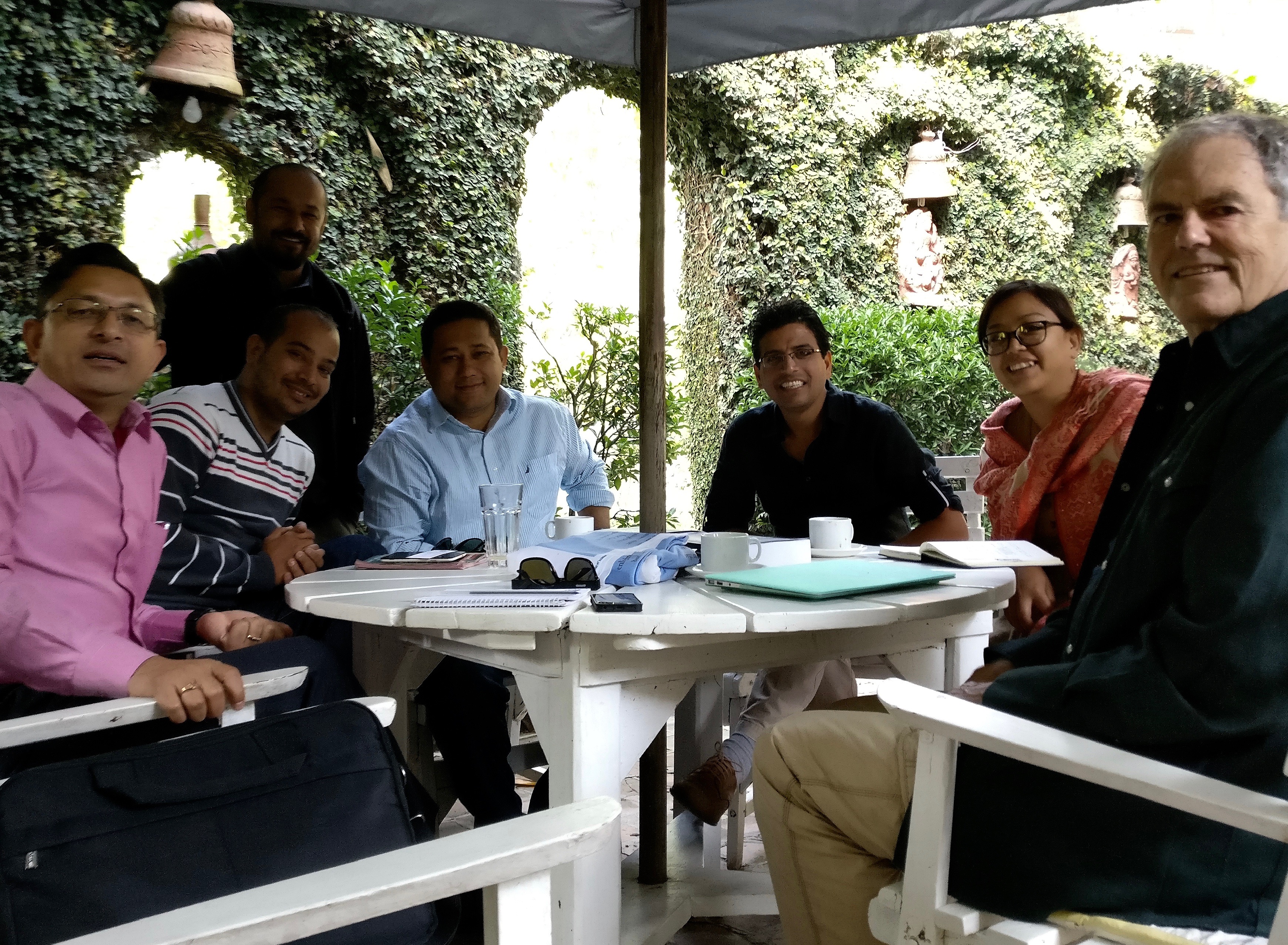
Inaugural meeting at Hotel Vajra, Kathmandu


The list of remarkable things about Nepal is remarkably long.

You could start with the physical: It has 8 of the 10 highest mountains in the world with elevations ranging from 66 meters to 8,848 meters above sea level. It is a biodiversity hotspot deriving from the multiple ecoregions–arctic to tropical, including mountains, hills, and savannas. There is a corresponding diversity of flora and fauna, with gorgeous butterflies and birds. There are many cultural groups and over 125 languages spoken. The architecture, the food, the music, the arts, the history, the religions, and more are fascinating. The traffic in Kathmandu is a story in itself.

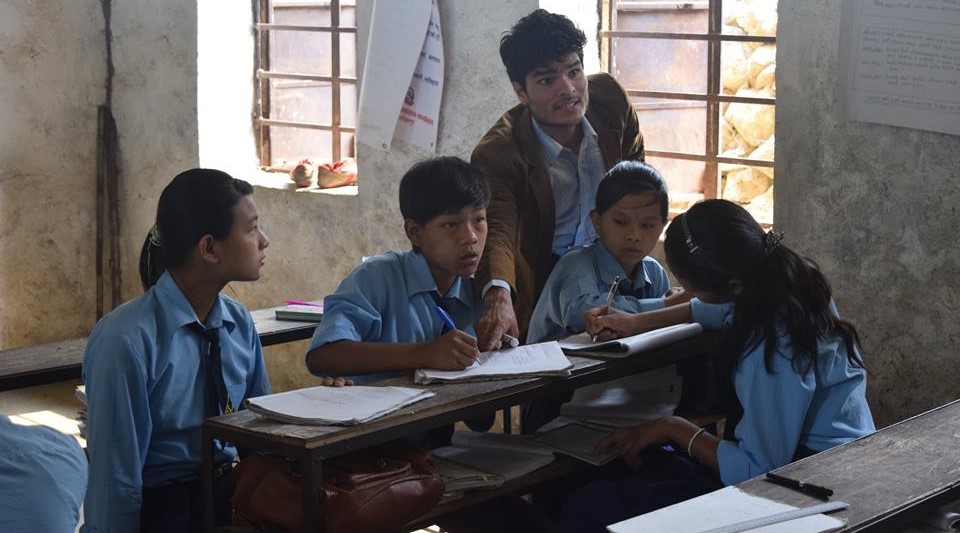
Teach for Nepal, from the website

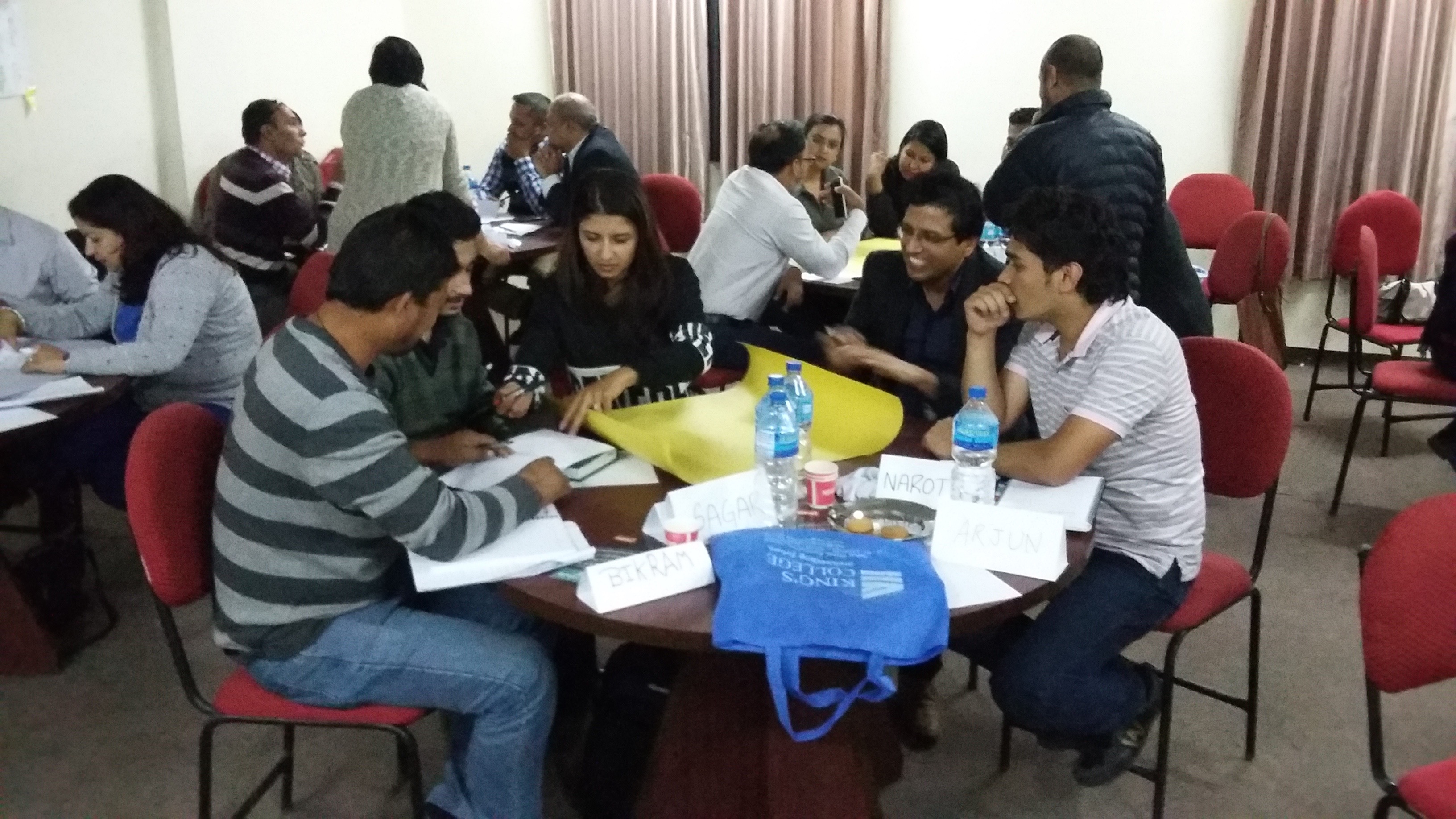
However, I experienced something perhaps even more remarkable. I was fortunate to be included in a group of young Nepalis who hope to build a movement to make education in Nepal more progressive, specifically to make it more relevant to people’s lives, more connected to community, and more supportive of inquiry that leads to sustained learning and creativity.

The group has the tentative name of Progressive Educators of Nepal Network (PENN). We met last Tuesday for early morning breakfast at Hotel Vajra in Kathmandu.

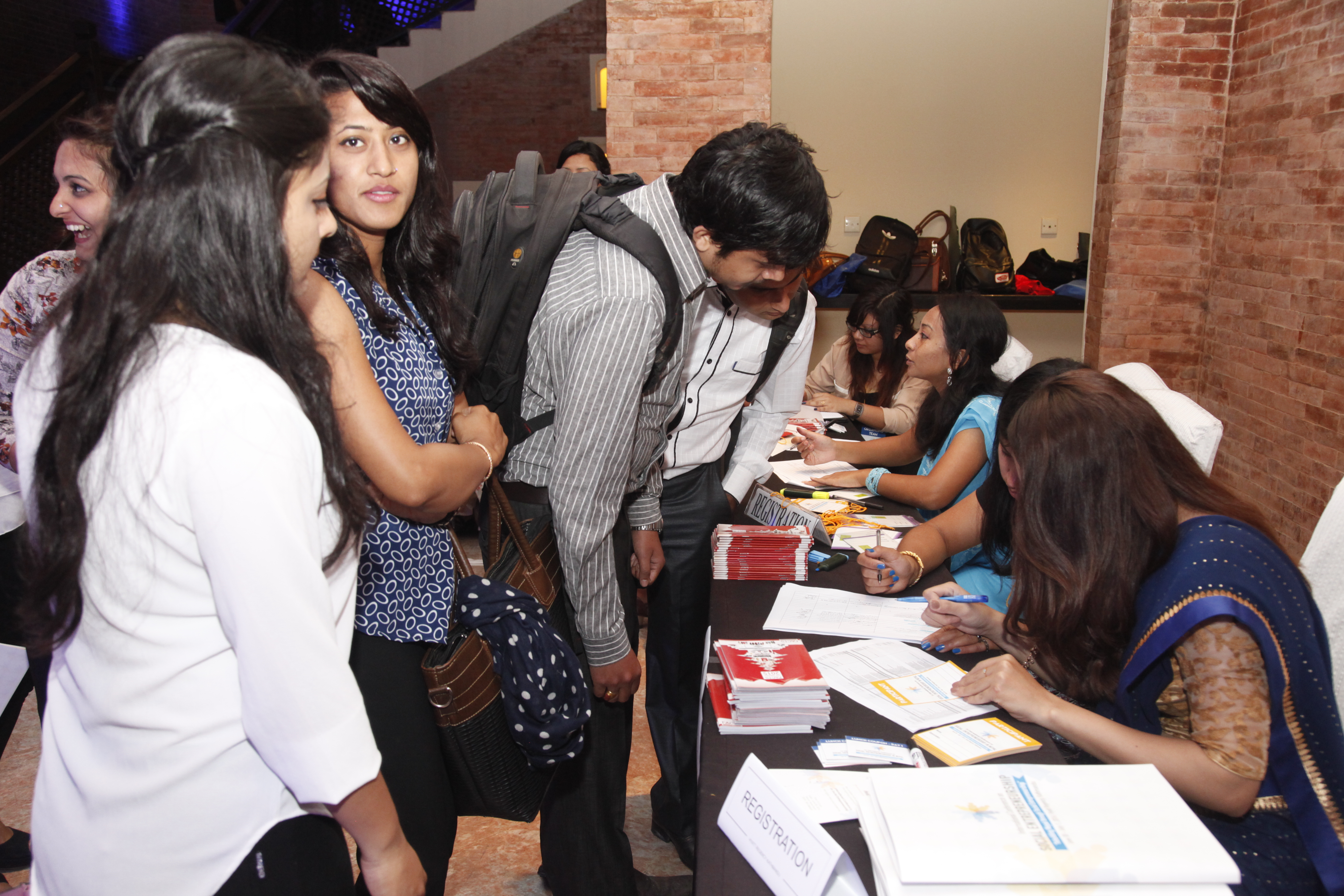
King;s College events
King’s College events

Those present represented four organizations. Shisir Khanal and Swastika Shrestha came from Teach for Nepal. Like Teach for America and similar organizations, TFN engages university graduates and young professionals who are committed to reduce education inequality. They emphasize community-based education, teaching in rural, public schools. Fellows work for two years, typically living in a community and staying in a home there.

Children as innovators
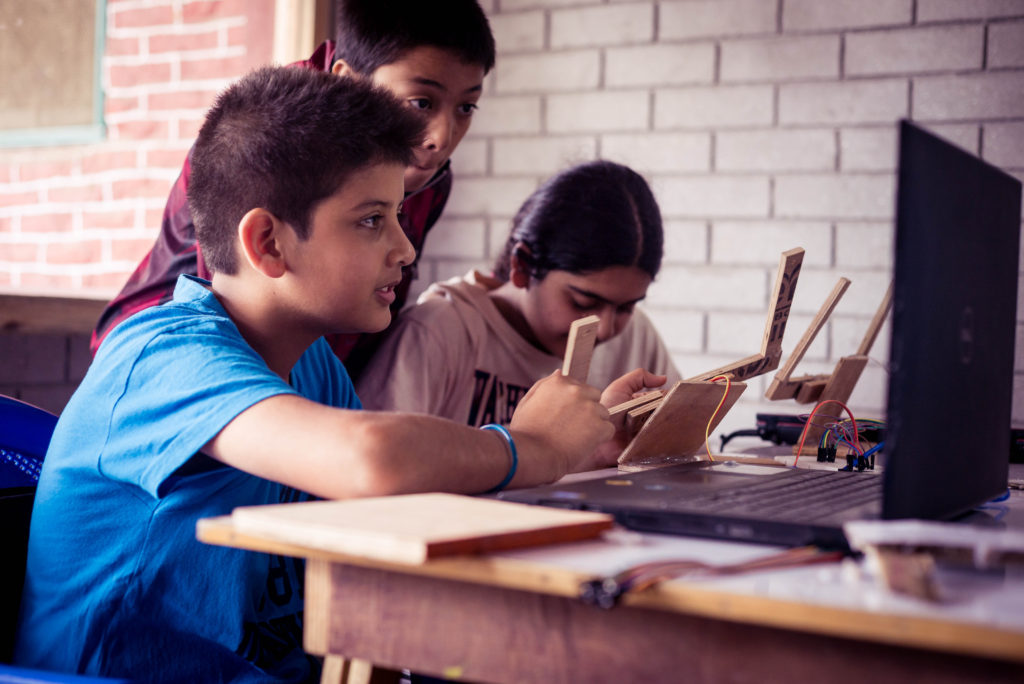
Children as innovators at Karkhana

Umes Shrestha and Narottam Aryal came from King’s College, a new college whose objective is making world-class education available to Nepali youths at home at an affordable cost. King’s College seeks to make its teaching more relevant for students and more inquiry-based.

Karkhana, meaning “factory,” is a company emphasizing experimentation, collaboration, and play for both makers and teachers. It started as a Saturday morning hacker hang-out and evolved into an innovation focused company that combines education and design of new products. See for example, the recent Kathmandu Mini Maker Faire. Pauvita Gautram represented Karkhana and its inquiry-based learning approach.

KLL mapping as service learning

Kathmandu Living Labs (KLL) is a not-for-profit civic technology company. It has been mapping all the educational institutions, health facilities, road networks, tangled mesh of gallies, religious sites and other geographic features of Kathmandu Valley using OpenStreetMap. Secondary and college-level students participate through mapping workshops. Nama Budhathoki represented KLL and its effort to extend youth mapping work to education for full civic engagement. See KLL goal statement.

In November, this network of people, organizations, and interests will host a month long project to foster the development of educators who can become leaders in community–based education. I’ll lead initial workshops on progressive education, inquiry-based learning, and community inquiry. We’ll also travel to village sites to explore community-based education, then bring those experiences back to Kathmandu for a national meeting.

The work of this group can be important for Nepal, while also serving as a model for others. More to come on this exciting project.

Time travel in west Texas

p1080726

Sunrise out of the cabin

Ever since reading The Time Machine as a teenager, I, like most people, have wondered about time travel. And despite annoying naysaying from logicians and physicists, it still seems like an intriguing idea.

Wolf spider

Wolf spider

Susan and I just spent a week in far west Texas, where we experienced something like time travel. We stayed in a cabin in a caldera near Fort Davis. Other than a barbed wire fence, a single electric line, and a narrow, rutted dirt road there were no signs of human habitation––no other buildings, no cell service, no flights overhead.

An astute rancher might have pointed out that the male cattle were steers, not bulls, and that the cattle and many turkeys around were probably being raised for market. Closer inspection would reveal that there were some planted trees, both for shade and for pecans, but on the whole the impression was of desert isolation.

In this land the people are hard to find, but we could see yucca, sotol, ocotillo, prickly pear, sagebrush, mesquite, live oak, and uncountable wildflowers. We saw buzzards, mockingbirds, huge spiders, whitetail and mule deer. These living friends were framed by gorgeous sunrises and sunsets, and unbelievable cloud formations.

(Reconstructed) Fort Davis from 1854

1854 Fort Davis (reconstructed)

This all made me think of my early days in Fort Worth. We lived then in the new suburbs on the edge of ranchland. In our childhood explorations we could find tarantulas and horned toads, tumbleweeds and cockleburs, scorpions and butterflies. The land seemed to stretch forever into remoteness and romance. When we looked up we could see the Milky Way and thousands of stars.

Fort Davis felt like that Fort Worth of long ago. The contentious Presidential race was irrelevant. The old cashier at the local market wanted to share interesting stories rather than to ring up grocery items. The buildings and houses looked like stage props for an old Western, until you realized that they were still in use, probably by the same family that settled here a century or two ago.

Rhyolite porphyry in fantastic shapes from volcanoes 35 million years ago

Rhyolite porphyry in fantastic shapes from volcanoes 35 million years ago

Fort Davis itself lies at the base of a rhyolite cliff, the south side of the caldera, or box canyon, that held our cabin. With just a few steps we could reach the path to climb the cliff shown above. Without realizing it, we zoomed even further back in time, to an era of intense volcanic activity, which created the Davis Mountains. The rhyolite columns, tuff and pumice, volcanic peaks and domes, took us entirely away from the human world.

The Hobby-Eberly Telescope at the UT McDonald Observatory

The Hobby-Eberly Telescope at the UT McDonald Observatory (from mcdonaldobservatory.org)

But not long after that we learned what time travel could really be. We went to the nearby University of Texas McDonald Observatory, which takes advantage of the clear mountain air.

Among many projects at McDonald is the Hobby-Eberly Telescope Dark Energy Experiment (HETDEX). This seeks to uncover the secrets of dark energy, using the large Hobby-Eberly Telescope and to survey the sky 10x faster than other facilities can do. It will eventually create the largest map of the Universe ever, with over a million galaxies. In doing so, HETDEX will look back in time 10 billion years.

If there is anything more amazing than the mind-stretching that Fort Davis does, it is that the area is so little visited. In addition to the sites mentioned above, there is a state park with numerous hiking trails, the Chihuahuan Desert Nature Center and Botanical Gardens, interesting towns such as Alpine and Marfa, and the world’s largest spring-fed swimming pool, under the trees at Balmorhea State Park, which takes one back to the wonderful CCC projects of the 1930s.


A Day of Languages

From the European Day of Languages website

From the European Day of Languages website

Today is the European Day of Languages. It was proclaimed by the Council of Europe at the end of the European Year of Languages and has been celebrated ever since (2001).

There are about 225 languages indigenous to Europe. However, nearly half of EU citizens do not speak a language other than their mother tongue (EU, 2006). With a growing population of immigrants and refugees, European cities have become even more multilingual. For example, in London about 300 languages are spoken.

The European Union has now set a target for children to learn at least two foreign languages from an early age, both to enhance intercultural understanding and to improve the European economy.

The European Day of Languages

In that context, the aim of the European Day of Languages is to encourage language learning, specifically, to

  • highlight the importance of language learning and diversify the range of languages learned,
  • promote the rich linguistic and cultural diversity of Europe,
  • encourage lifelong language learning in and out of school.

People are encouraged to study a new language, or to take special pride in their existing language skills. There is also emphasis on learning a language other than English. Events are organized for children, on TV and radio programs, and in language classes and conferences.

A Day of Languages for the US?

The US has a linguistic diversity similar to Europe’s. It’s not a trivial task to count how many languages are spoken in any region, but it’s clear that there are well over 300 languages spoken in the US (Ryan, 2013), including at least 134 indigenous languages and many more spoken by more recent immigrants, such as the English.

Shouldn’t the US, or perhaps, North America, also have a Day of Languages? As in Europe, it would be good for the economy. It could help remind us all of the wonderful resource in our rich linguistic and cultural diversity. And, most importantly, it might also help us be less prone to lump people in categories of “the other.”

I have to add that it would be nice to have September 26 as a national holiday.

References

European Union (2006, February). Europeans and their Languages Special Eurobarometer 243.

Ryan, Camille (2013, August). Language use in the United States: 2011. American Community Survey Report.

Coast Sweep, Provincetown

Each Fall, nearly a million people join together for the International Coastal Cleanup. This is a worldwide, collective effort, which is simultaneously a depressing reminder of what we’re doing to our planet and an inspiration  suggesting that people can change. More than 18 million pounds of trash were collected by nearly 800,000 volunteers in 2015. This is about 0.1% of what’s added each year to the oceans.

In Massachusetts, the cleanup is called Coast Sweep.  Yesterday we joined a group from the Center for Coastal Studies. CCS does many things, but is most famous for having freed more than 200 large whales and other marine animals from life threatening entanglements with fishnets, lobster lines, and other human made dangers.

Long Point lighthouse, with Hindu boat in the background

Long Point lighthouse, with Hindu boat in the background

We were enticed in part by the ferry ride to Provincetown Long Point provided by Flyer’s and a lunch afterwards at Napi’s Restaurant. We had the gift of a beautiful morning, doing light work with interesting people amidst stunning scenery.

In our orientation, we learned what we should pick up and how to record it. A handy poster made by an Americorps worker helped with the relevant categories (including netting, lobster trap vents, rope over/less than a meter, shotgun shells, plastic fabric, tampon applicators, plastic bags, balloon ribbons, styrofoam, and mystery objects).

Each group had a recorder and one or more 19-gallon Ikea bags for the debris. Those bags are made of woven polypropylene, a plastic, but at least they’re reusable. In addition to items in the big categories, we found a toilet seat, copper plating, still-full mustard containers, fishing lures, and more.

For Long Point, these items mostly wash in with the tide, and concentrate in the wrack lines. Much of the plastic will wash back out to sea with the tides and be eaten by fish (and subsequently by people), turtles, marine mammals, and other creatures, unless we can remove it first.

October 9-16 will be Wellfleet Ocean Week, with events at the Library, at Oysterfest, and other venues. There will be a Coast Sweep on October 10 at Mayo Beach in Wellfleet, coordinated by the Wellfleet Conservation Trust.

Ocean Week will introduce the founders of 5 Gyres,, who helped bring attention to the problem of microbeads. These are tiny beads of plastic that are put into toothpastes, facial scrubs, and other products at a rate of 8 billion per day. Last year, Congress passed and the President signed a bill to ban these pollutants. It’s a rare instance in recent years of positive new action by our government and one in which the US is a leader.

Coast Sweep doesn’t even pretend to dent the world’s plastic pollution, although it does help to make specific beaches on lakes, rivers, and oceans more pleasant. The hope is that it brings awareness of what we collectively are doing to our planet and perhaps lead to changes in our addiction to plastics.

The dump lives on

My friend and former student Beena alerted me to a wonderful blog post by Nicholas Delbanco. It’s a celebration of Wellfleet’s Transfer Center from U-M’s alumni publication Michigan Today: The order of ordure.

Driving down the hill away from the landfill, windows shut against the stench of it, I congratulate myself on having completed my task. I am, after all, helping to organize the planet. “The order of ordure” — I try out a phrase — “the composition of compost, the transfer of trash, the way of waste.” There’s something deeply gratifying about such distribution. Every item has its place and all can be redeemed.

This is absurd, of course. We make small difference here. Rumor has it that the 16-wheelers hauling garbage lump everything together after our dutiful sorting. And day by week by month the waste accumulates again. But as the air clears and I open the car windows, I’m seized by the conviction that what I’ve done is similar to what I also do each day: distribute words on a page.

2016-08-22 10.57.53Delbanco writes as a summer resident. As a full-time one, I can confirm what he says, and perhaps add a little texture. During the winter, the Transfer Center remains as the top attraction in town, the place where you see your friends and catch up on gossip. But it loses the bustle that Delbanco sees and definitely the stench.

By the way, I don’t experience that smell as a uniform aroma, but as one that guides you through the site, noticeable at the bottle and cans area, a little stronger near the discarded sea shells and fishing gear, not so noticeable at the metal recycling or the mulch pile.

Delbanco also emphasizes the dropping off aspect. That’s of course the reason for the very existence of the Center. But he may not appreciate how much some clients (the “cadre of those who pick over what others discard”) find to remove from the site. Only some of those do it for cash.

We go to the dump (aka2016-08-22 11.01.46 Wellfleet Transfer Center and Recycling Station) with our Forester filled to its gills, but often return with just as much stuff. That leaves me with mixed feelings. On the one hand there’s a sense of the great find, such as the canoe we retrieved, which only leaks a little. We typically come home with eight buckets of compost or mulch for the garden. The swap shop often has the perfect item that even Amazon can’t find.

On the other hand, there’s a feeling of complete failure to progress. We use up Energy to make the exchange, but the Conservation of Mass is maintained.

12291159-the-enormous-room-now-available-on-web-bookscomDelbanco suggests that transferring and recycling trash is not so different from doing the same with words. He mentions E. E. Cummings in that regard, but may not realize a connection to Wellfleet.

William Slater Brown was a friend of Cummings, best known as the character “B.” in Cummings’s  The Enormous Room. That book details their temporary imprisonment in France during World War I. B. was arrested by French authorities as a result of anti-war sentiments he had expressed in some letters, and Cummings stood by him. Today, Brown’s daughter Rachel is a prominent photographer living in Wellfleet.

More than book sales

60850a9557833ee696b66f4da4915404_f296

More Than Words staff (from the MTW website)

On Friday, staff from More Than Words (MTW) worked with members of the Friends of Wellfleet Library (FWL) to load donated books for sale in one of two Boston-area stores and online. The books filled a medium-sized truck and weighed 2.75 tons.

Loading books

That’s a lot of books! Even so, the MTW truck will need to return for more books in a couple of weeks. Once, they managed to carry twice as much, but that pushes the safety limits on a medium-sized truck.

Backing the MTW truck up to the shed

Backing the MTW truck up to the shed

On this day, a couple of MTW workers joined with Friends volunteers loading books by passing them in a chain from one hand to another.

I thought the names would be easy for me since I was positioned with two Stephen’s before me and one after, but I found that it caused confusion when I’d call out, “careful, Stephen, that box is breaking!”

Book donations to the Library

These books and others were donated by people who care about the Wellfleet Library. Occasionally a book may fit Library collection needs, but generally the idea is  that they will be sold during the two summer book sales or from a sale rack in the Library. Some of the children’s books are given to new parents or to families involved in a summer reading program.

Filling gaylords with books, 500 pounds each

Filling gaylords with books, 500 pounds each

The sales have been extremely successful, raising thousands of dollars for Library needs. Receipts from the sales supplement the Library budget, making possible museum passes, children’s programs, online tools such as Freegal and Zinnio, special equipment purchase, computer user support, special books and periodicals, and audio visual materials for documenting the life and times of the community.

But there are always some books that don’t sell. In the past, many of these met their end in the recycle bin. But for the last three years, MTW and FWL have partnered to give the books an extended life, one that amplifies the reach and benefits of the Library.

More Than Words

The partnership helps More Than Words (MTW), a significant, nonprofit social enterprise in the Boston area. MTW “empowers youth who are in the foster care system, court involved, homeless, or out of school to take charge of their lives by taking charge of a business.” Youth in the program have managed an online bookselling operation since 2004. They are challenged with authentic and increasing responsibilities in a business setting, along with high expectations and a culture of support.

MTW opened a lively bookstore on Moody St in Waltham in 2005 and added a coffee bar in 2008. The model was replicated in the South End of Boston in 2011, doubling the impact of the program. Even so, the Wellfleet donation is about all that MTW can handle from Cape Cod.

Serving multiple needs

Helpers of all ages

Helpers of all ages

I’ve always felt that the summer books sales serve multiple worthy goals: raising money for Library collections and programs, making low-cost books available to those who need them, bringing community together through a shared project, informing people about the Library, and preserving a literate tradition. Even a book that doesn’t sell helps with some of those purposes. But I was sad to think that even one book might end up as recycled paper.

Through More Than Words, many books continue their good work. They become available to a larger audience, both in the metropolis of Boston and through the worldwide online market. More importantly, the book sales offer young people an opportunity to learn business skills, to further their education, and to develop as individuals. Now, although I still hope that FWL racks up good numbers in the summer sales, I’m glad to see that many of the books continue to serve additional purposes.

Double hernia repair

Enjoying Northern Lights (about a true-life, foolhardy adventure) prior to surgery

Enjoying Northern Lights (about a true-life, foolhardy adventure) prior to surgery

This post is just a place to record some notes (newest first) regarding medications, symptoms and such related to my recent surgery, which my drug-addled brain might easily forget.

It has more detail than anyone wants, but I thought it might be useful for the post-op visit, for immediate family, and for me to monitor what I hope will be progress. The bottom line is that so far it’s going better than I expected.

July 4 (day 4)

Some dizziness and fatigue. Bruises showing more.

Exercise today: 12K steps, 34 floors

July 3 (day 3)

Feeling much better–lost most of fluid buildup, defecated, now less than pre-surgery weight, incisions healing well.

Considering the Wellfleet 5 mile Road Race, but wiser heads may prevail.

Exercise today: 9K steps, 31 floors

July 2 (day 2)

Removed bandages and showered this morning. It’s still sore at the incision sites and internally, where I’m assuming the mesh is, but mostly just when I bend. Still about 5.5 pounds over pre-surgery weight.

Having some side effects from the oxycodone (shaking, constipation); stopping that now.

Exercise today: 8K steps, 23 floors

July 1 (1st full day after surgery)

The pain still seems minor, more like high discomfort. So, I’m taking just one oxycodone at a time, roughly every four hours.

It hurts a bit more after a longish walk. The biggest problem is bending over, say, to tie shoes. The admonition to avoid lifting heavy objects is unnecessary, since there’s no way I’d attempt such a foolish thing.

The minor pains from last night (urination, throat, incision) seem mostly gone.

People who make standup desks ought to add serving hernia patients to their list of advantages.

Exercise today: 8K steps, 21 floors

CCH-banner

Cape Cod Hospital in Hyannis

June 30 (day of surgery)

I had bilateral laparoscopic inguinal hernia repair at 1:30 pm on June 30, 2016. Dr. Carlos Fonts was the surgeon. It was done in the O’Keeffe Surgical Pavilion at Cape Cod Hospital, which conveniently opened the year we moved to Cape Cod.

I have to add that I feel very fortunate with the surgeon and all the staff in his office at CC Hospital. They were very professional and courteous. When I said that all I wanted to drink after surgery was some water, a nurse from Morocco made me a “special” cocktail of fruit juices, which was delicious.

I recovered fine from surgery around 4 pm, without the embarrassing regurgitation I had after a previous surgery. My main complaint is a sore throat from the breathing tube. Later I discover some bleeding and minor pain around the naval incision and stinging urination.

There is also bloating. When I weighed myself the morning of surgery I was 217.7. The night after, having eaten modestly, I was 227.7 (a 10 pound increase).

Around 11 pm, I have my first sensation of pain at the sight of the repair, internally. Overall the pain is minor, so I took only two of the oxycodones today (6 pm, 11:30 pm).

It seems OK to walk, but difficult to bend over.

Exercise today: 1 K steps, 7 floors

The Children’s Room

Cape Cod Modern, by Peter McMahon & Christine Cipriani

Cape Cod Modern, by Peter McMahon & Christine Cipriani

Each age tries to form its own conception of the past. Each age writes the history of the past anew with reference to the conditions uppermost in its own time. –Frederick Jackson Turner, “The significance of history”, 1893

Tiny Wellfleet has been a significant home for histories of all stripes. These include psychohistory (Robert Jay Lifton, Erik Erikson, etc.), history employed to support social justice and civil rights (Howard Zinn, William McFeely, etc.), histories of colonial settlements, pirates, and whaling, and accounts of the daily lives of artists, shellfishers, and innumerable interesting characters. Wellfleet historical writing has for a long time been a vital participant in the story of Wellfleet, not simply a spectator.

A recent example is the winner of the 2015 Historic New England Book Prize, co-authored by Peter McMahon and Christine Cipriani: Cape Cod Modern: Mid-century Architecture and Community on the Outer Cape.The book uses architectural and personal photos, and interviews with designers, their families, and their clients to document the experimental homes designed by a cosmopolitan group of designers who settled in Wellfleet and Truro in the mid-20th century. The book has stimulated renewed interest in Bauhaus, in the so-called modernist houses, and in the community around them.

Preparatory drawing for playroom mural in Kepes House, Cambridge, Massachusetts, by Julia Kepes

Preparatory drawing for playroom mural in Kepes House, Cambridge, Massachusetts, by Julia Kepes

A complementary project can now be seen with the summer opening of the Wellfleet Historical Society and Museum today. The Children’s Room, Art and Design of Wellfleet’s Mid-century Children’s Books is a collaboration of WHSM with the Cape Cod Modern House Trust and the Wellfleet Public Library. Here’s a description from the WHSM site:

During the 1930s Wellfleet’s population was just barely 800 people, and yet over 1,000 books have been published by, or about, the town’s mid-century denizens, around 200 being inventive books for children. Many of these books were designed and illustrated by some of the most acclaimed graphic artists of the era. This exhibit includes a selection of books, artifacts and original artwork.

Dwellers of the Tundra, by Aylette Jenness & Jonathan Jenness

Dwellers of the Tundra, by Aylette Jenness & Jonathan Jenness

Many of the artists and authors of the children’s books were connected with Bauhaus, and its emphasis on learning, science, experimentalism, and progressive politics. That can be seen in the wide variety of nature topics and in sympathetic depictions of diverse cultures.

As with Bauhaus, the exhibit invites participation. Visitors can observe blown-up versions of artwork from the children’s books, and peruse the books themselves. There are specially designed benches on which to sit or to spread out the objects. There are also crayons and paper to create your own artworks.

I like the fact that the museum is opening just after the summer solstice (a special one at that, coinciding with a strawberry moon). Bauhaus was very aware of new technologies, materials, and scientific discoveries. A love of nature and its meanings for humans was evident throughout its history. Wellfleetian Ati Gropius, who was the daughter of founder Walter, would gather people in late June and ask “What does the summer solstice mean to you?” Several of the Bauhaus-connected houses took advantage of solar or lunar movements in their design. So, it’s appropriate that this wonderful new exhibit welcome the summer season.

Fidelia, by Ruth Adams & Ati Forberg (Gropius)

Fidelia, by Ruth Adams & Ati Forberg (Gropius)

The new Children’s Room is filled with wonderful individual items. There are Caldecott award winners and artworks that are surprisingly fresh and striking a half century or more after they were created. But the exhibit as a whole brings the items together in a provocative way, adding new meaning to the specific items and to our understanding of that mid-century era.

As I think about how our history-making enriches life in Wellfleet, I’m reminded of William James’s comment about teaching:

You can give humanistic value to almost anything by teaching it historically. Geology, economics, mechanics, are humanities when taught with reference to the successive achievements of the geniuses to which these sciences owe their being. Not taught thus literature remains grammar, art a catalogue, history a list of dates, and natural science a sheet of formulas and weights and measures. –William James, “The social value of the college-bred,” 1907