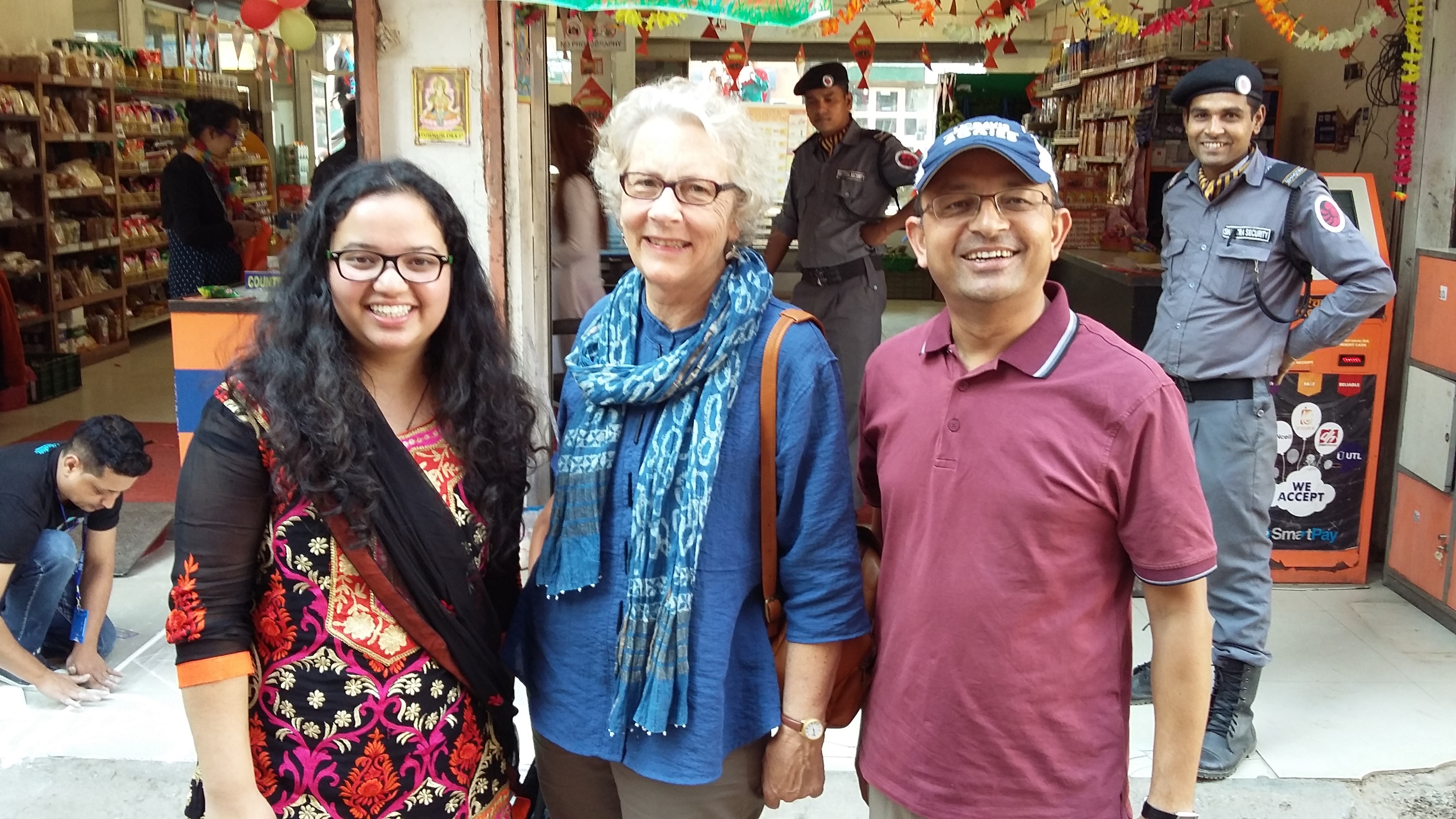
Jasna, Susan, and Nama outside a Chinese restaurant in Lazimpat, Kathmandu

Jasna, Susan, and Nama outside a Chinese restaurant in Lazimpat, Kathmandu

Imja Tsho
Today’s BBC News reports on an important development in Nepal, one which should be a warning to us all (Nepal drains dangerous Everest lake).
Nepal’s army has just completed lowering Lake Imja by 10 ft. This is because it was in danger of flooding downstream settlements with over 50,000 people.
Lake Imja, near Mount Everest (Sagarmatha) at 16,400 ft altitude, is one of thousands of such glacial lakes in the Himalayas. Many of the lakes are filling fast because of accelerated melting of glaciers due to rising temperatures.
The Himalaya region has been described as the third pole of the earth. It is melting, just as the Arctic and Antarctic are.
Lake Imja is a good example of that melting. It is a new lake, composed of glacial meltwater blocked by a terminal moraine. In 1962, it was 7.5 acres, and is now over 260.
I can only guess at the enormous cost of the six-month project, not just in dollars, but in terms of using up limited Nepali resources. It has been necessary to save lives, but sherpas in the region say there are many more lakes that endanger communities.
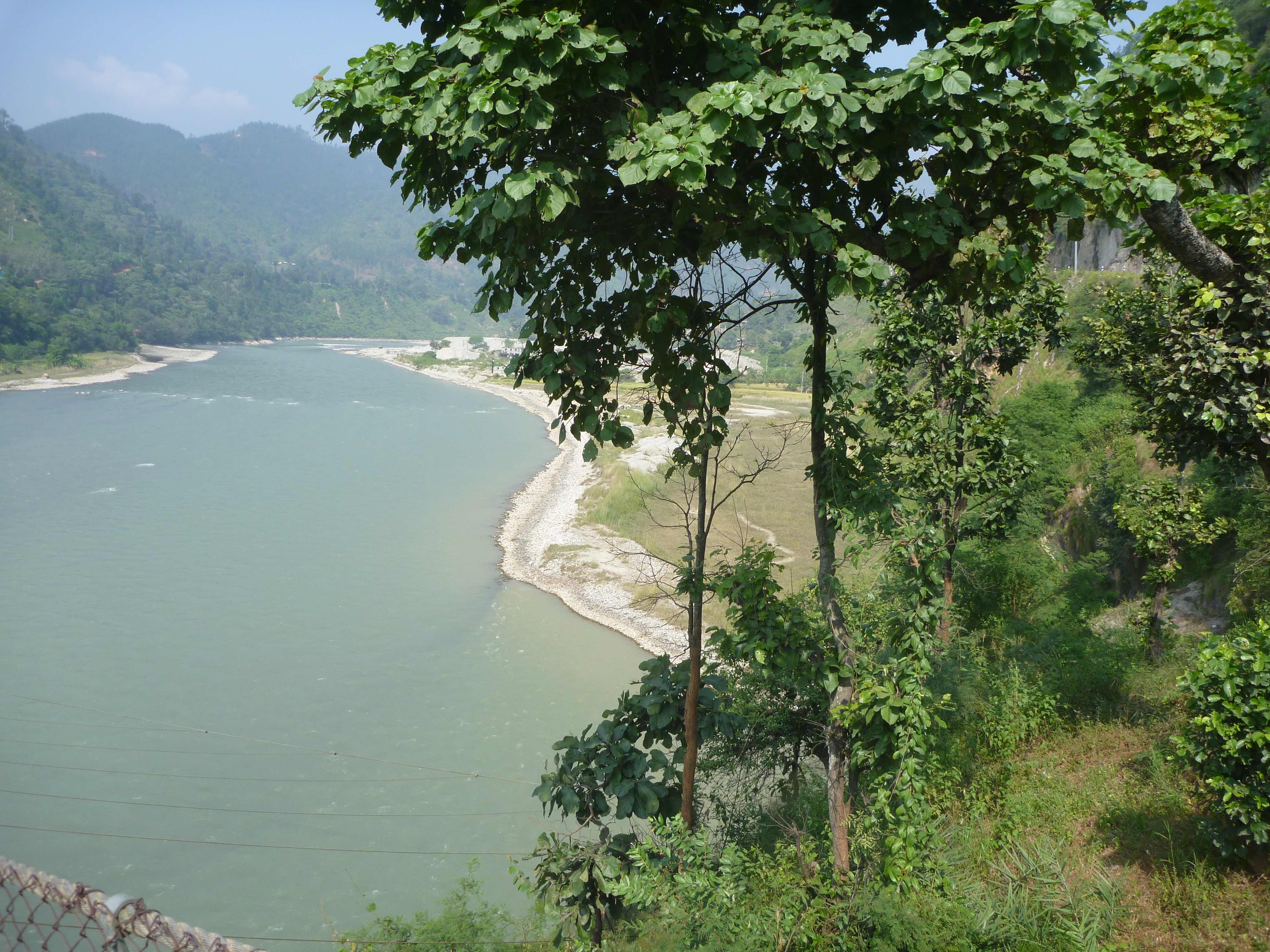
 When Shiva had been walking for a long time in the mountains north of the Kathmandu Valley, he grew thirsty, but there was no water to be found. Angry at that, he drove his trishula, or trident, into the ground to create three springs, which in turn created a river.
 Some say that the Trishuli begins with snow melt in the Langtang Himal. Other accounts, such as Wikipedia, say that the Trishuli River arises in Tibet, where it’s called Kirong Tsangpo.
In any case, Shiva’s river, the Trishuli, later joins the Bhote Kohsi that flows from Tibet and becomes a spectacular mountain river, with exciting rapids and impressive gorges. It is no surprise that it’s Nepal’s most popular rafting river. It looks like large parts of it could be canoed as well.
The Trishuli flows through mostly Buddhist regions then into Hindu areas. It is one of the major tributaries of the Narayani River, which eventually goes into India to join the Ganges.
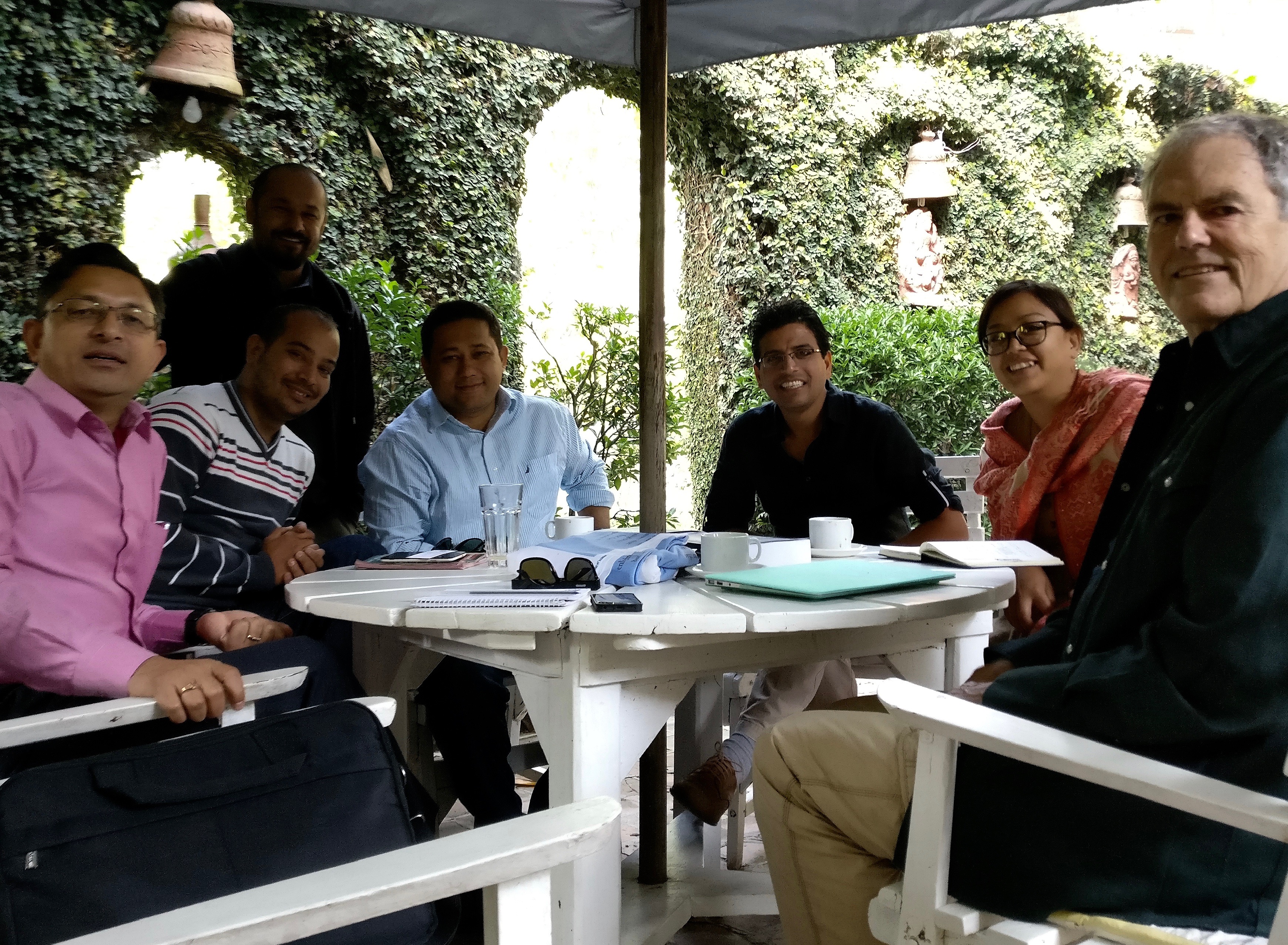
 At this moment, I’m sitting on a veranda looking out at a series of hills that we would call mountains in New England. The view is partially obscured by a profusion of bougainvillea, poinsettia trees, palms, and many tropical plants I can’t identify, Workers at this guest house where we are staying have to keep cutting back the gorgeous greenery that people in Massachusetts would struggle to nurture as tiny house plants.
Yes, the economic conditions are bad, the roads are full of surprises, the electricity is whimsical, and the effects of the 2015 quake are still felt, but all the people we meet are warm and generous. They use their adequate English to help me learn a few words of Nepali.
 Locals directed us to a walk one way to see the hilltop village of Nuwakot with its durbar, or palace, square, now being restored; another to make a circuit of the hill behind with spectacular views; another to explore the farm with its geese, turkeys, donkeys, goats, and naturally organic vegetables.
But this evening seems like a time to stay on the veranda and take in the mountain air and the beautiful sunset silhouetting the hills.


The list of remarkable things about Nepal is remarkably long.
You could start with the physical: It has 8 of the 10 highest mountains in the world with elevations ranging from 66 meters to 8,848 meters above sea level. It is a biodiversity hotspot deriving from the multiple ecoregions–arctic to tropical, including mountains, hills, and savannas. There is a corresponding diversity of flora and fauna, with gorgeous butterflies and birds. There are many cultural groups and over 125 languages spoken. The architecture, the food, the music, the arts, the history, the religions, and more are fascinating. The traffic in Kathmandu is a story in itself.
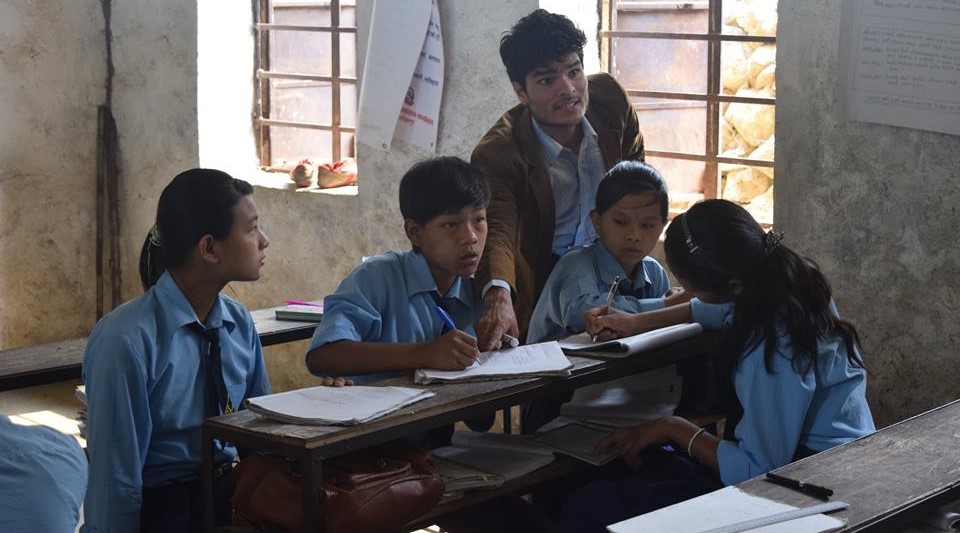
However, I experienced something perhaps even more remarkable. I was fortunate to be included in a group of young Nepalis who hope to build a movement to make education in Nepal more progressive, specifically to make it more relevant to people’s lives, more connected to community, and more supportive of inquiry that leads to sustained learning and creativity.
The group has the tentative name of Progressive Educators of Nepal Network (PENN). We met last Tuesday for early morning breakfast at Hotel Vajra in Kathmandu.
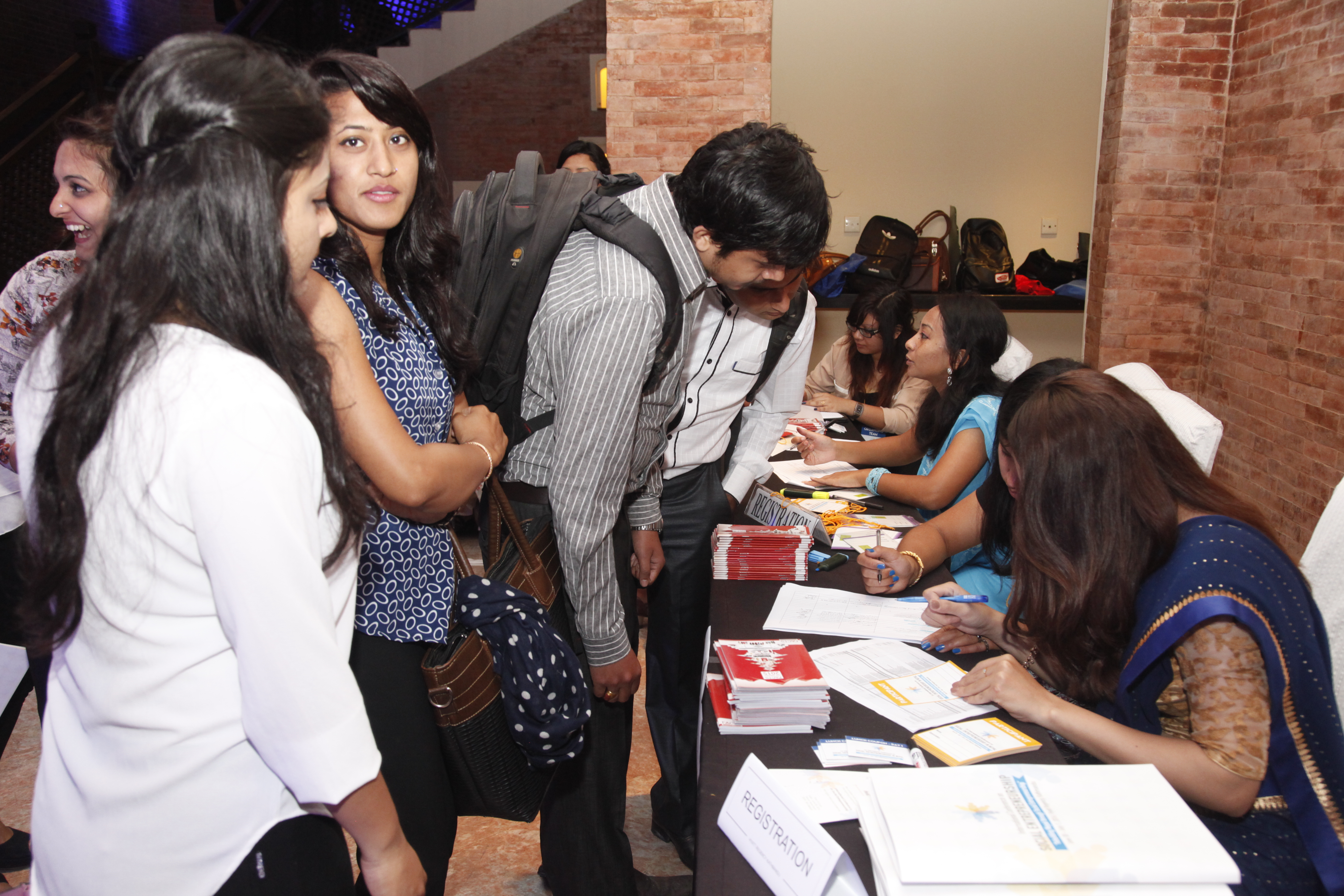
Those present represented four organizations. Shisir Khanal and Swastika Shrestha came from Teach for Nepal. Like Teach for America and similar organizations, TFN engages university graduates and young professionals who are committed to reduce education inequality. They emphasize community-based education, teaching in rural, public schools. Fellows work for two years, typically living in a community and staying in a home there.
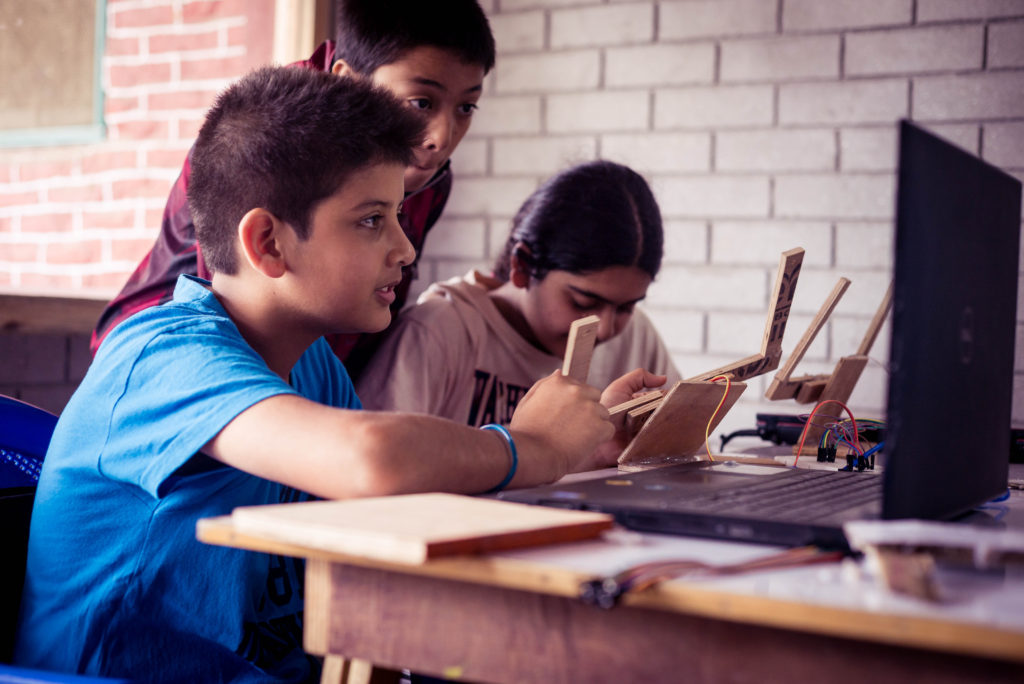
Umes Shrestha and Narottam Aryal came from King’s College, a new college whose objective is making world-class education available to Nepali youths at home at an affordable cost. King’s College seeks to make its teaching more relevant for students and more inquiry-based.
Karkhana, meaning “factory,” is a company emphasizing experimentation, collaboration, and play for both makers and teachers. It started as a Saturday morning hacker hang-out and evolved into an innovation focused company that combines education and design of new products. See for example, the recent Kathmandu Mini Maker Faire. Pauvita Gautram represented Karkhana and its inquiry-based learning approach.

Kathmandu Living Labs (KLL) is a not-for-profit civic technology company. It has been mapping all the educational institutions, health facilities, road networks, tangled mesh of gallies, religious sites and other geographic features of Kathmandu Valley using OpenStreetMap. Secondary and college-level students participate through mapping workshops. Nama Budhathoki represented KLL and its effort to extend youth mapping work to education for full civic engagement. See KLL goal statement.
In November, this network of people, organizations, and interests will host a month long project to foster the development of educators who can become leaders in community–based education. I’ll lead initial workshops on progressive education, inquiry-based learning, and community inquiry. We’ll also travel to village sites to explore community-based education, then bring those experiences back to Kathmandu for a national meeting.
The work of this group can be important for Nepal, while also serving as a model for others. More to come on this exciting project.
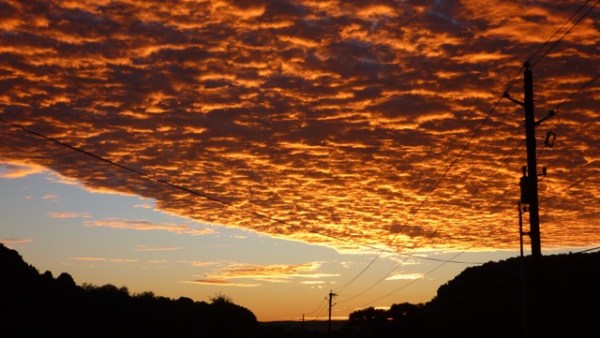
Sunrise out of the cabin
Ever since reading The Time Machine as a teenager, I, like most people, have wondered about time travel. And despite annoying naysaying from logicians and physicists, it still seems like an intriguing idea.

Wolf spider
Susan and I just spent a week in far west Texas, where we experienced something like time travel. We stayed in a cabin in a caldera near Fort Davis. Other than a barbed wire fence, a single electric line, and a narrow, rutted dirt road there were no signs of human habitation––no other buildings, no cell service, no flights overhead.
An astute rancher might have pointed out that the male cattle were steers, not bulls, and that the cattle and many turkeys around were probably being raised for market. Closer inspection would reveal that there were some planted trees, both for shade and for pecans, but on the whole the impression was of desert isolation.
In this land the people are hard to find, but we could see yucca, sotol, ocotillo, prickly pear, sagebrush, mesquite, live oak, and uncountable wildflowers. We saw buzzards, mockingbirds, huge spiders, whitetail and mule deer. These living friends were framed by gorgeous sunrises and sunsets, and unbelievable cloud formations.

1854 Fort Davis (reconstructed)
This all made me think of my early days in Fort Worth. We lived then in the new suburbs on the edge of ranchland. In our childhood explorations we could find tarantulas and horned toads, tumbleweeds and cockleburs, scorpions and butterflies. The land seemed to stretch forever into remoteness and romance. When we looked up we could see the Milky Way and thousands of stars.
Fort Davis felt like that Fort Worth of long ago. The contentious Presidential race was irrelevant. The old cashier at the local market wanted to share interesting stories rather than to ring up grocery items. The buildings and houses looked like stage props for an old Western, until you realized that they were still in use, probably by the same family that settled here a century or two ago.
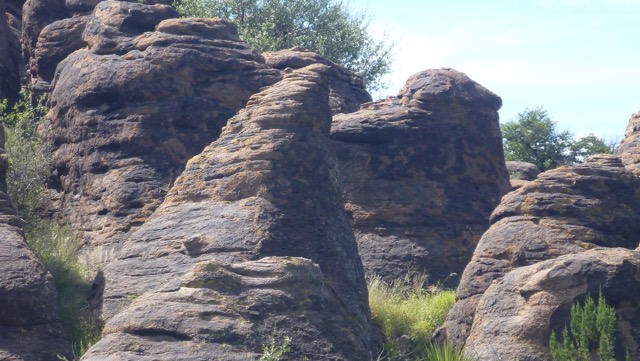
Rhyolite porphyry in fantastic shapes from volcanoes 35 million years ago
Fort Davis itself lies at the base of a rhyolite cliff, the south side of the caldera, or box canyon, that held our cabin. With just a few steps we could reach the path to climb the cliff shown above. Without realizing it, we zoomed even further back in time, to an era of intense volcanic activity, which created the Davis Mountains. The rhyolite columns, tuff and pumice, volcanic peaks and domes, took us entirely away from the human world.

The Hobby-Eberly Telescope at the UT McDonald Observatory (from mcdonaldobservatory.org)
But not long after that we learned what time travel could really be. We went to the nearby University of Texas McDonald Observatory, which takes advantage of the clear mountain air.
Among many projects at McDonald is the Hobby-Eberly Telescope Dark Energy Experiment (HETDEX). This seeks to uncover the secrets of dark energy, using the large Hobby-Eberly Telescope and to survey the sky 10x faster than other facilities can do. It will eventually create the largest map of the Universe ever, with over a million galaxies. In doing so, HETDEX will look back in time 10 billion years.
If there is anything more amazing than the mind-stretching that Fort Davis does, it is that the area is so little visited. In addition to the sites mentioned above, there is a state park with numerous hiking trails, the Chihuahuan Desert Nature Center and Botanical Gardens, interesting towns such as Alpine and Marfa, and the world’s largest spring-fed swimming pool, under the trees at Balmorhea State Park, which takes one back to the wonderful CCC projects of the 1930s.


 Chip's journey
