John Dewey in Turkey: Lessons for today

The Republic of Turkey was proclaimed on October 29, 1923. As its first President, Mustafa Kemal Atatürk (photo below) sought to establish the modern Turkey as a “vital, free, independent, and lay republic in full membership of the circle of civilized states.” He recognized the need for “public culture,” which would enable citizens to participate fully in public life, and saw the unification and modernization of education as the key. Accordingly, one of his first acts was to invite John Dewey, who arrived in Turkey just nine months after the proclamation.

In this endeavor, the ideas of Atatürk and Dewey were consonant. Dewey’s words above (“vital, free, …”) could have been written by Atatürk, just as Dewey might have talked about “public culture.” Both recognized the need to institute compulsory primary education for both girls and boys, to promote literacy, to establish libraries and translate foreign literature into Turkish, and to connect formal schooling, the workplace, and government.

Today is John Dewey’s 149th birthday. Back in 1924, he was nearing the age of 65, when many people think of retiring. But his three-month-long study in Turkey was an ambitious project. He addressed issues of the overall educational program, the organization of the Ministry of Public Instruction, the training and treatment of teachers, the school system itself, health and hygiene, and school discipline. Within those broad topics, he studied and wrote about orphanages, libraries, museums, playgrounds, finances and land grants for education, and what we might call service learning or public engagement today.

He laid out specific ideas, such as how students in a malarial region might locate the breeding grounds of mosquitoes and drain pools of water of cover them with oil. In addition to learning science they would improve community health and teach community members about disease and health. Workplaces should offer day care centers and job training for youth. Libraries were to be more than places to collect books, but active agents in the community promoting literacy and distributing books. In these ways, every institution in society would foster learning and be connected to actual community life. As Dewey (1983, p. 293) argued,

The great weakness of almost all schools, a weakness not confined in any sense to Turkey, is the separation of school studies from the actual life of children and the conditions and opportunities of the environment. The school comes to be isolated and what is done there does not seem to the pupils to have anything to do with the real life around them, but to form a separate and artificial world.

Atatürk saw the need to unify Turkey into a nation state, despite its great diversity. Dewey supported that but emphasized that unity cannot come through top-down enforcement of sameness (p. 281):

While Turkey needs unity in its educational system, it must be remembered that there is a great difference between unity and uniformity, and that a mechanical system of uniformity may be harmful to real unity. The central Ministry should stand for unity, but against uniformity and in favor of diversity. Only by diversification of materials can schools be adapted to local conditions and needs and the interest of different localities be enlisted. Unity is primarily an intellectual matter, rather than an administrative and clerical one. It is to be attained by so equipping and staffing the central Ministry of Public Instruction that it will be the inspiration and leader, rather than dictator, of education in Turkey.

This was realized in many ways. For example, the central ministry should require nature study, so that all children have the opportunity to learn about and from their natural environment, but it should insist upon diversity in the topics, materials, and methods. Those would be adapted to local conditions, so that those in a coastal village might study fish and fishing while those in an urban center or a cotton-raising area would study their own particular conditions.

Many of Dewey’s ideas were implemented and can be seen in Turkey today, as we come upon its 85th birthday next week. What’s even more striking to me is how relevant they are to the US today. Many of our problems can be traced to the “separation of school studies from the actual life of children and the conditions and opportunities of the environment,” but also to the separation of work from learning, of health from community, of libraries from literacy development, or of universities from the public. Dewey would be the first to argue that we need to re-create solutions in new contexts, but his report from long ago and far away still provides insights for a way forward today.

References

Ata, Bahri (2000). The influence of an American educator (John Dewey) on the Turkish educational system. Turkish Yearbook of International Relations (Milletlerarası Münasebetler Türk Yıllığı), 31. Ankara: Ankara Üniversitesi.

Bilgi, Sabiha, & Özsoy, Seckin (2005). John Dewey’s travelings into the project of Turkish modernity. In Thomas S. Popkewitz (ed.), Inventing the modern self and John Dewey: Modernities and the traveling of pragmatism in education (pp. 153-177). New York: Palgrave Macmillan.

Dewey, John (1983). Report and recommendations upon Turkish education. In Jo Ann Boydston (ed.), The Middle Works: Essays on Politics and Society, 1923-1924. Vol. 15 of Collected Works. Carbondale: Southern Illinois Press.

Wolf-Gazo, Ernest (1996). John Dewey in Turkey: An educational mission. Journal of American Studies of Turkey, 3, 15-42.
Nea, neo: losing planes and finding museums

I’m now completing a wonderful, two-week trip to Turkey and Cyprus. Unfortunately, the return journey isn’t uniformly wonderful.

I arrived in Athens, from Larnaca, Cyprus, following a drive from Limassol to Larnaca. I’d been up since 3 am and it was now 9 am.  I anticipated a 4-hour layover, with nothing much to report. But a delay on the Athens-Philadelphia segment turns that into a 10-hour layover, which causes me to miss the flight to Indianapolis. USAir has booked me for a 10:30 am flight from Philadephia tomorrow. This means the 27-hour travel time I had braced myself for is turning into 44 hours, assuming that everything from here on goes well.

airplaneI considered going into Athens for the day, but between the lack of sleep and my carry-on stuff, I decided to stay at the airport. Unfortunately, it’s hot and humid, so walking around isn’t a great option. Moreover, it’s very crowded and there are no places left to sit.

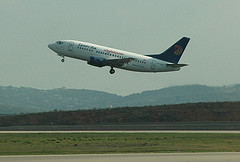
I’m sitting on the floor at this moment, both to get away from all the smoke and to take advantage of one of the few electrical outlets. People walking by give me amused looks, undoubtedly out of jealousy for the great spot I found. They know that the hard floor is still much better than the cramped seating that USAir offers on its 11-hour flight. All in all, the situation offers an ideal opportunity to be annoyed. (Photo shows some plane actually taking off from Venizelos airport&mdash:it’s not my plane, which is lost somewhere).

It’s probably an indication of fatigue and sleep deprivation that I’ve begun noticing odd connections. My flight is marked as Νέα, which I think is short for “nea hora” or new hour/time. Upstairs the Νέο McCafe offers surprisingly the most attractive option for sitting.

And then I discovered a new Airport Museum, which helped me forget the travel vagaries. It chronicles the history of the Spata area, where the airport is built.

Things To Do [when your plane is delayed six hours]: Visit the airport mini museum. Athens International Airport “Airport Museum” presents the continuity of life in the rural Messogia plains and its evolution through 172 archaeological findings discovered in the excavations undertaken during airport construction, and dating from the Neolithic and Early Helladic through the Post-Byzantine period.

I’m using Otenet, which claims to offer many Νέο features. So I feel I’m being immersed in neo/nea-ness, even though I’m not sure I understand exactly what’s new and what’s late, other than my plane.

I also discovered a separate exhibit on Eleftherios Venizelos, for whom the airport is named. He was a prominent statesman of the early 20th century, who helped to create the Νέο Greece we know today.

Lecture and class at Çanakkale Onsekiz Mart Üniversitesi

I recently went to Çanakkale Onsekiz Mart Üniversitesi (the 18th of March University in Çanakkale, Turkey) on a trip arranged by Prof. Mustafa Yunus Eryaman. The faculty there were wonderful hosts and showed me many excellent projects, including international connections, in this rapidly growing university.

While in Çanakkale, I lectured on Learning at the Border, presented in a doctoral seminar on Integrating Technology with Literacy, and visited Children’s House (Çocuklar Evi), a preschool.

There was much interest at Çanakkale Onsekiz Mart Üniversites in our community informatics work, in part because John Dewey had played such an important role in establishing education in the new Turkish nation. In the summer of 1924, Mustafa Kemal (Ataturk) had invited Dewey to advise him on modernizing the Turkish educational system, including instituting compulsory primary education for both girls and boys. Reforms were intended to enhance literacy and thus to raise a generation able to participate in what Ataturk called the public culture.

Children’s House (Çocuklar Evi) in Çanakkale, Turkey

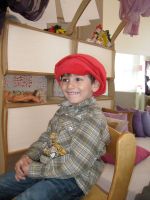
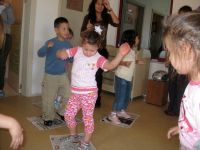
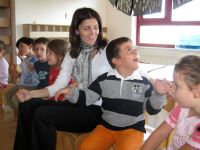
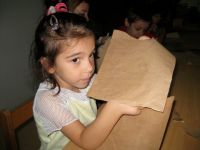
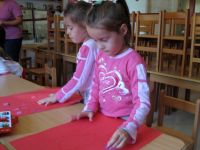
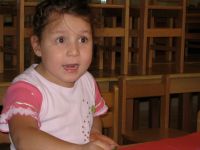
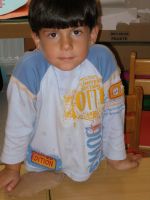
On Monday, I was invited by Ebru Aktan Kerem, an early childhood teacher/researcher at Çanakkale Onsekiz Mart Üniversitesi (in Turkey), to visit Çocuklar Evi, or Children’s House. Ebru’s innovative research contributes to a wonderful, university-based school for children, ages 3-6, and a site for learning for teachers and researchers.

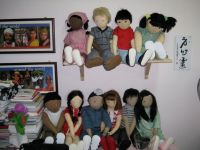
The Principal, Derya Bedir, and the teachers use persona dolls to help develop understanding across differences. They promote art, music, science, and healthy interaction in the spirit of Reggio Emilia or the University (of Illinois) Primary School.

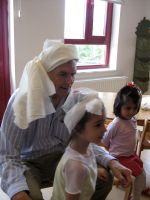
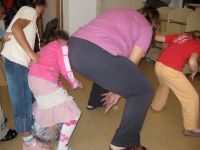
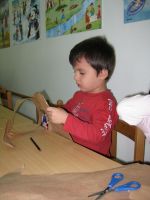
Some visitors apparently observe for an hour, have tea, and then leave. They come away with a rich picture of an outstanding school. But I was captivated by the children and the creative activities led by the teachers. I hope I didn’t overstay my welcome. I joined in on the Turkish songs and taught the children “Skidamarinkadinkadink.” They helped me with my Turkish. One activity led to another, then lunch, and then interesting art projects after lunch. I kept up reasonably well, but was reminded that preschool children can get up and down much faster than I can!

Click once on a photo to enlarge it; click again to enlarge it further.

Gallipoli and Çanakkale Onsekiz Mart Üniversitesi

oldest veteranI’ve been visiting Çanakkale’s Onsekiz Mart University the last few days, where I’ve met many wonderful people, including faculty, students, and even three-six year olds in the Children’s House (Çocular Evi), a university-based preschool.

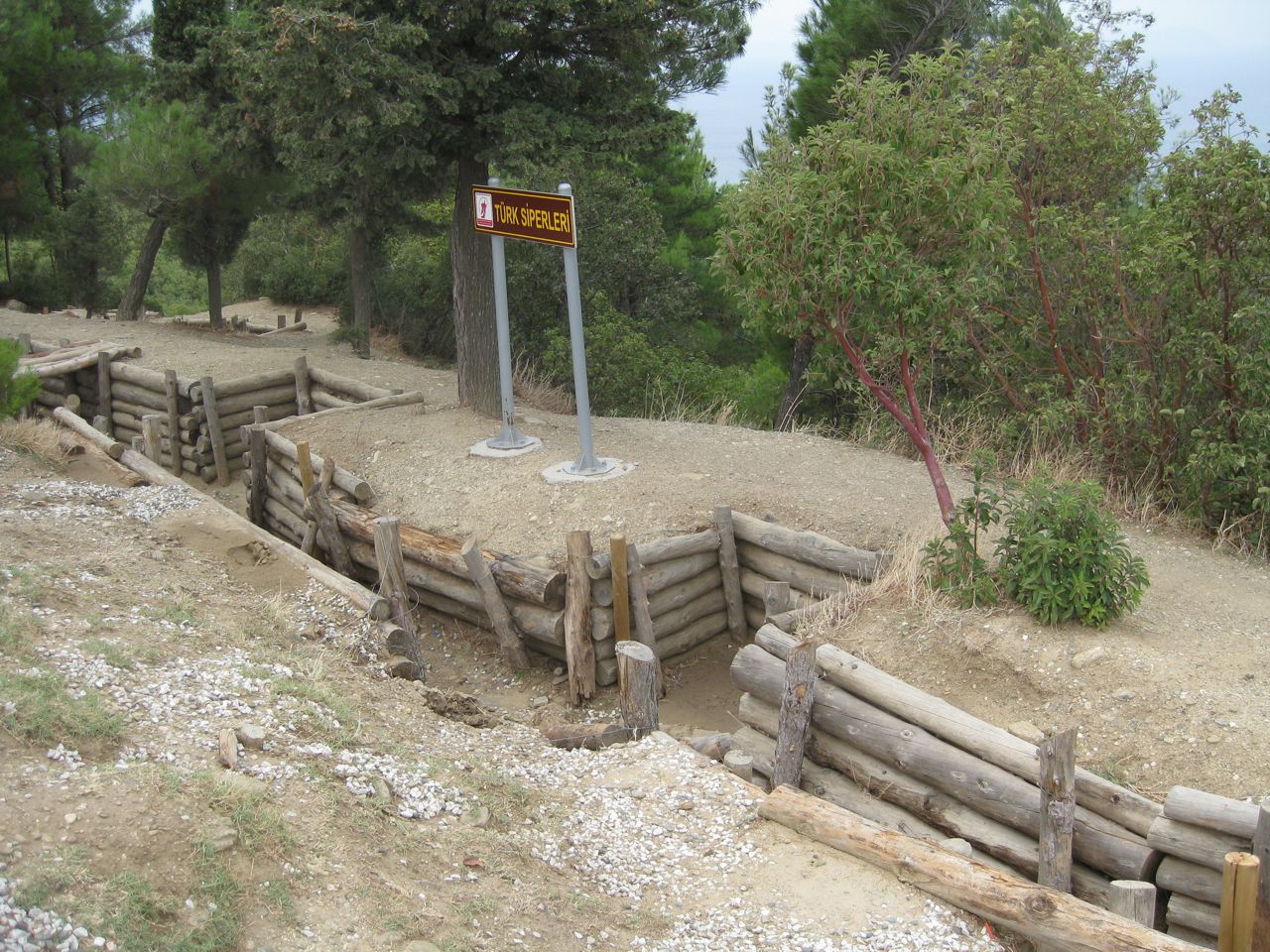
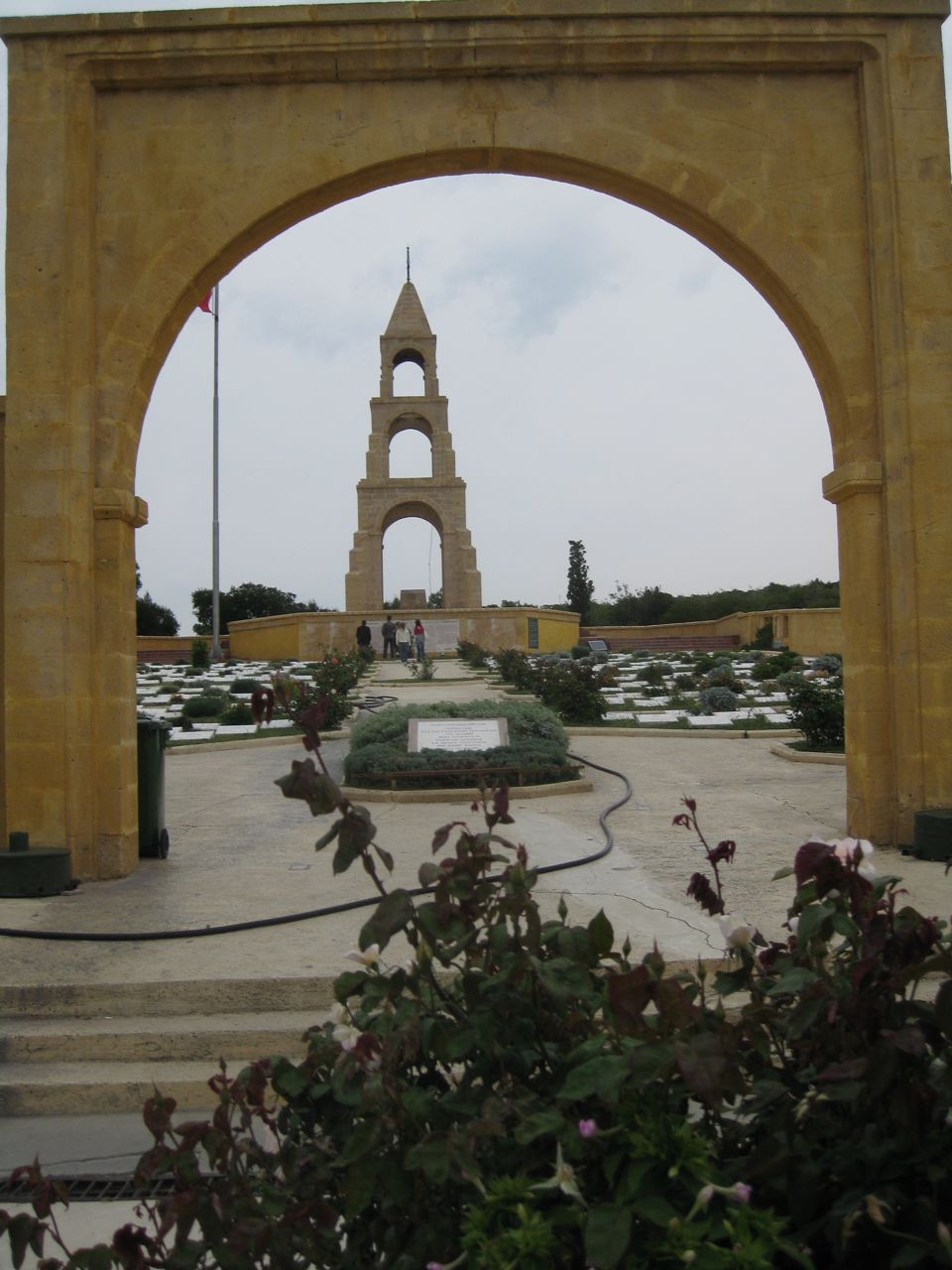
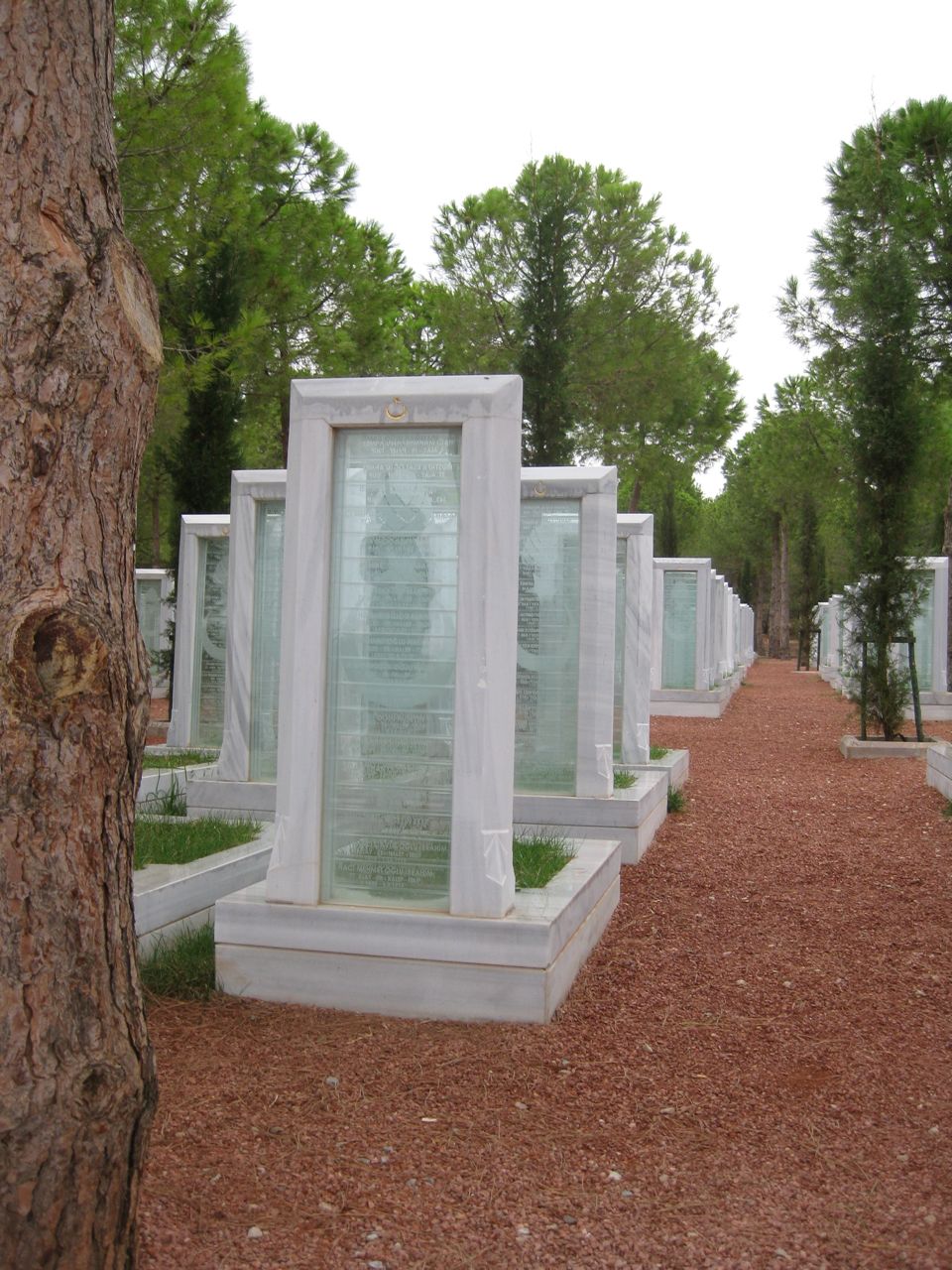
On Saturday, my hosts Yunus and Martina took me by ferry to the World War I Gallipoli battlefield. It’s now a large national park, with more cemeteries than we could visit in one day. After seeing all of the deaths from fighting for “a good cause,” it’s especially moving to read Mustafa Kemal Ataturk’s words.

Mustafa Kemal was the Commander of the Turkish 19th Division during the Gallipoli Campaign, the first President of the Turkish Republic from 1924-1938, and became known as Ataturk (Father of the Turks). Referring to the soldiers from Australia and New Zealand who lost their lives during the Gallipoli Campaign, Ataturk said:

Those heroes that shed their blood and lost their lives … you are now lying in the soil of a friendly country. Therefore rest in peace. There is no difference between the Johnnies and the Mehmets to us where they lie side by side in this country of ours. You, the mothers, who sent their sons from far away countries, wipe away your tears. Your sons are now lying in our bosom and are in peace. After having lost their lives on this land they have become our sons as well.

Ataturk had been commander of the 19th Turkish Division. He’s also famous for saying “I don’t order you to attack, I order you to die. In the time which passes until we die other troops and commanders can take our place.” Many died on both sides, but I don’t know whether the good cause was Turkey defending itself from the Allies or the Allies trying to conquer Turkey so they could invade Russia. In any event, the Allies lost, Winston Churchill was fired, and a new set of mothers began producing a new set of sons for the next World War.

The Anzac forces initially underestimated the ability of the Turkish army to resist, but in the end they developed a respect for not only the fighting ability, but the moral courage as well. An allied commander referred to Turkish soldiers in the following way:

He is a tough and brave soldier but when cease fire is called, he is gentle and humane; he will bandage the wounds of his enemy and carry him on his back to save his life. Such a soldier hasn’t been seen before on this earth.

Turkish memorialTurkish graves

Prolearn Summer School: Usability Panel

The first PROLEARN Summer School was held September 5-9, 2005 at Isik University in Sile, Turkey. The objective was “to contribute to the creation of an institutional culture, integrating distributed researchers across Europe into one community. It provides a framework for structuring a number of on going research, training, and scientific leadership activities.”

This slideshow could not be started. Try refreshing the page or viewing it in another browser.

LEEP

  • online professional development program
  • library & information science
  • 10 units, leading to a masters degree
  • ~100 Ss/year

challenges

  • low expertise, high resistance among Ss and Ts
  • low-end equipment
  • courses incompatible with online

outcomes

  • 100% retention
  • faculty choose
  • now larger than on-campus
  • students around world
  • model for others
  • WISE consortium (13 unis)

approach

  • low-end tech
  • tech support
  • faculty buy-in
  • cohort model
  • coordination with library, advising, etc
  • blended learning
  • mix sync & async

inquiry model

  • appropriate tech for each course
  • participatory design
  • diversity as a resource
  • Learning, culture and community in online education: Research and practice
  • LEEP Virtual Reunion