Shivapuri peak

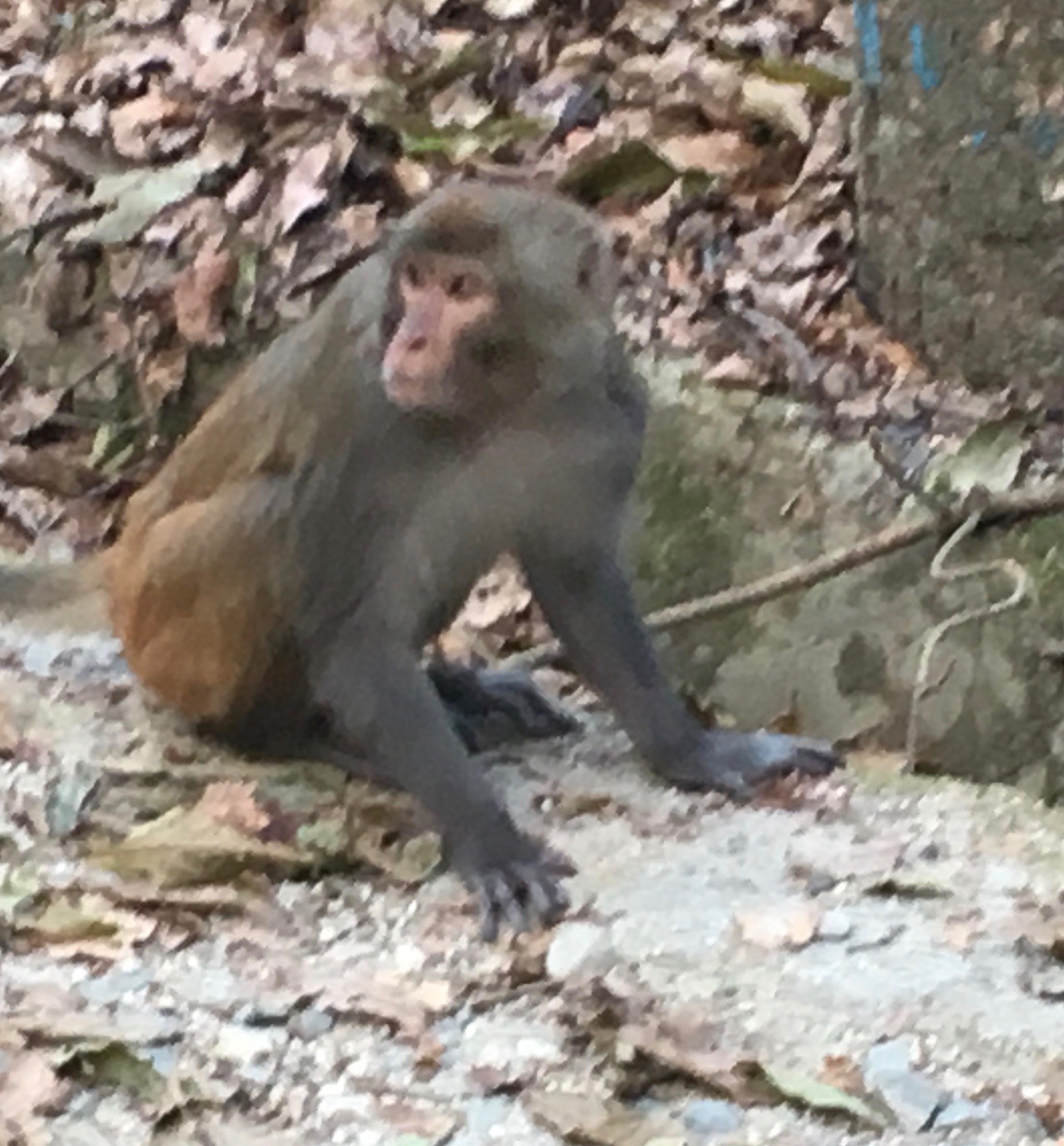
Asami monkey

Asami monkey

I recently “climbed” Shivapuri. I have to put that in quotes, because for Nepalis and serious trekkers, this is a “short and easy walk.” For this flatlander, however, it was a serious climb.

Most of the guides describe it as 3-4 hours up and 2-3 down, with extra time needed for photos, lunch, shrine visits, and such. So, it consumes much of one day. My fitbit got a workout, reporting 38,000 steps and 353 flights of stairs. To be fair to flatlanders, it’s not a negligible height–8,963 ft, easily higher than anything east of the Rockies in North America.

The park
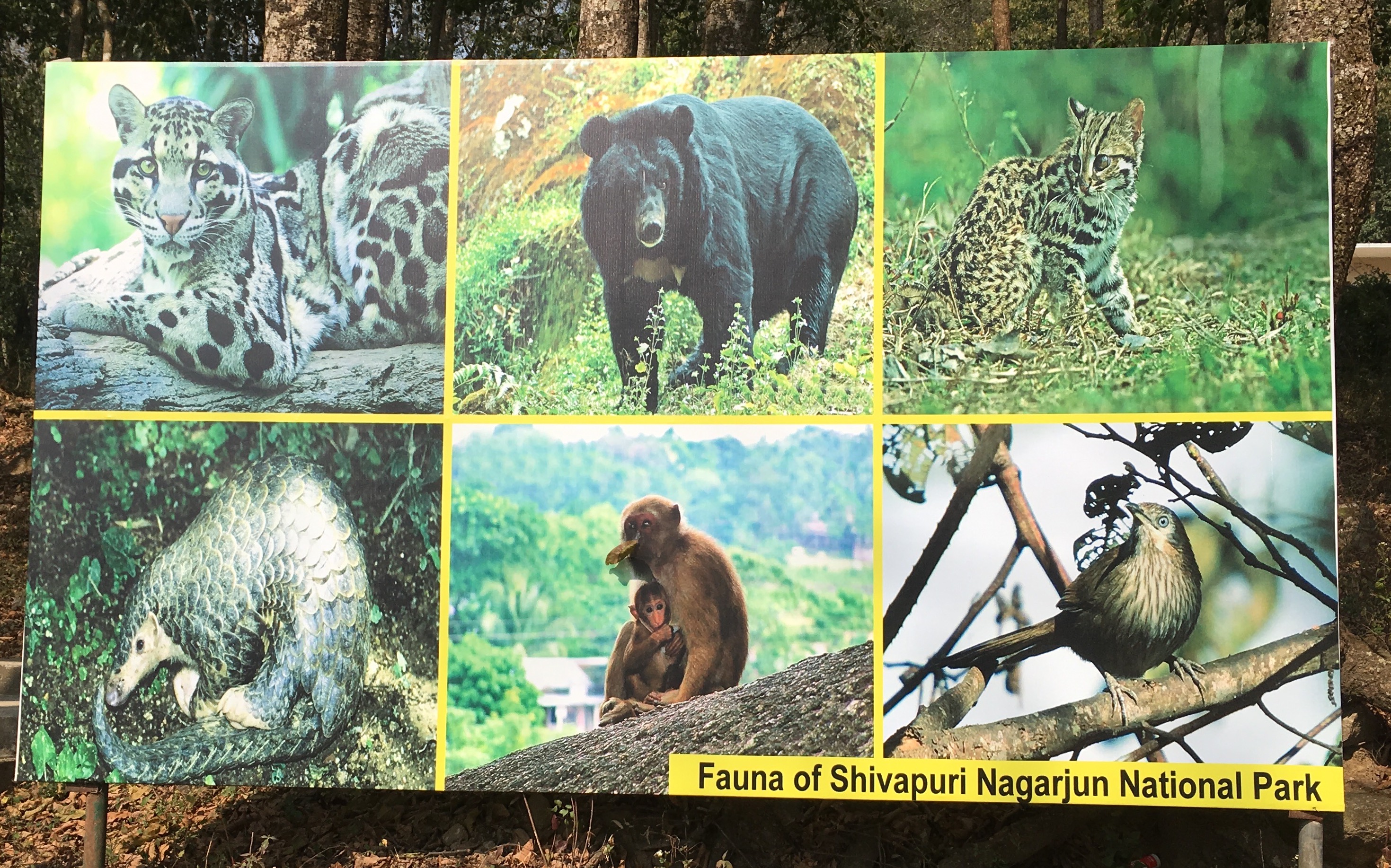
Fauna of Shivapuri

Fauna of Shivapuri

The Shivapuri park is in a beautiful national park, just north of Kathmandu. It’s a destination for watchers of birds, plants, butterflies, Hindu shrines and Buddhist monasteries, and much more.

I learned that Mira Rai had been there the day before my walk, hosting a trail running event. The distances were 25 K, 50 K, and 80 K. I could still see many of the brightly colored ribbons marking the trails for the races. Perhaps you need to walk there to understand why an 80 K (50 mile) run up and down the hills would be a good workout. One man ran directly up and down to Shivapuri peak in one and a quarter hours. That’s a good marathon pace by itself, but on stairs at altitude it’s unbelievable.
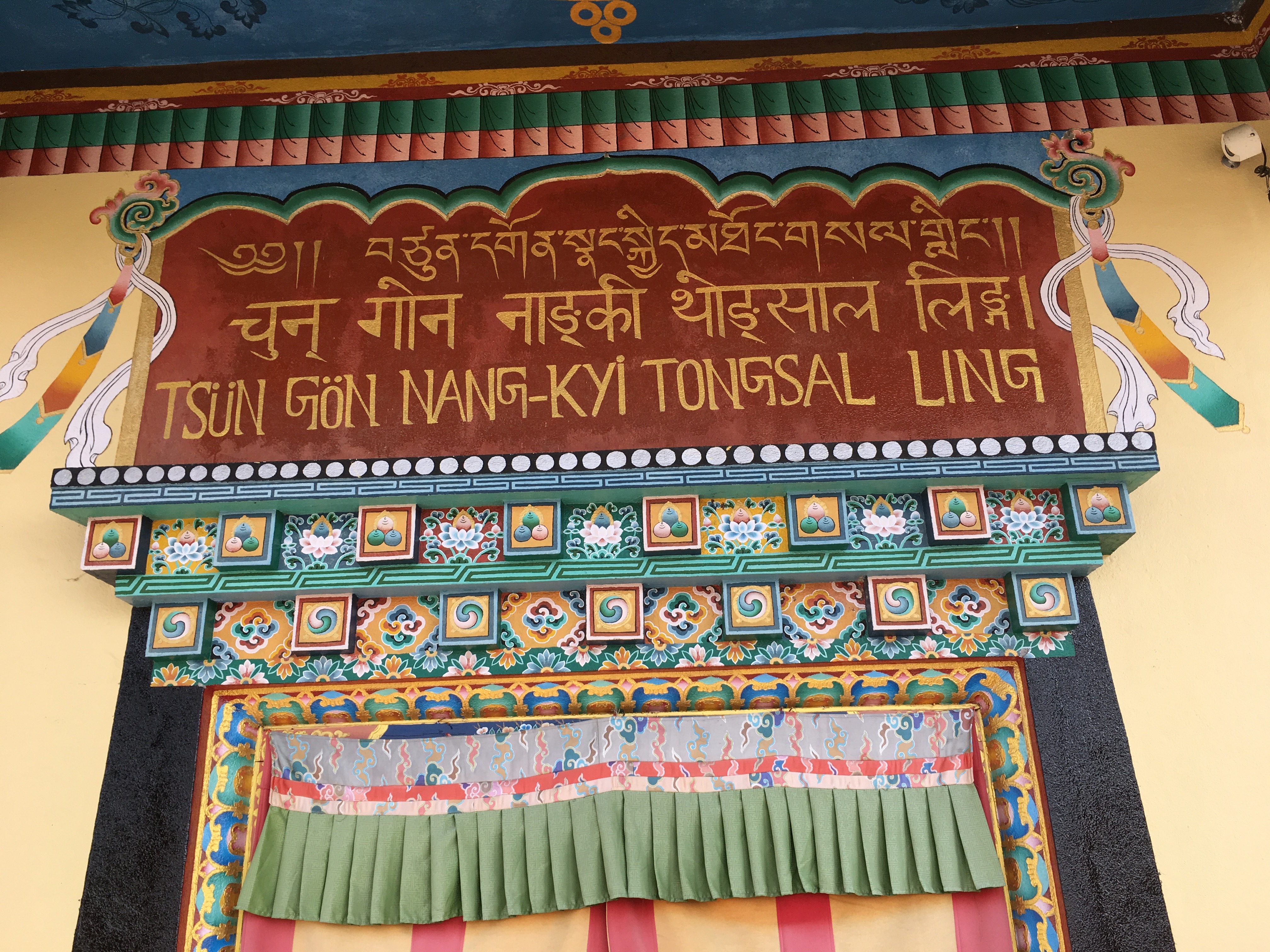
Nagi Gomba

Nagi Gomba

Sights

At my more sensible pace, I had a chance to observe more of the natural beauty of Shivapuri. Starting at the Pani Muhan gate, I saw Asami monkeys, a type different from the rhesus monkeys one sees around temples in Kathmandu. There were loud calls from the many warblers in the park, as well as from blue magpies, Bonelli’s eagles, and great Himalayan barbets. I mostly just heard these, but did see kalij pheasants. Beautiful butterflies were everywhere, and mercifully, no annoying insects.
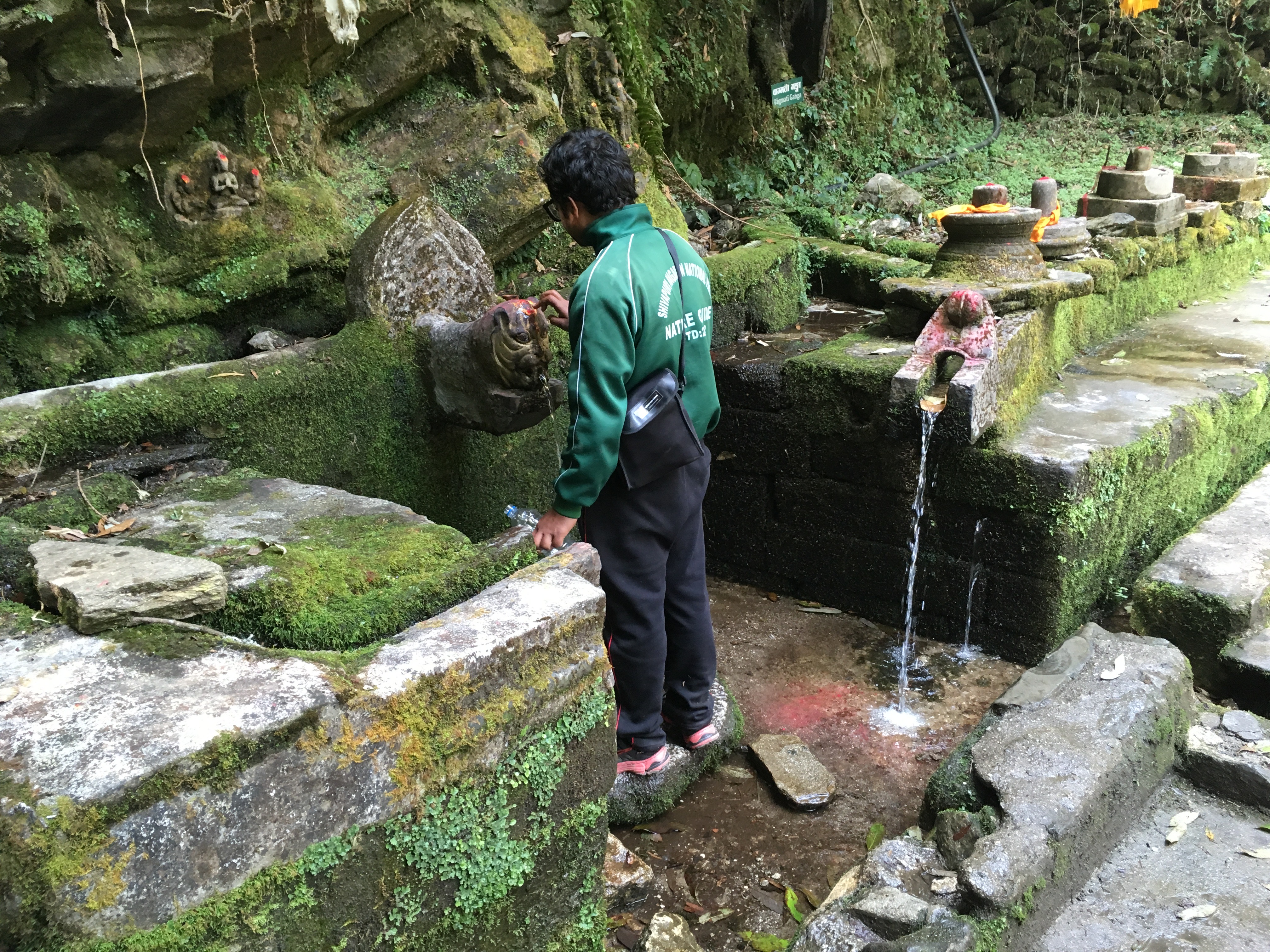
Water source and temple

Water source and temple

There are some magnificent pines at the lower elevation, then a dense forest of laurels, rhododendrons, and oaks heading up.

The first major stop is Nagi Gomba, a Buddhist monastery run by nuns. There’s a school for orphans. Although there is still much evidence of earthquake damage, fortunately, not al of the buildings were destroyed. You can also fill up your water bottle with clean mountain water. The photo of the main doorway shows the title in a Tibetan language, in Nepali, and in Tibetan with Roman script.

Signpost

Signpost

My guide

There are mostly helpful signposts marking the way. But they’re not necessary because of the mandatory guide. In one of the photos you can see Badi filling up his water bottle at a shrine. There, he also applied a tilak, along with the prayer – “May I remember the Lord. May this pious feeling pervade all my activities. May I be righteous in my deeds.”

At Shivapuri peak

At Shivapuri peak

Badi, by the way, was an excellent guide, helping to identify many of the unfamiliar natural phenomena. He was also very honest. When I said, “I need to get in better shape,” he replied, “yes, you do.” Seeking a little softer response, I added, “I need to lose some of this belly.” Perhaps I hoped he’d say that I wasn’t that bad for an old man, but instead, I got another, “yes, you do.”
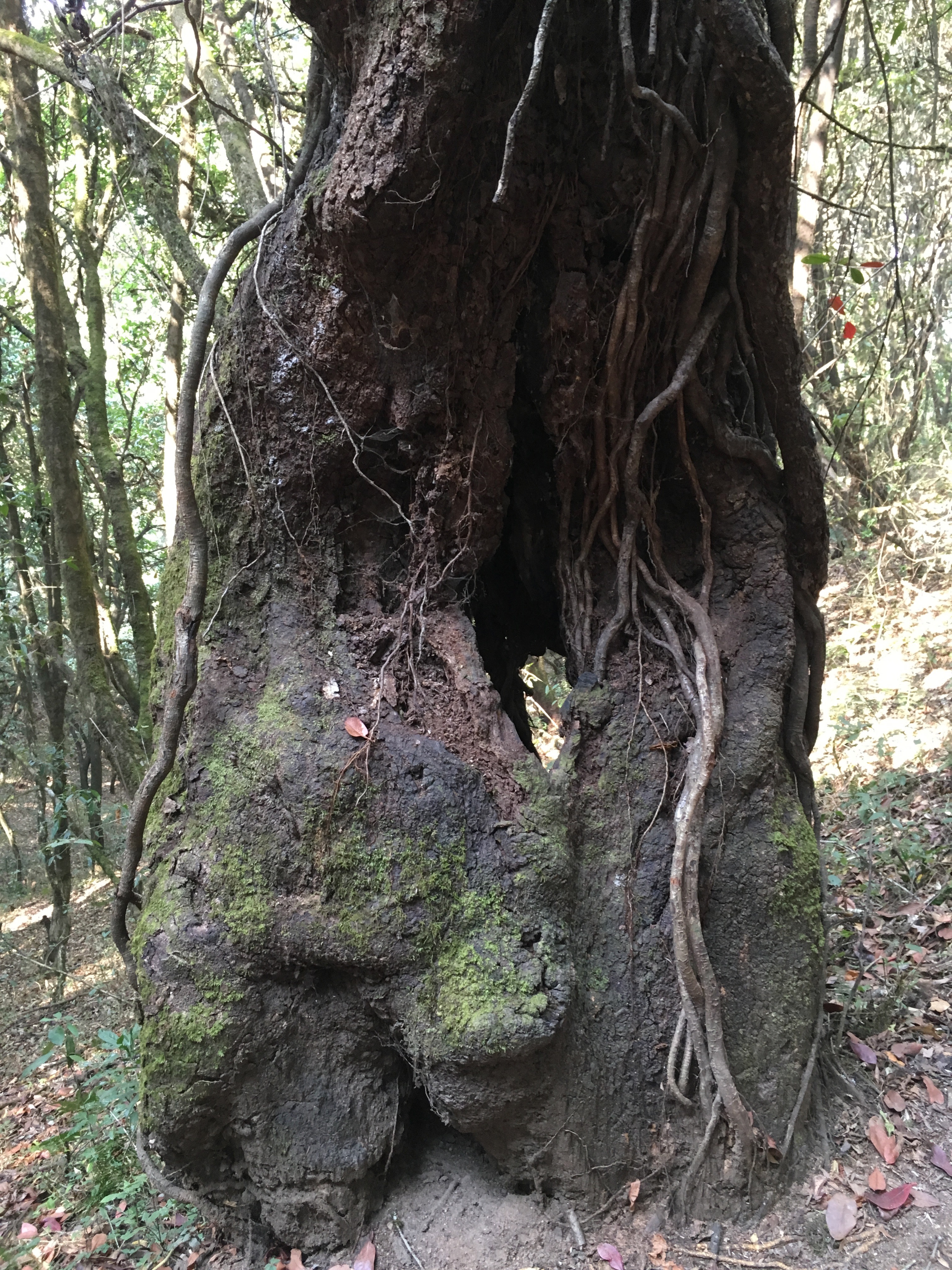
Huge, old oaks

Huge, old oaks

So, I asked whether he’d guided anyone as old as I on this “climb.” He told me about a 65 year old German man. He was a pilot who had a terrible crash, breaking many bones. His doctor told him to take up walking and trekking. I knew what was coming: “He was in much better shape than you.”

The top

I struggled a bit near the top. I was probably dehydrated, getting a little dizzy. At one point the mica on the ground and in the rocks presented me with a beautiful kaleidoscope of flashing lights. I enjoyed that for a moment, until I remembered that I needed to be paying attention to the walking.
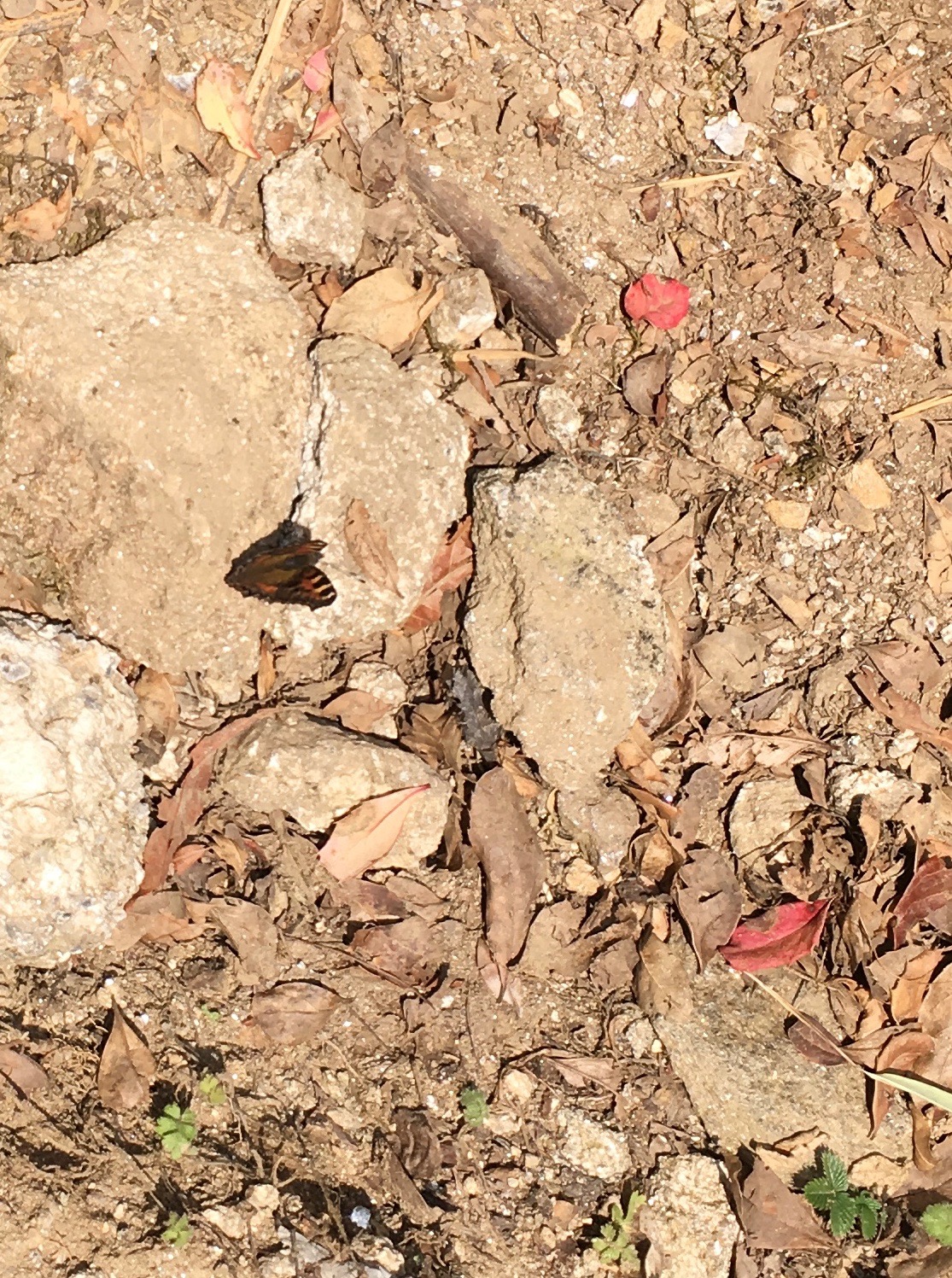
Many beautiful butterflies

Many beautiful butterflies

We managed to reach the summit and paused for a brief lunch. Unfortunately, there was cloud cover, so we didn’t get the view of the Himalayas that many people count on as their reward for the climb.

Also, I felt a little sick, which may have had something to do with the mica kaleidoscope. So I walked back down a short way to take care of business in the woods. When I came back up to the peak, I realized that I had technically ascended it twice in one day, something few people do. My pace was glacial and my form was embarrassing, but I made it, and twice!

Kumbeshwar Technical School

KTS is a place very close to my apartment in Patan and is now close to my heart as well. I’ve visited several times and want to learn more about it.

KTS was established in 1983 to assist the local community of street sweepers. They were “untouchables,” with little education or employment opportunities.
Carpentry training

Carpentry training

The project began with a childcare project, followed by adult literacy classes, and a nutrition and health clinic. Soon, a carpet weaving training program was established to expand employment possibilities. A production unit grew out of that, which provided funds to start a primary school in 1987.

Today, there’s a nursery, a free daycare center for employees’ children, and an orphanage. There are now training programs for knitting and carpentry as well.

On the production side, there is no child labor involved and all the work adheres to Fair Trade policies (KTS is a founding member of Fair Trade Group Nepal). Products are sold abroad by organizations such as Traidcraft, Serrv, Ten Thousand Villages, and Oxfam.

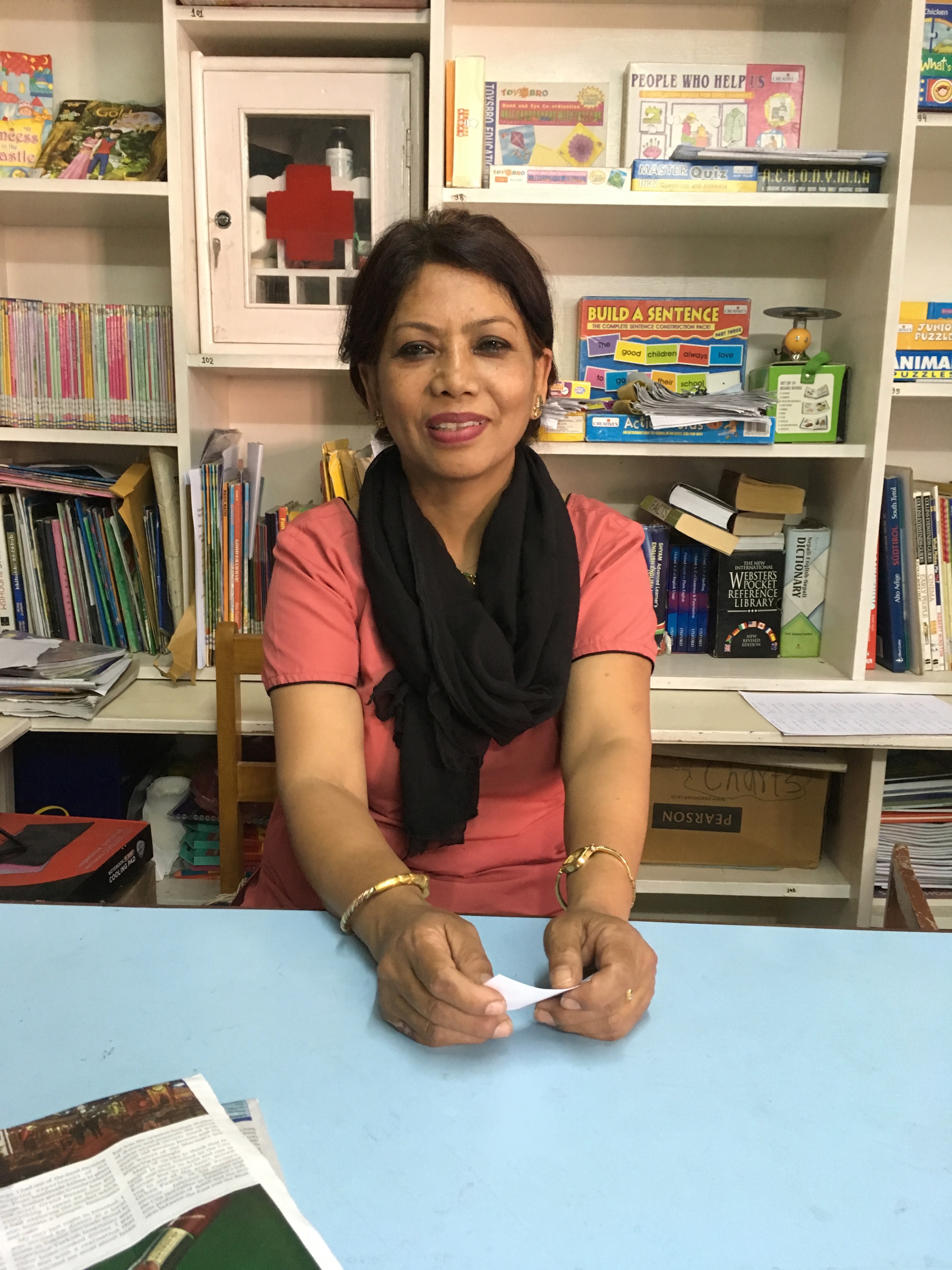
The library (and social studies teacher)

The library (and social studies teacher)

The project provides an allowance during training, and employment afterwards. Over 2000 businesses have been started by graduates, some in Kathmandu, and others back in villages.

There is a small shop displaying carpets, knit hats and mittens, furniture and small wooden items. There’s even a cookbook for Nepali food, now in its second edition.

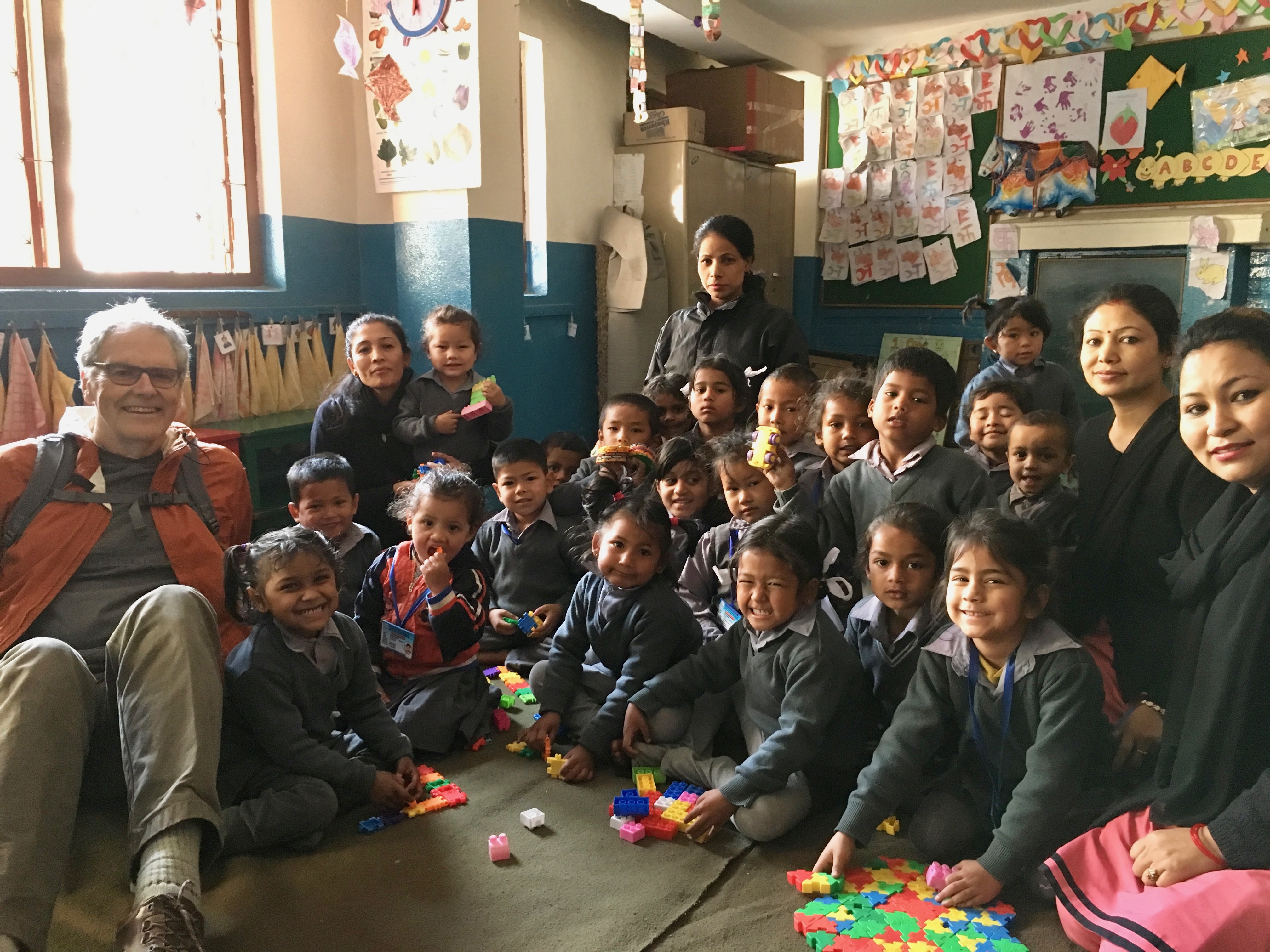
Nursery school

Nursery school

The program keeps growing and changing, but throughout there’s a focus on fairness, opportunity, economic security, local empowerment, literacy and learning.

Courtyard life

Dhumbahal stupa, Patan

Dhumbahal stupa, Patan

My apartment is on the second floor (US, third) near Kumbeshwar Temple complex in Patan. It’s in one of several 4-6 story buildings surrounding a small courtyard, called Dhumbahal Square.

Thus far, it’s similar to the courtyard behind the flat in London where we stayed with our good friend Jane on the way to Nepal. That courtyard had well-groomed bushes and trees, walkways, and convenient benches. It offered a peaceful respite from city life.

Objects

Family

Family across the way

The one in Patan is a different story entirely. It’s 100 feet square, about the same size as the average US suburban lot–1/4 acre. But in that 1/4 acre there’s more to see than anyone can absorb.

There’s a Buddhist stupa in the middle. Around the perimeter one finds a communal water source, a small Hindu mandir, a tiny shop that miraculously produces any item you can name, a beauty parlor (and training center), a (motor)bike wash and repair center, a small convenience store, a weather station on top of one of the buildings, and other establishments I haven’t identified yet.

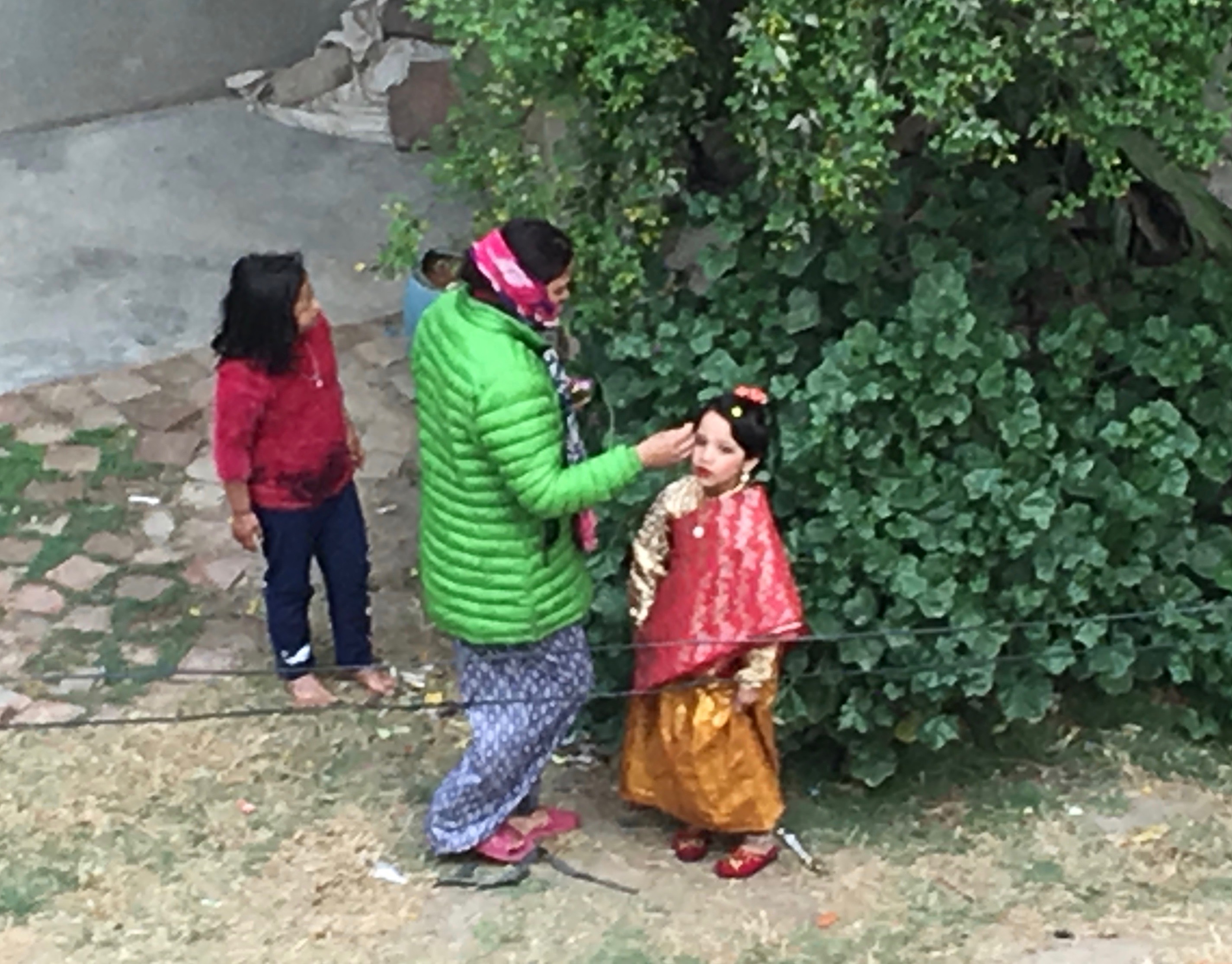
Tree blossoms for her hair

Tree blossoms for her hair

Water is brought by truck to fill large, black plastic tanks on the top of each building. That water becomes the tap water, getting its pressure from the height of the tanks. It’s filtered, but most people drink bottled water for safety. Mine comes in 20 liter clear plastic jugs, which fit into a dispenser tank.

Small mandir

Small mandir

The ground is covered about a third with bricks. Some of those form a sort of patio, others are arranged in a curving pattern as if they knew exactly where most people would like to walk. There’s also a slate paved area, some concrete, lots of bare ground, and amazingly, a little grass. I haven’t figured out why one surface is one place rather than another, but it all seems to work.

Activities

The mystery hole

The mystery hole

As remarkable as some of these objects may be, it is the activities around them that cause one to sit mesmerized on the balcony, just watching.

Baby photos

Baby photos

A woman tosses millet in the air to remove chaff; another takes an offering with candles and flowers to the temple; a man splashes water on the ground to reduce the dust; boys roll an abandoned motorcycle tire around the stupa, as two girls walk around the same monument turning the prayer wheels; a young man washes his motorcycle; an older man gets an open-air shave and haircut; a young couple take endless photos of their young child; women hang laundry and water flower pots; children play rock pitching games. It’s notable how often fathers are caring for children. One older boy (12) runs to pick up a younger one (6) who’s fallen. He comforts him and brushes the dust off his pants. The children also sing and dance.

Preparing vegetables

Preparing vegetables

Meanwhile, there’s construction. Although Patan may be the oldest city in the Kathmandu Valley, dating back more than two millennia, and the courtyard is in one of its oldest parts, there’s a feel of new building everywhere.

The wedding party

The wedding party

Some of this is needed re-construction after the damage of the 2015 earthquake. But workers are building new apartments, too, reflecting early gentrification of the area. One man digs a mysterious hole that ends up being 8 feet deep with surprisingly straight sides. Later, small boys use the dirt from the hole as a site for play and the uncovered rocks for their pitch & toss games. A small crew puts up a cell tower, without using any harnesses or visible safety equipment. The construction goes on amidst the young children playing, older ones coming and going from school, adults working and relaxing.

Installing the cell antenna

Installing the cell antenna

Observing all of this is like a watching a complex movie, except it’s one that is showing 360° around, with sights and sounds, but also with tastes and smells, touch, heat and cold.

Schedule

There is no beginning to the courtyard’s day; one moment segues into the next 24/7. A dog may start barking at 2 in the morning and soon have dozens of others to talk with. I can’t give a full account of the day, as I’m mercifully learning to sleep through most of it. But sometime around 5 in the morning is an important inflection point.

Morning rituals

Morning rituals

That’s when I hear the first temple bells–one is deep and loud, two are middle volume, but one of those is high pitched. There are several smaller ones, too. If the dogs weren’t already going they soon make up for lost time. Motorcycles start up. Human voices come in, conversing rapidly or yelling. Before long children are running and squealing about. In little gaps, one can hear pigeons cooing, crows cawing, and songbirds singing. The roosters manage to make themselves heard above it all.

This continues throughout the day, although each hour has its distinctive character. There are sounds of children laughing, singing, and squealing at play from the nearby school. There’s even a time in the afternoon when all but one dog decides it’s too much trouble to bark anymore. That one gives a few desultory yaps, but I can tell that his heart isn’t in it. In the evening, there’s the dinnertime chatter all around, and later, Nepali pop music.

One day, the signature event was a wedding. Although it seemed to involve most of the courtyard and many visitors, it didn’t stop all the other activities. We saw a 50 foot long tent being erected and red plastic chairs being set up in rows. Soon, a 14-piece band appeared. There were of course many photos, of babies and children and women in beautiful saris. There were also a number of young men in what must be called dandy outfits and poses.

Chaos and peace

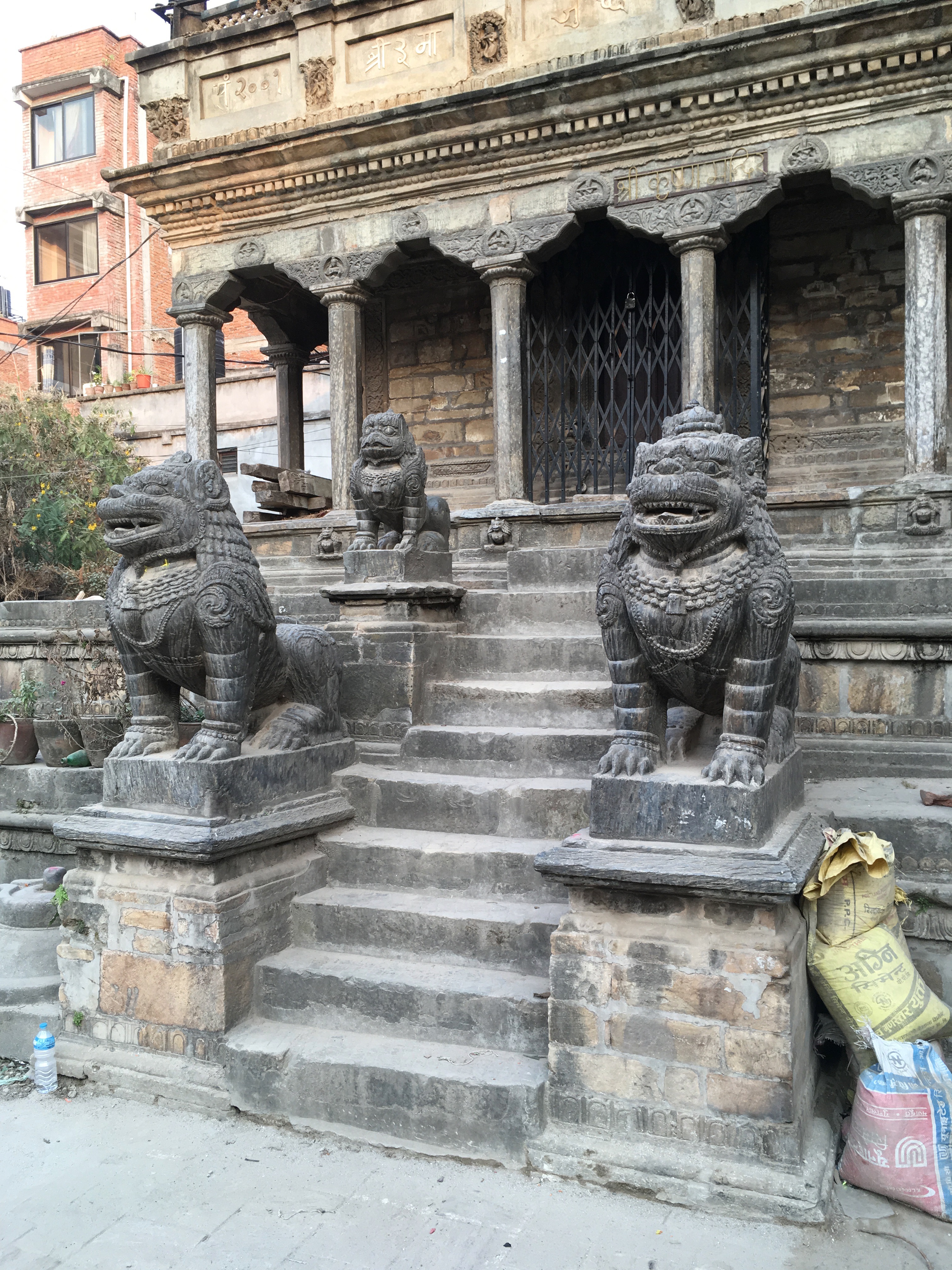
The sign to turn into the courtyard

Lions signaling the turn into the courtyard

On first encounter, the chaos of the courtyard is disturbing–too many scary dogs snarling, too much noise, too many strange sights, sounds, and smells, too many chances to trip on rocks or broken pavement.

But the courtyard is actually a very safe place, away from the street traffic and noise, and where people know one another.

After a while it all, or most of it anyway, begins to make sense. There are patterns and relations that fit into a larger whole. I begin to recognize faces and they mine. One child loves to talk in broken Nepali/English; another seems too shy to say anything. The apparent chaos is actually welcoming, enriching, overcoming difference. There’s peace in the bustle that is less apparent in quiet solitude.

Peace does not mean to be in a place where there is no noise, trouble, or hard work. It means to be in the midst of those things and still be calm in your heart.

Rubber band chain adventures

Courtyard friends

Courtyard friends

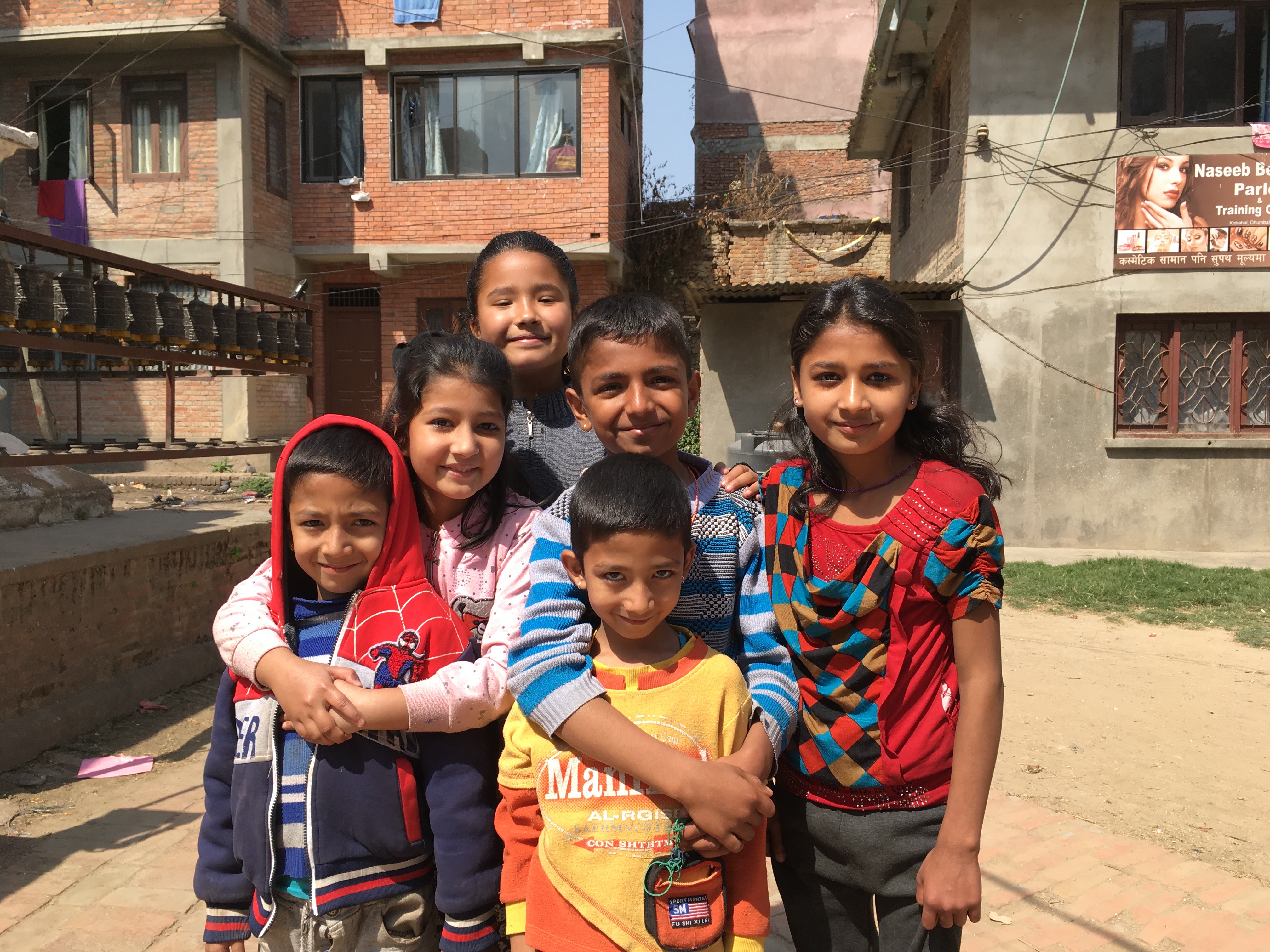
The six kids above are the ones I see most often in the courtyard. On Sunday they were shooting a rubber band chain onto the stupa. It was a good game except that the chains would hang up out of their reach.

They could climb the lower part of the stupa (left in the photo), but the upper part is a smooth dome. Also, there are many electric wires that can catch the chains. You can see some of those in the photo.

The children invited me to shoot one of the chains. I was a failure compared to any of them. But I had a super power, about four feet extra reach. So I climbed up to recover the captured chains.

When I asked to take a photo, the girl in red had just gotten on her bike and was about to ride off. She called out “Wait! Wait!” to be included.

This photo says a lot to me. Notice the arms around each of the twin boys. That’s very common here, as well as the mutual efforts to include everyone in the play, even me. Notice also the generous, but slightly mischievous smiles on each of their faces.

You can see one of the rubber band chains in the left hand of the 12 year-old boy.

As I left, I tried my very best Nepali, “Pheri bhe-ṭaūlah (see you later).” The oldest girl said essentially, “Huh?” I was saved by the same 12 year-old boy, who explained that I was trying to say “Pheri bhe-ṭaūlah.” They all smiled and waved goodbye, wondering what I could have been saying.

The photo is a large format. If you click twice on it, you can get a closer view.

National Botanical Garden

I had a wonderful day at the National Botanical Garden, about half an hour by motorized transport south of Patan, in Godawari. It lies below Mt. Phulchwoki (2715m), which is the highest peak in the Kathmandu valley. It’s an instant relief to be in a quieter place with cleaner air. Beyond that, the garden is a pleasant place to walk with many interesting specimens and layouts.

Some of the grounds are relatively wild and undeveloped, but most are organized into special gardens, such as a typical Nepali terrace garden, with a Nepali style stone tap at the top, a water garden, a fern garden, a Japanese garden, a rock garden, a lily garden, and a Conservation and Educational garden for students and scholars.

Posing for photos in the Japanese garden

A heavy load of greens

Family playing along the creek

Egret in the terrace area

School groups

Flowers and goats in the distance

The entry complex, with a pleasant, informal restaurant

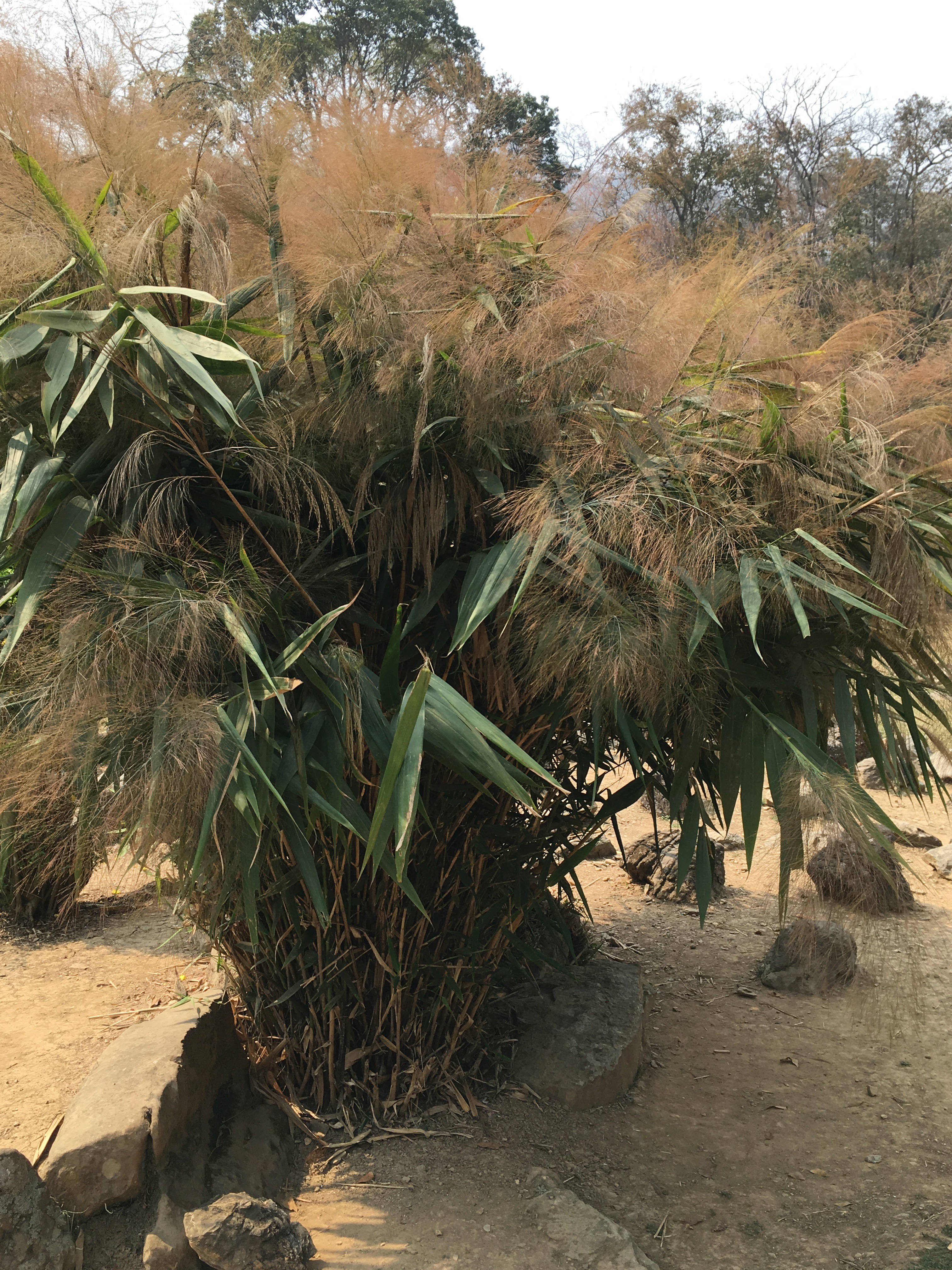
Nepalese broom grass (Thysanolaena); flowers used to make brooms

Old vines in an arbor

Small stream running through the Botanical Garden

Ornamental cabbage?

One of many special display buildings

Ang Zangbu’s Story

The cover of Zangbu’s Story, by Ang Zangbu Sherpa with Diane Scott, shows young Zangbu, a Sherpa boy, gazing at an airplane. Piloting a plane is to become his dream, but to achieve that he has to endure hardships few of us can imagine, and he needs to go to school.

The book describes this true journey. The illustrations by Malcolm Wells alone make it a classic.

His first school is a Sherpa school near Lukla, six hours from his home. It is expected that in two years he is to become the one in the family to learn to read and write, to hold important posts in the village, and to understand land deeds often used to steal land from illiterate Sherpas.

But it is not easy. He has no support at home, no mentor. He must work beforre and after school:

At sherpa school, grade 1

At Sherpa school, grade 1

He struggles not because he is lazy, but because he is working so hard-at pulling weeds and hauling manure in the fields. From the moment it is light until the school bell rings, then from the time he gets out of school until dark–work. But not schoolwork. That must be done, if it is done at all, by the dim light in his cousin’s single open room, where a place by the fire is assigned by age.

Zangbu’s story  is not about violent struggles with wolves, or imagined struggles with yetis, though there is some of that. It’s about growing up with hunger, hard work, and abuse rather than with toys and creature comforts. It’s about perseverance and the ability to learn from difficulty, not to become discouraged. It’s also a richly detailed account of the educational challenges for children in mountain villages in Nepal.

Although written for children, Zangbu’s Story is a book that could inspire and teach any adult as well.

Welcome to Nepal

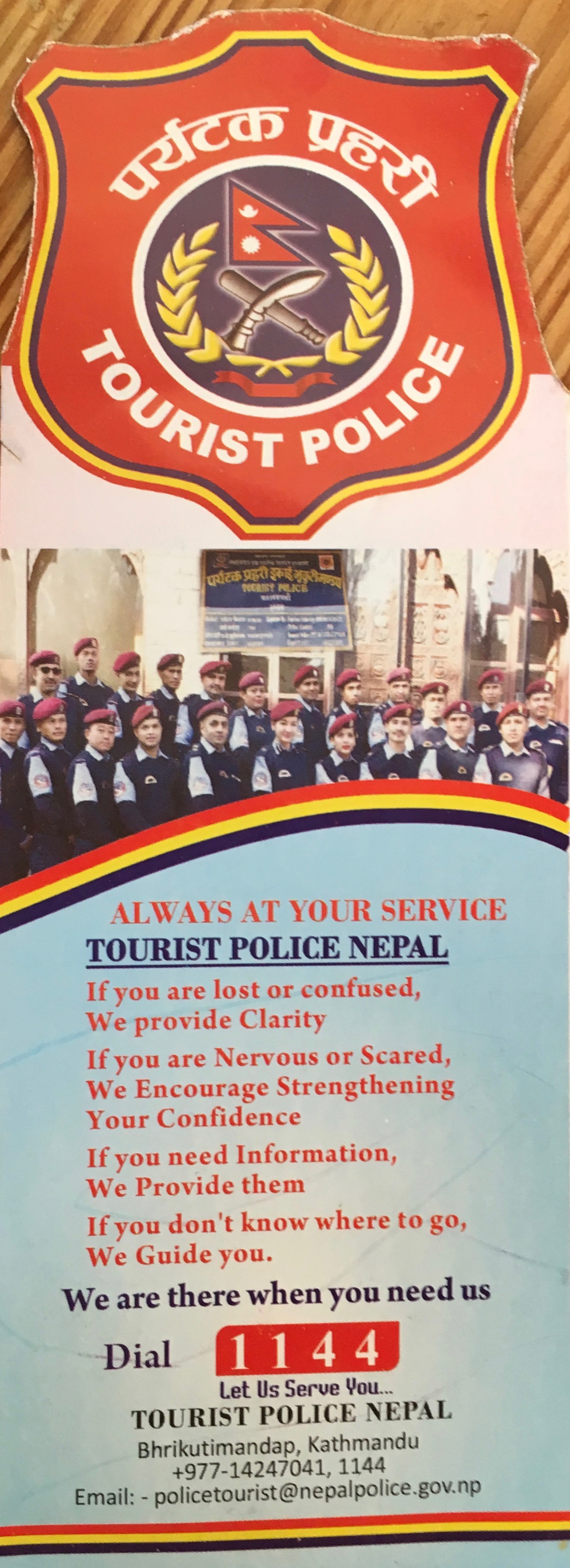
Tourist Police NepalIt’s hard to imagine a more welcoming place than Nepal. People of all ages greet each other and visitors with a big smile accompanying a “Namaste.”

Tourists are still rare enough in many areas that little children are fascinated–staring, giggling, and waving. Their parents show then how to bring their hands together for “Namaste,” and get a big smile when you reciprocate.

There are welcome signs everywhere, on mats, doorways, posters, wooden carvings, and painted cloths. The signs are in Sanskrit (svāgatam) or Nepali (swagat cha), although those welcomes usually employ the Devanāgarī script (स्वागतम्).

There are also many welcomes in English. These often use two words, “wel come,” or hyphenation, “wel-come.”

Officialdom, even the police, also displays a welcoming attitude. Listen to the poem below, from a card distributed by the Tourist Police.

Always at your service

If you are lost or confused, we provide clarity.
If you are nervous or scared, we encourage strengthening your confidence.
If you need information, we provide them.
If you don’t know where to go, we guide you.

We are there when you need us.

Dial 1144.

Let us serve you.

The book-tuk, libraries for all

Roaming Library, Kathmandu Post, Mar 17, 2017

Roaming Library, Kathmandu Post, Mar 17, 2017

I like to season my bad news with an occasional snippet of good news. One such is from an article in the Kathmandu Post, “The roaming library,” by Rhythm Sah, a grade 9 student in Biratnagar, Nepal. He attends high school about 250 miles east of the capital, Kathmandu.

Sah writes,

I had never thought that mobile libraries existed. That’s why when I saw the Book Bus in my school ground one early morning, I was amazed. The bus reached us after hundreds of kilometres of travel from the Capital. When the door on the side of bus opened, we saw well arranged rows of books inside…. The bus, also known as a roaming library, had wonderful books with poems, stories and novels. I looked at some beautiful novels and pretty picture books.

The Book Bus, one of two, was started with help from the American Embassy about three years ago. There’s also a book-tuk, with solar-powered wireless internet service. It was made by modifying a type of small, three-wheeled, electric van, called a Tempo, or more commonly, a tuktuk.

Sah continues,

The main aim of establishing such library is to build reading habit in the youth, to exchange culture and to improve English speaking and writing skills. The bus reaches different corners of the nation and teaches the students how to enjoy books. I was very happy when the bus came to the school and was saddened when it continued on with its journey. The bus has made my love for books even stronger and I cannot wait until it comes back!

Tempo electric van, Kathmandu

Safa Tempo electric van, Kathmandu

The provision of library services, including books, video, and internet can make a huge difference in a country like Nepal, where many people lack the most basic services. This is especially true in the countryside, but for many in the large cities as well. For an amount of money that doesn’t even register in the US budget, the US can provide Nepalis with tools they need for education, development, and peaceful progress. With relatively small expenditures of money and no endangerment of lives, we can do more to promote peace and stability in Nepal and elsewhere than we have with any of our recent, ill-conceived wars.

The cost of a single B-2 Spirit jet is ten times the sum of all US aid to Nepal, including for democracy and human rights, economic development, education, environment, health, peace and security, and humanitarian assistance (such as earthquake relief). That jet is just one small piece of a military budget larger than those of the next seven countries–China, UK, Russia, France, India, Japan, Saudi Arabia, and Germany combined. And yet, with already the largest military budget in the world, the President has proposed a huge increase in US military spending. The increase alone is about the size of Russia’s entire defense budget.

The new budget includes draconian cuts for library and museum services in the US and for similar programs abroad. Even if the cuts were justified, the savings from those programs would go only a small way toward funding the military increase. Whether one is concerned about ensuring a peaceful world, about spending taxpayer money wisely, about economic growth, about reining in the National debt, about creating opportunities for young people, or helping those in dire need, this is the wrong path to take.

Cutting programs such as the mobile libraries in Nepal reduces cross-national understanding and promotes instability that costs far more in the long run.

I hope that Sah and his friends can take advantage of the book bus and the book-tuk as long as they last.

Mira Rai

Mira Rai (Wikipedia)

Mira Rai (Wikipedia)

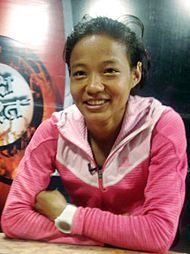
A short while ago, while in Kathmandu, I had a beautiful walk in Shivapuri Nagarjun National Park. Later, I read that Nepali runner Mira Rai had been in the same spot two years ago. She was jogging on the hilly trails, then joined other runners, chatting and laughing. They invited her to enter her first race: the Kathmandu West Valley Rim 50K.

If you zoomed through this text so far without a jaw drop, you may need some additional background. The Park’s trails are well maintained, but few people jog there, much less while chatting and laughing. It’s more a place to walk or climb slowly, with frequent stops to catch breath. And if you do decide to run competitively, start with a 5K, not 50K (31 miles).

Rai had never competed in a trail race before. She didn’t have any food, water, or hi-tech athletic gear. But she entered this one. Despite hailstones and rain, Rai, the only female competitor, completed the race.


She had the one big advantage that most successful people have: She worked hard. Growing up in Bhojpur, a remote mountain village in eastern Nepal, she had chased goats, gathered firewood, and carried heavy sacks of rice and buckets of water up and down steep hills. Like many other Nepali girls, she dropped out of school (later than many, at age 12).

A BBC article quotes her:

“I would run to the market – three hours away – buy sacks of rice, then run back and sell them for profit,” she says, flashing that wry smile. She forgets to mention that the bags weighed 28kg (60lbs), and she was just 11 years old.

After that first race, Rai had a long string of running achievements, including the Mont-Blanc 80 km, where she set a record. She’s received well-deserved international acclaim for these many accomplishments.

When she was injured early this year, she began to train other village girls and now organizes running competitions in her village for young girls. She uses proceeds from Mira, the film about her life to provide equipment for them. That film was a finalist in the Banff Mountain Film Festival this year.

Rai herself is now a finalist for National Geographic’s Adventurer of the Year. Although there are nine other excellent candidates, I had no hesitation in voting for her.

As my friend Chris pointed out, the world of running will be in for a big awakening if Nepalis start to take up competitive running.

First PENN conference, Kathmandu

15232068_1685659911459594_7389935162873165852_n
The First Annual Conference of
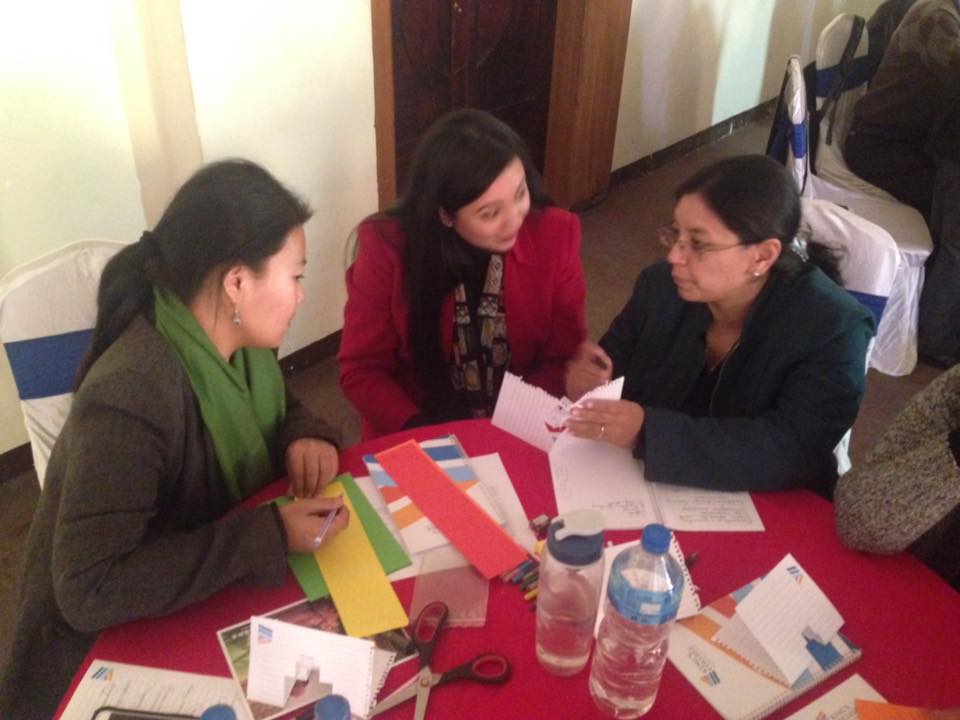
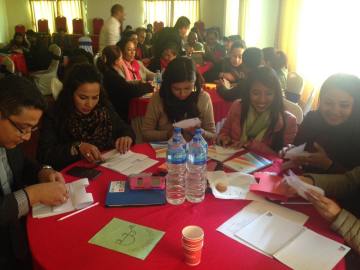
Progressive Educators Network of Nepal (PENN) held on Friday was a big success, thanks to collaborators from King’s College, Kathmandu Living Labs, Karkhana and Teach for Nepal. The theme for this year was “the community is the curriculum.”

15355647_1684340441591541_5119271557140173330_nThere were about twice as many people as we expected, but more importantly, many people directly contributed with activities or presentations, and everyone seemed to be engaged and committed to continuing the effort.

I was very fortunate to be a part of this. As the foreign visitor, I was officially the “lead facilitator,” but I felt that I was the one who was learning. I also shared quite sincerely that I can’t recall another such meeting with the same level of commitment or willingness to listen and learn from one another.

15267728_1684346728257579_116754909530787023_nWe talked about the issue of importing ideas from abroad. But there are impressive things underway here in schools, colleges, and informal learning that could be a model others around the world.

I’d like to add that when I heard the initial plans for my trip to Nepal, I couldn’t quite believe that it would all come together: workshops, community inquiry in a village, and a national conference.

15220016_1684347144924204_2798198498524614991_n But that all happened better than I expected. The reality went beyond the original plan and came to include multiple organizations, trips to excellent schools, and the creation of PENN.

I want to both thank and congratulate Umes Shrestha, Narottam Aryal, Nama Raj Budhathoki, Swastika Shrestha, Pavitra Gautam, Aakriti Thapa, Krishnakumar KC, Amrit Poudel, Shisir Khanal, Raj Poudel, and so many others.

(Now, I’m thinking of all those I just left off the list, some of whom made perhaps even more major contributions. Please accept my apology, but especially, my thanks to all.)

You can see more of the activities pictured in this facebook album.