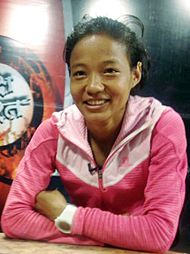
Mira Rai (Wikipedia)
A short while ago, while in Kathmandu, I had a beautiful walk in Shivapuri Nagarjun National Park. Later, I read that Nepali runner Mira Rai had been in the same spot two years ago. She was jogging on the hilly trails, then joined other runners, chatting and laughing. They invited her to enter her first race: the Kathmandu West Valley Rim 50K.
If you zoomed through this text so far without a jaw drop, you may need some additional background. The Park’s trails are well maintained, but few people jog there, much less while chatting and laughing. It’s more a place to walk or climb slowly, with frequent stops to catch breath. And if you do decide to run competitively, start with a 5K, not 50K (31 miles).
Rai had never competed in a trail race before. She didn’t have any food, water, or hi-tech athletic gear. But she entered this one. Despite hailstones and rain, Rai, the only female competitor, completed the race.
She had the one big advantage that most successful people have: She worked hard. Growing up in Bhojpur, a remote mountain village in eastern Nepal, she had chased goats, gathered firewood, and carried heavy sacks of rice and buckets of water up and down steep hills. Like many other Nepali girls, she dropped out of school (later than many, at age 12).
A BBC article quotes her:
“I would run to the market – three hours away – buy sacks of rice, then run back and sell them for profit,” she says, flashing that wry smile. She forgets to mention that the bags weighed 28kg (60lbs), and she was just 11 years old.
After that first race, Rai had a long string of running achievements, including the Mont-Blanc 80 km, where she set a record. She’s received well-deserved international acclaim for these many accomplishments.
When she was injured early this year, she began to train other village girls and now organizes running competitions in her village for young girls. She uses proceeds from Mira, the film about her life to provide equipment for them. That film was a finalist in the Banff Mountain Film Festival this year.
Rai herself is now a finalist for National Geographic’s Adventurer of the Year. Although there are nine other excellent candidates, I had no hesitation in voting for her.
As my friend Chris pointed out, the world of running will be in for a big awakening if Nepalis start to take up competitive running.


