Several of our Youth Community Informatics sites are mapping cemeteries. What sounds like small project, or even a gloomy one, soon opens up into far-reaching explorations of history, geography, health, families, technology, mathematics, literacy, and more.
At Iroquois West Middle School, youth started with a story about a primary school’s project to study cemeteries: Learning from graveyards. The “Map Masters” soon expanded this by incorporating technologies of GPS and GIS into their mapping project of the Onarga Cemetery. They have already made many discoveries and are continuing to do more. They’ll also connect with cemetery mapping projects in Cass County and East St. Louis.
One interesting tombstone that we found at the Onarga Cemetery was in the shape of a tree trunk. The name of the person buried there was Emory Gish. According to our reseach on symbolism the tree trunk showed a life cut short. The number of broken branches might symbolize the number of deceased family members buried nearby.
A recent political cartoon showed an ayatollah in Iran pointing a gun at an unarmed citizen, who feebly tried to respond with a pointed index finger. It implied that if Iranians had gun rights they’d have a better chance of standing up to tyranny. The implication was that our Second Amendment had been written for a similar purpose: to protect ordinary people from governmental oppression.
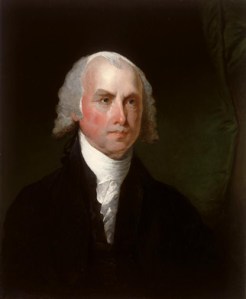
But whatever merits or problems one might see in the Second Amendment today, it’s worth remembering that it was not conceived to enable people to stand up to government, but for precisely the opposite purpose. James Madison wrote the Second Amendment to reassure Southern states that Congress would not disarm their militias, which they deemed to be necessary for slave control. Thus, the amendment ensured that people in power could continue to oppress, not the other way around. For Iran today, this would be akin to guaranteeing that the ayatollah shown in that cartoon would always have a gun, while the citizen did not.
Compromises to ensure ratification
The Constitution required ratification by at least nine states. Eight had ratified it, but anti-Federalists in other states held sway. Virginia was divided, with George Mason and Patrick Henry arguing against ratification. They raised the specter that Congress might refuse to call forth the militia to suppress a slave insurrection or could even disarm the Southern militias.
Although the Federalists prevailed, James Madison’s career was damaged. In order to resurrect it, he promised that he would support adding a bill of rights including this provision: “A well regulated Militia, being necessary to the security of a free State, the right of the people to keep and bear Arms, shall not be infringed.”
Carl Bogus (1998) shows that Madison wrote the amendment for the specific purpose of assuring his constituents that Congress could not use its new powers to deprive the states of an armed militia. Their primary concern was not that Congress would disarm the militia and thereby prevent hunting, self-defense, national defense, sport shooting, or resistance to governmental tyranny. Instead, it was that disarming the militia could bring an end to slavery. Despite later revised interpretations, the amendment did not grant individuals a right to keep and bear arms for random purposes, but instead for “well regulated” militias whose essential purpose was to prevent a slave rebellion, as happened in Saint-Domingue (now Haiti) just three years later.
As in any political arena, there were multiple interpretations and motivations at the time, as well as misunderstandings due to making sense of these more than two centuries later (Amar, 2005). A major concern in 1788 was of course the war against England and fears about future invasions. But it’s also clear that a driving force was the desire to preserve the institution of slavery, thus using guns to maintain tyranny, not just to resist it.
Cooper invented “the first handheld mobile telephone and supervised the ten years that were necessary to commercialize the product. He … formulated the Law on Spectrum Efficiency, also known as Cooper’s Law, which states that the maximum amount of information that is transmitted over a given amount of radio spectrum doubles every 30 months.”
Tomlinson worked at Bolt Beranek and Newman (now BBN Technologies). He helped develop the TENEX operating system, which had several innovative features, including a full virtual memory system, a user-oriented command line interpreter, and a command escape recognition system. In 1971 he developed the ARPANet’s first application for email by combining the SNDMSG and CPYNET programs so messages could be sent to users on other computers. He selected the @ sign to identify the user’s computer. Before long, that sign became the icon of the digital era.
Ray and I were colleagues at BBN, and teammates on the Great Swamp Volleyball Team, but I was just an ordinary user of that ground-breaking operating system and that early form of email.
Yesterday was the Juneteenth World Wide Celebration, the commemoration of the ending of slavery in the United States. As you can see in President Obama’s statement below, it’s based on the actual, as opposed to the mandated, freeing of slaves in Galveston, Texas in 1865.
I remember the celebrations in Texas when I was young, and it’s good to see those events being recognized more widely. That’s not because Juneteenth marks the completion of America’s struggle against racism, but because understanding our past can help us begin to deal with the reality of racism today.
There are times when a movie just grabs me, despite technical flaws, my low expectations, and even a boring DVD case cover. In This World is one of those. The political message is clear, but understated, conveyed instead by an intimate look at the consequences of war and greed on the lives of decent people.
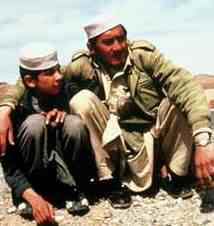
The movie presents a fictitious journey that conveys disturbing truths of life “in this world” we inhabit. Although it’s low-key and rough as cinema, it produces an intimate connection to its characters, Afghan refugees Jamal and Enayatullah, as they travel from Shamshatoo refugee camp near Peshāwar, Pakistan, across Pakistan, through Iran, Turkey, Italy and France, towards London.
Like thousands of others every year, their desperation feeds the multibillion dollar human smuggling business, an unconscionable stain on any of our pretensions to justice. The smuggling fuels crime, violence, corruption, illegal drug trade, and too often leads to death, no longer being “in this world.”
The actors are Afghan refugees themselves, and the encounters in the movie elide life and art. I was fascinated by the places they moved through, and their resourcefulness in learning how to cope with diverse languages and unscrupulous people.
The camps near Peshāwar are filled with people displaced by the Soviet invasion of Afghanistan and later, US bombing. UNHCR says that there are currently “1.7 million registered Afghans in Pakistan, with 45 percent residing in refugee villages and the rest scattered among host communities.” But the total, including children born to refugees, may be several million. The humanitarian crisis is compounded now by two million civilians fleeing the fighting in Pakistan’s Northwest Frontier.
Even though the story is depressing about our institutions, I finished it feeling hopeful about our human capacity. I wanted to travel the modern silk road and more still to learn about the world of these refugees and the policies that lead to their plight.
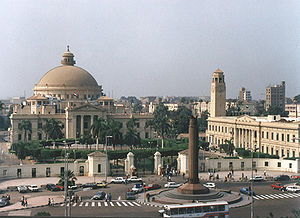
Obama’s speech yesterday at Cairo University (photo at left) was beautiful. It represents a new beginning against extremism both in the US and abroad. Even Osama Bin Laden recognized that it challenges a linchpin of al-Qaida’s message.
I don’t agree with many of the current Administration’s foreign policies (escalation of the Afghanistan-Pakistan war, inadequate engagement with the Caribbean, especially with respect to Cuba, and not doing more for Haiti, failure to close Guantanamo and re-establish justice following years of officially sanctioned torture and renditions, etc.), but opening dialogue is a first step towards a rational, humane, and effective foreign policy.
The ending of the speech is classic Obama:
It’s easier to start wars than to end them. It’s easier to blame others than to look inward. It’s easier to see what is different about someone than to find the things we share. But we should choose the right path, not just the easy path. There’s one rule that lies at the heart of every religion — that we do unto others as we would have them do unto us. This truth transcends nations and peoples — a belief that isn’t new; that isn’t black or white or brown; that isn’t Christian or Muslim or Jew. It’s a belief that pulsed in the cradle of civilization, and that still beats in the hearts of billions around the world. It’s a faith in other people, and it’s what brought me here today.
We have the power to make the world we seek, but only if we have the courage to make a new beginning, keeping in mind what has been written.
The Holy Koran tells us: “O mankind! We have created you male and a female; and we have made you into nations and tribes so that you may know one another.”
The Talmud tells us: “The whole of the Torah is for the purpose of promoting peace.”
The Holy Bible tells us: “Blessed are the peacemakers, for they shall be called sons of God.”
The people of the world can live together in peace. We know that is God’s vision. Now that must be our work here on Earth.
Thank you. And may God’s peace be upon you. Thank you very much. Thank you.
The book, How Europe Underdeveloped Africa, is now available online.
Rodney presents a new way of thinking about Africa’s so-called “underdevelopment.” The question was “why are some areas of the world rich and others poor?” I had been taught many reasons for this—that successful countries had better inventions, more adventurous explorers, greater natural resources, geographical advantages, better climate, less corruption, or just good fortune. The implication was that they mostly deserved their status as did the less successful ones. Africa’s underdevelopment was thus to a large extent Africa’s fault. Of course, a generous impulse might lead us to help those less fortunate to develop and share the goods of the world, maybe not to achieve full equality, but at least enough to meet their minimal needs.
Rodney challenges that entire view. He describes an Africa that is more developed than Europe in most ways except military conquest. When Europe fails to compete on even terms with Africa and Asia it turns to war and colonization to take by force what it cannot achieve through fair trade. Africa is then consciously exploited by European imperialists, leading directly to the modern underdevelopment of most of the continent. Thus, “underdeveloped” is an active verb, with an agent who does the underdeveloping; it’s not just a descriptive adjective.
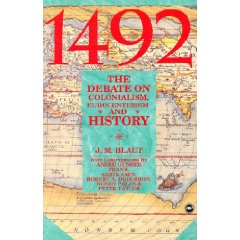
Rodney’s thesis was highly influential. James M. Blaut’s works, The Colonizer’s Model of the World: Geographical Diffusionism and Eurocentric History (Guilford, 1993) and 1492: The Debate on Colonialism, Eurocentrism, and History (Africa Research & Publications, 1993) extends the basic thesis, with more detailed economic analyses.
Other writers have criticized aspects of Rodney’s work, but the general idea seems even more salient in an era of neocolonialism. For example, Haiti today struggles under a crushing external debt. Nearly half of that was incurred under the Duvaliers, puppet dictators of the US. The Duvaliers stole the resources of the Haitian people, then assumed debts that oppress their children and grandchildren. Debt service, a burden essentially imposed by the US, makes economic growth nearly impossible. Yet commonplace accounts would say that “they” (the Haitian people) can’t manage finances, don’t know how to protect their natural resources, have a corrupt economy, lack creativity or initiative, or otherwise are to blame for their fate.
For many countries in Africa, for Haiti, and for other colonized areas, the forcible appropriating of indigenous human and natural resources means underdeveloping those areas. When we turn “underdevelop” into a past participle, “underdeveloped,” we make it easy to forget how that happened. Rodney puts it this way:
The question as to who, and what, is responsible for African underdevelopment can be answered at two levels. Firstly, the answer is that the operation of the imperialist system bears major responsibility for African economic retardation by draining African wealth and by making it impossible to develop more rapidly the resources of the continent. Secondly, one has to deal with those who manipulated the system and those who are either agents or unwitting accomplices of the said system. The capitalists of Western Europe were the ones who actively extended their exploitation from inside Europe to cover the whole of Africa. In recent times, they were joined, and to some extent replaced, by the capitalists from the United States; and for many years now even the workers of those metropolitan countries have benefited from the exploitation and underdevelopment of Africa. (§1.2)
Rodney’s account of Africa, written 37 years ago, is still relevant for Africa today. But it extends to other international regions and even to communities within so-called “developed” countries. When we see, and label, communities as underdeveloped, low-resource, impoverished, disadvantaged, economically depressed, troubled, or marginalized, we follow the lead of the 1965 Moynihan report, which described a “tangle of pathology,” locating problems within the community with causes in the distant past.
We should ask not only how these communities compare to privileged ones, or even what useful things we might do to help them. We need to look first at the structures and mechanisms of power that caused these conditions in the first place, and now, continue to maintain them. This means turning from the conceit that underdevelopment just happens, that an appropriate and full response is to “give” to those less fortunate. It requires collaborative struggle in which all participants are willing to examine the roots of oppression and to engage in the practice of freedom.
Image courtesy of Windows to the Universe. “This is an artist’s conception of Pluto and Charon. Pluto is in the background and Charon is in the foreground. Pat Rawlings, Science Applications International”
The Illinois State Senate has redeemed poor Pluto from dwarf planet status to its rightful place in the universe, and established March 13 as Pluto Day. This was done in large part to honor Illinois native Clyde Tombaugh. One justification for this was that Tombaugh was the only American to discover a planet. Another was that there were no real problems left to work on.
There are of course a few problems with the Senate’s idea. Early Native Americans undoubtedly discovered most of the planets in our solar system, even if official histories don’t credit them. Other Americans have discovered many planets outside of our solar system. And what Tombaugh discovered isn’t really a planet, under current definitions.
But Pluto is now part of our culture. Even if it’s not a planet, do we really want children going around saying “My very educated mother just served us nine”? Nine what? Pluto gives us a reason to add “pizzas,” which might be reason enough to keep it.
Tombaugh did do something. Eric Jakobsson, points out that they should have honored him for “discovering the first of the Kuiper objects (as opposed to the last of the planets). Arguably, that was a more important discovery than another planet, because it added a whole new dimension to our understanding of the solar system.”
Eric’s argument highlights two different conceptions of learning. In one, authority gives us the answer, case closed. In another, ideas become tools for further inquiry. Richard Shaull, puts it this way in the foreword to Paulo Freire’s Pedagogy of the Oppressed (1993):
There is no such thing as a neutral educational process. Education either functions as an instrument to facilitate the integration of the younger generation into the logic of the present system, or it becomes the practice of freedom, the means by which men and women participate in the transformation of their world.
We should remember and honor Tombaugh’s dedication, intelligence, and painstaking studies of photographs. His work on Pluto and asteroids contributed to transforming our scientific understanding of the universe. That was not the social world that Freire means when he says the “practice of freedom,” but in its own way represented a challenge to the “present system.” Unfortunately, the Senate’s rearguard action has become an internet joke that fails to express what Tombaugh really accomplished.
I’ve been reading the articles on RiseOut, an online “news center focused on deschooling, youth activism, and other related issues concerning the rights of youth in the U.S.” There are entries on deschooling; unschooling; youth media; racism; the Highlander Folk School in New Market, Tennessee; Dr. “Patch” Adams; a review of the book, The Teenage Liberation Handbook, How to quit school and get a real life and education (by Grace Llewellyn); critiques of school segregation (and recent Supreme Court decisions that support it), credentialism, and military conscription.
Most of the articles on RiseOut are well-researched, thoughtful, and provocative. They remind me of the wonderful book, Letter to a teacher by the schoolboys of Barbiana, in which youth in Italy present a searing critique of their education and the unjust society it supports.
Both the Barbiana book and RiseOut address the question that Earl Kelley asks: What is real in education?. Kelley answers that the bedrock reality is the the actual life of youth.
The Obama administration’s proposed “Cradle to Career” education plan, has many good components, but education reform will never accomplish much if schooling continues to be separated from actual life and fails to come to terms with the issues raised in RiseOut.
From the RiseOut site:
We provide a diversity of alternatives to education that are self-directed and decentralized from standardized schooling. We support a young person’s choice in dropping out of school, free of social stereotypes and biases. We aim to provide a plethora of alternatives from a 12-year prison like sentence of state schooling, while staying vigilant of abuses against young people through diagnosing, segregation, ageism, adultism, sexism, and other assholisms.
A message to those who have decided to quit school:
Instead of dropping out, we applaud you for your courage to “riseout” from a nightmarish disposition of compulsory schooling. We hope RiseOut can be a resource for sharing your stories and providing choices towards regaining control over your own education.
Norma Scagnoli referred me to a wonderful podcast by LeAnn Erickson, Associate Professor of Film and Media Arts at Temple University. Erickson is an independent video/filmmaker, whose work has appeared on public television, in galleries, and has won national and international awards.
Entitled, Hidden Her-story: The Top-Secret “Rosies” of World War II, it was recorded in January at the EDUCAUSE 2009 Mid-Atlantic Regional Conference in Philadelphia. I expected to listen for a minute and then go on to more pressing things, but after listening a little I decided that those things weren’t so pressing after all. It’s a fascinating story for anyone who has an interest in history, computers, women, education, mathematics, warfare, politics, Philadelphia, science, workplace equity, morality, or life in general.
In 1942, only months after the United States entered World War II, a secret military program was launched to recruit women to the war effort. But unlike recruiting “Rosie” to the factory, this search targeted female mathematicians who would become human “computers” for the U.S. Army. These women worked around-the-clock shifts creating ballistics tables that proved crucial to Allied victory. “Rosie” made the weapons, but the female computers made them accurate. When the first electronic computer (ENIAC) was invented to aid ballistic calculation efforts, six of these women were tapped to become its first programmers. “Top Secret ´Rosies’: The Female ‘Computers’ of WWII” is a documentary project currently in postproduction that will share this untold story of the women and technology that helped win a war and usher in the modern computer age.
Controls for the podcast appear beneath the description on the EDUCAUSE page.











 Chip's journey