The bottom line in health care

healthIn my previous post on Single-payer health care: Why not?, I talked about our family’s experiences with health care in France, UK, Ireland, Italy, China, Australia, and other places in comparison to that in the US. This included health care for children and the elderly, and both minor (blood donation, physicals, skin growth removal) and major (broken hip, eye infection) procedures.

Thinking a bit more about this I realized that there were four essential facts that emerged from this wide variety of experiences. In every industrialized country except the US,

  1. Equitable: Everyone has the right to health care.
  2. Effective: People live longer, healthier lives.
  3. Economical: They spend less on health care, as much as 50% less.
  4. Efficient: There is much less bureaucracy, fewer forms, less running around, less waiting.

dollarI might add a fifth point, too: The scare stories that we hear (“you have to wait forever!” “you can’t choose your doctor!”) are simply false, or they index issues that are the same or worse in the US. The information we get about health care promotes profit, not health.

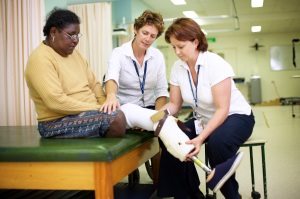
There are many issues–changing demographics, new technologies, new medical knowledge, changing standards, globalization, and more–which affect health care. But the fundamental difference in the current US situation is that health care is driven by the bottom line. Insurance companies, pharmaceutical companies, media corporations, hospitals and clinics, doctors and other health care professionals, and all others involved in health care operate in a system in which rewards bear little relation to the overall quality of care or efficient use of resources.

One can debate each of the points above, but the evidence from OECD, UN, WHO, WTO, and other international organizations is overwhelming in support of them. Other systems offer health care that is more equitable, more effective, more economical, and more efficient.

So, why is single-payer, or national health care not even worth discussing? Why does the Obama plan dismiss it? Why does even public broadcasting ignore it?

In This World

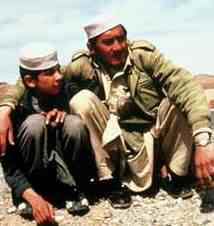
in this world-2There are times when a movie just grabs me, despite technical flaws, my low expectations, and even a boring DVD case cover. In This World is one of those. The political message is clear, but understated, conveyed instead by an intimate look at the consequences of war and greed on the lives of decent people.

The movie presents a fictitious journey that conveys disturbing truths of life “in this world” we inhabit. Although it’s low-key and rough as cinema, it produces an intimate connection to its characters, Afghan refugees Jamal and Enayatullah, as they travel from Shamshatoo refugee camp near Peshāwar, Pakistan, across Pakistan, through Iran, Turkey, Italy and France, towards London.

ITW_trailerLike thousands of others every year, their desperation feeds the multibillion dollar human smuggling business, an unconscionable stain on any of our pretensions to justice. The smuggling fuels crime, violence, corruption, illegal drug trade, and too often leads to death, no longer being “in this world.”

The actors are Afghan refugees themselves, and the encounters in the movie elide life and art. I was fascinated by the places they moved through, and their resourcefulness in learning how to cope with diverse languages and unscrupulous people.

The camps near Peshāwar are filled with people displaced by the Soviet invasion of Afghanistan and later, US bombing. UNHCR says that there are currently “1.7 million registered Afghans in Pakistan, with 45 percent residing in refugee villages and the rest scattered among host communities.” But the total, including children born to refugees, may be several million. The humanitarian crisis is compounded now by two million civilians fleeing the fighting in Pakistan’s Northwest Frontier.

Even though the story is depressing about our institutions, I finished it feeling hopeful about our human capacity. I wanted to travel the modern silk road and more still to learn about the world of these refugees and the policies that lead to their plight.

A new beginning against extremism

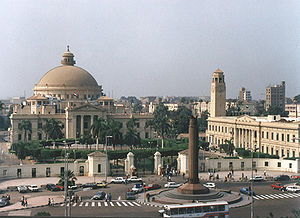
300px-CairoUnivObama’s speech yesterday at Cairo University (photo at left) was beautiful. It represents a new beginning against extremism both in the US and abroad. Even Osama Bin Laden recognized that it challenges a linchpin of al-Qaida’s message.

I don’t agree with many of the current Administration’s foreign policies (escalation of the Afghanistan-Pakistan war, inadequate engagement with the Caribbean, especially with respect to Cuba, and not doing more for Haiti, failure to close Guantanamo and re-establish justice following years of officially sanctioned torture and renditions, etc.), but opening dialogue is a first step towards a rational, humane, and effective foreign policy.

The ending of the speech is classic Obama:

89px-A_Boat_in_the_Nile_RiverIt’s easier to start wars than to end them. It’s easier to blame others than to look inward. It’s easier to see what is different about someone than to find the things we share. But we should choose the right path, not just the easy path. There’s one rule that lies at the heart of every religion — that we do unto others as we would have them do unto us. This truth transcends nations and peoples — a belief that isn’t new; that isn’t black or white or brown; that isn’t Christian or Muslim or Jew. It’s a belief that pulsed in the cradle of civilization, and that still beats in the hearts of billions around the world. It’s a faith in other people, and it’s what brought me here today.

We have the power to make the world we seek, but only if we have the courage to make a new beginning, keeping in mind what has been written.

The Holy Koran tells us: “O mankind! We have created you male and a female; and we have made you into nations and tribes so that you may know one another.”

The Talmud tells us: “The whole of the Torah is for the purpose of promoting peace.”72px-Barack_Obama_at_Cairo_University_cropped

The Holy Bible tells us: “Blessed are the peacemakers, for they shall be called sons of God.”

The people of the world can live together in peace. We know that is God’s vision. Now that must be our work here on Earth.

Thank you. And may God’s peace be upon you. Thank you very much. Thank you.

See Obama hits a home run, by Robert Dreyfuss.

Single-payer health care: Why not?

180px-Roma_-_FatebenefratelliI’ve been fortunate to have traveled many places, and to have lived for extended periods in China, Australia, France, and Ireland. During those travels, my family has received health care on many occasions, including for our small children in China and Asutralia, my wife in Scotland, and my 87-year-old mother in Ireland.

This health care has come in a variety of forms, including treatment for my ten-year-old daughter’s eyes at the Hospitaller Order of St. John of God or Fatebenefratelli (see left), located on San Bartolomeo, the only island in the Tiber River in Rome. That hospital was built in 1584 on the site of the Aesculapius temple.

clontarfWe also faced emergency surgery for my mother’s hip at Beaumont Hospital in Dublin, Ireland and subsequent rehab at the Orthopaedic Hospital of Ireland in Clontarf (right). In China, we were served in medical facilities with separate queues for Western medicine (our choice) and traditional Chinese medicine (below left). I donated blood many times at the Hôtel-Dieu de Paris, founded in 651 on the Ile de la Cité (below right). I’ve also observed, though not had to depend upon, health care in Russia and even in economically oppressed places such as Haiti.

beida_hospitalOn the whole, I’ve received excellent care in a variety of conditions. Individual health providers have been courteous, knowledgeable, and dedicated to their professions. For myself and my family, the experience of care did not depend on the setting or language, but rather on the ailment or the specific people providing care.

And yet, one thing stands out: Among the industrialized nations, the United States is the only one without universal health care. All of the others provide health care for all. They also do it primarily through single-payer systems.

The United States operates instead through a complex bureaucracy of insurance policies, doughnut hole prescription drug coverage, forms and regulations galore, massive administration, unnecessary and excessive procedures, complex and confusing tax codes, leading to escalating costs and unfair coverage. The inequity of care actually costs all of us more in the end, because of lack of preventative care, inefficient delivery (e.g., emergency rooms), and lost productivity. Our system costs much more, even double that found in other countries.

hotel_dieuIf we were to find that spending a few dollars more gave us better care, there might be little room for argument. But in comparable economies, people spend much less, yet have longer, healthier lives (American Health Care: A System to Die For: Health Care for All). Why then, is the system that works in Canada, Japan, Europe, Australia, etc., not even under consideration here?

The answer is unfortunately all too obvious: Americans, unlike citizens in other countries, have ceded control of their own health care to profit-making insurance companies, hospitals, clinics, laboratories, pharmaceutical companies, and other entities. The best we can do is an occasional feeble cheer when someone asks why our government can’t even consider a single-payer system. Then we listen to an answer that mostly obfuscates and lays the blame for it back on our own timidity:

Friends don’t let friends suffer: The US must step up for Haiti

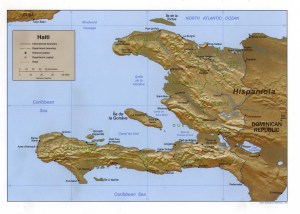
haiti-childrenHaiti is experiencing an unprecedented humanitarian crisis. The US must not ignore one of its closest neighbors in a time of need.

Here are some grim facts behind the crisis, reflecting both long-term problems and recent natural catastrophes:

  • Last year, during a one-month period, hurricanes Fay, Gustav, Hanna and Ike devastated the country. Over 1000 people were killed; countless others were reported missing and injured.
  • The hurricane damage was equivalent to 15 percent of Haiti’s gross domestic product (GDP). A recent international donors’ conference raised $324 million in emergency and long-term assistance for Haiti. That was better than nothing, but it’s only a third of what Haiti needs to rebuild.
  • Meanwhile, over 30,000 undocumented Haitians face deportation orders from the US. If carried out, these orders would return Haitians to a country struggling to rebuild and not able to provide the critical social safety nets needed for people to survive. Their return would also diminish remittances, which mean the difference between life and death for Haitians.
  • There is high maternal and infant mortality, as well as unwelcome high rankings on most other indicators of poverty.

haiti_rel99Despite these problems, organizations such as La Fondation Connaissance et Liberté (FOKAL) have made major strides toward sustainable development. External aid now can make the difference between compounding the suffering and building an independent, prosperous, and democratic nation.

What can be done?

  • The World Bank and International Monetary Fund should include Haiti in their Highly Indebted Poor Country initiative, a program to lower debt to manageable levels. Better yet, cancel Haiti’s crippling external debts until the economy can be self-sufficient.
  • US and other international aid to Haiti should be doubled immediately. Foreign aid should be structured as grants, not as loans, which may offer short-term help, but long-term shackles.
  • International aid should be focused on development, not military and police support. Haiti has enough guns already. Aid programs should work with NGO’s as well as government agencies.
  • Stop the deportations. Haitians should be granted Temporary Protected Status (TPS) and the Department of Homeland Security should conduct a thorough review of US policy towards Haiti. Individuals should call the DHS at 202-282-8495 [if unable to get through, call the White House Comment line at 202-456-1111] and urge these actions.
  • The US should extend the Haitian Hemispheric Opportunity through Partnership Encouragement Act (HOPE), which allows Haitian textile manufacturers to export duty-free to the United States. This could generate much-needed jobs in Haiti’s labor-intensive garment industry. The average Haitian garment worker earns $4 a day, while 77 percent of Haitians live on less than $2 a day. As Rep. Charles Rangel, said of the US textile industry concerns, “God should be so good to the people in Haiti that their exports should be a threat to the United States of America. That’s not going to happen.”
  • All Americans need to learn more about our neighbor in need. Explore the resources provided by organizations such as the Latin American Network Information Center (LANIC) – Haiti, the Haiti Information Project, the Haiti Action Committee, and Oxfam, as well as the many books about Haiti, especially those that consider its history.

References

UNICEF (2009). The state of the world’s children: Maternal and newborn health.

Fondation Connaissance et Liberté (FOKAL)

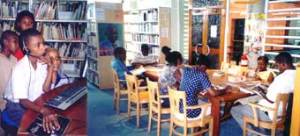
accueil_biblio1 I was very fortunate to hear Elizabeth Pierre-Louis speak yesterday.

Elizabeth was on campus to accept the 2008 Young Humanitarian Award. As Director of the Library Program at Fondasyon Konesans Ak Libète (FOKAL) in Haiti, she helped to set up 45 community libraries across the country. She coordinates the training and management of these libraries, which are improving the quality of live for the people there. Elizabeth described a wide variety of programs of FOKAL, including projects on supplying running water, developing basic literacy, supporting the visual arts, dance and music, debate, and economic education.

Throughout these many programs, there is an emphasis on participatory democracy, including organization and responsibility of citizens, leadership, financial and technical management, resolving conflicts, and collective decision making. Elizabeth’s work is just part of an amazing organization helping people work together toward common purposes.

The photo, of the Monique Calixte Library in FOKAL’s Cultural Center, and this text below are from the FOKAL site.

The Fondation Connaissance et Liberté / Fondasyon Konesans Ak Libète (FOKAL) Cultural Center, built in 2003 in the center of Port-au-Prince thanks to funding from the Open Society Institute (OSI) and support from George Soros, is designed for meetings, training, reading, debates, recreation and discovery.

The center is comprised of a public library, with a membership of over 5,000 where children and youths from the poor neighborhoods of Port-au-Prince have access to reading materials in optimal conditions, a small auditorium, a café-terrasse and a cybercafé. The UNESCO auditorium is a hall designed for conferences, debates, meetings, audio-visual presentations, films, concerts and theatre. The center also includes a large atrium where one can discover the works of both Haitian and foreign painters, writers, and sculptors; and a sound and video production studio, a training hall and gardens…

FOKAL’s cultural center offers a place, eminently rare in Haiti, where peasants, women, children and youths from poor neighborhoods have a chance to interact with each other and with representatives of all sectors of society on subjects which concern education, the environment, culture, and democracy…