Changing the spiral of violence into a spiral of hope

stack of monitors Camara is a wonderful program, which could be described in simple terms as a way to stop filling landfill sites with the hazardous waste of old computers, and instead, send those computers to schools and colleges in Africa. But it’s really much more than that.

I was fortunate to get a tour of the new Camara facilities now located in the Digital Hub near the Guinness Warehouse in the Liberties area of Dublin. I’ve now also had a chance to meet with various Camara staff and volunteers. I learned that Camara delivers computers to schools throughout Africa; sends volunteers to teach technology in Africa, and creates computer training materials and educational multimedia for schools in Africa.

refurbishingThere are many distinctive features of the Camara operation. One is that computers are loaded with Camarabuntu. This is a complete operating system (Linux), plus an office suite, web browser, many educational applications, and a condensed Wikipedia. It’s designed for a teacher to be able to setup a complete computer-based classroom quickly and easily.
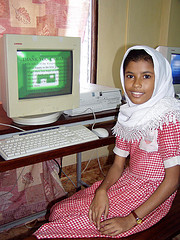
There is also much attention to the volunteer experience, including providing opportunities for people with a wide range of skills and available time. Post-prinary and third-level students participate, as do retired people, and many others. Camara finds ways to involve everyone. Even those who donate computers are asked to help with the initial sorting of parts. They also help with culture shock for those who make the four-week trip to Africa.

girl at site

One derivation of the name, Camara, is from a West African word meaning, “one who teaches from experience.” Another is from Dom Hélder Pessoa Câmara the Roman Catholic Archbishop of Olinda and Recife, who had an uncompromising commitment to the poor. Câmara’s “Spiral of Violence” calls upon the youth of the world to break the spiral that their ancestors and parents have perpetuated. The Camara computer to Africa program brings together these aspects of learning and social justice in a refreshingly practical and successful way.

Photos courtesy of the Camara Flickr site.

Scholarship of Teaching & Learning at NCI

NCIAn important emphasis for the School of Computing at the National College of Ireland is research that makes a difference for student learning. This is realized in the development of automated systems to enhance learning: Orla Lahart is developing a system to provide online mentoring for teachers; Dietmar Janetzko is developing dialogue systems to respond to learners or instructors producing course materials; Stephan Weibelzahl’s group (including Sabine Moebs, Teresa Hurley, Diana Chihaia) has a variety of efforts to build adaptive learning spaces; Keith Maycock is working on automatic generation of instructional content to suit the cognitive ability and pedagogic preference of learners.

There is also innovative research on learning styles (Elaine Maher, Paul Stynes, Pramod Pathak); students’ perceptions of software development concepts (Frances Sheridan); the use of mobile devices to support learning (Paul Hayes); elearning (Eugene O’Loughlin); new approaches to enhance student engagement (Pramod Pathak); workplace learning (Leo Casey, Abigail Reynolds, Michael Coleman); digital literacy (Leo Casey, Abigail Reynolds); and many other examples. The recent inauguration of a new elearning usability lab (Leo Casey, Stefan Weibelzahl) further supports this research.

A distinctive feature of most of this research is that it is applied to the teaching within the School itself. Thus researchers do not simply study how those in other settings learn or teach; they apply it to their own setting. This means that the School is automatically aligned with the Scholarship of Teaching & Learning movement. I hope to see its research appear soon in journals such as the International Journal for the Scholarship of Teaching & Learning (IJ-SoTL) and at SoTL conferences.

Thoughts for today

“Books are no substitute for living” (May Hill Arbuthnot), but “Life without books is empty” (Isaac Asimov)

“To feel the meaning of what one is doing, and to rejoice in that meaning; to unite in one concurrent fact the unfolding of the inner life and the ordered development of material conditions–that is art” (John Dewey)

“It is better to know some of the questions than all of the answers” (James Thurber), but “The best way to find things out .. is not to ask questions at all…if you sit quite still and pretend not to be looking, all the little facts will come and peck round your feet, situations will venture forth from thickets, and intentions will creep out and sun themselves on a stone” (Elspeth Huxley)

“One’s work should be a salute to life” (Pablo Casals, from “Salute to Life”)

Children First

Children FirstI attended a very interesting session yesterday at the National College of Ireland on child protection policies. This related to the about-to-appear Children First: National Guidelines for the Protection and Welfare of Children, and the fact that the College has a significant number of under-18-year-old students, as well as programs for area children.

There were disturbing stories in the session about recent abuse cases, and also complex accounts of how Ireland is advancing its child protection policies. The latter included issues such as reconciling the constitution’s protection of family rights with the United Nations Convention on the Rights of the Child. The Convention asserts that every child has basic rights, including the rights to live, to express opinions, to be protected from abuse, and to privacy. There were practical tips offered on what to do when observing a situation in which children’s rights were violated as when they are forced to beg on the streets.

Participating in the session reminded me that 193 nations have ratified the UN Convention, while only two have not–Somalia and the United States. The turmoil in Somalia makes it a special case, which might be excused. But the US should have been the leader, not the wayward one. It’s sad to imagine John Lennon, standing on the other side saying, “We hope someday you’ll join us” and not being able to do so.

Aughavannagh and Glenmalure

Aughavannagh cottage

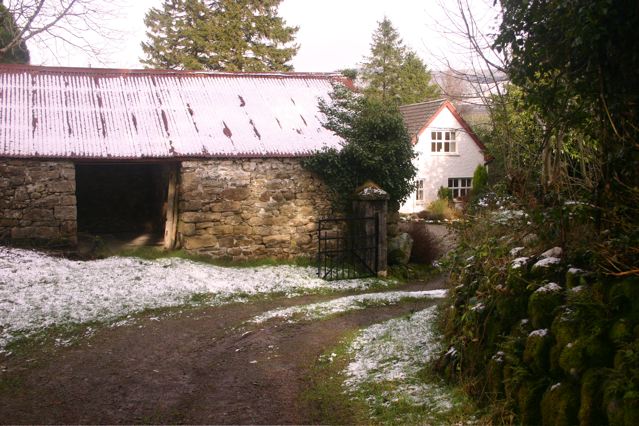
Our Ballsbridge apartment lease ran out at the end of January and the new apartment wasn’t available until 3 February. That meant that aside from badly needing a break, we were also homeless for three days. It became clear that this was a time to turn crisis into opportunity. We chose to make a long weekend of it, going to stay in a cottage in Aughavannagh in the Wicklow Mountains south of Dublin. You can see the cottage behind the shed, in the first photo.

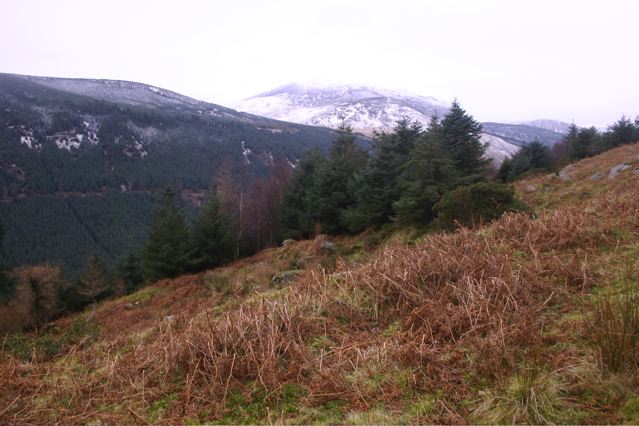
Glenmalure mtns

Being in a valley, there was no mobile phone access, much less internet. As our rental car was not designed for the snow in the mountains, so we were about as isolated as one could be just 50 kilometers or so by air south of Dublin.

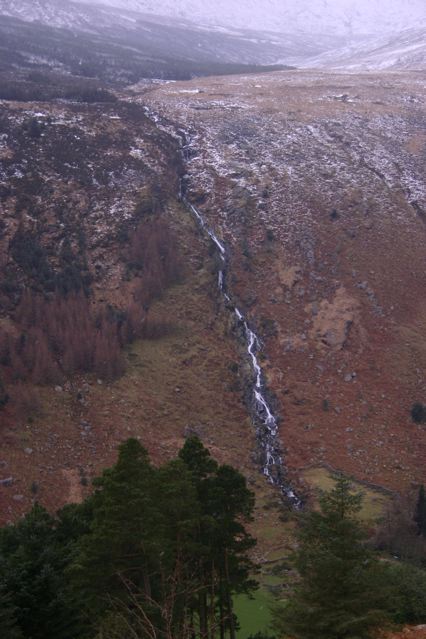
Glenmalure waterfall

The weekend was cold, with light snows, rain, and ferocious winds at times. But we had a fireplace and plenty of fuel. At times the weather cleared enough for walks. One very delightful one was at Glenmalure, the longest glacial valley in Ireland and UK. It’s just east of Luqnaquilla, Wicklow’s highest mountain at 925m. There’s also the impressive Carrawaystick waterfall, down to the Avonbeg River (see left).

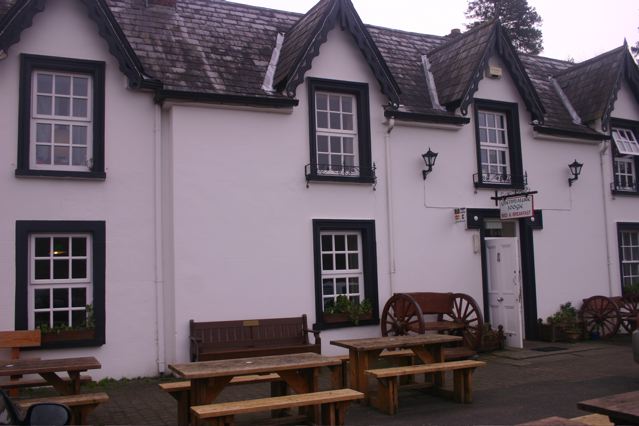
Glenmalure is not far south from Glendalough, an equally beautiful spot, but one that’s more heavily traveled. At the end of the walk we had an excellent pub lunch at the Glenmalure Lodge, where we had parked our car. That allowed us time to get back to watch Ireland v. Italy (rugby) on the telly. (We weren’t totally out of touch with the modern world!) Glenmalure Lodge

Fulbright Chair at National College of Ireland, 2007-08

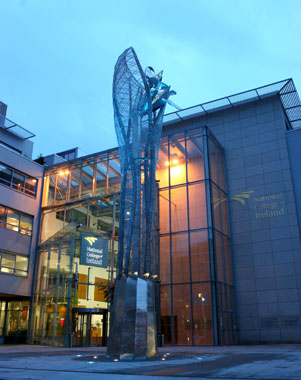
NCI Iris

My Fulbright Distinguished Chair position is hosted by the National College of Ireland, a third-level institution in Dublin. The College is very different from my own University of Illinois in terms of size, history, student population, local community, and emphasis on postgraduate education. And yet, I sensed from the position description and confirmed through subsequent interactions that there was an excellent fit with my own interests, experiences, and values.

The College was established in Ranelagh by Jesuits. Initially known as the Catholic Workers College, it was designed to serve workers and to fulfill the social justice mission of the Jesuits. It was also a response to the threats of totalitarianism revealed by the leadup to and aftermath of the Second World War, seeing education as the means to preserve a democratic society.

In 2000, the name was changed to National College of Ireland, and in 2003 the College moved to the International Financial Services Centre in the Dublin Docklands area. Over its history the nature of work had changed from manufacturing to service, digital technologies had become ubiquitous, and Ireland had grown into a wealthy nation. But not everyone participated fully in the Celtic Tiger; in the Docklands itself, one sees high-rise buildings for multinational banks and insurance companies next to housing for families who see little chance for success in schooling or in the economy. In this context, the College has maintained its social justice commitment, but renewed that in the context of a changing economy and demographics.

It was clear from my initial meetings in the College that there was a strong desire among both the leadership and the staff to bring social action together with academic excellence. There was a commitment to foster social responsibility along with new economy skills. There was an openness to seeing social commitment as an integral part of the learning experience and of scholarship in the College. Because of this, I saw a real opportunity to connect my work on community inquiry. My work came to focus on widening participation, enriching the learning environment, and promoting an active research culture, which were also key aspects of the College strategic plan.

Continue reading

School visit stories

One school Principal here told me they weren’t thinking about computers much because they had other priorities. I said, “oh, like basic reading and arithmetic?” He said, “no, I have 100 boys in this school and there’s no one to fix the damn toilets!”

We met with a class of 3rd graders. He told them I was from Texas and asked what they knew about it. Long pause, then one said, “they have squirrels.” I agreed. After another pause, a second added, “they have cowboys.” The Principal then asked, “Anything else? Do you know any famous people from Texas?”

One boy then said “Stone Cold Steve Austin.” Others quickly jumped in with other names I didn’t recognize. I thought the problem was my hearing or the accents, but the Principal didn’t know the names either. So, the boys had to explain that they were all wrestlers from Texas, whom they’d had seen on TV. There’s always more to learn.

Bridge to College

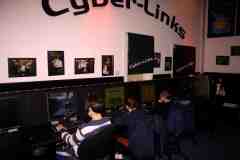
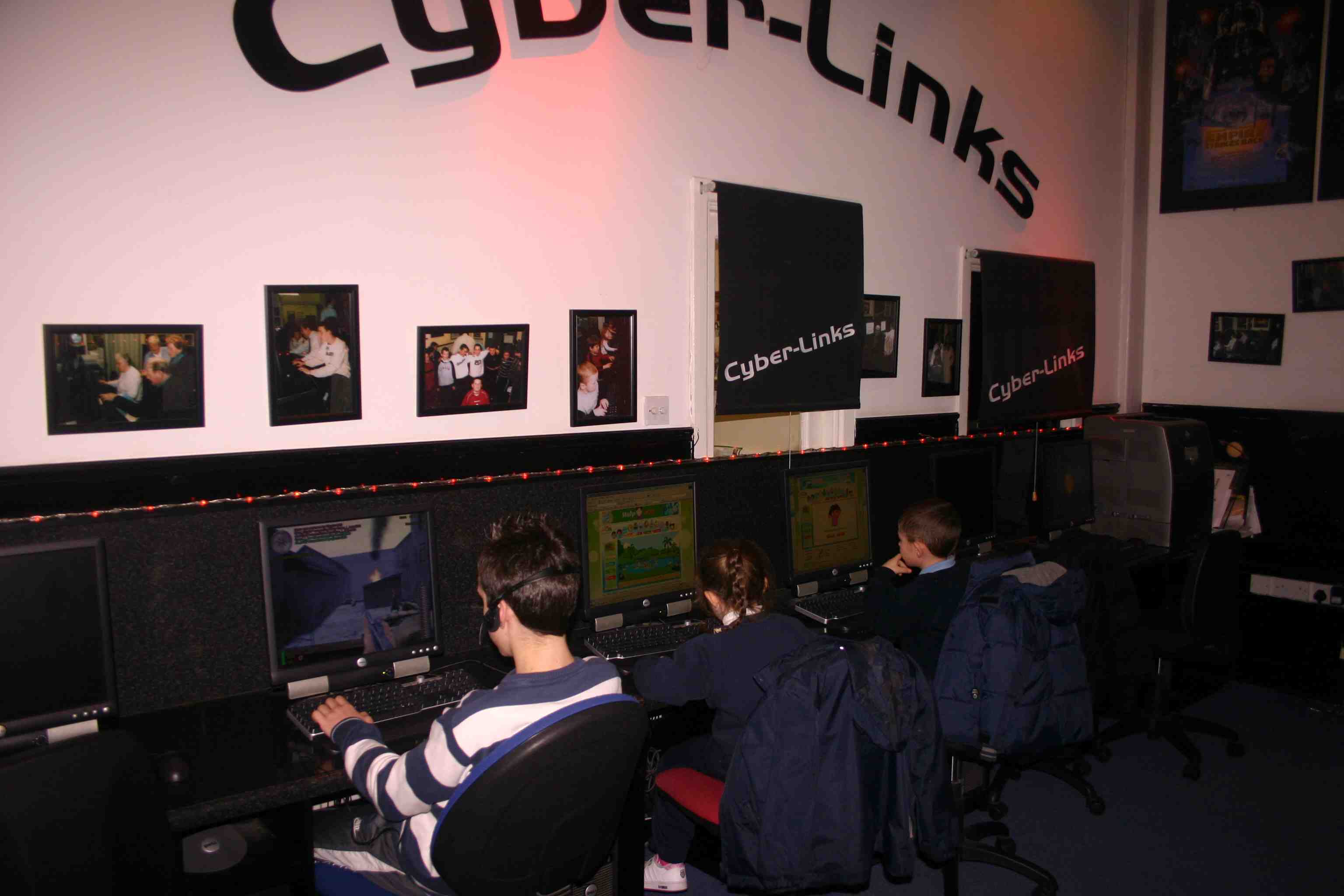
While living in Dublin, I often walk past the Suas Foundation’s Bridge to College (B2C) space on Fenian Road. But I find it hard not to pause to see what’s happening inside. There’s always activity there.

Brendan TangneyI first became aware of B2C when Brendan Tangney of Trinity College took me there to see the construction last fall. Even then, I could see it was special. It might be characterized as a computer access centre, but most of those that I’ve seen have computers in utilitarian rows, plain tables, and some bland color on bare walls. In contrast, I saw here the beginning of pods for small groups to work together on projects. There were low curved walls defining the pods, which promised just the right balance of privacy for the groups and the possibility of communication across groups. When Maxine Greene talks about transformation of public spaces to promote democratic engagement, I know she means far more than furniture, but I nevertheless felt that this was a tangible expression of making spaces work for people and for more inclusive learning.

treeSoon, I saw a primeval forest emerging. A thick, green carpet suggesting grass, or maybe pond vegetatio, grew on the floor, while a Lord of the Rings forest appeared on the walls, with ancient trees and mist rising from the swamp. That was just the room in the front. Through a doorway and a time-warp window I could see a nightclub or cafe in the second room. It had black walls with a cityscape, and rising above that, surrealistic images. The whole thing made me want to explore and to be a part of whatever was going to happen there. It’s an attractive space with computers organized into pods, projectors, digital cameras, printers, and other tools, as well as a physical space with meeting areas, movable furniture, room to move about, and a small stage.

cityscapeOn later visits, I met with developers Claire Conneely and John Lawlor. I learned that this wasn’t just a pretty space. I saw Transition Year students engaged in serious, challenging, collaborative, multimedia projects. For example, they would take a video camera in to the neighboring community (between Trinity and the Liffey River). They’d film objects, the neighborhood, and themselves, then edit the video. The next day, they would take on a social action multimedia campaign–visit your elderly relatives over the holidays, stop using drugs, give aid to Africa, and so on. The project involved web-based research, then the creation of a poster, with text, images, and graphics. Later they would produce a radio spot for the same campaign. At the end of the week, they would make a web page integrating all of their work.

Claire ConneelyOver three and a half days, students, some of whom might have been on the verge of quitting school, would demonstrate facility with digital video, video and audio editing, web search, graphics, design, web page construction, all in the service of and as an aid to learning about living responsibly in the world. In so doing, they also learned about working together and completing complex tasks. Rather than being monitored or guided every step of the way, they relied on just a mentor, who was just a few years older. The mentor was also a student, but at third level, and was typically learning along with the younger students. There are plans now for a second tier of mentoring, in which the Transition Year students would mentor 11-year-olds.

John LawlorI could point about many good things about the space and the programme. There is a good mix of using diverse technologies effectively, collaboration within and across groups, project-based work, inquiry, reflection, and problem-solving. I’ve seen the value of those aspects in some other projects. But three other things stand out for me with B2C:

studentFirst, although the technologies are used in intensive and complex ways, their use is not the end. All of the activities fit together into a unified whole, which extends beyond the technological fluency. In the cases I’ve seen there, students are addressing questions that go beyond B2C or their normal schooling to seek positive transformation of their social lives. Of course, I’d love to hear that the radio spots are actually aired and the poster distributed and read, or that the campaigns extend beyond the week. But even so, there’s a clear realization here of John Dewey’s idea of connecting school and society.

more studentsSecond, as I said above, there is a remarkable approach to seeing space and physical facilities as something to be constructed to serve human ends, rather than as a given that constrains what we can do. Many community technology centres or computer labs in schools do a good of managing the digital technologies effectively, but they rarely have the resources, or perhaps the vision, to see that the physical space can be something that is inviting, reinforcing, and conducive to productive social interaction. Here, the physical space is treated as seriously as the choice of software or projectors.

mentors, Chloe, JonellaThird, B2C is a useful facility, but far more than that, it is an artistic creation, and here, I speak of the totality–the painted walls, the furniture, the window to see from city to forest or forest to city. It reminds us of Jane Addams’s call that the first furniture for Hull House should be art on the walls, or the view prevalent in Chinese schools that the aesthetic side of learning is as important as the cognitive.

The radio museum in Howth

This could have been a post about a walk on the Cliffs of Howth, a small seaside town north of Dublin. Yesterday was a beautiful day, with a brisk wind and light cirrus clouds–a great day for a cliff walk if you don’t stand too close to the edge and if you watch your footing on the muddy track and wet rocks.

Pat and EmilyBut before we began the walk, we happened upon a wonderful small museum about the development of radio: Ye Olde Hurdy-Gurdy Museum of Vintage Radio. It’s in the Martelo Tower above the harbor, at one end of the cliff walk. Pat Herbert, the founder, is passionate about what he’s learned about radio, and communications in general, drawing everyone else into it. Susan adds:

Pat played a tape on which a group of amateur radio enthusiasts had recorded a conversation with the Space Shuttle Columbia during the few minutes it was over Ireland in 1983, 20 years prior to its tragic crash over Texas. One of the astronauts at the time was an amateur radio enthusiast, and Irish amateur radio people had spent hours trying to contact him. A visitor to the museum gave Pat the tape, which he owned only because his brother had been one of the 1983 radio buffs. The entire visit was like that, just one story after another… He had many stories, mostly directed at Emily. And, typically, at about 1:00, announced that it was about time for a cup of tea and biscuits. So we sat around and talked for a good while.

Howth cliffPat said that not many school groups come to the museum. That’s a shame, because the exhibits could be fascinating to young people as well as to those who lived through some of the times presented there. I think especially of young people in transition year programs (age ~15), who are doing new media projects, such as at the Suas Foundation’s excellent Bridge to College (B2C) programme . The museum would introduce interesting technologies as well as add an historical perspective.

Susan and EmilyWhen we did manage to set off on the hike we had a wonderful windy time, circling a good part of the Howth peninsula with grand views of the Ireland’s Eye and the Dublin harbor, and then making it up to the Ben of Howth. Eventually returned to the port in time for early dinner at The Oar House.

Christmas in Kilcrohane

sheep on Sheepshead Wayme in KilcrohaneWe had a wonderful Christmas in Kilcrohane on the Sheepshead Peninsula in West Cork. We went with Stephen, over from St. Petersburg, Russia; Emily, from Minneapolis; and Matt, one of their friends, from Saint-Raphael, France. Our week included a visit to Fitzpatrick’s one evening, several to the O’Mahony store, and stops in Durrus, Bantry, Ahakista, and other charming towns.

swan lakeWe also had winds, fog, sleet, and torrential rain. Locals call it “rain,” even though it blows horizontally, rather than falling sensibly from the top down. There were several terrific gales (or was it one long one?), which made us thankful for the stone walls of Betsy and Michael’s cottage. Sitting by a warm fire, we could look out on gorgeous Dunmanus Bay with sunny skies one time and am awesome storm the next.

Lough HyneDespite the general theme of winter storm, we had frequent sun and glorious skies. That allowed us to manage several good walks. One was in the ancient forest above Glengariff; another around Lough Hyne south of Skibbereen; and others on the Sheepshead Way. We made good use of Kevin Corcoran’s West Cork Walks.Mizen peninsula

Emily was a writing dervish, thus missing some of the walks. Her friend Matt played his guitar, while posed on the large window seat. Stephen had a swim down at the end of the road. He was inspired in part by Frank O’Mahony, who had done the St Stephen’s Day charity swim at the pier. Perhaps it was warmer for the swimmers to be in the water than in the air, given the sleet and winds. And we played a fair bit of bridge.

Photos by Susan Porter Bruce.