My father’s birthday

My father, Bertram Camp Bruce, was born on November 19, 1915. Had his heart been healthier, he might have lived until his birthday today, but instead he died on December 12, 1969, almost 40 years ago. His death punctuated a tumultuous decade, for the world, for the country, and for my family and me.

This week I’ve been hearing 60’s music everywhere–Ray Charles, Joan Baez, Bob Dylan, The Supremes. There’s no need to make that time more vivid, but the music amplifies it for me. My father loved opera, musicals, symphony, classical and romantic chamber music, big band, jazz, and popular singers of the 30’s, 40’s, and 50’s. But his wide-ranging love of music didn’t extend to 60’s pop and folk. He enjoyed talking with the young people who visited Bruce Piano Co., and was of course happy to sell guitars or amps, as long as he didn’t have to attend the next concert using them.

I enjoyed, and still do, 60’s music. I even listened to it while working in the shop during the summer at Bruce Piano Co., since Fred, the technician, liked it too. But I’m very glad that my father taught me to enjoy other kids of music as well.

I wish we could listen to music together again.

New literacies and frogs

I visited the University of Connecticut in Storrs yesterday. It was a brief stop, but enough to be once again impressed with the excellent work of the New Literacies Research Team, led by Don Leu. They use new media, not simply to enhance or modernize in a superficial way, but to return classroom literacy to its roots in real communication. Nearly every project I heard about emphaizes reading and writing with a purpose and communication with real audiences.

For example, one project links a fourth-grade class studying the continents with a first-grade class in another state doing the same. The fourth-graders made online slide presentations to help teach the younger students, but quickly learned that their language was too advanced. They then recorded audio explanations to help explain things better.

On the way to UConn, I passed through nearby Willimantic, which is famous for its legend,“The Battle of Frog Pond”. This great battle occurred in 1754 around the time of the French and Indian War. It started with a huge racket in the middle of the night. The terrified villagers seized their muskets and prepared for the attack. In some accounts, they fired wildly across the town common. But no attack materialized. Instead, when morning arrived, they found hundreds of dead bullfrogs. A nearby pond had dried up causing the bullfrogs to fight for the remaining water.

Later, American Thread Company established a mill in the town, which grew to be one of the largest producers of thread in the world. Willimantic became known as “Thread City,” and today boasts four statues on its bridge across the Willimantic River, each with a huge thimble and a giant, now silent, bullfrog.

John Dewey and Daisaku Ikeda

ikeda-headshotI attended the 6th Annual Ikeda Forum for Intercultural Dialogue yesterday at the Ikeda Center for Peace, Learning, and Dialogue in Cambridge. The topic was John Dewey, Daisaku Ikeda, and the Quest for a New Humanism. The occasion was the 150th Anniversary of John Dewey’s birth.

Although Ikeda’s Nichiren Buddhism, a form of Mahayana Buddhism, may at first seem far removed from Dewey’s American pragmatism, the speakers found many areas of consonance between the work of the two. I was pleased to see that Jane Addams was brought into the conversation, too.

Ikeda CenterNichiren was a 13th century Buddhist reformer, who based his teachings on the Lotus Sutra and its  message of the dignity of all life. Like Dewey’s pragmatism, Nichiren Buddhism is grounded in the realities of daily life. It promotes “human revolution,” in which individuals take responsibility for their lives and help to build a world in which diverse peoples can live in peace.

Ikeda is the founder of the Soka Gakkai International, a movement characterized by its emphasis on value creation (soka). This implies that each individual needs the opportunity to find value in their unique path while contributing value to humanity. Soka schools have much in common with the kinds of schools Dewey envisaged (but rarely saw enacted).

At the Ikeda Forum discussions focused on connections and divergences between Dewey’s naturalistic humanism and Ikeda’s Buddhist humanism. Presentations examined how their work can be used as resources for individual and social change.

The land of forms

form_1040_us_individual_income_tax_return_form_imageFar across the sea, there’s a certain land in which curious practices began to emerge some time ago. These practices began with the idea of documenting the work people were doing. Someone had the brilliant idea to ask each person to fill out a form to show how much they had done at such and such a time. It was never clear that the information so collected had any bearing on the work or the people involved, but the form was beautiful and quickly evolved from a few simple questions into a formidable document.

Soon, it was decided that forms would be useful in health care, asking all kinds of questions about the body, regardless of whether that information would be used. There were then forms for voting, for taxes, for getting a job, for running a business, for schools, for shopping, for clubs, for religion, for travel, for sports, for software, indeed for every aspect of the people’s lives. In the early stage, the typical form would fit on a sheet of paper. But that stage was short-lived. The forms began to grow, soon needing special, long sheets of paper, or multiple sheets. Then, online forms appeared, with checkboxes, open fields, Previous and Next buttons and all sorts of other helpful features.

prc-health-form-eAn especially useful feature was “Are you absolutely sure that the information you have entered is accurate and complete? Severe penalties for non-compliance will ensue.” This one was good because the forms were inevitably obscure and self-contradictory, making it a challenge to know what one had just filled out, much less whether it was accurate and complete.

A major advance in the practice of forms was to create forms to determine whether you were filling out other forms properly. Ethics compliance forms were established to check that other activities, inevitably themselves involving forms, were properly conducted. As with the other uses of forms, the genesis was quite understandable. For example, people had been incorrectly filling out forms to issue driving licenses, thus endangering the public. A new form arose to ensure more ethical behavior. The fact that ethical abuses escalated following the introduction of the new ethical form led to a now-familiar phenomenon: The form was expanded. Again, the link between ends and means was tenuous at best.

An especially interesting aspect of the forms culture was that some forms could not be completed without first doing another form. Completing the second form would lead to the production of a control number to be entered on the first, assuming of course that it, the second one, could be properly completed, submitted, and reviewed. This practice reached its zenith with the realization that form number two could itself require the completion of another form, and so on.

In this way, the forms began to come alive, each connected to the others though a complex, essentially unknowable rhizomatic network. Forms naturally spawned other forms in an ever-growing ecology of forms in multiple media.pro-job-application-form-thumb

As the forms ecology grew, some people began to raise questions about whether it was possible to complete a form if doing so entailed completing other forms in an endless succession. Fortunately, there were philosophers and mathematicians to weigh on on this question. One school of thought, the Infinitists, began to argue that the chains of forms were infinite, meaning that some forms were uncompleteable, a seeming tragedy in the forms world. Others claimed that the total number of forms had to be finite, but that there were circular chains such that a form could be completed only by being already completed.

This latter view is reminiscent of Schopenhauer’s demand on the reader in his The World as Will and Idea. Schopenhauer says that his book has but one idea. That idea is an organic whole that cannot be expressed by a book with “a first and a last line.” His compromise solution to this conundrum is to ask the reader to read the book twice or not at all. The Circularists,  as those who believed in the circular chains of forms came to be called, adopted a similar view: They argued that although the circular topology prevented the form from ever being completed, repeated revisitings could lead to a kind of oneness with the form akin to groking Schopenhauer’s one organic idea.

Pragmatists, of the Peircean variety were quick to see the ever-increasing complexity of the forms ecology, with its convoluted topologies and possible lack of finitude. But they emphasized an additional wrinkle that had passed by even some of the great connoisseuers of forms. The forms were not static; they could change in small and large ways at a moment’s notice. This meant, among other things, that having completed a form on one day was no assurance that one would not be required to complete it again the next.

autofill_formThere was also a curious aspect of the storage of forms data. I’ve remarked on the separation of the forms from the dally life and purposes they purported to address. But beyond that, they spoke to themselves in what some deemed to be a fractured dialect. Forms completed at a doctor’s office could not communicate with the apparently similar form at the physical therapy facility whose purpose was to implement the doctor’s prescription. And neither of those forms could speak to the pharmacy forms or those of the medical supply.  This occurred even when the facilities were all part of the same organization.

On the other hand, even though the forms were disconnected from daily life and each other, they had a remarkable ability to retain and communicate data in a dysfunctional fashion. For example, no matter how grudgingly and circumspectly people had revealed details of their lives or how many assurances had been made, these details were regularly transmitted throughout the land. The word for “privacy” disappeared from the language, as it no longer had a use.

Despite the massive accumulation and dissemination of data engendered by the forms, people seemed to know less and less about one another or the concrete problems they faced in their lives. The reason was clear: Police spent time on forms, not on preventing crime; health providers likewise became adept at forms, but not at ensuring health; teachers knew every line and checkbox, but had little time for details such as students.

Over time, the people learned that nothing was real in their lives unless it could fit on a form–their wealth, their citizenship, their job, their spouse, and so on. What could not be form-alized did not exist. The forms became the reality they originally sought only to document. They infiltrated every aspect of the people’s lives and slithered with ease across natural and political boundaries. While the forms ecology had a beginning in specific times and places, it warmed the hearts of forms afficianados to know that there was no way to stop their spread.

I welcome comments on this little story. There’s a form below for your convenience.

Camara sends 14,000 computers to Africa

children_400[Photo from the Camara site]

Dom Helder Camara, the Brazilian archbishop is famous for saying “When I give food to the poor, they call me a saint. When I ask why the poor have no food, they call me a communist.”

Camara is a volunteer organization in Dublin, Ireland, which empowers communities in Africa by using technology in education.

I’ve written about Camara before in terms of its history and its role in third-level education. As it’s come up in some recent conversations, I thought it was worth a reminder. We should note that Camara has now distributed nearly 14,000 computers in Africa.

Their activities include these from their website:

How useful is the concept of community?

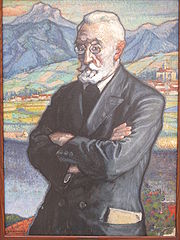
de_UnamunoMiguel de Unamuno says that anyone who invents a concept takes leave of reality. I like that statement both for its literal meaning that reality can nver be fully captured by a single concept, and in the suggestion that concepts imply a kind of madness.

Unamuno’s dictum applies to the question “How useful is the concept of community?”, because community designations betray the individual in two senses. One is that every community designation necessarily strips away the uniqueness of the individuals within. A term such as “immigrants” is clearly impoverished with respect to the many reasons, origins, and experiences of immigrants.

But a community designation can not only strip away individual meaning; it can attach wrong, or even contradictory meanings. For example, if we say that someone is a member of the “elderly community,” we impute a large set of attributes that may be totally off. She might be 90 years old, but rather than suffering “elderly decline,” she might be longing for that iPod we had provided to the “youth community” to share the latest music. There’s even some evidence that the very old are healthier than the somewhat old, because they were the ones who survived past critical health hurdles.

What makes this all even more interesting is that we can’t think without concepts, and we do better when we make use of even faulty information. A member of the “library patron community” may come to the library to get warm, to order some coffee (as at Urbana Free Library), to get a date, to sleep, or a host of other reasons.

Nevertheless, it’s helpful to know that many visitors seek information. Similarly, many immigrants may need help dealing with often absurd regulations that don’t apply to citizens in a country. Many elderly people have special physical or mental challenges well beyond those faced by most younger people.

These thoughts keep bringing me back to the need for dialogue. In so many cases, well-intentioned people make judgments and decisions without really listening to those they’re trying to help. Most examples of community designations betraying the individual, could at least be better addressed by starting with the idea of listening to each others’ experiences first.

References

Goodbye, maple

We had to take down a beautiful maple tree at the back of the house that was way too close to the foundation. Still, there are other maples nearby. And look at the dogwoods. Burning bush, pruned by the deer up to nose height. And leaves from yesterday’s storms. We still have plenty of trees. –Susan Bruce

Boys and tables: Asking may not be enough

In my last post, I talked about the parable of the blind men and the elephant, concluding that if we want to know how others see the world, “we need to ask.”

But often, simple asking is not enough. John Dewey includes the following story (from Ogden and Richards, quoting J. H. Weeks) in his Essays in Experimental Logic. He obviously liked the story as I do, because he repeats it in his Logic: The theory of inquiry:

I remember on one occasion wanting the word for Table. There were five or six boys standing around, and tapping the table with my forefinger, I asked, ‘What is this?’ One boy said it was a dodela, another that it was an etanda, another stated that it was bokali, a fourth that it was elamba, and the fifth said it was meza.

[It turned out afterwards that] one boy thought we wanted the word for tapping; another understood that we were seeking the word for the material of which the table was made; another had the idea that we required the word for hardness; another thought we wished for a name for that which covered the table; and the last, not being able, perhaps, to think of anything else, gave us the word, meza, table—the very word we were seeking.

References

Ogden, C. K., & Richards, I. A. (1949). The meaning of meaning: A study of the influence of language upon thought and of the science of symbolism, 10th ed. With supplementary essays by Bronislaw Malinowski and F. G. Crookshank (orig. pub. 1923). Routledge & Kegan Paul.

Philosophy reading group

Here are the readings for our philosophy reading group this year (2009-2010). There’s a general emphasis on practice-based theories:

Other possibilities:

Bernstein, Beyond Objectivism and Subjectivism
Michel de Certeau, Practice of Everyday Life
Joe Dunne, Back to the Rough Ground
Bent Flyvbjerg, Making Social Science Matter
Ian Hacking, The Social Construction of What?
Bruno Latour, Reassembling the Social (or one of his others)
Jonathan Lear, Therapeutic Action
Alasdair MacIntyre, Dependent Rational Animals
Theodore Schatski, Social Practices
Richard Sennett, The Craftsman
Charles Taylor, Modern Social Imaginaries
Leslie Paul Thiele, The Heart of Judgment
Stephen Turner, The Social Theory of Practices
Victor Turner, The Ritual Process (or From Ritual to Theater)
and/or modern classics such as Arendt, Collingwood, Gadamer, Goodman, Oakeshott, Wittgenstein.

Apples and apples

IMG_8487There’s more than corn and beans in the farmland here. Last Sunday, we visited an apple farm/orchard in Monticello, Illinois, which had 17 varieties.

Appropriately (for Monticello), one was Thomas Jefferson’s favorite, Spitzenberg. We got a little carried away and bought five half-pecks for $20.

IMG_8489Fortunately, one is a long-keeper, Buff, which is supposed to last until late winter if it stays cold.

IMG_8485If we don’t eat them all, we can feed them to our deer. See this backyard scene, where we played boule at the potluck in honor of John Dewey’s 150th birthday on Tuesday.