What is Islam?

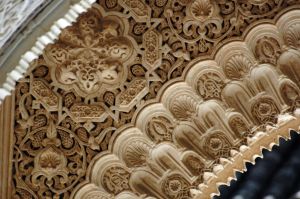
Arabesque decoration at the Alhambra

Arabesque decoration at the Alhambra

All too often we hear simplistic statements about Islam, which tell us a little about the speaker, but nothing about Islam itself.

Candidates for President and mass media personalities say things like “We need to patrol and secure Muslim neighborhoods,” “Muslims should be banned from entering the U.S.,” “Immigration visas & refugees from countries with active terror networks must be halted,” “It’s time we made peace with the Muslim world [by dropping an atomic bomb],” “Islam hates us,” “The hate is in Islam itself,” and “Islam is in need of a Reformation.” These are typically said in the context of discussing terrorism, while Islam is widely ignored otherwise. Meanwhile, defenders talk about “true Islam” or define Islam is just another Abrahamic religion.

Setting aside the lack of evidence, the faulty reasoning, the many harms they cause, and the hurt they inflict, one thing stands out: The speakers and their audiences seem fully convinced that they know exactly what Islam is and what it means to be a Muslim.
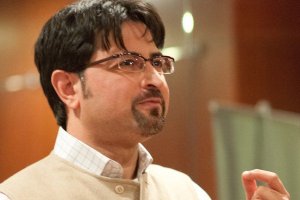
Shahab Ahmed

Shahab Ahmed

Despite their lack of interest in the topic at other times and the inability to read Arabic, they profess to prove points by quoting the Qur’an out of context. With minuscule knowledge of Islamic history, literature (even in translation), culture, or actual beliefs and practices, they are nevertheless eager to pronounce what Islam is and what should be done to fix it. Most remarkably, they are able to conflate anecdotes and faulty data across diverse cultures to come up with simplistic generalizations that they would be ashamed to apply to say, Christianity, Judaism, Western culture, or atheism.

Shahab Ahmed

A Muslim who studied deeply the history, literature, philosophy, and practices of Islam, Shahab Ahmed (1966-2015), provides a richly detailed account of Islam that should cause us to question statements such as those above. His account doesn’t yield counter generalizations; instead it shows how such sweeping statements obscure rather than illuminate. His new book, What Is Islam? The Importance of Being Islamic (Princeton University Press, 2015) has been useful for both Muslims and non-Muslims. One implication is that to say that someone is a Muslim is little more informative than saying that they are a person.

Ahmed's posthumous book

Ahmed’s posthumous book

Ahmed was a postdoctoral associate in the Aga Khan Program for Islamic Architecture at Harvard. His personal history surely informed his international perspective. Born in Singapore to Pakistani parents, but raised in Malaysia, he was sent to a British boarding school. It was difficult for him being the only Muslim boy in the school, thousands of miles from home, but his skill as a spin bowler in cricket kept him going. Back in Malaysia he attained a law degree in Kuala Lumpur, then worked as a journalist in Pakistan, and then obtained degrees in Arabic Studies from American University, Cairo. After that, he attained a doctorate in Islamic Studies at Princeton and then a postdoc at Harvard. Last June he was diagnosed with a rare form of leukemia. While still ill, he married his fiancée Nora Lessersohn but died shortly after on September 17, 2015. You can see more about Ahmed and his book in How has Islamic orthodoxy changed over time?, by Elias Muhanna.

Reconceptualizing Islam

Through analysis of literature, art, philosophy, history, and politics, Ahmed asks “What is Islam?” To answer this he starts with a set of six questions (see end of this post). It’s clear that understanding the questions is a prerequisite to having a meaningful discussion about Islam.

Statue of Avicenna at the UN Office in Vienna

Statue of Avicenna at the UN Office in Vienna

Consider just one question: “Is there such a thing as Islamic art, and if so, what is actually Islamic about it?” Unlike most other religious art (Christian, Hindu, Buddhist, etc.), Islamic art is typically abstract, often based on mathematical patterns (see above left from Calat Alhamra, in Granada, Andalusia, Spain). It doesn’t appear to represent religious ideas, the way that say, stations of the Cross do for Christians or statues of the Buddha do for Buddhists. Ahmed uses this key difference to talk about the way that Islamic art has developed. This leads to a discussion of the relation of Islam to science and philosophy, which accounts for why Islamic mathematics, science, and technology could build upon and extend the Greco-Roman tradition during a time when Christian Europe remained largely in opposition to it.

Throughout the wide ranging, long, and complex book, Ahmed struggles with the six opening questions and others, but more broadly, the variety and contradictions of Islam. Can it be defined through scripture, laws, cultural practice, or other means? He asks whether we should speak of Islam or of islams. He shows the challenge of relating the religious, the cultural, and the political, when those relationships shift across linguistic and national boundaries, as well as historical periods.

Inventing a concept

I’m reminded of Unamuno’s lesson that to invent a concept is to take leave of reality. Ahmed helps to reveal and interpret that reality as he questions the concept of Islam itself. At the same time, he helps us to understand the coherence that many people feel when they say they are Muslim, despite all the complexities. He offers a new paradigm for understanding how Muslims have historically understood divine revelation, one that shows how and why they have embraced values such as exploration, ambiguity, polyvalence, and relativism. It also helps to show how practices such as figural art, music, and wine drinking are Islamic. Crucially, it explains the historical constitution of Islamic law and its relationship to ethics and political theory.

Ahmed’s discussion is detailed and complex, one that is difficult to summarize briefly. Consider his discussion of what Muslims think Islam is: “[They] are in agreement that there is such a thing as Islam, even if they disagree about what it is.” For example, many scholars point to the Five Pillars–one God (the shahādah), five daily prayers, fasting in Ramadan, pilgrimage to Mecca, and alms-giving–as definitive for Islam. But others point out that the last four pillars are hotly contested theologically, interpreted in diverse ways, and as often ignored as observed. One says that if the pillars are seen as defining, then there are more negligent Muslims than observant ones.

So, some argue that it’s just the first pillar–one God and Mohammad as the Messenger. But that just opens to further questions: What is God? What is his message? What does it mean to submit (Islam) to God?

Ahmed’s richly detailed discussion shows that whether we talk about historical developments, theological interpretations, or diverse daily practices, we’re on very thin ice if we claim that we have an analytical tool that clearly marks out who is a Muslim, in what way they are, and what that means. Among the many people who would answer “yes” to the question, “Are you a Muslim?” there are non-participating adherents, strictly observant followers (of diverse tenets), mystics, skeptics, atheists and fundamentalists, feminists and misogynists. Moreover, Ahmed argues that the cultures that have embraced Islam are probably more diverse than those of any other religion, including Christianity.

Another example, comes from Rumi, His Maṣnavī-yi ma’navī (Doublets of Meaning) is one of the most significant texts in Islamic history. In one passage he writes about how attaining ḥaqīqat (Real-Truth) nullifies the (Islamic) laws and the paths or rituals to follow. This is similar to Buddhism and some versions of Christianity, in which the rules, practices, norms, beliefs, rituals, and so on, are but means to an end in which they no longer matter.

Ahmed does not conclude from many examples such as this that Islam is too diffuse to have meaning. Instead, he does an amazing job of communicating how Islam can feel real and important to people, even as they admit to its protean character. He offers at least a starting point for making sense of the impact that Islam has on the lives of both followers and non-followers, one that is far more productive than the inane comments I listed above.

Ahmed’s six opening questions

  • What is Islamic about Islamic philosophy?
  • When Sufis assert that virtuoso “friends of God” are no longer bound by Islamic law and practice, is this an Islamic or an un-Islamic truth claim?
  • Key ideas from Avicennan philosophy and Sufism “flirt incorrigibly with pantheism and relativism.” These have been among the “the most socially pervasive and consequential thought paradigms in the history of societies of Muslims,”  Are these Islamic ideas?
  • The Divan of Hafiz, the great 14th-century Persian poet, is “the most widely-copied, widely-circulated, widely-­read, widely-memorized, widely-­recited, widely-invoked, and widely-­proverbialized book of poetry in Islamic history.” It takes as its themes wine-drinking and (often homo-)erotic love, as well as a disparaging attitude to observant ritual piety.” Is that work and its ethos Islamic?
  • Is there such a thing as Islamic art, and if so, what is actually Islamic about it?
  • How can both the consumption of wine and its prohibition be essential to Islamic history and culture?

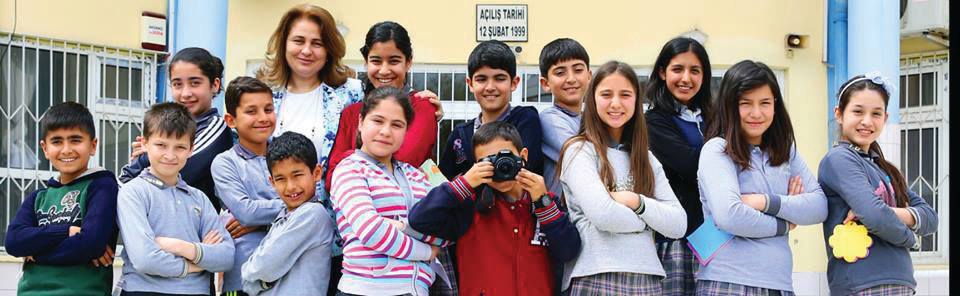
Recognizing Roma

Akdeniz University project

Akdeniz University project, grades 5-7

A remarkable, but little noticed event was reported on April 7 in the NY Times (with limited coverage elsewhere). Rick Gladstone’s, ‘Roma poisoned at U.N. camps in Kosovo may get apology and compensation‘ relates the findings of a human rights advisory panel of the United Nations Interim Administration Mission in Kosovo. The panel found that the mission failed to protect Roma families sent to camps after war broke out in 1998 between Serbia and Albanian separatists.

Hundreds of Roma were placed in three camps in Mitrovica, Kosovo, after ethnic Albanians had seized their homes. The camps were within 200 yards of enormous piles of industrial waste from a lead-smelting factory. Soon after the camps were set up, many Roma died from lead poisoning. Others suffered stunted growth, irreversible brain and nerve damage, suppression of the immune system, anemia and renal failure. There were associated speech, language, and behavioral problems. Some of this is described in the film Gypsy Blood: The Roma, Ashkali, and Egyptian IDPs of Mitrovica, Kosovo (2005).

Turgut Reis school

Turgut Reis school

The panel’s findings are significant in two ways. First, the U.N. rarely apologizes for anything, often denying allegations or asserting diplomatic immunity. Forced to enter difficult situations with limited resources, it is understandable that mistakes can be made. But even as the organization of last resort, it is important for it to acknowledge errors and where possible provide remedies. That’s a necessary first step before encouraging member countries to do likewise.

Perhaps more significantly, the finding recognizes a harm done to Roma people, one in a long series over many centuries. During the Second World War, the Nazis exterminated hundreds of thousands of Roma. This was the Baro Porrajmos, or Great Devouring. After the war Roma experienced killings, forced sterilization, segregation, racial discrimination, evictions, and extreme poverty.

Roma are widely misunderstood. People who would never say something similar about other groups often casually offer ignorant and offensive comments about Roma people. They are seen by many as rootless (“gypsies”). It’s true that they are widely dispersed, but most are settled, or would choose to be if they could find work. They are seen as unwilling to participate, even though as with any group, some assimilate well to dominant lifestyles while others maintain distinctive ways. It’s a final insult that they are widely blamed for petty crimes with little evidence other than an often mistaken ethnic identification. (And yes, they do commit some crimes, just as do members of any group.)

My own experience with Roma people has been limited. There were Roma in Illinois, especially in the southern areas. I met Roma people during a year in Ireland. Amongst a large number of immigrants, they were often misidentified based on quick judgements about behavior. I’ve met Roma in the US and in various other countries in Europe. I learned about librarians in Bucharest working with Roma communities. I visited “Roma schools” in Turkey. I wouldn’t pretend to any great personal knowledge, but what I have experienced loudly confirms what I’ve read from thoughtful sources, e.g., The Roma and open society or Dimitrina Petrova’s ‘The Roma: Between a myth and the future.’

To take just one example: The Turgut Reis middle school in Çanakkale, Turkey (see photos above) is set in the midst of a 600-year old Roma community. To residents of the neighborhood, the Turks, Arabs, Europeans, and so on are the itinerant ones. Students in the school are bright, energetic, focused on sports, music, and each other They’re sometimes unruly, but fun to be with. They fit well to my stereotype of middle school students .

The needs of the Turgut Reis community are familiar in other urban settings–job opportunity, education, affordable housing, and overcoming racism. The history of the people undoubtedly shapes their situation today, but that situation is not determined by being Roma. Attaching a label, such as “Roma,” may provide a starting point for conversation, but it ultimately tells us little about any individual.

I’m glad that the U.N. panel found a failure to comply with the applicable human rights standards in the Kosovo camps. It also urged a public apology and payment of adequate compensation. I hope that doing so nurtures the growth of a greater understanding of a complex and fascinating culture.


A football field every 45 minutes

Isle de Jean Charles

Isle de Jean Charles

John D. Sutter’s column ‘There’s no more land’ struck home for me about global warming and sea level rise.

It’s not that Sutter offers new data or analysis on sea level rise per se. There is plenty of that already. For example, Dahr Jamail’s excellent recent summary ‘Climate disruption in overdrive: Submerged cities and melting that “feeds on Itself”‘ is enough to ruin whatever you might imagine could be a good day. It starts with this

the planet is warming a stunning 50 times faster than when it comes out of an ice age. The implications of the rapidity of this warming, for those who care to digest it emotionally, are horrifying…. even if carbon reduction targets are achieved and the planet’s temperature is kept below the 2 degree Celsius warming threshold, sea-level rise will still inundate major coastal cities around the world, forcing one-fifth of the total world population of humans to migrate away from the coasts.

and goes downhill from there.

But Sutter shows what dreary statistics can mean for ordinary lives:

Isle de Jean Charles, the mostly French-speaking, Native American community where Billiot [Wenceslaus Billiot, an 88-year-old born on the island] lives, once was about the size of Manhattan. Now, it’s about a third of Central Park.

The coastal island has lost 98% of its land since 1955.

And what’s left is going fast.

“I don’t know how long we’re going to stay here,” Billiot told me.

“If a hurricane comes, we’re wide open.

“There’s no more land.”

The island is losing a football field chunk of land every 45 minutes. Also see Lauren Zanolli’s ‘Louisiana’s vanishing island: the climate ‘refugees’ resettling for $52m’.

I’ve never been to Isle de Jean Charles, but have traveled in that area just south of New Orleans. Susan and I once camped in a tent at Grand Isle State Park. We feasted on Gulf shrimp we bought directly off a trawler. It’s a rare and magical place to visit.

The website for the island/town says:

For the people of Isle de Jean Charles, the island is more than simply a place to live. It is the epicenter of our people and traditions. It is where our ancestors cultivated what has become a unique part of Louisiana culture. Today, the land that has sustained us for generations is vanishing before our eyes.  Our tribal lands are plagued with a host of environmental problems — coastal erosion, lack of soil renewal, oil company and government canals, and a rising sea level — which are threatening our way of life on this gradually shrinking island.

The land’s beauty is enhanced by the feeling of its impermanence, whether because of hurricanes or natural changes in estuaries and dunes. If I were typesetting the island, I’d look for a wispy font with a small type size.

Isle de Jean Charles

Bayous and estuaries south of New Orleans

But the fact of the impermanence has now been written in 96 point bold by the actions of humans rapidly destroying the land. Channeling the river, adding dams and levees, drilling for and transporting oil, developing resort communities, and other activities have all played their part, but stronger hurricanes and sea level rise are the final blows.

Our politicians seem happy to stay in blissful ignorance of all this (see ‘In their own words: 2016 presidential candidates on climate change’). Republican leaders are actually in denial and Democrats make tepid statements without programs for meaningful change. Naomi Klein writes that to make those changes, “some powerful interests will have to lose”:

A president willing to inflict these losses on fossil-fuel companies and their allies needs to be more than just not actively corrupt. That president needs to be up for the fight of the century—and absolutely clear about which side must win. Looking at the Democratic primary, there can be no doubt about who is best suited to rise to this historic moment.

For Klein, Bernie Sanders is the one best suited for that rise. But could anyone who stands up to the fossil-fuel companies ever be elected President? More importantly, could they stand up to the fossil fuel users, meaning us?

To win “the fight of the century” many more people need to connect the larger processes of human-induced climate change to the particulars of places like Isle de Jean Charles, and further, to connect that to the choices we make about lifestyle and to what we value.

The place of freedom

William Hubbard House

William Hubbard House, Ashtabula, OH

Place is both the barrier to and the enabler of freedom. The freedom of a vacation comes from its being a getaway, but few things feel less free than totally losing a sense of place while traveling in a strange land.

That dual nature applies to more significant experiences as well, as I reflected on seeing the William Hubbard House in Ashtabula, Ohio.

Hubbard moved to Ashtabula from Holland Patent, New York, around 1834. (I could never have predicted that without any planning we’d pass through both of those small places, set on back roads 330 miles apart, on the same day.)

Hubbard became involved in the local antislavery society and town politics. His house was a strategic location for the Underground Railroad, set on the shore of Lake Erie and with his own ferry port nearby. His house was the last stop before a boat ride across the lake to Canada.

Runaway slaves and conductors on the Underground Railroad referred to his home as “Mother Hubbard’s Cupboard” or “The Great Emporium.” It is not known how many slaves Hubbard helped gain their freedom, but records suggest that he housed 39 slaves on one occasion.

Lake Erie, and the final stop

Lake Erie, and the final stop

It was both inspiring and humbling to stand beside the Hubbard home with the vast expanse of Lake Erie and unseen Canada beyond. One can read about the many Underground Railroad locations and the heroic journeys that people took to gain their freedom, but encountering the two-story house, the lake, the Ashtabula river leading to the ferry port, the antebellum era town buildings, and the woods nearby made the bare plotline come alive.

Being there made the slaves’ escape from a place of misery to a place of hope just a little more tangible. I wondered how anyone could be there and not have their sympathy enlarged. Or how they could think about that 19th century quest for freedom and talk so easily (as some Presidential candidates do) about denying freedom to victims of violence and oppression in the Middle East, Central America, or other places today.

In The Particularities of Place (see also Why Place Matters: Geography, Identity, and Civic Life in Modern America (2014, edited by Wilfred M. McClay and Ted V. McAllister), Wilfred M. McClay writes,

We embrace freedom because we believe fervently in the fullest breadth of individual human possibility, and share a deep conviction that no one’s horizons in life should be dictated by the conditions of his or her birth. Nothing is more quintessentially American than that conviction. But…. one’s place of origin is seen as an impediment, something to be overcome. “Place” may even point toward notions of social hierarchy that Americans generally find anathema…the idea of “knowing your place” was favored by advocates of racial segregation and the subordination of women.

William Still, "Father of the Underground Railroad"

William Still, “Father of the Underground Railroad”

The plantations were a place that denied not only freedom per se, but the full “breadth of individual human possibility.” Yet the places of the Underground Railroad and the new River Jordan, expanded that possibility.

McClay goes on to see a renewed need for place today:

We now have a new set of problems, born of the pathologies engendered precisely by our achievements. Something is now seriously out of balance in the way we live…. it can be argued that, like it or not, we must recover a more durable and vibrant sense of place if we are to preserve the healthy dynamism of our society as it now exists, and promote the highest measure of human happiness and flourishing.

In seeking to escape from one place, slaves needed to maintain a sense of others. This included both some idea of a lost homeland and a vision of that Railroad leading to a new place of freedom. McClay quotes from William Leach’s Country of Exiles:

People require a firm sense of place so they can dare to take risks. A society whose common store of memories has been beaten down or shattered is open to further disruption; for such a society cannot defend or protect itself from the stronger incursions of those who know what they want and how to get it.

I’m happy that places such as the Hubbard House have been preserved, to enable a continuity of place, which in turn gives us a human connection across very different life experiences. Visiting it gave me a richer sense of the place in which I live.

Highlander Center

2016-03-11 14.10.00

In the midst of a long car trip, we stopped to visit the Highlander Research and Education Center near New Market, Tennessee. It was just a short visit, since we had many miles to go. Also, the workshop and conference areas were in use, so our options were limited.

In spite of all that, I was very happy that we could make the time to see it. I’d known about the Highlander Folk School for many years, through Myles Horton’s books and other writing. But I also knew that the state of Tennessee had revoked Highlander’s charter and confiscated the school’s land and property.(in 1961) and that Horton had died in 1990. I hadn’t kept up with all the good work that the Center continued to do.

2016-03-11 14.09.42

After two major moves, the Highlander Center came to its present site in 1971. It sits atop Bay’s Mountain in the Tennessee River Valley, looking across to the Great Smoky Mountains.

The Workshop Center is home to organizing and leadership development, workshops on civil rights, immigrant communities, and economic justice. Projects have ranged from connecting communities around the world affected by industrial chemical pollution to LGBTQ rights.

In the early years (1930s-40s) the focus was on building a unified Labor movement. Later (1950s-60s) Highlander helped incubate the SNCC and Mississippi Freedom Summer. Ralph Abernathy, Rosa Parks, Pete Seeger, and Martin Luther King were among the participants.

2016-03-11 14.10.27

Moving into the1970s-90s there was an increasing focus on land issues, environment, and global economics. This meant more international connections and collaborations. In the present century there has been even more emphasis on developing tools and connecting people and organizations. Highlander has also expanded work with immigrant communities.

The Resource Center is home to archives, book shop, and library. Within a small wooden building is a rich history of progressive movements over eight decades in Appalachia, the US, and worldwide.

2016-03-11 14.13.37

The activities of the Highlander Center are diverse. But they’re well symbolized through the metaphor of a conversation with neighbors, all sitting in rocking chairs, arranged in a circle.

Those chairs and that circle are real. The open dialogue across different backgrounds and experiences that they imply is the first step in enacting positive change.

We stayed that night in Fall Creek Falls State Park, not too far to the west of the Center. The Park is named for the highest plunge waterfall east of the Mississippi. The nearby Piney Creek Falls are even more beautiful.

2016-03-11 16.44.16-22016-03-11 16.25.13

Namskaket Creek

On the day after Christmas Stephen and I decided to venture out. Seeing no snow, we did the best we could by a short canoe trip on Namskaket Creek in Brewster.

To get to the creek, we made a short portage on the Cape Cod Rail Trail. Another option would have been to launch in the bay at Skaket or Crosby Lane beach.

The whole journey, including a PB&J lunch, took only four hours, with about half of that paddling. It was still a bit of an adventure, since it wasn’t easy to find our way through the salt marsh and occasionally we had to fight the wind. But the weather was perfect and the birds were joyous. The mix of forest, marsh, beach, briny water and ocean was unbeatable.

Can anything be done?

Earthquake response in Nepal

Earthquake response in Nepal

When we think about problems such as intolerance, economic justice, or climate change, should we focus on the local or the global? the short-term or the long-term? the social or the technical? Questions such as these recur in ways that often lead to discouragement, including the feeling that nothing can be done on any problem at any level.

Naomi Klein discussed this in last June’s College of the Atlantic commencement address, Climate Change Is a Crisis We Can Only Solve Together. She writes, “the very idea that we—as atomized individuals, even lots of atomized individuals—could play a significant part in stabilizing the planet’s climate system, or changing the global economy, is objectively nuts.” There must be “a large, organized, and focused movement.” And yet, she goes on to say, local activism is critical: It’s winning big fights, showing us what the future looks and feels like, and inspiring bigger examples. In short, we need both.

What Klein says makes a lot of sense. But it’s often hard to find examples that bridge between the local and the global, the immediate need and the needed long-term change, or between social and organizational work and technological fixes.

Open air mapping, when buildings were unsafe

Open air mapping, when buildings were unsafe

Yesterday at MIT, Nama Budhathoki gave an inspiring talk on the work of Kathmandu Living Labs. It was titled: Nepal’s Digital Innovation for Social Good: Looking Back to the April Earthquake. His project offers such an example.

KLL uses online mapping to address a wide variety of social challenges. This can be seen most dramatically in the timeline of KLL’s response to the April 25 earthquake in Nepal. For an excellent summary of their work, see Naomi Bloch’s article GIS & the Global Community: Humanitarian Mapping.

Through KLL, a farmer in a remote Nepalese village can integrate his local knowledge of a field or stream with that of an engineer at MIT. People in Nepal, despite their own challenges, can become among the largest contributors to relief efforts following Typhoon Haiyan in the Philippines. Detailed information about a school can be used to influence government policies and actions. This connecting across levels or communities is something many people talk about but few have shown how to achieve.

There are many reasons for KLL’s success, including the dedication of Nama and his team. But what also seems clear is that KLL offers remarkable models for how people can work together to achieve common good.

Elogio de la Sombra

The Friends of wellfleet Library presented another in its Favorite Poems series yesterday, with Mort Inger ably hosting.

My own contribution was from one of my favorite writers, Jorge Luis Borges. Suzanne Jill Levine calls him “the most important writer of the 20th Century,” an assertion supported by Jane Ciabattari in a BBC article last year.

I became fascinated with Borges when I was in high school, the time that his first book-length publications began to appear in English (Ficciones and Labyrinths). His works wandered across a labyrinth of genres, including romance, mystery, sci-fi, fantasy, metafiction, philosophy, literature, and language. His interest in time challenged my own dissertation work on time and formal logic.

I like other musings of Borges on philosophical issues, including this:

Being an agnostic means all things are possible, even God, even the Holy Trinity. This world is so strange that anything may happen, or may not happen. Being an agnostic makes me live in a larger, a more fantastic kind of world, almost uncanny. It makes me more tolerant.

Borges was also a translator of English, French, German, Old English, and Old Norse into Spanish. He translated Oscar Wilde’s story “The Happy Prince” at the age of nine. And his ideas about translation are even more relevant today. He saw language as a creative force that shaped us as much as we it. I think that he’d want me to learn better Spanish, but would also support the fact that nearly all my reading of his work is in translation. I know at least one Borges.

His work on time and language come together in his ideas about literary precursors:

the heterogeneous pieces I have enumerated resemble Kafka; …not all of them resemble each other….if Kafka had never written a line, we would not perceive this quality; in other words, it would not exist….The fact is that every writer creates his own precursors.

Despite being acknowledged by many as an outstanding, even the (or one of the) most important writers of the last century, Borges was never awarded the Nobel Prize. He writes:

Not granting me the Nobel Prize has become a Scandinavian tradition; since I was born they have not been granting it to me.

In 1955, after Peron was deposed, he became Director of the National Library of Argentina. Soon thereafter he became blind. He focused on poetry, since he could memorize an entire work and keep it in memory until he had perfected it.

No one should read self-pity or reproach
Into this statement of the majesty
Of God; who with such splendid irony,
Granted me books and night at one touch
Seven Nights, 1984

A decade or so later, when he was exactly my age now, Borges published a collection of poems, Elogio de la Sombra (In Praise of Darkness). Of the same name, the last poem in the book, is the one I read yesterday:

In Praise of Darkness (1969/1974)

Old age (the name that others give it) can be the time of our greatest bliss. The animal has died or almost died. The man and his spirit remain.
I live among vague, luminous shapes that are not darkness yet.
Buenos Aires,
whose edges disintegrated
into the endless plain,
has gone back to being the Recoleta, the Retiro,
the nondescript streets of the Once,
and the rickety old houses
we still call the South.
In my life there were always too many things.
Democritus of Abdera plucked out his eyes in order to think; Time has been my Democritus.
This penumbra is slow and does not pain me;
it flows down a gentle slope,
resembling eternity.
My friends have no faces,
women are what they were so many years ago,
these corners could be other corners,
there are no letters on the pages of books.
All this should frighten me,
but it is a sweetness, a return.
Of the generations of texts on earth
I will have read only a few-
the ones that I keep reading in my memory, reading and transforming.
From South, East, West, and North
the paths converge that have led me
to my secret center.
Those paths were echoes and footsteps,
women, men, death-throes, resurrections,
days and nights,
dreams and half-wakeful dreams,
every inmost moment of yesterday
and all the yesterdays of the world,
the Dane’s staunch sword and the Persian’s moon, the acts of the dead,
shared love, and words,
Emerson and snow, so many things.
Now I can forget them. I reach my center
my algebra and my key,
my mirror.
Soon I will know who I am.

–Tr. Norman Thomas di Giovanni

A conference in Taipei

The conference in Taipei a little over a week ago was really two-in-one. It combined “Museums in Everyday Life” with “Educational and Communication Technology Transforms the Future.” The museum part meant that we had tours of several local museums as part of the conference activities, rather than requiring one to skip sessions.

At the end, there was a wonderful dinner with Taiwanese specialities at Qingtian 76 (also see), a Japanese-styled building that had once been the residence for National Taiwan University professors and is now an excellent and charming restaurant.

This slideshow requires JavaScript.

Reconnecting with students

There were many special aspects for me of a recent trip to Taiwan, including the countryside, Taipei, interesting conferences on museums in everyday life and technology in education, university visits, wonderful food, and museums.

Alex at Wistaria Tea House (紫藤廬; Zǐténg Lú)

Alex at Wistaria Tea House (紫藤廬; Zǐténg Lú)

Several of my students from Taiwan now live in the US, Canada, and other places, but many have returned to Taiwan to work and live. Reconnecting with them was a special treat, especially since some had to travel a long distance to meet.

Alex and Shihkuan introduced Susan and me to Taipei, including the Wistaria (or Wisteria) Tea House. This is a Japanese-style wooden house built in the 1920s, which is named for three wisteria vines planted in the front courtyard. The house served as a residence for the Governor-General of Taiwan under Japanese rule prior to 1945. It became a teahouse and was known as a venue for political dissidents during the 1980s. It continues as a meeting place for literati, artists, and academics and was used for the filming of Eat Drink Man Woman.

Shihkuan, Alex

Shihkuan, Alex

We had a wonderful lunch there and enjoyed a Gongfu cha (“making tea with effort”) ceremony. I proved to be the clumsiest at pouring tea properly.

In the evenings, I was fortunate to have dinners in excellent Taiwanese restaurants with many former doctoral students.

Shihkuan, Ruey-chuan, Yuangshan, Hsiu-Hsiang

Shihkuan, Ruey-chuan, Yuangshan, Hsiu-Hsiang

Yu-Hua, Min-Ling, Shihkuan, Yulan

Yu-Hua, Min-Ling, Shihkuan, Yulan

Yuangshan & family

Yuangshan & family