My evening flight from Kathmandu to Delhi was canceled, so I had to take one five hours earlier. Although I wasn’t happy about the resulting extra layover time, flying earlier in the day meant that I had a glorious panorama of the Himalayas most of the way. Since Delhi is directly west of Kathmandu the 500-mile flight path was as if made to order for the view.

The Himalayas are a feature of our world that call for silent awe, and need no supporting adjectives, such as “stunning” or “snow-covered.” They’re the antithesis of another, also beautiful, feature of our world, Cape Cod. Its glacial drift formations are a gentle lullaby to the Himalayan symphony.
However, as we flew along the southern edge of the grand plateau, I took my eyes, or ears, away from that symphony from time to time because I couldn’t put down the book I was reading. In The Path: A One-Mile Walk through the Universe. In the book, Chet Raymo describes the path he took for 37 years from his house in North Easton, Massachusetts to the Stonehill College campus where he taught physics and astronomy.
Just as we were passing from Nepal into India, I read this:
Millions of years ago India, drifting northward on the mobile surface of the earth, nudged into Asia and began pushing upward a double-thickness slab of the Earth’s crust known as the Tibetan plateau, the front range of which are the towering Himalayas.
Raymo goes on to explain how sunlight beating down on the plateau produces warm air. As it rises, moist air from the Indian Ocean takes its place. This creates the Indian monsoon cycle. Heavy rainwater combines chemically with the Himalayan rock. The weathering takes carbon dioxide out of the air.
As the mountains rose and eroded, the amount of carbon dioxide in the atmosphere decreased and Earth began to cool. On Northern continents ice sheets formed and moved across the land, grinding, abrading.
Thus, mountains in Asia caused glaciers in New England and those in turn built the Cape Cod beaches where we swim every summer. The symphony is magnificent, but it needs the lullaby to follow.
India continues its journey northward; the Himalayas continue to rise; the sun still beats down; the monsoons cycle onward, and the rains take carbon dioxide out of the air.
But don’t look for the glaciers to return anytime soon to build up more places to plant your beach umbrella. Our technologies are now overwhelming these natural processes. Combustion of fossil fuels is adding far more greenhouse gases to the air, warming the world and covering up those glacial sands with rising sea water.









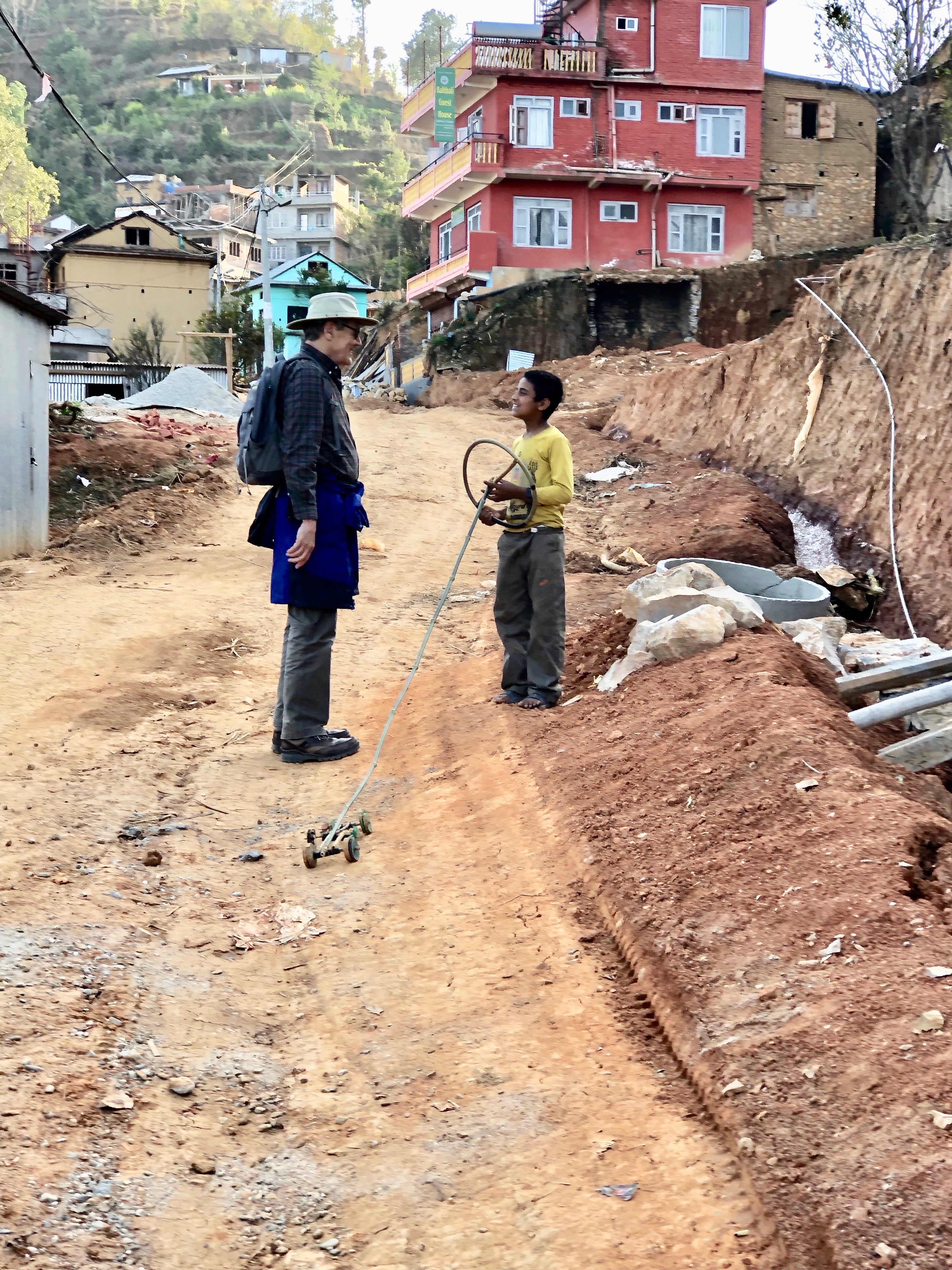
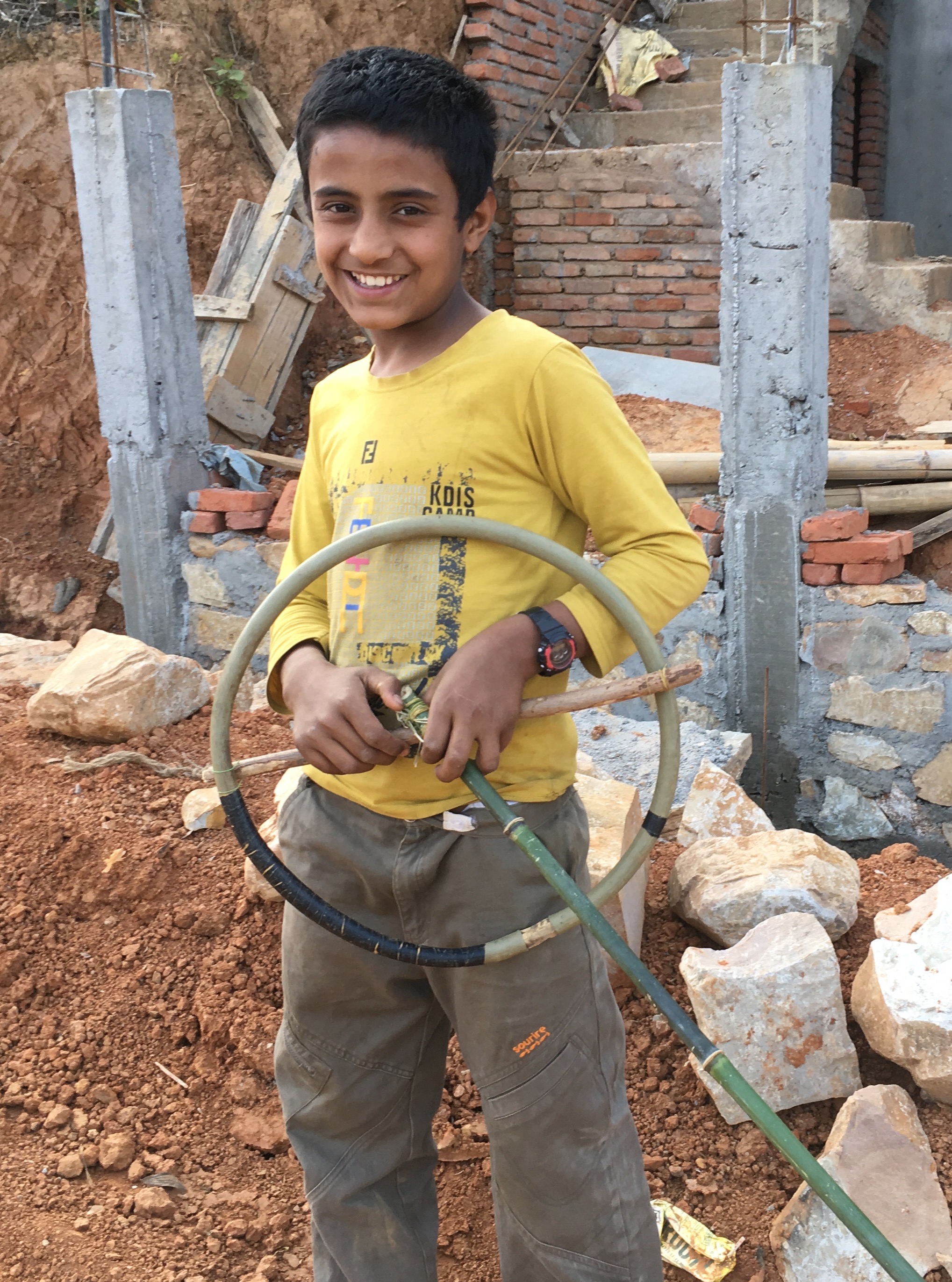 Yesterday I happened upon another, but this one, as far as I can tell, is an individual effort.
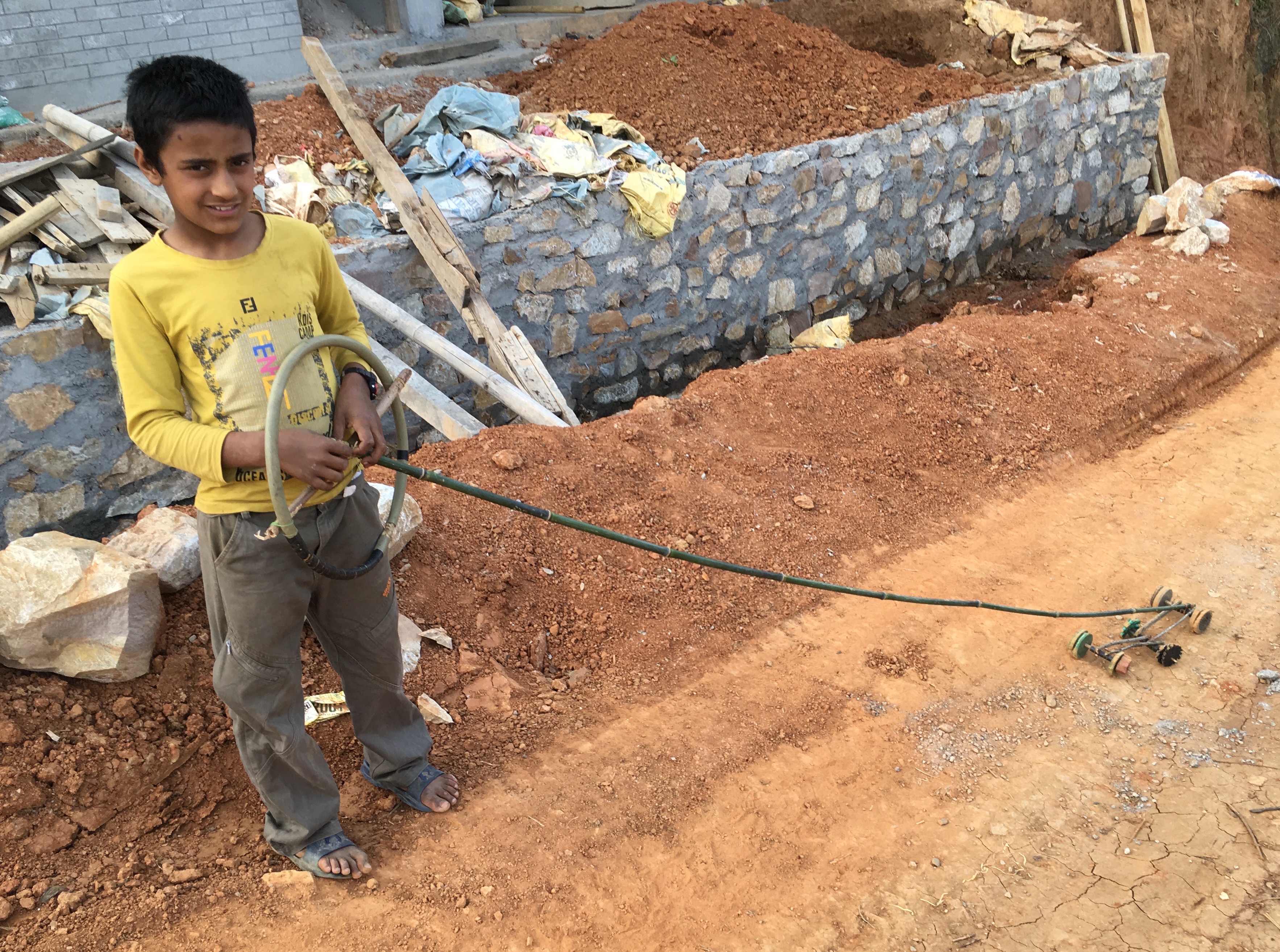
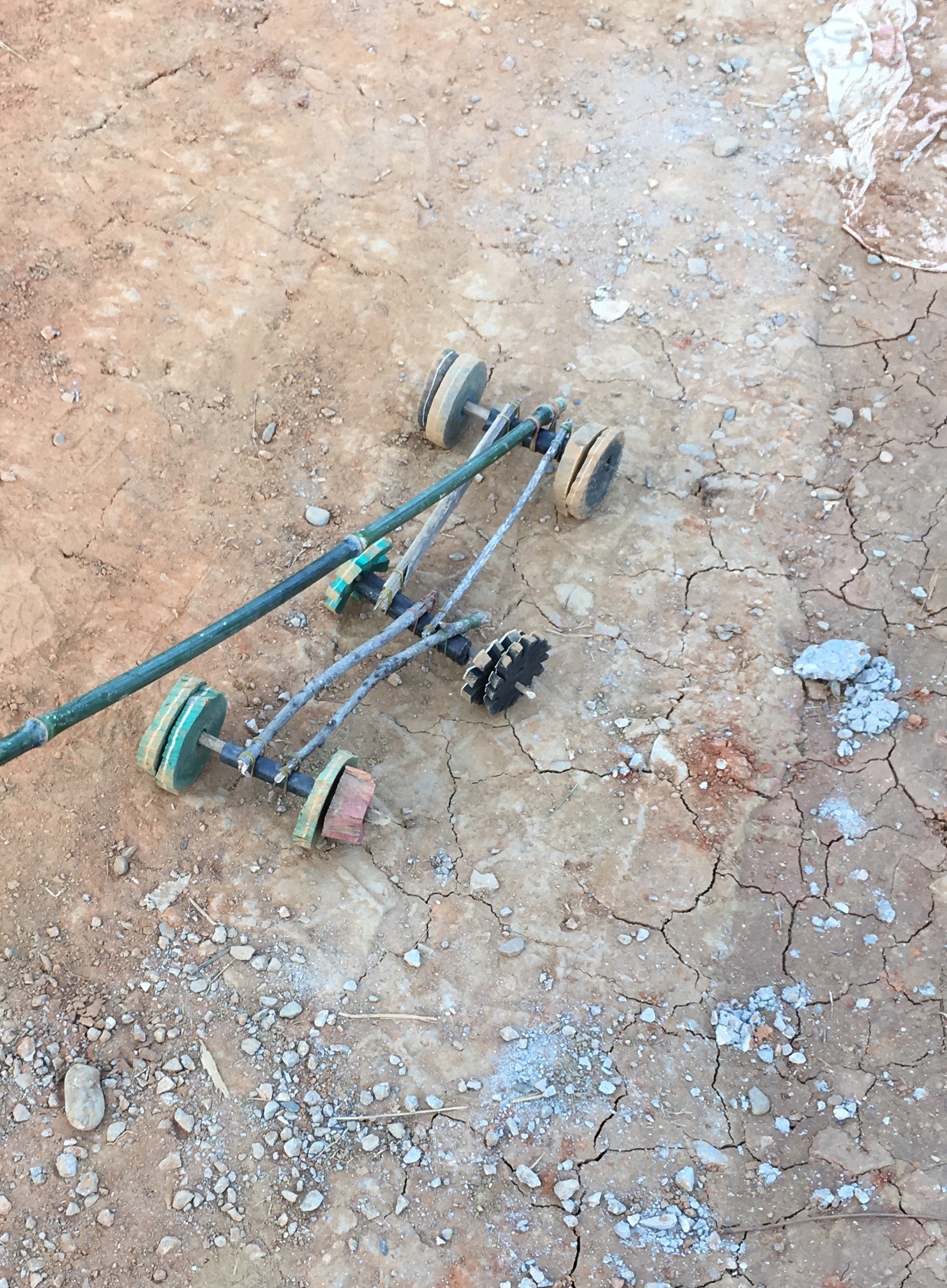
Jenish showed me his car. It’s 16 inches long. There are wooden wheels, six of them, much like an extra-terrestrial rover might have. That’s useful for the rough street it has to navigate.
Steering is controlled through a normal sized wheel. It’s made of a hose, bent into a circle and held by tape. The main structural elements are from bamboo, a widely available resource. The steering is just reliable enough not to be frustrating, and just unpredictable enough to be fun.
Yesterday I happened upon another, but this one, as far as I can tell, is an individual effort.
Jenish showed me his car. It’s 16 inches long. There are wooden wheels, six of them, much like an extra-terrestrial rover might have. That’s useful for the rough street it has to navigate.
Steering is controlled through a normal sized wheel. It’s made of a hose, bent into a circle and held by tape. The main structural elements are from bamboo, a widely available resource. The steering is just reliable enough not to be frustrating, and just unpredictable enough to be fun.
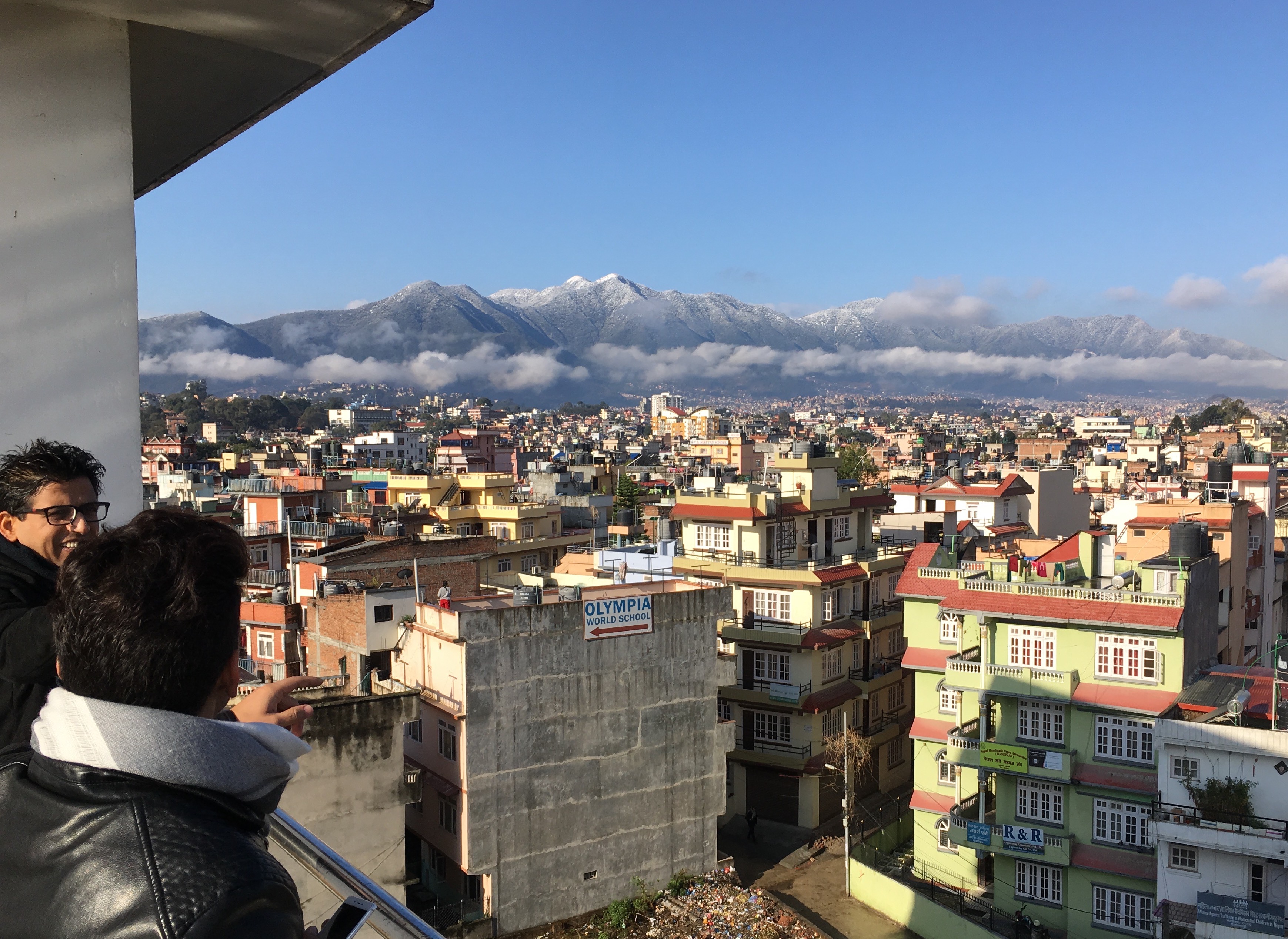
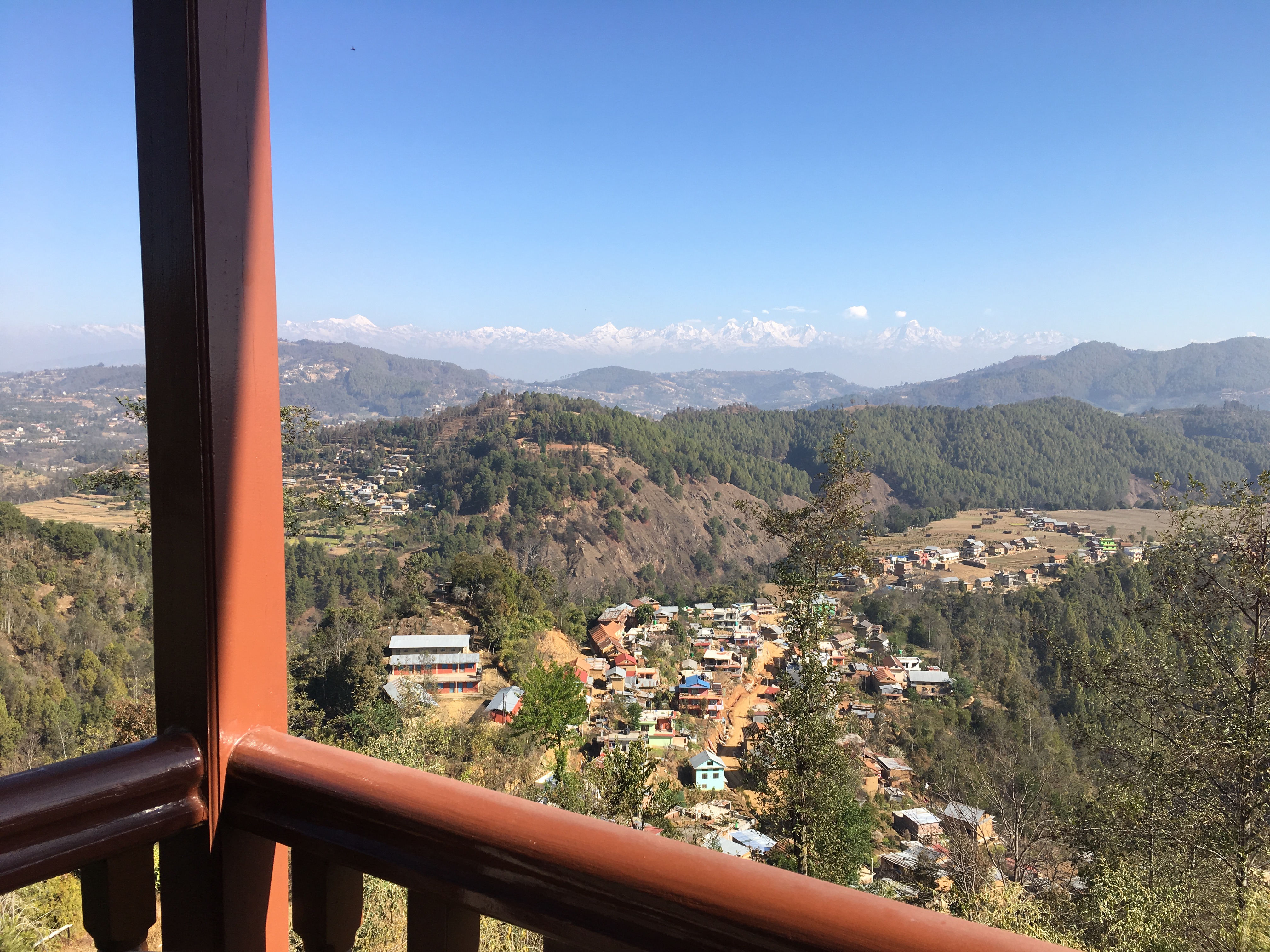
 View from our balcony this morning, showing part of Balthali, fog, and the LangTang Himalayas beyond.
 Clad in traditional attire, women from Limbu, Sherpa and Magar ethnicities pose for a photograph as they observe International Mother Language Day in Kathmandu.