St. Andrew’s Resource Centre

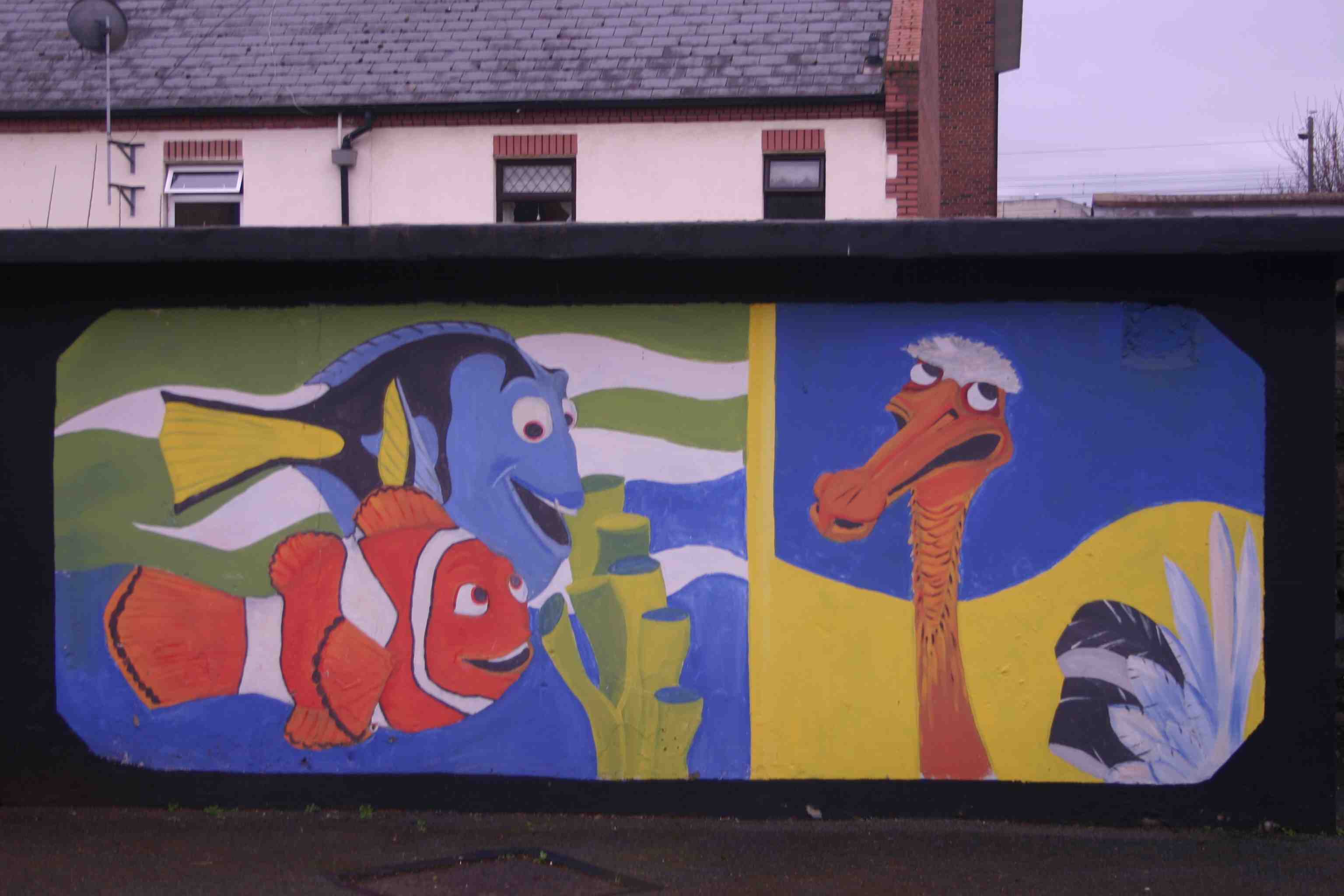
muralWe went to the organic market at the St. Andrews Resource Centre today, to get some healthy, fresh produce. We also enjoyed a hearty lunch of lentil soup and samosas.

After several visits, I can say that the Centre is one of the best-run and most beneficial community centres that I’ve seen. In addition to the market, there are employment services, tutoring for secondary school students (grinds), adult education, computer training, parenting and young mothers programmes, and welfare rights counseling. There’s a Heritage project to record the history of the Pearse St. community and many others projects (see below).

buildingThe elegant building was opened as the St. Andrew’s School in 1895 and operated as such until 1976 due to the decline of the working docklands. A renovation began in 1985, which led to the social centre opening on Bloomsday, 1989. The structure is well-preserved and there are colorful murals in the hallways and the back courtyard.

Staff are drawn from the community, so that the centre’s work tends to directly reflect community needs. Concurrently, community members develop skills that help their own careers. The latest count is 224 staff on full or part-time status.

The Centre has learned several lessons that might be useful elsewhere:

  • Issues and programs develop out of needs identified by the community. There’s bottom-up planning rather than solutions from on high.
  • There’s a concerted effort to build capacity in the community. For individuals, there’s an advancement path through community work.
  • There’s a flat organizational structure, which allows quick and flexible response to needs. A corollary is an openness to the process. Staff learn to find workarounds to barriers.
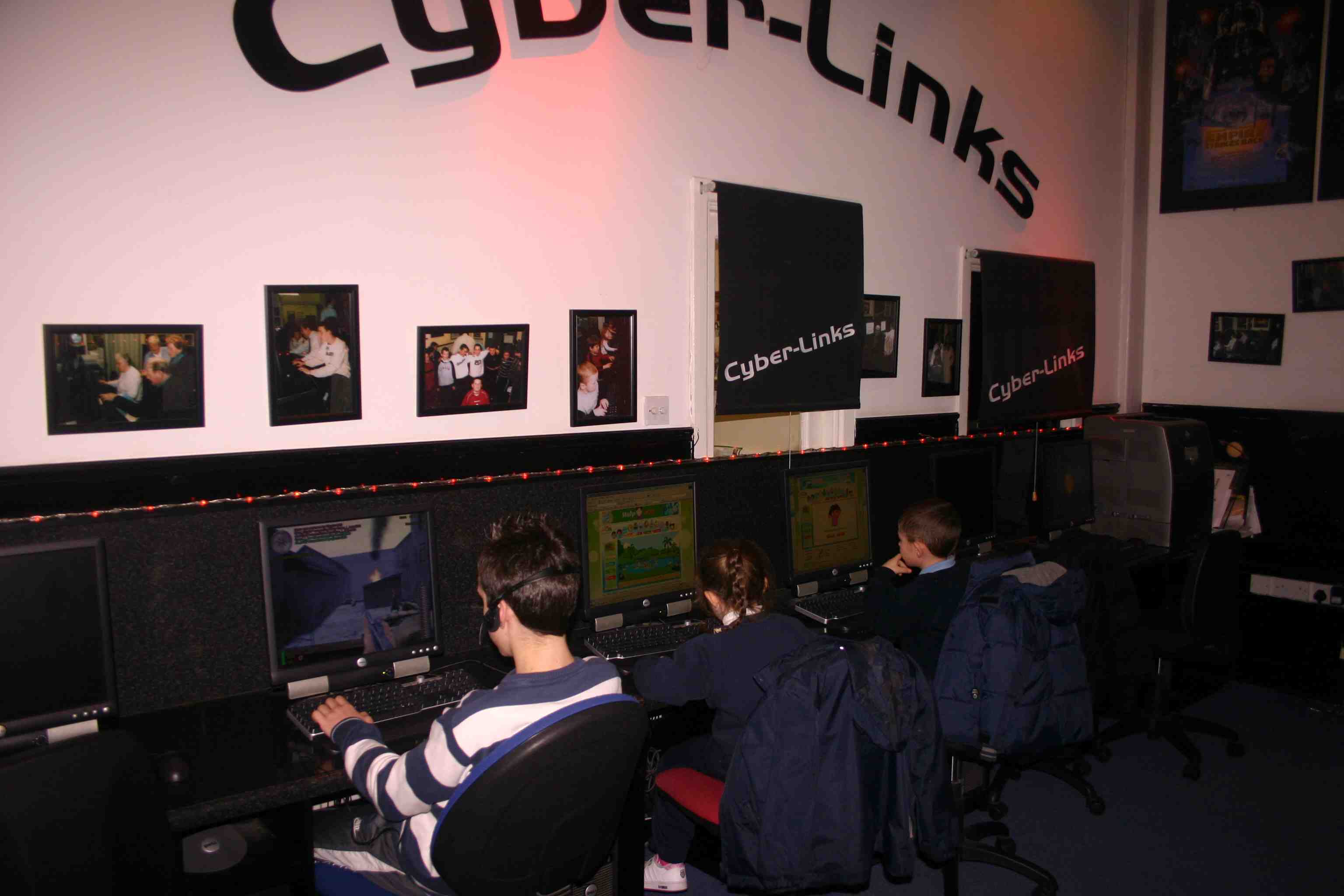
  • cybercafeThere’s a self-sustaining budgetary model. There’s no one paymaster and staff grows in response to funding.
  • The Centre provides integrated services, a “one-stop shop.” This applies across the life cycle from the childcare center through Day Centre with meals for the elderly. Activities such as the Cyber-Links centre coordinate with others, such as the theatre project to present drama written and acted by community members.
  • figuresStaff and community members care about the Centre. Pride in the Centre is evident: There’s no grafitti and there appear to be limited security concerns. The display of figures brought in by children in the Childcare programme is just one tangible piece of evidence for this.
  • There’s a forward thinking, needs-directed process, which identifies opportunities for funding consistent with community needs, capabilities, and processes.

Aughavannagh and Glenmalure

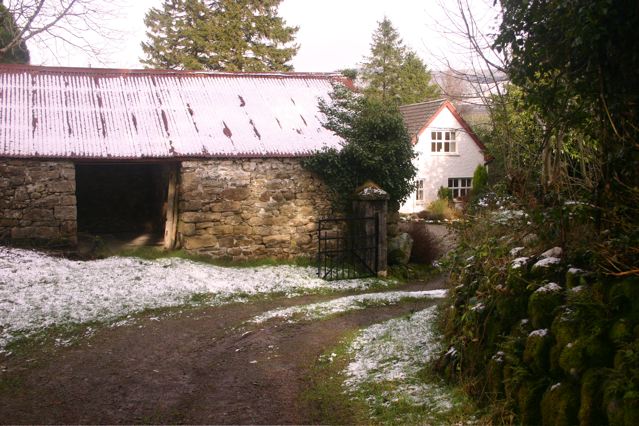
Aughavannagh cottage

Our Ballsbridge apartment lease ran out at the end of January and the new apartment wasn’t available until 3 February. That meant that aside from badly needing a break, we were also homeless for three days. It became clear that this was a time to turn crisis into opportunity. We chose to make a long weekend of it, going to stay in a cottage in Aughavannagh in the Wicklow Mountains south of Dublin. You can see the cottage behind the shed, in the first photo.

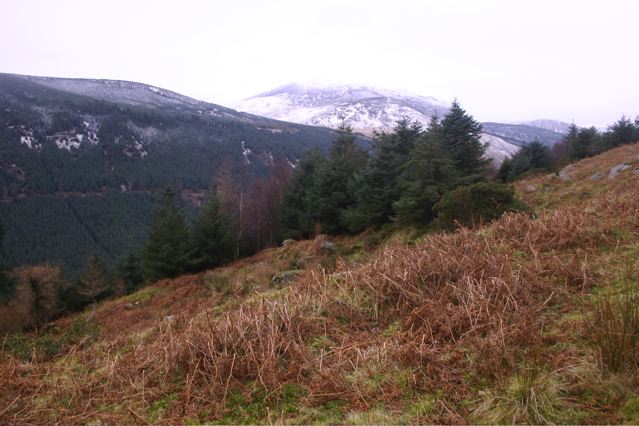
Glenmalure mtns

Being in a valley, there was no mobile phone access, much less internet. As our rental car was not designed for the snow in the mountains, so we were about as isolated as one could be just 50 kilometers or so by air south of Dublin.

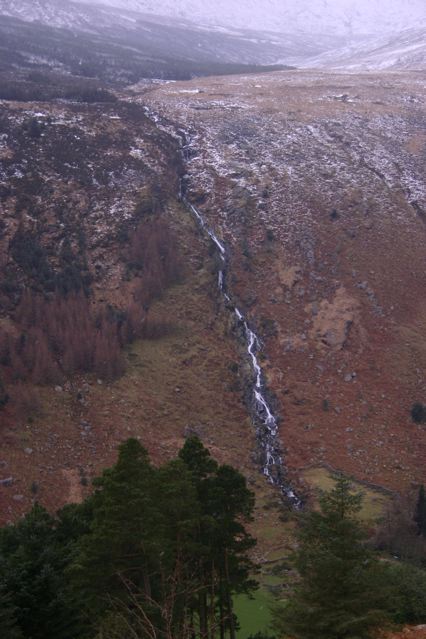
Glenmalure waterfall

The weekend was cold, with light snows, rain, and ferocious winds at times. But we had a fireplace and plenty of fuel. At times the weather cleared enough for walks. One very delightful one was at Glenmalure, the longest glacial valley in Ireland and UK. It’s just east of Luqnaquilla, Wicklow’s highest mountain at 925m. There’s also the impressive Carrawaystick waterfall, down to the Avonbeg River (see left).

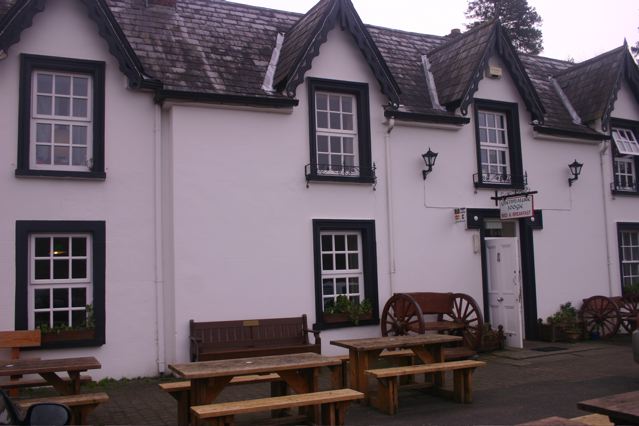
Glenmalure is not far south from Glendalough, an equally beautiful spot, but one that’s more heavily traveled. At the end of the walk we had an excellent pub lunch at the Glenmalure Lodge, where we had parked our car. That allowed us time to get back to watch Ireland v. Italy (rugby) on the telly. (We weren’t totally out of touch with the modern world!) Glenmalure Lodge

Fulbright Chair at National College of Ireland, 2007-08

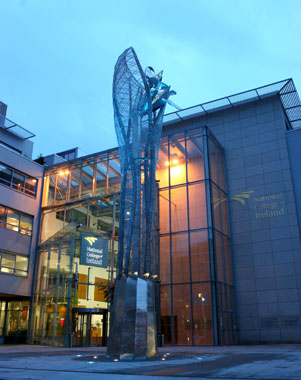
NCI Iris

My Fulbright Distinguished Chair position is hosted by the National College of Ireland, a third-level institution in Dublin. The College is very different from my own University of Illinois in terms of size, history, student population, local community, and emphasis on postgraduate education. And yet, I sensed from the position description and confirmed through subsequent interactions that there was an excellent fit with my own interests, experiences, and values.

The College was established in Ranelagh by Jesuits. Initially known as the Catholic Workers College, it was designed to serve workers and to fulfill the social justice mission of the Jesuits. It was also a response to the threats of totalitarianism revealed by the leadup to and aftermath of the Second World War, seeing education as the means to preserve a democratic society.

In 2000, the name was changed to National College of Ireland, and in 2003 the College moved to the International Financial Services Centre in the Dublin Docklands area. Over its history the nature of work had changed from manufacturing to service, digital technologies had become ubiquitous, and Ireland had grown into a wealthy nation. But not everyone participated fully in the Celtic Tiger; in the Docklands itself, one sees high-rise buildings for multinational banks and insurance companies next to housing for families who see little chance for success in schooling or in the economy. In this context, the College has maintained its social justice commitment, but renewed that in the context of a changing economy and demographics.

It was clear from my initial meetings in the College that there was a strong desire among both the leadership and the staff to bring social action together with academic excellence. There was a commitment to foster social responsibility along with new economy skills. There was an openness to seeing social commitment as an integral part of the learning experience and of scholarship in the College. Because of this, I saw a real opportunity to connect my work on community inquiry. My work came to focus on widening participation, enriching the learning environment, and promoting an active research culture, which were also key aspects of the College strategic plan.

Continue reading

Messing about in technology

If we were to establish a hall of fame for reflective writing about teaching, especially for texts revealing deep, yet accessible ideas about pedagogical theory/practice, it would be difficult to find better candidates than “Messing About in Science” by David Hawkins (1965). The paper describes his work in a fifth-grade class teaching about pendulums as part of the Elementary Science Study, which grew out of his discussions with Eleanor Duckworth, another insightful science educator. Although the study was grounded in a specific setting, the ideas might be applied to any subject of study or types of learners, including learning about and with digital technologies.

Phases in science learning

Hawkins identifies three patterns, or phases, of school work in science. These phases induce different relations among children, materials of study, and teachers. If we substitute “mentors” or “colleagues” for “teachers,” we see that they apply fairly well to science work itself and to other kinds of learning and work. That’s not so surprising, given that the essence of the phases is that the form of inquiry in science is not that different from the form of inquiry in learning. In fact, Hawkins prefers the term “work” over “play” in his model, even though it might appear that he’s just arguing for allowing children to have time to play.

Hawkins has in mind the kind of work one might do on a boat, citing the famous passage by in The Wind in the Willows, by Kenneth Grahame (1908):

“Believe me, my young friend”, said the water rat solemnly, “there is nothing…absolutely nothing…half so much worth doing as simply messing about in boats. Simply messing…nothing seems really to matter, that’s the charm of it. Whether you get away or whether you don’t; whether you arrive at your destination or whether you reach somewhere else, or whether you never get anywhere at all, you’re always busy, and you never do anything in particular…”

slipping pennies into water

(Slipping pennies into water in an investigation of surface tension, in a school in Brisbane; note the name tape on the forehead!)

Hawkins discovered that in order to learn in science we need ample time to “mess about.” Because it may appear that we don’t “get anywhere at all,” this phase is often neglected and undervalued. Thus, he devotes most of his article to the circle (◯) or “messing about” phase, in which learners engage in “free and unguided exploratory work” (p. 67).

In the pendulum study, Hawkins had planned to allow the children to explore for an hour or two, before getting into the science lesson per se. But he soon discovered that they needed more time to become familiar with the materials. Moreover, the materials provided a structure to their investigations. Their messing about was far from chaotic or undirected. In fact, as they messed about they began to generate the very questions that the lesson was intended to address, but in a way that was more involved, and connected to their direct experience.

Hawkins goes on to describe two additional phases, which he sees as essential, but more often included in science teaching. The triangle (△) phase, involves “multiply programed material” to support work that is “more externally guided and disciplined” (p. 72). The square (▢) phase is for “discussion, argument, and the full colloquium of children and teacher” (p. 74). The phases are unordered, and all are important. Learning in science requires the opportunity to experience al of the phases in a connected way, and to move easily among them.

Franz and Papert (1988) build on Hawkins’s ideas in a paper about students learning how to measure time. They argue that using computers well for learning requires

open-ended projects that foster students’ involvement with a variety of materials; …activities in which students use computers to solve real problems; …[connection of] the work done on the computer with what goes on during the rest of the school day, and also with the students’ interests outside of school; …[recognizing] the unique qualities of computers; …[taking advantage of] ow-cost technological advances…, which promote integration of the computer with aspects of the students’ physical environment.

Youth community informatics

In our Youth Community Informatics project, middle-school students make podcasts of stories important in their lives. Their work (learning) appears to follow the models we see in the pendulum and time projects, especially in terms of the value of messing about. They need time to explore, experiment, and become comfortable with the technologies.

In the project, young people select images from the web, scan in family photos, create graphics, find and download music, create audio files, edit audio using Audacity, and create presentations. They learn about copyright and citing sources, as well as about design and story-telling. More importantly, they use the podcasts as a way to connect with and talk about their families and their lives outside of school.

Like Hawkins, we see the value of guided inquiry (△) and of full colloquium (▢) in this work, but we have seen increasingly the need for ample time to mess about (◯) as well. Doing that allows students to make the technology part of their lived experience and not something divorced from it.

References

Hawkins, David (1965). Messing about in science. Science and Children, 2(5), 5-9.

Franz, George, & Papert, Seymour (1988, Spring). Computer as material: Messing about with time. Teachers College Record, 89(3), 408-417.

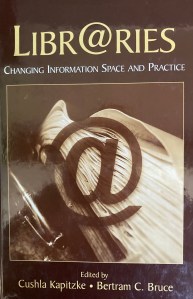
Libr@ries: Changing information space and practice

Libr@ries examines the social, cultural, and political implications of the shift from traditional forms of print-based libraries to the delivery of online information in educational contexts. Despite the central role of libraries in literacy and learning, research of them has, in the main, remained isolated within the disciplinary boundaries of information and library science.


Continue reading

Timeline tool

I knew that the iLabs timeline tool was useful for the Learning Technologies Timeline where I wanted both the format of a timeline and collaborative construction of it. Rajeev has taken that to a new level with his timelines for Dewey, Addams, and Chicago.

It wasn’t much to go from there to see the timeline tool as a way to present a roadmap for a project or to make an agenda for a meeting. And recently I realized that it’s also a way to make a syllabus for those who think the existing syllabus tool is too complex or offers too many options.

I didn’t see initially that it was also a blog if I simply sort by newest first. It’s also a lab notebook with spaces for regular notes, links to data, automatic dating, Dave and Rajeev helped me see that it’s a roster for a project or a class, especially helpful if it includes photos. Now, I’m seeing that it’s a bulletin board. Each instantiation of a timeline can be a separate forum, and individual postings are entries in that forum, which can then be sorted by dates or titles of the postings. Of course it doesn’t thread messages…

To what extent do each of the iLabs tools have this multiple use character?

GSLIS canoe trip

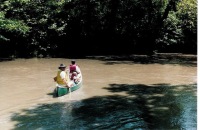
Photos from a GSLIS canoe trip on the Middle Fork of the Vermilion River (Wabash River tributary). There was another GSLIS trip on the same river the previous June.

The Middle Fork is the only river in Illinois designated as a National Wild and Scenic River by US National Park Service. It flows through Kickapoo State Park near Danville.

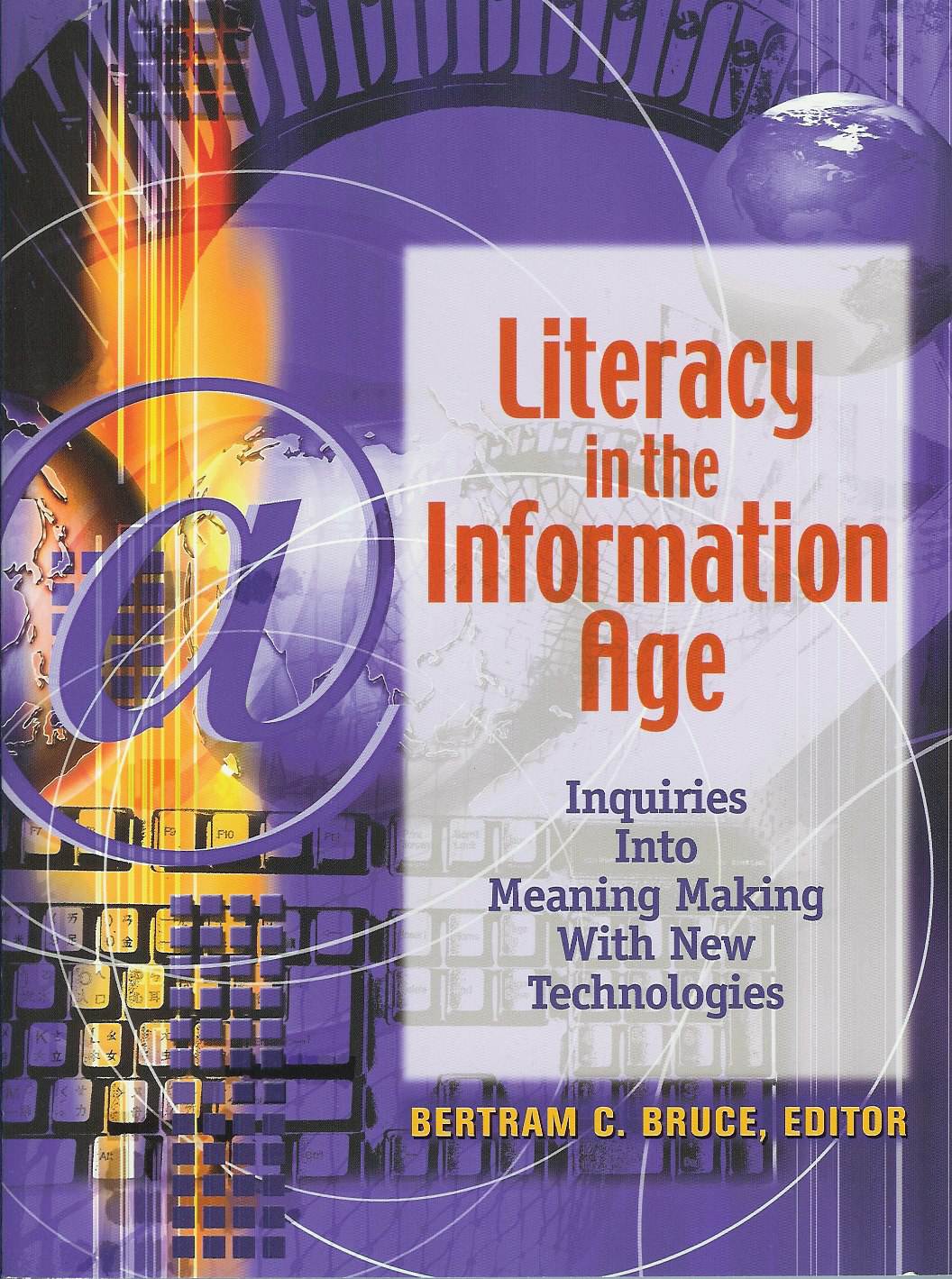
Literacy in the information age: Inquiries into meaning making with new technologies

liabookEducators today want to go beyond how-to manuals and publications that merely celebrate the many exciting new technologies as they appear in schools. Students are immersed in an evolving world of new technology development in which they are not passive recipients of these technologies but active interpreters of them. How do you help learners interpret these technologies as we all become immersed in the new information age? Continue reading

Professor, GSLIS

GSLIS

Still at the University of Illinois, I became a Professor in what was known then as the Graduate School of Library & Information Science (GSLIS) in the Spring semester of 2000. You can see what attracted me to LIS here. The School is now known as the School of Information Sciences, or simply the iSchool.

In 2004-05, I had a sabbatical in Europe, mostly around Paris, in Germany through a joint NSF/DFG project, and through Fulbright Specialist grants in Finland and Sweden.

In 2007-08 I held a Fulbright Distinguished Chair at the National College of Ireland in Dublin. At other times, I’ve had extended projects in Turkey, China, Romania, Nepal, and other places.

Discoveries

Discoveries (1995) is a series of four interactive CD-ROM programs for Grades 3-6 (ages 8-12). It includes hypertext, panoramic images, and immersive technology in a pre-web ecology.

img_3975Into the Forest (Great Smoky Mountains National Park) [ISBN 0-669-36168-2]

Editor: Grace Talusan
Designer: Angela Sciaraffa
Logo: Pamela Esty
Cover photo illustration: Daniel Derdula

Continue reading