Children’s House (Çocuklar Evi) in Çanakkale, Turkey

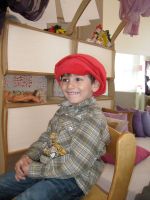
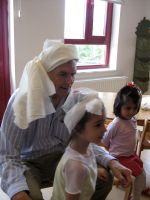
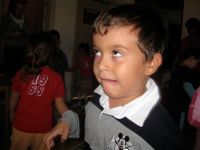
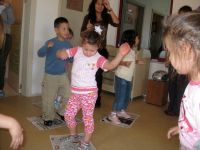
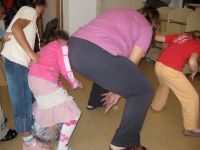
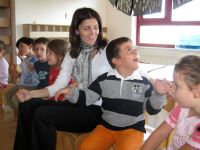
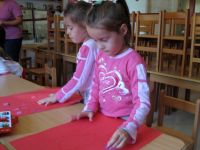
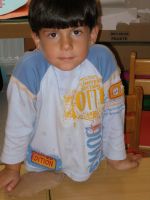
On Monday, I was invited by Ebru Aktan Kerem, an early childhood teacher/researcher at Çanakkale Onsekiz Mart Üniversitesi (in Turkey), to visit Çocuklar Evi, or Children’s House. Ebru’s innovative research contributes to a wonderful, university-based school for children, ages 3-6, and a site for learning for teachers and researchers.

The Principal, Derya Bedir, and the teachers use persona dolls to help develop understanding across differences. They promote art, music, science, and healthy interaction in the spirit of Reggio Emilia or the University (of Illinois) Primary School.

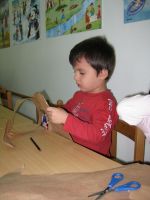
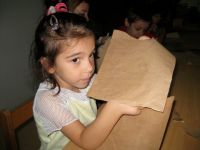
Some visitors apparently observe for an hour, have tea, and then leave. They come away with a rich picture of an outstanding school. But I was captivated by the children and the creative activities led by the teachers. I hope I didn’t overstay my welcome. I joined in on the Turkish songs and taught the children “Skidamarinkadinkadink.” They helped me with my Turkish. One activity led to another, then lunch, and then interesting art projects after lunch. I kept up reasonably well, but was reminded that preschool children can get up and down much faster than I can!

Click once on a photo to enlarge it; click again to enlarge it further.

Is Finland cheating on international tests?

International comparisons of school systems have become a sport, maybe not so universally engaging as the Olympics, but still of high interest to policy makers in education. There are many reasons to question the assumptions behind these comparisons and the way that they are carried out. Nevertheless, they give a rough indication of how school systems are doing in relative to one another.

For example, OECD’s Program for International Student Assessment (PISA) has shown that the best performing countries do much better than the worst. Moreover, the same countries are perennial leaders: Canada, Finland, Japan, Singapore, South Korea. But there may be a flaw as serious as any Olympics scandal—a case of cheating!

Laat year, McKinsey, a major consulting company, asked “why?”—why do some school systems produce students who regularly perform so well on international tests? They issued a report: How the World’s Best-Performing School Systems Come Out on Top.

There were a number of interesting findings. One was that Finland, which regularly tops the list, has largely dispensed with national examinations. They have no formal reviews and keep the results of informal audits confidential. They devote their school days to teaching and learning.

Meanwhile, the US is on an ever-expanding testing binge. A study from QED found that over a quarter of teachers report spending more than an hour a day preparing students for standardized tests. Nearly half of teachers believe standardized tests negatively impact student learning. More than three-quarters of teachers report being evaluated based on student test scores, even though they rank this as the least effective method.

An increasing percentage of class time is now spent testing students. A much bigger portion is spent preparing for the tests. And to a large extent the entire curriculum has been devoted to testing in just reading and basic mathematics.

The net result is that US students don’t have the same opportunity to learn that students in Finland have. While Finnish students engage in critical thinking, reasoning, arts, science, history, and much more, ours in the US spend time being tested or drilling on basic skills to prepare for the test.

So, my question is: Is it fair to compare Finnish and US schools? Of course, Finnish students can do better if they spend more time learning. But isn’t that cheating? Shouldn’t they have to be tested just as much? Shouldn’t the teachers and principals there be subject to the same score-driven evaluations? Shouldn’t their curriculum be restricted just like ours?

International comparisons make no sense if Finland is allowed to maintain a system built around highly-qualified, well-supported teachers (as McKinsey shows), a full curriculum, and a valuing of learning, while the US requires its schools to dumb-down to the misleadingly named “No Child Left Behind.” Let’s level the playing field and make it equally hard for Finnish students to learn!

Tom Chapin’s Not on the Test offers a musical version of this argument.

Technology in Docklands Education

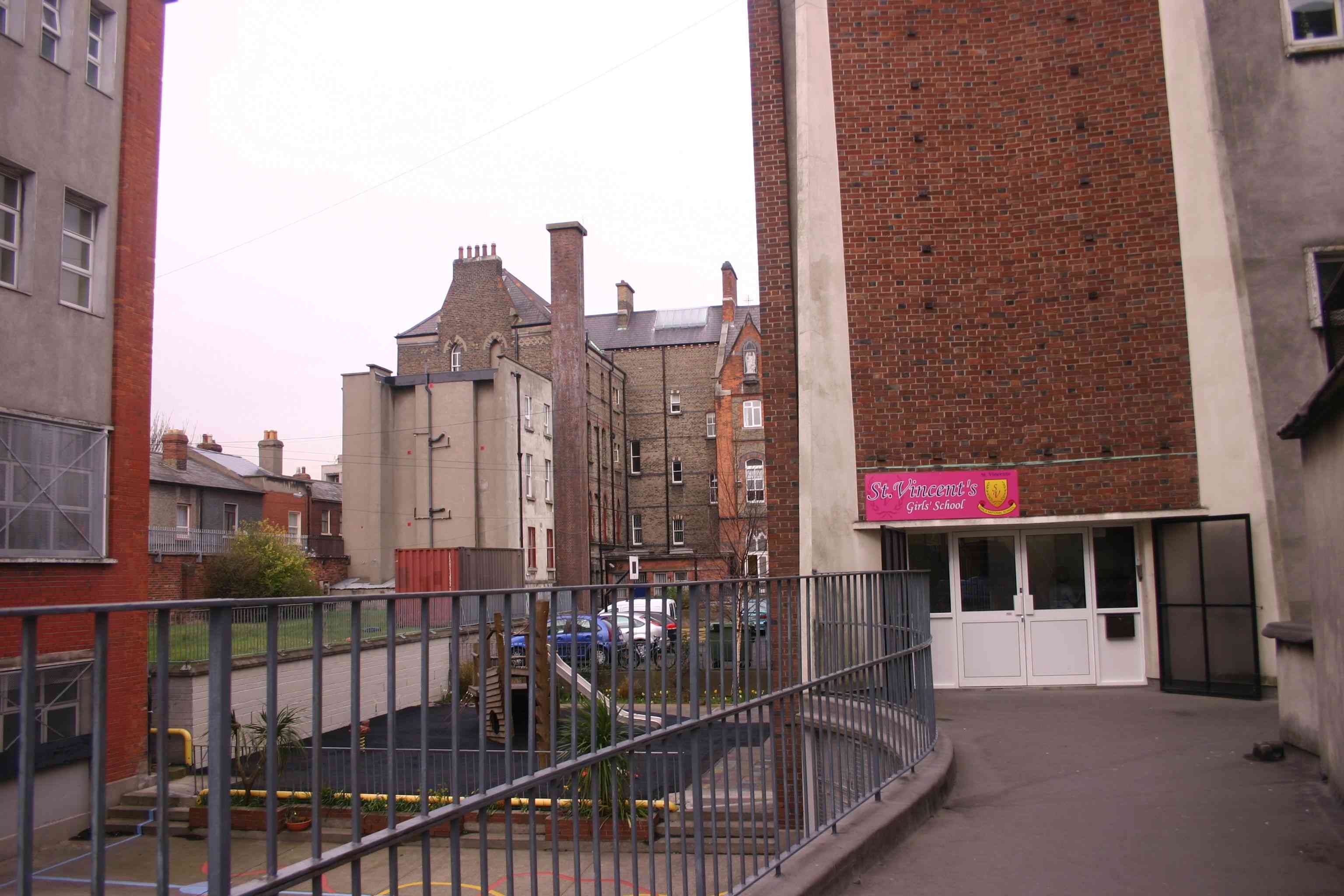
One of the most interesting experiences for me this year in Dublin was to work with Abi Reynolds and Leo Casey on the Technology in Docklands Education (TIDE) project. The aim was to meet with 24 Docklands-area schools and other partners to investigate the current use of technologies in teaching and learning, to document their experiences, and to report on current and future needs. Most of the schools are in one of the DEIS categories (officially disadvantaged). You can see the entrance to one of the TIDE schools, the St. Vincent’s Girls School on North William St., in the first photo.

St Vincent\'s, North William StThe research design involved face-to-face interviews with principals and teachers, followed by an online survey. We learned about the school library, computer resources, interactive whiteboards, digital cameras, and other resources. We also observed some ICT-based activities in the classrooms or neighborhood.

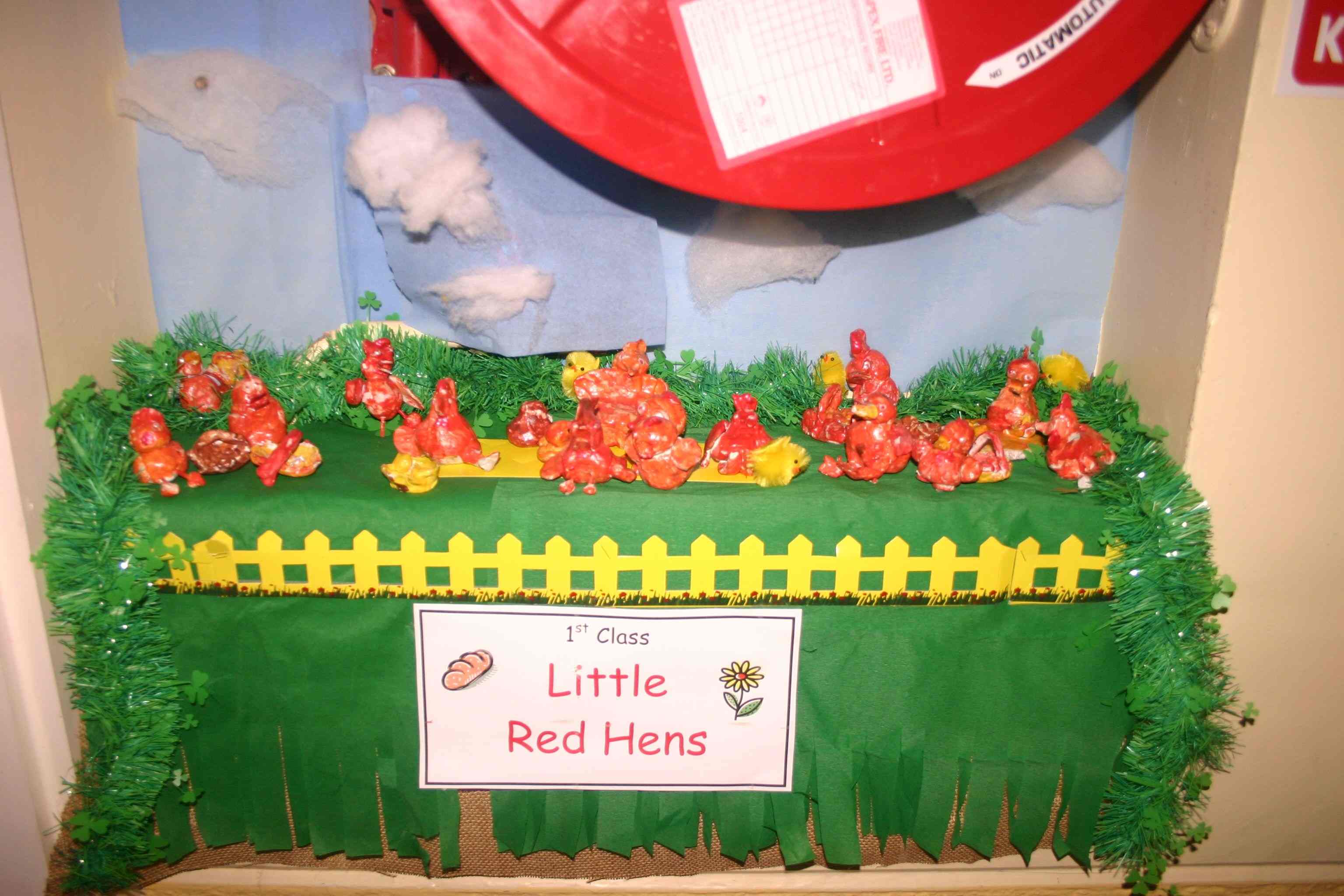
For the analysis, we used scenario-based design (Carroll & Farooq, 2005) to describe the current situation and to identify needs. This led to producing scenarios of use—stories about exemplary projects, such as a stop-action animation involving Little Red Hens (see second photo). We also identified scenarios of support—stories of ways that the schools could be helped to enhance learning.

Visiting the schools gave me a good sense of education in inner-city Dublin, but also of the local communities. I became familiar with landmarks such as Five Lamps, Sheriff Street, and Ringsend, and learned about how Fairview Park near the River Tolka originated through landfill.

Many of the joys and challenges in the schools seemed similar to what I’ve seen in schools in China, Australia, Russia, the US, etc. But I also found myself expecting to be surprised as each school revealed its own special identity. One Principal told us that they had a large population of Filipino children, in part related to the demand for health care workers in the nearby hospitals. He said it had transformed his school, with all of the children becoming more interested in language, culture, and geography.

References

Bruce, Bertram C., & Reynolds, A. (2010, February, in press). Technology in Docklands education: Using scenarios as guides for teaching and research. Educational Studies, 36(1).

Carroll, J. M., & Farooq, U. (2005). Community-based learning: Design patterns and frameworks. In H. Glllersen, K. Schmidt, M. Beaudouin-Lafon, & W. Mackay (Eds.), Proceedings of the 9th European Conference on Computer-Supported Cooperative Work (Paris, France, September 18-22, 2005), pp. 307-324. Dordrecht, The Netherlands: Springer.

Our presentation to the Principals and teachers:

The Fís Book Club

Fis Book Club

The Fís Book Club has received an enthusiastic response from schools here in Ireland, and now in the UK. Fís means “vision” in Irish, and also stands for Film in Schools. It’s been developed at the Institute of Art, Design, and Technology in Dun Laoghaire.

The Fís Book Club is essentially a web-place where children post video book reviews based on their independent reading. The methods for making and posting the reviews are simpler and more straightforward than on other sites I’ve seen, thus allowing the focus to be on the reading and response.

The collected video book reports form a child-friendly online video Book Review Catalogue, which is accessible only to the participating schools. Teachers and children within the project can watch the videos of other children’s book reviews, find books they might like to read, or compare responses. There are no advertisements in the site.

Make your own electronic whiteboard

One of the more interesting, and on-going, inquiries around technology and learning is related to a device–a low-cost, multi-touch, interactive whiteboard using a Wiimote. As most people know, an interactive whiteboard is a large interactive screen on which a projector can mirror a computer’s display. Users can then control the computer using a special pen, finger, or other device. They’re used in a variety of settings including classrooms at all levels, work groups, broadcasting, etc., but cost thousands of dollars. A Wiimote is the remote controller from the Nintendo Wii computer game, which costs just a few hundred.

Johnny Chung Lee, a graduate student at Carnegie Mellon University, has a variety of interesting projects involving human-computer interaction. He discovered a way to build an interactive whiteboard using a Wiimote. His version is portable and can be built for a tiny fraction of the cost of a commercial whiteboard. He’s recently come out with the Wiimote Whiteboard v0.2.

Lee’s inquiry continues with his writing and reflections in his blog, procrastineering. There he writes:

One of the great, unexpected, and perhaps most influential aspects of creating these videos has been how many people they have inspired and sparked an innovative spirit in. I’ve gotten hundreds of emails from young students that express this enthusiasm. But, perhaps one of the best testimonials is this news article about kids in the Clara Byrd Baker Elementary School’s Lego Club in Williamsburg, VA. The students there, led by Kofi Merritt, are getting excited about innovating in technology by creating their own electronic white boards.

Merritt worked with four fifth-graders and a parent volunteer to build the whiteboard. It’s a great example of making the tools for one’s own inquiry.

Best stories for digital story (re-)telling

Digital storytelling can be for any kind of story, but one application I see a lot in schools is essentially responding to a story by retelling it in a digital form, often with interesting rewriting done by the students. This is carried out using software such as Comic Life or PhotoStory, or sometimes with full video. There’s often the use of clay or puppet animation.

I’ve seen all sorts of stories and media used, such as claymation in a 1st-grade class around The Little Red Hen or in a third grade around The Three Little Pigs. You can see in my blog a post about The Hundred-Mile-An-Hour Dog in a fourth grade.

A teacher asked me whether there were any best stories for this, especially in the context of introducing the technology to other teachers. Other than thinking that stories with distinctive characters and action plots lend themselves well to digital storytelling, I hesitated to recommend any particular stories. But he wanted to have some suggestions of what has worked well, or is likely to work well, in terms of engaging students and making good use of the media.

Do you have any experience with this, or suggestions about his question?

Ching-Chiu Lin, who works in this area, says:

I thought about an article in Art Education that discusses ways that illustrators tell stories in picture books, such as pace of turning the pages and arrangement of images (see below). Instead of seeking exemplary books for teachers to use, another suggestion is to think about the possibilities of transforming/applying these artistic storytelling styles into digital form.

For example, David Wiesner’s Tuesday and Flotsam (style of combination and arrangement of images) may encourage students to write their own unique stories (scripts) based on the same images they view. The use of diagonals and geometric patterns in Gerald McDermott’s Anansi The Spider may be easy for younger students to making their videos by using the collage style animation. Or students can use a story from one book and represent it by borrowing another book’s style.

This line of thinking may help teachers not only thinking about the story itself, but also ways of presentation, learning objectives, and learners’ prior knowledge.

Eubanks, P. (1999). Learning to be a connoisseur of books: Understanding picture books as an art medium. Art Education, 52(6), 38-44.

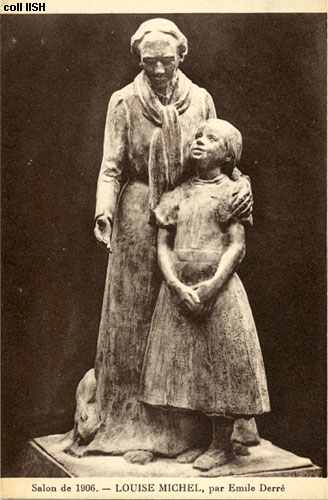
Louise Michel, the Paris Commune, and Learning

The Women IncendiariesLast Monday night, we visited Square Louise Michel at the foot of Sacre Coeur in Paris. The park and the nearby streets of Montmartre are a living history book, with every cobblestone suggesting times of struggle, hope, fear, and disillusionment. Staying there for a few days makes me feel that I just have to share some thoughts about the Paris Commune and Louise Michel.

There was a time when I knew very little about the Paris Commune, which held Paris for two months in the spring of 1871. It wasn’t part of my history lessons in school, nor did it enter into political debates or everyday conversations. As I read, I began to see references to it—”the democratic and social republic!”, the petroleuses, the horrible siege prior to the commune, which led to the eating of zoo animals, the Federales’ Wall, early establishment of rights for women, why Sacre Coeur was built—but these references were disjointed, so that much what I did know was confused and contradictory. It took living in Paris for a year to help me understand more of what it was about.

I knew even less about Louise Michel, one of the heroes of the Paris Commune, and as I’m learning, much more besides. But I feel a shiver now whenever I think of her. I’m amazed by her passion and ideals, the violence in her life, her writing, her work as an educator in many senses of that word, and her life fully lived.

Louise MichelFor a long time Michel was the only woman other than saints to have a Paris métro named after her. The recent renaming of the Pierre Curie métro to Pierre et Marie Curie makes two (or one and a half). Schools all over France bear her name as well. She comes alive in books such as Édith Thomas’s The Women Incendiaries (reprinted by Haymarket Books, 2007; original in French in 1963). I think of her when I play Le Temps des Cerises, a song often associated with the commune and with Michel, even though it was written five years before the Commune.

I’ve also learned that she was an early practitioner of what I’d call inquiry-based teaching and learning. She was a continual learner, inspired by the works of Charles Darwin and Claude Bernard. As a school teacher, she used methods promoted in the progressive education movement (which came much later): interaction with objects such as flowers, rocks, and animals, studies outdoors, and scientific methods. She declared,

The morality I was teaching was this: to develop a conscience so great that there could exist no reward or punishment apart from the feeling of having done one’s duty, or having acted badly.

After the Commune fell, Michel was deported to New Caledonia. Unlike her jailers and many of the other Communards, she befriended Polynesians. She gave lessons to one in “the things whites know,” while he taught her his language. Later, she ventured deep into the forest to work with and study groups still practicing cannibalism. She collected their legends and music as a modern ethnographer might do. When there was a native revolt, Michel joined the side of the Polynesians. Throughout, she wrote poetry, prose, and letters on behalf of prisoner rights.

Later, she opened a school in London for the children of political refugees (The International School). There was a statement in the prospectus taken from Mikhail Bakunin’s God and the State:

All rational education is at bottom nothing but this progressive immolation of authority for the benefit of liberty, the final object of education necessarily being the formation of free men full of respect, and love for the liberty of others.

As infed says, there were no compulsory subjects, teaching was in small groups, and there was an emphasis on rational and integral education. Often, groups of children would bring their own ideas about what to study. Michel wanted students to learn to think for themselves, just as she did herself and encouraged others to do throughout her life.

Louise Michel was a complex person whose every year might fill the life for someone else; a blog post feels totally inadequate. Moreover, one might criticize both the Commune and her participation on many grounds. Nevertheless, her commitment to social justice, her caring for all life, her passion for learning and teaching, her striving for women’s rights and democracy in general, her unselfish work on behalf of others, her strong moral stance, and her unfailing courage set a mark to inspire anyone.

References

  • Michel, Louise (2004). Louise Michel [Rebel lives series, Nic Maclellan, ed.). New York: Ocean.
  • Saudrais, Hélène (2005). Louise Michel. Amsterdam: International Institute of Social History.
  • Thomas, Édith (2007/1963). The women incendiaries. Chicago: Haymarket Books (reprinted in 2007; original in French, Les Petroleuses, in 1963).

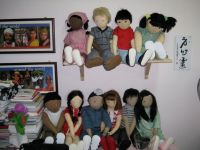
Dáil na nÓg Fairsay campaign

The Youth, Media and Democracy conference concluded yesterday at Dublin Institute of Technology. There was an excellent program, with presentations from youth groups using a variety of media–film (documentaries, personal stories, what-ifs), comics, hip hop, remix (VJ-ing, web video mashups), object animation, radio, and more. There were also interesting talks about the Fresh Film Festival, media policy, the 5th World Summit on Media for Children held in Johannesburg, the Story of Movies, Digital Hub FM, and much more.

I was also impressed with the Dáil na nÓg campaign to encourage mainstream media to provide more balanced coverage of youth, especially to show the diversity of youth activities and not just negative images. A small group of Dáil na nÓg representatives has conducted this campaign, called Fairsay. They’ve had multiple meetings with media and policy makers, assisted by Anne O’Donnell from the Office of the Minister for Children.

Dáil na nÓg means “youth parliament”. Young people come as representatives of their local area to tell decision makers in Government what they think of issues that affect their daily lives.

The young Dáil na nÓg representatives gave excellent presentations and participated fully in panel discussions, demonstrating by their presence how young people can learn social responsibility, communication skills, and connected understanding through active civic participation.

So, it’s ironic that the Fairsay work is only partly sanctioned by the schools. For example, when they were waiting for a media callback they had to have their mobile phones on vibrate during class. When a call came it had to be taken down the hall in the study room. The classroom might be a place to teach about government or media, but not to actively engage with it.

Any teacher knows the many distractions available today for young people, mobile phones being near the top of the list. Still, it’s unfortunate that we can’t find better ways (this applies to US schools even more) to make actually participating in democracy take precedence over just talking about it. The young people at the conference showed how they could use media in diverse ways to move beyond the spectator role to become active participants.

Slow learning

Many people would say that new technologies speed up life, indicated by terms such as “fast forward” or “multitasking.” The same people might add that because young people live in a fast-paced, digitally-enhanced world, we need to change schooling accordingly. If we don’t use technologies to match their pace, we’ll lose them. Moreover, there is so much more to learn today. We need to use podcasts, mobile technologies, video, on-demand resources, blogs, SMS, and other tools to speed up learning for the millenial generation.

Other people question the rush to new learning technologies. They argue that it’s good to learn in a slow, considered, and reflective way. Better to immerse oneself in a book, to read, even re-read difficult passages. Schooling should counter, not acquiesce to, the blur of modern life.

This debate is unlikely to reach an easy resolution. But as is often the case, the polar opposites here share some unquestioned assumptions. Both seem to think that the new technologies accelerate; they just disagree about whether that’s a good or bad thing.

However, when I’ve observed learning in classrooms with a thoughtful use of new technologies, I’ve often seen the contrary: Learning seems stretched out or slowed down. For example, in my last post about The Hundred-Mile-An-Hour Dog, I talked about a primary-level class doing digital storytelling around a book they had read. They built dioramas for scenes in the story, constructed clay figurines for the characters, photographed events in each episode, wrote narration for the scenes, checked grammar and spelling, and eventually created a photostory. This took many class sessions and involved discussions about the story, choices in design and presentation, and referring to the text for details. Certainly the new technologies (digital camera, computer) made it easier to carry out aspects of the project. But the overall effect was to engage the students in a deeper, more critical form of reading and response.

During this time, they didn’t read as many stories as they might have, or write as many words. One might say that their learning slowed down. At the same time it had become more substantive and meaningful. In contrast, their usual activities are sometimes rushed and unreflective.

So now, I’d like to flip the debate. Those who embrace the new technologies need to say that they’re good, not because they accommodate the fast pace of modern life, but because they slow it down. And those who oppose them need to realize that we often use the old tools in cursory, shallow ways which might be corrected with new technologies.

The Hundred-Mile-An-Hour Dog

The Hundred-MIle-An-Hour Dog

I recently re-visited a classroom, which is one of those that give me hope when I’m down about the challenges facing education today. It’s not that everything is perfect; that would seem so unreal as to dis- rather than en-courage. No, it was that the principal, the teacher, and the students were all engaged in learning in productive, connected ways.

The students were ten-year-old boys in a fourth class. They had read The Hundred-Mile-An-Hour Dog by Jeremy Strong. They then used storyboards, clay animation, a digital camera, and online music to create a digital story. There were six groups and each one responded to a different chapter in the book,

The novel was the overall winner of the 1997 Red House Children’s Book Award. You can get an idea of the story from Strong’s description:

Streaker is a dog that can run as fast as a whirlwind. Unfortunately she is badly trained. She doesn’t know her name and doesn’t know what ‘Stop!’ means either. She is driving everyone mad. Then Trevor takes on a bet with nasty Charlie Smugg. Trevor will train Streaker in two weeks, or he will have to bath in a tub full of muck and frogspawn. Can Trevor’s friend Tina help – or is Tina after something else quite different?

When A. and I talked with the boys we had exchanges such as:

A/C: Do you like this?
B: Yes!
A/C: Can you tell us why?
B: Because it’s fun, not work.
A/C: But aren’t you working hard?
B: Well, yes, it’s work, but it’s different.

We also heard, “it’s easier to think in groups,” “[when you have a question] you go back to the story,” and “[when we disagree] we talk it out.” The activity combined art—sketches, coloring, clay figures, collage backdrops; group work—planning, sharing work, dispute resolution; technology—audio files and editing, digital photography, photostory; as well as reading and writing.

The principal says that activities like this—it’s really a whole program—have totally changed teaching and learning in the school. It’s boosted self-esteem and helped the school re-connect with the community. She “can’t imagine the school without it.” The work develops multiple intelligences, fosters project work, leads to integrated learning, and addresses the standard curriculum goals in the process. Teachers learn from each other, and maybe from the children, too,