Dr. Evil’s community engagement

Richard Berman, aka Dr. Evil is

the force behind several industry-backed nonprofits that share staff and office space with his very for-profit communications and advertising firm, Berman and Company. The firm promises clients it will not ‘just change the debate’ but ‘start’ one, and a range of companies, from Anheuser-Busch to Philip Morris to the casino chain Harrah’s, have signed up for Berman’s ‘aggressive’ and ‘hard-hitting’ advocacy. Some clients pay Berman and Co. directly, while others donate to his nonprofits—but much of the cash winds up in the same place, via hefty management fees the front groups pay to Berman’s company.

Among Berman’s outfits is the Center for Consumer Freedom, which targets critics of fast food, alcohol, and mercury-laden fish. (Seen its commercial in which the “food police” yank an ice cream cone from a little boy?) Berman’s Employment Policies Institute campaigns against minimum-wage increases. And his Employee Freedom Action Committee crusades against unionization.

via Dr. Evil’s Payday | Mother Jones

This Mother Jones article goes on to show several examples in which mainstream news agencies pick up on the press releases of Berman’s organizations, using them in a totally unexamined, uncritical way.

One might view Berman’s method as a form of community engagement, offering appealing names (e.g., “Consumer Freedom”) and prima facie activities to promote a greater good. But it’s the opposite of what Jane Addams meant when she talked about making the entire social organism democratic.

Faubourg Tremé and community engagement

Thinking about Faubourg Tremé and also an earlier post about Cooking up a storm gives me a different understanding of community engagement or civic renewal. Sirianni and Friedland (2005), for example, talk about a broad civic renewal movement in the US in areas such as community organizing and community development, neighborhood associations, civic environmentalism, civic journalism, and healthy communities. They also discuss policies that can foster civic capacity building and problem solving.

Although their survey is useful (I use it in my own course on community engagement), three things seem missing from their picture. The most glaring omission is race. Every one of the areas they discuss is deeply imbued with the history and present circumstances of race relations in the US. The very notion of civic capacity building and problem solving can’t be examined fully without taking into account that there is a legacy of oppression and a lack of understanding about how race has shaped American history and policies.

A second omission is history. Much of Sirianni and Friedland focuses on current movements and tools for organizing, all useful, to be sure. But without a grounding in historical precedents it’s difficult to see clearly our way forward. For example, long before the present generation of civic renewal, Jane Addams and colleagues led the way through their work in Chicago on health care, working conditions, literacy, and participatory democracy. Before that, the Paris Commune built social institutions based on liberty, justice, and equality, with a deep respect for learning by all. Even before that, Faubourg Tremé showed how an engaged community could work together to establish effective civic journalism, work toward racial equality, and build a healthy community.

A third area of omission is art. John Ruskin argues that art and culture reflect the moral health of society. Ruskin influenced Jane Addams, who saw that art in all its forms, including crafts, theater, and cultural practices was essential to community and individual development. The importance of art as a means for a community to find shared values, maintain its own history, and to express itself is striking in both the Faubourg Tremé and Cooking up a storm stories as well. I’m not sure that art ought to listed as a civic renewal movement per se, but it does seem crucial to understand more about what it means for civic health and civic renewal.

References

Faubourg Tremé

Just to the Northwest of the French Quarter lies a neighborhood that few tourists visit, and many have never heard of, called Faubourg Tremé. Much of the area now appears bleak with Interstate Highway 10 bisecting it, industrial yards, and boarded up buildings. But it’s one of the most important neighborhoods in American history, and still has meaning for today. There are efforts to restore Faubourg Tremé and to learn what it has to tell us.

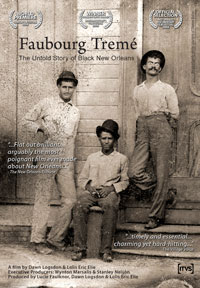
faubourg_tremeA recent, award-winning documentary tells the fascinating story, made all the more compelling by relating it to the life of a young reporter for the Times-Picauyune. The film is Faubourg Tremé: The Untold Story of Black New Orleans. Reporter Lolis Eric Elie leads us in his discoveries about his own city. He and director Dawn Logsdon show the relation between the city’s present and its rich past, enlivened throughout by music, including Derrick Hodge’s original jazz score, the Tremé Song by John Boutté, and a century of New Orleans music.

Viewers also meet Irving Trevigne, Elie’s seventy-five year old Creole carpenter, who descends from over two hundred years of skilled craftsmen, as well as Paul Trevigne, editor of L’Union, the first black newspaper in the US. L’Union and later, the Tribune, were strong advocates for the abolition of slavery, but beyond that, for full citizenship and social equality for all blacks, something most northern abolitionists shied away from. They hear from Louisiana Poet Laureate Brenda Marie Osbey, musician Glen David Andrews, and historians John Hope Franklin and Eric Foner as well.

armstrong_park_Congo Squre cFaubourg Tremé was home to the largest community of free black people in the Deep South during slavery, where they published poetry and wrote and conducted symphonies. It was a racially-integrated community, a model for our own future. It as also possibly the oldest black neighborhood in America, the home of the Civil Rights movement and the birthplace of jazz. (See Congo Square to the right.)

Long before Rosa Parks, Tremé residents organized sit-ins on streetcars leading to their eventual desegregation. But on June 7, 1892, Homer Plessy from Tremé deliberately challenged the Louisiana 1890 Separate Car Act, by insisting on sitting in a whites-only car on a commuter train. He was arrested, tried, and convicted and eventually lost in the infamous Supreme Court decision of Plessy v. Ferguson. The resulting “separate-but-equal” decision legitimized segregation throughout the US for the next 62 years, and was a major blow to Tremé.

Following later assaults from urban renewal, Interstate Highway 10, and then Hurricane Katrina, it’s surprising that anything remains in Tremé. But one thing that has survived is a sense of history, embedded deep in the music, dance, architecture, social relations, and stories of the community. It is this history which holds a promise for the renewal of Tremé and perhaps of the larger US Society.

The film is a must-see, telling a story that is simultaneously informative, uplifting, and disturbing.

No tent cities for the wealthy

A continuing saga locally, similar to that in many other communities, is that of tent cities.

St. Mary’s Catholic Church in east Champaign apparently will be the home for the Safe Haven tent community for the next month.

The Rev. Tom Royer, pastor of the church at 612 E. Park Ave., sent a letter to Mayor Jerry Schweighart and the city council, dated Sunday, that “the parish of St. Mary has decided to host the Safe Haven tent community for 30 days.”

“This will give them (residents) additional time to work with you and the zoning commission to find a more permanent location for their community,” wrote Royer, who did not give a date when the tent city would locate at the church.

City Zoning Administrator Kevin Phillips said Wednesday the city still holds that tent cities are in violation of the city’s zoning ordinance, and he said the city would take enforcement action if the tent city does relocate at St. Mary’s Catholic Church.

via Eastern Champaign church takes in tent city residents

The discussions revolve around questions such as whether the tent city would annoy nearby residents, or how long it will be allowed to stay in a particular location. It’s amazing to me how little talk there is about alternatives. What other options are there for people who are down on their luck, often facing physical and emotional, as well as financial challenges? Shouldn’t we be asking ourselves what we can do to provide housing, not how to prevent people from coping?

One can’t help but recall Anatole France’s (1844-1924) famous passage from Le lys rouge (The red lily):

Cela consiste pour les pauvres à soutenir et à conserver les riches dans leur puissance et leur oisiveté. Ils y doivent travailler devant la majestueuse égalité des lois, qui interdit au riche comme au pauvre de coucher sous les ponts, de mendier dans les rues et de voler du pain.

For the poor it consists in sustaining and preserving the wealthy in their power and their laziness. The poor must work for this, in presence of the majestic quality of the law which prohibits the wealthy as well as the poor from sleeping under the bridges, from begging in the streets, and from stealing bread.

Understanding what we’re doing in Afghanistan

It’s refreshing to hear an admission that we really don’t know much about the country we’ve invaded, and that it would help if we did. Wouldn’t it be even more refreshing if we bothered to do that learning before we invade the next country?

We’re trying to understand what are the … factors that the people of Afghanistan are willing to sacrifice … to achieve,” he says. “And, I think, that right now it’s different depending on where you go, but I don’t think we have as good a grasp of that as we should. –Maj. Gen. Michael T. Flynn, Aug. 11, 2009

via U.S. General: Taliban ‘Comfortable’ In Kandahar : NPR.

Opening the door to single-payer health care

Tommy_DouglasMy previous posts on national health care, The bottom line in health care and The bottom line in health care, and Single-payer health care: Why not?, make the case for a national health program. But Canada established its program in an incremental way.

Tommy Douglas, premier of Saskatchewan from 1941 to 1960, led the province to develop a universal, publicly-funded “single-payer” health care system. It was so successful that other provinces soon copied it, and ultimately, so did Canada’s federal government. In 2004, Douglas was rated by his compatriots as “The Greatest Canadian” of all time.

Saskatchewan has been a leader in many areas of health care, but that happened over many years. The Saskatchewan Government site lists six reasons why the province was able to do what it did. These are worth thinking about for the US health care debates today:

  • There was a vision of health care for all.
  • Citizens showed a co-operative spirit, trust, and a willingness to help one another.
  • Municipal politicians were forward-thinking and innovative.
  • Provincial governments responded quickly to needs.
  • Medical doctors were altruistic, with service to sick patients as their primary goal.
  • Economic hardship, particularly during the 1930s, meant that virtually everyone was in the same predicament.

A US House committee recently approved an amendment allowing states to create single-payer health care systems. Doing so might be a way around entrenched, moneyed interests that have thus far thwarted every attempt at health care reform in the US, but only if we can find a similar vision and co-operative spirit. Could we do it without the economic hardship of the 1930s?

References

Nichols, John (2009, July 17). A real win for single-payer advocates. The Nation.

Physicians for a National Health Program.

Stewart, Walter (2003). The life and political times of Tommy Douglas. Toronto: McArthur. Gripping, humorous, and revealing story of Douglas’s amazing life.

The story of stuff

home-diggerAnnie Leonard has created an excellent, 20-minute video+animation that calls for creating a more sustainable and just world: The Story of Stuff with Annie Leonard

The story is told in an engaging, even funny, way, very accessible to children, as it addresses serious environmental and social issues. It discusses the inadequacies of the linear model for the materials economy, which conceives stuff in terms of extraction, production, distribution consumption, and disposal. Annie shows how these mostly hidden processes affect communities in the US and abroad. It’s lively, informative, humorous, and makes us think of the stuff in our lives in a new way.

The story of stuff website has additional resources, and the book will be available March 9, 2010

Guns against tyranny?

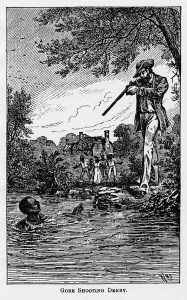
douglassA recent political cartoon showed an ayatollah in Iran pointing a gun at an unarmed citizen, who feebly tried to respond with a pointed index finger. It implied that if Iranians had gun rights they’d have a better chance of standing up to tyranny. The implication was that our Second Amendment had been written for a similar purpose: to protect ordinary people from governmental oppression.

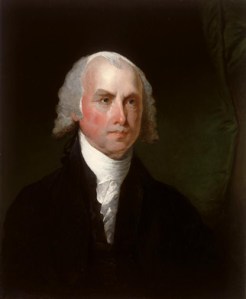
But whatever merits or problems one might see in the Second Amendment today, it’s worth remembering that it was not conceived to enable people to stand up to government, but for precisely the opposite purpose. James Madison wrote the Second Amendment to reassure Southern states that Congress would not disarm their militias, which they deemed to be necessary for slave control. Thus, the amendment ensured that people in power could continue to oppress, not the other way around. For Iran today, this would be akin to guaranteeing that the ayatollah shown in that cartoon would always have a gun, while the citizen did not.
jamesmadisonCompromises to ensure ratification

The Constitution required ratification by at least nine states. Eight had ratified it, but anti-Federalists in other states held sway. Virginia was divided, with George Mason and Patrick Henry arguing against ratification. They raised the specter that Congress might refuse to call forth the militia to suppress a slave insurrection or could even disarm the Southern militias.

Although the Federalists prevailed, James Madison’s career was damaged. In order to resurrect it, he promised that he would support adding a bill of rights including this provision: “A well regulated Militia, being necessary to the security of a free State, the right of the people to keep and bear Arms, shall not be infringed.”

Carl Bogus (1998) shows that Madison wrote the amendment for the specific purpose of assuring his constituents that Congress could not use its new powers to deprive the states of an armed militia. Their primary concern was not that Congress would disarm the militia and thereby prevent hunting, self-defense, national defense, sport shooting, or resistance to governmental tyranny. Instead, it was that disarming the militia could bring an end to slavery. Despite later revised interpretations, the amendment did not grant individuals a right to keep and bear arms for random purposes, but instead for “well regulated” militias whose essential purpose was to prevent a slave rebellion, as happened in Saint-Domingue (now Haiti) just three years later.

As in any political arena, there were multiple interpretations and motivations at the time, as well as misunderstandings due to making sense of these more than two centuries later (Amar, 2005). A major concern in 1788 was of course the war against England and fears about future invasions. But it’s also clear that a driving force was the desire to preserve the institution of slavery, thus using guns to maintain tyranny, not just to resist it.

References

Amar, Akhil Reed (2005). America’s Constitution: A biography. New York: Random House.

Bellesiles, Michael A. (2002, July). Constitutional meanings. Common Place, 2(4).

Bogus, Carl T. (1998, Winter). The hidden history of the second amendment. UC Davis Law Review, 31(2).

Douglass, Frederick (1881). Life and times of Frederick Douglass, his early life as a slave, his escape from bondage, and his complete history to the present time. Hartford, CT: Park.

Mencimer, Stephanie (2008, March). Whitewashing the Second Amendment. Mother Jones.

Spitzer, Robert J. (2000). Lost and found: Researching the Second Amendment. Chicago-Kent Law Review Symposium on the Second Amendment, 76.

In This World

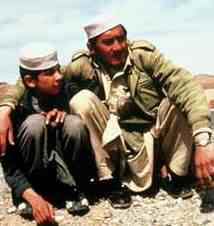
in this world-2There are times when a movie just grabs me, despite technical flaws, my low expectations, and even a boring DVD case cover. In This World is one of those. The political message is clear, but understated, conveyed instead by an intimate look at the consequences of war and greed on the lives of decent people.

The movie presents a fictitious journey that conveys disturbing truths of life “in this world” we inhabit. Although it’s low-key and rough as cinema, it produces an intimate connection to its characters, Afghan refugees Jamal and Enayatullah, as they travel from Shamshatoo refugee camp near Peshāwar, Pakistan, across Pakistan, through Iran, Turkey, Italy and France, towards London.

ITW_trailerLike thousands of others every year, their desperation feeds the multibillion dollar human smuggling business, an unconscionable stain on any of our pretensions to justice. The smuggling fuels crime, violence, corruption, illegal drug trade, and too often leads to death, no longer being “in this world.”

The actors are Afghan refugees themselves, and the encounters in the movie elide life and art. I was fascinated by the places they moved through, and their resourcefulness in learning how to cope with diverse languages and unscrupulous people.

The camps near Peshāwar are filled with people displaced by the Soviet invasion of Afghanistan and later, US bombing. UNHCR says that there are currently “1.7 million registered Afghans in Pakistan, with 45 percent residing in refugee villages and the rest scattered among host communities.” But the total, including children born to refugees, may be several million. The humanitarian crisis is compounded now by two million civilians fleeing the fighting in Pakistan’s Northwest Frontier.

Even though the story is depressing about our institutions, I finished it feeling hopeful about our human capacity. I wanted to travel the modern silk road and more still to learn about the world of these refugees and the policies that lead to their plight.

A new beginning against extremism

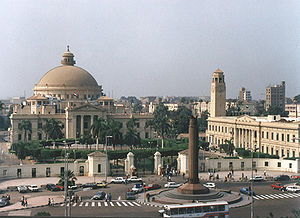
300px-CairoUnivObama’s speech yesterday at Cairo University (photo at left) was beautiful. It represents a new beginning against extremism both in the US and abroad. Even Osama Bin Laden recognized that it challenges a linchpin of al-Qaida’s message.

I don’t agree with many of the current Administration’s foreign policies (escalation of the Afghanistan-Pakistan war, inadequate engagement with the Caribbean, especially with respect to Cuba, and not doing more for Haiti, failure to close Guantanamo and re-establish justice following years of officially sanctioned torture and renditions, etc.), but opening dialogue is a first step towards a rational, humane, and effective foreign policy.

The ending of the speech is classic Obama:

89px-A_Boat_in_the_Nile_RiverIt’s easier to start wars than to end them. It’s easier to blame others than to look inward. It’s easier to see what is different about someone than to find the things we share. But we should choose the right path, not just the easy path. There’s one rule that lies at the heart of every religion — that we do unto others as we would have them do unto us. This truth transcends nations and peoples — a belief that isn’t new; that isn’t black or white or brown; that isn’t Christian or Muslim or Jew. It’s a belief that pulsed in the cradle of civilization, and that still beats in the hearts of billions around the world. It’s a faith in other people, and it’s what brought me here today.

We have the power to make the world we seek, but only if we have the courage to make a new beginning, keeping in mind what has been written.

The Holy Koran tells us: “O mankind! We have created you male and a female; and we have made you into nations and tribes so that you may know one another.”

The Talmud tells us: “The whole of the Torah is for the purpose of promoting peace.”72px-Barack_Obama_at_Cairo_University_cropped

The Holy Bible tells us: “Blessed are the peacemakers, for they shall be called sons of God.”

The people of the world can live together in peace. We know that is God’s vision. Now that must be our work here on Earth.

Thank you. And may God’s peace be upon you. Thank you very much. Thank you.

See Obama hits a home run, by Robert Dreyfuss.