The New Jim Crow

Writing in Mother Jones, Michelle Alexander  has an excellent article on The New Jim Crow. It’s about how the War on Drugs has led to a permanent American undercaste. Similar ideas came up in my class yesterday as we discussed equity and excellence in education. As with many other topics we saw how making progress within education cannot be separated from addressing the same problems beyond the walls of academia.

Here’s an excerpt from her article:

Ever since Barack Obama lifted his right hand and took his oath of office, pledging to serve the United States as its 44th president, ordinary people and their leaders around the globe have been celebrating our nation’s “triumph over race.” Obama’s election has been touted as the final nail in the coffin of Jim Crow, the bookend placed on the history of racial caste in America.

Obama’s mere presence in the Oval Office is offered as proof that “the land of the free” has finally made good on its promise of equality. There’s an implicit yet undeniable message embedded in his appearance on the world stage: this is what freedom looks like; this is what democracy can do for you. If you are poor, marginalized, or relegated to an inferior caste, there is hope for you. Trust us. Trust our rules, laws, customs, and wars. You, too, can get to the promised land.

Perhaps greater lies have been told in the past century, but they can be counted on one hand. Racial caste is alive and well in America.

She offers some important information that should make us all question how America deals with race today, starting with:

There are more African Americans under correctional control today—in prison or jail, on probation or parole—than were enslaved in 1850, a decade before the Civil War began.

The article addresses the obvious questions that some readers may have, such as “well, shouldn’t we be locking up criminals?” or “aren’t we at least improving in the ways we deal with racism and poverty?”

It’s worth noting that Alexander’s just saying that the absolute number of African Americans under correctional control today is greater than the number enslaved in 1850. In a sense that makes it less horrific. One might also qualify the claim by pointing out that being on parole is very different from being a slave.

Nevertheless, some aspects of the modern system are even worse and less justifiable. Many people would be surprised to learn that the absolute scale of the institution is now greater. Unlike slavery, it’s now pervasive in every state, and stands out as inconsistent with other contemporary practices. And the current prison system doesn’t even produce goods; it simply drains scarce resources to destroy lives.
Climate change’s OJ Simpson moment

Bill McKibben has just written an excellent article: Climate Change’s OJ Simpson Moment | Mother Jones. Although one can read it as yet another argument pro or con on climate change, it’s even more a sophisticated analysis of how the discourse has developed over the last 20 years, in the process giving a surprisingly sympathetic account of climate change deniers.

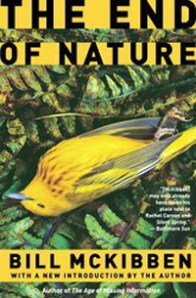
He starts by discussing the positive reaction to his first book, The End of Nature, which was one of the first books for a general audience on climate change:

And here’s what’s odd. In 1989, I could fit just about every scientific study on climate change on top of my desk. The science was still thin. If my reporting made me think it was nonetheless convincing, many scientists were not yet prepared to agree.

Now, you could fill the Superdome with climate-change research data…Every major scientific body in the world has produced reports confirming the peril. All 15 of the warmest years on record have come in the two decades that have passed since 1989. In the meantime, the Earth’s major natural systems have all shown undeniable signs of rapid flux: melting Arctic and glacial ice, rapidly acidifying seawater, and so on.

Somehow, though, the onslaught against the science of climate change has never been stronger, and its effects, at least in the US, never more obvious: fewer Americans believe humans are warming the planet.

But McKibben doesn’t just rail agains the deniers of global warming, or pull out reams of reports, data, and arguments. Instead, he  talks about how we all respond to disturbing news and to mountains of evidence we don’t have the capacity to sort through. I felt as if he were speaking to all of us across a wide range of complex topics in the modern era–health, economics, education.

He goes on then to show how evidence alone is not the issue; in fact, its effect can be contrary to what you might think at first:

the immense pile of evidence now proving the science of global warming beyond any reasonable doubt is in some ways a great boon for those who would like, for a variety of reasons, to deny that the biggest problem we’ve ever faced is actually a problem at all.

The “OJ Simpson moment” relates to the problem that the defense faced in the OJ Simpson murder trial, in which “it was pretty clear their guy was guilty. Nicole Brown’s blood was all over his socks, and that was just the beginning.” How could they cast doubt, when there appeared to be no remotely reasonable doubt? McKibben shows how, ironically, one resource they had was the immense body of evidence against their client.

He also shows how ordinary language is shaped and changed. One reason the deniers of global warming are winning the debate is that they’re able to connect with our fear of change, of having to do something. As McKibben says:

The great irony is that the climate skeptics have prospered by insisting that their opponents are radicals. In fact, those who work to prevent global warming are deeply conservative, insistent that we should leave the world in something like the shape we found it. We want our kids to know the world we knew. Here’s the definition of radical: doubling the carbon content of the atmosphere because you’re not completely convinced it will be a disaster.

Should we subsidize good journalism?

The Death and Life of American Journalism: The Media Revolution that Will Begin the World Again, by John Nichols and Robert W. McChesney, has just been published. It makes a convincing case that journalism is a public good, with broad social benefits, including being necessary for democracy.

They also show how good journalism is under threat from a variety of forces. One is media consolidation, meaning that a few huge corporations control most of our media. Another is that our reliance on the Internet is radically changing business models, making it increasingly difficult to support investigative journalism. Moreover, whether the Internet can remain open, diverse, and democratic is very uncertain. Meanwhile, support for public media is waning, especially in the US, which spends only a tiny percentage of what other nations do for non-corporate media.

To address these problems, they propose what some might consider to be a radical proposal. But it’s actually quite in line with traditional government initiatives in areas such as defense, education, transportation, etc., which support vital services that the market can’t supply. Moreover, their proposal operates through free market mechanisms, without requiring, or even allowing government control over media content. It’s an innovative idea, one whose importance goes far beyond just saving the local newspaper.

Their proposal contains four key elements:

  1. free postage for any publication, with less than 20% of its pages in advertising
  2. up to $200 individual tax deduction for a newspaper subscription
  3. a viable school newspaper and radio station for every middle school, high school and college, so that young people not only read the news, but also produce it
  4. increased spending on public and community broadcasting

I might add other items, such as broadening the youth production aspect to include other sites in which that occurs, such as community centers and libraries, or find some way to support local book production as well.

The proposal could ensure a diversity of news sources, with support for those who produce the news. It would immediately move us beyond reliance on a handful of media conglomerates, while still allowing their operation, for those who so chose. The cost is no more than that supported by other nations with advanced economies. It’s well worth considering for anyone concerned with maintaining a modern democracy.

Nichols and McChesney, are co-founders, along with Josh Silver, of Free Press, which works for net neutrality and has launched a major campaign to save the news.

References

Nichols, John, & McChesney, Robert W. (2009, March 18). The death and life of great American newspapers. The Nation.

Elizabeth Peratrovich Day

Today, February 16, is Elizabeth Peratrovich Day. I learned about it from Bonnie and Hans, friends of nearly 30 years. They have a great blog, Bonnie & Hans’ Excellent Adventure, out of Grayling Alaska.

In a recent post, Elizabeth’s Day, they talk about Elizabeth Peratrovich the Anti-Discrimination Act of 1945, Alaska’s Civil Rights Day, and the film For the Rights of All: the Ending of Jim Crow in Alaska, a documentary about the work of Alaska Natives to end discrimination.

Keeping tabs

In The Public and its Problems, John Dewey (1927) talked about the need for a vibrant Public as a necessary condition for a healthy democracy. This meant the development of what’s been called a “critical, socially-engaged intelligence,” for citizens who respect each others’ diverse viewpoints, who inquire about their society, and are actively engaged in improving it. Doing this requires open diaolgue, the ability to speak without reprisals, and, it should go without saying, the confidence that one is not being hounded by agencies who operate in secret with little check on their behavior.

A colleague of mine recently showed me her copy of Jane Addams’s FBI file. It’s 188 pages of prying into the life of one of the greatest Americans. Hull House, which she co-founded (1889), was a settlement home for thousands of immigrants in Chicago, providing food, shelter, education, arts, English classes, and an introduction to particpatory democracy. It was the beginning of sociology, social work, and public health. The first little theater in America, the first playgrounds in Chicago, and so much more, came out of Addams’s lifetime of dedication to building a better world for all.

It’s true, Addams protested against World War I. For that she won the Nobel Peace Prize (1931), but also the attention of the Federal Bureau of Investigation, thanks in part to the machinations of J. Edgar Hoover. At least those files are finally public. You can judge for yourself whether our Nation was more secure because of that assault on personal liberty.

Another colleague pointed me to a court case in Canada related to the Canadian Security Intelligence Service’s (CSIS) file on Tommy Douglas. Douglas was premier of Saskatchewan from 1941 to 1960, and led in the development of a universal, publicly-funded single-payer health care system. The success there led eventually to the national Medicare plan in Canada. In part for that work, Douglas was selected as “The Greatest Canadian” of all time.

Now, CSIS argues in an affidavit filed in court last month that “Secrecy is intrinsic to security intelligence matters.” They say that full disclosure of Douglas’s file could endanger the lives of confidential informants.

Since the file is secret, we can’t know whether CSIS is correct in saying that it’s absolutely necessary to maintain secrecy on its operations. For that matter, how do we know that their reluctance isn’t based on covering up their own violations? Reading the file on Addams, I’d say that the only people who might want to hide it are those in the FBI. One thing we do know is that there’s no public basis for these security investigations–no violence, no plots, no attempts to undermine the government.

If the file on Douglas is anything like the one on Addams, we should all ask about the extent to which our security services really serve the public good. Why do we create dossiers on our great leaders, without any public evidence? Does security intelligence trump all other values? Does it help create a vibrant Public when secret agencies are given free rein to explore and document our lives, with little oversight on their own actions?

References

CSIS trying to block release Tommy Douglas’ file. Toronto Sun.

Dewey, John (1927). The public and its problems. New York: Holt.

Maloney, Steven Douglas. The public and Its problems.

US halts airlift of Haiti quake victims

Many people have responded to the earthquake tragedy in Haiti with money, volunteer work, and basic sympathy and care. Nevertheless, it’s disturbing to see the ways in which we fall short. It’s hard for me to imagine that the recent suspension of medical evacuations would have occurred for a disaster in say, Canada or Europe.

The United States has suspended its medical evacuations of critically injured Haitian earthquake victims until a dispute over who will pay for their care is settled, military officials said Friday.

The military flights, usually C-130s carrying Haitians with spinal cord injuries, burns and other serious wounds, ended on Wednesday after Gov. Charlie Crist of Florida formally asked the federal government to shoulder some of the cost of the care.

Hospitals in Florida have treated more than 500 earthquake victims so far, the military said, including an infant who was pulled out of the rubble with a fractured skull and ribs…The suspension could be catastrophic for patients, said Dr. Barth A. Green, the co-founder of Project Medishare for Haiti…“People are dying in Haiti because they can’t get out.”

via In Cost Dispute, U.S. Halts Airlift of Haiti Quake Victims – NYTimes.com.

Banning books

The always controversial Texas State Board of Education added to its tragicomic history with a confusion over Martins:

Brown Bear, Brown Bear, Why Were You Banned?

Bill Martin is a philosophy professor at DePaul University who has written a book called Ethical Marxism: The Categorical Imperative of Liberation.

Bill Martin Jr., who died in 2004, was a children’s author who wrote Brown Bear, Brown Bear, What Do You See? The men are not related.

Last week, the two Martins were briefly fused into one persona by Pat Hardy, a member of the Texas State Board of Education, who moved that Bill Martin be removed from a suggested revision of the state’s third-grade social-studies curriculum. The Fort Worth Star-Telegram quoted Ms. Hardy as saying that his books for adults contain “very strong critiques of capitalism and the American system.” –Don Troop

The  issue might be simply amusing, except that the Texas State Board of Education decides what will be taught in Texas public schools. Because the Texas market drives what publishers sell in other states, it plays an extraordinary role in defining American public education.

Recently, the Board has considered reviving the reputation of Senator Joseph McCarthy, to portray him as an American hero. They also debate the Biblical underpinnings of the nation’s founding, the superiority of America, and its divine ordination.

Pat Hardy, is from my hometown of Fort Worth. Unlike many others on the Board, she’s actually an educator. Although she’s a conservative Republican, she’s been attacked in elections to the Board by social conservative groups, who criticize her insufficient support of creation science and lack of solidarity with the social conservative bloc on the board.

Much of the commentary on this incident has focused on its silliness, on the apparent confusion of such different authors and books. But for me, it raises some important questions about the Board, and by extension, American education:

  • What if Bill Martin Jr. (the children’s book author) had written a book on ethics? Would that be a bad thing? Would that justify banning his beloved book for children?
  • Must we agree with Bill Martin (the philosopher) about vegetarianism and animal rights in order to read his book? Is it wrong to read a book that critiques and extends Marxism?
  • Should the role of the Board, or the role for any of us as educators and citizens, be to weed out books with ideas we don’t accept (or perhaps, understand)?
  • Do we want students to grow up unquestioning, and safe from bad ideas only when we diligently purge them from their world?
  • Might we do better to “teach the controversy,” as Gerald Graff says, to open up the world of books, ideas, and learning, rather than to try to shut it down?

Who’s responsible for the fragility of Haiti?

In What You’re Not Hearing about Haiti (But Should Be) at CommonDreams.orgCarl Lindskoog presents an excellent account of why the disaster in Haiti is neither entirely a natural one nor the fault of the Haitian people and government:

[January 14, 2010] In the hours following Haiti’s devastating earthquake, CNN, the New York Times and other major news sources adopted a common interpretation for the severe destruction: the 7.0 earthquake was so devastating because it struck an urban area that was extremely over-populated and extremely poor.  Houses “built on top of each other” and constructed by the poor people themselves made for a fragile city.  And the country’s many years of underdevelopment and political turmoil made the Haitian government ill-prepared to respond to such a disaster…

It may startle news-hungry Americans to learn that these conditions the American media correctly attributes to magnifying the impact of this tremendous disaster were largely the product of American policies and an American-led development model.

Lindskoog shows how USAID policies led to structural changes in the countryside, which predictably forced Haitian peasants who could no longer survive to migrate to the cities, especially Port-au-Prince. Promised manufacturing jobs failed to materialize.  Port-au-Prince became overpopulated and slum areas expanded.  Poorly constructed housing followed and the eventual abandonment of the US-led development model. Haitians, with virtually no financial resources were left to address the problems they had not created.

Canadian Imams issue Fatwa against terrorism

Twenty Imams affiliated with the Islamic Supreme Council of Canada issued a Fatwa (or religious edict) on January 8 declaring that attacks on Canada or the United States by any extremist are an attack on the ten million Muslims living in North America.

The Fatwa is consistent with what I hear from the many Muslim friends and colleagues I have both in the US and abroad. They all condemn violence and feel just as threatened by terrorists as anyone else. Their statements and this latest Fatwa directly answer a question some people have asked: “Why don’t Muslims speak out against terrorism?”

There are several reasons we don’t hear more: Mainstream media finds it more newsworthy to publicize the latest violence than a statement deploring violence. Also, Muslims would no more consider terrorism done in the name of Islam to represent their religion than would Christians consider the Oklahoma City bombings to represent Christianity. The first response of either might be “Of course it’s wrong! How could it be my religion? Why do I need to say anything at all?”

Based on the Qur’an, the Fatwa says in part,

Muslims in Canada and the United States have complete freedom to practice Islam…In many cases, Muslims have more freedom to practice Islam here … than in many Muslim countries.

In fact, the constitutions of the United States and Canada are very close to the Islamic guiding principles of human rights and freedom. There is no conflict between the Islamic values of freedom and justice and the Canadian/US values of freedom and justice.

Therefore, any attack on Canada and the United States is an attack on the freedom of Canadian and American Muslims…[and on] thousands of mosques across North America. It is a duty of every Canadian and American Muslim to safeguard Canada and the USA. They must expose any person, Muslim OR non-Muslim, who would cause harm to fellow Canadians OR Americans.

May Allah save Canada, the United States and the entire world from the evil of wrong doers. Ameen.

Civil rights for the LGBT community, and for all

In his ‘Letter from the Birmingham jail‘, Martin Luther King placed the struggle against injustice in Birmingham in a larger context:

Moreover, I am cognizant of the interrelatedness of all communities and states. I cannot sit idly by in Atlanta and not be concerned about what happens in Birmingham. Injustice anywhere is a threat to justice everywhere.

While those lines are often quoted, they’re more often ignored. For many people, injustice means what happens to them directly, not what happens to others.

Countering that passivity, and calling on progressives allies to stand up, is a video made by one of my students, Phil Reese. It’s an excellent message about civil rights for all, including the LGBT community. In addition to conveying an important message, it’s done in a creative way, reminding us of the many silenced voices around us.

Progressives can’t sit by while Civil Rights are taken away from Americans–help us and become a true ally in the fight for Equality! -HEY #p2 We’re talking to you! AFTER THE VID VISIT http://bit.ly/HEYP2ALLY for more!