“I Came a Stranger” by Hilda Polacheck

I Came A StrangerI just finished reading I Came a Stranger: The Story of a Hull-House Girl, by Hilda Satt Polacheck, and edited by her daughter, Dena J. Polacheck Epstein (University of Illinois Press, 1991). It’s a fascinating account of Polacheck’s journey from Wloclawek, Poland to Chicago, and the role that Jane Addams of Hull House played in her life.

The book is interesting on many levels: Hilda’s life is filled with many compelling, poignant, and humorous stories; she makes the immigrant experience in late-19th, early 20th century Chicago come alive; and she shows what Hull House meant to a girl like her, who “came a stranger” to Chicago, knowing no English and learning to survive by doing. The labor and feminist politics of the era have immediate meaning for her, and she recounts stories about Emma Goldman, Eugene V. Debs, Clarence Darrow, Alice Hamilton, and other great figures of that time. She describes her struggles, romance, triumphs, and tragedies.

It’s a pity then, that the book wasn’t published in her lifetime, as there was no interest in the life of an “obscure woman.” But I was drawn in by her honesty and commitment to the ideals she saw in Jane Addams. I also gained a deeper understanding of the remarkable role that Hull House played in the effort to, as Addams says, “make the entire social organism democratic.”

The last flower in WALL-E

Our family had a rare trip to an in-theater movie on Sunday, as opposed to watching one of the many movies we see at home. It was a good choice for the theater, WALL-E, with its sweeping scenes of dance in outer space and the counterpoint of its portrayal of robots with minimalist, but very believable emotions.

It’s a delightful movie for children or adults, but the adults are more likely to squirm as they see characters depicted in lounge chairs with drink holders, more similar than they might like to see to the audience sitting in now extra-wide theater seats with holders for 44-ounce cups. The story shows how a culture of excess consumption, with little regard for the environment, community, or meaningful activity, ultimately destroys a livable earth and nearly, the people themselves.

The plot hinges on the robot Wall-E’s discovery of a living plant, either the last to survive massive environmental destruction, or perhaps, the first to signal a possible recovery of the planet. He and another robot, EVE, protect the plant until it re-energizes humankind to save the planet they nearly destroyed.

It reminded me of James Thurber’s The Last Flower, a graphic novel published in November 1939, two months after World War II began. I haven’t seen the parallel mentioned elsewhere, but it seemed surprisingly close to me. In Thurber’s story, we read:

One day a girl who had never seen a flower chanced to come upon the last one in the world…The only one who paid attention to her was a young man she found wandering about. Together the young man and the girl nurtured the flower and it began to live again.

In only 48 cartoon frames, Thurber talks about wars, which never end, and the causal factors of greed, intolerance, the inability to understand others, and a fetish of violence. He also describes human and environmental destruction in both words and pictures. There is a deep pessimism in the seeming inability of people to maintain a respect for life or to find common ground, but also optimism, in the refusal of the flower to disappear entirely.

WALL-E presents a happier, less complex position. Some of the causal factors are there, but WALL-E’s world seems to have eliminated wars and racism. And although humanity has come close to a final disaster, the plant that WALL-E and EVE nurture appears to redeem it once and for all.

Thurber’s plant, unlike WALL-E’s, has a flower, which holds the promise of reproduction, as do his (non-robot) people. It is essential that the plant have a flower, which is visited by a bee, because biological reproduction in all its messiness is integral to the rebirth of Thurber’s world. WALL-E offers a vision more akin to Coca-Cola commercials about holding hands around the world. I liked WALL-E, but seeing it gave me a new appreciation for what Thurber managed to do using much simpler technology, but a deep insight into people and life.

Community development: What works, or not?

Much has been written about community development from the perspectives of community members, educators, activists, local governments, social workers, or other participants. Although each perspective highlights particular issues, common themes run through some very diverse settings.

These themes are highlighted in a 2005 report, Community Development: A Guide for Grantmakers on Fostering Better Outcomes Through Good Process, written by Bill Potapchuk of the Community Building Institute, with Malka Kopell, of The William and Flora Hewlett Foundation. But the perspective is one I hadn’t considered, namely that of grantmakers, those who seek to foster community development through grants. The report identifies eight elements of good process for community development:

  • Requires advocacy, seeking a process that leads to more investment, connection, and authentic participation
  • Effectively coordinates, links, combines, and supports various initiatives to ensure that they work in concert, using a shared strategy and supporting a common vision
  • Responds to and reflects a widely divergent set of interests
  • Is not imposed on people
  • Ensures that community residents are meaningfully engaged and have sufficient power to influence decisions
  • Creates safe opportunities for authentic dialogue across differences
  • Fosters collaborative conversations that become more strategic, holistic, and systemic over time
  • Anticipates conflict and seeks to discuss it in ways that forges common ground

We could use these eight elements as a rubric for describing or evaluating community-building efforts. For example, I recently encountered a quasi-governmental organization, which had control over significant funding but distributed that in a very patriarchal way. There was little opportunity for authentic participation, which meant that it was difficult for different initiatives to work in concert, use a shared strategy, or support a common vision. Activities were imposed on people, thus lessening the value of even worthwhile initiatives. Meanwhile, real needs were often not met or even recognized. There was little authentic dialogue across differences or a chance to forge common ground. The net result was that the organization failed to meet its lofty mission statement.

In contrast, I’ve seen at St Andrew’s Resource Centre in Dublin an organization that embodies all eight elements–authentic participation, a common vision, respect for difference, all leading to collaborative conversations that forge common ground–even if they might use different terminology. Similarly, Paseo Boricua in Chicago succeeds in part because it creates that space for dialogue and a respect for each individual.

In fact, it is the respect for difference that enables each of these very different organizations to build a sense of a common purpose. In each case, the realization of the eight elements is both means and end. Engaging participants makes it possible to accomplish specific tasks, but the engagement is itself a crucial aspect of community building. As a result, the sense of purpose and individual worth within these communities enables them to achieve far more, even with limited resources.

Community as Intellectual Space: Aesthetics as Resistance

CIS flyer The 4th Annual Community as Intellectual Space symposium is being held this week at Paseo Boricua in Chicago, June 13-15. Events will start at the Puerto Rican Cultural Center (PRCC), 2739/41 W. Division (near corner of Division and California).

This year, the focus is on Aesthetics as Resistance: The Act of Community Building. There will be artist-led tours of the beautiful murals found throughout the neighborhood, the annual People’s Parade, a delicious Puerto Rican dinner, workshops on community-education activities as diverse as urban agriculture and computer programming for children using Squeak, meetings with local Humboldt Park/Paseo Boricua community and government leaders, including Rep. Luis Gutierrez and Rep. Cynthia Soto, and panels on liberatory education. [Click to enlarge the poster or follow the link above for more details.]

Aesthetics as Resistance promises an active dialogue on art, identity, and cross-cultural community building with community leaders, artists, educators, librarians, activists, students, and residents. It expresses the PRCC’s vision to build community grounded in cultural practice, including murals, poetry, music, and the People’s Parade. These practices are both creative and political acts to develop community out of local funds of knowledge.

Paseo Boricua has a motto: ‘Live and help others to live.’ It is known for its multigenerational and holistic community activism around human rights and social change. Education is structured around the belief that ‘the community is the curriculum,’ reflecting the ideas of Paulo Freire and providing a contemporary version of Hull House.

With its many academic partnerships, Paseo Boricua also provides an outstanding example of university-community collaboration in research, teaching and public engagement. For example, last year the community hosted a tour and visit for the John Dewey Society. This furthered dialogue around how the community answers Dewey’s call for critical, socially-engaged citizens, for an active public, and for education as lived experience.

[This announcement is also posted on the John Dewey Society Social Issues blog.]

Mother Jones

This May, I feel connections to Mary Harris Jones, who was born in 1830, possibly on Mayday, in Cork, Ireland. She was a prominent labor and community organizer in the US, best known as Mother Jones. Her birthplace is in one of my favorite counties in Ireland and her burial place is not too far from my home in Illinois in the Mount Olive Union Miners Cemetery. That cemetery is also the home for coal miners killed in rioting associated with strikes which she had led.

Mother Jones’s legendary work during her 100 years of life is an inspiration. Her concern for working people caused her to be at odds with union leadership at times, as well as with companies or government. This combativeness led to her being called many things, including the “Miners’ Angel.”

Another labor organizer described her as “the greatest woman agitator of our times.” A DA called her “the most dangerous woman in America,” because she could inspire supposedly contented workers to demand their rights. When a Senator denounced her as the “grandmother of all agitators”, she answered, “I hope to live long enough to be the great-grandmother of all agitators.” She herself said “I’m not a humanitarian; I’m a hell-raiser.” I can’t pretend to or even fully imagine anything like the life she led, but I still admire her courage and caring.

Mother Jones magazine

Beyond place and dates, I feel a connection to Mother Jones in that I find the magazine named after her, to be one of the best sources for insights into current events. It probes deeper into issues than mainstream news services such as NY Times, BBC, or Deutsche Welle and has more factual content than most blogs or opinion magazines.

A good example, and what I started to write about today, is an article called Irony Man, by Nick Turse. It’s in part a review of the film Iron Man, but is really more a review of America’s disastrous foreign policy and how its most enduring harm may be to our own psyche and culture.

Death and taxes

An excellent report from Christian Aid Ireland has just been published. It paints a graphic and disturbing picture of the global economic system and the devastating impact of policies sustained by transnational corporations (TNC) and the governments that serve them. Have any of the US Presidential candidates even mentioned issues such as this?

The report, Death and taxes: the true toll of tax dodging, shows how the global taxation system allows the world’s richest to avoid social responsibilities while continuing to under-develop much of the world. This system costs poor nations far more than they receive in all the governmental and private aid. It’s essentially a relentless mechanism for taking money from the poor to give to the rich.

As the report says,

This is in part to do with super-rich individuals. It is also to do with governments, including the UK government, who have let this situation develop and persist. But it is mostly about the world’s transnational corporations wielding their enormous power to avoid the attentions of the tax man – with devastating results.

The situation is stark and urgent. We predict that illegal, trade-related tax evasion alone will be responsible for some 5.6 million deaths of young children in the developing world between 2000 and 2015. That is almost 1,000 a day. Half are already dead.

Corporations “avoid…the tax man” in various ways, including setting up legal schemes for tax-avoidance and demanding tax concessions and low royalty rates on output. They also use false accounting, such as fake invoices, mispriced transfer of goods, services, and finances, and illicit transfers of cash.

Research by Raymond Baker, a senior fellow at the US Center for International Policy, says that 7 per cent of global trade involves the illicit movement of capital between countries by TNCs and other business entities. Transfers of goods and services within a TNC are mispriced to take advantage of differing tax rates and to minimise profits where they are high. Accomplices in unrelated companies issue false invoices to disguise the profits made in a transaction and reduce the tax liability. Baker says:

For the first time in the 200-year run of the free-market system, we have built and expanded an entire integrated global financial structure the basic purpose of which is to shift money from poor to rich. [It is] the ugliest chapter in global economic affairs since slavery.

The Death and Taxes report provides much more detail on the real, immediate, and personal impact of what may seem to be an obscure or esoteric issue. It also offers recommendations for what can be done about it. The data and analysis support the efforts of the Organisation for Economic Co-Operation and Development to regulate tax havens and end the secrecy. They also show the urgent need for an international accounting standard that requires companies to reveal country-by-country accounting.

Aid from organizations such as Christian Aid Ireland is vital in today’s world. But the bottom line on the accounting here is that if wealthy nations abandoned all their aid programs they would be more decent partners in the world than they are now, if they simply acted honestly and fairly with others.

Louise Michel, the Paris Commune, and Learning

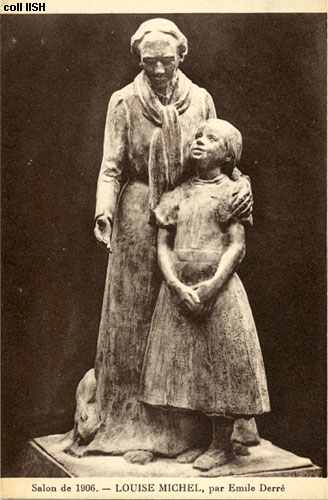
The Women IncendiariesLast Monday night, we visited Square Louise Michel at the foot of Sacre Coeur in Paris. The park and the nearby streets of Montmartre are a living history book, with every cobblestone suggesting times of struggle, hope, fear, and disillusionment. Staying there for a few days makes me feel that I just have to share some thoughts about the Paris Commune and Louise Michel.

There was a time when I knew very little about the Paris Commune, which held Paris for two months in the spring of 1871. It wasn’t part of my history lessons in school, nor did it enter into political debates or everyday conversations. As I read, I began to see references to it—”the democratic and social republic!”, the petroleuses, the horrible siege prior to the commune, which led to the eating of zoo animals, the Federales’ Wall, early establishment of rights for women, why Sacre Coeur was built—but these references were disjointed, so that much what I did know was confused and contradictory. It took living in Paris for a year to help me understand more of what it was about.

I knew even less about Louise Michel, one of the heroes of the Paris Commune, and as I’m learning, much more besides. But I feel a shiver now whenever I think of her. I’m amazed by her passion and ideals, the violence in her life, her writing, her work as an educator in many senses of that word, and her life fully lived.

Louise MichelFor a long time Michel was the only woman other than saints to have a Paris métro named after her. The recent renaming of the Pierre Curie métro to Pierre et Marie Curie makes two (or one and a half). Schools all over France bear her name as well. She comes alive in books such as Édith Thomas’s The Women Incendiaries (reprinted by Haymarket Books, 2007; original in French in 1963). I think of her when I play Le Temps des Cerises, a song often associated with the commune and with Michel, even though it was written five years before the Commune.

I’ve also learned that she was an early practitioner of what I’d call inquiry-based teaching and learning. She was a continual learner, inspired by the works of Charles Darwin and Claude Bernard. As a school teacher, she used methods promoted in the progressive education movement (which came much later): interaction with objects such as flowers, rocks, and animals, studies outdoors, and scientific methods. She declared,

The morality I was teaching was this: to develop a conscience so great that there could exist no reward or punishment apart from the feeling of having done one’s duty, or having acted badly.

After the Commune fell, Michel was deported to New Caledonia. Unlike her jailers and many of the other Communards, she befriended Polynesians. She gave lessons to one in “the things whites know,” while he taught her his language. Later, she ventured deep into the forest to work with and study groups still practicing cannibalism. She collected their legends and music as a modern ethnographer might do. When there was a native revolt, Michel joined the side of the Polynesians. Throughout, she wrote poetry, prose, and letters on behalf of prisoner rights.

Later, she opened a school in London for the children of political refugees (The International School). There was a statement in the prospectus taken from Mikhail Bakunin’s God and the State:

All rational education is at bottom nothing but this progressive immolation of authority for the benefit of liberty, the final object of education necessarily being the formation of free men full of respect, and love for the liberty of others.

As infed says, there were no compulsory subjects, teaching was in small groups, and there was an emphasis on rational and integral education. Often, groups of children would bring their own ideas about what to study. Michel wanted students to learn to think for themselves, just as she did herself and encouraged others to do throughout her life.

Louise Michel was a complex person whose every year might fill the life for someone else; a blog post feels totally inadequate. Moreover, one might criticize both the Commune and her participation on many grounds. Nevertheless, her commitment to social justice, her caring for all life, her passion for learning and teaching, her striving for women’s rights and democracy in general, her unselfish work on behalf of others, her strong moral stance, and her unfailing courage set a mark to inspire anyone.

References

  • Michel, Louise (2004). Louise Michel [Rebel lives series, Nic Maclellan, ed.). New York: Ocean.
  • Saudrais, Hélène (2005). Louise Michel. Amsterdam: International Institute of Social History.
  • Thomas, Édith (2007/1963). The women incendiaries. Chicago: Haymarket Books (reprinted in 2007; original in French, Les Petroleuses, in 1963).

Dáil na nÓg Fairsay campaign

The Youth, Media and Democracy conference concluded yesterday at Dublin Institute of Technology. There was an excellent program, with presentations from youth groups using a variety of media–film (documentaries, personal stories, what-ifs), comics, hip hop, remix (VJ-ing, web video mashups), object animation, radio, and more. There were also interesting talks about the Fresh Film Festival, media policy, the 5th World Summit on Media for Children held in Johannesburg, the Story of Movies, Digital Hub FM, and much more.

I was also impressed with the Dáil na nÓg campaign to encourage mainstream media to provide more balanced coverage of youth, especially to show the diversity of youth activities and not just negative images. A small group of Dáil na nÓg representatives has conducted this campaign, called Fairsay. They’ve had multiple meetings with media and policy makers, assisted by Anne O’Donnell from the Office of the Minister for Children.

Dáil na nÓg means “youth parliament”. Young people come as representatives of their local area to tell decision makers in Government what they think of issues that affect their daily lives.

The young Dáil na nÓg representatives gave excellent presentations and participated fully in panel discussions, demonstrating by their presence how young people can learn social responsibility, communication skills, and connected understanding through active civic participation.

So, it’s ironic that the Fairsay work is only partly sanctioned by the schools. For example, when they were waiting for a media callback they had to have their mobile phones on vibrate during class. When a call came it had to be taken down the hall in the study room. The classroom might be a place to teach about government or media, but not to actively engage with it.

Any teacher knows the many distractions available today for young people, mobile phones being near the top of the list. Still, it’s unfortunate that we can’t find better ways (this applies to US schools even more) to make actually participating in democracy take precedence over just talking about it. The young people at the conference showed how they could use media in diverse ways to move beyond the spectator role to become active participants.

Earth Hour, Dublin

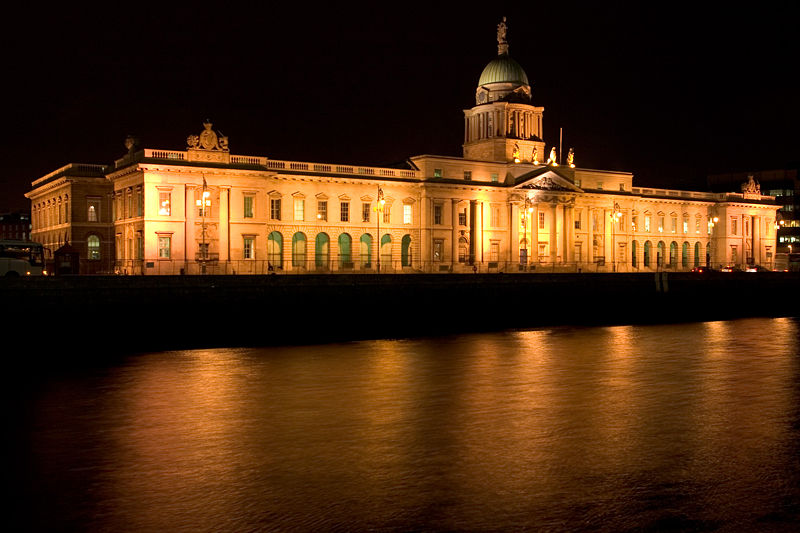
Custom HouseIn about an hour, it will be Dublin’s turn to participate in Earth Hour. The event started last year in Sydney when residents and businesses turned off their lights for one hour as a statement about global warming. This year, 28 cities will participate, each at their 8 pm on March 29. The event is described as a way to highlight “simple changes that will collectively make a difference.”

.

Dublin at nightI thought this was a good opportunity to post some Dublin at night photos before we have to turn off the lights here. They’re beautiful scenes, but also remind us of the energy demands of modern cities.

I hope that Earth Hour will live up to its expectations, but fear that it may turn out to be no more than another fun event and a way for all of us to feel good, without addressing the fundamental changes needed to treat our planet and our children more kindly.

O’Connell Street SpireThe photos are not my own, but are used under Creative Commons licenses. On the upper right is the Custom House by Jimmy Harris. It’s near to where I work. The O’Connell Street bridge at the left is by Hans-Peter Bock. And on the bottom right is the Spire of Dublin, further up on O’Connell Street, by Peter Guthrie.