New literacies and frogs

I visited the University of Connecticut in Storrs yesterday. It was a brief stop, but enough to be once again impressed with the excellent work of the New Literacies Research Team, led by Don Leu. They use new media, not simply to enhance or modernize in a superficial way, but to return classroom literacy to its roots in real communication. Nearly every project I heard about emphaizes reading and writing with a purpose and communication with real audiences.

For example, one project links a fourth-grade class studying the continents with a first-grade class in another state doing the same. The fourth-graders made online slide presentations to help teach the younger students, but quickly learned that their language was too advanced. They then recorded audio explanations to help explain things better.

On the way to UConn, I passed through nearby Willimantic, which is famous for its legend,“The Battle of Frog Pond”. This great battle occurred in 1754 around the time of the French and Indian War. It started with a huge racket in the middle of the night. The terrified villagers seized their muskets and prepared for the attack. In some accounts, they fired wildly across the town common. But no attack materialized. Instead, when morning arrived, they found hundreds of dead bullfrogs. A nearby pond had dried up causing the bullfrogs to fight for the remaining water.

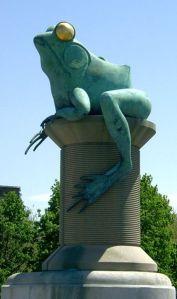
Later, American Thread Company established a mill in the town, which grew to be one of the largest producers of thread in the world. Willimantic became known as “Thread City,” and today boasts four statues on its bridge across the Willimantic River, each with a huge thimble and a giant, now silent, bullfrog.

Your very own barcode

Tech-Ex talks about the Google doodle becoming a barcode, and then, how to make your own. That article also includes a little history of the barcode:

The first item scanned was a pack of chewing gum scanned at an Ohio supermarket in 1974. On June 26, 1974, Clyde Dawson pulled a 10-pack of Wrigley’s Juicy Fruit gum out of his basket and it was scanned by Sharon Buchanan at 8:01 AM. The pack of gum and the receipt are now on display in the Smithsonian Institution.

Click here to create your own, and you too could be scanned!: the barcode printer: free barcode generator by Barcodes Inc

chipbruce_barcode

Dewey’s logic

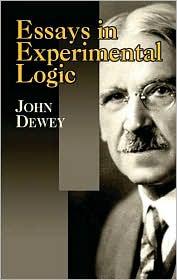
essays_experimental_logicJohn Dewey is not even mentioned in the Wikipedia article on Logic. That’s an oversight that I’m tempted to remedy, but it also reflects the fact that the 20th century development of logic in the tradition of Frege, (early) Wittgenstein, Russell, Gödel, and Tarski has largely ignored Dewey’s work, conceiving it in various ways, but above all, as not part of Logic. His idea that logic is the theory of inquiry is deemed to be a non-starter.

Dewey’s new logic

Bertrand Russell, in particular, took pains to explain why Dewey’s logic (1938) was not real logic, how it failed to address the fundamental questions of truth conditions or the relation between propositions and meaning, an idea that Tarksi had already developed in his model theory. Logicians should focus on concepts such as truth conditions, consistency of logical systems (that not all statements are provable), and completeness (that true statements are provable).

The development of model theory as a basis for semantics meant that the direct connection with the world was severed; logicians could now focus on the structure and operation of logical systems per se, without concern for real world consequences. In the terms of academic logic, it’s clear that Russell won the battle; Dewey’s “new logic” as Russell demeaned it, especially with its insistence on connection to lived experience, is now judged irrelevant by virtually all mathematical logicians, and most philosophical logicians.
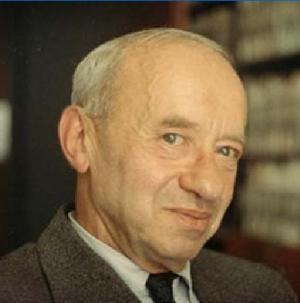
alfred_tarskiHowever, despite the great achievements of Tarski and others to follow, the standard account of logic has encountered obstacles. Kurt Gödel proved that any effectively generated theory capable of expressing elementary arithmetic cannot be both consistent and complete. For most systems of greater complexity, it’s not possible to say what consistency and completeness even mean.

Logicians began to see that formal logic was inadequate for the goals that David Hilbert, Russell and Whitehead, and others had proposed. Moreover, it was completely inadequate for that part of the universe that isn’t elementary arithmetic, i.e., social relations, history, culture, language, art, learning, nature, and all the other things that most people care about.
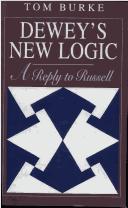
a_bIn recent years, these inadequacies of the formal semantics approach have led to a reconsideration of Dewey’s theories. Thomas Burke, among others, has called for a critical, re-examination of logic as the theory of inquiry. In Dewey’s new logic: A reply to Russell, he analyzes the debate between Russell and Dewey that followed the publication of Dewey’s Logic: a theory of inquiry in 1938. He concludes that although Russell won the battle, Dewey won the war, in the sense that his logic holds more promise for the future, especially as a a logic for work in the social sciences and humanities, or for practical concerns.

Dewey’s unread book

In the preface to his 1938 book on logic, Dewey says,

This book is a development of ideas regarding the nature of logical theory that were first presented, some forty years ago, in Studies in Logical Theory; that were somewhat expanded in Essays in Experimental Logic and were briefly summarized with special reference to education in How We Think.

There are many proposed encapsulations of Dewey’s vast body of work. If I had to choose one, it might be logic, which Dewey himself saw as a 40-year project. His early training, an academic context that sought a logical basis for knowing and life, and the ways in which his logic integrates across his ideas in art, education, political theory, morality, and other areas, suggests to me that logic could be the strongest connective thread.
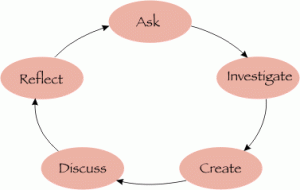
circleAs he develops his logic, one can see the core behind many of Dewey’s major ideas, such as warranted assertions, situation, ends-in-view, habits, the continuum of inquiry, facts and meanings, and the relation between natural and social science. He also confronts major issues in logic as they are conceived by Russell et al., but always with a twist, which not surprisingly, makes his views unacceptable to that community. Nevertheless, I agree with Burke et al. that Dewey offers us the best option for a usable logic for the problems of today.

Reading Dewey’s Logic: A theory of inquiry
Dewey_logicSome of Dewey’s Logic: a theory of inquiry can be a slow read. Published 71 years ago, the style is often pedantic. Dewey’s characteristic lack of references, diagrams, compelling metaphors, and good examples doesn’t help. His attempts to speak to the world of Russell and Tarski often get in the way. Nevertheless, the ideas are powerful, and deserve the reconsideration mentioned above.

Much of the book can seen as explaining one of the few definitions Dewey ever provides:

Inquiry is the controlled or directed transformation of an indeterminate situation into one that is so determinate in its constituent distinctions and relations as to convert the elements of the original situation into a unified whole.

The book is 556 pp. (my copy), divided into four parts. Part I is probably the most useful for most readers. It’s here that he provides the rationale for conceiving logic as inquiry, and discusses topics such as common sense in relation to scientific inquiry.

Part II defines inquiry and explores the construction of judgments. Part III on propositions and terms is a shorter section, and probably the most technical in the book. It’s also the one that speaks most to Tarski, although in a way that I suspect he rejects. Part IV focuses on mathematics and science. I found it to be the most interesting, especially as it deals with scientific methods, scientific laws, theories of knowledge, and social inquiry.

My recommendation on reading is to slow-read Part I, in order to understand what Dewey is trying to do. Use Part II as a way to see how the theory plays out, but devoting effort to chapters differentially, e.g., I find chapter 8 on understanding and inference to be especially good. Part III could be left for a more advanced read. Part IV is very good, especially the last three chapters.

Table of Contents

Here is the TOC for Logic: a theory of inquiry. The links are to the Past Masters collection at the University of Illinois (login required).

preface
collapse section
collapse section
collapse section
collapse section

References

  • Burke, F. Thomas (1994). Dewey’s new logic: A reply to Russell. Chicago: University of Chicago Press.
  • Burke, F. Thomas; Hester, D. Micah; Talisse, Robert B. (Eds.) (2002). Dewey’s logical theory: New studies and interpretations. Nashville: Vanderbilt University Press.
  • Dewey, John (1938). Logic: a theory of inquiry. New York: Henry Holt.
  • Talisse, Robert T. (2002). Two concepts of inquiry. Philosophical Writings, 20, 69-81.
  • Tarski, Alfred (1983). Logic, semantics, metamathematics: Papers from 1923 to 1938 (2nd ed.). Hackett, Indianapolis: Hackett.

hear you are — [murmur]

murmur[murmur] is a documentary oral history project that records stories and memories told about specific geographic locations. We collect and make accessible people’s personal histories and anecdotes about the places in their neighborhoods that are important to them. In each of these locations we install a [murmur] sign with a telephone number on it that anyone can call with a mobile phone to listen to that story while standing in that exact spot, and engaging in the physical experience of being right where the story takes place. Some stories suggest that the listener walk around, following a certain path through a place, while others allow a person to wander with both their feet and their gaze…

All our stories are available on the [murmur] website, but their details truly come alive as the listener walks through, around, and into the narrative. By engaging with [murmur], people develop a new intimacy with places, and “history” acquires a multitude of new voices. The physical experience of hearing a story in its actual setting – of hearing the walls talk – brings uncommon knowledge to common space, and brings people closer to the real histories that make up their world.

Being cellphone-impaired, and far from Toronto, I’m reduced to listening to the stories on the website, but they still convey a sense of the city and its history. The site’s a well-designed example of integrating oral history, geographic information systems, and mobile phones.

Voyages with the Rob Roy

rob_royI had shoulder surgery on August 18, so my days of paddling through rapids or hoisting a canoe on my shoulders need to be postponed. As a substitute, I’ve been reading A thousand miles in the Rob Roy canoe on rivers and lakes of Europe (1866), by John Macgregor (1825-1892).

singers_wagonMacGregor himself led a life that sounds like an overdone adventure yarn. At the age of three months, he was rescued from a burning ship whil een route to India with his parents. At the age of 12, he helped launch a rescue boat for a ship in distress off Belfast, then slipped aboard secretly a the last moment to help out. He grew up sailing, boat-building, riding, reading, and experimenting with home-made steam engines, batteries, and chemicals that led to several major explosions. He attended seven schools before graduating from Trinity College, Dublin in mathematics. He traveled throughout the world, fighting Greek pirates and crocodiles, climbing Mont Blanc, Etna, and Vesuvius. He won awards for sharpshooting, drew for Punch and illustrated books, and wrote his own books on marine propulsion, patent law, travel, and transcriptions of Syrian and Egyptian melodies he had heard in his travels.

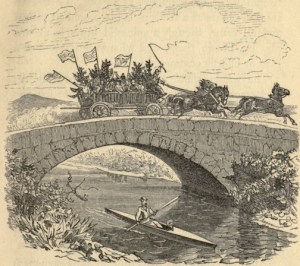
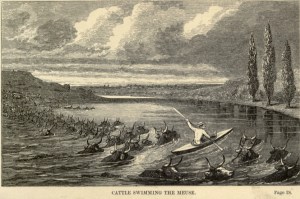
MacGregor built a hybrid canoe / kayak with a sail and a double-bladed, kayak paddle which he named the “Rob Roy”. He then paddled through the rivers, lakes and canals of Germany, France and Switzerland, portaging between waterways on a cart or on trains. His account of the journey became a best seller and was the beginning of the recreational canoeing movement. His trip inspired many, including Robert Louis Stevenson, who made his own voyage in a Rob Roy, and then wrote about it in his first published book, An inland voyage.

morningMacGregor’s account portrays a Europe with only distant resonance to today. Instead of shopping centers and freeways, there were people cutting hay with hand tools. Instead of the Web, there were newspapers, 3241 in Germany alone.

A thousand miles displays a buoyant optimism and refreshing sense of discovery. MacGregor talks of “a strange feeling of freedom and novelty which lasted to the end of the tour,” (p. 15), and throughout, of a reverence for the canoe, which I share:

Something like it is felt when you first march off with a knapsack ready to walk anywhere, or when you start alone in a sailing-boat for a long cruise.

But then in walking you are bounded by every sea and river, and in a common sailing-boat you are bounded by every shallow and shore; whereas, I was in a canoe, which could be paddled or sailed, hauled, or carried over land or water to Rome, if I liked, or to Hong-Kong. (p. 15)

digueI also like his descriptions of wildlife, for example of herons “wading about with that look of injured innocence they put on when you dare to disturb them.” (p. 35) Later, he refers to a gathering including the

long-necked, long-winged, long-legged heron, that seems to have forgotten to get a body, flocks by scores with ducks of the various wild breeds, while pretty painted butterflies and fierce- looking dragon-flies float, as it were, on the summer sunbeams, and simmer in the air. (p. 71)

At the village of Geisingen it was discovered that the boiler of my engine needed some fuel, or, in plain terms, I must breakfast. (p. 59)

meuseMacGregor’s challenges along the way become not discouragements, but the very stuff of the journey. He  reminds me that a broken shoulder is just a toss on the billows, one that can be an opportunity to learn:

It is, as in the voyage of life, that our cares and hardships are our very Mentors of living. Our minds would only vegetate if all life were like a straight canal, and we in a boat being towed along it. The afflictions that agitate the soul are as its shallows, rocks, and whirlpools, and the bark that has not been tossed on billows knows not half the sweetness of the harbour of rest. (p. 37)

What do Boston & Cambridge have to say to Champaign Unit 4?

violin_may06Ann Abbott inspired me to say more about the connections between the Boston desegregation experience in my last post and that of Champaign Unit 4.

I’d have to say that Boston is a good example of how not to do it. As I said in that post, Judge Garrity made the correct, and only legally justifiable decision, but rulings alone cannot accomplish much if there is widespread resistance, especially from political and religious leaders, school officials, and media. The racism thwarted integration of the schools, and in the process did major damage to the school system and to Boston as a civilized city.

In contrast, just across the Charles River, Cambridge managed relatively successful desegregation during the same period. Cambridge adopted a “freedom of choice” or “controlled open enrollment” desegregation plan in 1981. Parents would specify a list of  the schools they wanted their children to attend. Their preferences were followed as long as explicit desegregation controls could be maintained. There were no guarantees of attending any particular school.

Graham_parksBecause the program was coupled with interesting magnet programs at every school, there were many viable options for families. As parents we almost welcomed the fact that we didn’t have to make the final choice between the Maynard School’s dual language (two-way Spanish-English bilingual) program, Tobin’s School of the Future, with innovative uses new technologies, the Graham & Parks Alternative Public School, with its open education plan (see mural above), or the closer by Peabody, Fitzgerald, or Lincoln schools, each with things to recommend it. It helped that Cambridge did not have the urban sprawl of midwestern cities, which meant that unlike Champaign, Cambridge offered several schools within walking distance.

Although not without its problems, this plan was effective in substantially desegregating Cambridge schools, and maintained public support and involvement with the public schools. It’s not surprising then that Robert Peterkin, Superintendent, was called in as a consultant on the similar plan in Champaign. The story in Champaign is still unfolding (as it is in Cambridge and Boston as well). But if I had to draw lessons today from these three experiences, I’d say that it’s essential for Champaign residents today to avoid the disastrous path of resistance that Boston experienced

champaignThe Champaign school district has been struggling to address concerns such as too many black students in special education and discipline referrals; too few in gifted and honors classes; and black students being bused out of their neighborhoods. Responses such as denying the problems or siting new schools outside of black communities (though still technically north side) remind me of Boston’s response. Everyone would benefit if the school system and residents were to embrace not only the technical details of the Cambridge (or similar) plan, but also the spirit that saw how desegregation could enrich the learning for all.

References

Don’t blame Judge Garrity for the failure of school busing in Boston

W. Arthur Garrity Jr., the federal judge whose order to desegregate Boston’s public schools triggered mob violence and an image of bigotry in the city that prided itself on being the cradle of American liberty, died Thursday of cancer.

Garrity’s death at 79 came two months after the Boston school board voted to end busing for integration, 25 years after Garrity’s order launched a tumultuous period in the city’s history.

via W. A. Garrity; Judge Desegregated Boston Schools – Los Angeles Times.

garrity1I moved to the Boston area on the first of June, 1974. On June 21, Judge Garrity filed a 152-page opinion, in which he ruled that the School Committee of the city of Boston had “knowingly carried out a systematic program of segregation affecting all of the city’s students, teachers and school facilities.” The ruling was unanimously affirmed by the U.S. Court of Appeals. It ordered the School Committee to desegregate Boston schools by instituting student assignment, teacher employment, and facility improvement procedures, as well as the use of busing on a citywide basis. When the Committee failed to present an adequate plan the court assumed an active role in in the desegregation, a role that continued for fifteen years, my entire time of living in the Boston area.

The Community Action Committee of Paperback Booksmith, a bookstore in the area, published the decision in 1974 as The Boston School Decision. Publishing a lengthy court opinion may seem like a foolish business decision, but it was in fact a courageous and consequential act to inform the public debate. I still have my well-read copy.

Following the decision, there was resistance, violence, and white flight. When regular drivers refused to drive buses for schoolchildren out of racism or fear for their own safety, brave people, such as my friend Henry Kingsbury, volunteered to take their place. Given all that and the fact that 30 years later, the Boston schools had become even more segregated than before, one might consider Judge Garrity’s decision to be a failure. A persistent myth arose that this was an example of social engineering gone awry. For example, Bruce G. Kauffmann, in “Judge took Beantown for bumpy ride in 1974” describes it as “a liberal judge’s infatuation with experimental social engineering programs.”

school-busBut Garrity was both courageous and correct. The problem was not his, nor anyone else’s, attempt to engineer social relations. For twenty years after the Supreme Court had ruled that the legal maintenance of segregated schools violated the US Constitution, and even more, the fundamental values of the United States for simple justice, the Boston School Committee and other political leaders steadfastly resisted every attempt at incremental reforms. Ideas about placement of schools, magnet programs, voluntary busing, and so on, which might have led to gradual and peaceful integration, were subverted or outright blocked.

The decision demonstrates conclusively that the School Committee had consistently and deliberately acted to thwart Constitutional guarantees of equal rights, not only maintaining the “separate” aspect of Jim Crow, but failing also at any semblance of the “equal.” Schools designated for Black children were not just segregated, but denied resources in terms of teacher preparation, class size, curriculum, materials, physical plants, and other necessary tools for learning.

Given the entrenched racism, and the clear history of subversion of basic civil rights, Garrity had no choice. Unfortunately, the failure of leadership in Boston, both Black and White, pro-and anti-desegregation, led to undermining Garrity’s decision and the earlier Brown V. Board of Education decision.

References

Garrity, W. Arthur, Jr. (1974). The Boston School Decision: The text of Judge W. Arthur Garrity Jr.’s decision of June 21, 1974 in its entirety. Boston: The Community Action Committee of Paperback Booksmith.

Weinbaum, Elliot (2004, Fall). Looking for leadership: Battles over busing in Boston. Penn GSE Perspectives on Urban Education, 3(1).

Faubourg Tremé and community engagement

Thinking about Faubourg Tremé and also an earlier post about Cooking up a storm gives me a different understanding of community engagement or civic renewal. Sirianni and Friedland (2005), for example, talk about a broad civic renewal movement in the US in areas such as community organizing and community development, neighborhood associations, civic environmentalism, civic journalism, and healthy communities. They also discuss policies that can foster civic capacity building and problem solving.

Although their survey is useful (I use it in my own course on community engagement), three things seem missing from their picture. The most glaring omission is race. Every one of the areas they discuss is deeply imbued with the history and present circumstances of race relations in the US. The very notion of civic capacity building and problem solving can’t be examined fully without taking into account that there is a legacy of oppression and a lack of understanding about how race has shaped American history and policies.

A second omission is history. Much of Sirianni and Friedland focuses on current movements and tools for organizing, all useful, to be sure. But without a grounding in historical precedents it’s difficult to see clearly our way forward. For example, long before the present generation of civic renewal, Jane Addams and colleagues led the way through their work in Chicago on health care, working conditions, literacy, and participatory democracy. Before that, the Paris Commune built social institutions based on liberty, justice, and equality, with a deep respect for learning by all. Even before that, Faubourg Tremé showed how an engaged community could work together to establish effective civic journalism, work toward racial equality, and build a healthy community.

A third area of omission is art. John Ruskin argues that art and culture reflect the moral health of society. Ruskin influenced Jane Addams, who saw that art in all its forms, including crafts, theater, and cultural practices was essential to community and individual development. The importance of art as a means for a community to find shared values, maintain its own history, and to express itself is striking in both the Faubourg Tremé and Cooking up a storm stories as well. I’m not sure that art ought to listed as a civic renewal movement per se, but it does seem crucial to understand more about what it means for civic health and civic renewal.

References

Faubourg Tremé

Just to the Northwest of the French Quarter lies a neighborhood that few tourists visit, and many have never heard of, called Faubourg Tremé. Much of the area now appears bleak with Interstate Highway 10 bisecting it, industrial yards, and boarded up buildings. But it’s one of the most important neighborhoods in American history, and still has meaning for today. There are efforts to restore Faubourg Tremé and to learn what it has to tell us.

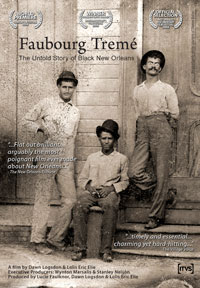
faubourg_tremeA recent, award-winning documentary tells the fascinating story, made all the more compelling by relating it to the life of a young reporter for the Times-Picauyune. The film is Faubourg Tremé: The Untold Story of Black New Orleans. Reporter Lolis Eric Elie leads us in his discoveries about his own city. He and director Dawn Logsdon show the relation between the city’s present and its rich past, enlivened throughout by music, including Derrick Hodge’s original jazz score, the Tremé Song by John Boutté, and a century of New Orleans music.

Viewers also meet Irving Trevigne, Elie’s seventy-five year old Creole carpenter, who descends from over two hundred years of skilled craftsmen, as well as Paul Trevigne, editor of L’Union, the first black newspaper in the US. L’Union and later, the Tribune, were strong advocates for the abolition of slavery, but beyond that, for full citizenship and social equality for all blacks, something most northern abolitionists shied away from. They hear from Louisiana Poet Laureate Brenda Marie Osbey, musician Glen David Andrews, and historians John Hope Franklin and Eric Foner as well.

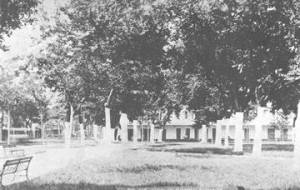
armstrong_park_Congo Squre cFaubourg Tremé was home to the largest community of free black people in the Deep South during slavery, where they published poetry and wrote and conducted symphonies. It was a racially-integrated community, a model for our own future. It as also possibly the oldest black neighborhood in America, the home of the Civil Rights movement and the birthplace of jazz. (See Congo Square to the right.)

Long before Rosa Parks, Tremé residents organized sit-ins on streetcars leading to their eventual desegregation. But on June 7, 1892, Homer Plessy from Tremé deliberately challenged the Louisiana 1890 Separate Car Act, by insisting on sitting in a whites-only car on a commuter train. He was arrested, tried, and convicted and eventually lost in the infamous Supreme Court decision of Plessy v. Ferguson. The resulting “separate-but-equal” decision legitimized segregation throughout the US for the next 62 years, and was a major blow to Tremé.

Following later assaults from urban renewal, Interstate Highway 10, and then Hurricane Katrina, it’s surprising that anything remains in Tremé. But one thing that has survived is a sense of history, embedded deep in the music, dance, architecture, social relations, and stories of the community. It is this history which holds a promise for the renewal of Tremé and perhaps of the larger US Society.

The film is a must-see, telling a story that is simultaneously informative, uplifting, and disturbing.

Mapping cemeteries

Several of our Youth Community Informatics sites are mapping cemeteries. What sounds like small project, or even a gloomy one, soon opens up into far-reaching explorations of history, geography, health, families, technology, mathematics, literacy, and more.

At Iroquois West Middle School, youth started with a story about a primary school’s project to study cemeteries: Learning from graveyards. The “Map Masters” soon expanded this by incorporating technologies of GPS and GIS into their mapping project of the Onarga Cemetery. They have already made many discoveries and are continuing to do more. They’ll also connect with cemetery mapping projects in Cass County and East St. Louis.

One interesting tombstone that we found at the Onarga Cemetery was in the shape of a tree trunk. The name of the person buried there was Emory Gish. According to our reseach on symbolism the tree trunk showed a life cut short. The number of broken branches might symbolize the number of deceased family members buried nearby.