Youth Community Informatics Forum

Forum flyer p. 1The goal of the Youth Community Informatics project is to encourage youth to consider careers in library and information science by engaging them in technology-rich activities that benefit their local communities. Youth ages 12-18, along with their adult leaders.

  1. participate in technology-mediated learning modules on a range of information science topics;
  2. work on community informatics projects in collaboration with local community partners and university students from LIS and related fields;
  3. participate in campus events to experience a wide variety of library and information science careers;
  4. Forum flyer p. 2help develop computer technology centers for their own use, and for use by others in their communities.

In the Youth Community Informatics Forum, to be held on June 27-28, 2008 at the University of Illinois in Urbana-Champaign, groups of youth will investigate information spaces around campus using digital cameras and GPS, along with their own eyes and ears, create Google Maps representations of what they learn, discuss their findings with other groups. They will also learn about LIS careers and about working with their own communities.

The project is supported by the Institute of Museum and Library Services (IMLS).

A functional curriculum for youth

Earlier this week I was browsing a freebie rack containing books that someone had discarded. Following the principle that one’s trash is another’s treasure, I looked closely and discovered William B. Featherstone’s, A Functional Curriculum for Youth. It was published in 1950, shortly before his untimely death, and long before current talk about integrative learning, service learning, community-based education, or youth community informatics.

Featherstone talks about a broad curriculum, based upon the idea that the school’s function is “building meanings for life.” He argues for education that contributes to “improvement of daily living in the here and now” and that supports the individual’s “involvement in in community life.” He advocates community councils to guide schools in their role as the co-ordinators of the complete educational effort within a community, essentially, the school as social center. The focus is on wholeness of learning and action in the world, so that schools

do not teach language arts as such; they teach life, carrying on projects, units, and other lifelike enterprises in which language arts function as principal means of communication and expression.

One of his more surprising suggestions is that youth should be paid to go to school. The rationale is that schooling is a social investment that benefits the entire society; going to school is socially useful work of value at least equal to that of most jobs:

when the right kind of school is provided, society cannot afford to allow any youth to remain out of school…solely because his personal economic resources …do not enable him to continue.

In Featherstone’s day, and even more so in ours, there are relentless attempts to reduce schooling to a factory model. Capitalist economics extends that agenda to many other realms of life–office work, grocery shopping, community involvement. Featherstone realized that even if we could somehow justify the factory approach for the school experience that it would in no way prepare students for the life that he valued. He saw, as Ella Flagg Young had before him, that the project of promoting democratic education was inseparable from the project of working towards a democratic society.

Community as Intellectual Space: Aesthetics as Resistance

CIS flyer The 4th Annual Community as Intellectual Space symposium is being held this week at Paseo Boricua in Chicago, June 13-15. Events will start at the Puerto Rican Cultural Center (PRCC), 2739/41 W. Division (near corner of Division and California).

This year, the focus is on Aesthetics as Resistance: The Act of Community Building. There will be artist-led tours of the beautiful murals found throughout the neighborhood, the annual People’s Parade, a delicious Puerto Rican dinner, workshops on community-education activities as diverse as urban agriculture and computer programming for children using Squeak, meetings with local Humboldt Park/Paseo Boricua community and government leaders, including Rep. Luis Gutierrez and Rep. Cynthia Soto, and panels on liberatory education. [Click to enlarge the poster or follow the link above for more details.]

Aesthetics as Resistance promises an active dialogue on art, identity, and cross-cultural community building with community leaders, artists, educators, librarians, activists, students, and residents. It expresses the PRCC’s vision to build community grounded in cultural practice, including murals, poetry, music, and the People’s Parade. These practices are both creative and political acts to develop community out of local funds of knowledge.

Paseo Boricua has a motto: ‘Live and help others to live.’ It is known for its multigenerational and holistic community activism around human rights and social change. Education is structured around the belief that ‘the community is the curriculum,’ reflecting the ideas of Paulo Freire and providing a contemporary version of Hull House.

With its many academic partnerships, Paseo Boricua also provides an outstanding example of university-community collaboration in research, teaching and public engagement. For example, last year the community hosted a tour and visit for the John Dewey Society. This furthered dialogue around how the community answers Dewey’s call for critical, socially-engaged citizens, for an active public, and for education as lived experience.

[This announcement is also posted on the John Dewey Society Social Issues blog.]

The student as the axis of change in the university

Univest 08 I just returned from the Univest 08 conference: The student as the axis of change in the university, which was held on June 2-3 in Girona, Spain. There were excellent presentations and discussions, for me aided considerably by simultaneous translation from Spanish or Catalan into English.

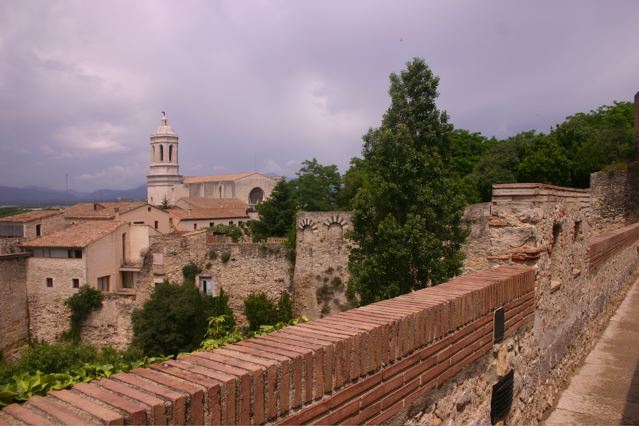
I thought that it worked very well to have students respond to the major presentations. It’s also hard to think of a more pleasant place to hold a conference than Girona, with outstanding restaurants, a beautiful old city, large parks, rivers, and great museums.

Girona wall, cathedralOne motivation for the conference was the European Convergence Process, a scheme to make Europe competitive with the United States in tertiary education. Beginning in 2010, more than 40 European countries will participate in the European Space for Higher Education, in which students, professors, and researchers will be able to move about without borders.

img_73581The aim of the process, which began in 1999 in Bologna is to produce a higher-quality, more homogeneous system, which is also more competitive in its teaching methods. A hope is that it will help build a society based on European knowledge, manifesting in culture and education the convergence that is already underway in the political and economic arenas.

The conference brought together teachers, students, administrators, and people from government and industry around topics, such as:

  • Student-centered instructional planning
  • Learner self-regulation
  • Student supervision and tuition
  • Student participation in university life
  • Experiences outside the classroom

My own talk was on student-centered learning, particularly on helping students by getting them to focus not on themselves, but instead on their communities.

Louise Michel, the Paris Commune, and Learning

The Women IncendiariesLast Monday night, we visited Square Louise Michel at the foot of Sacre Coeur in Paris. The park and the nearby streets of Montmartre are a living history book, with every cobblestone suggesting times of struggle, hope, fear, and disillusionment. Staying there for a few days makes me feel that I just have to share some thoughts about the Paris Commune and Louise Michel.

There was a time when I knew very little about the Paris Commune, which held Paris for two months in the spring of 1871. It wasn’t part of my history lessons in school, nor did it enter into political debates or everyday conversations. As I read, I began to see references to it—”the democratic and social republic!”, the petroleuses, the horrible siege prior to the commune, which led to the eating of zoo animals, the Federales’ Wall, early establishment of rights for women, why Sacre Coeur was built—but these references were disjointed, so that much what I did know was confused and contradictory. It took living in Paris for a year to help me understand more of what it was about.

I knew even less about Louise Michel, one of the heroes of the Paris Commune, and as I’m learning, much more besides. But I feel a shiver now whenever I think of her. I’m amazed by her passion and ideals, the violence in her life, her writing, her work as an educator in many senses of that word, and her life fully lived.

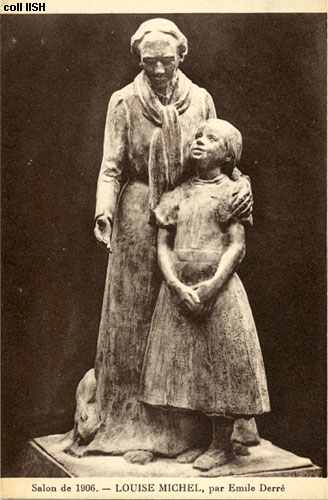
Louise MichelFor a long time Michel was the only woman other than saints to have a Paris métro named after her. The recent renaming of the Pierre Curie métro to Pierre et Marie Curie makes two (or one and a half). Schools all over France bear her name as well. She comes alive in books such as Édith Thomas’s The Women Incendiaries (reprinted by Haymarket Books, 2007; original in French in 1963). I think of her when I play Le Temps des Cerises, a song often associated with the commune and with Michel, even though it was written five years before the Commune.

I’ve also learned that she was an early practitioner of what I’d call inquiry-based teaching and learning. She was a continual learner, inspired by the works of Charles Darwin and Claude Bernard. As a school teacher, she used methods promoted in the progressive education movement (which came much later): interaction with objects such as flowers, rocks, and animals, studies outdoors, and scientific methods. She declared,

The morality I was teaching was this: to develop a conscience so great that there could exist no reward or punishment apart from the feeling of having done one’s duty, or having acted badly.

After the Commune fell, Michel was deported to New Caledonia. Unlike her jailers and many of the other Communards, she befriended Polynesians. She gave lessons to one in “the things whites know,” while he taught her his language. Later, she ventured deep into the forest to work with and study groups still practicing cannibalism. She collected their legends and music as a modern ethnographer might do. When there was a native revolt, Michel joined the side of the Polynesians. Throughout, she wrote poetry, prose, and letters on behalf of prisoner rights.

Later, she opened a school in London for the children of political refugees (The International School). There was a statement in the prospectus taken from Mikhail Bakunin’s God and the State:

All rational education is at bottom nothing but this progressive immolation of authority for the benefit of liberty, the final object of education necessarily being the formation of free men full of respect, and love for the liberty of others.

As infed says, there were no compulsory subjects, teaching was in small groups, and there was an emphasis on rational and integral education. Often, groups of children would bring their own ideas about what to study. Michel wanted students to learn to think for themselves, just as she did herself and encouraged others to do throughout her life.

Louise Michel was a complex person whose every year might fill the life for someone else; a blog post feels totally inadequate. Moreover, one might criticize both the Commune and her participation on many grounds. Nevertheless, her commitment to social justice, her caring for all life, her passion for learning and teaching, her striving for women’s rights and democracy in general, her unselfish work on behalf of others, her strong moral stance, and her unfailing courage set a mark to inspire anyone.

References

  • Michel, Louise (2004). Louise Michel [Rebel lives series, Nic Maclellan, ed.). New York: Ocean.
  • Saudrais, Hélène (2005). Louise Michel. Amsterdam: International Institute of Social History.
  • Thomas, Édith (2007/1963). The women incendiaries. Chicago: Haymarket Books (reprinted in 2007; original in French, Les Petroleuses, in 1963).

Dáil na nÓg Fairsay campaign

The Youth, Media and Democracy conference concluded yesterday at Dublin Institute of Technology. There was an excellent program, with presentations from youth groups using a variety of media–film (documentaries, personal stories, what-ifs), comics, hip hop, remix (VJ-ing, web video mashups), object animation, radio, and more. There were also interesting talks about the Fresh Film Festival, media policy, the 5th World Summit on Media for Children held in Johannesburg, the Story of Movies, Digital Hub FM, and much more.

I was also impressed with the Dáil na nÓg campaign to encourage mainstream media to provide more balanced coverage of youth, especially to show the diversity of youth activities and not just negative images. A small group of Dáil na nÓg representatives has conducted this campaign, called Fairsay. They’ve had multiple meetings with media and policy makers, assisted by Anne O’Donnell from the Office of the Minister for Children.

Dáil na nÓg means “youth parliament”. Young people come as representatives of their local area to tell decision makers in Government what they think of issues that affect their daily lives.

The young Dáil na nÓg representatives gave excellent presentations and participated fully in panel discussions, demonstrating by their presence how young people can learn social responsibility, communication skills, and connected understanding through active civic participation.

So, it’s ironic that the Fairsay work is only partly sanctioned by the schools. For example, when they were waiting for a media callback they had to have their mobile phones on vibrate during class. When a call came it had to be taken down the hall in the study room. The classroom might be a place to teach about government or media, but not to actively engage with it.

Any teacher knows the many distractions available today for young people, mobile phones being near the top of the list. Still, it’s unfortunate that we can’t find better ways (this applies to US schools even more) to make actually participating in democracy take precedence over just talking about it. The young people at the conference showed how they could use media in diverse ways to move beyond the spectator role to become active participants.

Slow learning

Many people would say that new technologies speed up life, indicated by terms such as “fast forward” or “multitasking.” The same people might add that because young people live in a fast-paced, digitally-enhanced world, we need to change schooling accordingly. If we don’t use technologies to match their pace, we’ll lose them. Moreover, there is so much more to learn today. We need to use podcasts, mobile technologies, video, on-demand resources, blogs, SMS, and other tools to speed up learning for the millenial generation.

Other people question the rush to new learning technologies. They argue that it’s good to learn in a slow, considered, and reflective way. Better to immerse oneself in a book, to read, even re-read difficult passages. Schooling should counter, not acquiesce to, the blur of modern life.

This debate is unlikely to reach an easy resolution. But as is often the case, the polar opposites here share some unquestioned assumptions. Both seem to think that the new technologies accelerate; they just disagree about whether that’s a good or bad thing.

However, when I’ve observed learning in classrooms with a thoughtful use of new technologies, I’ve often seen the contrary: Learning seems stretched out or slowed down. For example, in my last post about The Hundred-Mile-An-Hour Dog, I talked about a primary-level class doing digital storytelling around a book they had read. They built dioramas for scenes in the story, constructed clay figurines for the characters, photographed events in each episode, wrote narration for the scenes, checked grammar and spelling, and eventually created a photostory. This took many class sessions and involved discussions about the story, choices in design and presentation, and referring to the text for details. Certainly the new technologies (digital camera, computer) made it easier to carry out aspects of the project. But the overall effect was to engage the students in a deeper, more critical form of reading and response.

During this time, they didn’t read as many stories as they might have, or write as many words. One might say that their learning slowed down. At the same time it had become more substantive and meaningful. In contrast, their usual activities are sometimes rushed and unreflective.

So now, I’d like to flip the debate. Those who embrace the new technologies need to say that they’re good, not because they accommodate the fast pace of modern life, but because they slow it down. And those who oppose them need to realize that we often use the old tools in cursory, shallow ways which might be corrected with new technologies.

Youth Media Democracy, April 18-19

Youth Media and Democracy conference[See followup after the event at Dáil na nÓg Fairsay campaign.]

What appears to be an exciting conference on youth, media and democracy is coming up on April 18-19, 2008 at Dublin Institute of Technology and the Digital Hub. It’s called Youth Media Democr&cy, “an inaugural conference exploring the effects and opportunities of new media on children and youth.”

The conference explores the ways that media and ICT’s affect the activities, roles, and relationships of youth, through topics such as new media, emerging literacies, digital divide, representations of youth in media, and new media as a platform for democracy in the lives of young people. It also examines how youth can express themselves through new media and will showcase youth-created media.

St. Andrew’s Resource Centre

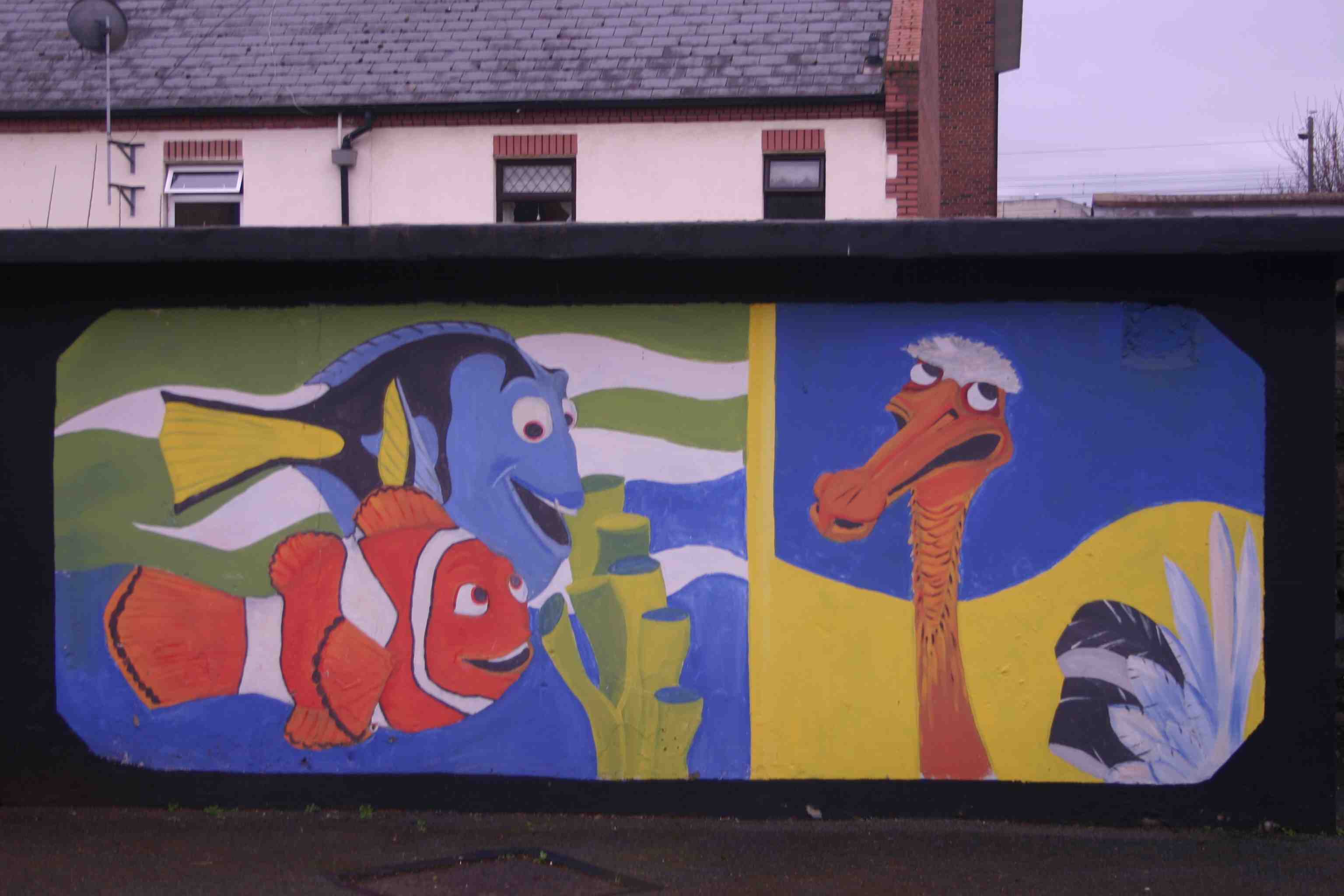
muralWe went to the organic market at the St. Andrews Resource Centre today, to get some healthy, fresh produce. We also enjoyed a hearty lunch of lentil soup and samosas.

After several visits, I can say that the Centre is one of the best-run and most beneficial community centres that I’ve seen. In addition to the market, there are employment services, tutoring for secondary school students (grinds), adult education, computer training, parenting and young mothers programmes, and welfare rights counseling. There’s a Heritage project to record the history of the Pearse St. community and many others projects (see below).

buildingThe elegant building was opened as the St. Andrew’s School in 1895 and operated as such until 1976 due to the decline of the working docklands. A renovation began in 1985, which led to the social centre opening on Bloomsday, 1989. The structure is well-preserved and there are colorful murals in the hallways and the back courtyard.

Staff are drawn from the community, so that the centre’s work tends to directly reflect community needs. Concurrently, community members develop skills that help their own careers. The latest count is 224 staff on full or part-time status.

The Centre has learned several lessons that might be useful elsewhere:

  • Issues and programs develop out of needs identified by the community. There’s bottom-up planning rather than solutions from on high.
  • There’s a concerted effort to build capacity in the community. For individuals, there’s an advancement path through community work.
  • There’s a flat organizational structure, which allows quick and flexible response to needs. A corollary is an openness to the process. Staff learn to find workarounds to barriers.
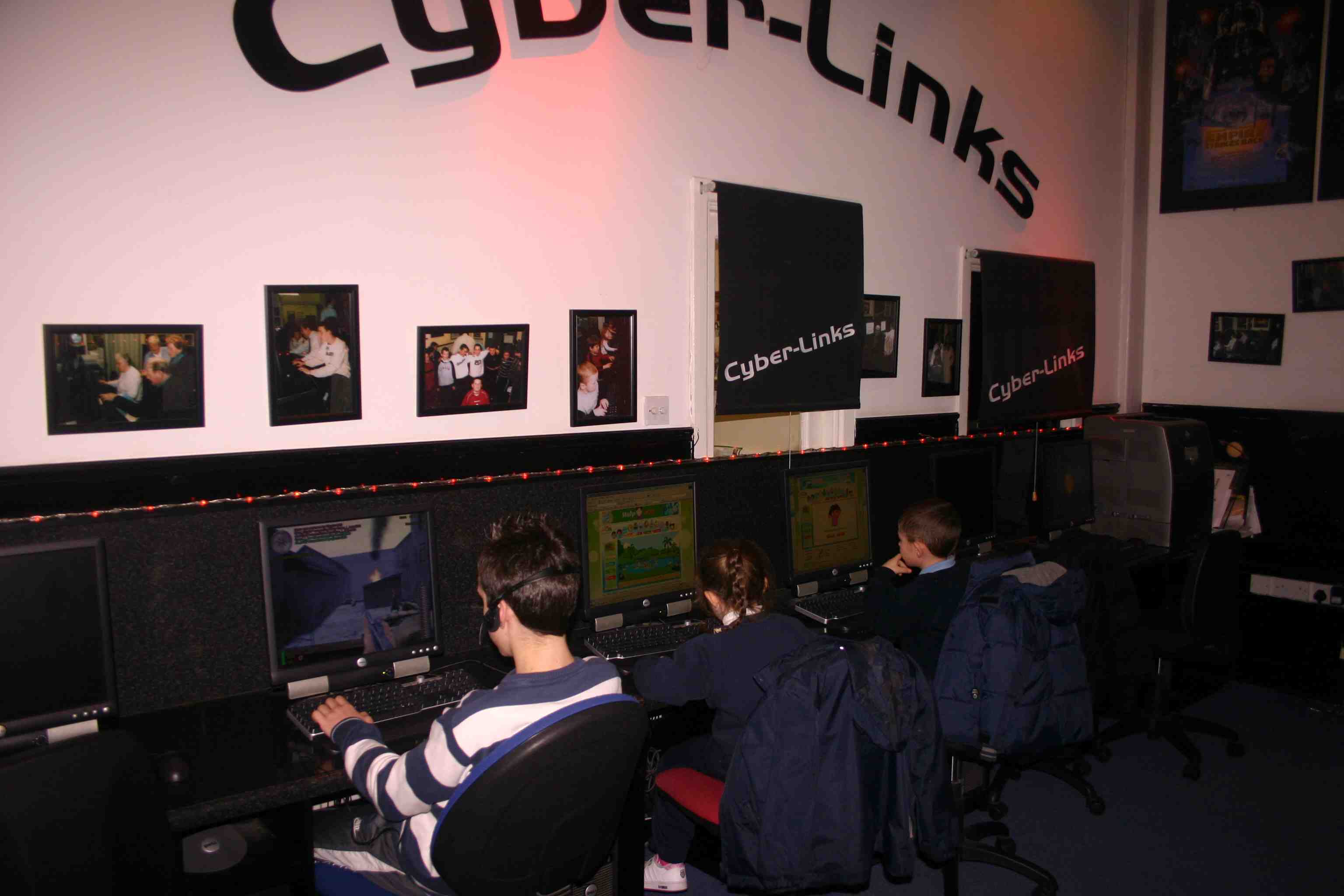
  • cybercafeThere’s a self-sustaining budgetary model. There’s no one paymaster and staff grows in response to funding.
  • The Centre provides integrated services, a “one-stop shop.” This applies across the life cycle from the childcare center through Day Centre with meals for the elderly. Activities such as the Cyber-Links centre coordinate with others, such as the theatre project to present drama written and acted by community members.
  • figuresStaff and community members care about the Centre. Pride in the Centre is evident: There’s no grafitti and there appear to be limited security concerns. The display of figures brought in by children in the Childcare programme is just one tangible piece of evidence for this.
  • There’s a forward thinking, needs-directed process, which identifies opportunities for funding consistent with community needs, capabilities, and processes.

Re-Connecting with Community

Nick and me

On March 5, National College of Ireland hosted an event to consider the relations between third-level education and the communities around them. Emma Kytzia and Beatrice Cantalejo did a terrific job putting it all together.

Nick Rees (left) presided. I was asked to speak on “A Radical Vision for Third-Level Education Today: Re-Connecting with Community.” The lecture was followed by a panel discussion, guided by Paul Mooney, then questions from the audience, and finally, conversation over wine in the President’s office.

I drew from two examples in the Chicago area, Hull House and Paseo Boricua, to examine how educational institutions can re-connect with community. There was a little about current work with the College and the local schools in the Docklands community around widening participation in higher education.panel

The real focus of the evening was on how these experiences might inform education and community work in Dublin today. An excellent panel took up that topic:

  • Mr Ken Duggan, School Principal, Westland Row CBS
  • Prof Áine Hyland, former Professor of Education and Vice President (Academic), UCC
  • Mr Seanie Lambe, Director, Inner City Renewal Group
  • Ms Michele Ryan, Head, School of Community Studies, National College of Ireland

Further Information:presenters