eTourism and community informatics

Just saw a notice for ENTER (eTourism) conference, scheduled for Amsterdam in 2009. What caught my eye were sessions on community informatics, user-generated content, accessibility, cultural heritage, online communities, and other topics related to community informatics. One of the speakers is Ulrike Gretzel, who earned her PhD here in 2004 in Communication, with a specialty in etourism.

It’s interesting to reflect on eTourism in relation to community informatics, both in terms of the underlying similarities in approach and because it’s one avenue for students to take. Tourism is the largest business in the world and the most IT-intensive. It’s also the major means of survival for many in impoverished communities.

The mission of our own tourism department is

to understand and promote the development and sustainability of healthy communities and advance quality of life and well-being of individuals, families, and communities through parks, recreation, sport, and tourism.

Compare that to the mission of the Community Informatics Initiative:

works with people to develop information and communication technologies to achieve their goals. It fosters collaborations across campus, local, national and international communities. Together we build innovative community networks, community technology centers, software, and library services.

John Dewey in Turkey: Lessons for today

The Republic of Turkey was proclaimed on October 29, 1923. As its first President, Mustafa Kemal Atatürk (photo below) sought to establish the modern Turkey as a “vital, free, independent, and lay republic in full membership of the circle of civilized states.” He recognized the need for “public culture,” which would enable citizens to participate fully in public life, and saw the unification and modernization of education as the key. Accordingly, one of his first acts was to invite John Dewey, who arrived in Turkey just nine months after the proclamation.
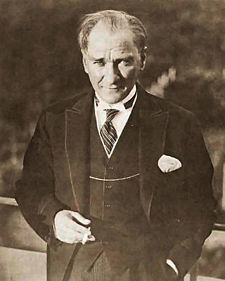
In this endeavor, the ideas of Atatürk and Dewey were consonant. Dewey’s words above (“vital, free, …”) could have been written by Atatürk, just as Dewey might have talked about “public culture.” Both recognized the need to institute compulsory primary education for both girls and boys, to promote literacy, to establish libraries and translate foreign literature into Turkish, and to connect formal schooling, the workplace, and government.

Today is John Dewey’s 149th birthday. Back in 1924, he was nearing the age of 65, when many people think of retiring. But his three-month-long study in Turkey was an ambitious project. He addressed issues of the overall educational program, the organization of the Ministry of Public Instruction, the training and treatment of teachers, the school system itself, health and hygiene, and school discipline. Within those broad topics, he studied and wrote about orphanages, libraries, museums, playgrounds, finances and land grants for education, and what we might call service learning or public engagement today.

He laid out specific ideas, such as how students in a malarial region might locate the breeding grounds of mosquitoes and drain pools of water of cover them with oil. In addition to learning science they would improve community health and teach community members about disease and health. Workplaces should offer day care centers and job training for youth. Libraries were to be more than places to collect books, but active agents in the community promoting literacy and distributing books. In these ways, every institution in society would foster learning and be connected to actual community life. As Dewey (1983, p. 293) argued,

The great weakness of almost all schools, a weakness not confined in any sense to Turkey, is the separation of school studies from the actual life of children and the conditions and opportunities of the environment. The school comes to be isolated and what is done there does not seem to the pupils to have anything to do with the real life around them, but to form a separate and artificial world.

Atatürk saw the need to unify Turkey into a nation state, despite its great diversity. Dewey supported that but emphasized that unity cannot come through top-down enforcement of sameness (p. 281):

While Turkey needs unity in its educational system, it must be remembered that there is a great difference between unity and uniformity, and that a mechanical system of uniformity may be harmful to real unity. The central Ministry should stand for unity, but against uniformity and in favor of diversity. Only by diversification of materials can schools be adapted to local conditions and needs and the interest of different localities be enlisted. Unity is primarily an intellectual matter, rather than an administrative and clerical one. It is to be attained by so equipping and staffing the central Ministry of Public Instruction that it will be the inspiration and leader, rather than dictator, of education in Turkey.

This was realized in many ways. For example, the central ministry should require nature study, so that all children have the opportunity to learn about and from their natural environment, but it should insist upon diversity in the topics, materials, and methods. Those would be adapted to local conditions, so that those in a coastal village might study fish and fishing while those in an urban center or a cotton-raising area would study their own particular conditions.

Many of Dewey’s ideas were implemented and can be seen in Turkey today, as we come upon its 85th birthday next week. What’s even more striking to me is how relevant they are to the US today. Many of our problems can be traced to the “separation of school studies from the actual life of children and the conditions and opportunities of the environment,” but also to the separation of work from learning, of health from community, of libraries from literacy development, or of universities from the public. Dewey would be the first to argue that we need to re-create solutions in new contexts, but his report from long ago and far away still provides insights for a way forward today.

References

Ata, Bahri (2000). The influence of an American educator (John Dewey) on the Turkish educational system. Turkish Yearbook of International Relations (Milletlerarası Münasebetler Türk Yıllığı), 31. Ankara: Ankara Üniversitesi.

Bilgi, Sabiha, & Özsoy, Seckin (2005). John Dewey’s travelings into the project of Turkish modernity. In Thomas S. Popkewitz (ed.), Inventing the modern self and John Dewey: Modernities and the traveling of pragmatism in education (pp. 153-177). New York: Palgrave Macmillan.

Dewey, John (1983). Report and recommendations upon Turkish education. In Jo Ann Boydston (ed.), The Middle Works: Essays on Politics and Society, 1923-1924. Vol. 15 of Collected Works. Carbondale: Southern Illinois Press.

Wolf-Gazo, Ernest (1996). John Dewey in Turkey: An educational mission. Journal of American Studies of Turkey, 3, 15-42.

Lecture and class at Çanakkale Onsekiz Mart Üniversitesi

I recently went to Çanakkale Onsekiz Mart Üniversitesi (the 18th of March University in Çanakkale, Turkey) on a trip arranged by Prof. Mustafa Yunus Eryaman. The faculty there were wonderful hosts and showed me many excellent projects, including international connections, in this rapidly growing university.

While in Çanakkale, I lectured on Learning at the Border, presented in a doctoral seminar on Integrating Technology with Literacy, and visited Children’s House (Çocuklar Evi), a preschool.

There was much interest at Çanakkale Onsekiz Mart Üniversites in our community informatics work, in part because John Dewey had played such an important role in establishing education in the new Turkish nation. In the summer of 1924, Mustafa Kemal (Ataturk) had invited Dewey to advise him on modernizing the Turkish educational system, including instituting compulsory primary education for both girls and boys. Reforms were intended to enhance literacy and thus to raise a generation able to participate in what Ataturk called the public culture.

No-Nonsense Guides

I’ve been reading the No-Nonsense Guides. These are clear, concise, very readable introductions to complex topics, such as globalization, women’s rights, and world food. They’re a bit like articles in The Economist, but from a critical perspective and with more evidence to back up the analysis. Even if you feel you understand one of the topics, the corresponding book is a great summary and resource. I highly recommend them.

The Guides are published by New Internationalist, whose mission is

to report on the issues of world poverty and inequality; to focus attention on the unjust relationship between the powerful and powerless worldwide; to debate and campaign for the radical changes necessary to meet the basic needs of all; and to bring to life the people, the ideas and the action in the fight for global justice.

Based in Oxford, New Internationalist also offers a free online newsletter, a magazine, and other publications.

“The Monastery: Mr. Vig and the Nun”

I walk by a wonderful video rental store, called That’s Rentertainment, on my way to and from work. It has an amazing collection of foreign and independent films, anime, TV, and documentaries, as well as knowledgeable staff. The prices are good, too, so it often makes sense to take a chance on a movie I’ve never heard about before. One of these was director Pernille Rose Grønkjær’s, The Monastery: Mr. Vig and the Nun (Slottet, or The Castle in Danish).

The description won’t appeal to everyone, and at times it may seem slow or disjointed. But it’s an unexpectedly good movie.

The true story is about Jørgen Laursen Vig, who lives alone in the derelict Hesbjerg Castle near Odense. His lifelong dream has been to create a monastery. Nearing the end of his life he turns to Russia and invites the Russian Patriarchate to use his castle as the site. They send Nun Amvrosija and a few others to assess the situation and begin the process of creating the monastery. As anyone might suspect, there are good intentions in the beginning, but problems arise as it becomes more a reality.

Through these events the film explores friendship, and what Allan Berg Nielsen describes in an excellent essay as The Manifold Nature of Love. It’s about life dreams, loss, and the challenge of opening up to others. Grønkjær (see photo), the director, is the interviewer, and becomes entwined at times in these questions.

At one point, Vig becomes frustrated with Nun Amvrosija. They argue about trivial things, while not addressing the larger issues. Perhaps he feels he’s losing control of the project. Referring to her, he says:

Vig: It’s hard to argue with people who are always right. Who don’t …
Grønkjær (interviewing): What if she came here just as much for you as for the monastery?
Vig: For me? I don’t know how to react to that. It’s the project we’re talking about, not me. Because that’s not what is needed.

A little later he grows discouraged, and puzzled:

Vig: I can’t solve all the problems.
Grønkjær: It’s not a problem, Vig.
Vig: Perhaps they’re problems you women have.
Grønkjær: We haven’t any problems.
Vig: You have feelings, or whatever. Things like that are not my business. I stay out of it.

That excerpt suggests the movies is about gender. It is, but one could also say that it’s about age, religion, nationality, language, and more than anything, about people trying to come together about things they both want, but struggle to achieve.

Nun Amvrosija writes to Mr. Vig:

Dear Mr. Vig, We were together for almost five years. We were very different, yet we were doing the same thing. We often disagreed with each other. But the Lord directs everything in His wisdom. Our Lord laid this gift in your hands. A gift which I believe opened the gates of paradise to you. I wish for the kingdom of heaven and eternal peace. Dear Mr. Vig, servant of Our Lord.

Vig is not only a fascinating character in the movie, but must have been throughout his life as well. See his East-West Seminar at Hesbjerg, 1995.

Today the monastery is run by Nun Amvrosija. A Russian Orthodox priest comes from Copenhagen to carry out the services. The Russian Patriarchate and the Hesbjerg Foundation now set the future plans for the monastery.

Liberating Voices

Liberating Voices: A Pattern Language for Communication Revolution (MIT Press), edited by Doug Schuler will appear this coming December. The book contains 136 patterns designed to meet challenges of communication in a world of new communication systems and global connections. Patterns integrate theory and practice to address social and environmental problems through citizen activism. Each describes a problem and its context, a discussion, a solution, and links to other patterns.

The book was inspired by Christopher Alexander’s A Pattern Language, and is part of the Public Sphere Project. You can get a preview of the book and explore the network of patterns online.

a visionary manual rich in insights and directly useful in any attempt to connect people and information technologies in the quest for real democracy. This is a crucial book for our time. —Langdon Winner, Rensselaer Polytechnic Institute

a pattern language that can be used as a framework for rethinking how we build community and create a more humane, equitable future. —Nancy Kranich Former President, American Library Association, author of Libraries & Democracy

Growing our food with sewage

One fifth of the world’s food is now grown in urban areas and for half of the urban fields the only source of water is untreated city sewage. Thus, according to a recent study from the International Water Management Institute (IWMI), one tenth of the world’s food is now grown using raw sewage.

Sewage abroad

Raw sewage brings heavy metals, pathogenic bacteria, and worms. But the water is necessary for the plants, and the sewage contains nitrates and phosphates, which promote plant growth. In many areas the use of city sewage has become necessary to prevent starvation. This is just one reminder of the consequences of our unjust global economic system and of the interconnections among water supplies, waste treatment, agriculture, the environment, and economic development.

Sewage at home

But the issues about sewage and agriculture are not confined to crowded cities in developing countries. In most of Europe and North America, about half of the sewage sludge is now spread on farmland, but after treatment that breaks down most of the complex organic molecules and kills most of the pathogens. A major contribution of US industry and the Environmental Protection Agency, has been to promote the term “biosolids,” for the treated stuff, which sounds much better than “sewage,” “sludge,” or “shit.” But despite the name change, we know little about the health and environmental effects of using it.

A report in 2002 from the National Academy of Sciences says that unsafe pathogens and chemicals remain in biosolids. No epidemiological studies have been done to show whether spreading them on land is safe for agriculture workers, nearby residents, or food consumers. In short, we don’t know whether we’re better off than the 10% getting the raw stuff.

Experimental sewage

Meanwhile, biosolid experiments are underway. Could sludge be a fix for hazardous lead paint by lowering the the rate at which lead enters the bloodstream and circulates to organs and tissues? A study asking that was conducted recently on a vacant lot in East St. Louis next to an elementary school. The 300 students were black and almost entirely from low-income families. It’s not clear how the residents could make informed decisions about participating in the study, given the NAS report that no studies have ever been done on its safety.

Where is the public?

Issues such as this never get mentioned in political campaigns, and rarely make the mainstream news. They’re unpleasant to think about, and solutions might require changes in lifestyle or large expense. Most of us are so confused that we can’t even frame the questions. Nevertheless, these issues deserve more attention as part of the world we’re making for ourselves and our children.

Writing in 1927, John Dewey (in The Public and Its Problems) noted that “The public is so confused and eclipsed that it cannot even use the organs through which it is supposed to mediate political action and polity.” In contrast to Walter Lippman, who argued for a knowledgeable elite to address complex problems, Dewey saw full participation in civic life as essential:

We have the physical tools of communication as never before. [But] the thoughts and aspirations congruous with them are not communicated, and hence are not common. Without such communication the public will remain shadowy and formless, seeking spasmodically for itself, but seizing and holding its shadow rather than its substance. Till the Great Society is converted into a Great Community, the Public will remain in eclipse.

I doubt that sewage will become the rallying call for the Great Community, but Dewey was annoyingly vague about what that call might be. What’s clear is that we need to find better ways to create the kind of democracy in which people really participate and which addresses the most basic problems we all face.

See also:

World’s farmers turn to raw sewage for irrigation – health (New Scientist)

Sludge tested as lead-poisoning fix (AP)

Sewage Sludge Standards Need New Scientific Basis (NAS)

“Club Ed: This University Is at Your Service”

Thomas Bartlett writes in the Chronicle about High Point University in North Carolina, which takes student services to a new level. It’s a stark contrast to the idea of student service discussed at the conference on The student as the axis of change in the university, or Dewey’s idea of The school as social center. As we continue on the path to a greater divide between rich and poor, I imagine we’ll see copies of High Point’s approach accompanied by increasing irrelevance of universities to the world around.

Lots of colleges treat students like customers. But how many have an ice-cream truck? And valet parking? And a concierge desk? And an enormous hot tub in the middle of the campus?

Not too many. Actually, only one: High Point University.

This once-sleepy institution in the hills of North Carolina has undergone a revival in the last couple of years, thanks in part to its jaw-dropping menu of student services. Behind it all is High Point’s president, Nido R. Qubein, a motivational speaker and businessman who believes that the customer (that is, the student) should be not only satisfied, but wowed.

Club Ed: This University Is at Your Service – Chronicle.com.

“I Came a Stranger” by Hilda Polacheck

I Came A StrangerI just finished reading I Came a Stranger: The Story of a Hull-House Girl, by Hilda Satt Polacheck, and edited by her daughter, Dena J. Polacheck Epstein (University of Illinois Press, 1991). It’s a fascinating account of Polacheck’s journey from Wloclawek, Poland to Chicago, and the role that Jane Addams of Hull House played in her life.

The book is interesting on many levels: Hilda’s life is filled with many compelling, poignant, and humorous stories; she makes the immigrant experience in late-19th, early 20th century Chicago come alive; and she shows what Hull House meant to a girl like her, who “came a stranger” to Chicago, knowing no English and learning to survive by doing. The labor and feminist politics of the era have immediate meaning for her, and she recounts stories about Emma Goldman, Eugene V. Debs, Clarence Darrow, Alice Hamilton, and other great figures of that time. She describes her struggles, romance, triumphs, and tragedies.

It’s a pity then, that the book wasn’t published in her lifetime, as there was no interest in the life of an “obscure woman.” But I was drawn in by her honesty and commitment to the ideals she saw in Jane Addams. I also gained a deeper understanding of the remarkable role that Hull House played in the effort to, as Addams says, “make the entire social organism democratic.”

first Youth Community Informatics Forum

In the Youth Community Informatics Forum held June 27-28, 2008, about 40 young people and youth leaders came to Champaign from a variety of economically disadvantaged, mostly minority communities throughout the state.

There was a youth media festival on Friday. Then on Saturday, participants spent the morning working in one of four small groups to investigate “information spaces” in the community. These included the Center for Children’s Books, Champaign Public Library, the Independent Media Center, Espresso Royale, Native House, Cafe Paradiso, Transit Plaza, Illini Union, and bronze plaques around campus. The group leader introduced a staff member from the center to the students for a small tour and helped them use a Flip video camera and a GPS receiver to record their observations.

At each site, the youth asked questions such as:

  1. What do we see in this information center? How do we like it?
  2. What is this center about?
  3. What do we want people to know about the center?
  4. How can we give others a clear idea about the center through watching/hearing our report?

In the afternoon, they created a Google map with their videos, text, and GPS coordinates. They also added music (an innovation we hadn’t planned on, but perfectly appropriate). They then shared their findings in a public presentation.

The activity was conceived in terms of an Inquiry Cycle:

Inquiry cycle

Inquiry cycle

  • Ask: What are the information spaces in the community?
  • Investigate: Visit, listen, explore, video, determine geo-coordinates.
  • Create: Make a GIS site with video, music, text.
  • Discuss: Share the product and the findings with others.
  • Reflect: Think about issues of journalism, democracy, careers, technologies, etc.

We found that the students learned technology skills, problem solving, cooperative work, writing, public presentation, specific information spaces, community journalism, university life, and much more.

Although the June activity made use of diverse new technologies, it is important to note that the focus was on learning about the community, asking questions, and sharing findings with others, not on the technologies per se. The most effective use of these technologies in libraries and similar settings would likely involve embedding that use in a larger, purposeful context. That context in turn could be a way to help connect youth with other resources, such as books and structured activities.

We’re now planning a similar activity in October with the Mortenson Center Associates, a group of visiting, international librarians. This will be the first day of a two- or three-day event. The longer time will allow for discussion about how the information spaces might differ in different countries, what technologies are available in different contexts, how valuable the activity would be for youth in their libraries, and so on. Students from the Community Informatics (LEEP) course would lead the investigation of the local-area information centers.

Both youth leaders and young people said they enjoyed the Forum, learned a lot, and hope for more. One youth leader said that next year he’d like to bring a much larger group. Another wrote,

I believe, in the not too distant future, that this conference will be seen as a landmark in developing a new perspective as part of the partnership between those marginalized sectors of civil society and the university in bridging the digital divide.

As Myles Horton might say, that’s a long haul, but at least there was good spirit of cooperation in learning, which I hope will carry over to continuing work in these communities.

[Cross-posted on social issues]