Sharing your books, for a noble cause …

wordle_mark_quote [tag cloud from the UC Books to Prisoners site, created using wordle]

UC Books to Prisoners is an Urbana, IL based project providing books to Illinois inmates at no cost. Books to Prisoners offers books by mail to all Illinois inmates and operates lending libraries in the two Champaign County jails.

Is your book collection weighing you down? Do you have a home library that is threatening the structural integrity of your abode? Champaign-Urbana has many great places to donate books. One of the neediest is the Books to Prisoners program, profiled earlier in a Smile Politely piece.

We take donations of used books from the community, mail books in response to prisoner requests, and stock and staff the two local jail libraries. Those books that are not suitable for prisoners, for a variety of reasons, are sold to cover the postage to mail books.

Thanks to community support, we have sent 32,162 books in 8,281 packages to 5,096 inmates since we were founded five years ago. Go here for details about dropping off books.

If you’d like to get rid of your books, merely to make space to acquire more, come to our Spring Book Sale April 3–5 at the IMC in the old Urbana Post Office. A huge assortment of high quality books: paperbacks at 50 cents, hardbacks for a buck.

via Sharing your books, for a noble cause … : SPlog : Smile Politely

RiseOut: “Defining Our Own Education”

I’ve been reading the articles on RiseOut, an online “news center focused on deschooling, youth activism, and other related issues concerning the rights of youth in the U.S.” There are entries on deschooling; unschooling; youth media; racism; the Highlander Folk School in New Market, Tennessee; Dr. “Patch” Adams; a review of the book, The Teenage Liberation Handbook, How to quit school and get a real life and education (by Grace Llewellyn); critiques of school segregation (and recent Supreme Court decisions that support it), credentialism, and military conscription.

Most of the articles on RiseOut are well-researched, thoughtful, and provocative. They remind me of the wonderful book, Letter to a teacher by the schoolboys of Barbiana, in which youth in Italy present a searing critique of their education and the unjust society it supports.

Both the Barbiana book and RiseOut address the question that Earl Kelley asks: What is real in education?. Kelley answers that the bedrock reality is the the actual life of youth.

The Obama administration’s proposed “Cradle to Career” education plan, has many good components, but education reform will never accomplish much if schooling continues to be separated from actual life and fails to come to terms with the issues raised in RiseOut.

From the RiseOut site:

We provide a diversity of alternatives to education that are self-directed and decentralized from standardized schooling. We support a young person’s choice in dropping out of school, free of social stereotypes and biases. We aim to provide a plethora of alternatives from a 12-year prison like sentence of state schooling, while staying vigilant of abuses against young people through diagnosing, segregation, ageism, adultism, sexism, and other assholisms.

A message to those who have decided to quit school:

Instead of dropping out, we applaud you for your courage to “riseout” from a nightmarish disposition of compulsory schooling. We hope RiseOut can be a resource for sharing your stories and providing choices towards regaining control over your own education.

TakingITGlobal – Inspire. Inform. Involve.

tigI heard Michael Furdyk from TakingITGlobal.org give a very interesting talk with slide show on Thursday. TakingITGlobal – Inspire. Inform. Involve. “is an online community that connects youth to find inspiration, access information, get involved, and take action in their local and global communities.”

It offers many of the features found on other social networking sites, but with a focus on social good and attention to the special needs of schools and youth leaders for protected spaces and appropriate content. Youth can share media they have produced as well as discuss projects around the world. They can participate in fully online communities or build an online community to support their face-to-face interactions. TakingITGlobal now works with 235,701 individual members and 1008 schools in 261 countries.

You can see a short CBC documentary about Michael and co-founder, Jennifer Corriero, here:

Illini Summer Academies plans, 2009

isa_logoIllini Summer Academies is a three-day event providing Illinois teens opportunities to explore the University of Illinois campus, study potential careers, develop leadership skills, and meet with youth from across the state. One of the nine academies will be on Youth Community Informatics, in which youth will learn about GPS/GIS, video editing, and other digital communication tools as means for contributing to their own communities.

alumnicenterThe Academies are open to youth in grades 8-12. They take place from June 29-July 1 at the University of Illinois at Urbana-Champaign. Delegates live in college dormitories and tour the campus. Joint activities for all delegates offer opportunities to meet with those attending different academies and with youth from around the state. These include opening and closing sessions, activities every evening, and a formal banquet at the Alice Campbell Alumni Center.

The Illini Summer Academies are just one among many camps and activities for youth offered by the University of Illinois at Urbana-Champaign during 2009.

What wealth is tangible?

"Where is the Wealth of Nations?"What wealth is tangible? “Tangible” means something you can see and touch, something real and substantial. When referring to nations, tangible assets include land, buildings, equipment, stocks, and cash. Assets such as culture, education, law, environment, and health are deemed to be “intangible” or even “invisible.” But in light of the recent collapse of world economic system, social justice and cultural/environmental well-being now appear as the far more tangible assets to me.

Various tools have been proposed to provide more complete and useful measures of wealth and productivity. Along this line, Sharon Irish recently shared what she’s learned about the American Human Development Project.

…a nonpartisan, non-profit initiative established to introduce to the United States a well-honed international approach and tool for measuring human well-being: the human development approach and the human development index. The project’s mission is to stimulate fact-based public debate about and political attention to human development issues in the United States and to empower people with an instrument to hold elected officials accountable for progress on issues we all care about: health, education and income.

via About the Project — Measure of America: American Human Development Project.

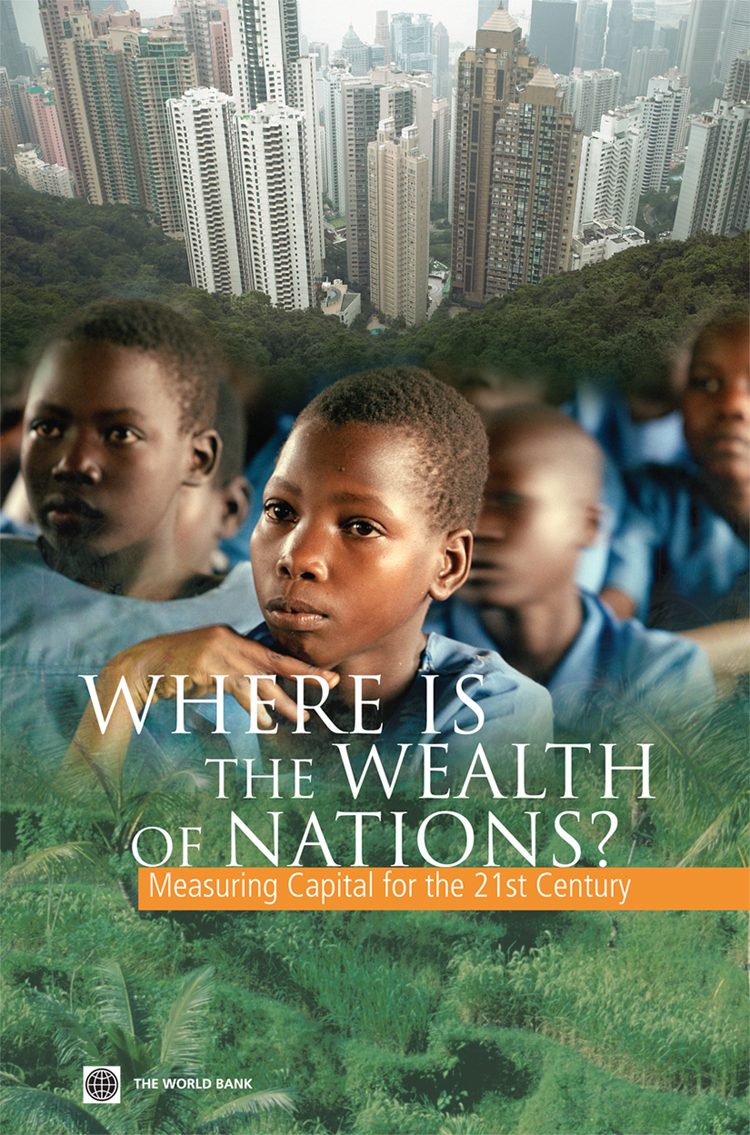
It reminds me of the World Bank’s report “Where is the Wealth of Nations?”, which shows that the generators of development are things like the rule of law and a good school system. It also explains why say, a Mexican migrant to the U.S. is five times more (economically) productive than one who stays home. See also Ronald Bailey’s commentary on the report.

Devising better tools is not easy. There are serious debates about how to factor in human capital, biodiversity, global warming, civil rights, arts, and other issues. But if anything good can come from the economic collapse, it might be a better understanding of what wealth we really do have versus that which is ephemeral. We might then realize that investing in children makes far more sense than investing in obscene bonuses for financial tycoons.

Why I dislike “service learning”

451Learn and Serve America’s National Service-Learning Clearinghouse (NSLC) defines service learning as

a teaching and learning strategy that integrates meaningful community service with instruction and reflection to enrich the learning experience, teach civic responsibility, and strengthen communities.

At its best, service learning is an integrated approach in which students are engaged with the actual life of the community around them; they learn to act in socially responsible ways; their learning has value beyond themselves; and it’s relevant to their own experiences and future. A full service learning approach involves two-way learning, in which students and community members learn from one another, recognizing that each has important resources to share.

This is in contrast to standard learning, that which we usually see in classrooms. We call that “learning,” which suggests that it’s the norm, the ordinary, the unhyphenated, the unmarked. It’s considered to be real learning, unlike the specialized, add-on, extraordinary models such as “service learning.”

But here’s my problem, and why I dislike the term “service learning”: Why do we think that learning connected to life is the marked case? Why do we give it the special designation? Why is the usual approach considered the standard?

I propose that what has up until now been called “learning,” the activity we see so often in classrooms, henceforth be called “disconnected, irrelevant, irresponsible, minimal-value learning.” Accordingly, we drop the term “service learning.” Instead, it is just “learning”; the norm is then learning that is integrated, relevant, responsible, and serves the needs of both the learner and the society.

References

Roy, Loriene, Jensen, Kelly, & Meyers, Alex Hershey (2009). Service learning : linking library education and practice. Chicago : American Library Association, 2009.

Exploration kits

Martin Wolske has written, in Technology is NOT the focus:

we need to be developing community technology centers (CTC) differently. Right now, they are developed with the idea that people are coming to the CTC for the technology. As such, traditional desktop or tower cases and larger LCD monitors dominate. Maybe the CTC of the future instead needs to be a place with lots of tables and chairs that can easily be rearranged, and laptops for checkout.

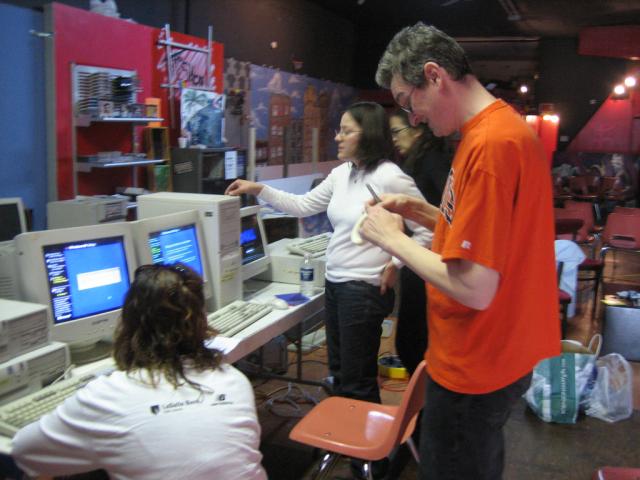
One step in that direction is to think of a CTC as a community media lab (CML). The focus then is on the community and communication, not technology. A CML is an excellent way to promote and learn about digital media use. It also provides a venue for people from a variety of organizations and with diverse technological interests to work together.

logitech-backpackHow about complementing the CML with exploration kits? These would be available to individual youth, or to organizations such as community centers, after-school programs, boys and girls clubs, 4-H, and so on. They would allow youth to take tools into many different settings, thus promoting ubiquitous learning.

Lisa Bouillion-Diaz from Extension has suggested that the kit might take the form of a backpack, which could be easily transported. It might contain things such as:

  • GPS receiver
  • camera
  • video camera
  • audio recording equipment if higher quality is needed than on the cameras
  • physical maps, images, texts, …
  • activity guides to support community mapping, journalism, history, …
  • hands-on STEM learning objects, such as magnifying glass, weights, compass, magnets, …
  • possible: distant measuring tool (electronic or mechanical), temperature probes, motion sensor

All of this would be linked with a website, showing how to make your own kit or to modify the standard one(s) for specific purposes or groups. What else might go into such a kit?

I see kits as intermediate between the indigenous media experiences youth have through mobile phones, Facebook, video games, etc. and the formal learning that occurs (or not) in classrooms. We’re working on them for the Youth Community Informatics project, but their scope could be expanded to include learners of all ages.

Fences or webs?

old-new schools

In my last post I talked about the Eight-Year-Study, which documented the success of progressive education at fostering intellectual curiosity, cultural awareness, practical skills, a philosophy of life, a strong moral character, emotional balance, social fitness, sensitivity to social problems, and physical fitness.

I had come across materials related to the study in the Progressive Education Association Records in the University of Illinois Archives. This is a treasure-trove, not only of the Progressive Education Association per se, but also of the various social movements they were involved in. I hope to explore it more.

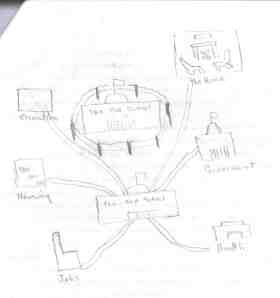
One drawing I found is shown here. It’s included in the folder for the booklet that later appeared as Dare our secondary schools face the atomic age? However, there are no images in that booklet. The drawing shows two visions for schools. In one, the “old school,” there is a fence surrounding the building; activities of the school are separate from those of the world around it, and as a result, schooling is separated from the actual life of the children.

In a second vision, the “new school,” the building is substantially the same, but it is connected to sites for recreation, housing, jobs, health, government, and by implication, all aspects of life. This idea of community-based schools was key to the Progressive Education movement, especially in its later years, as members realized they needed to do more than promote child-centered learning in an individual sense. That was true for “community schools” per se (Clapp, 1939), but actually for all schools, urban or rural, large or small, primary or secondary.

Today, many of these ideas have survived under rubrics such as “civic engagement,” “public engagement,” “community-based learning,” or “service learning.” But often those ideas are seen as one-way or very limited in scope, as in a single course. It’s worth revisiting the earlier visions to understand better how schools and universities could better fulfill the high hopes we place upon them.

References

Benedict, Agnes E. (1947). Dare our secondary schools face the atomic age?. New York: Hinds, Hayden & Eldredge.

Benedict, Agnes E. (1947). Pencil drawing, Progressive Education Association Records, 1924-1961, Record Series 10/6/20, Box 4, folder Dare the Schools Face the Atomic Age?, University of Illinois Archives.

Clapp, Elsie Ripley (1939). Community schools in action. New York: Viking.

Remaining Awake Through a Great Revolution

irvington_statue_of_rip_van_winkleOn November 4, voters in the US made a momentous choice, not only by taking another step towards racial equality, but also by demanding new ways of relating to other countries, to injustice, to the environment, and to truth itself. As of today, that is only one step; nothing has changed except the direction we are pointed.

Where the path leads next depends even more on the rest of us than it does on President-Elect Obama. The great challenges of globalization, racism, poverty, and violence are unaffected by a single election. Yet, there is a risk that we can fall asleep, lose sight of those challenges, and begin to think only of narrow issues, such as many that surfaced in the campaign.

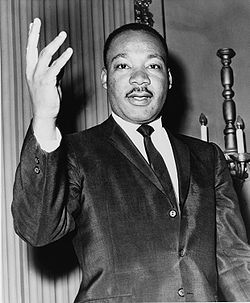
We have the opportunity now to respond to the challenges posed 43 years ago in Martin Luther King, Jr.’s excellent speech, Remaining Awake Through a Great Revolution. In his talk, he relates the story of “Rip Van Winkle,” who slept 20 years. But he reminds us that when Rip went up to the mountain, the sign on the local inn had a picture of King George III of England. Twenty years later, the sign had a picture of George Washington. Rip had not only slept 20 years; he had slept through a revolution. As King says, “Rip Van Winkle knew nothing about it; he was asleep.”

King saw that we are experiencing a scientific and technological revolution, one that challenges us to remain awake, and to develop a world perspective. It’s more imperative than ever to eradicate racial injustice and rid the world of poverty, and to find an alternative to war and bloodshed. Long before talk of flat worlds, King saw that our destinies were intertwined:250px-martin_luther_king_jr_nywts

All I’m saying is simply this: that all mankind is tied together; all life is interrelated, and we are all caught in an inescapable network of mutuality, tied in a single garment of destiny. Whatever affects one directly, affects all indirectly. For some strange reason I can never be what I ought to be until you are what you ought to be. And you can never be what you ought to be until I am what I ought to be – this is the interrelated structure of reality…And by believing this, by living out this fact, we will be able to remain awake through a great revolution.

Remaining awake means looking beyond government as usual and recognizing that children in Haiti are in our “garment of destiny,” as much a part of our world as the person next door. It means knowing that justice is an ongoing project that needs to be defended wherever we hear of abuses of human rights, not seeking ways to justify them. It means finding an end to wars, not simply moving from one venue to another.

Can we do any better now at addressing King’s great challenges?

References

King, Jr, Martin Luther (1965, June). Remaining awake through a great revolution. Commencement address for Oberlin College, Oberlin Ohio.

National Day of Listening

The day after Thanksgiving (November 28, 2008), has been declared by StoryCorps as the first annual National Day of Listening.

This holiday season, ask the people around you about their lives — it could be your grandmother, a teacher, or someone from the neighborhood. By listening to their stories, you will be telling them that they matter and they won’t ever be forgotten. It may be the most meaningful time you spend this year.

You can preserve the interview using recording equipment readily available in most homes, such as tape recorders, computers, video cameras or a pen and paper. Our free Do-It-Yourself Guide is easy to use and will prepare you and your interview partner to record a memorable conversation, no matter which method of recording you prefer.

The National Day of Listening site has a four-step scheme to help with the process, including the DIY guide and a video. This looks like a great way to build up a family or community oral history.

The process that StoryCorps describes could of course be done any time, but most of us are inclined to procrastinate. We tend to vacillate between thinking that it’s nothing more than listening again to an old story and thinking that it requires fancy equipment, special expertise, and many days of hard work. Maybe setting aside a National Day, calling for one hour of serious listening, and offering a four-step process will make it easier for any of us to do.