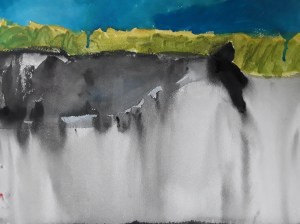
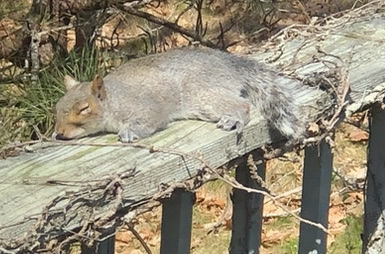
Winter can be harsh,
despite never-ending seeds.
Where do those birds come off––
thinking my feeder is for them?
I need to stretch my bones,
massage my belly,
soak up some rays.

Winter can be harsh,
despite never-ending seeds.
Where do those birds come off––
thinking my feeder is for them?
I need to stretch my bones,
massage my belly,
soak up some rays.
The Frames film program has produced a short video of my work in Nepal, focusing on the Fulbright Specialist trip in 2019. I hope you enjoy it.
The Frames Film Program provides opportunities for multi-barriered youth (ages 16 to 30) to learn the basics of filmmaking — at no cost. It is an off-site program of Frog Hollow Neighbourhood House. As a Vancouver-based film production and life skills program, it provides opportunities for youth to learn the basics of filmmaking in a supportive, safe and fun environment.
I have many embarrassing moments in my life. Here is just one.
In 1993, JIm Edgar was Governor of Illinois. Maybe he wasn’t perfect, but two of his predecessors were in prison for misdeeds as Governor and two of his successors went to prison as well. Need I mention that Jim was the only one of the group who failed to get rich in office?
I’ll refer to him as Jim, mostly because it’s easier than saying “the (then) current Governor of the State of Illinois.” Also, he is almost exactly my age.
Jim was invited to speak at the University of Illinois, where I was teaching as a Professor in the College of Education. Coincidentally, his daughter Elizabeth was my lab assistant in the science lab used for preservice and inservice classes in science education.
I was fortunate to get an invitation to a limited capacity event, perhaps 100 attendees. It was to be held from 4 to 5 on a weekday. This presented a problem. I taught class until 4 that day and had a meeting with local school teachers at 5 at a nearby school.
But I figured that I would end class a few minutes early, then rush to the event and stand inconspicuously in the back, being prepared to leave at 4:50. It was a great plan. It would all work out.
The first flaw in my plan came as students had an unusual number of questions that day. So I had to run to the event, still reliant on my plan to stand in the back and skip out early.
When I arrived, I discovered that this was a major media event. There were TV cameras, photographers, news reporters, and all sorts of people in limousines. I say “all sorts” but now, recalling the event, I think the attendees were nearly all men, all in dark suits with ties, all looking very somber until the TV lights came on, when they would flash big smiles. People had come to be seen as much as to hear the speech.
I in contrast was wearing blue jeans and a green, nylon anorak. I loved that jacket. It’s only defect was that it was very noisy when the nylon brushed against something. I stood out, not in a good way. But I still had the plan to stand inconspicuously in the back and sneak out early.
Unfortunately, I was the last to arrive and my plan was immediately rejected by a couple of the many ushers. They pointed to the last remaining seat. It was in row 3 in the exact middle. They insisted that I go to sit there, probably something about not wanting to show an empty seat on TV.
I reluctantly forced my way through the crowd to get to my selected seat. This required rubbing my noisy anorak against other attendees, many of whom were… large. I made a lot of noise and as my arrival pushed us past the nominal start time, all eyes, and TV cameras were on me. Who is this tall guy dressed and acting so inappropriately? Why doesn’t he just sit down and look like all the other dark suits?
I survived that part, although I was hot in my anorak from the run to the event and the embarrassment. I decided to endure that and focus on the speech.
Often a speaker will select an audience member to focus on, rather than trying to meet every pair of eyes at once. Jim did that. I was in the exact middle, and had the most inappropriate garb. I was also genuinely interested. I felt that he was speaking directly to me.
It was actually quite good. Jim related the saga of his failed attempt to provide a floor for funding of schools in Illinois. As in most states, Illinois provided a substantial portion of school funding out of local property taxes. This meant for example, that New Trier High School could spend $15K per pupil per year (not sure of the exact numbers here). They had just installed a new swimming pool. They could hire the best teachers, the fastest computers, and provide the smallest classes. Since area housing was expensive, the local taxpayers got all of this with a lower tax rate and a far lower percentage of their income.
Meanwhile, some rural schools in downstate Illinois could not afford needed repairs. They spent, say $2.7K per pupil per year. Jim’s plan was to seek a balance, $3.5K per pupil per year funded by a progressive income tax.
This was a brilliant initiative. However, it was opposed by politicians from Chicago, who fought for every advantage for their region, by the Democrats who rebelled against anything the Republican Governor would propose, and by his own Republicans who saw it as a giveaway to the poor and could not countenance a progressive income tax.
Note that Jim was taking on one of the most egregious, anti-democratic practices we have in this country. But he did it in a very modest way. There was no idea of truly equalizing funding for the institution that is supposed to offer a level playing field for all citizens, much less the idea that poor students might need extra help.
He worked hard on this for at least a year, but the idea was doomed from the start.
That was the bulk of the speech. Towards the end he turned to a second topic. This was an urging of the university to get more involved with the local community, especially with the schools. I thought “great!” It was exactly what I was doing. In fact at 5:00 I was to meet with local school teachers. I wanted to say that, but couldn’t in this formal lecture format.
But I also realized that if he didn’t wrap it up quickly. I’d be late for that meeting. As much as I didn’t want to further disturb the big gathering, I felt an even stronger obligation to be timely with the teachers and to show respect for their work.
I was obviously fidgeting. I began studying my watch, trying to calculate the precise moment when I would need to leave the meeting regardless of the disturbance. 4:55 was a messy compromise. I knew the big event was scheduled to got to 5:00, but it might easily go on until 5:30. 4:55 would make me a couple of minutes late to the teachers, but if I ran again and didn’t encounter traffic it could all work.
I waited until 4:55:15, then stood up abruptly as Jim was speaking. He paused, other audience members groaned or mumbled invectives, the TV cameras focused in. I thought that nothing could have been more embarrassing until I heard the noisy anorak rubbing against people and seats.
I did manage to escape. The teachers probably wondered why I was so disheveled and probably smelled from all the running.
The next day I saw Elizabeth in the science lab.
Me: I was fortunate get an invitation to your father’s speech yesterday. He did a great job.
Elizabeth: Oh! He’ll be happy to hear that. He worried that he’d gone on too long and said that some audience members were fidgeting.
This morning at breakfast, faced with a large stack of unread magazines and newspapers, I realized that I really wanted to go upstairs to my office to work on my own book project instead.
Although my own writing is clumsy and inarticulate, it’s never on a topic that doesn’t interest me. Also, if I don’t like a word choice or phrasing, if an important side point seems left out, I can just fix it right then and there.
It’s never perfect; there’s always some way to improve it.
In contrast, in this great collection of magazines––New Scientist, The Nation, Mother Jones, Natural History, Texas Monthly, Mad, The New Yorker, and more––there are occasionally topics of only minor interest; some articles are too long, some too short.
What can I do if I disagree with a word choice or think an argument is unsupported? Fume? Write a letter to the editor? It feels very passive compared to what I can do with my book project. For me the life of the writer seems far superior, not in a moral sense, but simply in the sense of attracting my time and attention.
But then I flipped through an issue of The New York Review of Books (August 19, 2021). For a reader, that’s always intimidating. Faced with hundreds of interesting new books, my write now strategy looks even more attractive.
I came across an excerpt from a new book by Wisława Szymborska, How to Start Writing (and When to Stop). It’s a collection of the advice columns that she wrote anonymously in the Polish journal Życie literackie (Literary Life) from 1960 to 1981.
My musings about writing over reading stopped cold when I read one letter in which Szymborska decides to console a writer rather than to give him/her some hope of publication.
A splendid fate awaits you, the fate of a reader, and a reader of the highest caliber, that is to say, disinterested—the fate of a lover of literature, who will always be its steadiest companion, the conquest, not the conqueror. You will read it all for the pleasure of reading. Not spotting “tricks,” not wondering if this or that passage might be better written, or just as well, but differently. No envy, no dejection, no attacks of spleen, none of the sensations accompanying the reader who also writes.
She goes on to describe the many benefits of being a reader, rather than a writer:
And there is also this not inconsiderable benefit: people speak of incompetent writers, but never of incompetent readers. There are of course hordes of failed readers—needless to say, we do not include you among them—but somehow they get away with it, whereas anyone who writes without success will instantly be deluged in winks and sighs. Not even girlfriends are to be relied upon in such cases.
So, where to go from here?
I decided that I had read enough; the cantaloupe was finished and the oatmeal was cold. I could still pour some more coffee and return to my writer’s garret. Like the Ancient Mariner:
He went like one that hath been stunned,
And is of sense forlorn:
A sadder and a wiser man
He rose the morrow morn.
A Call for Papers
Guest Editor: Bertram (Chip) Bruce
Editor of Schools: Studies in Education: Andy Kaplan
In an age of climate disasters, extreme income inequality, conspiracy theories, anti-democratic movements, segregated schooling, pandemic, and more, the need for democratic education has never been greater, but it may also seem less viable than ever. Classics such as John Dewey’s Democracy and Education are still relevant but invite us to re-invent education for today.
Schools: Studies in Education, published by the University of Chicago Press, plans to host a symposium on this topic to celebrate Schools’ twentieth anniversary of publication. The mission of Schools is to present inquiry into the subjective experience of school life. Unique among academic journals of education, Schools features articles by and about the daily life of classrooms, descriptions and reflections on the meaning of what happens when learning actually occurs.
To celebrate our twentieth year of publication, we propose a symposium on how to think about democratic education in today’s world, and how we should plan for the future. How should issues such as indigenous people’s rights, racism, women’s rights, authoritarian governments, the concentration of wealth, and more make us analyze, discuss, and work to create democratic education?
We highly encourage submissions from classroom educators at all levels, from educators outside the United States, and from educators associated with alternative schools or informal learning.
Interested authors should submit a one-page prospectus describing what their project entails. This is to determine appropriateness and balance for the special issue. We anticipate a mix of empirical and theoretical contributions. Completed manuscripts will undergo the usual Schools: Studies in Education review process before final acceptance.
Articles should be a maximum of 8000 words (25 double-spaced pages). Please follow the Schools style guide.
Articles will appear in the Spring and Fall 2023 issues. There is a possibility of a follow-on book publication based on revised versions of the articles, once the symposium has been published in Schools.
OK, quick disclaimer: Cancer only makes me happy in some ways at some times, but that’s a better score than from many other activities I know about. At other times cancer/chemo varies from unpleasant to horrible. Along that line, it has at least given me a better, embodied understanding of what other people with cancer and chemo go through.
But let me say what those “some ways at some times” actually are. How could they emerge through the fog of fear, pain, loneliness, uncertainty, and the literal mental fog of cancer/chemo, not to mention little things like nausea, constipation, loss of hair, appetite, sleep, swimming, and social life?
Well, one huge happiness making of all this is that it puts the rest of life in a good perspective. The great Sanskrit dramatist Kalidasa wrote that we should
Look to this day for it is life
the very life of life.In its brief course lie all
the realities and truths of existence the joy of growth
the splendor of action
the glory of power.For yesterday is but a memory And tomorrow is only a vision. But today well lived
makes every yesterday a memory of happiness
and every tomorrow a vision of hope.Look well, therefore, to this day….
I memorized that poem long ago, and tried at times to live its precepts. But it took cancer to teach me what it really means. All of those minor annoyances and anxieties that used to clutter my days now dissolve into the mist.
It’s like the drama on a Netflix show: While I’m watching it can seem incredibly important, but the pause button puts it in its place.
Another thing I’ve long known, but not absorbed (too many examples of this to count) is the importance of connection to family, friends, acquaintances, even strangers. John Donne’s Meditations contains another passage which I memorized, but failed to understand fully:
No man is an island entire of itself; every man is a piece of the continent, a part of the main; if a clod be washed away by the sea, Europe is the less, as well as if a promontory were, as well as any manner of thy friends or of thine own were; any man’s death diminishes me, because I am involved in mankind. And therefore never send to know for whom the bell tolls; it tolls for thee.
The cancer has caused me to reconnect with old friends and family. I’ve learned about weddings, births, and deaths, new jobs and houses. Let me be clear: I could have reconnected with any of those people anytime. But I didn’t.
It took cancer/chemo to wake me up to one of life’s simple truths. So much for reading many books and getting a PhD!
I never thought of myself as timid. Awkward yes, and fumbling, but often more fool hardy than frightened. (There was that time when my partner and I canoed over a dam backwards. She sensibly thought we should turn back and I wanted to push ahead. That led us to turn sideways, then go in full reverse. But that’s another story.)
Cancer/chemo has taken away needless fears. I have a relaxed attitude about many things now and a willingness to take risks that I didn’t have before. But it’s not in an aggressive way. I’d actually be less likely to want to go over a dam backwards, but I’d be less fretful about it if I thought it were necessary.
It’s almost embarrassing to says this, but cancer/chemo is a great learning opportunity.
The experience certainly concentrates the attention and there is so much to learn about cancer, therapy, the body, chemicals, new technologies, the medical system, and more. Each new side effect, as unpleasant as it might be, also opens up doors to new ways of understanding the body and world I live in.
Echoing Kalidasa, cancer/chemo has helped me prioritize what I do, in a way that makes happier.
I used to play piano to get ready for a lesson, or because I somehow thought I should. Now i do it because I love the music and love bringing my fingers into that. Like David Sudnow, I see that the “ways of the hand” are a miracle to savor.
Moreover, I make the time for piano that I want. I’ve stopped doing many things that once seemed necessary––they weren’t really.
A major concern for cancer is depression. The fear, the pain, the loneliness, are a recipe for getting depressed or anxious. But I’ve oddly been less so than I was pre-cancer.
I’m not in denial. That would be hard to do anyway. What I think is going on is that cancer/chemo has helped me do what I ought to have been doing all along. I’m focusing on things that matter and shoving aside the rest.
Rumi, the 13th-century Persian poet says this well:
Patience is not sitting and waiting. It is foreseeing. It is looking at the thorn and seeing the rose, looking at the night and seeing the day. Lovers are patient and know that the moon needs time to become full.
I don’t ordinarily spend a lot of time thinking about how quickly the cells in my body grow. But one of the many benefits of cancer Is that it’s giving me an insight into that question. I’m now learning a bit about this and particularly about how it affects every aspect of the cancer and chemo treatment.
Many cancers are detected in the first place because the cancer cells grow so much faster than the surrounding cells. For example, a skin cancer might show up as a spot or lesion on the skin that enlarges much faster. Other cancers show up as launch center of the skin or processes that interfere with normal body function.
In my case (ALCL) I did not detect cancer in this way. The cancer cells were in fact growing much more quickly than ordinary cells but that was all happening internally, in the abdominal lymph nodes.
A key part of my cancer diagnosis was a PET scan. This is an imaging test done using hybrid PET/CT cameras. It uses 18F-sodium fluoride as a marker. This radioactive substance lights up the most quickly growing cells. In my case this showed brightly lit abdominal lymph nodes. There was also some involvement of bone marrow and spleen, indicating possible cancer cells growing quickly, but not as quickly as in the lymph nodes.
The actual chemo treatment also depends on differential cell growth rates. The cytotoxins kill the most actively growing cells (the cancer), but fewer of the regular body cells. The theory is that one can keep zapping the cancer without doing irreparable harm to the rest of the body.
The most obvious effect of differential cell growth rates is in the side effects of the chemo therapy. For example, I lost the dark hair on my head but not the white hairs. This is good in the sense that I’m not completely bald, but it also shows that the cells that generate the dark hairs on my head are more alive (growing faster) than the cells that generate the white hairs.
I’ve also lost some of the hair under my arms but very little of the hair growing on the tops of my arms. One of the worst effects is in my mouth. The cells in the lips, gums, tongue, and interior of the mouth are rapidly growing cells that are affected more severely by the chemotherapy than are other cells in the body.
A good, accessible resource on cell growth is Cell Biology by the Numbers by Ron Milo and Rob Phillips. Their chart makes clear why chemo affects the digestive system, blood cells, and mouth cells more than say, fat or skeletal cells.

They point out that hair grows at about 1 cm per month, while fingernails grow at about 0.3 cm per month. Coincidentally, that is about the same speed as the continental spreading in plate tectonics that increases the distance between North America and Europe.
That last factoid should come in handy someday; I’m just not sure when.
It’s hard to avoid the negative aspects of cancer and chemo treatment: fatigue, isolation, and ruminations about life. But too much of that and we miss seeing the positives.

Let me name just a few of these:
There is a lot of talk in some circles today about Critical Race Theory (CRT), mostly that it’s a dangerous idea, which should be banned.
Whenever I hear someone say “we should/should not teach X!” I wonder what they mean by “X” but even more, what they mean by “teach.” Most people have no idea what the CRT controversy is about or even what CRT is. I suspect that many of the opponents and even proponents don’t either.
But beyond the important question of what it is are we actually talking about is the one about teaching. There are many things that should be taught, but none in a doctrinaire fashion. Should we teach the life cycle of butterflies? Definitely, yes. It’s fascinating; it can be investigated in a hands-on way as well as through texts; it has important implications for agriculture; it can open up inquiry into nature more broadly; and much more. But I would hate to see it taught as evidence for a “proof” or “dis-proof” of evolution.
The same is true for CRT. If teaching it meant only forcing students to think one way about race (I don’t know of any proponent who thinks that), then I’d join the critics. But it could be terrific if it means opening up avenues of inquiry for students.
To be more specific, for most people who know something about the theory, it means asking how ideas about race have shaped our history and who we are today. The focus is usually on how specific laws and policies have dealt with race––constructing its meaning, delimiting rights and responsibilities, allocating resources, and so on. It can open up into questions of scientific racism, the intersections with class, gender, religion, nationality, and other dimensions.
How, for example, did Federal programs, banking regulations, and Jim Crow laws affect the ability of Blacks to get federal mortgage assistance after World War II? There are many things to say about that question, contrasting opinions, and things to discover. There is no single idea to learn and scholars are studying it further.
Should we teach that the US is racist to it core? No, not if that means an unexamined mantra to be memorized. But historical scholarship tells us that there is a lot of evidence of racism in our founding documents, in the ideas and arguments of founders. There’s certainly enough to support asking questions in a sustained, critical fashion.
Should we teach that the US is founded on freedom? Again, not if that means indoctrinating one unexamined claim. It’s true that in the late 1700s free, white, males with property achieved hard-fought success in determining their own political destiny. And it’s true that some of our founding documents have ringing calls for freedom for all. But the exciting story about the US can be uncovered only by examining how freedom and civil rights have been expanded (with some setbacks) throughout our history, even though they remain unfulfilled to this day.
The ongoing story has no single, simple “truth,” either in CRT or in easily falsifiable claims that masquerade as “patriotism.” We should not pretend otherwise.
One problem with teaching unexamined doctrines is that it can lead to later disillusionment and a complex unlearning project. But maybe that’s a good thing. Should I be taught to revere our Constitution as it stands, then learn later that it was shaped in part by racists and the desire to perpetuate slavery? Would that make me feel betrayed and question everything I had been taught?
That’s a harsh approach, akin to throwing the toddler in the deep end. Perhaps that’s what critics of CRT are after: a bracing, subversive repudiation of patriotic pabulum, which would generate unbridled critique?
South Pacific‘s “You’ve Got To Be Carefully Taught” tells us
You’ve got to be taught before it’s too late
Before you are six or seven or eight
To hate all the people your relatives hate
You’ve got to be carefully taught
Let’s try to move beyond teaching hate. Does CRT mean learning to hate all the people your relatives loved? I don’t think so. If it were a new kind of hate, I’d be strongly opposed to it.
CRT does want us to move beyond the kind of hate that South Pacific exposes But if it means helping students ask questions about their history and to be carefully taught falsehoods.
If we can show students life in its fullness, their own inquiry can lead them to discover all we know and more.
[Cross posted from Wellfleet Conservation Trust]
A new video for the Drummer Cove conservation area has just been released. Thanks go especially to Mary Doucette, advised by Mike Fisher.
The Drummer Cove area is remarkably varied for its 11+ acres. It is also unusual for offering a 1+ mile trail with easy access.
Length & Extent of Trail: 1.1 miles; 11.3 acres plus easements
Area description: The Drummer Cove Conservation Area includes salt marsh, tidal flats, coastal bank and oak pine forest on its upland. The entire area is within the recharge area to Drummer Cove and as such falls into the Wellfleet Harbor Area of Critical Environmental Concern. The land is in State designated Priority Habitat for rare species. The four benches provide great views of the Cove.
Location: The trail head is at 170 Pond Ave in South Wellfleet. 41.91415, -70.00165
Directions: Exit Route 6 heading west for approximately 0.5 miles on Paine Hollow Road to the first stop sign. Turn left on Pleasant Point Road for approximately 0.25 miles. Turn left on to Pond Ave for 0.3 miles, the last part being a dirt road to a parking area at the trail head.