 1999 (35:57), 2000 (34:23), 2001 (33:30), 2002, 2003, 2004-twosome (relay) (38:23), 2005, 2006-twosome (relay) (38:40), 2007-2009, 2010-twosome (relay) (39:15)
See other race results.

1999 (35:57), 2000 (34:23), 2001 (33:30), 2002, 2003, 2004-twosome (relay) (38:23), 2005, 2006-twosome (relay) (38:40), 2007-2009, 2010-twosome (relay) (39:15)
See other race results.
As I’m sure you know, on February 18, 2004, a group of 60 prominent scientists issued a statement, “Restoring Scientific Integrity in Policymaking”, which expressed concern over the Bush administration’s misuse or suppression of science in areas such as environment, health, and nuclear weapons. Signers included 20 Nobel laureates and scientists from a broad spectrum of political views. When the statement was released, Russell Train, a lifelong Republican, who served as administrator of the Environmental Protection Agency under Nixon and Ford said “this administration has obstructed that freedom and distorted that objectivity in ways that were unheard of in any previous administration.” The Union of Concerned Scientists issued a companion 37-page report detailing practices such as censorship of scientific documents, rewriting to distort the evidence, packing scientific panels, and dismissing panelists who arrived at the wrong conclusions. Since then, there have been numerous incidents showing that these practices are continuing.
This issue seems absolutely central to the GSLIS mission to promote access for all to reliable information. At the level of National policy, open access to the best information we can obtain is essential in every area and the wanton distortion of evidence undermines effective governance. I’ve signed the statement for those reasons, but also because I believe that manipulation of information in this way is a crucial element in the erosion of democracy.
A closely-related issue is the large-scale removal of scientific and information from the public domain.. There is a National Academies of Science report on this “The Role of Scientific and Technical Data and Information in the Public Domain: Proceedings of Symposium”. (I have a paper copy as well). That report, by the way, took an entire year to come out (compared to the usual 4-5 months); the extra time was most likely for security review. That’s consistent with an environment in which the CIA can mark as “classified” its report on the National Research Council meeting on scientific openness (held in Washington, DC on January 23-24, 2003).
If you’d like to sign the statement, “Restoring Scientific Integrity in Policymaking,” or to read more about the issue, just start with the update message below or follow the links at http://www.ucsusa.org/global_environment/rsi/. You can also see the Bush administration’s April 2 response.
I knew that the iLabs timeline tool was useful for the Learning Technologies Timeline where I wanted both the format of a timeline and collaborative construction of it. Rajeev has taken that to a new level with his timelines for Dewey, Addams, and Chicago.
It wasn’t much to go from there to see the timeline tool as a way to present a roadmap for a project or to make an agenda for a meeting. And recently I realized that it’s also a way to make a syllabus for those who think the existing syllabus tool is too complex or offers too many options.
I didn’t see initially that it was also a blog if I simply sort by newest first. It’s also a lab notebook with spaces for regular notes, links to data, automatic dating, Dave and Rajeev helped me see that it’s a roster for a project or a class, especially helpful if it includes photos. Now, I’m seeing that it’s a bulletin board. Each instantiation of a timeline can be a separate forum, and individual postings are entries in that forum, which can then be sorted by dates or titles of the postings. Of course it doesn’t thread messages…
To what extent do each of the iLabs tools have this multiple use character?
On August 27 the earth and Mars will pass just 34.6 million miles apart. Mars will appear 58 times brighter than it did on January 1. As Francis Reddy points out, the last time this happened, Neanderthals flourished and humans had not yet made it to Australia.
If you paste “34,649,589” into Google, you’ll get to a bunch of sites on this, including Celestial Delights Online, which has a beautiful poster you can download and an animation showing how the image of Mars will change.
The Community Inquiry Lab Builder provides a way to create a web site for a class, group, project, or community. It includes Inquiry Page tools, such as Inquiry Units, and a Document Center for group writing projects.
A Community Inquiry Laboratory (CIL) is a place where members of a community come together to develop shared capacity and work on common problems. Community emphasizes support for collaborative activity and for creating knowledge that is connected to people’s values, history, and lived experiences. Inquiry points to support for open-ended, democratic, participatory engagement. Laboratory indicates a space and resources to bring theory and action together in an experimental and critical manner. A CIL is most importantly a concept, not a technology in the narrow sense, but it may be supported through a website and other tools for communication.
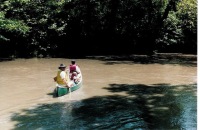
Photos from a GSLIS canoe trip on the Middle Fork of the Vermilion River (Wabash River tributary). There was another GSLIS trip on the same river the previous June.
The Middle Fork is the only river in Illinois designated as a National Wild and Scenic River by US National Park Service. It flows through Kickapoo State Park near Danville.


Today, April 9, there will be an attempt at the world’s largest lesson. The UN’s Literacy Decade has just begun and today they want people all over the world to teach a lesson about literacy, which focuses on facts such as that nearly a billion adults are illiterate, most non-literate people are women, and 100 million children don’t even go to school. They hope to have thousands of students thinking about these issues all on the same day. The idea of record setting seems a little silly, but the campaign for global literacy is very serious, addressing a problem that stands in the way of solving almost any problem one can name, whether that’s about healthcare, the environment, economic development, social welfare, or conflict resolution.
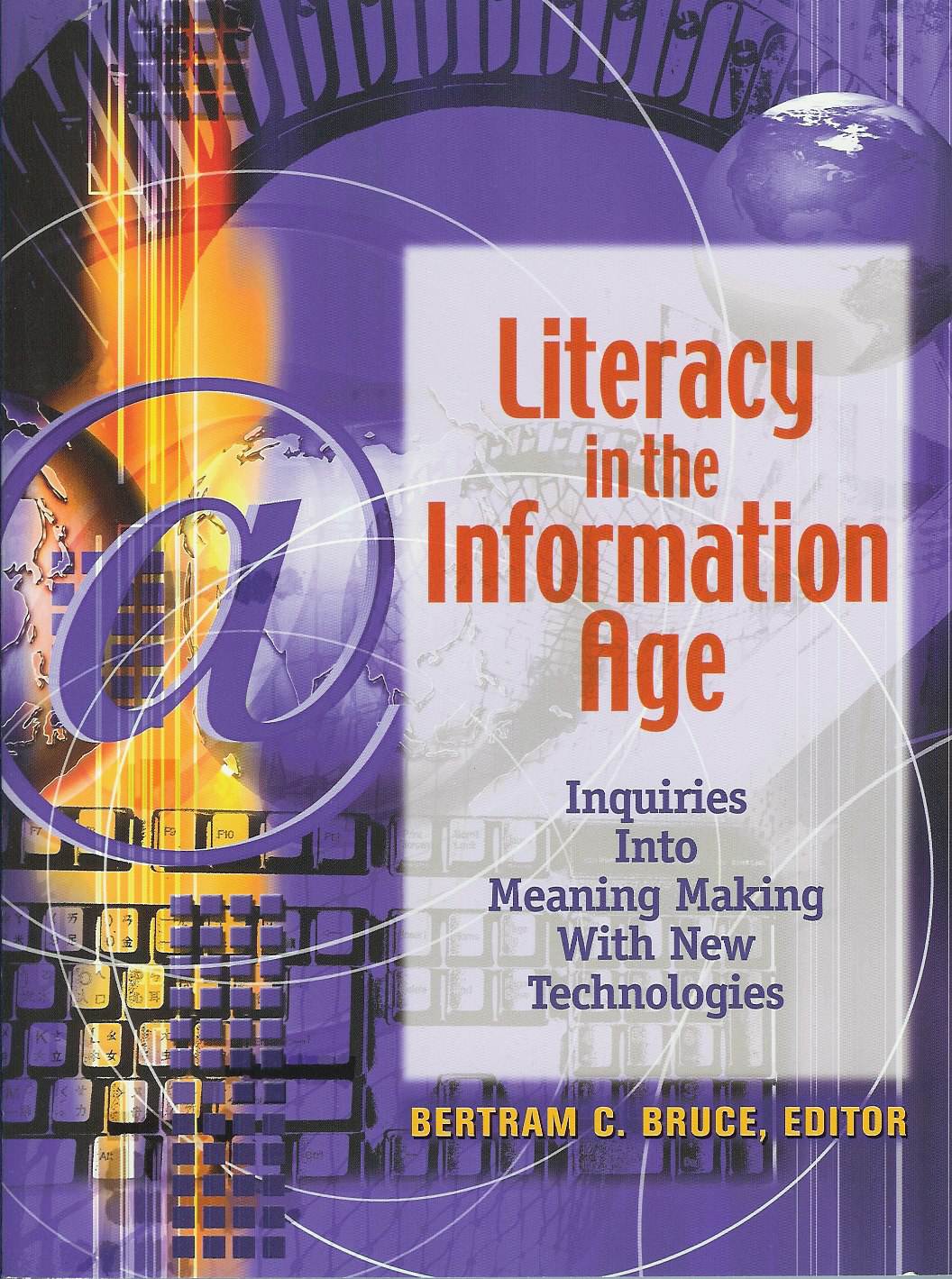 Educators today want to go beyond how-to manuals and publications that merely celebrate the many exciting new technologies as they appear in schools. Students are immersed in an evolving world of new technology development in which they are not passive recipients of these technologies but active interpreters of them. How do you help learners interpret these technologies as we all become immersed in the new information age? Continue reading
 Paseo Boricua has become the center of the Chicago Puerto Rican community. It’s a place where Puerto Ricans can learn about their heritage through the culture center and where the Pedro Albizu Campos High School provides an alternative school setting to help young people succeed. Puerto Rican restaurants and night life have developed along with commerce. Inquiry Project members have bcome active in working with the Paseo Boricua community.
From No Iraq Attack: An Open Letter
“Naturally the common people don’t want war: Neither in Russia, nor in England, nor for that matter in Germany. That is understood. But, after all, It is the leaders of the country who determine the policy and it is always a simple matter to drag the people along, whether it is a democracy, or a fascist dictatorship, or a parliament, or a communist dictatorship. Voice or no voice, the people can always be brought to the bidding of the leaders. That is easy. All you have to do is tell them they are being attacked, and denounce the peacemakers for lack of patriotism and exposing the country to danger. It works the same in any country.”
Hermann Goering at the Nuremberg trials, 1946.
 Chip's journey