John Dewey in Turkey: Lessons for today

The Republic of Turkey was proclaimed on October 29, 1923. As its first President, Mustafa Kemal Atatürk (photo below) sought to establish the modern Turkey as a “vital, free, independent, and lay republic in full membership of the circle of civilized states.” He recognized the need for “public culture,” which would enable citizens to participate fully in public life, and saw the unification and modernization of education as the key. Accordingly, one of his first acts was to invite John Dewey, who arrived in Turkey just nine months after the proclamation.

In this endeavor, the ideas of Atatürk and Dewey were consonant. Dewey’s words above (“vital, free, …”) could have been written by Atatürk, just as Dewey might have talked about “public culture.” Both recognized the need to institute compulsory primary education for both girls and boys, to promote literacy, to establish libraries and translate foreign literature into Turkish, and to connect formal schooling, the workplace, and government.

Today is John Dewey’s 149th birthday. Back in 1924, he was nearing the age of 65, when many people think of retiring. But his three-month-long study in Turkey was an ambitious project. He addressed issues of the overall educational program, the organization of the Ministry of Public Instruction, the training and treatment of teachers, the school system itself, health and hygiene, and school discipline. Within those broad topics, he studied and wrote about orphanages, libraries, museums, playgrounds, finances and land grants for education, and what we might call service learning or public engagement today.

He laid out specific ideas, such as how students in a malarial region might locate the breeding grounds of mosquitoes and drain pools of water of cover them with oil. In addition to learning science they would improve community health and teach community members about disease and health. Workplaces should offer day care centers and job training for youth. Libraries were to be more than places to collect books, but active agents in the community promoting literacy and distributing books. In these ways, every institution in society would foster learning and be connected to actual community life. As Dewey (1983, p. 293) argued,

The great weakness of almost all schools, a weakness not confined in any sense to Turkey, is the separation of school studies from the actual life of children and the conditions and opportunities of the environment. The school comes to be isolated and what is done there does not seem to the pupils to have anything to do with the real life around them, but to form a separate and artificial world.

Atatürk saw the need to unify Turkey into a nation state, despite its great diversity. Dewey supported that but emphasized that unity cannot come through top-down enforcement of sameness (p. 281):

While Turkey needs unity in its educational system, it must be remembered that there is a great difference between unity and uniformity, and that a mechanical system of uniformity may be harmful to real unity. The central Ministry should stand for unity, but against uniformity and in favor of diversity. Only by diversification of materials can schools be adapted to local conditions and needs and the interest of different localities be enlisted. Unity is primarily an intellectual matter, rather than an administrative and clerical one. It is to be attained by so equipping and staffing the central Ministry of Public Instruction that it will be the inspiration and leader, rather than dictator, of education in Turkey.

This was realized in many ways. For example, the central ministry should require nature study, so that all children have the opportunity to learn about and from their natural environment, but it should insist upon diversity in the topics, materials, and methods. Those would be adapted to local conditions, so that those in a coastal village might study fish and fishing while those in an urban center or a cotton-raising area would study their own particular conditions.

Many of Dewey’s ideas were implemented and can be seen in Turkey today, as we come upon its 85th birthday next week. What’s even more striking to me is how relevant they are to the US today. Many of our problems can be traced to the “separation of school studies from the actual life of children and the conditions and opportunities of the environment,” but also to the separation of work from learning, of health from community, of libraries from literacy development, or of universities from the public. Dewey would be the first to argue that we need to re-create solutions in new contexts, but his report from long ago and far away still provides insights for a way forward today.

References

Ata, Bahri (2000). The influence of an American educator (John Dewey) on the Turkish educational system. Turkish Yearbook of International Relations (Milletlerarası Münasebetler Türk Yıllığı), 31. Ankara: Ankara Üniversitesi.

Bilgi, Sabiha, & Özsoy, Seckin (2005). John Dewey’s travelings into the project of Turkish modernity. In Thomas S. Popkewitz (ed.), Inventing the modern self and John Dewey: Modernities and the traveling of pragmatism in education (pp. 153-177). New York: Palgrave Macmillan.

Dewey, John (1983). Report and recommendations upon Turkish education. In Jo Ann Boydston (ed.), The Middle Works: Essays on Politics and Society, 1923-1924. Vol. 15 of Collected Works. Carbondale: Southern Illinois Press.

Wolf-Gazo, Ernest (1996). John Dewey in Turkey: An educational mission. Journal of American Studies of Turkey, 3, 15-42.

Nobel Peace Prize winner wants jobs for the young

UN LITERACY DECADEIt’s not a new idea, that providing opportunities for people to earn a living and to contribute to society is at the heart of peacebuiding, but it was good to hear Martti Ahtisaari highlighting that in his recent speech:

Nobel Peace Prize winner Martti Ahtisaari said Saturday that finding jobs for more than 1 billion young people in the Middle East and Asia will be a major challenge to peacebuilding in the next decade.

“During the next 10 years about 1.2 billion young 15-to-30-year-olds will be entering the job market and with the means now at our disposal about 300 million will get a job,” Ahtisaari said in an interview with Finnish YLE TV.

“What will we offer these young, about a billion of them, or will we leave them to be recruited by criminal leagues and terrorists?” he asked.

Nobel Peace Prize winner wants jobs for the young – International Herald Tribune

I would just add that the need for meaningful, self-sustaining work is not limited to the Middle East and Asia, and that oppressed peoples only rarely turn to violence, but Ahtisaari’s challenge stands as one we must not ignore. Our global economic system increasingly robs people of the opportunity for self-sustaining work and for economic self-determination.

The economic injustice is closely related to lack of education, a problem addressed by the United Nations Literacy Decade 2003-2012 project, whose motto is “Literacy for all: voice for all, learning for all.” The Literacy Decade emphasizes adult literacy as well as one prerequisite for a more just society.

It’s tragic to see how great the gap is between our response to terrorism and global unrest and our appreciation of its underlying causes.

Comparing Obama and McCain

Kent Porter has prepared a helpful website (Obama and McCain Compared), which presents Obama and McCain’s positions on taxes, spending, environment, and health care. It should be useful for any voter who wants some basic, well-sourced facts that go beyond the usual, impoverished discussions we see in the mainstream media.

The following information represents my attempt to cut through all of the divisive spin that our presidential elections have engendered. As a high school teacher who values information and facts over red herring issues that take our minds off of the ball, I have tried to provide details about four key areas–Taxes, Federal Spending, the Environment, and Health Care. I wanted to present factual information about where the two candidates stand on those areas.

No-Nonsense Guides

I’ve been reading the No-Nonsense Guides. These are clear, concise, very readable introductions to complex topics, such as globalization, women’s rights, and world food. They’re a bit like articles in The Economist, but from a critical perspective and with more evidence to back up the analysis. Even if you feel you understand one of the topics, the corresponding book is a great summary and resource. I highly recommend them.

The Guides are published by New Internationalist, whose mission is

to report on the issues of world poverty and inequality; to focus attention on the unjust relationship between the powerful and powerless worldwide; to debate and campaign for the radical changes necessary to meet the basic needs of all; and to bring to life the people, the ideas and the action in the fight for global justice.

Based in Oxford, New Internationalist also offers a free online newsletter, a magazine, and other publications.

What we do not know: The betrayal of our values

I returned to the US in June after living a year living in Ireland. Many people have naturally asked, “What was it like? How was it different? What did you learn?”

It’s hard to know where to begin. I may have learned as much about myself and my home country as about Ireland, or other countries I’ve visited. And, mostly, if I learned anything, it was how much I don’t know about other people and places. As Confucius says: “To know that we know what we know, and that we do not know what we do not know, that is true knowledge.”

Our Hollywood Self-Image

But one specific thing I’ve become more aware of is a gap between what most Americans conceive as their moral stance on the world and what many abroad see as our actual practice. I suspect that many of us in the US identify with Jefferson Smith in Mr. Smith Goes to Washington. He’s decent, naive, idealistic, earnest, fair, caring, and above all honest, embodying all the American small town values. He’s not sophisticated or slick, but he’s the kind of person you’d like to have as a friend or trust for political leadership. Mr. Smith asks us to adhere to “just one, plain, simple rule: Love thy neighbor” and reminds us that “there’s no compromise with the truth.”

What’s interesting today is that many abroad would also identify with Mr. Smith. And they admire the US for modeling his values, offering hope for other countries. They recall our promotion of the Kellogg-Briand pact, the struggle against authoritarian regimes, the Nuremburg trials, the United Nations, the Geneva Conventions, as concrete examples of how we have stood for truth, peace, courage, and justice, just as Mr. Smith might have wanted. Their values are our values; their people are our people.

But then, we part ways, because of something many Americans do not know. Continue reading

Liberating Voices

Liberating Voices: A Pattern Language for Communication Revolution (MIT Press), edited by Doug Schuler will appear this coming December. The book contains 136 patterns designed to meet challenges of communication in a world of new communication systems and global connections. Patterns integrate theory and practice to address social and environmental problems through citizen activism. Each describes a problem and its context, a discussion, a solution, and links to other patterns.

The book was inspired by Christopher Alexander’s A Pattern Language, and is part of the Public Sphere Project. You can get a preview of the book and explore the network of patterns online.

a visionary manual rich in insights and directly useful in any attempt to connect people and information technologies in the quest for real democracy. This is a crucial book for our time. —Langdon Winner, Rensselaer Polytechnic Institute

a pattern language that can be used as a framework for rethinking how we build community and create a more humane, equitable future. —Nancy Kranich Former President, American Library Association, author of Libraries & Democracy

The whole world is watching?

The US employed a “pre-emptive strike” in Iraq in March 20, 2003, which didn’t go so well, not to mention being a crime against humanity. But at home during the conventions, so-called “pre-emptive strikes” have done a good job of stifling protest and minimizing media coverage. These occurred during marches and even before the Convention began.

One of the protestors at the Republican National Convention (RNC) in St. Paul said, “the whole world is watching,” but that’s just not the case today as it was in 1968.

[Youtube http://www.youtube.com/watch?v=i6al8Q7pRK8%5D
Mainstream media coverage:

Police raid RNC protest sites in Twin Cities
Mass show of peaceful dissent soon makes a violent descent
Police fire chemical agents, projectiles at RNC protesters

Growing our food with sewage

One fifth of the world’s food is now grown in urban areas and for half of the urban fields the only source of water is untreated city sewage. Thus, according to a recent study from the International Water Management Institute (IWMI), one tenth of the world’s food is now grown using raw sewage.

Sewage abroad

Raw sewage brings heavy metals, pathogenic bacteria, and worms. But the water is necessary for the plants, and the sewage contains nitrates and phosphates, which promote plant growth. In many areas the use of city sewage has become necessary to prevent starvation. This is just one reminder of the consequences of our unjust global economic system and of the interconnections among water supplies, waste treatment, agriculture, the environment, and economic development.

Sewage at home

But the issues about sewage and agriculture are not confined to crowded cities in developing countries. In most of Europe and North America, about half of the sewage sludge is now spread on farmland, but after treatment that breaks down most of the complex organic molecules and kills most of the pathogens. A major contribution of US industry and the Environmental Protection Agency, has been to promote the term “biosolids,” for the treated stuff, which sounds much better than “sewage,” “sludge,” or “shit.” But despite the name change, we know little about the health and environmental effects of using it.

A report in 2002 from the National Academy of Sciences says that unsafe pathogens and chemicals remain in biosolids. No epidemiological studies have been done to show whether spreading them on land is safe for agriculture workers, nearby residents, or food consumers. In short, we don’t know whether we’re better off than the 10% getting the raw stuff.

Experimental sewage

Meanwhile, biosolid experiments are underway. Could sludge be a fix for hazardous lead paint by lowering the the rate at which lead enters the bloodstream and circulates to organs and tissues? A study asking that was conducted recently on a vacant lot in East St. Louis next to an elementary school. The 300 students were black and almost entirely from low-income families. It’s not clear how the residents could make informed decisions about participating in the study, given the NAS report that no studies have ever been done on its safety.

Where is the public?

Issues such as this never get mentioned in political campaigns, and rarely make the mainstream news. They’re unpleasant to think about, and solutions might require changes in lifestyle or large expense. Most of us are so confused that we can’t even frame the questions. Nevertheless, these issues deserve more attention as part of the world we’re making for ourselves and our children.

Writing in 1927, John Dewey (in The Public and Its Problems) noted that “The public is so confused and eclipsed that it cannot even use the organs through which it is supposed to mediate political action and polity.” In contrast to Walter Lippman, who argued for a knowledgeable elite to address complex problems, Dewey saw full participation in civic life as essential:

We have the physical tools of communication as never before. [But] the thoughts and aspirations congruous with them are not communicated, and hence are not common. Without such communication the public will remain shadowy and formless, seeking spasmodically for itself, but seizing and holding its shadow rather than its substance. Till the Great Society is converted into a Great Community, the Public will remain in eclipse.

I doubt that sewage will become the rallying call for the Great Community, but Dewey was annoyingly vague about what that call might be. What’s clear is that we need to find better ways to create the kind of democracy in which people really participate and which addresses the most basic problems we all face.

See also:

World’s farmers turn to raw sewage for irrigation – health (New Scientist)

Sludge tested as lead-poisoning fix (AP)

Sewage Sludge Standards Need New Scientific Basis (NAS)

Is Finland cheating on international tests?

International comparisons of school systems have become a sport, maybe not so universally engaging as the Olympics, but still of high interest to policy makers in education. There are many reasons to question the assumptions behind these comparisons and the way that they are carried out. Nevertheless, they give a rough indication of how school systems are doing in relative to one another.

For example, OECD’s Program for International Student Assessment (PISA) has shown that the best performing countries do much better than the worst. Moreover, the same countries are perennial leaders: Canada, Finland, Japan, Singapore, South Korea. But there may be a flaw as serious as any Olympics scandal—a case of cheating!

Laat year, McKinsey, a major consulting company, asked “why?”—why do some school systems produce students who regularly perform so well on international tests? They issued a report: How the World’s Best-Performing School Systems Come Out on Top.

There were a number of interesting findings. One was that Finland, which regularly tops the list, has largely dispensed with national examinations. They have no formal reviews and keep the results of informal audits confidential. They devote their school days to teaching and learning.

Meanwhile, the US is on an ever-expanding testing binge. A study from QED found that over a quarter of teachers report spending more than an hour a day preparing students for standardized tests. Nearly half of teachers believe standardized tests negatively impact student learning. More than three-quarters of teachers report being evaluated based on student test scores, even though they rank this as the least effective method.

An increasing percentage of class time is now spent testing students. A much bigger portion is spent preparing for the tests. And to a large extent the entire curriculum has been devoted to testing in just reading and basic mathematics.

The net result is that US students don’t have the same opportunity to learn that students in Finland have. While Finnish students engage in critical thinking, reasoning, arts, science, history, and much more, ours in the US spend time being tested or drilling on basic skills to prepare for the test.

So, my question is: Is it fair to compare Finnish and US schools? Of course, Finnish students can do better if they spend more time learning. But isn’t that cheating? Shouldn’t they have to be tested just as much? Shouldn’t the teachers and principals there be subject to the same score-driven evaluations? Shouldn’t their curriculum be restricted just like ours?

International comparisons make no sense if Finland is allowed to maintain a system built around highly-qualified, well-supported teachers (as McKinsey shows), a full curriculum, and a valuing of learning, while the US requires its schools to dumb-down to the misleadingly named “No Child Left Behind.” Let’s level the playing field and make it equally hard for Finnish students to learn!

Tom Chapin’s Not on the Test offers a musical version of this argument.

The Springfield Race Riot of 1908

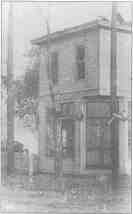
Loper's restaurantToday marks the 100th anniversary of the Springfield race riot. The riot was a shameful episode in America’s history. It occurred in the Illinois State capital and the hometown of Abraham Lincoln. Anti-black riots followed in East St. Louis and Chicago. There was one positive outcome: In 1909, reformers called a small meeting to address the violence and racism, out of which grew the National Association for the Advancement of Colored People, the nation’s oldest and largest civil rights organization.

The riot, and the subsequent rationalizations, is an event that I’ve found especially disturbing. It’s a frightening reminder of the consequences of racism and mob violence. It may touch me more not only because I live nearby, but also because my father’s family was from Springfield. Although the events happened long ago, they remind us to look closely at our contemporary beliefs, attitudes, and values about race, immigration, and people we see as “other.”

Roberta Senechal writes (Illinois History Teacher, 3(2), 1996):

On the evening of August 14, 1908, a race war broke out in the Illinois capital of Springfield. Angry over reports [later revealed as a concocted allegation] that a black man had sexually assaulted a white woman , a white mob wanted to take a recently arrested suspect from the city jail and kill him. They also wanted Joe James, an out-of-town black who was accused of killing a white railroad engineer, Clergy Ballard, a month earlier.

Tree where man was hangedLate that afternoon, a crowd gathered in front of the jail in the city’s downtown and demanded that the police hand over the two men to them. But the police had secretly taken the prisoners out the back door into a waiting automobile and out of town to safety. When the crowd discovered that the prisoners were gone, they rioted. First they attacked and destroyed a restaurant [top left] owned by a wealthy white citizen, Harry Loper, who had provided the automobile that the sheriff used to get the two men out of harm’s way. The crowd completed its work by setting fire to the automobile, which was parked in front of the restaurant.

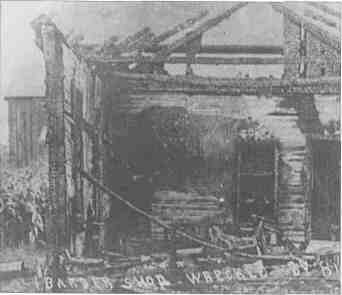
barber shopIn the early hours of the violence, as many as five thousand white Springfield residents were present, mostly as spectators. Still angry, the rioters, minus most of the spectators, next methodically destroyed a small black business district downtown, breaking windows and doors, stealing or destroying merchandise, and wrecking furniture and equipment. The mob’s third and last effort that night was to destroy a nearby poor black neighborhood called the Badlands. Most blacks had fled the city, but as the mob swept through the area, they captured and lynched a black barber, Scott Burton, who had stayed behind to protect his home [hanging tree, above right; barber shop, left].

[snip]

The pattern of attacks supports [one black resident’s] opinion that black success brought danger. The first area targeted was the black business district. The two blacks killed were well-off, successful businessmen who owned their own homes. All of those targeted for hit-and-run attacks were also well-off. Although what triggered the riot may have been anger over black crime, very clearly whites were expressing resentment over any black presence in the city at all. They also clearly resented the small number of successful blacks in their midst.

See more at The Springfield Race Riot of 1908 and A Minute With Clarence Lang.