Remaining Awake Through a Great Revolution

irvington_statue_of_rip_van_winkleOn November 4, voters in the US made a momentous choice, not only by taking another step towards racial equality, but also by demanding new ways of relating to other countries, to injustice, to the environment, and to truth itself. As of today, that is only one step; nothing has changed except the direction we are pointed.

Where the path leads next depends even more on the rest of us than it does on President-Elect Obama. The great challenges of globalization, racism, poverty, and violence are unaffected by a single election. Yet, there is a risk that we can fall asleep, lose sight of those challenges, and begin to think only of narrow issues, such as many that surfaced in the campaign.

We have the opportunity now to respond to the challenges posed 43 years ago in Martin Luther King, Jr.’s excellent speech, Remaining Awake Through a Great Revolution. In his talk, he relates the story of “Rip Van Winkle,” who slept 20 years. But he reminds us that when Rip went up to the mountain, the sign on the local inn had a picture of King George III of England. Twenty years later, the sign had a picture of George Washington. Rip had not only slept 20 years; he had slept through a revolution. As King says, “Rip Van Winkle knew nothing about it; he was asleep.”

King saw that we are experiencing a scientific and technological revolution, one that challenges us to remain awake, and to develop a world perspective. It’s more imperative than ever to eradicate racial injustice and rid the world of poverty, and to find an alternative to war and bloodshed. Long before talk of flat worlds, King saw that our destinies were intertwined:250px-martin_luther_king_jr_nywts
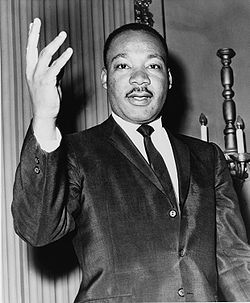
All I’m saying is simply this: that all mankind is tied together; all life is interrelated, and we are all caught in an inescapable network of mutuality, tied in a single garment of destiny. Whatever affects one directly, affects all indirectly. For some strange reason I can never be what I ought to be until you are what you ought to be. And you can never be what you ought to be until I am what I ought to be – this is the interrelated structure of reality…And by believing this, by living out this fact, we will be able to remain awake through a great revolution.

Remaining awake means looking beyond government as usual and recognizing that children in Haiti are in our “garment of destiny,” as much a part of our world as the person next door. It means knowing that justice is an ongoing project that needs to be defended wherever we hear of abuses of human rights, not seeking ways to justify them. It means finding an end to wars, not simply moving from one venue to another.

Can we do any better now at addressing King’s great challenges?

References

King, Jr, Martin Luther (1965, June). Remaining awake through a great revolution. Commencement address for Oberlin College, Oberlin Ohio.
What, when, and where of web pages

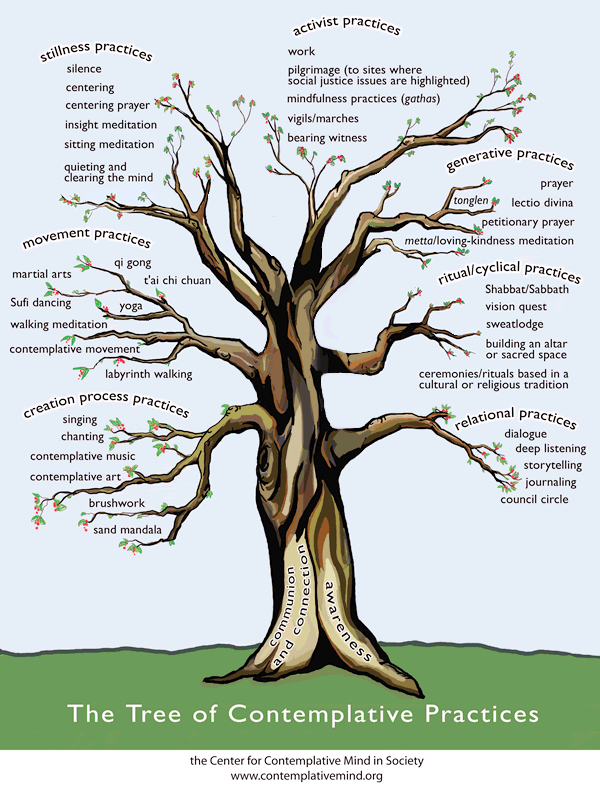
tree-of-practices-screenHow do we find an entry on a website? Usually, we do it either from a general search or by a link from another entry. But both of those are enabled by the fact that the entries are connected in some pattern.

What

One such pattern depends on what the entry is about. When we focus on the what, we call the entry a page. The main page on a topic (the parent) then links to sub-topics (the children). An example of this is my page on Teaching, which has several children pages. There can be many generations of pages, resulting in complex family tree of pages. Of course, with hyperlinking, it’s not strictly a tree structure, but the fundamental idea isn’t that different from the kinds of outlines we were taught to do in school.

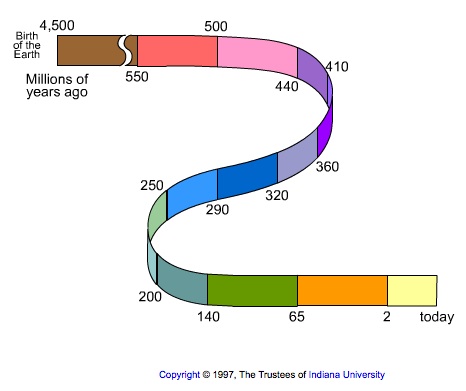
ribbon

When

A second way to organize pages has become so common that many people use its name to refer to any website. That’s to focus on the when of an entry. In that case, the website becomes a blog and the entries, now called posts, are organized by their time of creation into a chronology, usually with the most recent first.

Image at left, showing geologic time, courtesy of the Indiana Geological Survey.

world_mapWhere

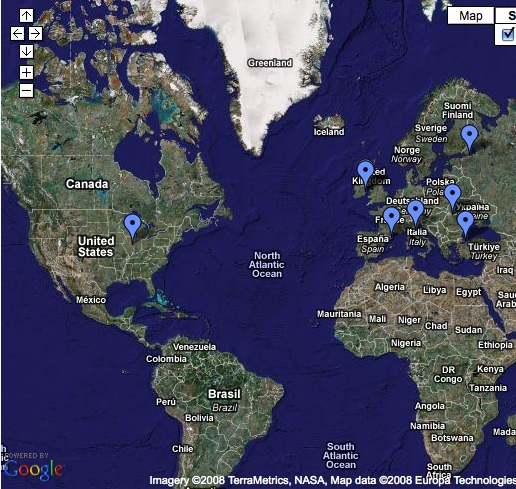
So we have a conceptual organization and a temporal one, what else is there? Well, another that is emerging now is a spatial organization. In this case, the entries, now called place-descriptions(?), are organized by their geotag, or where they occurred. For example, my entry on Aughavannagh and Glenmalure is more about the place than about the particular time our visit occurred. Just as pages can be grouped into a tree structure or posts into a chronology, place-descriptions can be grouped into a spatial map using their geotags. So, this site now has a world map, with place markers indicating the place-descriptions.

Things get messy in practice. We also use the less-structured tags and categories as other ways to find entries. A given entry might serve as a page, a post, or a place-description. And none of this works if the entries aren’t marked appropriately.

52°54′55″N 6°25′28″W

eTourism and community informatics

Just saw a notice for ENTER (eTourism) conference, scheduled for Amsterdam in 2009. What caught my eye were sessions on community informatics, user-generated content, accessibility, cultural heritage, online communities, and other topics related to community informatics. One of the speakers is Ulrike Gretzel, who earned her PhD here in 2004 in Communication, with a specialty in etourism.

It’s interesting to reflect on eTourism in relation to community informatics, both in terms of the underlying similarities in approach and because it’s one avenue for students to take. Tourism is the largest business in the world and the most IT-intensive. It’s also the major means of survival for many in impoverished communities.

The mission of our own tourism department is

to understand and promote the development and sustainability of healthy communities and advance quality of life and well-being of individuals, families, and communities through parks, recreation, sport, and tourism.

Compare that to the mission of the Community Informatics Initiative:

works with people to develop information and communication technologies to achieve their goals. It fosters collaborations across campus, local, national and international communities. Together we build innovative community networks, community technology centers, software, and library services.

LIS 590 IBL, Inquiry-Based Learning, Spring 2009

We’ve changed the format for my spring course, Inquiry-Based Learning. It was originally scheduled as a LEEP (online) offering, LIS 590 IBO, but will now instead be offered on campus as LIS 590 IBL. Please share this description with anyone who may be interested.

  • Course: LIS 590 IBL, Inquiry-Based Learning (CRN: 36880)
  • Instructor: Bertram (Chip) Bruce
  • Semester: Spring, 2009
  • Prerequisites: Graduate student status
  • Schedule: Mondays, 9:00-11:50 am, 109 LISB
  • Website: http://illinois.edu/goto/ibl

Inquiry-based learning is a powerful way of thinking about learning as it occurs in libraries, museums, community centers, homes, workplaces, or online, as well as in formal settings, such as schools and universities. It implies the creation of environments in which learners are actively engaged in making meaning through personal and collaborative inquiry. It does not ignore the usual focus on content/skills: “What should be taught?,” or method: “How should we teach?” but begins with even more basic questions about the nature of learning and life.

Because of this, considerations of inquiry-based learning lead directly to issues of lifelong learning, the nature of knowledge, purpose, social justice, and democracy. This broad sweep makes it impossible to encapsulate inquiry-based learning in a simple framework or method. But it is also an indication of its importance in defining ways of thinking about the meaning of community, the roles of teachers and students, the relations between school and society, and how learning and life go together.

In the course we will examine the nature of inquiry and of inquiry-based learning, drawing on philosophical, historical, and critical sources such as Jane Addams, John Dewey, Paolo Freire, and Myles Horton. We’ll read about, observe, and engage in inquiry-based learning. In the course of this, we’ll also consider challenges to inquiry-based learning, including those related to management, assessment, basic skills, cultural differences, and pedagogical goals.

Lecture and class at Çanakkale Onsekiz Mart Üniversitesi

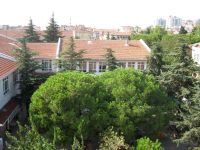
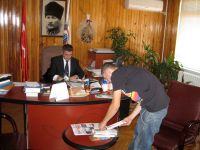
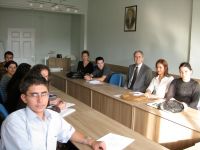
I recently went to Çanakkale Onsekiz Mart Üniversitesi (the 18th of March University in Çanakkale, Turkey) on a trip arranged by Prof. Mustafa Yunus Eryaman. The faculty there were wonderful hosts and showed me many excellent projects, including international connections, in this rapidly growing university.

While in Çanakkale, I lectured on Learning at the Border, presented in a doctoral seminar on Integrating Technology with Literacy, and visited Children’s House (Çocuklar Evi), a preschool.

There was much interest at Çanakkale Onsekiz Mart Üniversites in our community informatics work, in part because John Dewey had played such an important role in establishing education in the new Turkish nation. In the summer of 1924, Mustafa Kemal (Ataturk) had invited Dewey to advise him on modernizing the Turkish educational system, including instituting compulsory primary education for both girls and boys. Reforms were intended to enhance literacy and thus to raise a generation able to participate in what Ataturk called the public culture.

“The Cucumber Season”

Just read an amusing, and ironically, informative essay in ACM Ubiquity, called “The Cucumber Season: Reflections on the Nature of Information When There Isn’t Any,” by Espen Andersen:

I would like to introduce a new term to the English language: “Cucumber season”. The term, from Norwegian, refers to the period from sometime in early June, when Parliament and the public schools recess, until mid-August when the schools start up again and people return from their summer holidays. The name of this season comes from the observation that during this period, newspapers have little to write about – since nothing much happens – and so are forced to report on non-news, such as outsized and/or weirdly shaped vegetables such as cucumbers. By extension, the term refers to newspaper articles as well – a padded-out news item of dubious importance and inflated headline is referred to as a cucumber.

ACM Ubiquity – The Cucumber Season: Reflections on the Nature of Information When There Isn’t Any.

Liberating Voices

Liberating Voices: A Pattern Language for Communication Revolution (MIT Press), edited by Doug Schuler will appear this coming December. The book contains 136 patterns designed to meet challenges of communication in a world of new communication systems and global connections. Patterns integrate theory and practice to address social and environmental problems through citizen activism. Each describes a problem and its context, a discussion, a solution, and links to other patterns.

The book was inspired by Christopher Alexander’s A Pattern Language, and is part of the Public Sphere Project. You can get a preview of the book and explore the network of patterns online.

a visionary manual rich in insights and directly useful in any attempt to connect people and information technologies in the quest for real democracy. This is a crucial book for our time. —Langdon Winner, Rensselaer Polytechnic Institute

a pattern language that can be used as a framework for rethinking how we build community and create a more humane, equitable future. —Nancy Kranich Former President, American Library Association, author of Libraries & Democracy

TagCrowd, make a tag cloud from any text or website

TagCrowd, created by Daniel Steinbock at Stanford University, is a clever new web application for visualizing word frequencies by creating a tag cloud (or text cloud). It’s fun to play with and has a number of interesting possible uses.

I made the one on the right from a selection of Emily Dickinson poems. One thing that stands out is her use of the word “stop,” as in:

Not In Vain
If I can stop one heart from breaking,
I shall not live in vain;
If I can ease one life the aching,
Or cool one pain,
Or help one fainting robin
Unto his nest again,
I shall not live in vain.

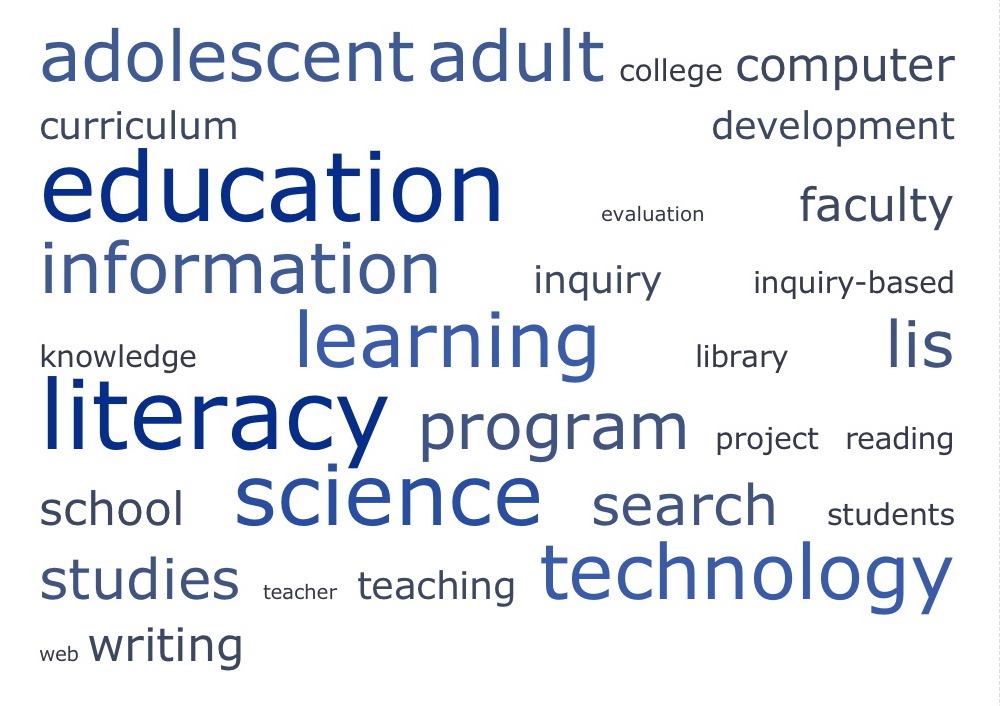
Tag clouds provide a visualization for navigation on Web 2.0 sites with user-generated metadata (tags) as on this blog. TagCrowd enables this for any text file, by automatically generating tags. You could give it the file name for a secret document you’ve just found, tell it the url for your favorite news website, or paste in the text from the novel you’re writing.

The application can be used in various ways (list from the TagCrowd site):

See the tag cloud for my own cv on the left above. What strikes me there is how I need words of four and five syllables, when Emily Dickinson could say so much in words of one syllable! Stop.

first Youth Community Informatics Forum

In the Youth Community Informatics Forum held June 27-28, 2008, about 40 young people and youth leaders came to Champaign from a variety of economically disadvantaged, mostly minority communities throughout the state.

There was a youth media festival on Friday. Then on Saturday, participants spent the morning working in one of four small groups to investigate “information spaces” in the community. These included the Center for Children’s Books, Champaign Public Library, the Independent Media Center, Espresso Royale, Native House, Cafe Paradiso, Transit Plaza, Illini Union, and bronze plaques around campus. The group leader introduced a staff member from the center to the students for a small tour and helped them use a Flip video camera and a GPS receiver to record their observations.

At each site, the youth asked questions such as:

  1. What do we see in this information center? How do we like it?
  2. What is this center about?
  3. What do we want people to know about the center?
  4. How can we give others a clear idea about the center through watching/hearing our report?

In the afternoon, they created a Google map with their videos, text, and GPS coordinates. They also added music (an innovation we hadn’t planned on, but perfectly appropriate). They then shared their findings in a public presentation.

The activity was conceived in terms of an Inquiry Cycle:

Inquiry cycle

Inquiry cycle

  • Ask: What are the information spaces in the community?
  • Investigate: Visit, listen, explore, video, determine geo-coordinates.
  • Create: Make a GIS site with video, music, text.
  • Discuss: Share the product and the findings with others.
  • Reflect: Think about issues of journalism, democracy, careers, technologies, etc.

We found that the students learned technology skills, problem solving, cooperative work, writing, public presentation, specific information spaces, community journalism, university life, and much more.

Although the June activity made use of diverse new technologies, it is important to note that the focus was on learning about the community, asking questions, and sharing findings with others, not on the technologies per se. The most effective use of these technologies in libraries and similar settings would likely involve embedding that use in a larger, purposeful context. That context in turn could be a way to help connect youth with other resources, such as books and structured activities.

We’re now planning a similar activity in October with the Mortenson Center Associates, a group of visiting, international librarians. This will be the first day of a two- or three-day event. The longer time will allow for discussion about how the information spaces might differ in different countries, what technologies are available in different contexts, how valuable the activity would be for youth in their libraries, and so on. Students from the Community Informatics (LEEP) course would lead the investigation of the local-area information centers.

Both youth leaders and young people said they enjoyed the Forum, learned a lot, and hope for more. One youth leader said that next year he’d like to bring a much larger group. Another wrote,

I believe, in the not too distant future, that this conference will be seen as a landmark in developing a new perspective as part of the partnership between those marginalized sectors of civil society and the university in bridging the digital divide.

As Myles Horton might say, that’s a long haul, but at least there was good spirit of cooperation in learning, which I hope will carry over to continuing work in these communities.

[Cross-posted on social issues]

Youth Community Informatics Forum

Forum flyer p. 1The goal of the Youth Community Informatics project is to encourage youth to consider careers in library and information science by engaging them in technology-rich activities that benefit their local communities. Youth ages 12-18, along with their adult leaders.

  1. participate in technology-mediated learning modules on a range of information science topics;
  2. work on community informatics projects in collaboration with local community partners and university students from LIS and related fields;
  3. participate in campus events to experience a wide variety of library and information science careers;
  4. Forum flyer p. 2help develop computer technology centers for their own use, and for use by others in their communities.

In the Youth Community Informatics Forum, to be held on June 27-28, 2008 at the University of Illinois in Urbana-Champaign, groups of youth will investigate information spaces around campus using digital cameras and GPS, along with their own eyes and ears, create Google Maps representations of what they learn, discuss their findings with other groups. They will also learn about LIS careers and about working with their own communities.

The project is supported by the Institute of Museum and Library Services (IMLS).