Turtles in China and Australia

During our sabbatical in Beijing and Brisbane, we had a surprising common theme: turtles.

I’ve always liked turtles, so perhaps it was natural that I saw them everywhere we turned. It started when we asked Caroline, a ten-year-old friend from Canada, about her classes at the Bei Da elementary school. She described a strange typing class, which involved typing expressions such as “FD 100 RT 120 FD 100 RT 120”. Although she didn’t realize it at first, this was not typing class, but computer programming using the Logo language. The commands were eventually to be used to command a robotic turtle, or one on a computer screen. In this example, the turtle would be commanded to draw an equilateral triangle, 100 pixels on a side.

We decided that turtle talk was a nice, limited domain in which to practice our feeble Chinese. Wang Dongyi, a Chinese friend, was helping us with that, and we were helping him with his English. Before long we had a bustling turtle circus going in our apartment at Shao Yuan on the Bei Da campus. Caroline, Emily, and Stephen played the turtles, with occasional help from certain childlike adults. We’d issue Logo commands in Chinese or English, and learn from the consequences of the turtles’ behaviors. In this way, we were all practicing both language and programming skills. We of course had to learn the Chinese word for sea turtle, Hai Gui (海归), so that we could say Turtle Emily, forward 30, or its equivalent in Chinese.

These navigational commands happened to be useful for us visitors, as we were continually seeking of giving directions. We began to refer to taxis as Hai Gui, since they needed to execute programs such as forward ten blocks, left, then forward three more.

Hai Gui, from Woodblock Dreams

We saw images and sculptures of turtles. We even ate Hai Gui, probably more than we realized, since we couldn’t always identify or obtain a name for what we were eating. We then learned that the “Hai Gui” or “sea turtles” of China are the returning professionals who contribute to the growth of the Chinese economy. These are the students who were sent abroad, like baby sea turtles, to get advanced degrees and Western experiences, then return to lay their eggs in their homeland.

When we reached Australia, we spent a lot of time outdoors, taking advantage of the beautiful countryside in Queensland. We saw many turtles in lakes and in the ocean, and even swam with adult loggerheads. One highlight, near Bundaberg, was Mon Repos Beach, one of the two largest Loggerhead turtle rookeries in the South Pacific Ocean. Successful breeding there aids survival of this endangered species. The research program conducts animal surveys of nesting turtles, studies of reproduction, migration, behavior, incubation, and genetics.

Visitors can watch the turtles, and if they’re lucky, see the adults lay eggs (from mid November to February) or even better, see the hatchlings emerge and crawl to the sea (from January until the end of March). We couldn’t miss that. The night we went was magical. We saw baby turtles hatch and then crawl to the sea. Emily and Stephen took on the role of turtle guides, standing with legs spread and using a flashlight to guide the way. The turtles would follow the light until they neared the ocean edge and then could follow the moonlight.

Susan and I would not have done well as turtle guides since watching Emily and Stephen do this was too wonderful on its own. As Susan wrote in an email at the time, “The theme of any future message will be turtles; we did see the hatchlings and Stephen and I swam with a huge loggerhead on the [Great Barrier] Reef, a few seconds that were worth the total airfare.”

In that year, we were Hai Gui ourselves, emerging from our safe nest with little understanding of the world we were about to encounter.

Rethinking schools

Rethinking Schools began in 1986 in Milwaukee, Wisconsin, as an effort to address problems such as “basal readers, standardized testing, and textbook-dominated curriculum.”

It’s since become an international publisher of educational materials, with a magazine and books on classroom practice and educational theory, social justice, anti-racism, vouchers and marketplace-oriented reforms, funding equity, and school-to-work. The publications are written by and for teachers, but speaks to students, parents, administrators, researchers, and community members as well.

I like their vision of the common school:

Schools are about more than producing efficient workers or future winners of the Nobel Prize for science. They are the place in this society where children from a variety of backgrounds come together and, at least in theory, learn to talk, play, and work together.

Schools are integral not only to preparing all children to be full participants in society, but also to be full participants in this country’s ever-tenuous experiment in democracy. That this vision has yet to be fully realized does not mean it should be abandoned.

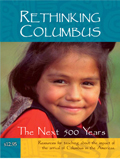
I highly recommend their publications, including the classic, Rethinking Columbus: The Next 500 Years, which was my introduction. I’ve used several of the books or magazine issues in my own teaching and can say that I’ve learned important things from every one of them.

UI 4th for hosting foreign students

The University of Illinois’s Urbana campus continues to host more international students than all but three other universities in the nation, according to the Institute of International Education.

The UI is No. 1 among public universities.

via The News-Gazette.com: UI 4th overall in 2008-09 for hosting of foreign students.


A highlight of my job is to work with a diverse group of students, who bring different experiences and perspectives. This diversity includes nationality.

Considering just the doctoral level, I’ve now served on the committee for 80 students who’ve completed their Ph.D. and another 25 who are still working towards it. Here’s the list of countries represented, among just those for whom I have an official role: USA (58), Taiwan (11), Korea (7), China (5), India (5), Australia (3), Romania (2), Singapore (2), Austria (1), Azerbaijan (1), Belize (1), Germany (1), Haiti (1), Hungary (1), Ireland (1), Japan (1), Nepal (1), Puerto Rico (1), Spain (1), Turkey (1), Vietnam (1). I’ve also been able to work closely with students from Brazil, Canada, Côte d’Ivoire, Cuba, Cypress, Egypt, Iran, Malaysia, Mexico, Pakistan, Poland, South Africa, and many other places.

This list is by nationality, not necessarily by ethnicity or residence. For example, one student was originally from Mexico and now lives and works in Japan, but I counted him as USA, because he’s a US citizen. The number from Asia (32) isn’t far below that from the US, but there are none from Africa, and only two from South America and just seven from Europe (or eight, counting Turkey).

Knowing well the challenges of travel and life in other countries, I’m impressed with the imagination and the perseverance of students from abroad. I’m also very grateful for what they’ve added to the university and to the life of myself and my family.

Inquiry Based Learning interview

Michael Hallissy recently interviewed me from Dublin, Ireland for a podcast on Inquiry Based Learning. I can’t bear to listen to my recorded self, so I’m not sure why you would, but in case you’re a masochist, the link above should be just what you need. Extra credit if you can spot the two factual mistakes we made, one by Michael and one by me.

New literacies and frogs

I visited the University of Connecticut in Storrs yesterday. It was a brief stop, but enough to be once again impressed with the excellent work of the New Literacies Research Team, led by Don Leu. They use new media, not simply to enhance or modernize in a superficial way, but to return classroom literacy to its roots in real communication. Nearly every project I heard about emphaizes reading and writing with a purpose and communication with real audiences.

For example, one project links a fourth-grade class studying the continents with a first-grade class in another state doing the same. The fourth-graders made online slide presentations to help teach the younger students, but quickly learned that their language was too advanced. They then recorded audio explanations to help explain things better.

On the way to UConn, I passed through nearby Willimantic, which is famous for its legend,“The Battle of Frog Pond”. This great battle occurred in 1754 around the time of the French and Indian War. It started with a huge racket in the middle of the night. The terrified villagers seized their muskets and prepared for the attack. In some accounts, they fired wildly across the town common. But no attack materialized. Instead, when morning arrived, they found hundreds of dead bullfrogs. A nearby pond had dried up causing the bullfrogs to fight for the remaining water.

Later, American Thread Company established a mill in the town, which grew to be one of the largest producers of thread in the world. Willimantic became known as “Thread City,” and today boasts four statues on its bridge across the Willimantic River, each with a huge thimble and a giant, now silent, bullfrog.

John Dewey and Daisaku Ikeda

ikeda-headshotI attended the 6th Annual Ikeda Forum for Intercultural Dialogue yesterday at the Ikeda Center for Peace, Learning, and Dialogue in Cambridge. The topic was John Dewey, Daisaku Ikeda, and the Quest for a New Humanism. The occasion was the 150th Anniversary of John Dewey’s birth.

Although Ikeda’s Nichiren Buddhism, a form of Mahayana Buddhism, may at first seem far removed from Dewey’s American pragmatism, the speakers found many areas of consonance between the work of the two. I was pleased to see that Jane Addams was brought into the conversation, too.

Ikeda CenterNichiren was a 13th century Buddhist reformer, who based his teachings on the Lotus Sutra and its  message of the dignity of all life. Like Dewey’s pragmatism, Nichiren Buddhism is grounded in the realities of daily life. It promotes “human revolution,” in which individuals take responsibility for their lives and help to build a world in which diverse peoples can live in peace.

Ikeda is the founder of the Soka Gakkai International, a movement characterized by its emphasis on value creation (soka). This implies that each individual needs the opportunity to find value in their unique path while contributing value to humanity. Soka schools have much in common with the kinds of schools Dewey envisaged (but rarely saw enacted).

At the Ikeda Forum discussions focused on connections and divergences between Dewey’s naturalistic humanism and Ikeda’s Buddhist humanism. Presentations examined how their work can be used as resources for individual and social change.

Camara sends 14,000 computers to Africa

children_400[Photo from the Camara site]

Dom Helder Camara, the Brazilian archbishop is famous for saying “When I give food to the poor, they call me a saint. When I ask why the poor have no food, they call me a communist.”

Camara is a volunteer organization in Dublin, Ireland, which empowers communities in Africa by using technology in education.

I’ve written about Camara before in terms of its history and its role in third-level education. As it’s come up in some recent conversations, I thought it was worth a reminder. We should note that Camara has now distributed nearly 14,000 computers in Africa.

Their activities include these from their website:

Philosophy reading group

Here are the readings for our philosophy reading group this year (2009-2010). There’s a general emphasis on practice-based theories:

Other possibilities:

Bernstein, Beyond Objectivism and Subjectivism
Michel de Certeau, Practice of Everyday Life
Joe Dunne, Back to the Rough Ground
Bent Flyvbjerg, Making Social Science Matter
Ian Hacking, The Social Construction of What?
Bruno Latour, Reassembling the Social (or one of his others)
Jonathan Lear, Therapeutic Action
Alasdair MacIntyre, Dependent Rational Animals
Theodore Schatski, Social Practices
Richard Sennett, The Craftsman
Charles Taylor, Modern Social Imaginaries
Leslie Paul Thiele, The Heart of Judgment
Stephen Turner, The Social Theory of Practices
Victor Turner, The Ritual Process (or From Ritual to Theater)
and/or modern classics such as Arendt, Collingwood, Gadamer, Goodman, Oakeshott, Wittgenstein.

Dreaming in Hindi, by Katherine Russell Rich

kathy_sari

Recently, I listened to an interesting Afternoon Magazine (WILL AM 580) radio interview with Katherine Russell Rich, related to her book, Dreaming in Hindi: Coming Awake in Another Language.

It’s her own story of learning language. When Rich lost her job at a New York magazine, she didn’t just file for unemployment compensation, she decided to immerse herself in Hindi and in India, as she says on her website;

I’d recently lost a job, I was watching the business I’d been in and loved, magazines, begin to crumble. My world had been turned upside down. Compounding that was the fact that in the decade before, I’d gotten smacked around twice by breast cancer. I barely recognized my own life anymore. Or the way that I put it in the book was, “I no longer had the language to describe my own life, so I decided to borrow someone else’s.”

There are many examples revealing about Hindi, English, language in general, culture, and Rich herself, e.g.,

…the word for yesterday and tomorrow is the same: kal, from Kali, the goddess of death and destruction. There’s a philosophy embedded in there—it’s only when you’re in today, aaj, that you’re here; if you’re in yesterday or tomorrow, you’re in blackness.

White privilege

Peggy McIntosh’s essay, White privilege: Unpacking the invisible knapsack” (1990) provides a very accessible discussion of race/racism, in particular, how whites have trouble even seeing it. She identifies 50 daily effects of white privilege, “conditions that…attach somewhat more to skin-color privilege than to class, religion, ethnic status, or geographic location” per se.

McIntosh predicts that if you’re White you’ll answer “yes'” to most of these, and if you’re Black, you’ll say “no” to many of them. Try it yourself. For example,

1. I can if I wish arrange to be in the company of people of my race most of the time.

6. I can turn on the television or open to the front page of the paper and see people of my race widely represented.

7. When I am told about our national heritage or about “civilization,” I am shown that people of my color made it what it is.

21. I am never asked to speak for all the people of my racial group.

22. I can remain oblivious of the language and customs of persons of color who constitute the world’s majority without feeling in my culture any penalty for such oblivion.

24. I can be pretty sure that if I ask to talk to the “person in charge”, I will be facing a person of my race.

25. If a traffic cop pulls me over or if the IRS audits my tax return, I can be sure I haven’t been singled out because of my race.

34. I can worry about racism without being seen as self-interested or self-seeking.

44. I can easily find academic courses and institutions which give attention only to people of my race.

John Berry (2004) adapts these for the library profession. I like both of these articles, and can imagine ways to use such lists to spark a discussion.

I would have to answer yes to most of the statements myself. Then I imagined it for my time in Ireland (thinking more about nationality, than about race per se). Still mostly yes, but some no’s and some harder to answer. When I thought about my stay in Turkey, there were fewer yes’s. For Haiti, fewer still.

But what was most interesting to me is that even for Haiti, I could still say yes to most of the statements, even though I’m the outsider there in terms of race, nationality, language, culture, and above all, economic class. The fact that I can take myself mentally to Haiti, and still possess White Privilege shows even more to me why it’s such a powerful social construct. It also reveals why it’s so hard to understand and accept that one possesses that unfair privilege.

In a Harvard Law Review article, Cheryl Harris (1993), takes this concept further, arguing that racial identity and property are deeply intertwined. She examines “how whiteness, initially constructed as a form of racial identity, evolved into a form of property, historically and presently acknowledged and protected in American law.”

References