Today, the me nobody knows

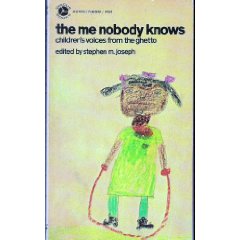
me_nobody1I came across the poem, “Today,” in the me nobody knows: children’s voices from the ghetto, by Stephen M. Joseph (Avon, 1969). There are many beautiful, and some heartbreaking, stories and poems in the book, which is an anthology of writings by children in Bedford-Stuyvesant, Harlem, Jamaica, and the lower west and east sides of Manhattan. The year after the book was published, a musical based it, The Me Nobody Knows, premiered in New York.

Joseph, a teacher, invited the children to write, offering three choices: to write using their names, in which case he was willing to meet at lunch or outside of school to talk with them about it; omit their names, but still hand in the writing; or write, but neither sign the paper nor hand it in. But he never forced them to write at all.

The pieces in the book give one picture of life in the inner city, or for that matter, many children everywhere. They invite the question: Are we doing any better for children today, 40 years later?

This poem struck me for its rhythm and the ways that things seem not totally to fit, but do fit all the same.

Today
Cynthia L, Age 15

Today is my day,
Today should be your day,
If it’s your day and my day
It’s everybody’s day.
In your way is my day
Because you made a day that comes all the way.
And two days of a way equal today.
That will never fade away.
In our own way let’s find ways
To make great exciting things happen.
In your ways, make my days,
You made a day that comes all the way,
And two days that are made up of your ways,
Those kind of days will never fade away.
Why I like to use walking poles

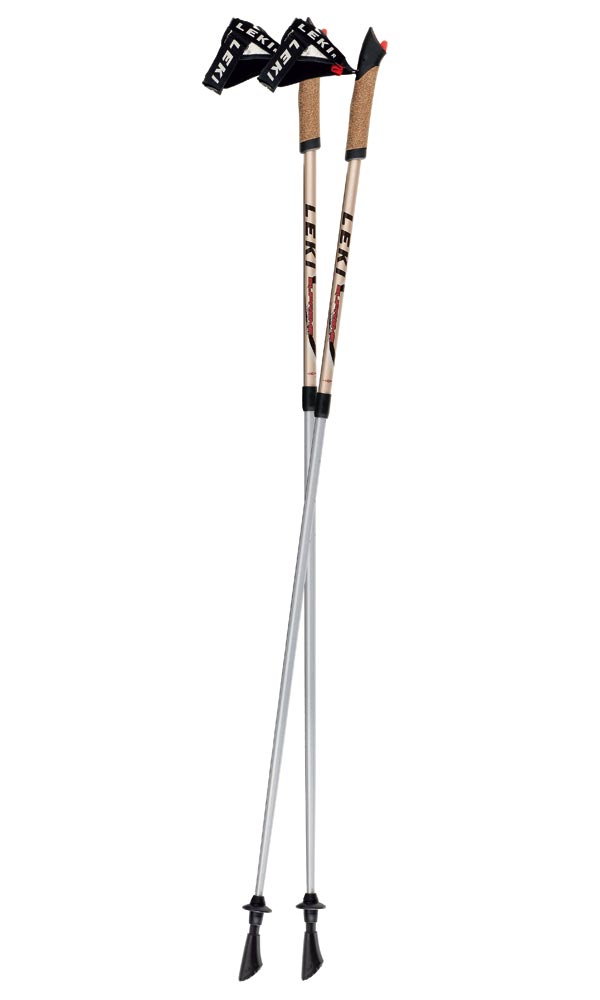
leki_polesOK. I know it looks strange, but here are a few reasons I like to use walking poles:

  1. If I don’t have a baby or a dog with me, it provides something to talk about with strangers.
  2. It add ten years to the usability of my knees (and ankles, hips, back, feet,…).
  3. Even in the short run, my knees don’t hurt so much after a long walk.
  4. I can fend off small animals.
  5. A stick can be handy for opening gates, picking up objects, making an impromptu tent, or hoisting a flag. See more reasons to carry a walking stick.
  6. I get upper body exercise while walking.
  7. I burn more calories, but don’t even feel that I’m exercising.
  8. I walk faster.
  9. I’m less likely to fall when crossing a stream and stepping on slippery, unstable, rounded rocks, or even just stepping on a wet leaf or going down a bumpy sidewalk.
  10. I can use the same sticks for x-country skiing.
  11. They remind me to get more exercise, and to be outside more, providing a partial escape from the computer screen.
  12. They’re reflective, which makes it much safer to walk at night, especially since they move rapidly in the normal walking motion.
  13. They make me feel that I’m in Finland again.
  14. Using them is similar to using a bicycle or roller blades in that walking is suddenly easier.
  15. Cars slow down and avoid me more. I’m not sure why. Do they think I’m disabled? that I might strike them with the poles? that I look larger? that I look strange? Whatever it is, I appreciate their response.
  16. They’re a big help going up a steep hill, because you can use your arms to push up.
  17. They provide a measure of safety going downhill.
  18. They’re handy for retrieving a frisbee stuck in a tree, a hat that fell in a stream, or a ball that rolled under a cabinet.
  19. When you’re tired of walking, you can lean on them to rest.
  20. And they’re especially useful for canoeing!

Happy Pluto Day!

plutolithograph1Image courtesy of Windows to the Universe. “This is an artist’s conception of Pluto and Charon. Pluto is in the background and Charon is in the foreground. Pat Rawlings, Science Applications International”

The Illinois State Senate has redeemed poor Pluto from dwarf planet status to its rightful place in the universe, and established March 13 as Pluto Day. This was done in large part to honor Illinois native Clyde Tombaugh. One justification for this was that Tombaugh was the only American to discover a planet. Another was that there were no real problems left to work on.

There are of course a few problems with the Senate’s idea. Early Native Americans undoubtedly discovered most of the planets in our solar system, even if official histories don’t credit them. Other Americans have discovered many planets outside of our solar system. And what Tombaugh discovered isn’t really a planet, under current definitions.

225px-clydetombaughBut Pluto is now part of our culture. Even if it’s not a planet, do we really want children going around saying “My very educated mother just served us nine”? Nine what? Pluto gives us a reason to add “pizzas,” which might be reason enough to keep it.

Tombaugh did do something. Eric Jakobsson, points out that they should have honored him for “discovering the first of the Kuiper objects (as opposed to the last of the planets). Arguably, that was a more important discovery than another planet, because it added a whole new dimension to our understanding of the solar system.”

Eric’s argument highlights two different conceptions of learning. In one, authority gives us the answer, case closed. In another, ideas become tools for further inquiry. Richard Shaull, puts it this way in the foreword to Paulo Freire’s Pedagogy of the Oppressed (1993):

There is no such thing as a neutral educational process. Education either functions as an instrument to facilitate the integration of the younger generation into the logic of the present system, or it becomes the practice of freedom, the means by which men and women participate in the transformation of their world.

We should remember and honor Tombaugh’s dedication, intelligence, and painstaking studies of photographs. His work on Pluto and asteroids contributed to transforming our scientific understanding of the universe. That was not the social world that Freire means when he says the “practice of freedom,” but in its own way represented a challenge to the “present system.” Unfortunately, the Senate’s rearguard action has become an internet joke that fails to express what Tombaugh really accomplished.

RiseOut: “Defining Our Own Education”

I’ve been reading the articles on RiseOut, an online “news center focused on deschooling, youth activism, and other related issues concerning the rights of youth in the U.S.” There are entries on deschooling; unschooling; youth media; racism; the Highlander Folk School in New Market, Tennessee; Dr. “Patch” Adams; a review of the book, The Teenage Liberation Handbook, How to quit school and get a real life and education (by Grace Llewellyn); critiques of school segregation (and recent Supreme Court decisions that support it), credentialism, and military conscription.

Most of the articles on RiseOut are well-researched, thoughtful, and provocative. They remind me of the wonderful book, Letter to a teacher by the schoolboys of Barbiana, in which youth in Italy present a searing critique of their education and the unjust society it supports.

Both the Barbiana book and RiseOut address the question that Earl Kelley asks: What is real in education?. Kelley answers that the bedrock reality is the the actual life of youth.

The Obama administration’s proposed “Cradle to Career” education plan, has many good components, but education reform will never accomplish much if schooling continues to be separated from actual life and fails to come to terms with the issues raised in RiseOut.

From the RiseOut site:

We provide a diversity of alternatives to education that are self-directed and decentralized from standardized schooling. We support a young person’s choice in dropping out of school, free of social stereotypes and biases. We aim to provide a plethora of alternatives from a 12-year prison like sentence of state schooling, while staying vigilant of abuses against young people through diagnosing, segregation, ageism, adultism, sexism, and other assholisms.

A message to those who have decided to quit school:

Instead of dropping out, we applaud you for your courage to “riseout” from a nightmarish disposition of compulsory schooling. We hope RiseOut can be a resource for sharing your stories and providing choices towards regaining control over your own education.

TakingITGlobal – Inspire. Inform. Involve.

tigI heard Michael Furdyk from TakingITGlobal.org give a very interesting talk with slide show on Thursday. TakingITGlobal – Inspire. Inform. Involve. “is an online community that connects youth to find inspiration, access information, get involved, and take action in their local and global communities.”

It offers many of the features found on other social networking sites, but with a focus on social good and attention to the special needs of schools and youth leaders for protected spaces and appropriate content. Youth can share media they have produced as well as discuss projects around the world. They can participate in fully online communities or build an online community to support their face-to-face interactions. TakingITGlobal now works with 235,701 individual members and 1008 schools in 261 countries.

You can see a short CBC documentary about Michael and co-founder, Jennifer Corriero, here:

Hidden Her-story: The Top-Secret “Rosies” of World War II

leann_ericksonNorma Scagnoli referred me to a wonderful podcast by LeAnn Erickson, Associate Professor of Film and Media Arts at Temple University. Erickson is an independent video/filmmaker, whose work has appeared on public television, in galleries, and has won national and international awards.

Entitled, Hidden Her-story: The Top-Secret “Rosies” of World War II, it was recorded in January at the EDUCAUSE 2009 Mid-Atlantic Regional Conference in Philadelphia. I expected to listen for a minute and then go on to more pressing things, but after listening a little I decided that those things weren’t so pressing after all. It’s a fascinating story for anyone who has an interest in history, computers, women, education, mathematics, warfare, politics, Philadelphia, science, workplace equity, morality, or life in general.

In 1942, only months after the United States entered World War II, a secret military program was launched to recruit women to the war effort. But unlike recruiting “Rosie” to the factory, this search targeted female mathematicians who would become human “computers” for the U.S. Army. These women worked around-the-clock shifts creating ballistics tables that proved crucial to Allied victory. “Rosie” made the weapons, but the female computers made them accurate. When the first electronic computer (ENIAC) was invented to aid ballistic calculation efforts, six of these women were tapped to become its first programmers. “Top Secret ´Rosies’: The Female ‘Computers’ of WWII” is a documentary project currently in postproduction that will share this untold story of the women and technology that helped win a war and usher in the modern computer age.

Controls for the podcast appear beneath the description on the EDUCAUSE page.

What wealth is tangible?

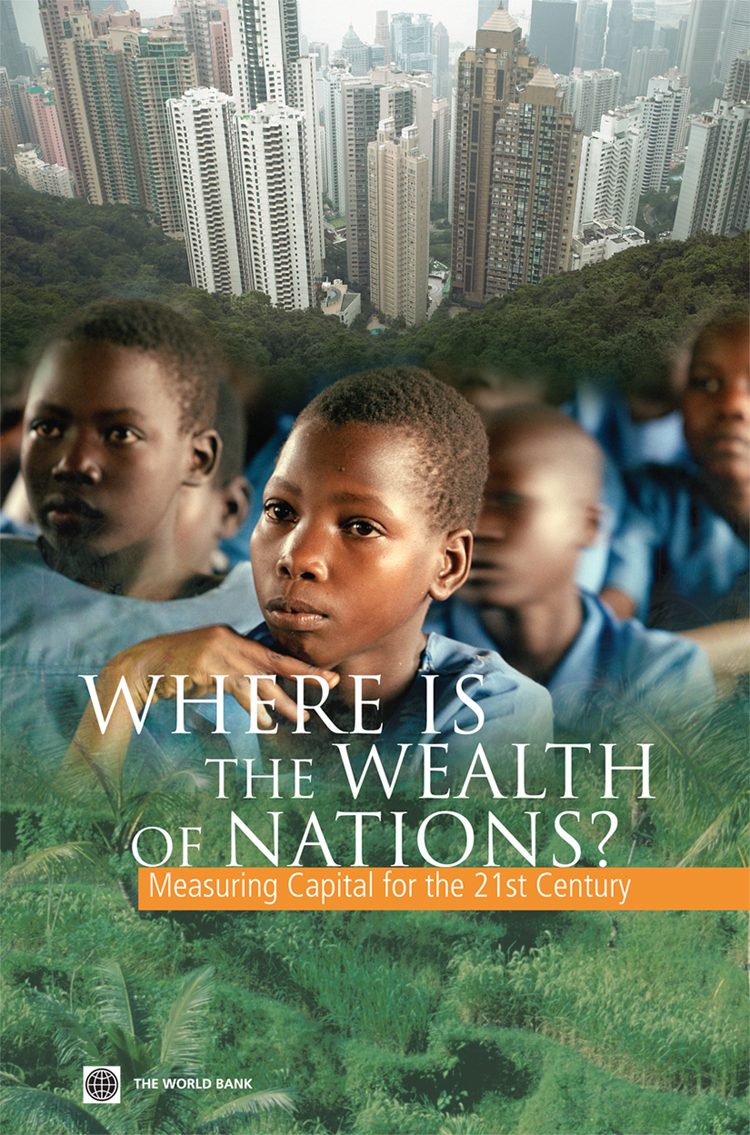
"Where is the Wealth of Nations?"What wealth is tangible? “Tangible” means something you can see and touch, something real and substantial. When referring to nations, tangible assets include land, buildings, equipment, stocks, and cash. Assets such as culture, education, law, environment, and health are deemed to be “intangible” or even “invisible.” But in light of the recent collapse of world economic system, social justice and cultural/environmental well-being now appear as the far more tangible assets to me.

Various tools have been proposed to provide more complete and useful measures of wealth and productivity. Along this line, Sharon Irish recently shared what she’s learned about the American Human Development Project.

…a nonpartisan, non-profit initiative established to introduce to the United States a well-honed international approach and tool for measuring human well-being: the human development approach and the human development index. The project’s mission is to stimulate fact-based public debate about and political attention to human development issues in the United States and to empower people with an instrument to hold elected officials accountable for progress on issues we all care about: health, education and income.

via About the Project — Measure of America: American Human Development Project.

It reminds me of the World Bank’s report “Where is the Wealth of Nations?”, which shows that the generators of development are things like the rule of law and a good school system. It also explains why say, a Mexican migrant to the U.S. is five times more (economically) productive than one who stays home. See also Ronald Bailey’s commentary on the report.

Devising better tools is not easy. There are serious debates about how to factor in human capital, biodiversity, global warming, civil rights, arts, and other issues. But if anything good can come from the economic collapse, it might be a better understanding of what wealth we really do have versus that which is ephemeral. We might then realize that investing in children makes far more sense than investing in obscene bonuses for financial tycoons.

Digital TV conversion

television

Digital TV conversion reminds me of Henry Wadsworth Longfellow’s poem:

There Was a Little Girl

There was a little girl,
Who had a little curl,
Right in the middle of her forehead.
When she was good,
She was very good indeed,
But when she was bad she was horrid

We’re in a very small minority of Americans who will today be banished from TV land, forced then to use our time productively, to spend time with friends and family, read books, play music, or engage in other ancient practices. We live about 280 yards outside of the city limits, so we’ve never been able to have cable TV. We have too many old oaks and hickories to get a clear line of sight on a satellite, and the combination of the trees and a concrete block house leaves us with poor broadcast reception. Between the trees, our raccoons and other creatures, we doubt that a roof antenna would work well or last long.

That leaves rabbit ears for through-the-air transmission. This works tolerably well for analog TV. Sometimes it works for digital as well. When it does, it is “very good indeed,” but more often it’s not just horrid, it’s non-existent. As I said, we may be the only household so cursed. When the great conversion comes, we’ll be exiled to the unknown land of “no TV.” I’ll make a youtube to tell you if we survive.

Today’s Front Pages: Newseum’s map of newspapers around the globe

The Newseum, at Pennsylvania Avenue and Sixth Street, NW, Washington, DC has a great, online map linking to front pages of newspapers around the globe. If you place the cursor on a city, you can see the front page in miniature; click, and it pops up in full, with a link to the newspaper website. You can also view the newspapers in Gallery or List mode. Currently, more than 575 newspapers from around the world submit their front pages to the Newseum.

Appropriating technologies: Nets for fish or for mosquitoes?

Appropriating TechnologiesThe notion of “appropriate technologies” is familiar; it’s similar to saying we should use the right tool for the job. In developing countries, this usually implies that we should find tools that fit with the local culture, knowledge base, environment, and existing technologies, for example, donkeys might work better than automobiles when the roads are in poor condition or non-existent.

There’s a related idea, in which the user is not just a passive recipient of some technology, but an active (re-)creator of it. People can actively appropriate technologies, interpret, use, and even re-design them to fit their needs. An excellent example of this is the alternate uses people have found for insecticide-treated nets:

Insecticide-treated nets (ITNs) are a simple, cost-effective way to fight malaria and are distributed to pregnant women and children in Kenya, often for free. But when Noboru Minakawa of the Institute of Tropical Medicine in Nagasaki, Japan, and colleagues surveyed villages along Lake Victoria, they found people were using the nets for fishing or drying fish, because the fish dry faster in the nets than on papyrus sheets, and the nets are cheaper (Malaria Journal, DOI: 10.1186/1475-2875-7-165).

In Zambia too, ITNs are being used for fishing, straining fruit and even for wedding dresses, says Todd Jennings of non-profit health group PATH in the capital Lusaka. “An ITN in the water is one not hanging in the fisherman’s home protecting his children,” he says.

It would be tragic if these uses of the nets mean that children are unprotected. Can we imagine a day come when people are not forced to choose between providing food and preventing disease?

References

Bruce, B. C., & Rubin, A. D. (1993). Electronic Quills: A situated evaluation of using computers for writing in classrooms. Hillsdale, NJ: Lawrence Erlbaum. See especially Chapter 9.

Eglash, Ron, Croissant, Jennifer L., Di Chiro, Giovanna, & Fouché, Rayvon (Eds.) (2004). Appropriating technology: Vernacular science and social power. Minneapolis: University of Minnesota Press.

New Scientist (2008, December 23). Malaria bed nets’ usefulness is their downfall..